

FUE hair restoration serves as a breakthrough solution for those seeking to address hair loss and achieve a fuller head of hair. This advanced hair transplant method is designed to be a permanent solution, offering a natural look without the visible scarring commonly associated with more traditional hair restoration techniques.
Here’s what you need to know about FUE hair restoration:
- Minimally invasive: Uses micro punches to extract individual hair follicles.
- Natural results: Provides a seamless appearance with your existing hair.
- Permanent fix: Harvested hairs are genetically resistant to balding.
- Quick recovery: Most patients resume normal activities in a few days.
- Invisible scarring: Only tiny dots remain, which fade over time.
As you consider the possibilities that FUE hair restoration offers, this approach is not just about aesthetics but enhancing your confidence and quality of life.
I’m Matthew Casavant, with over a decade of experience pioneering minimally invasive procedures. My expertise extends to FUE hair restoration, utilizing my meticulous skills to deliver the best results custom to each individual’s needs. Let’s dive deeper into the process and explore how this can be a turning point in your hair restoration journey.
Terms related to fue hair restoration:
– fue hair implant
– top fue hair transplant surgeons
Understanding FUE Hair Restoration
Follicular Unit Excision (FUE) is a cutting-edge hair restoration technique that focuses on individual follicular units. In this procedure, each follicular unit, typically containing 1-4 hairs, is carefully removed from a donor area using a specialized tool known as a micro punch. These micro punches vary in size, usually between 0.7 to 1.2 mm, allowing for precise extraction with minimal trauma to the surrounding tissue.
The Role of Donor and Recipient Areas
In FUE hair restoration, the donor area is crucial. It is usually located at the back of the head, where hair is most resistant to balding. Sometimes, other body parts like the beard or chest can be used if the scalp donor area is limited. The key is that these areas provide healthy, robust hair follicles that can thrive when transplanted.
Once the follicles are extracted, they are carefully placed into the recipient area—the part of the scalp experiencing thinning or balding. The placement is critical, as it determines the natural look of the hair once it grows. Surgeons carefully consider the angle, direction, and density of each follicle to mimic natural hair patterns.
The Art of Micro Punches
The micro punches used in FUE are essential for the procedure’s success. These tools can be manual, motorized, or robotic, each offering unique benefits. Manual punches allow for more tactile feedback and precision, while motorized and robotic systems can increase speed and consistency, especially for larger sessions.
Advantages of FUE
FUE is preferred over traditional methods due to several benefits:
No Linear Scar: Unlike the older FUT method, FUE leaves no linear scar, only tiny white dots that fade over time.
Versatile Donor Areas: Hair can be harvested from various parts of the body, providing more options for individuals with limited scalp donor hair.
Faster Recovery: Patients often experience quicker healing times, allowing them to return to daily activities sooner.
By understanding the intricacies of FUE hair restoration, you can appreciate why it is a favored choice for many seeking a natural and lasting solution to hair loss.
Benefits of FUE Hair Restoration
When considering FUE hair restoration, it’s important to understand the numerous benefits that make this technique stand out. Let’s explore these advantages:
No Linear Scar
One of the most appealing benefits of FUE hair restoration is that it leaves no linear scar. Unlike the traditional FUT method, which involves removing a strip of skin and can leave a noticeable scar, FUE uses tiny micro punches to extract individual hair follicles. This means you only get tiny, dot-like scars that are virtually invisible, especially if you prefer a short hairstyle.
Faster Recovery
FUE hair restoration offers a faster recovery time compared to other hair transplant methods. Thanks to the minimally invasive nature of FUE, most patients can resume their normal activities much sooner. Typically, the donor area heals in about a week, and the recipient area is usually back to normal within 10 to 14 days. This quick recovery is a significant advantage for those with busy lifestyles.
Less Postoperative Pain
Patients often report less postoperative pain with FUE. The procedure is designed to minimize trauma to the scalp, which means you’re likely to experience only mild discomfort after the surgery. This is a stark contrast to FUT, where the removal of a strip of skin can lead to more intense and prolonged pain.
Non-Scalp Harvesting
Another unique benefit of FUE hair restoration is the ability to perform non-scalp harvesting. This means that if your scalp donor area is limited, hair follicles can be extracted from other parts of the body, such as the beard or chest. This flexibility allows for more personalized treatment plans and can be particularly beneficial for individuals with limited scalp hair.
These benefits highlight why FUE hair restoration is a popular choice for those looking to restore their hair with minimal scarring and downtime. As you consider your options, keep in mind these advantages to make an informed decision about your hair restoration journey.
FUE Hair Restoration Procedure Steps
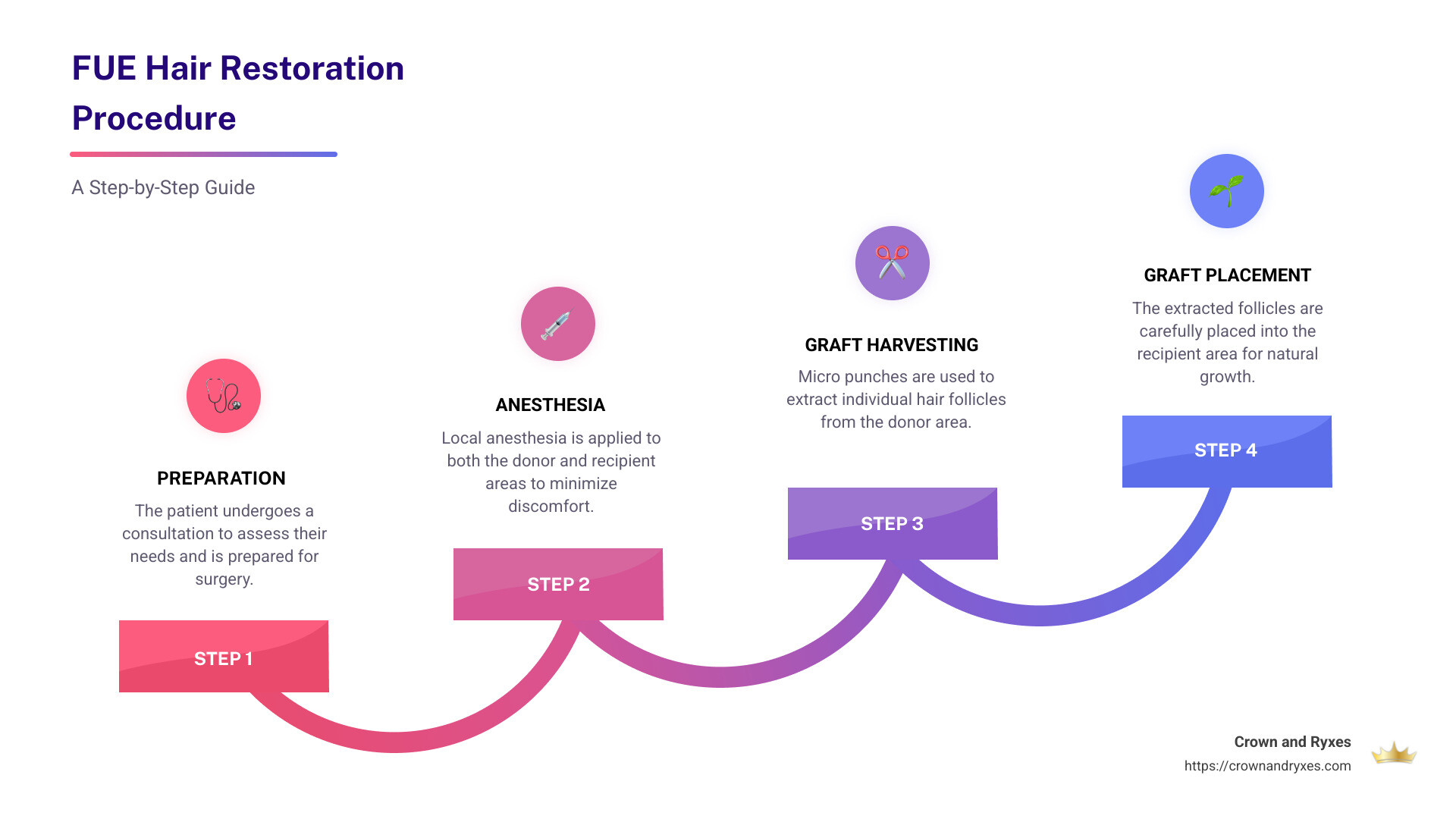
Understanding the steps involved in FUE hair restoration can help you feel more comfortable and informed about the process. Here’s a breakdown of what to expect:
Donor and Recipient Areas
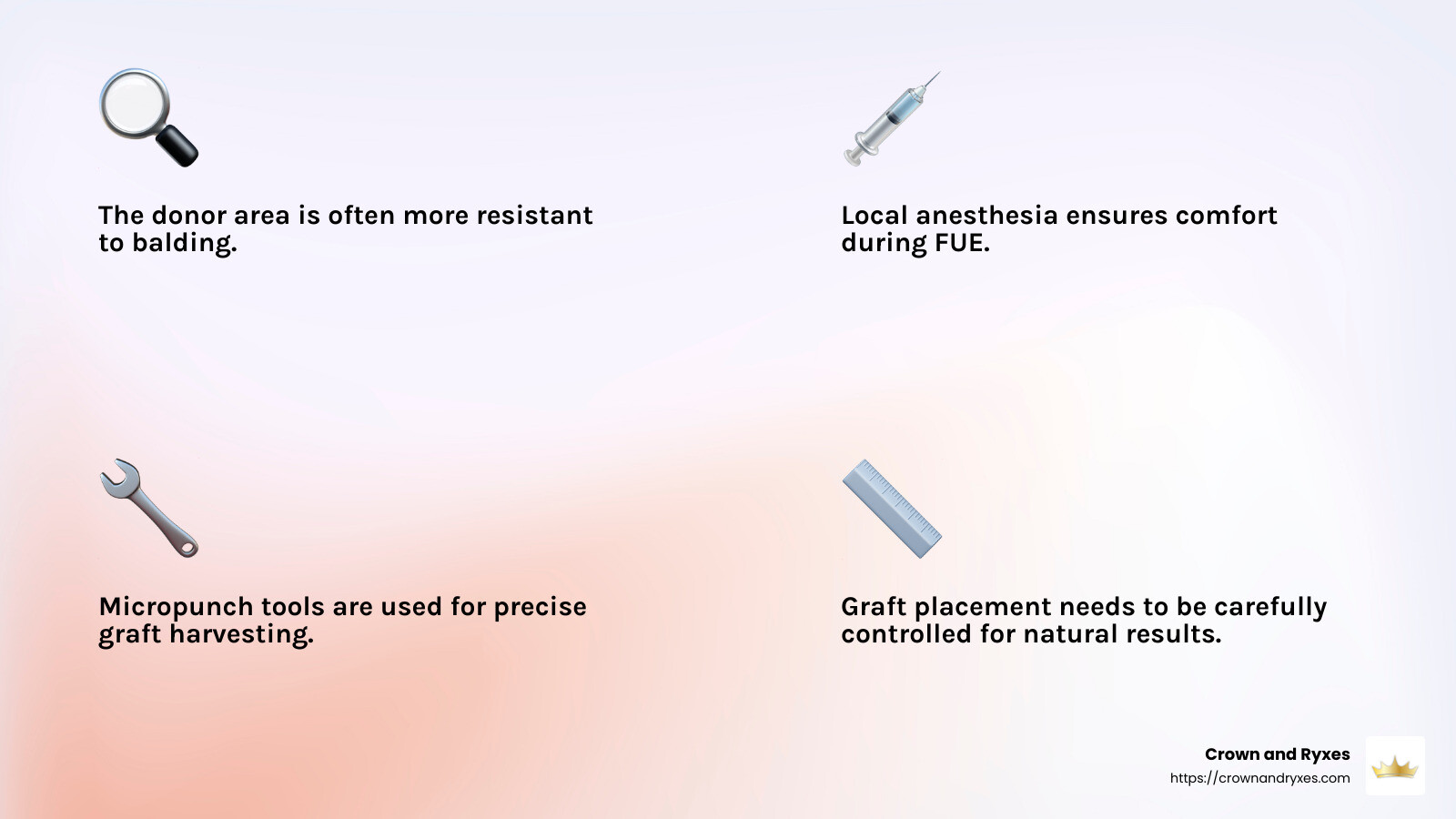
The first step in the FUE hair restoration procedure is identifying the donor and recipient areas. The donor area is typically at the back or sides of your head, where hair is more resistant to balding. The recipient area is where the hair will be transplanted, often the top or front of the scalp. Your surgeon will outline these areas and confirm the plan with you to ensure it meets your goals.
Administering Anesthesia
Once the areas are marked, the next step is administering anesthesia. Local anesthesia is used to numb the scalp, ensuring that you remain comfortable throughout the procedure. Some surgeons may also offer sedation to help you relax even further.
Graft Harvesting
With anesthesia in place, the surgeon begins graft harvesting. Using a micropunch tool, individual hair follicles are carefully extracted from the donor area. This step requires precision to avoid damaging the follicles. There are two main techniques for extraction:
- Two-Step Procedure: Involves using a sharp punch followed by forceps to gently pull out the follicle.
- Three-Step Procedure: Adds a blunt dissection step to minimize damage to the follicles, increasing the yield of healthy grafts.
Graft Placement
After harvesting, the next crucial step is graft placement. Tiny incisions are made in the recipient area, and the harvested follicles are inserted into these sites. The angle, direction, and density of the placement are carefully controlled to ensure a natural look. This part of the procedure requires experience and precision, as it determines the final appearance of your new hair.
These steps are fundamental to achieving a successful FUE hair restoration. Each stage is carefully planned and executed to ensure the best possible outcome for your hair restoration journey.
Risks and Side Effects of FUE Hair Restoration
While FUE hair restoration is a popular and effective procedure, it’s important to be aware of potential risks and side effects. Being informed helps you make the best decision for your hair restoration journey.
Overharvesting
One risk is overharvesting. This happens when too many hair follicles are taken from the donor area, leading to thinning or “see-through” patches. This is more likely if the procedure isn’t done by a skilled surgeon. It’s crucial to have a qualified professional who knows how to balance the extraction to maintain a natural look.
Scalp Cysts
Scalp cysts are another possible side effect. These are small bumps that can form when follicles are damaged or not properly placed. They are usually minor and can be treated easily, but they highlight the importance of choosing a surgeon with experience and precision in FUE techniques.
Telogen Effluvium
Some patients may experience telogen effluvium, which is temporary hair shedding after the procedure. This can be alarming, but the hair typically regrows over several months. It’s a normal response and should resolve as your scalp heals and adjusts.
Qualified Surgeon
To minimize these risks, work with a qualified surgeon. A skilled professional will have the expertise to manage these potential complications and ensure a safe and successful outcome. They will also guide you through the recovery process, providing advice on how to care for your new hair and scalp.
By understanding these risks and side effects, you can approach FUE hair restoration with confidence, knowing what to expect and how to prepare. It’s always a good idea to discuss any concerns with your surgeon to ensure you’re fully informed and comfortable with the procedure.
Ideal Candidates for FUE Hair Restoration
Choosing to undergo FUE hair restoration is a significant decision, and determine if you’re an ideal candidate. Here are the key factors that can help you decide:
Hair Stabilization
Before considering FUE, it’s important to have your hair loss stabilized. This often involves using medications like finasteride or minoxidil to manage hair thinning. Stabilization helps ensure that the transplant results are long-lasting and reduces the risk of future hair loss impacting the transplanted area.
Donor Hair Quality
The quality of your donor hair is crucial for a successful FUE procedure. Ideal candidates have a dense donor area with healthy hair follicles, usually located at the back of the scalp. These hairs are genetically resistant to hair loss, making them perfect for transplantation. The better the donor hair, the more natural and full the results will appear.
Realistic Goals
Having realistic expectations is vital. FUE can significantly improve hair density and appearance, but it may not fully restore a youthful hairline or completely stop hair loss. Discussing your goals with your surgeon ensures that you understand what can be achieved and helps align your expectations with the possible outcomes.
Medical Safety
Medical safety is a top priority. A thorough consultation with your surgeon will assess your overall health to ensure you’re fit for surgery. Conditions like uncontrolled diabetes or heart issues might complicate the procedure. Your surgeon will review your medical history to identify any potential risks and ensure a safe experience.
By considering these factors, you can determine if FUE hair restoration is the right path for you. Discussing these aspects with a skilled surgeon at Crown and Ryxes can help you make an informed decision that aligns with your hair restoration goals.
Frequently Asked Questions about FUE Hair Restoration
Is FUE hair restoration permanent?
Yes, FUE hair restoration is designed to be a permanent solution. Once the hair follicles are transplanted, they generally continue to grow for a lifetime. This is because the donor hair, usually taken from the back of the head, is genetically resistant to hair loss. However, the success of the procedure depends significantly on the skill of an experienced surgeon. A qualified professional ensures that the grafts are extracted and placed correctly, which is key to their long-term survival.
Do I have to shave my head for FUE?
In most cases, yes. Shaved FUE is the standard approach, where the donor area is shaved to allow precise extraction of hair follicles. This method makes it easier for the surgeon to work and leads to better results. However, non-shaved FUE is an option for some patients. It involves extracting hair without shaving the entire donor area, but it requires more time and is typically more expensive. Non-shaved FUE might be suitable for those who need to keep their existing hairstyle intact during the process.
What is the failure rate of FUE?
The failure rate of FUE hair restoration is generally low, especially when performed by a qualified surgeon. With modern techniques and experienced hands, the success rate is high, and complications are rare. However, it’s crucial to avoid the “black market” clinics where unlicensed technicians perform the surgery, as these places have significantly higher failure rates. Choosing a reputable clinic like Crown and Ryxes ensures that your procedure is performed safely and effectively, minimizing the risk of graft failure.
Conclusion
At Crown and Ryxes, we are committed to changing lives through personalized FUE hair restoration and comprehensive wellness solutions. Our approach is simple yet effective: combining cutting-edge technology with individualized care to meet the unique needs of each client.
Why Choose Crown and Ryxes?
Personalized Restoration Journeys: We understand that every client is unique. That’s why we tailor each hair restoration plan to fit your specific goals and needs. Whether you’re dealing with thinning hair, a receding hairline, or other hair loss concerns, our expert team is here to guide you every step of the way.
Expertise and Experience: With locations in Clermont, FL, and Lady Lake, FL, our clinics are staffed by highly skilled professionals dedicated to delivering the best results. We prioritize safety and quality, ensuring that every procedure is performed with precision and care.
Comprehensive Wellness Solutions: Beyond hair restoration, we offer a range of wellness services aimed at enhancing your overall health and confidence. Our holistic approach ensures that you not only look your best but feel your best too.
Choosing FUE hair restoration with Crown and Ryxes means investing in a solution that’s not just about restoring hair—it’s about restoring confidence and vitality. We invite you to begin your personalized restoration and wellness journey with us today. Experience the difference that expert care and personalized attention can make.