

Why Hair Loss Matters More Than You Think
Best hair fall treatment for men includes several proven options:
- Topical Minoxidil – An over-the-counter foam or liquid applied to the scalp to stimulate growth.
- Oral Finasteride – A prescription pill that blocks DHT, the hormone causing male pattern baldness.
- Hair Transplant Surgery – A permanent solution using FUE or FUT techniques.
- Platelet-Rich Plasma (PRP) Therapy – Injections that use your own blood platelets to stimulate follicles.
- Low-Level Laser Therapy (LLLT) – FDA-approved devices that use red light to promote growth.
Hair loss isn’t just about vanity. By age 35, around two-thirds of men notice some thinning, and by 50, that number jumps to 85 percent. For many, losing hair means losing confidence, affecting self-perception and social interactions.
Fortunately, we now understand why hair loss happens and what actually works to fight it.
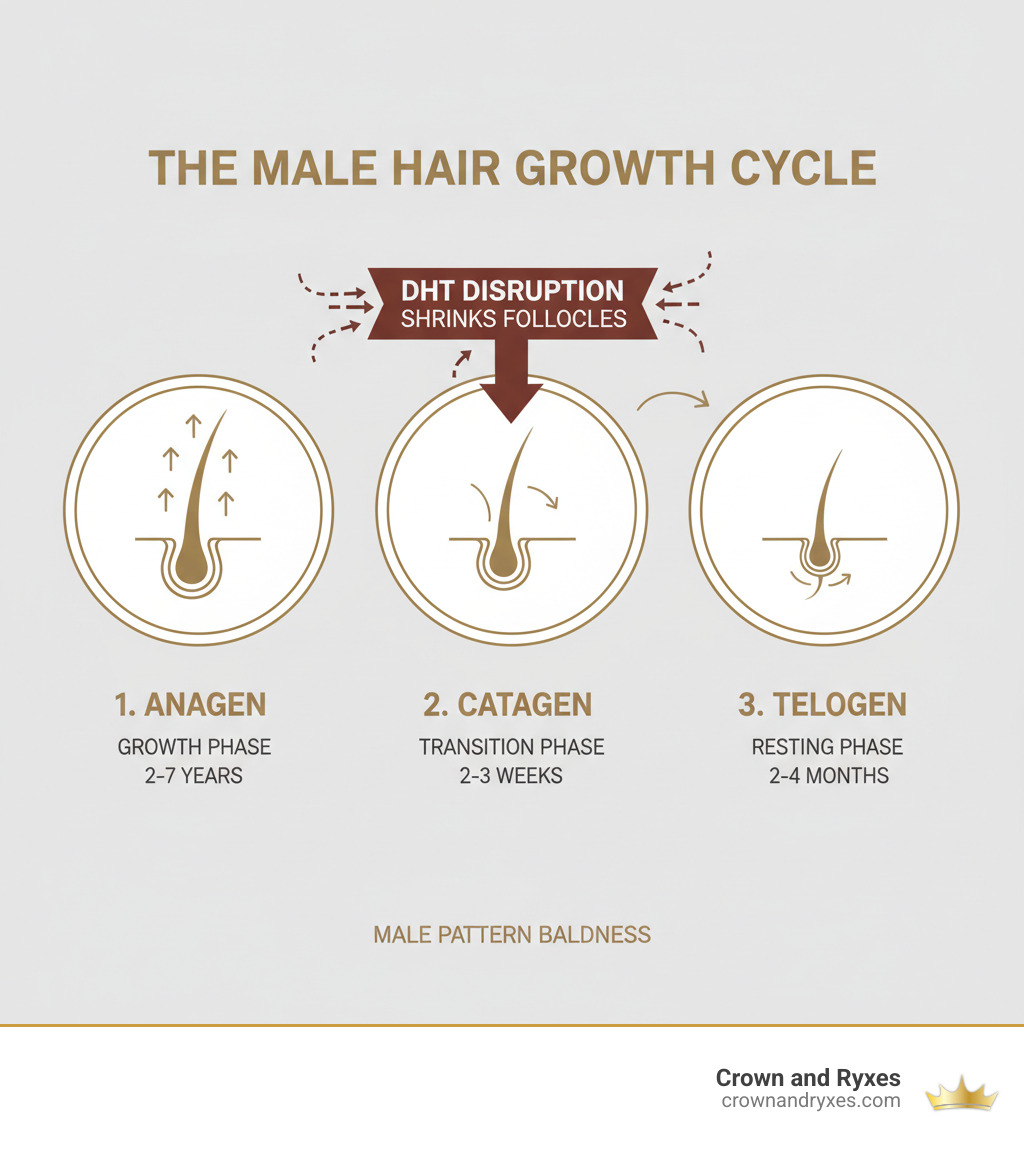
Male pattern baldness (androgenetic alopecia) is the main culprit, driven by genetics and a hormone called DHT (dihydrotestosterone). DHT shrinks hair follicles over time until they stop producing hair. The key to successful treatment is starting early with science-backed solutions proven in clinical trials.
Our experts have spent decades helping patients understand and treat hair loss. We’ve seen which best hair fall treatment for men options deliver real results, from FDA-approved medications to advanced surgical techniques. Let us guide you through what works.
Understanding Male Hair Loss: Why It Happens
If you’re noticing a receding hairline or a thinning crown, you’re not alone. By age 50, 85% of men experience significant thinning. So what’s actually happening?
The primary cause is androgenetic alopecia, or male pattern baldness. Experts agree that up to 95% of men’s hair loss is genetic. You’re likely following a familiar family pattern.
Genetics, however, work with a specific hormone: dihydrotestosterone (DHT). Your body makes DHT from testosterone. For men with a genetic sensitivity, DHT attaches to hair follicles, causing them to shrink over time in a process called miniaturization. The hair’s growth cycle shortens, strands become thinner, and eventually, the follicles stop producing hair altogether.
While genetics and DHT are the main drivers, other factors can accelerate hair loss or cause temporary shedding:
- Stress: Major physical or emotional stress can trigger telogen effluvium, a condition where large numbers of hairs are pushed into the resting phase, causing sudden, heavy shedding. This is usually temporary.
- Nutritional Deficiencies: Severe shortages of key nutrients like zinc, iron, or vitamin D can contribute to hair loss.
- Medical Conditions: Thyroid problems, autoimmune disorders like alopecia areata, and certain medications can all cause hair to fall out.
It’s normal to shed 50-100 hairs daily. But if you’re noticing significantly more shedding, patchy bald spots, or scalp irritation, it’s time to investigate. Understanding the cause is the first step toward finding the best hair fall treatment for men for your specific situation.
FDA-Approved Powerhouses: The Gold Standard Treatments
When searching for the best hair fall treatment for men, you want solutions backed by science. FDA-approved treatments are the gold standard, supported by rigorous clinical trials. The two most prominent are topical minoxidil and oral finasteride. They deliver measurable results for male pattern baldness, but consistency is key.
Topical Treatments: The Role of Minoxidil
You’ve likely heard of minoxidil, a trusted over-the-counter option for hair regrowth available in foam and liquid forms. Originally a blood pressure medication, its hair-growing side effect made it famous. As a vasodilator, minoxidil widens blood vessels on the scalp, increasing blood flow and delivering more oxygen and nutrients to follicles. It also helps prolong the hair’s growth phase and enlarge miniaturized follicles, resulting in thicker, longer hairs.
Choosing between foam and liquid is a matter of preference. Daily application is required, and stopping the treatment will reverse the gains. An initial shedding period is common but is a positive sign that weaker hairs are making way for stronger ones. For those who find topical application difficult, studies suggest oral minoxidil is an effective alternative.
Expect to see initial results in 3-6 months, with more significant changes appearing after a year of consistent use.
Oral Medications: How Finasteride Fights Hair Loss
Finasteride is a prescription medication that targets the root hormonal cause of male pattern baldness. It works by blocking the enzyme that converts testosterone into DHT. By lowering DHT levels, finasteride protects vulnerable hair follicles from shrinking. Research on Finasteride’s effectiveness for hair loss is impressive, with trials showing that 80% of men experienced hair growth after one year.
Potential side effects, though rare (affecting less than 2% of men), can include lower libido, erectile dysfunction, or mood changes. These concerns should be discussed with your doctor. For men concerned about sexual health, our REGENmax programs offer comprehensive solutions to support vitality alongside hair restoration.
Crucially, finasteride is for male use only and is never prescribed to women of childbearing age due to the risk of birth defects. Like minoxidil, finasteride requires long-term commitment to maintain results. Many men achieve the best outcome by combining both treatments for a comprehensive attack on hair loss.
The Best Hair Fall Treatment for Men: Advanced & Surgical Options
When daily medications aren’t enough, advanced in-office procedures and surgical options can deliver more dramatic, transformative results. These therapies go beyond at-home treatments, offering permanent restoration and regenerative solutions. Whether you’re in Clermont, FL, or The Villages, FL, a hair restoration specialist can create a personalized plan for your unique needs.
Hair Transplants: A Permanent Solution
For a permanent fix, hair transplant surgery is often the best hair fall treatment for men. A surgeon relocates healthy, DHT-resistant hair follicles from the back or sides of your scalp to thinning areas. These transplanted follicles are genetically programmed to keep growing for life.
There are two main techniques:
- Follicular Unit Transplantation (FUT): A strip of skin is removed from the donor area, and individual follicles are dissected and transplanted. This method is efficient for extensive hair loss.
- Follicular Unit Extraction (FUE): Individual hair follicles are extracted one by one with a punch tool. This technique is less invasive and leaves minimal, dot-like scars.
Recovery is straightforward, and both are outpatient procedures. After the transplant, the new hairs will shed before new growth begins around six to nine months later. Full, mature results are visible in 12 to 15 months. The American Academy of Dermatology Association confirms that a hair transplant can provide permanent, natural-looking results. Ongoing medication may be needed to maintain hair in non-transplanted areas.
Exploring the best hair fall treatment for men: Non-Surgical Therapies
Several powerful non-surgical options can stimulate hair growth, used either alone or with other treatments.
- Platelet-Rich Plasma (PRP) Therapy: This treatment uses growth factors from your own blood. A small blood sample is spun to concentrate the platelets, which are then injected into your scalp to awaken dormant follicles and promote thicker growth. Studies show PRP can stimulate hair growth.
- Microneedling: This procedure creates tiny, controlled injuries on the scalp to trigger the body’s healing response, stimulating growth factors and collagen that encourage hair regeneration.
- Low-Level Laser Therapy (LLLT): FDA-approved helmets, caps, or combs use red light to energize hair follicles, increase blood flow, and boost cellular metabolism. It’s a non-invasive option with virtually no side effects.
The best approach often combines therapies. For men concerned about sexual wellness and overall vitality, our REGENmax programs offer comprehensive solutions to support well-being alongside hair restoration.
Supporting Your Hair Growth Journey: Lifestyle & Supplements
Medical and surgical treatments are powerful, but a holistic approach creates the best environment for hair to thrive. Good nutrition, a healthy lifestyle, and proper hair care are essential supporting elements.
The Role of Diet and Supplements
Your hair reflects your overall health. A diet rich in protein, the primary building block of hair, is fundamental. Certain vitamins and minerals are also crucial, but supplements should be taken with care.
- Key Nutrients: Deficiencies in iron and zinc are known causes of hair loss, and supplementation can help if levels are low. Vitamin D may also play a role, especially in autoimmune-related hair loss. However, always consult a medical professional before starting any supplement, as they can determine if you have a deficiency.
- Biotin: While popular, a 2024 literature review found no good evidence that it works for hair growth in people without a deficiency. Furthermore, the FDA has issued a warning on Biotin interference with lab tests, so always inform your doctor if you are taking it.
- Natural Topicals: Gentle scalp massage can improve circulation. Rosemary oil has also shown promising results in some studies for stimulating hair growth.
For a deeper look at the science, The role of vitamins and minerals in hair loss offers comprehensive insights.
Lifestyle Factors That Make a Difference
Your daily habits lay the foundation for healthy hair.
- Manage Stress: Chronic stress raises cortisol levels, which can lead to temporary but significant hair shedding (telogen effluvium). Meditation, exercise, and adequate sleep can help manage stress.
- Be Gentle: Avoid aggressive brushing, excessive heat styling, and tight hairstyles (like braids or dreadlocks) that pull on follicles and can cause permanent damage (traction alopecia).
- Minimize Harsh Chemicals: Perms, relaxers, and excessive coloring can damage the hair shaft and scalp.
- Eat a Balanced Diet & Hydrate: A diet rich in lean proteins, fruits, and vegetables provides essential building blocks. Drinking enough water is crucial for all bodily functions, including hair growth.
- Quit Smoking: Smoking is linked to accelerated male pattern baldness as it restricts blood flow and creates inflammation.
Combining these lifestyle choices with proven medical treatments offers the most comprehensive strategy for finding the best hair fall treatment for men.
Frequently Asked Questions about Men’s Hair Loss
When dealing with hair loss, it’s natural to have questions. Here are concise answers to some of the most common ones.
When should I see a specialist for hair loss?
The earlier, the better. It’s much easier to save existing follicles than to revive ones that have shut down. Schedule an appointment with a hair restoration specialist if you notice:
- Early signs of thinning, like a receding hairline or widening part.
- Sudden or patchy hair loss, which could signal an underlying condition.
- Scalp irritation, such as itching, redness, or pain.
- You are considering prescription or surgical options and need expert guidance.
How do men’s and women’s hair loss treatments differ?
While some treatments overlap, the approaches are different due to distinct causes and patterns.
- Pattern: Men typically see a receding hairline and crown thinning. Women usually experience diffuse thinning across the scalp.
- Causes: Men’s hair loss is primarily driven by genetics and DHT. Women’s hair loss is more often linked to hormonal fluctuations (like postpartum changes or thyroid issues).
- Medications: Finasteride is for men only and is strictly contraindicated for women due to the risk of birth defects. Minoxidil dosage also differs, with women often starting at a lower concentration.
What is the typical timeline for seeing results from the best hair fall treatment for men?
Patience is essential, as hair growth is a slow process. Here’s a general timeline:
- Topical & Oral Medications (Minoxidil/Finasteride): Initial improvements may appear in 3-6 months, with more significant results visible at 6-12 months. Use must be continuous to maintain results.
- PRP & LLLT: Visible results typically appear within 3-6 months of starting a consistent treatment schedule.
- Hair Transplants: This requires the most patience. After an initial shedding phase, new growth begins around 6-9 months post-surgery. Full, mature results are seen at 12-15 months.
Across all treatments, consistency is the key to achieving the best possible outcome.
Conclusion: Taking the Next Step Towards a Fuller Head of Hair
You now have the power of knowledge. Hair loss doesn’t have to be an inevitable decline. You understand the science behind DHT and are aware of the best hair fall treatment for men, from FDA-approved medications like minoxidil and finasteride to permanent surgical solutions and regenerative therapies like PRP.
What matters most is that early action changes everything. The sooner you address hair loss, the more hair you can save. That first sign of thinning is your window of opportunity.
The right path forward is personal. It depends on your genetics, goals, and lifestyle. That’s where personalized care makes all the difference.
At Crown and Ryxes, we don’t use cookie-cutter solutions. We create customized wellness blueprints that combine cutting-edge medical science with a personal approach. Whether you’re exploring medications, considering advanced procedures, or looking to optimize your overall health—including our REGENmax programs for sexual wellness and comprehensive men’s vitality—we are here to guide you.
Regaining control over your hair loss can rebuild your confidence. If you’re in Clermont, FL, or The Villages, FL, and are ready to take the next step, our team is here to help.
Visit our dedicated page on men’s hair restoration services to learn more. Your future self—looking in the mirror with renewed confidence—will thank you.