

Understanding Male Hair Loss: Causes and Solutions
Looking in the mirror to see your hairline receding can be a tough moment. You’re not alone in this experience – nearly 90% of men will face some degree of hair loss during their lifetime, often beginning in their late twenties or early thirties. By the time men reach 50, more than half are already showing visible signs of thinning hair.
The search for the best hair loss treatment for male pattern baldness isn’t one-size-fits-all. Your ideal solution depends on several factors: the underlying cause, how far your hair loss has progressed, and your personal health profile.
| Top Evidence-Based Treatments | Effectiveness | Timeline for Results |
|---|---|---|
| Oral Dutasteride (0.5mg daily) | Highest ranking in meta-analysis | 3-6 months |
| Oral Finasteride (1mg daily) | 80-90% slow progression | 3-6 months |
| Topical Minoxidil (5%) | Effective for 60% of users | 4-6 months |
| Hair Transplant (FUE/FUT) | Permanent solution | 6-12 months |
| Platelet-Rich Plasma (PRP) | Moderate evidence | 3-6 months |
Male pattern baldness (androgenetic alopecia) primarily stems from two factors: your genetics and a hormone called dihydrotestosterone (DHT). This hormone gradually shrinks your hair follicles until they stop producing visible hair – a process called miniaturization. The thinning typically follows predictable patterns, starting at the temples or crown.
Here’s the encouraging news – modern science offers several effective solutions that can help. But I can’t stress this enough: early intervention yields the best results. The sooner you address hair loss, the more options you’ll have.
As my colleague Dr. Amy McMichael wisely points out: “The best medication is the one that the patient will be compliant with, since we are still much better at keeping the hair they have than turning back the hands of time.“
I’m Dr. Matthew Casavant, and throughout my practice, I’ve guided countless men through this journey. My approach focuses on finding the best hair loss treatment for male pattern baldness through evidence-based strategies and personalized care plans that fit your specific needs and lifestyle.
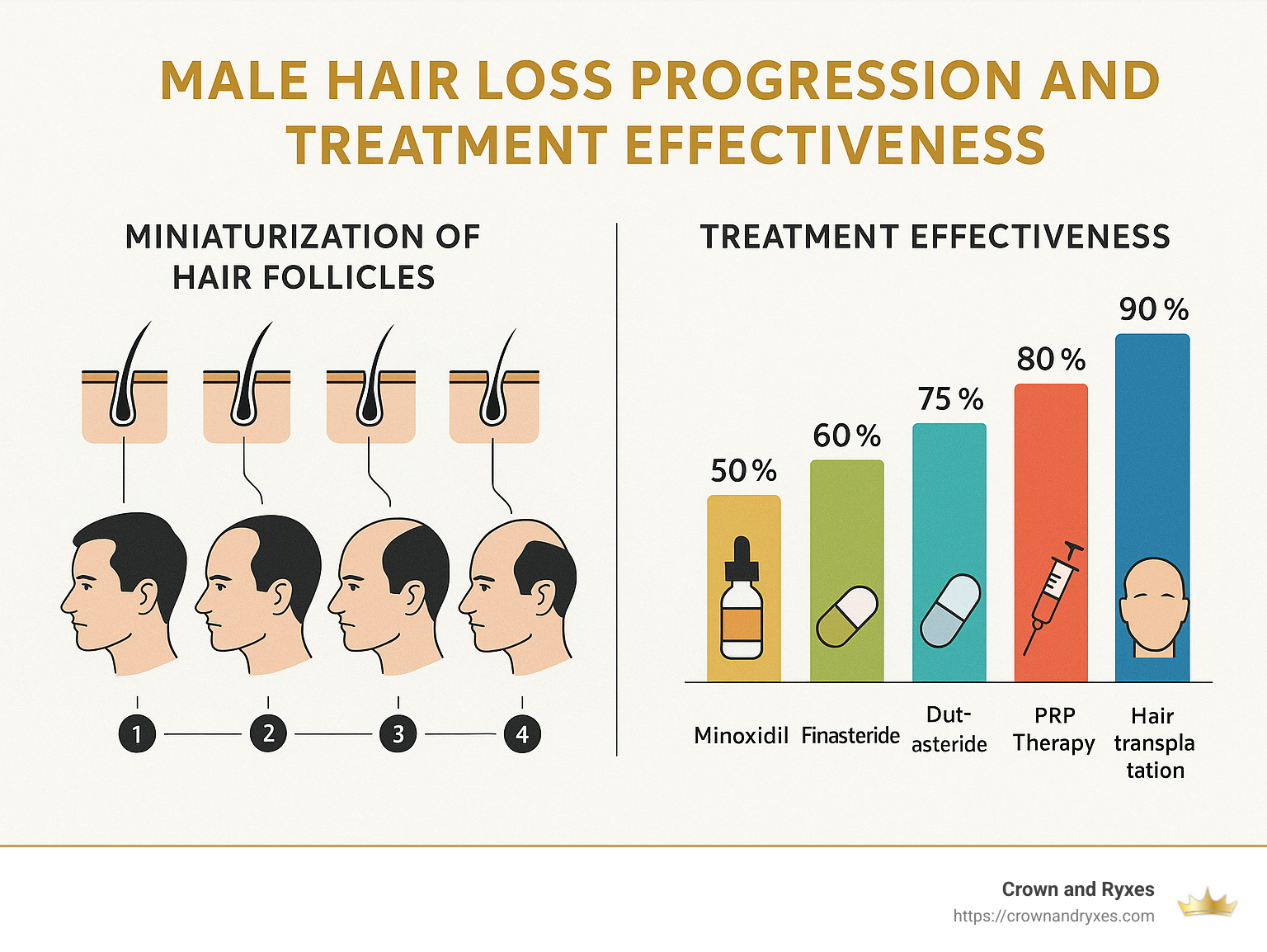
Finding your way through the many available treatments can feel overwhelming. To help simplify your journey to hair recovery, explore our comprehensive resources on hair loss treatments and specific approaches to male pattern baldness treatment.
Understanding what’s happening to your hair is the first step toward addressing it effectively. In the sections that follow, we’ll dive deeper into each treatment option to help you make an informed decision about which path might be right for you.
Best Hair Loss Treatment for Male: Quick Comparison Table
Let’s face it – navigating hair loss treatments can feel overwhelming. With so many options promising results, how do you know which one is right for you? I’ve helped hundreds of men through this journey, and I’ve found that understanding how treatments compare is the first step toward success.
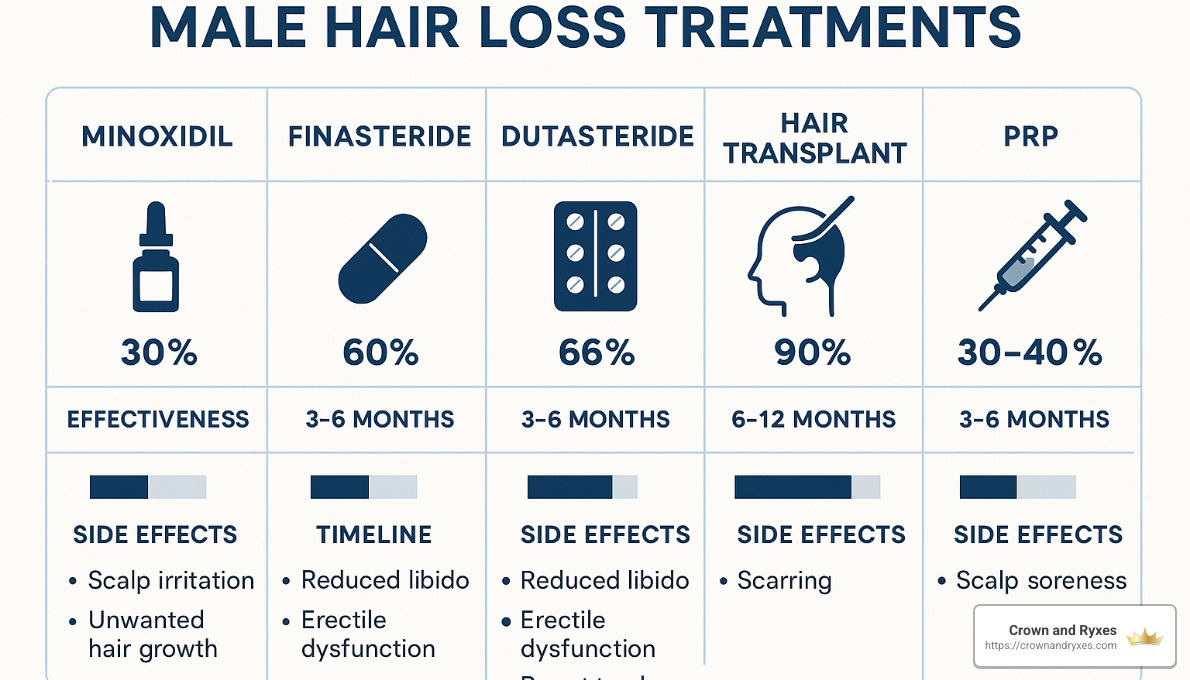
Take a look at this comprehensive breakdown of today’s most proven treatments:
| Treatment | Effectiveness | Timeline | Monthly Cost | Side Effects | Best For |
|---|---|---|---|---|---|
| Minoxidil 5% | 60% see results | 4-6 months | $20-50 | Scalp irritation, initial shedding | Early thinning, crown area |
| Finasteride 1mg | 80-90% halt progression | 3-6 months | $20-75 | Sexual dysfunction (2-4%) | Early to moderate loss |
| Dutasteride 0.5mg | Highest in meta-analysis | 3-6 months | $40-120 | Sexual side effects (slightly higher than finasteride) | Refractory cases |
| PRP Therapy | Moderate evidence | 3-6 months | $300-700 per session | Minimal, temporary pain | Adjunct therapy |
| Microneedling | Improves other treatments | 3-4 months | $30-300 | Temporary redness | Combined with topicals |
| Laser Therapy | Mixed evidence | 3-6 months | $25-80 (after device purchase) | None significant | Mild to moderate loss |
| FUE Transplant | 90-95% graft survival | 6-12 months for full results | $4,000-15,000 (one-time) | Temporary swelling, scarring | Advanced pattern loss |
What makes a treatment the “best hair loss treatment for male”?
Truth is, there’s no one-size-fits-all answer. What works brilliantly for your friend might not be right for you. When I consult with patients at Crown and Ryxes, we consider several personal factors before recommending a treatment path.
Scientific evidence matters tremendously. The treatments with the strongest research backing are finasteride, minoxidil, and dutasteride – these have been studied extensively and have predictable outcomes. As one specialist put it, “We don’t have randomized clinical trials that compare these medications for male pattern baldness against one another, which would be ideal.”
Safety considerations should never be overlooked. Even the best hair loss treatment for male pattern baldness comes with potential trade-offs. The good news? Most side effects are rare and often reversible when treatment stops.
Your lifestyle and commitment level play a huge role in success. I’ve seen men achieve amazing results with simple treatments they use faithfully, while more “powerful” options fail for those who can’t maintain the routine. Be honest with yourself – will you really apply that topical solution twice daily, every day?
Age and hair loss progression significantly impact which treatment will work best. Younger men in early stages typically respond beautifully to medications, while more advanced loss might benefit from combining approaches or considering surgical options.
Finally, budget reality matters. While we’d all love unlimited resources for health, most of us need to balance effectiveness with affordability. Some insurance plans cover certain treatments, while others are entirely out-of-pocket expenses.
At Crown and Ryxes, we believe finding the best hair loss treatment for male pattern baldness is a personal journey. Our approach focuses on education, realistic expectations, and creating a customized plan that fits your specific situation. In the following sections, we’ll explore each treatment option in greater detail so you can make an informed decision about your hair restoration journey.
1. FDA-Approved Essentials: Minoxidil & Finasteride
When it comes to fighting male hair loss, two treatments have earned their stripes with solid science behind them: minoxidil and finasteride. These aren’t just popular options – they’re the only treatments that have received the FDA’s official stamp of approval specifically for male pattern baldness, backed by decades of research.
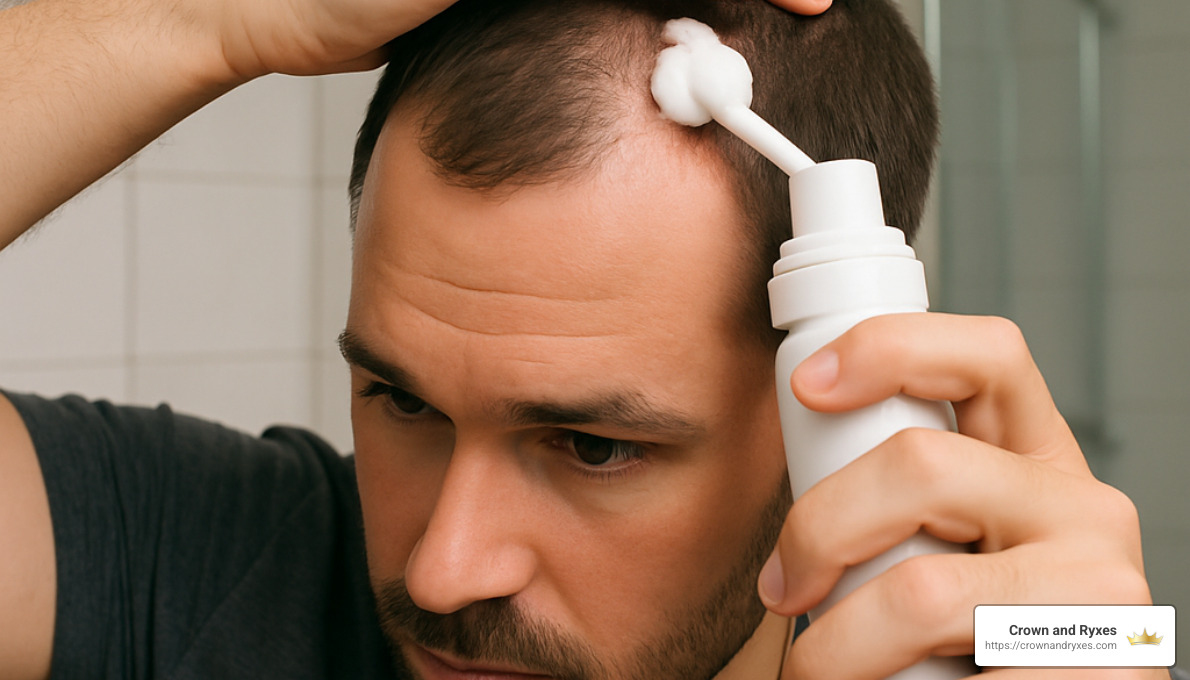
Minoxidil (you might know it as Rogaine) works like a traffic controller for your scalp, directing more blood flow to your hungry hair follicles. It’s a fascinating medical accident – scientists originally developed it for high blood pressure but noticed patients mysteriously growing more hair. Today, the 5% foam or liquid version has become a twice-daily ritual for men serious about keeping their hair.
About 60% of men who stick with minoxidil see real results – less hair in the drain and new growth especially on the crown area. But patience is key – you’ll typically wait 4-6 months before celebrating any visible improvement.
Meanwhile, finasteride (commonly known as Propecia) tackles the problem from a different angle. This 1mg daily pill goes after the hormonal culprit behind your thinning hair. It blocks the conversion of testosterone to DHT – that troublemaking hormone that’s slowly shrinking your follicles.
The numbers for finasteride are even more impressive. Clinical studies show it slows hair loss in 80-90% of men, with about two-thirds actually gaining new growth. It works particularly well for younger men under 40, and like most things in life, catching the problem early pays off.
One of our patients, Philip, put it this way: “I noticed my hairline sneaking backward in my late twenties. After six months using both finasteride and minoxidil foam, not only did the shedding stop, but I actually saw new hairs appearing along my temples. I wish I’d started sooner.”
Is combined minoxidil + finasteride the best hair loss treatment for male early stages?
For men just beginning to notice thinning hair, combining these two powerhouse treatments often delivers better results than using either one alone. It’s like attacking the problem from two directions:
Finasteride works internally to reduce DHT production – addressing the root cause – while minoxidil works externally to stimulate new growth. They complement each other beautifully, with finasteride typically showing stronger results on the hairline while minoxidil excels at revitalizing the crown.
Studies consistently show this dynamic duo produces results greater than what you’d expect from simply adding their individual benefits together. It’s a true case of 1+1=3.
Before you dive in, though, there are a few things worth knowing:
You might experience a brief “shedding phase” during the first few weeks. Don’t panic! This actually signals the treatments are working, pushing weak hairs out to make way for stronger ones.
About 2-4% of men on finasteride report some sexual side effects – reduced libido, erectile difficulties, or ejaculation issues. The good news is these typically resolve if you stop the medication.
Consistency is absolutely critical with both treatments. They’re more like ongoing maintenance than one-time fixes. Stop using them, and you’ll likely lose your hard-won gains within 6-12 months.
At Crown and Ryxes, we offer personalized Topical Solutions for Hair Loss that can be customized to your specific needs, including convenient combination formulations that make sticking to your routine easier.
As Dr. Amy McMichael wisely notes: “The best medication is the one that the patient will be compliant with… we are still much better at keeping the hair they have than turning back the hands of time.”
Dr. Natalie Kash, who specializes in hair restoration, agrees with this multi-angle approach: “The more ways you can act on the pathways contributing to hair loss the better, and I often see patients on multiple types of therapy have better results.”
Want to learn more about how minoxidil works? Check out this scientific research on minoxidil from trusted medical sources.
2. Heavyweight Option: Oral Dutasteride
When finasteride doesn’t deliver the results you’re hoping for, dutasteride steps in as the more powerful option in your hair loss battle. While not FDA-approved specifically for hair loss (it’s currently approved for prostate enlargement), many doctors prescribe dutasteride off-label when men need something stronger.

What makes dutasteride special is its dual-action approach. As a dual 5-alpha reductase inhibitor, it blocks both type I and type II enzymes involved in converting testosterone to DHT. Finasteride, on the other hand, only blocks type II. This double-blocking power allows dutasteride to reduce DHT levels by up to 90%, compared to finasteride’s 70%.
The results speak for themselves. A comprehensive meta-analysis of 23 studies found that 0.5 mg daily oral dutasteride had the highest probability of reducing male hair loss among all non-surgical treatments. That’s pretty impressive!
Michael, a 42-year-old patient at our Clermont location, couldn’t agree more: “After two years on finasteride with minimal results, my doctor suggested switching to dutasteride. Within four months, I noticed significantly less shedding and new growth along my hairline that I hadn’t seen in years.”
When does dutasteride become the best hair loss treatment for male refractory cases?
Not everyone needs to jump straight to dutasteride. It’s typically best for specific situations:
If you’ve used finasteride faithfully for at least a year without seeing the results you want, dutasteride might be your next step. Men experiencing aggressive hair loss that continues despite finasteride use often find relief with this stronger option. It’s also helpful for those with more extensive hair loss who still have viable follicles that could bounce back with the right treatment.
Before starting dutasteride, there are some important things to consider. The sexual side effects occur slightly more often than with finasteride (about 5-7% compared to 2-4%). If you’re over 50, you’ll want to have a thorough discussion about prostate health, as dutasteride can mask prostate cancer markers, making regular PSA (prostate-specific antigen) checks important.
Another consideration is dutasteride’s staying power in your system. With a half-life of about 5 weeks (compared to finasteride’s 1 day), any side effects may take longer to resolve if you decide to stop treatment.
At Crown and Ryxes, we never rush into prescribing dutasteride. We take time for thorough evaluations, detailed discussions about what you can expect, monitoring plans, and potential side effects. Your safety always comes first when considering this potent treatment option.
As Dr. Anthony Rossi points out, “This meta-analysis is important. We don’t have randomized clinical trials that compare these medications for male pattern baldness against one another, which would be ideal.” This highlights why we focus on personalized treatment plans rather than one-size-fits-all approaches.
The best hair loss treatment for male pattern baldness often depends on how you’ve responded to other treatments first. Dutasteride may be the heavyweight champion you need when other options haven’t delivered the results you’re looking for.
3. Regenerative Therapies: PRP, Microneedling & Laser
Ready to go beyond basic medications? Let’s explore some cutting-edge options that are changing the game for men dealing with hair loss. These regenerative approaches can work wonders either on their own or as powerful sidekicks to your existing hair loss regimen.
Platelet-Rich Plasma (PRP)
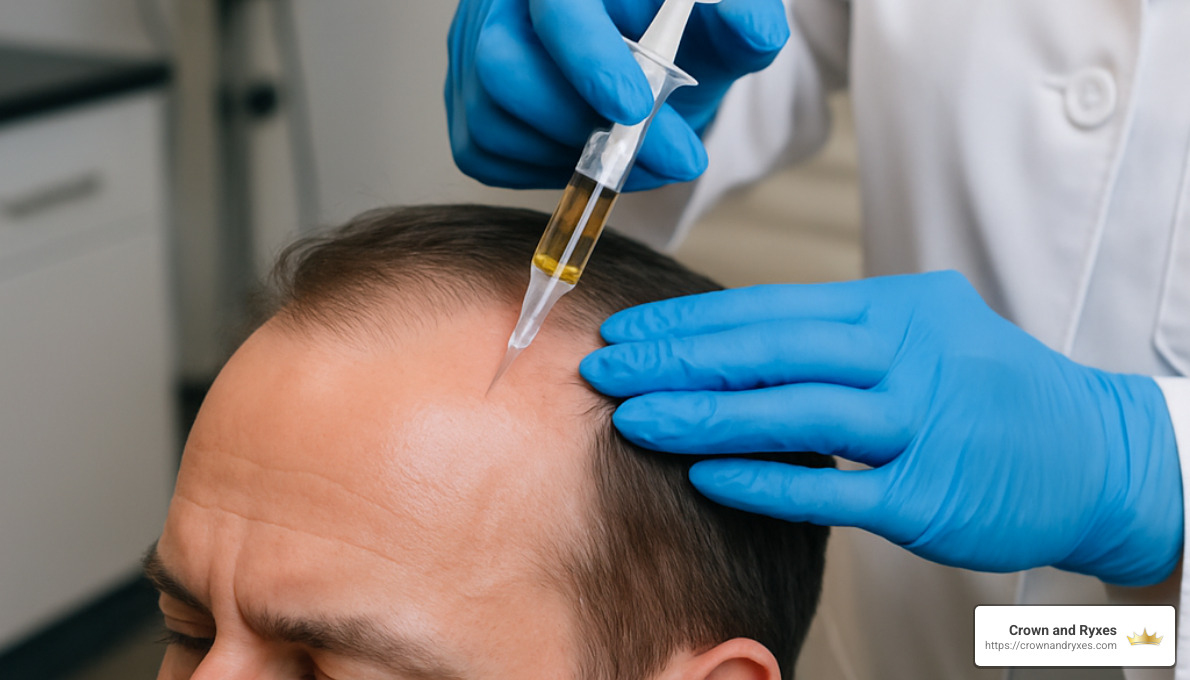
Imagine using your body’s own healing powers to revitalize your hair. That’s exactly what PRP therapy does! During this treatment, we draw a small amount of your blood (don’t worry, it’s quick), process it to concentrate those powerful platelets, and then inject this growth-factor-rich solution right where you need it most – your scalp.
James, one of our Lady Lake regulars, couldn’t be happier with his results: “After my third PRP session, my wife noticed my hair looked thicker overall. Six months in, I’m seeing new growth I hadn’t had in years, especially combined with my daily minoxidil routine.”
The typical treatment schedule involves monthly sessions for the first three months, followed by maintenance treatments every 3-6 months. While research quality varies, a 2019 review confirmed that PRP can genuinely reduce hair loss for many men.
Curious about what PRP could do for you? Learn more about our approach to PRP Hair Treatment.
Microneedling
Don’t let the name intimidate you! This minimally invasive procedure uses tiny needles to create controlled micro-injuries to your scalp. These tiny pricks stimulate collagen production and improve blood flow to your hair follicles – essentially waking them up from their slumber.
The real magic happens when you combine microneedling with topical treatments like minoxidil. Clinical studies show that men who used this dynamic duo saw significantly better results than those using minoxidil alone. Most of our patients undergo microneedling every 1-3 weeks, depending on their personalized treatment plan.
Low-Level Laser Therapy (LLLT)
Who knew wearing a special cap could help regrow your hair? FDA-cleared laser devices – including caps, combs, and helmets – use specific red light wavelengths to stimulate those sleepy hair follicles. Best of all, these devices are completely non-invasive and can be used in the comfort of your own home.
As Dr. Robert Finney explains: “Certain wavelengths of red light have been well studied in clinical trials and have been proven to help reverse signs of genetic hair loss.”
I know what you’re thinking – wearing a laser device might seem a bit strange at first. But many of our patients quickly incorporate it into their evening routine, perhaps while watching TV or answering emails. The convenience factor is huge, especially for busy professionals.
Want to learn if laser therapy might be right for you? Check out more about Laser Hair Therapy at Crown and Ryxes.
Stacking procedures for the best hair loss treatment for male moderate thinning
For guys with moderate thinning, combining these approaches often delivers the most impressive results. Think of it as a multi-pronged attack on hair loss:
PRP + Microneedling creates a powerful synergy, improving the delivery of those growth factors directly to your hair follicles. Many of our patients report noticing thicker, fuller hair after just a few combined sessions.
Microneedling + Minoxidil is another winning combination. Studies show significantly improved minoxidil absorption when paired with microneedling – essentially helping your topical treatment work even harder for you.
At Crown and Ryxes, many of our patients achieving the best results follow what we call our “comprehensive approach” – a personalized regimen typically including an oral medication (finasteride or dutasteride), daily minoxidil application, quarterly PRP treatments, monthly microneedling sessions, and daily low-level laser therapy.
Before jumping in, there are a few things worth considering:
Insurance coverage is limited. Most regenerative treatments are considered cosmetic and typically aren’t covered by insurance plans.
Commitment matters. These therapies require regular sessions to maintain those hair-raising results (pun intended!).
Evidence is evolving. While promising, research on some regenerative therapies is still developing, with study quality varying across treatments.
Costs vary widely. Treatment expenses range from a one-time investment in a laser device ($300-$3,000) to ongoing PRP sessions ($300-$700 per treatment).
At Crown and Ryxes, we don’t believe in one-size-fits-all solutions. Instead, we work with you to create a customized treatment plan that strategically combines these regenerative approaches with proven medications. Our goal? Maximum results that respect both your budget and lifestyle preferences.
4. Permanent Restoration: FUE & SmartGraft Transplants
For men with significant hair loss or those seeking a permanent solution, hair transplantation represents the gold standard. Modern techniques have evolved dramatically from the noticeable “plug” look of earlier decades to create natural, undetectable results.

Follicular Unit Extraction (FUE)
FUE is a minimally invasive technique where individual hair follicles are harvested from the donor area (typically the back and sides of the head) and precisely implanted into thinning or bald areas. This method leaves tiny, virtually invisible scars rather than the linear scar associated with older techniques.
When Tom came to us at 52, he was hesitant about surgery after seeing his father’s obvious “doll hair” transplant from the 1980s. We showed him recent before-and-afters, and he was amazed by how far the technology has advanced. “I can’t believe how natural these look,” he told us. “No one would ever know these guys had work done.”
The magic of FUE lies in its precision. Each follicular unit contains 1-4 hairs, and our specialists carefully place each graft at the proper angle and direction to match your natural hair pattern. The tiny extraction sites heal quickly, leaving virtually no visible scarring.
Recovery is relatively comfortable too. Most patients return to work within 3-5 days, though we recommend avoiding strenuous exercise for about two weeks. You can learn more about our approach to FUE Hair Restoration on our dedicated service page.
SmartGraft Technology
SmartGraft represents the cutting edge of hair transplantation, using an advanced system that harvests, counts, sorts, and stores grafts in a temperature-controlled, hydrated environment before implantation. Think of it as giving your precious hair follicles first-class treatment during their journey to their new home.
“I was back at the office four days after my SmartGraft procedure,” shares David, a 45-year-old patient from our Clermont location. “The recovery was much easier than I expected, and now, nine months later, my results look completely natural—even my barber can’t tell which hairs were transplanted.”
What makes SmartGraft special is the technology’s gentle handling of your follicles. Traditional methods can leave grafts exposed to air and dehydration, reducing survival rates. SmartGraft keeps them in an optimal environment until the perfect moment for placement, resulting in healthier transplants and better growth.
For busy professionals, the reduced downtime and faster procedure are game-changers. Learn more about our SmartGraft Hair Transplant approach and what makes it different from other options.
Are transplants the ultimate best hair loss treatment for male advanced baldness?
For men with advanced hair loss patterns, transplantation often provides the most dramatic and satisfying results. However, not everyone is an ideal candidate right away.
Donor hair availability is crucial—you need sufficient hair in the back and sides of your head to relocate to thinning areas. Men with extensive baldness but limited donor hair might need to adjust their expectations about coverage.
Hair characteristics play a significant role too. If you have coarse, wavy hair, you’re in luck—these hair types typically provide better coverage than fine, straight hair. During your consultation, we’ll assess your hair type and discuss realistic outcomes.
Age and progression considerations are important. If you’re in your 20s and just beginning to thin, we might recommend stabilizing your loss with medications before considering surgery. This prevents the awkward situation where transplanted hair remains while surrounding native hair continues to thin.
“I waited until I was 40 to get my transplant,” explains Michael from The Villages. “Dr. Casavant recommended I use finasteride for a year first to slow down my loss. Best advice ever—now my results look completely natural because we had a solid plan.”
The journey to new hair isn’t overnight. Initial healing takes 7-10 days, followed by a shedding phase at 2-4 weeks that can be emotionally challenging but is completely normal. New growth begins around month 3-4, with noticeable improvement by month 6. Your final results emerge around 12-15 months post-procedure—just in time to show off at next year’s holiday parties.
While transplanted hair is permanent, your existing native hair may continue to thin without ongoing medical therapy. That’s why at Crown and Ryxes, we often recommend continuing with medications even after successful transplantation. This comprehensive approach ensures you maintain your results for years to come.
Whether you’re just beginning to research options or ready to schedule a consultation, our team is here to guide you through every step of the restoration journey with honest advice and exceptional care.
5. Lifestyle, Supplements & Maintenance
Beyond medications and surgical interventions, your everyday habits play a surprising role in your hair health journey. Think of these lifestyle factors as the foundation that helps your primary treatments work even better.

Nutritional Support for Hair Health
Your hair is literally made from what you eat. While popping supplements won’t magically regrow a full head of hair, addressing specific deficiencies can make a noticeable difference.
Biotin gets all the attention in hair care circles, and for good reason – this B-vitamin helps produce keratin, the protein that forms your hair structure. But here’s what most people don’t realize: biotin supplements mainly help if you’re already deficient. For most guys with normal diets, extra biotin might not move the needle much.
Vitamin D deserves more attention than it gets. Many men with thinning hair show low vitamin D levels when tested. During winter months especially, supplementation might be worth discussing with your doctor.
I’ve seen several patients improve their hair quality after addressing iron deficiencies, particularly vegetarians or men with digestive issues. A simple ferritin test can tell if this might be helping your hair loss.
Zinc plays a crucial role in tissue repair and growth. Your hair follicles are constantly regenerating, and without adequate zinc, this process can falter. Oysters, beef, and pumpkin seeds are excellent natural sources.
Many of my patients ask about saw palmetto. Research suggests this herb may help block DHT production – the same mechanism as prescription finasteride, though much less potent. One promising study found 60% improvement in overall hair quality and an impressive 82% increase in hair density with consistent use.
Scalp Care and Massage
Your scalp is the soil where your hair grows – and it deserves some TLC.
A simple 4-5 minute daily scalp massage can work wonders. It sounds too simple to be effective, but the science backs it up. Massage increases blood flow to your follicles, distributes natural oils, and may strengthen follicles over time.
“I was skeptical about scalp massage at first,” shares Mark, one of our patients from The Villages. “But after adding it to my evening routine while watching TV, I’ve noticed less shedding and my scalp feels healthier. It’s also surprisingly relaxing.”
A survey of 340 people found that 68% experienced either stabilization or perceived growth after consistent scalp massage – about 36 hours total over 6 months. That’s just a few minutes daily for potentially noticeable results.
Lifestyle Modifications
Some daily habits can silently sabotage your hair restoration efforts.
Smoking has a clear link to accelerated balding. The chemicals in cigarettes damage hair follicles and compromise blood flow to the scalp. If you needed another reason to quit, your hairline just provided one.
Chronic stress wreaks havoc on your body, including your hair. While some stress is unavoidable, finding healthy ways to manage it – whether through exercise, meditation, or simply better sleep – can help prevent stress-related shedding.
A balanced diet rich in proteins, healthy fats, and antioxidants provides the building blocks your body needs for hair growth. Think salmon, eggs, avocados, nuts, and plenty of colorful vegetables.
Your daily hair care routine matters too. Harsh styling products, excessive heat, and tight hairstyles can damage hair and even cause traction alopecia over time. Gentle shampoos and lukewarm water are kinder to your remaining hair.
For more comprehensive approaches beyond medications, check out our Non-Surgical Hair Restoration Options.
Keeping results long-term: routine after finding your best hair loss treatment for male
Finding effective treatments is just the beginning – maintaining your results requires ongoing commitment.
Medication adherence makes or breaks your results. Even the best hair loss treatment for male pattern baldness only works when used consistently. Many guys see results fade when they get casual about their routine. Setting phone reminders or linking application to another daily habit (like brushing teeth) can help.
Regular follow-up appointments allow us to fine-tune your treatment plan as your hair and body change over time. What worked perfectly at 30 might need adjustments at 40.
Most successful long-term patients use combination therapy rather than relying on a single approach. As Dr. Melissa Patterson explains, “Hair loss is multifactorial, so the most successful treatment plans address it from multiple angles.”
Monitoring for side effects is crucial for both safety and compliance. Sometimes a simple adjustment in dosage or formulation can eliminate an unwanted side effect while preserving benefits.
Taking consistent photos in the same lighting every few months provides objective evidence of your progress. Our brains adapt to gradual changes, making it hard to notice improvements without visual documentation.
“What I appreciate most about Crown and Ryxes,” shares Thomas, a patient from our Lady Lake location, “is their comprehensive approach. They didn’t just prescribe medication and send me on my way—they helped me understand how my diet, stress levels, and even my shampoo were affecting my hair.”
The journey to maintain your hair is a marathon, not a sprint. With the right combination of medical treatments, healthy habits, and professional guidance, you can enjoy better hair not just for a season, but for years to come.
Frequently Asked Questions about Male Hair Loss Treatments
How long does it take to see results?
When you’re investing time and money into hair loss treatments, it’s natural to wonder when you’ll actually see improvement. The reality is that hair grows slowly—only about half an inch per month—and different treatments work on different timelines.
With minoxidil, most men start noticing fewer hairs on their pillow and in the shower after 4-6 months of consistent use. The full benefits typically appear around the one-year mark.
If you’re taking finasteride or dutasteride, you’ll likely notice the shedding slows down within 3-6 months. Actual regrowth becomes visible for most men between 6-12 months of daily use.
For regenerative treatments like PRP therapy, most of my patients report improvements after completing their third monthly treatment. The results continue to improve, with optimal results appearing between 6-12 months.
Microneedling works best as a complementary treatment, boosting the effectiveness of topicals. Most men see improved results after 3-4 months of combined therapy.
With laser therapy, the changes tend to be more subtle, with improvements in hair quality and reduced shedding noticeable around the 3-6 month mark.
If you’ve opted for a hair transplant, patience is especially important. New growth typically begins around months 3-4, but the transplanted hairs start out fine and colorless before developing into thicker, pigmented strands. Your final results will appear around 12-15 months post-procedure.
As Dr. Amy McMichael wisely points out, “We are still much better at keeping the hair they have than turning back the hands of time.” This highlights why early treatment is so crucial for the best hair loss treatment for male pattern baldness.
Can completely bald areas regrow hair?
This is one of the most common questions I hear in consultations, and the answer depends largely on timing. Think of your hair follicles like plants—they can bounce back from neglect, but only if they haven’t completely died.
For areas that have thinned within the last 3-5 years, there’s generally good potential for regrowth with medications like finasteride and minoxidil. The follicles are still alive but producing miniaturized hairs that may be nearly invisible.
Areas that have been bald for more than 5 years present a bigger challenge. The follicles may have significantly atrophied, making non-surgical regrowth limited. You might see some improvement with aggressive combination therapy, but expectations should be modest.
For completely bald areas where follicles are no longer producing any visible hair, transplantation typically offers the most reliable solution. The procedure essentially relocates healthy follicles from donor areas to restore growth where it’s been lost.
I always tell my patients that the key factor is whether hair follicles are still present and capable of being stimulated. Once follicles have completely atrophied, even the best hair loss treatment for male pattern baldness can’t bring them back without surgical intervention.
When should I see a dermatologist?
When it comes to hair loss, timing is everything. The earlier you seek professional help, the more options you’ll have and the better your results will likely be.
I recommend scheduling a consultation if you notice increased hair shedding (more than 100 hairs per day), which you might observe on your pillow, in the shower drain, or on your hairbrush. Don’t wait until others start noticing your thinning hair.
If your hairline is beginning to recede or your crown is becoming more visible, these are clear signs to seek professional advice. The same goes if you have a strong family history of baldness and want to take preventative measures—being proactive can save you a lot of hair in the long run.
Pay special attention if your hair loss seems sudden or appears in patches, as this may indicate conditions other than male pattern baldness that require different treatments. Similarly, if you experience scalp symptoms like itching, burning, or visible inflammation alongside hair loss, a dermatologist can help identify the underlying cause.
Young men under 25 experiencing aggressive hair loss should definitely seek early intervention, as catching it early often leads to better long-term outcomes.
At Crown and Ryxes, we take a proactive approach to hair loss management. During your consultation, we’ll perform a detailed scalp assessment, take high-quality photographs for baseline documentation, and develop a personalized treatment plan custom to your specific pattern of hair loss and goals.
The best hair loss treatment for male pattern baldness is one that’s started before significant loss occurs. As with many health conditions, prevention and early intervention typically yield the best results.
Conclusion
Finding the best hair loss treatment for male pattern baldness isn’t a one-size-fits-all journey. What transforms one man’s hairline might barely move the needle for another. After helping thousands of men reclaim their confidence, I’ve learned that successful hair restoration typically comes down to five key principles:
- Early intervention is crucial – the sooner you address hair loss, the more options you’ll have and the better your results will be
- Combination therapy almost always outperforms single treatments by targeting multiple aspects of hair loss
- Consistent long-term use is non-negotiable – hair restoration is a marathon, not a sprint
- Regular monitoring and adjustment ensures your regimen evolves as your needs change
- Realistic expectations about timelines and outcomes lead to greater satisfaction with your results
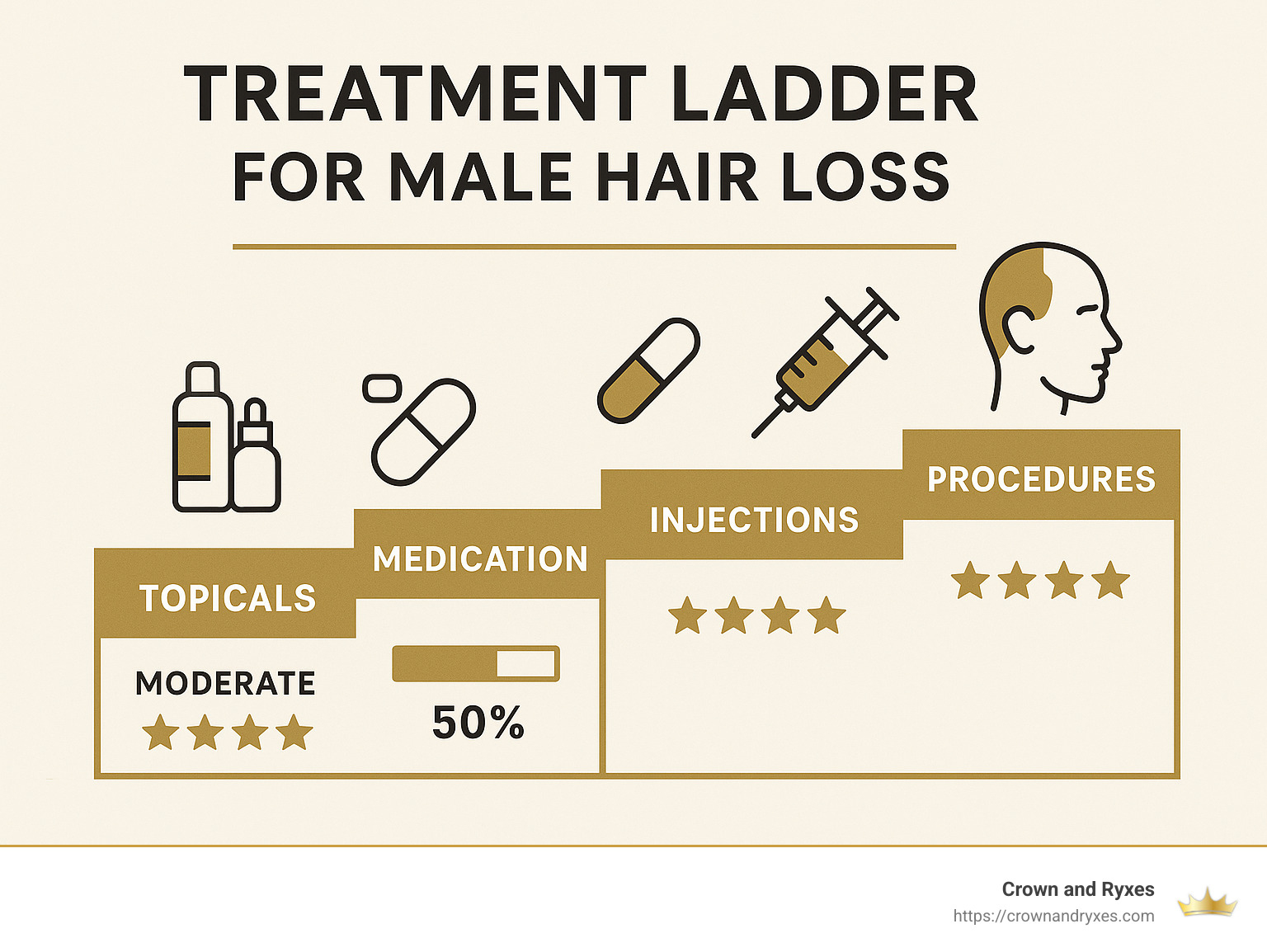
At Crown and Ryxes, we’ve built our practice around these principles. When you visit our Clermont or Lady Lake locations, you’ll experience a different kind of hair restoration journey – one that begins with genuine listening and thorough assessment, not a sales pitch.
We believe in education before recommendation. Understanding your unique pattern of hair loss, family history, lifestyle, and goals allows us to create truly personalized treatment plans. And because hair loss is progressive, we’re committed to evolving your care as your needs change over time.
I’ve seen how transformative proper hair restoration can be. One patient recently told me, “I didn’t realize how much my hair loss was affecting me until I got it back. It’s not just about looking younger – I feel like myself again.”
Whether you’ve just noticed the first signs of thinning or you’ve been watching your hairline recede for years, it’s never too early or too late to take action. The science of hair restoration has never been more advanced or accessible than it is today.
Ready to write your own hair restoration success story? We invite you to explore our comprehensive Hair Transplant Services and find how Crown and Ryxes can help you achieve the natural, confidence-boosting results you deserve.
While hair loss may be common, living with its effects is optional. With today’s advanced treatments, maintaining and even regrowing your hair is more possible than ever before. Your journey to better hair – and the renewed confidence that comes with it – starts with a single step.