

Understanding Hair Loss and Regrowth Options for Men
If you’re searching for the best hair regrowth treatment for men, here’s what research shows works most effectively:
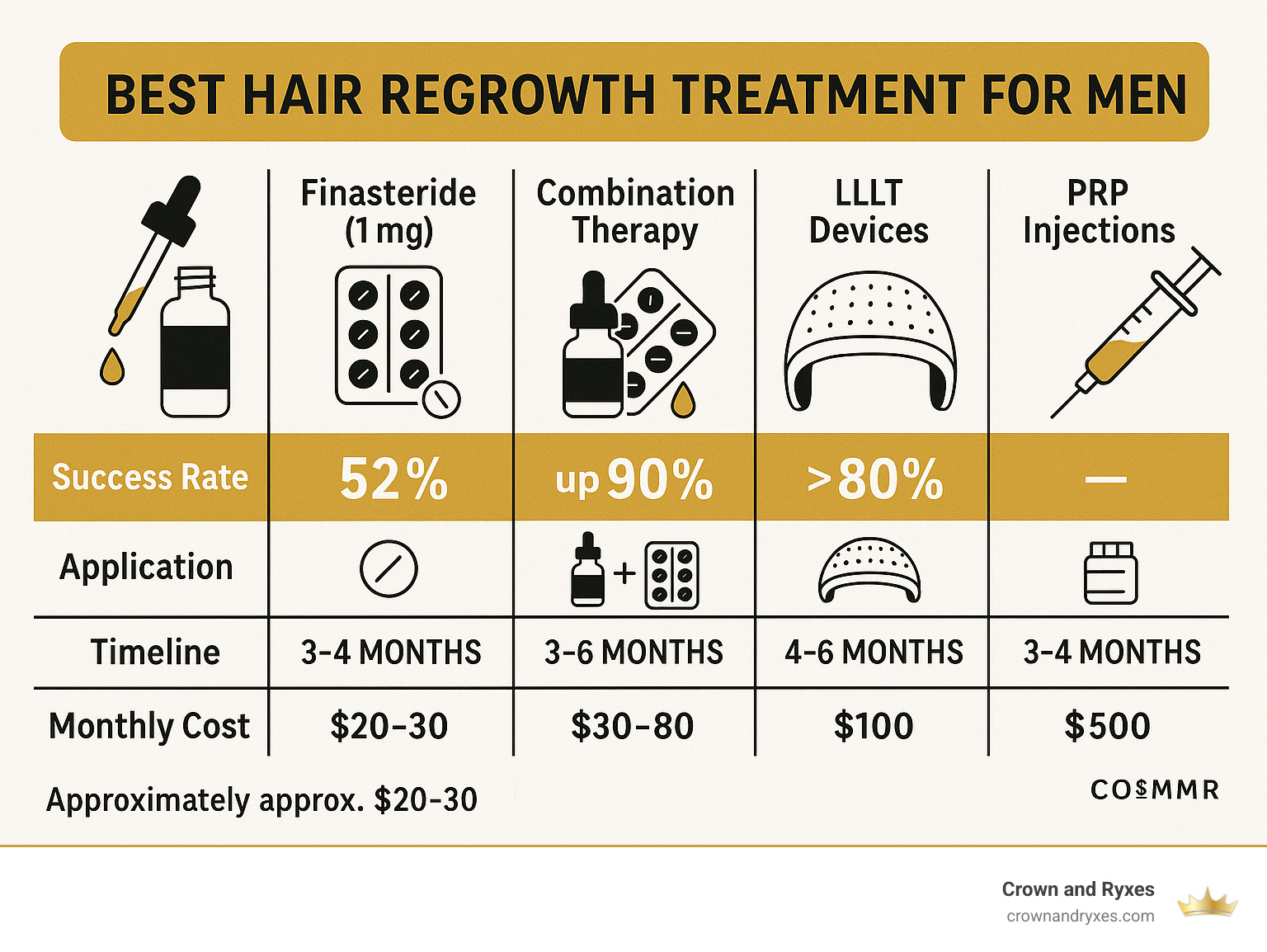
- Minoxidil (5%) – FDA-approved topical treatment showing moderate regrowth in 52% of men
- Finasteride (1mg) – Oral medication preventing further loss in 80% of men
- Combination therapy – Using both treatments together shows up to 90% success rate
- Low-level laser therapy (LLLT) – Devices showing improved hair density in 80%+ of users
- Platelet-rich plasma (PRP) – Injectable treatment using your own growth factors
For about 85% of men, significant hair thinning becomes a reality by age 50. But you’re not alone – over 60% of men under 35 consider hair loss a serious concern. The good news? Effective treatments exist that can both stop further loss and stimulate new growth.
Hair loss hits more than just your appearance. For many men, it affects confidence, self-image, and even how others perceive them. The frustration of seeing more hair in the drain or noticing your hairline creeping backward can be genuinely distressing.
Modern treatments range from over-the-counter solutions to prescription medications and in-office procedures. The key is understanding what causes your specific type of hair loss and matching it with the right treatment approach.
I’m Dr. Matthew Casavant, a physician with over 20 years of experience helping patients address concerns including the best hair regrowth treatment for men through evidence-based approaches and personalized care plans that consider both effectiveness and potential side effects.
Related content about best hair regrowth treatment for men:
Why Men Lose Hair: The Root Causes
Ever looked in the mirror and wondered why your hairline seems to be playing hide and seek? You’re not alone. Hair loss isn’t simply a side effect of getting older—it’s actually a fascinating (if frustrating) biological process influenced by several key factors.
DHT (Dihydrotestosterone) is often the main troublemaker. This powerful hormone, derived from testosterone, binds to receptors in your hair follicles like an unwelcome guest who refuses to leave. Over time, it causes those follicles to shrink until they eventually stop producing visible hair altogether.
Your family tree plays a huge role too. If you’ve noticed your father or uncles sporting the same thinning patterns you’re experiencing, genetics has likely dealt you a similar hand. Those inherited genes make your hair follicles more sensitive to DHT’s effects. This hereditary component explains why some guys start losing hair in their early twenties while others keep a full head of hair well into their golden years.
“For over 60% of men under 35—and over 80% by age 50—hair loss is a serious issue,” recent studies show. That’s a lot of us in the same boat!
Life’s challenges can literally stress your hair out. When you’re under constant pressure, your body produces more stress hormones like cortisol, which can disrupt your natural hair growth cycle. During particularly difficult periods, you might experience a condition called telogen effluvium, where hair falls out more rapidly than normal—think of it as your follicles going on strike due to stress.
Certain medications might also be contributing to your hair situation. Some antidepressants, blood pressure medications, and chemotherapy treatments list hair loss as a potential side effect. If you suspect a medication might be causing your thinning, it’s worth discussing alternatives with your doctor.
Don’t overlook your scalp’s health either. Conditions like seborrheic dermatitis or psoriasis create scalp inflammation that can make it difficult for hair to thrive. It’s like trying to grow a garden in poor soil—technically possible, but much harder to achieve good results.
Science Snapshot
Let’s peek beneath the surface to understand what’s really happening with your hair:
Androgenetic Alopecia Pathway sounds complicated, but it’s simply the scientific term for male pattern baldness. The process begins when testosterone converts to DHT through an enzyme called 5-alpha-reductase. As DHT builds up in your scalp, it gradually miniaturizes your hair follicles. With each growth cycle, the hairs produced become thinner and shorter until eventually, those follicles stop producing visible hair altogether. This explains why the best hair regrowth treatment for men often targets this specific pathway.
Telogen Effluvium is different—it’s like your hair’s panic response. Normally, about 85-90% of your hair is in the active growth (anagen) phase, with only 10-15% in the resting (telogen) phase. During telogen effluvium, up to 30% of hairs can shift to the resting phase all at once, resulting in noticeable shedding about 2-3 months after a triggering event like illness, surgery, or emotional trauma.
Understanding these mechanisms helps explain why different treatments work in different ways—and why the most effective approach often combines multiple strategies. The good news? Once you understand what’s happening, you can take informed steps toward preserving and regrowing your hair.
The Best Hair Regrowth Treatments for Men
When it comes to battling hair loss, not all treatments are created equal. Two medications have risen to the top as the gold standard for men seeking real results: minoxidil and finasteride. Let’s take a closer look at why these treatments earn their reputation as the best hair regrowth treatment for men.
Minoxidil and finasteride work through completely different mechanisms—which is exactly why they’re so powerful when used together. The science behind these treatments is compelling, with years of FDA data backing their effectiveness.
Minoxidil (available over-the-counter as a topical solution) shows impressive stats: about 66% of men see a halt in further hair loss, while 52% experience moderate regrowth, particularly at the crown. For about one in five men, the results are even more dramatic, with significant new growth appearing within 6-12 months.
Finasteride takes effectiveness up another notch. This daily 1mg oral prescription prevents further hair loss in about 80% of men—and roughly two-thirds actually see new hair growth. Most men start noticing improvements after consistently using it for 3-6 months.
But here’s where things get really interesting. When you combine these treatments, the results can be remarkable:
“I tell my patients that using minoxidil without finasteride is like mopping the floor while the faucet is still running,” explains Dr. Casavant. “The combination approach addresses both the symptoms and the underlying cause of hair loss.”
How Minoxidil Works
Minoxidil has a fascinating origin story—it was originally developed to treat high blood pressure before researchers noticed an unexpected side effect: hair growth. This happy accident led to one of the most widely used hair loss treatments today.
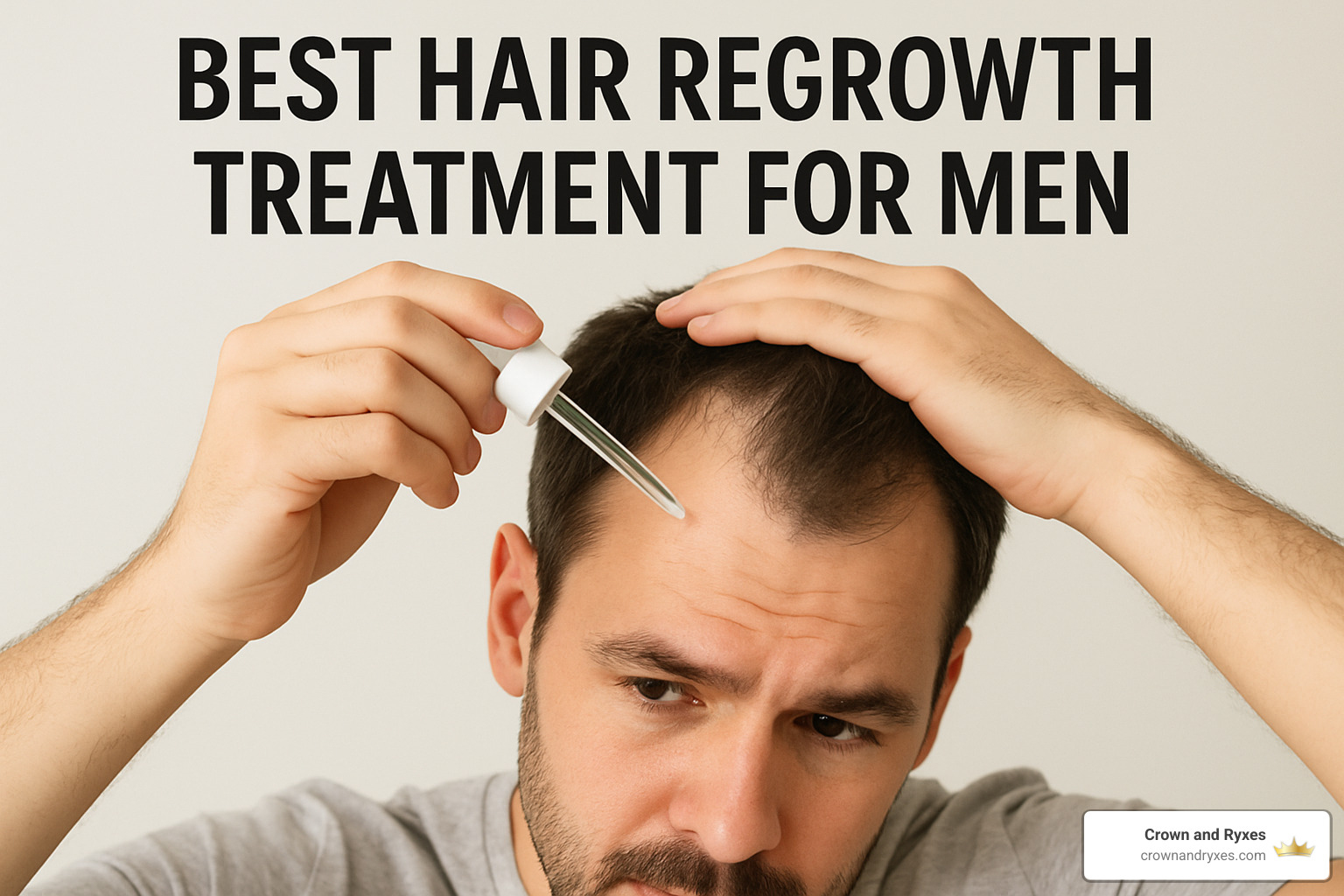
At its core, minoxidil works through vasodilation—it widens blood vessels in your scalp, increasing blood flow to those hungry hair follicles. This boost in circulation delivers more oxygen and nutrients right where they’re needed most.
On a cellular level, minoxidil opens potassium channels in cell membranes, which appears to wake up sleeping follicles and extend the growth phase of your hair cycle.
Many new users get concerned when they notice increased shedding during the first month of treatment. Don’t panic! This is actually a positive sign. Minoxidil is pushing resting hairs out to make room for stronger, healthier ones.
“The shedding phase threw me for a loop,” admits James, a Crown and Ryxes patient. “But by month three, I started seeing tiny new hairs, and by six months, my wife noticed a real difference in thickness.”
Topical vs Oral Minoxidil
While most men are familiar with topical minoxidil (the kind you apply directly to your scalp), oral minoxidil is gaining traction as an alternative approach.
The topical version comes in several forms: the original solution applied with a dropper, a foam that many find less irritating and easier to use, and targeted sprays for specific areas. Most men find the foam most convenient, especially when applied to slightly damp hair.
Oral minoxidil, taken at much lower doses than when used for blood pressure (typically 0.25-5mg), shows promising results in recent studies. Some research indicates it may work faster than topical application, with results appearing in as little as 8 weeks in some cases.
So which should you choose? It often comes down to convenience versus side effects. Topical minoxidil mostly causes local irritation in some users, while oral minoxidil can produce systemic effects like increased heart rate or unwanted body hair growth.
The truth is, the best treatment is the one you’ll actually use consistently. As one of our specialists puts it, “A perfect treatment that sits unused in your medicine cabinet won’t grow a single hair.”
How Finasteride Works & Key Side Effects
Finasteride tackles male pattern baldness at its source by targeting DHT—the hormone responsible for shrinking your hair follicles.
It works by blocking the 5-alpha-reductase enzyme that converts testosterone to DHT. This can reduce DHT levels in your scalp by up to 70%, effectively putting the brakes on the miniaturization process that leads to thinning hair.
With DHT levels lowered, many follicles gradually recover and begin producing thicker, longer hairs again. The science here is solid—about 80% of men see their hair loss stop, and around two-thirds experience actual regrowth.
However, we believe in transparent conversations about potential side effects. According to clinical data, about 2% of men experience decreased libido, roughly 1% notice erectile difficulties, and some report reduced ejaculate volume.
The good news? Most side effects resolve as your body adjusts to the medication, and almost all disappear if you discontinue use. That said, we take these concerns seriously at Crown and Ryxes, monitoring our patients closely and offering solutions like REGENmax for those experiencing sexual wellness concerns.
Combining Minoxidil + Finasteride: the best hair regrowth treatment for men
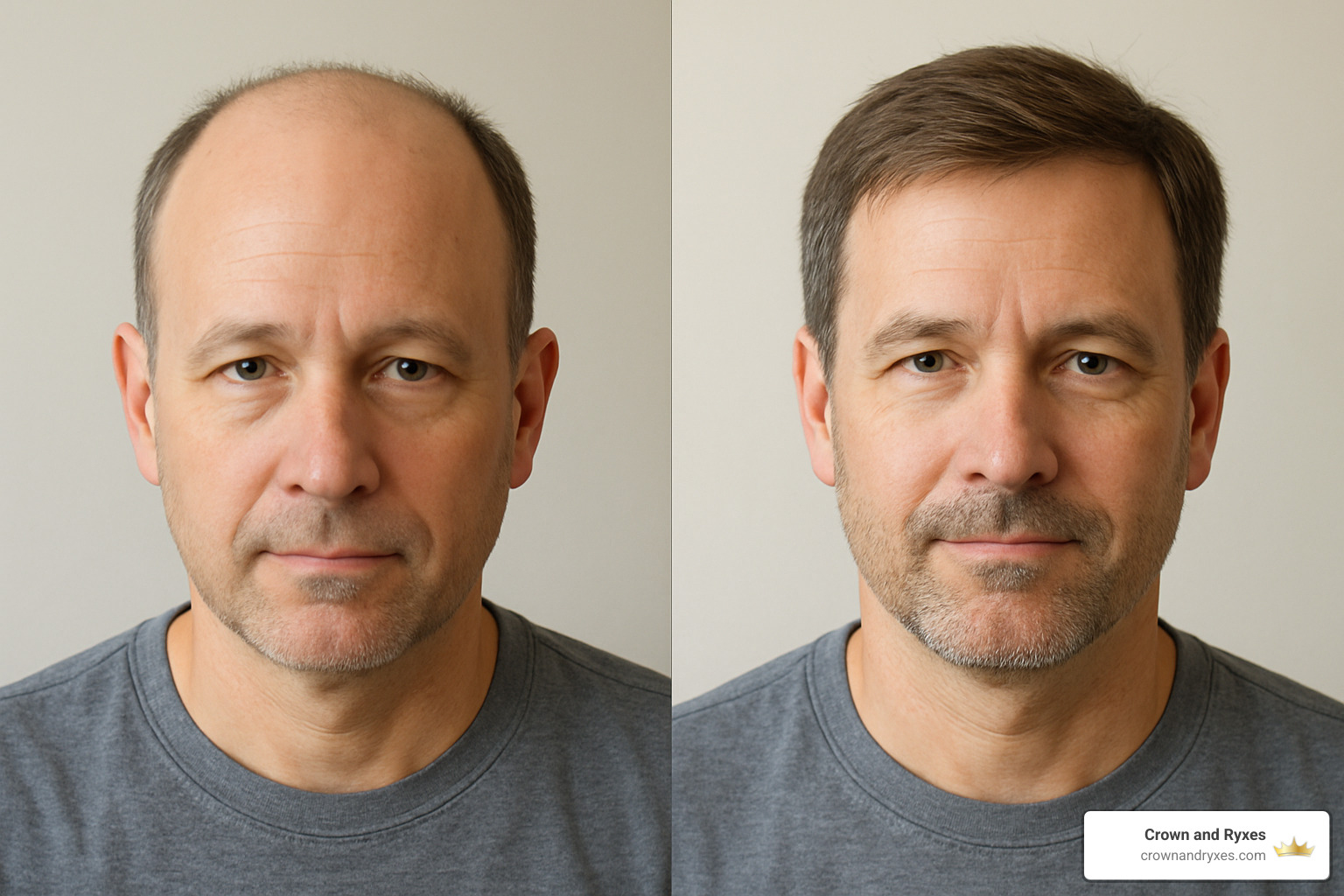
The research couldn’t be clearer: combining treatments produces dramatically better results than using either one alone—which is why this approach has earned its reputation as the best hair regrowth treatment for men.
These treatments work synergistically—minoxidil stimulates growth through improved blood flow and direct follicle stimulation, while finasteride prevents DHT from shrinking your follicles. Together, they create a comprehensive defense against hair loss.
The numbers speak for themselves: nearly 90% of men using this combination see at least moderate regrowth, with many experiencing significant improvements in both density and coverage.
“I was skeptical at first,” shares Michael, who started treatment at Crown and Ryxes last year. “But following the combination protocol has completely changed my hairline. People who haven’t seen me in a while actually comment on how much better my hair looks.”
For optimal results, we typically recommend:
- 1mg oral finasteride daily
- 5% topical minoxidil applied twice daily
- Consistent use for at least 6-12 months
- Regular check-ins to monitor progress and address any concerns
Managing Sexual Side-Effects with REGENmax
At Crown and Ryxes, we understand that some men worry about potential sexual side effects from finasteride. That’s why we’ve developed REGENmax, our advanced sexual wellness solution that helps address these concerns while you continue your hair restoration journey.
REGENmax combines cutting-edge technology with personalized protocols to support sexual function and maintain confidence throughout your treatment. Our approach includes comprehensive monitoring, individualized care plans, and regular check-ins to ensure everything’s working as it should.
“We believe men shouldn’t have to choose between their hair and their sexual wellness,” explains our clinical director. “With proper monitoring and support through REGENmax when needed, most men can achieve their hair restoration goals while maintaining sexual function.”
If you notice any changes in sexual function during treatment, we encourage open conversation with your provider. These side effects are manageable in most cases, and we’re committed to your complete wellness throughout your hair restoration journey.
The best hair regrowth treatment for men addresses not just your hair, but your overall well-being and confidence—and that’s exactly what we aim to provide at Crown and Ryxes.
Emerging & Adjunctive Therapies for Thicker Hair
Beyond the gold standard treatments of minoxidil and finasteride, several complementary approaches can improve your hair restoration journey. Think of these as powerful allies in your quest for thicker, healthier hair.
When patients ask me about the best hair regrowth treatment for men, I often explain that combining approaches tends to yield the most impressive results. The science backs this up – your hair follicles respond differently to various stimuli, and a multi-faceted approach often works wonders.
LLLT devices have transformed from sci-fi curiosities to legitimate treatment options, with clinical studies showing over 80% of consistent users experiencing noticeable improvements in hair density. Meanwhile, PRP injections harness your body’s own healing powers to refresh struggling follicles.
“I was initially skeptical about trying anything beyond the basics,” shares Tom, a Crown and Ryxes patient from Clermont, FL. “But adding these complementary treatments to my regimen made a world of difference – my hair looks fuller than it has in years.”
Low-Level Laser Therapy (LLLT)
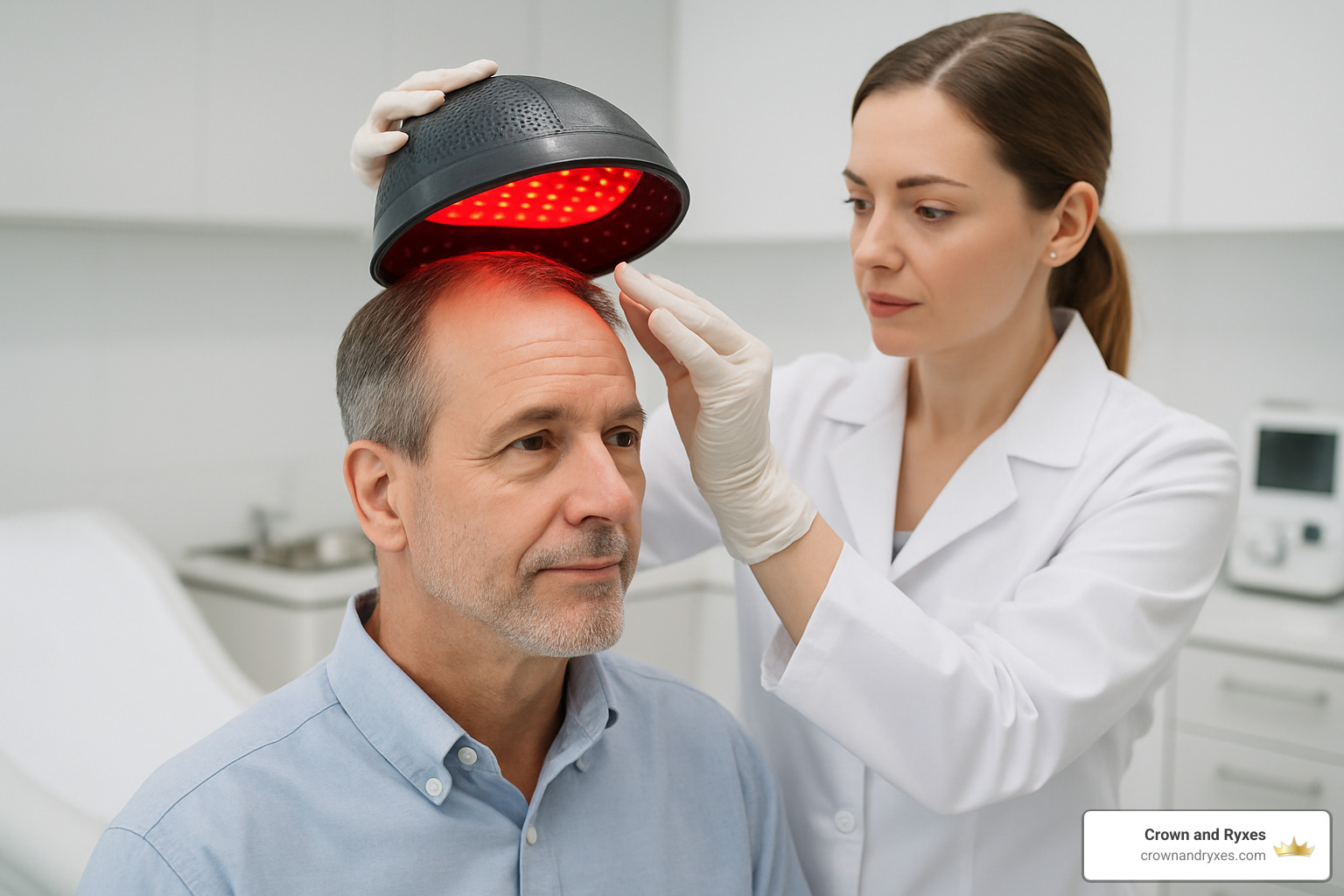
Those futuristic-looking laser caps and helmets you may have seen aren’t just gimmicks – they’re FDA-cleared devices with solid science behind them.
These devices typically emit red light at the optimal 650-655nm wavelength, which penetrates your scalp to energize hair follicles at the cellular level. The light energy gets absorbed by cellular photoreceptors, boosting ATP production and kickstarting metabolic activity in dormant follicles.
What impresses me most about LLLT is its proven ability to increase hair count by approximately 20% after 4-6 months of consistent use (typically 15-30 minutes, 3-7 times weekly). The best part? It plays nicely with other treatments.
“Wearing my laser cap while watching TV became part of my evening routine,” explains James from The Villages, FL. “It felt a bit silly at first, but after four months, my wife started commenting on how much thicker my hair looked, especially at the crown.”
LLLT offers several advantages: it’s completely non-invasive, can be done in the privacy of your home, works for both men and women, and causes virtually no side effects. The main problems are the upfront investment ($500-$3,000 depending on the device) and the need for consistent, long-term use.
Platelet-Rich Plasma (PRP)
PRP represents one of the most exciting advances in regenerative medicine for hair restoration. This treatment leverages your body’s own healing mechanisms to revitalize hair follicles.
The procedure is straightforward but sophisticated: we draw a small amount of your blood, process it to concentrate the platelets, and then precisely inject this platelet-rich plasma into your scalp. These concentrated platelets release growth factors that wake up sleeping hair follicles and extend their growth phase.
Most patients see optimal results with an initial series of three treatments spaced 4-6 weeks apart, followed by maintenance sessions every 4-6 months. Research shows PRP can increase hair count by an impressive 30-40% in responsive patients, with results beginning to appear after 3-4 months.
“What I appreciate about PRP is that it’s using your body’s own healing mechanisms,” notes a Crown and Ryxes patient from Clermont, FL. “After completing the initial three sessions, I noticed not just more hair, but thicker individual strands as well.”
Microneedling & Topical Boosters
Sometimes the simplest innovations yield remarkable results. Microneedling creates thousands of microscopic channels in the scalp using fine needles (typically 0.5-1.5mm in length).
These controlled micro-injuries trigger your body’s natural wound healing response, activating the Wnt/β-catenin pathway that plays a crucial role in hair follicle development. But here’s where it gets really interesting – when combined with topical treatments like minoxidil, microneedling significantly improves absorption and effectiveness.
One compelling study found that microneedling plus minoxidil produced 50% more hair growth than minoxidil alone. That’s a substantial improvement for a relatively simple addition to your routine.
“I’d been using minoxidil for years with decent results,” shares another patient from The Villages, FL. “When we added monthly microneedling sessions at Crown and Ryxes, I saw a noticeable improvement within just a few months.”
For home use, we typically recommend devices with needles no longer than 0.5mm, while our in-office treatments may use lengths up to 1.5mm for deeper, more controlled stimulation.
Lifestyle & Nutritional Supports
Your daily habits can either support or sabotage your hair restoration efforts. Several lifestyle factors significantly impact follicle health:
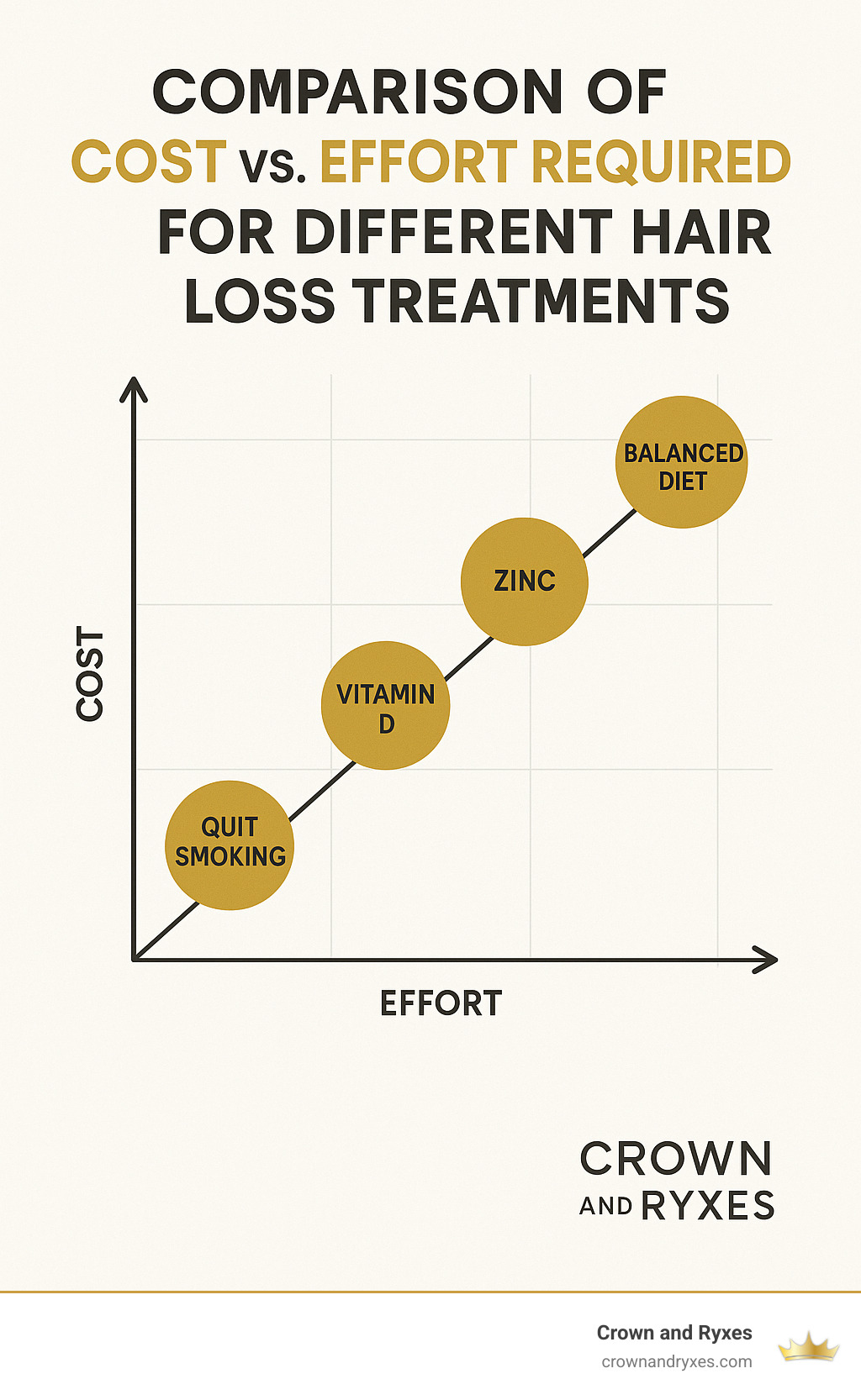
Quit smoking if you haven’t already. Research clearly links smoking to accelerated hair loss, as the toxins damage follicles and restrict blood flow to the scalp.
Vitamin D deserves special attention, as many men are deficient in this crucial nutrient that regulates hair follicle cycling. A simple blood test can determine if supplementation might benefit your hair growth journey.
Zinc plays an essential role in hair tissue growth and repair. If you’re deficient (as many men are), supplementation may help support your other treatments.
A balanced diet rich in proteins, healthy fats, and antioxidants provides the building blocks for robust hair growth. Severe caloric restriction or protein deficiency can trigger increased shedding – I’ve seen this happen countless times with patients on extreme diets.

Even simple practices like regular scalp massage show promise. One study found that 68% of participants reported hair stabilization after implementing regular scalp massage for at least 36 hours over 6 months. This easy practice may improve blood flow and reduce stress hormones – both beneficial for hair health.
At Crown and Ryxes, we take a comprehensive approach, often combining these adjunctive therapies with foundational treatments to create truly personalized hair restoration plans. The best hair regrowth treatment for men isn’t a one-size-fits-all solution – it’s a customized approach that addresses your unique pattern of loss and lifestyle factors.
Choosing, Combining & Budgeting Your Plan
Finding your perfect hair restoration strategy doesn’t have to feel overwhelming. Think of it as creating a custom roadmap that fits your unique situation, lifestyle, and budget.
Candidate Assessment: Your hair loss journey is as individual as your fingerprint. The treatments that work wonders for your friend might not be ideal for you. Factors like your age, how your hair is thinning, family history, and overall health all play crucial roles in determining your best approach.
“I always remind my patients that hair restoration isn’t one-size-fits-all,” shares one of our specialists at Crown and Ryxes. “A 25-year-old with early thinning needs a different strategy than someone in their 50s with more advanced loss.”
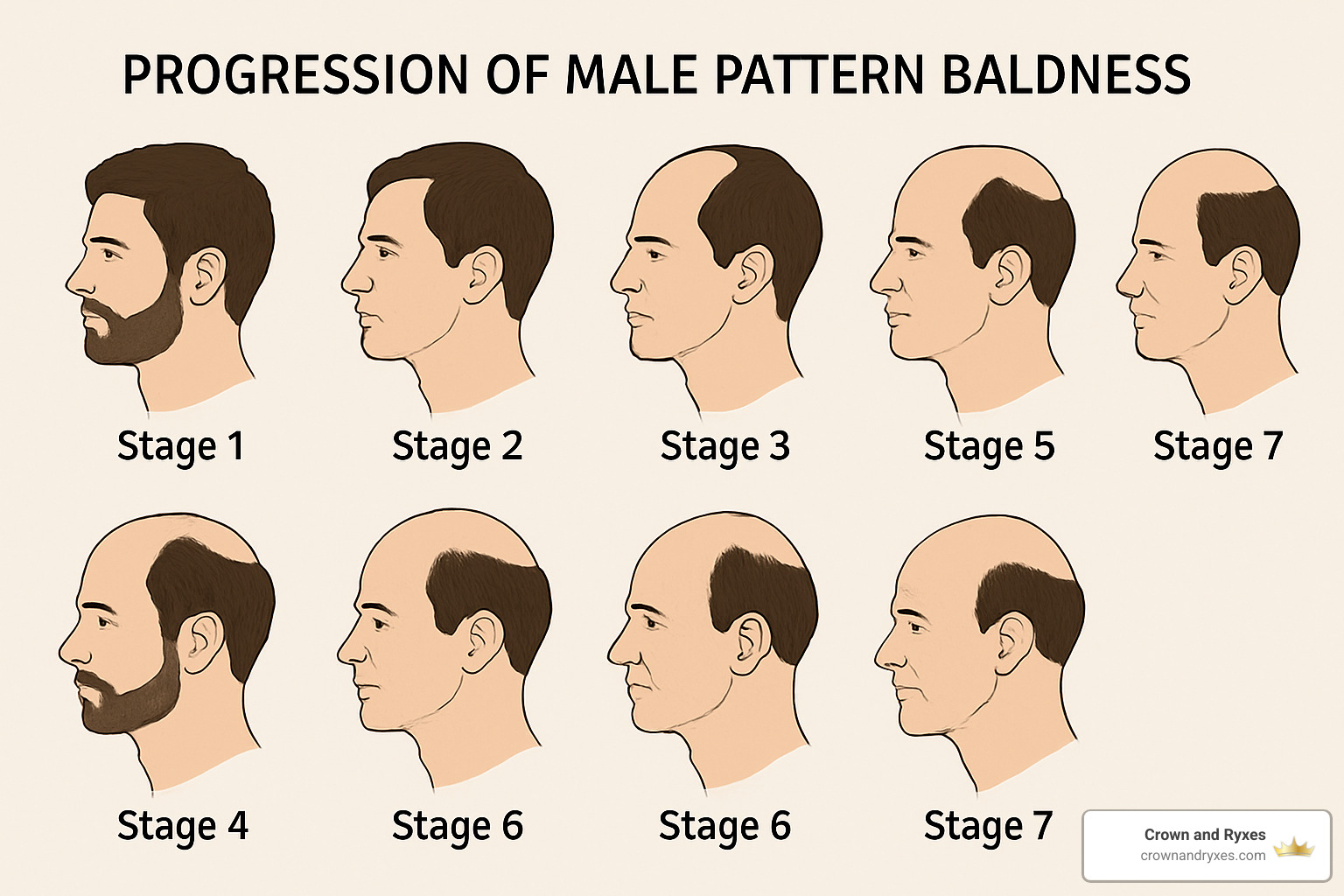
Norwood Scale: Hair specialists use this classification system to map out your hair loss pattern and severity. The scale runs from 1 (no hair loss) to 7 (the most extensive loss). The truth is, the earlier you start treatment (Norwood 2-3), the better your chances for significant regrowth. By stages 5-7, the focus often shifts more toward maintaining what’s left and achieving modest regrowth.
Budget Tiers: Let’s be practical – budget matters. The good news is that effective options exist at various price points:
- Basic tier ($10-50/month): Starting with generic minoxidil and ketoconazole shampoo gives you solid fundamentals without breaking the bank.
- Mid-tier ($50-150/month): Adding finasteride and perhaps upgrading to brand-name minoxidil formulations can significantly improve your results.
- Premium tier ($150-500/month): This level typically includes everything in the mid-tier plus an LLLT device like a laser cap for comprehensive treatment.
- Elite tier ($500+/month): For those seeking maximum results, this includes all previous treatments plus advanced procedures like PRP injections.
Maintenance Commitment: Be honest with yourself about what routine you’ll actually follow. The most sophisticated treatment plan won’t work if it sits unused in your bathroom cabinet.
“I had one patient who wanted the most advanced regimen possible,” recalls our specialist from Clermont, FL. “But his travel schedule made it impractical. We scaled back to something simpler that he could maintain consistently, and his results were excellent because he never missed a day.”
At Crown and Ryxes, we’ve found that the sweet spot for most men is a treatment plan that balances effectiveness, convenience, and affordability. We take time to understand your lifestyle before recommending solutions you can realistically maintain for the long haul.
“Many men come in expecting a miracle overnight solution,” says one of our specialists. “We help them understand that hair regrowth is a journey that requires patience and consistency. The good news is that with the right approach, most men see significant improvement.”
More info about hair restoration services
How Long Until Results Appear?
One of the most common questions we hear is: “When will I see results?” Understanding the timeline helps set realistic expectations and keeps you motivated during those early months.
Telogen Delay: Your hair follows a natural growth cycle, and there’s an unavoidable waiting period between starting treatment and seeing visible changes. Each hair grows about half an inch per month, and new growth takes time to become noticeable.
“The first three months are really about faith,” explains a patient from The Villages, FL. “You’re doing everything right, but the mirror doesn’t show much change. That’s when many guys give up – right before the good stuff starts happening.”
3-Month Marker: This is typically when you’ll first notice positive changes – usually a slowdown in hair loss and possibly some fine, new hairs (often called “peach fuzz”) appearing. Take photos monthly to track subtle changes your daily mirror check might miss.
6-Month Marker: Now we’re talking! The six-month point is when most men start seeing meaningful improvements. Those baby hairs from month three have grown longer and thicker, and overall density is improving. Side-by-side photos with your starting point often reveal surprising progress.
12-Month Marker: This is generally when the best hair regrowth treatment for men reaches its full potential. The one-year mark typically shows maximum results from medical treatments, though improvements can continue beyond this point for many men.
One Crown and Ryxes patient shared: “The hardest part was the first few months when it seemed like nothing was happening. I almost gave up, but my doctor encouraged me to stick with it. By month six, I started seeing real changes, and by month twelve, my hair was noticeably thicker than when I started.”
Don’t be alarmed if you experience some initial shedding in the first few weeks, especially with minoxidil. This is actually a positive sign that the medication is working – pushing out older, weaker hairs to make way for stronger new growth.
When to See a Dermatologist
While many hair restoration options are available without a prescription, certain situations call for professional evaluation:
Sudden Loss: If you’re losing hair rapidly – finding large amounts in the shower drain or on your pillow – this may signal an underlying medical condition rather than typical male pattern baldness.
Scarring Signs: Redness, scaling, pustules, or pain on the scalp aren’t normal with standard hair loss. These symptoms could indicate scarring alopecia, which requires different treatment approaches and prompt attention.
Resistant Cases: If you’ve diligently used over-the-counter treatments for 6-12 months without seeing improvement, it’s time for expert help. A dermatologist can determine why standard treatments aren’t working and suggest alternative approaches.
At Crown and Ryxes, we provide comprehensive evaluations to pinpoint the specific cause of your hair loss and develop a targeted treatment plan. Our physicians specialize in diagnosing and treating all forms of hair loss, from common pattern baldness to more complex conditions.
“What many men don’t realize is that sometimes hair loss can be a window into overall health,” notes one of our specialists. “Thyroid issues, nutritional deficiencies, and other medical conditions can manifest as hair loss. Identifying these underlying causes can improve not just your hair, but your overall wellbeing.”
Frequently Asked Questions about the Best Hair Regrowth Treatments for Men
Is hair loss reversible for every man?
The truth about hair regrowth isn’t one-size-fits-all. Your potential for getting back that full head of hair depends on several key factors:
Duration of loss makes a huge difference. Think of your hair follicles like plants – the ones that have only recently started to wither can usually be revived with proper care, while those that have been dormant for years might be beyond saving.
The type of hair loss you’re experiencing matters tremendously. The good news is that androgenetic alopecia (the fancy name for male pattern baldness) typically responds well to the best hair regrowth treatments for men. However, if you’re dealing with scarring alopecia, where actual scar tissue forms in the follicle, the chances for reversal are unfortunately much more limited.
Your unique biology plays a starring role too. Some men simply respond better to treatments than others due to genetic factors – it’s similar to how some people build muscle more easily at the gym.
“I like to explain hair follicles as being like hibernating bears,” our hair restoration specialist often tells patients. “If they’ve only been ‘asleep’ for a short while, waking them up is relatively easy. But after many years of deep slumber, some may never wake again.”
This is why we consistently emphasize early intervention at Crown and Ryxes. The sooner you address hair loss, the more options you’ll have and the better your results will likely be.
Can I stop treatment once I see regrowth?
I wish I could tell you that hair regrowth treatments are like antibiotics – take them for a while and you’re cured. Unfortunately, that’s not how it works.
The genetic predisposition to lose hair doesn’t disappear just because you’ve successfully regrown some. Think of hair loss treatments more like maintenance medications for a chronic condition. When you stop, the underlying process resumes.
One of our patients from Clermont, FL learned this the hard way: “After seeing amazing results with minoxidil for over a year, I figured my hair was ‘fixed’ and stopped using it. Within just three months, I lost everything I’d gained and then some. Now I view it like brushing my teeth—just part of my daily routine I don’t question.”
Typically, if you discontinue the best hair regrowth treatment for men that’s been working for you, you can expect:
- The new hair growth will begin shedding within 3-4 months
- You’ll likely return to where you started (or worse) within 6-12 months
- The balding process will continue as if you never treated it
The commitment to maintaining your results needs to be factored into your decision to start treatment. The good news? Many men find that once they establish a routine, it becomes second nature – just a few minutes of their daily self-care ritual.
Are laser caps safe for daily home use?
When patients first hear about laser caps, they often picture something from a sci-fi movie that might fry their brain. The reality is much more reassuring.
Low-level laser therapy (LLLT) devices have proven remarkably safe when used according to directions. These devices emit gentle, non-heating light at specific wavelengths (typically around 650nm) that stimulate cellular activity without causing damage.
“The LLLT cap was honestly the easiest part of my regimen,” shared a patient from The Villages, FL. “I just put it on while watching my favorite shows three times a week. No mess, no fuss, and I actually look forward to the quiet time.”
What makes these devices safe:
- They use non-ablative lasers (much gentler than those used for surgery)
- The FDA has cleared several brands specifically for at-home use
- The wavelengths are carefully chosen to be beneficial without causing harm
Side effects are minimal and uncommon. Some users report mild tingling during use or occasional headaches, but these typically resolve quickly. There are no known long-term adverse effects from regular use of LLLT devices.
For best results, consistency matters more than frequency. Most manufacturers recommend 15-30 minute sessions, 3-7 times weekly. Many of our patients at Crown and Ryxes incorporate their LLLT sessions into their evening relaxation routine – catching up on reading or watching TV while their cap does its work.
While LLLT can be effective on its own, many men see dramatically improved results when combining it with other treatments like minoxidil and finasteride as part of a comprehensive approach to hair restoration.
Conclusion
Finding the best hair regrowth treatment for men isn’t just about trying the latest product—it’s about starting on a personal journey custom to your unique situation. The science speaks volumes: the earlier you start treatment and the more consistent you are, the better your results will be.
After helping hundreds of men in Clermont, FL and The Villages, FL reclaim their hair and confidence, we’ve learned a few essential truths:
Combination therapy delivers superior results. While minoxidil or finasteride alone can be effective, using them together creates a powerful synergy that helps up to 90% of men see noticeable improvement. One approach stops the loss while the other stimulates new growth—a true one-two punch against baldness.
Consistency truly is the secret ingredient. I’ve seen countless men achieve remarkable changes not because they found some miracle cure, but because they stuck with proven treatments day after day, month after month. Hair regrowth requires patience—those who understand this from the start are most likely to succeed.
Supportive treatments amplify your results. Think of LLLT, PRP, microneedling, and proper nutrition as boosters that can take your results from good to great. They’re not necessarily replacements for foundation treatments but work beautifully alongside them.
Maintenance isn’t optional—it’s essential. I’ve had the difficult conversation many times with patients who stopped treatment once they saw results, only to lose their gains within months. The genetic factors behind hair loss don’t disappear, which means ongoing care is necessary to preserve your restored hair.
At Crown and Ryxes, we understand that hair loss affects more than just your appearance—it impacts how you feel about yourself and how you move through the world. That’s why we focus on personalized, evidence-based approaches that consider your specific pattern of loss, medical history, and goals.
We also recognize that some men may experience sexual wellness concerns when using finasteride. Our REGENmax program specifically addresses these potential side effects, ensuring you don’t have to choose between your hair and your sexual health.
The journey to hair restoration isn’t just about the treatments—it’s about working with professionals who understand both the science of hair growth and the emotional aspects of hair loss. Our team is committed to standing with you every step of the way, celebrating your progress and adjusting your plan as needed.
Don’t wait until more hair has been lost—the follicles you save today are much easier to maintain than those you try to resurrect tomorrow. Contact us today to schedule your consultation and take the first meaningful step toward a fuller head of hair and the confidence that comes with it.