

Navigating Hormone Therapy: BHRT vs HRT Explained
When it comes to managing hormone imbalances, the debate between bhrt vs hrt is a common one. Both Bioidentical Hormone Replacement Therapy (BHRT) and Hormone Replacement Therapy (HRT) aim to restore your body’s natural balance. But they achieve this goal in very different ways.
Here’s a quick look at the main differences:
| Feature | Bioidentical Hormone Replacement Therapy (BHRT) | Traditional Hormone Replacement Therapy (HRT) |
|---|---|---|
| Hormone Origin | Plant-derived; chemically identical to hormones your body makes. | Synthetic or animal-derived; similar but not always identical to human hormones. |
| FDA Regulation | Often custom-compounded and not FDA-approved, raising concerns about consistency. | Generally FDA-approved and standardized. |
| Customization | Can be custom to individual needs by compounding pharmacies. | Standardized dosages and formulations. |
This guide will break down the details of each therapy. We’ll explore their benefits, risks, and how they differ in terms of origin, regulation, and personalization. Our goal is to help you understand these options so you can make an informed decision with your healthcare provider.
I’m Dr. Matthew Casavant, founding physician. My background as an Ob/Gyn and commitment to staying current on medical advances means I help patients steer complex decisions, including the choice between bhrt vs hrt. Let’s dive deeper into what these treatments involve.
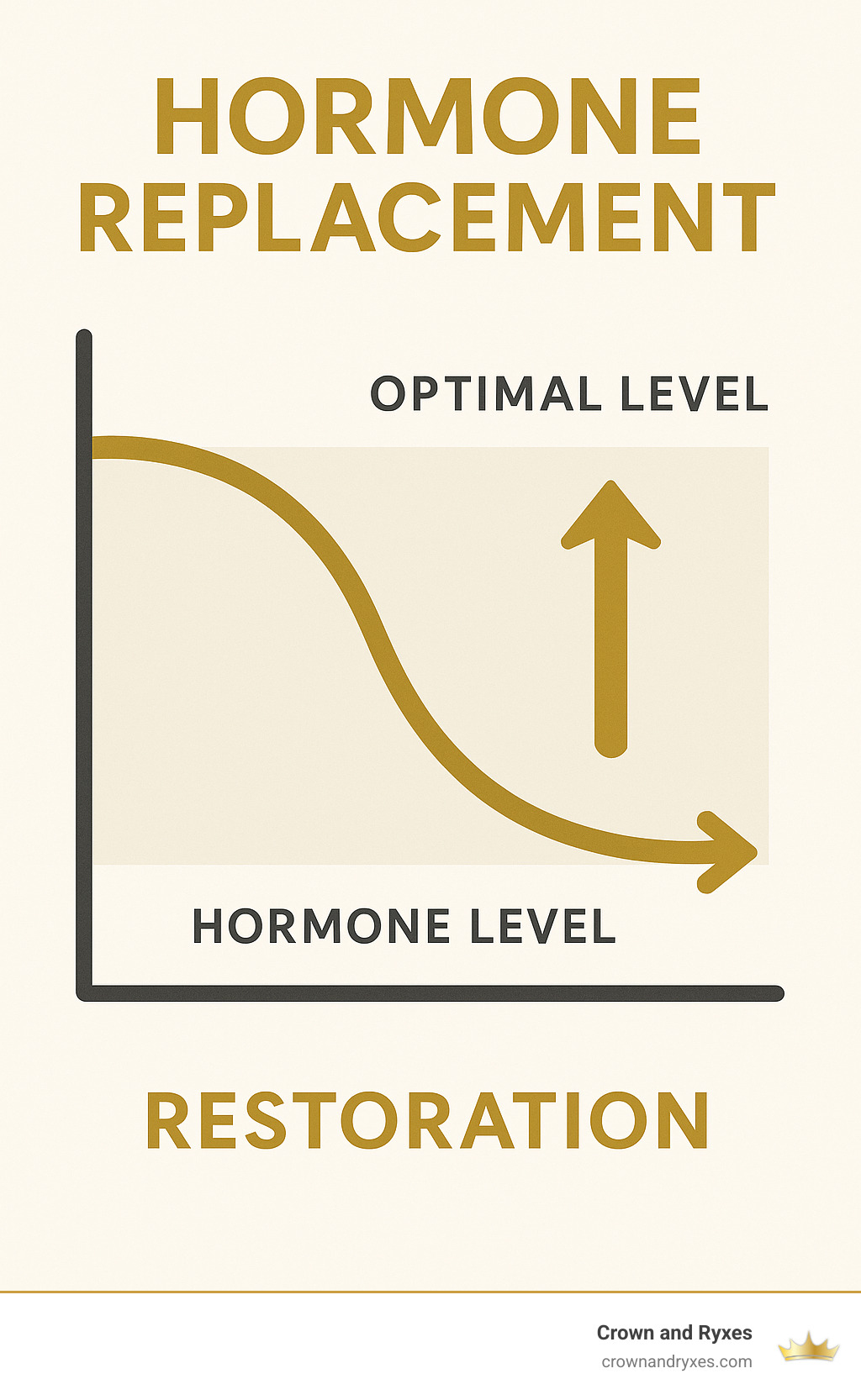
Quick bhrt vs hrt definitions:
What is Hormone Replacement Therapy (HRT)?
Hormone Replacement Therapy, often called traditional HRT or Menopause Hormone Therapy (MHT), has been a trusted medical approach for many decades. Its main goal is simple: to gently top up your body with hormones it’s no longer making enough of. Think of it like giving your car’s engine the right amount of oil for a smooth ride – it helps your body run its best!
Traditional HRT usually uses hormones that are either created in a lab (synthetic) or come from animal sources. A well-known example of an animal-derived estrogen is conjugated equine estrogens, which are sourced from pregnant mare urine. These medications undergo strict testing and are generally approved by the FDA. This means they’ve been thoroughly checked for safety and how well they work. They also come in standard dosages, so you know exactly what you’re getting. You can find them in many forms, like pills, patches, gels, and creams, making it easy to find what suits you best.
Benefits of Traditional HRT
Traditional HRT can bring wonderful relief and improvement for both women and men experiencing hormone imbalances:
For women, HRT is a true game-changer, especially when navigating the ups and downs of perimenopause and menopause. It’s incredibly effective at easing those uncomfortable hot flashes and night sweats, helping you get a better night’s sleep and feel more comfortable during the day. It also works wonders for vaginal dryness, which can make intimacy painful, restoring comfort and confidence. Beyond daily symptom relief, HRT plays a vital role in preventing osteoporosis, helping to keep your bones strong and reducing the risk of fractures as you age.
More info about our services for women
For men, HRT primarily helps those dealing with low testosterone, a condition that can really put a damper on their vitality. By carefully restoring testosterone levels, men often find a renewed sense of energy, an improved libido and sexual drive, and even better muscle mass. It’s all about helping men feel more like themselves and regain their zest for life.
Potential Risks of Traditional HRT
While the benefits of traditional HRT are clear and often life-changing, it’s also very important to understand the potential risks, especially if you’re considering long-term use. We believe in open, honest conversations about your health, so you can make the most informed decision alongside your healthcare provider.

Research, including major studies, has shown that using combined HRT (estrogen and progestin) for five years or more can slightly increase the risk of certain health concerns. These include a small increased risk of breast cancer and ovarian cancer, as well as an increased risk of blood clots, stroke, and heart disease. For example, organizations like the Canadian Cancer Society point out that long-term combined HRT is a known factor in breast cancer risk, particularly if used for more than 4-5 years. While the risk of ovarian cancer is generally low, both combined and estrogen-only HRT can slightly increase it.
It’s also crucial to know that the risk of heart disease or stroke can become higher if HRT is started after age 60, or more than 10 years after menopause begins. This highlights just how important it is to have close medical supervision and to carefully consider your own health history. The choice to pursue HRT, whether traditional or exploring the bhrt vs hrt discussion, should always be a deeply personal one, made hand-in-hand with your doctor, carefully weighing the potential benefits against your individual risk factors.
Scientific research on HRT risks and benefits
What is Bioidentical Hormone Replacement Therapy (BHRT)?
Bioidentical Hormone Replacement Therapy (BHRT) is a more recent approach to hormone management, and it’s certainly caught a lot of attention for its “natural” appeal. The key idea behind BHRT is that the hormones used are chemically identical to the hormones your body naturally produces. Imagine finding the perfect key to a lock – that’s the goal!
These bioidentical hormones typically start their journey from plant sources, like yams or soy. They are then carefully modified in a lab to perfectly match the molecular structure of human hormones. This chemical identity is what makes advocates suggest they might work more harmoniously with your body.
One of the most appealing aspects of BHRT is its focus on customization. Often, these hormones are custom-compounded by specialized pharmacies. This means they can create dosages unique to your specific needs, based on your hormone levels and how you’re feeling. This personalized touch is a big draw for many people exploring options like bhrt vs hrt.
More info about Bio-Identical Hormone Therapy
The “Bioidentical” Advantage
The idea behind the “bioidentical advantage” is pretty straightforward: if a hormone’s molecular structure is an exact match to what your body makes, your body should recognize and use it more effectively. Proponents suggest this perfect fit could potentially lead to fewer side effects compared to traditional HRT, which sometimes uses hormones with slightly different structures. It’s like having a glove that fits perfectly, rather than one that’s just a little off.
For those experiencing the frustrating symptoms of hormone imbalance, BHRT aims to offer comprehensive relief. Patients often report noticeable improvements in common concerns such as persistent fatigue, unpredictable mood swings, annoying brain fog, stubborn weight gain, and challenges with sexual dysfunction. These bioidentical hormones have a long history of helping ease these symptoms, paving the way for a better quality of life.
Compounded vs. FDA-Approved BHRT
This is where understanding BHRT can get a little tricky, and it’s a very important distinction to grasp.
Many BHRT products are custom-made, or “compounded,” by pharmacies. This means a pharmacist mixes individual ingredients to create a specific strength and dosage, custom just for you based on a healthcare provider’s prescription. The allure here is the ability to create highly customized doses, often guided by tests like saliva testing.

However, a significant point to remember is that compounded BHRT lacks FDA regulation. Unlike standard, commercially manufactured medications, compounded preparations don’t undergo the same rigorous testing for safety, purity, potency, and consistency. This means there can be concerns about whether you’re truly getting the exact hormone and dosage prescribed, or if the product is free from unexpected contaminants. Major scientific bodies, like the National Academies of Sciences, Engineering, and Medicine (NASEM) committee, have noted that there’s minimal evidence to suggest compounded bioidentical hormones are safer or more effective than traditional HRT. In fact, NASEM guidelines often recommend avoiding compounded BHRT unless a person has a known allergy or sensitivity to traditional HRT options.
It’s also crucial to know that there are FDA-approved bioidentical hormone options available. These are standardized, commercially produced medications that contain hormones chemically identical to those your body produces (like estradiol and progesterone). Well-known examples include medications like Estrace and Prometrium. These products have gone through the exact same strict FDA approval process as other medications, which ensures their quality and consistency.
NASEM committee findings on compounded BHRT
The Core Differences: BHRT vs HRT
Understanding the fundamental distinctions between bhrt vs hrt is key to making an informed decision. While both therapies aim to correct hormone imbalances, their approaches, origins, and regulatory landscapes vary significantly. Think of it like choosing between two different paths to the same destination – both get you there, but the journey feels a bit different.
Here’s a quick side-by-side look:
| Feature | Bioidentical Hormone Replacement Therapy (BHRT) | Traditional Hormone Replacement Therapy (HRT) |
|---|---|---|
| Hormone Origin | Plant-derived (yams, soy); chemically modified to be identical to human hormones. | Synthetic or animal-derived (e.g., conjugated equine estrogens); similar chemical structures. |
| Chemical Structure | Identical to hormones produced by the human body. | Similar to, but not always identical to, human hormones. |
| FDA Regulation | FDA-approved options exist, but many forms (especially compounded) are not FDA-approved and lack oversight. | Generally FDA-approved, standardized, and rigorously tested for safety and efficacy. |
| Customization | Often highly customized (“compounded”) to individual needs; FDA-approved forms are standardized. | Standardized dosages and formulations; less individual customization of the hormone itself. |
Hormone Source and Chemical Structure
The source and chemical structure of the hormones are perhaps the most talked-about differences in the bhrt vs hrt debate. It’s all about how closely the hormones resemble what your body naturally makes.
With traditional HRT, the hormones are either synthetic (man-made in a lab) or animal-derived. A classic example is conjugated equine estrogens, which come from the urine of pregnant mares. While these hormones are effective and have been used for decades, their chemical structures are similar to, but not always exactly identical to, the hormones naturally produced by the human body. Some believe this slight difference might be why some people experience side effects.
BHRT, on the other hand, takes a different starting point. These hormones begin as plant-based compounds, often from yams or soy. They are then carefully processed in a laboratory to create hormones that are chemically identical in molecular structure to the hormones your body produces naturally. We’re talking about exact matches for things like estradiol, progesterone, and testosterone. The idea here is that this identical structure allows the hormones to fit perfectly into your body’s receptors, just like a key into its lock. This perfect fit is thought to lead to better acceptance and potentially fewer unwanted reactions.
FDA Regulation and Customization (Compounding)
The regulatory landscape is another critical point when comparing bhrt vs hrt. It really boils down to how much oversight and testing each type of therapy undergoes.
Traditional HRT products are rigorously tested and approved by the FDA (U.S. Food and Drug Administration). This means they’ve gone through extensive clinical trials to prove they’re both safe and effective. Their manufacturing processes are also highly controlled, ensuring consistent dosage and purity in every single batch. When you get an FDA-approved HRT prescription, you can be confident about what you’re receiving.
In contrast, many BHRT products are custom-compounded by pharmacies. This means a pharmacist mixes individual ingredients specifically for you. While this sounds wonderfully personalized, it also means these custom-mixed products are generally not FDA-approved. Unlike commercially manufactured drugs, compounded BHRT doesn’t go through the same strict quality control, purity testing, or efficacy trials. There’s a concern that the actual hormone dosage in a compounded cream or pill might vary from what’s prescribed, or that it could contain impurities. This is why major medical organizations often express caution regarding compounded BHRT.
The ability to customize doses is often seen as a big plus for compounded BHRT. It allows for tailoring the treatment precisely to an individual’s unique hormone levels and symptoms. However, this personalization comes with the trade-off of less regulatory oversight. While standardized HRT might offer less individual dosage customization, it provides the assurance of FDA approval and consistent quality. It’s also important to remember that there are FDA-approved bioidentical hormone options available. These are commercially produced and meet the same strict standards as other FDA-approved medications.
Making an Informed Decision
Deciding between traditional HRT and BHRT is a significant health choice, and it’s one you absolutely shouldn’t make alone. Think of your healthcare provider as your trusted guide on this journey. A thorough medical consultation is key, allowing us to look closely at your unique health story, how severe your symptoms are, and any personal risk factors you might have. All of these pieces come together to help us figure out the very best path for you. And remember, regular monitoring is super important to make sure your therapy is working well and to keep you safe.
Key Factors in the BHRT vs HRT Decision
As you talk with your doctor, several important points should come up. It’s about finding what truly fits you.

First, consider your specific hormone needs. Are you mainly dealing with hot flashes and menopause symptoms, or is it more about low testosterone and energy? Sometimes it’s a mix of both! Next, think about if you have an allergy or sensitivity to conventional HRT ingredients. For a small number of people, this might mean compounded BHRT becomes a necessary choice if FDA-approved bioidentical options aren’t suitable. Your desire for customization is another big factor. Do you prefer a highly personalized approach, even if it means understanding some differences in how compounded BHRT is regulated? Or do you prefer the assurance of a standardized, FDA-approved medication? Your comfort with the regulatory status of the treatment is also important. Lastly, we’ll discuss your long-term health goals. By looking at your overall health picture and family history, we can assess what might be the best choice for you in the long run.
To help you have the best conversation, here are some questions you might want to ask your doctor:
- What are the specific benefits and risks of traditional HRT versus BHRT for my individual health profile?
- Are there FDA-approved bioidentical options that would be suitable for me?
- How will my hormone levels be monitored, and how often?
- What are the potential side effects I should look out for with either therapy?
- What is your experience and philosophy regarding both traditional HRT and BHRT?
Understanding the Safety Debate: BHRT vs HRT
It’s easy to be drawn to the idea that “natural” means “safer,” especially when it comes to BHRT. However, the medical community, including big names like the FDA, The Endocrine Society, and The British Menopause Society, all agree that “natural” doesn’t automatically mean safer or more effective.
The truth is, there isn’t much large-scale, solid research to prove that compounded bioidentical hormones cause fewer side effects or are safer than traditional HRT. While the hormones themselves (like estradiol) may be chemically identical to what your body makes, the main concern with compounded BHRT often comes down to the lack of strict quality control and consistency. The National Academies of Sciences, Engineering, and Medicine (NASEM) committee, for example, found minimal or no evidence to support claims that compounded BHRT is safer or more effective. Because the hormones have the same effects on your body, the risks associated with compounded BHRT are generally thought to be similar to those of traditional HRT.
You can read more about the consensus from the British Menopause Society here: The British Menopause Society consensus on bioidentical HRT
There are many common misunderstandings out there. Some people think all hormone therapies are the same, or even that BHRT causes cancer. While the link between hormone therapy and cancer is a complex area that doctors are always studying, current research suggests that bioidentical hormones, when used correctly, don’t necessarily carry the exact same risks as some older synthetic hormones. This is an area that continues to be actively researched.
Frequently Asked Questions about Hormone Therapy
We often hear similar questions from individuals exploring hormone therapy. Let’s tackle some of the most common ones to further clarify the bhrt vs hrt discussion.
Is BHRT scientifically proven to be safer than HRT?
This is a really common question, and it’s important to be clear: no, not in the way many people assume, especially for compounded bhrt vs hrt. Despite the appealing claims of “natural” and “safer” often seen in marketing, there simply isn’t strong scientific evidence from large-scale, well-controlled studies to support the idea that compounded BHRT is more safe or effective than FDA-approved traditional HRT.
Think about it this way: the hormones themselves, whether synthetic or bioidentical, ultimately work in the same ways within your body. Because of this, major medical organizations like the FDA, The Endocrine Society, and the National Academies of Sciences, Engineering, and Medicine (NASEM) state that the risks associated with them are likely quite similar. The biggest concern with compounded BHRT often comes down to the lack of standardization and consistent dosing, since these custom-made products don’t go through the same rigorous testing for purity and concentration that FDA-approved medications do.
How can hormone therapy improve sexual wellness?
Hormone balance is absolutely crucial for a healthy and fulfilling sexual life for both men and women. When your hormone levels are out of sync, your sex life can definitely take a hit, and who wants that?
For women, hormone therapy (whether HRT or BHRT) can be a real game-changer. It can effectively ease frustrating issues like vaginal dryness, which often makes intimacy uncomfortable or even painful. It can also significantly boost libido and overall sexual desire, helping women refind enjoyment and connection.
For men, restoring testosterone levels through hormone therapy (often called TRT, and yes, it can be bioidentical!) can dramatically improve erectile function and ramp up sex drive. Low testosterone commonly leads to a decreased interest in sex, and bringing those levels back into balance can truly reignite that spark.
At Crown and Ryxes, our REGENmax therapy, which focuses on enhancing sexual wellness, can be wonderfully complemented by balanced hormones. This combination helps ensure you feel your absolute best in all aspects of your life, including intimacy.
More info about Sexual Wellness Treatments
How long does it take to feel the effects of hormone therapy?
Patience, young padawan! While some individuals might notice subtle shifts within just a few weeks, it’s really important to set realistic expectations for your journey. For most patients, you’ll likely start to experience significant improvement in symptoms like fatigue, mood swings, brain fog, weight management, and hot flashes after about 6 to 8 weeks of consistent hormone therapy.
It’s a gradual journey, not an instant fix. Your body needs time to gently adjust to the new hormone levels and for the therapy to truly exert its full, beneficial effects. That’s why regular follow-up appointments with your healthcare provider are so important during this period. We’re here to monitor your progress, make any necessary dosage adjustments, and guide you every step of the way!
Your Path to Hormonal Balance in Clermont, FL
Choosing the right hormone therapy, whether it’s bhrt vs hrt, is a really important health decision. It’s definitely not a “one-size-fits-all” kind of thing! Think of it like finding the perfect pair of shoes – what fits one person beautifully might not be right for another. That’s why expert guidance is so incredibly valuable here.
The secret to success lies in a truly personalized approach. This means we start with thorough testing and really get to know your unique health story. We want to make sure the chosen therapy aligns perfectly with what your body needs and what your health goals are.
At Crown and Ryxes, with convenient locations in Clermont, FL, and The Villages, FL, our specialists are here to guide you every step of the way. We’re dedicated to crafting a custom wellness journey just for you. We focus on treatments that are backed by solid evidence, and we always provide close medical supervision. Why? Because your safety and achieving the best possible results are our top priorities!
We’ll sit down with you, listen to your symptoms, review your medical history, and conduct comprehensive testing. This allows us to figure out the most appropriate hormone therapy plan for you. Whether you’re weighing your options between bhrt vs hrt, or exploring other fantastic sexual wellness solutions like our REGENmax therapy, we’re committed to helping you feel absolutely your best.
Ready to take the first step towards feeling more balanced and vibrant?