Doctor for hair near me: Hair loss is a concern that many individuals, like Alex, struggle with. It can affect not only your appearance but also your confidence. When searching for a doctor for hair near me, find someone who understands the unique challenges you face and can provide the personalized solutions you need.
- Quick Tips:
- Search for specialists like dermatologists or trichologists.
- Check for professional credentials and certifications.
- Look for clinics offering advanced treatments like FUE and PRP.
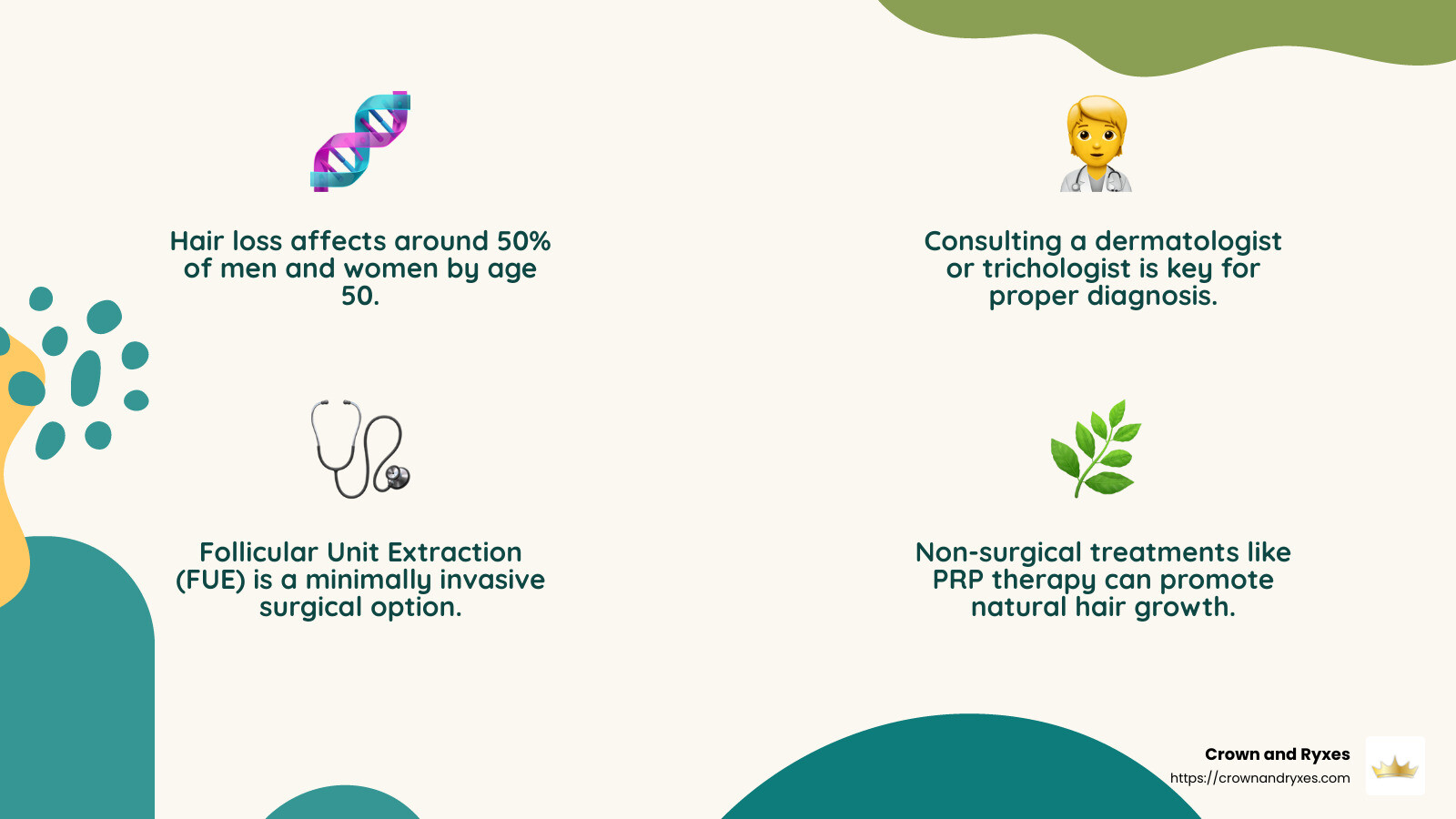
Hair restoration has come a long way, offering options that are both effective and subtle, perfect for individuals who value discretion and speed. With advancements like Follicular Unit Extraction (FUE) and Platelet-Rich Plasma (PRP) therapy, regaining a full head of hair is more accessible than ever before. These procedures are designed to fit seamlessly into your busy life, providing desired results with minimal downtime.
As Matthew Casavant, I’ve been exploring healthcare partnerships and solutions for over a decade. My aim is to help you find a doctor for hair near me who matches your needs for both privacy and proven results.
Understanding Hair Loss
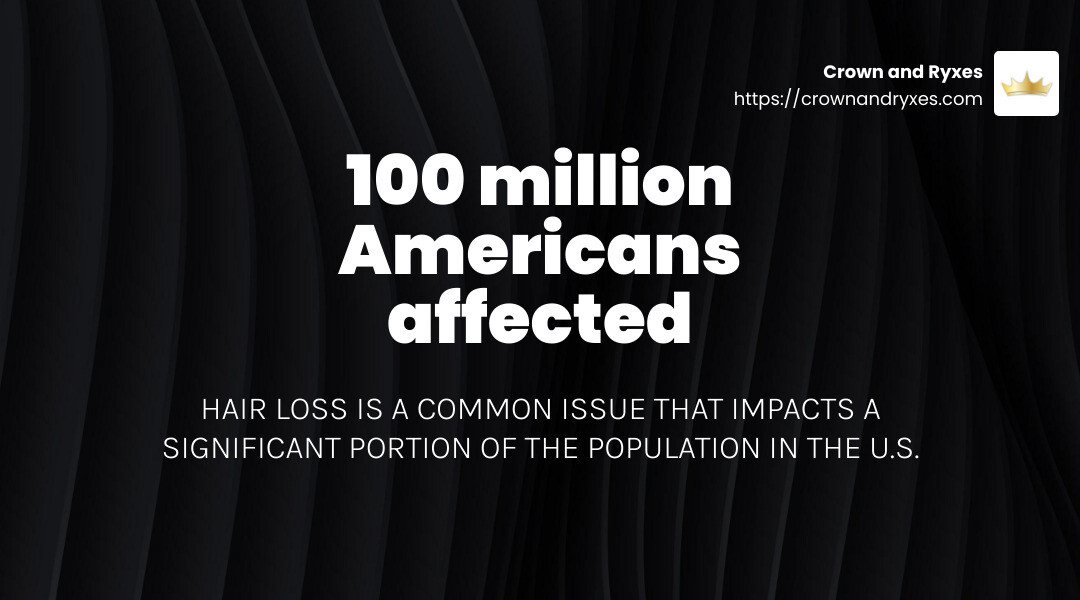
Hair loss is a common issue that affects millions of people worldwide, including a significant number of men and women in the U.S.
. Understanding the causes and symptoms can help you take the first step towards finding the right treatment.
Common Causes of Hair Loss
Hair loss can stem from a variety of factors, often making it a complex condition to diagnose. Here are some common causes:
Family History: Genetics play a crucial role in hair loss, with conditions like male and female pattern baldness often inherited from parents.
Hormonal Changes: Events such as pregnancy, menopause, or thyroid problems can lead to hair loss. Hormonal imbalances affect the hair growth cycle, causing thinning or shedding.
Medical Conditions: Autoimmune diseases, like alopecia areata, and scalp infections can contribute to hair loss. These conditions attack hair follicles, leading to bald spots or thinning.
Lifestyle Factors: Stress, poor diet, and certain hairstyles that pull on the scalp can also cause hair loss. These factors may disrupt the natural hair growth cycle, leading to excessive shedding.
Symptoms to Watch For
Recognizing the symptoms of hair loss early can help you seek timely treatment. Here are some signs to look out for:
Thinning Hair: A gradual reduction in hair volume, especially on the top of the head, is a common early sign. This thinning can be subtle and may go unnoticed initially.
Bald Spots: Circular or patchy bald areas can appear on the scalp or other parts of the body. These spots are often smooth and may grow slowly over time.
Excessive Shedding: Finding more hair than usual in your brush or shower drain could indicate hair loss. While some shedding is normal, an increase can signal a problem.
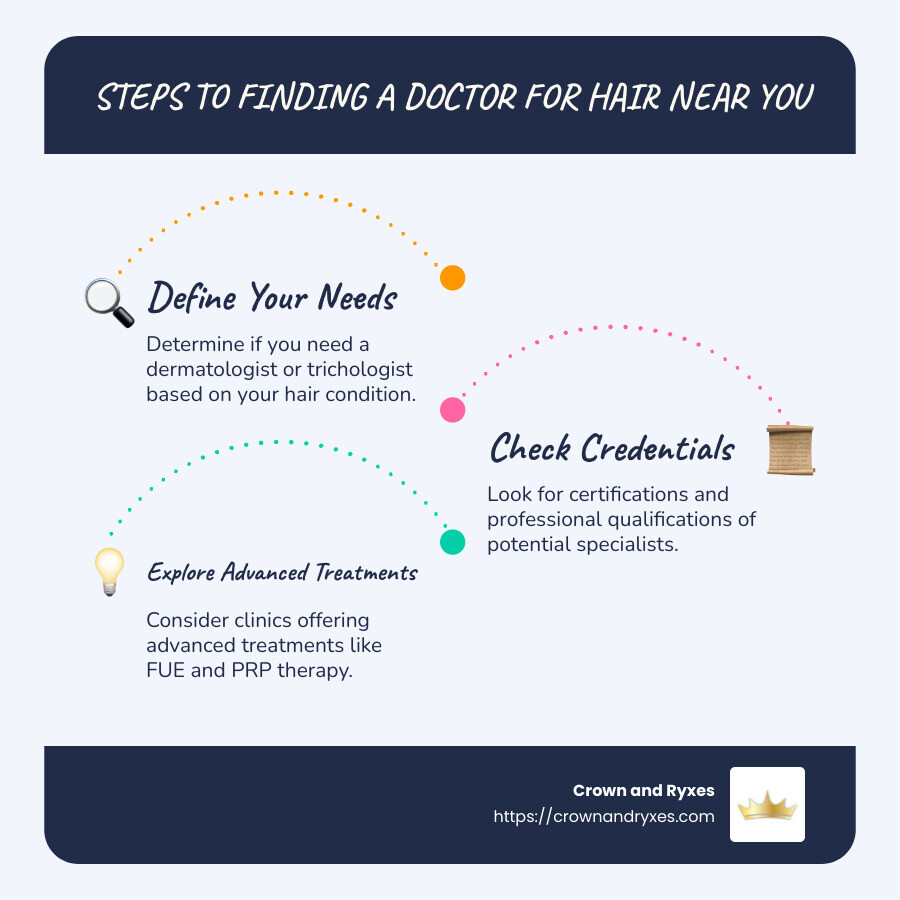
If you’re experiencing any of these symptoms, it’s important to consult with a specialist. A doctor for hair near me can help diagnose the underlying cause through a detailed examination and tests.
Understanding these aspects of hair loss can empower you to take control of your hair health. In the next section, we’ll explore how to find the right specialist to address your concerns and provide effective solutions.
Doctor for Hair Near Me: Finding the Right Specialist
When you’re dealing with hair loss, finding the right specialist is crucial. But who should you see—a dermatologist or a trichologist? Let’s break it down.
Dermatologists vs. Trichologists
Dermatologists are medical doctors who specialize in skin, hair, and nail conditions. They have extensive training in diagnosing and treating a wide range of hair disorders. Whether you’re dealing with alopecia areata or male pattern baldness, a dermatologist can provide a medical diagnosis and a treatment plan custom to your needs. For instance, at Crown and Ryxes, dermatologists are skilled in addressing complex hair disorders and conducting clinical trials for new treatments.
Trichologists, on the other hand, focus specifically on hair and scalp health. They aren’t medical doctors but have specialized training in hair science. They can help with non-medical hair issues like scalp health, hair texture, and hair care advice. Their expertise is particularly useful for addressing hair loss resulting from lifestyle factors or hair damage.
So, who should you see? If you suspect an underlying medical condition or need a formal diagnosis, a dermatologist is your best bet. For hair care advice or non-medical issues, a trichologist can be a great resource.
What to Expect from a Consultation
When you visit a doctor for hair near me, whether a dermatologist or a trichologist, here’s what you can generally expect:
Examination: The specialist will conduct a thorough examination of your scalp and hair. This might include a visual inspection and possibly using a magnifying device to get a closer look at your hair follicles and scalp condition.
Tests: Depending on your symptoms, the doctor may recommend certain tests. These could include blood tests to check for hormonal imbalances or nutritional deficiencies, or a scalp biopsy to examine hair follicles more closely.
Personalized Plan: After diagnosis, the specialist will discuss treatment options with you. This plan will be custom to your specific condition and needs. It might include medications, topical treatments, or lifestyle changes to improve your hair health.
Finding the right specialist can make all the difference in managing hair loss effectively. By understanding the roles of dermatologists and trichologists, you can make an informed decision about who to consult for your hair concerns.
Top Hair Restoration Treatments
When it comes to restoring hair, there are several advanced treatments available today. Let’s explore some of the most effective options: Follicular Unit Extraction (FUE), Platelet-Rich Plasma (PRP) Therapy, and Low-Level Light Therapy.
Follicular Unit Extraction (FUE)
FUE is a popular hair restoration technique that offers natural-looking results without the worry of a linear scar. In this procedure, individual follicular units are carefully extracted from the donor area—typically the back or sides of the scalp—and transplanted to areas with thinning or no hair.
No Linear Scar: Unlike traditional methods that might leave a noticeable scar, FUE uses micro-grafts, allowing you to style your hair as you wish without worrying about visible marks.
Quick Recovery: The procedure is minimally invasive, and most patients can return to their normal activities within a few days.
Platelet-Rich Plasma (PRP) Therapy
PRP Therapy is a non-surgical option that harnesses your body’s natural healing properties to promote hair growth. Here’s how it works:
Natural Healing: A small sample of your blood is drawn and processed to concentrate the platelets. These are then injected into your scalp to stimulate hair follicles and encourage growth.
Promotes Growth: Many patients experience noticeable hair growth and thickening after a series of PRP treatments.
Minimal Downtime: Because PRP uses your own blood, there’s little risk of adverse reactions, and you can typically resume normal activities right away.
Low-Level Light Therapy
Low-Level Light Therapy (LLLT) is another innovative approach to hair rejuvenation. It uses laser technology to improve hair health and density.
Laser Technology: Red light from lasers penetrates the scalp, promoting cellular activity and improving hair strength and resilience.
Convenient and Non-Invasive: Treatments are usually quick and painless, often done at home with a hands-free device. Patients report significant improvements in hair thickness and reduced shedding over time.
These advanced treatments offer hope for those experiencing hair loss. Whether you’re considering FUE, PRP, or LLLT, each option provides unique benefits custom to different needs and preferences. Always consult a qualified specialist to determine the best course of action for your hair restoration journey.
Frequently Asked Questions about Hair Doctors
What is a doctor for hair called?
When you’re dealing with hair loss, you might encounter two types of specialists: dermatologists and trichologists.
Dermatologists are medical doctors who specialize in skin, hair, and nail disorders. They can diagnose and treat a wide range of hair loss conditions, from common issues like male and female pattern baldness to more complex diseases such as alopecia areata or lichen planopilaris.
Trichologists, on the other hand, are hair and scalp specialists who focus specifically on diagnosing and treating hair loss and scalp conditions. While they are not medical doctors, they often work alongside dermatologists to provide comprehensive care.
Which doctor should I consult for hair loss?
Choosing between a dermatologist and a trichologist depends on your specific needs.
If you suspect your hair loss is due to a medical condition, such as a thyroid disorder or an autoimmune disease, a dermatologist is the right choice. They can conduct medical tests and prescribe medications if necessary.
For issues primarily related to hair health or scalp conditions, a trichologist might be more suitable. They often provide personalized care plans that include topical treatments and lifestyle advice.
Is it better to see a trichologist or dermatologist?
The decision between a trichologist and a dermatologist comes down to their specialty and expertise.
Dermatologists offer a medical approach, with the ability to perform diagnostic tests and prescribe medications. They are ideal for complex or medically-related hair loss issues.
Trichologists focus on the health of your hair and scalp, providing non-medical treatments and advice. They are great for general hair health concerns and non-medical hair loss issues.
The best option is to consult with a doctor for hair near me who can assess your situation and recommend the most appropriate specialist for your needs.
Conclusion
At Crown and Ryxes, we understand that hair loss can be a deeply personal experience. That’s why we offer personalized restoration and wellness solutions custom to your unique needs. Our approach is rooted in empathy and expertise, ensuring that every client feels supported throughout their hair restoration journey.
Whether you’re considering advanced treatments like Follicular Unit Extraction (FUE) or exploring non-surgical options such as Platelet-Rich Plasma (PRP) therapy, we’re here to guide you. Our team of specialists is dedicated to helping you achieve the best possible outcomes, with a focus on both men’s and women’s hair health.
Choosing the right doctor for hair near me is crucial, and at Crown and Ryxes, we pride ourselves on providing top-notch care with a personal touch. Our professionals, including dermatologists and trichologists, work together to offer comprehensive solutions that address the root causes of hair loss.
By prioritizing your individual needs and goals, we aim to restore not just your hair, but also your confidence. Begin your personalized wellness journey with us today. To learn more about our services, visit our Hair Transplant Services page.