

Navigating the Insurance Maze: The Truth About Liposuction Coverage
Does insurance cover liposuction? Generally, no. Most health insurance plans do not cover liposuction because it’s considered an elective cosmetic procedure rather than medically necessary treatment.
| Insurance Coverage for Liposuction | Details |
|---|---|
| Standard Coverage | ❌ Not covered for cosmetic purposes |
| Medical Exceptions | ✅ May be covered for conditions like lipedema, lymphedema, or lipomas |
| Medicare | ❌ Generally does not cover liposuction unless deemed medically necessary |
| Documentation Needed | Doctor’s letter of medical necessity, diagnostic tests, treatment history |
Standing in front of the mirror, pinching that stubborn pocket of fat that won’t budge despite diet and exercise, you’re not alone in wondering if your health insurance might help with the cost of liposuction. With the average cost hovering around $5,175 in 2025 (surgeon’s fee only), it’s a significant investment in yourself—and one that most insurance providers aren’t eager to help with.
The reality is straightforward: insurance companies draw a clear line between cosmetic procedures (which they typically don’t cover) and medically necessary treatments (which they might). Understanding this distinction is crucial before you consider scheduling a consultation.
In rare cases, when liposuction addresses a specific medical condition rather than purely aesthetic concerns, you might have a case for coverage. But navigating these exceptions requires thorough documentation, persistence, and often, a bit of luck.
I’m Dr. Matthew Casavant, a physician with extensive experience helping patients understand their options regarding procedures like liposuction and whether insurance coverage is possible. Having guided many patients through the process of determining if does insurance cover liposuction for their specific condition, I’ve seen the challenges and occasional successes in securing coverage.
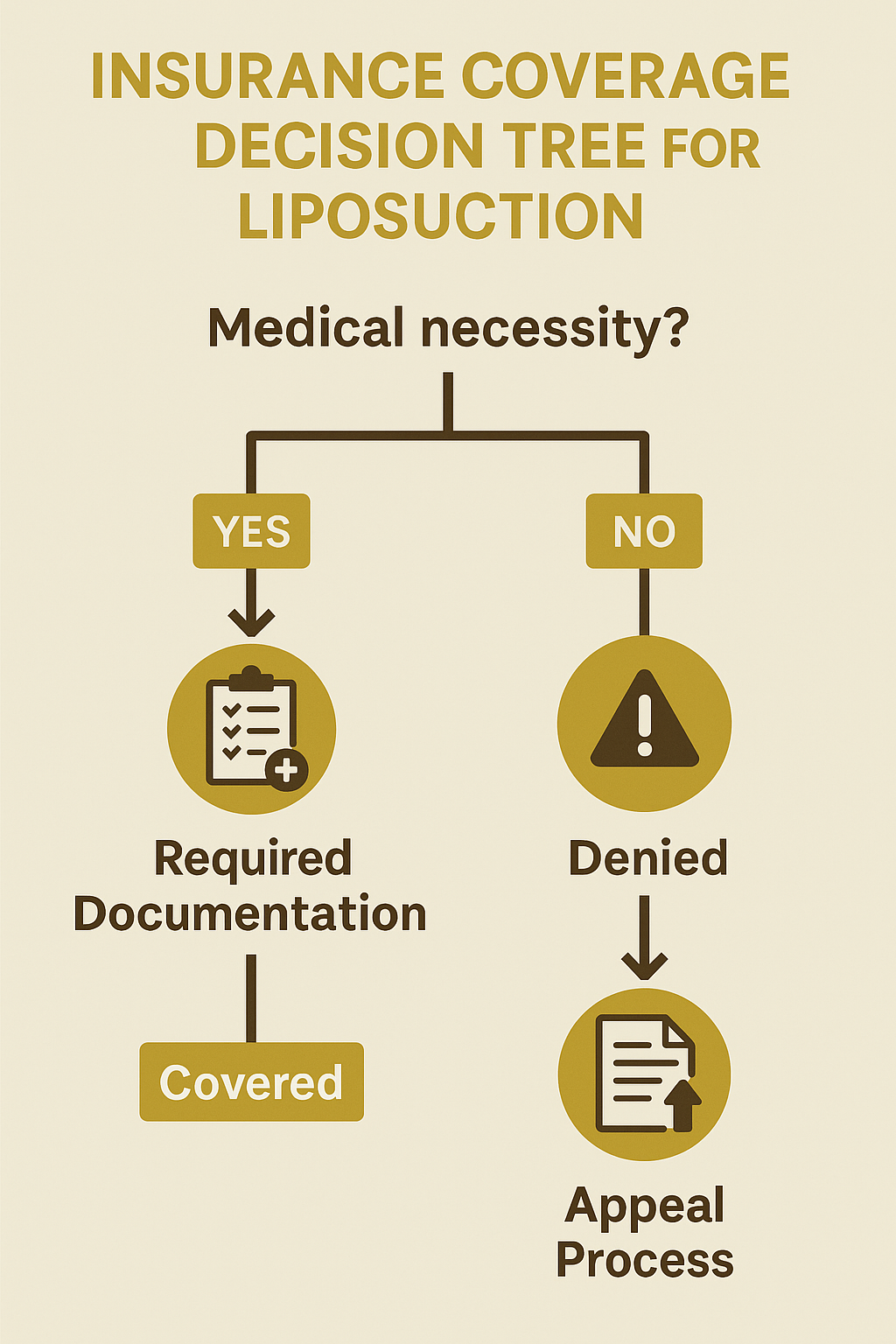
Does insurance cover liposuction terms explained:
– how much does liposuction cost
– abdominal liposuction cost
– arm liposuction cost
Understanding Liposuction and Its Appeal
Liposuction, sometimes called lipoplasty, isn’t just another cosmetic procedure—it’s often a turning point in many people’s lives. This surgical technique removes stubborn fat from specific body areas, helping create more balanced proportions and smoother contours. And it’s incredibly popular! In 2025, over 375,000 procedures are expected to be performed in the United States, continuing the upward trend we’ve seen in recent years.

When you think about how liposuction works, it’s actually quite straightforward. A surgeon makes tiny incisions and inserts a thin tube called a cannula to loosen and vacuum away unwanted fat. Liposuction isn’t a weight-loss method—it’s a body contouring solution. Those stubborn pockets of fat that seem to ignore your healthy eating and regular exercise? That’s exactly what liposuction targets.
I’ve seen how transformative this procedure can be. Many patients seek liposuction for both physical changes and emotional benefits. There’s something deeply personal about finally addressing those areas that have bothered you for years.
Improved proportions often lead to better-fitting clothes, which might sound simple but can make a world of difference in daily comfort and confidence. Many patients report how their self-esteem blossoms after seeing their new contours. And interestingly, the visible results often motivate continued healthy habits—it becomes easier to maintain a healthy lifestyle when you feel good about your appearance.
As one patient beautifully shared with the American Society of Plastic Surgeons: “I’d look in the mirror and not recognize myself. Liposuction helped me achieve balance in a physical sense, as well as in an emotional sense.”
This connection between physical appearance and emotional wellbeing isn’t superficial—it’s deeply human. At Crown and Ryxes, we recognize that your body image affects how you move through the world. That’s why we approach each person’s wellness journey with genuine care and a customized plan. Your relationship with your body is uniquely yours, and any decision to change it deserves thoughtful consideration and support.
But with all these benefits, many wonder: does insurance cover liposuction? It’s a critical question that leads us to our next section, where we’ll explore the sometimes complicated relationship between cosmetic procedures and insurance coverage.
Does Insurance Cover Liposuction?
The short answer? Rarely. According to the American Society of Plastic Surgeons, “Most health insurance plans do not cover liposuction costs.” This statement holds true across most major insurance providers, including Medicare.
Insurance companies typically classify procedures into two categories:
| Cosmetic Procedures | Reconstructive Procedures |
|---|---|
| Improve appearance | Correct abnormalities |
| Elective | Medically necessary |
| Not covered by insurance | May be covered by insurance |
| Patient pays out-of-pocket | Insurance may cover partial or full cost |
| Examples: standard liposuction, tummy tucks | Examples: breast reconstruction after mastectomy, repair after injury |
Why Doesn’t Insurance Cover Liposuction?
When patients ask me, “Does insurance cover liposuction?” I often have to deliver the disappointing news. Insurance companies have drawn a clear line in the sand when it comes to cosmetic procedures. They’ve built their coverage models around a fundamental principle: they only pay for treatments that are medically necessary, not those that simply improve appearance.
Think about it from their perspective. Insurance exists primarily to protect you financially from unexpected health issues and necessary medical treatments. Your desire for a more contoured waistline—while perfectly valid and important to your self-image—doesn’t fit into their definition of medical necessity.
For a treatment to qualify for coverage, insurance providers typically require it to address at least one of these criteria: treat or prevent illness, repair injury, correct functional impairment, or address a medical condition. Standard liposuction rarely checks these boxes because it’s usually an elective procedure that primarily improves appearance rather than treating an underlying health issue.
As one insurance document bluntly puts it: “Liposuction is an entirely cosmetic procedure you choose for personal reasons and does not directly influence your overall health.” While this statement might feel dismissive of the very real emotional benefits that can come from improved body image, it reflects the reality of how insurance companies evaluate coverage.
When Does Insurance Cover Liposuction?
Despite the general “no” answer to “does insurance cover liposuction,” there are exceptions that might surprise you. In certain circumstances, insurance may indeed cover the procedure—but only when it crosses the line from purely cosmetic to reconstructive surgery.
For your liposuction to have a chance at coverage, it needs to address specific medical issues. These might include a malformed body part due to congenital defects, developmental abnormalities, trauma, infection, tumors, or disease. The key difference is that the procedure must resolve a functional impairment, not just improve how you look.
This is similar to how breast reduction surgery might be covered when it’s performed to alleviate chronic back pain, or how a rhinoplasty might be covered when it’s fixing a broken nose or correcting breathing problems. The procedure itself hasn’t changed—but the purpose has shifted from cosmetic improvement to medical treatment.
Even major insurers like Blue Cross Blue Shield (which comprises 32 independent companies) may consider coverage for liposuction in specific circumstances. However, it’s worth noting that policies vary significantly between these independent entities, so what’s covered under one Blue Cross plan might not be covered under another.
At Crown and Ryxes, we understand the frustration of navigating these complex insurance distinctions. While we focus primarily on hair restoration and sexual wellness solutions, we empathize with patients seeking various personal wellness treatments and the financial challenges they often face. The journey toward your best self shouldn’t be complicated by insurance confusion, which is why understanding these distinctions matters so much.
When Is Liposuction Considered Medically Necessary?
The line between “cosmetic” and “medically necessary” isn’t always clear-cut when it comes to liposuction. While most people think of liposuction as purely aesthetic, there are legitimate medical conditions where this procedure might be your best treatment option.

Let’s talk about when does insurance cover liposuction might actually get a “yes” from your provider. The key is whether you’re dealing with a recognized medical condition that causes real functional problems in your daily life.
Lipedema is one of the most common conditions where insurance might cover liposuction. This chronic disorder primarily affects women, causing abnormal fat deposits in the legs and sometimes arms. It’s not just about appearance – lipedema causes real pain, easy bruising, and can severely limit your mobility as it progresses. Many patients describe the frustration of being told to “just lose weight” when diet and exercise don’t touch these abnormal fat cells.
If you’re dealing with lymphedema – swelling caused by lymphatic system blockages – liposuction might also be medically necessary. This condition often develops after cancer treatments when lymph nodes are removed or damaged. The resulting fluid and fat buildup can be debilitating, making even simple activities painful.
Lipomas – those benign fatty tumors that develop under the skin – can sometimes reach sizes that cause nerve compression and significant discomfort. When they’re large or numerous, removal through liposuction may be considered medically necessary rather than cosmetic.
Men suffering from gynecomastia (abnormal breast tissue development) that hasn’t responded to other treatments may find that liposuction offers relief from both physical discomfort and psychological distress. Similarly, patients with lipodystrophy syndrome – often associated with HIV medications – might need liposuction to address abnormal fat distribution that causes health complications.
Dr. Marcia A. Harris, a specialist in this field, puts it well: “It must be made clear that liposuction cannot cure conditions like lipedema. It’s a process that can provide fat reduction, symptom relief, and slow the progression of the disease.”
For any of these conditions, your insurance company won’t just take your word for it. They need solid evidence that:
Your condition causes significant functional impairment in daily activities
You’ve already tried conservative treatments without success
Liposuction is truly the most appropriate treatment option
The procedure isn’t primarily aimed at improving your appearance
The reality is that the burden of proof rests squarely on your shoulders. You and your healthcare provider will need to build a compelling case through comprehensive documentation, diagnostic tests, and treatment histories.
At Crown and Ryxes, we understand how frustrating this process can be. The same procedure that might be dismissed as “cosmetic” in one context could be life-changing medical treatment in another. That’s why we work closely with patients to help determine if their situation might qualify for coverage and guide them through the documentation process.
Navigating Insurance Policies and Proving Medical Necessity
Let’s face it – dealing with insurance companies isn’t anyone’s favorite activity. But if you believe your liposuction might qualify for coverage, understanding how to steer this maze can make all the difference between paying thousands out-of-pocket or getting help with those costs.
Understanding Your Policy
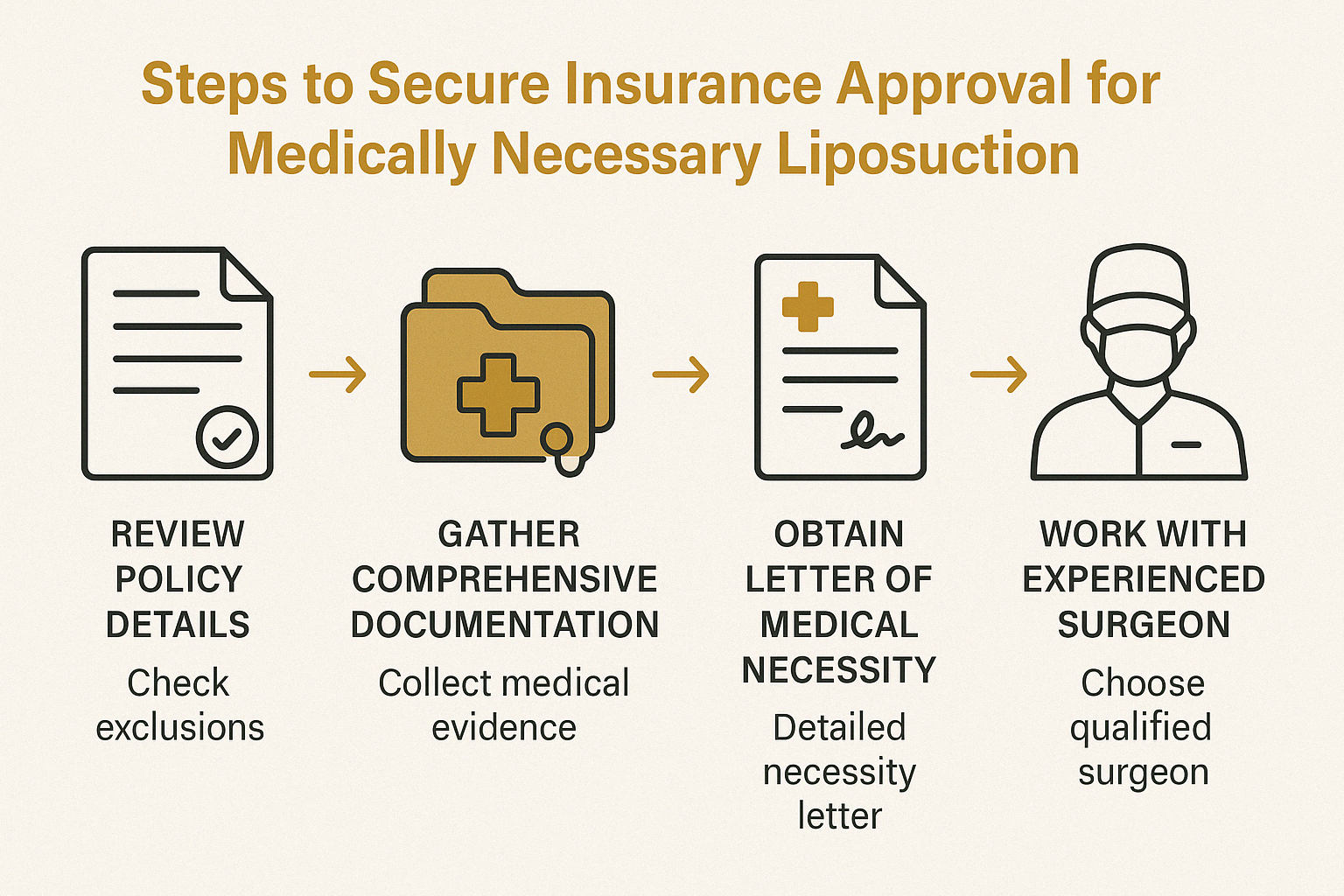
First things first – get familiar with your specific insurance policy. I always tell my patients to think of their policy as a roadmap; you need to know exactly where you’re going before starting the journey.
Pull out that policy document (or log into your online portal) and look for specific language about:
– Exclusions for cosmetic procedures
– Requirements for pre-authorization
– Specific terminology regarding reconstructive surgery
– Information about the appeals process
Don’t hesitate to pick up the phone and call your insurance provider directly. Ask pointed questions about your coverage for procedures that might be considered medically necessary. Pro tip: Always write down the date, time, and name of the representative you speak with, along with any information they provide. This documentation can be invaluable later if there’s any confusion.
Gathering Documentation
When it comes to the question of does insurance cover liposuction, your case will only be as strong as your documentation. Think of this as building a compelling case file that clearly demonstrates why your procedure isn’t merely cosmetic.
Work closely with your healthcare providers to collect comprehensive evidence. You’ll need detailed medical records that tell the story of your condition – how long you’ve had it, how it impacts your daily life, and why other treatments haven’t worked.
Your documentation arsenal should include:
Your medical history related to the condition, diagnostic test results confirming your diagnosis, and clear photographs showing the physical manifestation of your condition. Don’t forget to document your treatment history showing failed conservative approaches, a functional assessment detailing how your condition impacts daily activities, and most importantly, a thorough letter of medical necessity from your doctor.
This letter is truly the cornerstone of your case. A good letter of medical necessity includes your specific diagnosis with proper medical codes, details your symptoms and functional limitations, outlines previous treatments and their outcomes, explains why liposuction is medically necessary for your condition, describes expected health improvements, and cites relevant medical literature supporting your case.
Working With Your Healthcare Provider
Choosing the right healthcare provider isn’t just about finding someone skilled – you need someone who understands the insurance battle. The right medical professional can be your advocate in this process.
Your healthcare provider becomes your advocate by using appropriate medical terminology in all documentation, providing detailed notes focused on medical necessity rather than aesthetic outcomes, coding the procedure correctly for insurance submission, writing a compelling letter of support, and helping guide you through the pre-authorization process.
I remember one patient with severe lipedema who had been denied twice before seeking help. By having her doctor document the exact functional limitations and pain patterns, she was able to secure coverage for a procedure that ultimately allowed her to walk without pain for the first time in years.
The Pre-Authorization Process
Most insurance companies require pre-authorization for surgical procedures – think of this as getting permission before proceeding. The process typically involves submitting all your carefully gathered medical documentation, waiting while the insurance company’s medical team reviews your case, receiving a determination (approval, denial, or request for more information), and preparing to appeal if necessary.
Don’t be discouraged by an initial denial – it’s incredibly common, even for legitimate medical cases. The appeals process often requires additional documentation, peer-to-peer reviews between your doctor and the insurance company’s medical director, and a healthy dose of persistence.
As one insurance specialist often says, “The first ‘no’ is just the beginning of the conversation.” Many patients receive approval after an appeal, even when initially denied. Insurance companies often count on patients giving up after the first rejection, but those who persevere often find success.
Proving medical necessity for liposuction is challenging but not impossible. With thorough documentation, the right medical team, and persistence, you may be able to successfully answer “yes” to the question: does insurance cover liposuction for your specific condition?
For more scientific background on how medical professionals distinguish between cosmetic and medically necessary procedures, you might find this research on medical necessity in cosmetic procedures helpful in building your case.
Exploring Alternatives and Financing Options
When the reality sinks in that insurance won’t cover your liposuction procedure, it’s easy to feel discouraged. But don’t worry
— you still have a variety of approaches that can help you move closer to your body-contouring goals without undue financial strain.
Considering Healthy Lifestyle Adjustments
Before committing to surgery, it’s always wise to review your overall health habits. A balanced diet and consistent exercise routine can support your long-term wellness, boost your post-procedure results, or even help you feel more confident about addressing specific areas of concern. While these approaches may not eliminate isolated pockets of fat entirely—especially if they’re resistant to diet and exercise—their role in overall health is undeniable.
Financing Options for Liposuction
When you’re ready to move forward with liposuction and “does insurance cover liposuction” has been answered with a “no,” these financing paths can make your procedure more manageable:
• Medical credit cards like CareCredit, designed for healthcare expenses, often include promotional interest-free periods.
• Healthcare-specific financing plans from various financial institutions, which may offer flexible repayment options.
• Health Savings Account (HSA) or Flexible Spending Account (FSA) funds, in cases where a physician can document medical necessity.
• Traditional personal loans, which can sometimes be surprisingly affordable when spread out over a few years.
When comparing financing methods, look at both the monthly payment and the total cost over time. Also, keep an eye out for any early-payment penalties or changes in interest rates if you don’t clear the balance within promotional periods.
At Crown and Ryxes, our patient coordinators in Clermont and Lady Lake, Florida, are experienced in helping individuals explore a variety of wellness options—even when insurance doesn’t cover the full cost of a procedure. While we don’t perform liposuction, we understand the challenges of navigating health and wellness decisions and can provide information about remaining financially comfortable throughout your journey.
For more details on potential paths forward, consider reviewing our Liposuction Orlando FL page, where we share broader information about procedures and financing options in the Central Florida area.
Frequently Asked Questions about Liposuction Insurance Coverage
Can Insurance Cover Liposuction?
The question “does insurance cover liposuction?” isn’t always a straightforward no. While rare, insurance coverage is possible when the procedure addresses genuine medical issues rather than just appearance concerns.
Your chances of coverage depend on several key factors. First, your specific medical condition matters tremendously—conditions like lipedema or lymphedema carry more weight than simply wanting to reduce love handles. Second, you’ll need clear evidence of how this condition actually impairs your daily functioning—documentation of pain, mobility issues, or other limitations is crucial. Third, you’ll need to show you’ve already tried and failed with less invasive treatments before turning to surgery.
Perhaps most importantly, your specific insurance policy’s terms will ultimately determine what’s possible. Each provider has their own definition of “medical necessity,” and some policies contain explicit exclusions for procedures they consider primarily cosmetic regardless of underlying conditions.
“The key is framing,” explains one insurance specialist I work with. “Your documentation must emphasize functional improvement rather than aesthetic benefits, even when both might result from the procedure.”
What Steps Can I Take if My Insurance Denies Coverage?
An initial denial isn’t necessarily the end of the road. In fact, many patients who eventually secure coverage face rejection on their first attempt.
Start by requesting a written explanation for the denial—this document provides valuable insights into exactly what your insurance company found lacking in your case. Then carefully review your policy’s appeals process, noting all deadlines and requirements.
The heart of a successful appeal is strengthening your case with additional evidence. Work with your doctor to gather more detailed clinical notes, additional test results showing the progression of your condition, or more comprehensive documentation of how your daily life is affected. Personal documentation can be powerful too—keeping a journal of pain levels or limitations in movement provides compelling evidence of medical necessity.
Once you’ve built a stronger case, submit your formal appeal within the specified timeframe. Don’t be discouraged if this process takes time—persistence often pays dividends.
If your internal appeal is denied, you still have options. Consider requesting a peer-to-peer review where your doctor speaks directly with the insurance company’s medical director. These doctor-to-doctor conversations often help clarify medical necessity in ways that paperwork alone cannot. You may also have rights to an external review by an independent third party, particularly for certain conditions or in states with strong patient advocacy laws.
Remember what one patient shared after her successful appeal: “It took three tries and six months of persistence, but eventually my insurance covered my lipedema treatment. Don’t give up after the first no.”
Are There Payment Options if Insurance Doesn’t Cover My Liposuction?
When insurance coverage isn’t an option, you still have many paths forward to make liposuction financially manageable.
Many of our patients at Crown and Ryxes find medical credit cards like CareCredit particularly helpful, as they often offer interest-free periods specifically for healthcare procedures. Others prefer dedicated healthcare financing plans, which typically feature competitive interest rates for medical treatments.
We also offer in-house financing options that allow you to spread payments over time without involving third-party lenders. For some patients, this creates a more comfortable payment schedule without additional credit checks or applications.
Don’t overlook potential tax advantages either. If your procedure has been deemed medically necessary by a physician (even if insurance won’t cover it), you might be able to use HSA or FSA funds to pay for it, providing significant tax savings.
When budgeting for liposuction, remember to account for all costs beyond just the surgeon’s fee. Anesthesia typically adds $500-$1,000, facility charges range from $600-$1,200, and you’ll also need to budget for pre-operative tests, compression garments for recovery, medications, and follow-up visits.
During your consultation at Crown and Ryxes, we take time to provide a comprehensive cost breakdown with no surprises. We understand this is both a physical and financial decision, and we’re committed to helping you find a solution that fits your body goals and your budget.
“The investment in yourself shouldn’t cause financial stress,” as one of our financial counselors often tells patients. “Our job is to help you find a comfortable path forward.”
Conclusion
Let’s face facts: navigating insurance coverage for liposuction feels a bit like trying to solve a puzzle with missing pieces. Most of us start with high hopes only to find that standard insurance policies view liposuction through a very specific lens—cosmetic procedures generally don’t make the cut for coverage.
The dividing line is clear. Procedures that improve appearance fall into the “cosmetic” category, while those that address functional problems or specific medical conditions might qualify as “medically necessary.” This distinction isn’t just semantic—it’s the difference between paying out-of-pocket or having insurance help shoulder the cost.
If you believe your situation falls into that rare “medically necessary” category—perhaps you’re dealing with lipedema, lymphedema, or another qualifying condition—don’t give up before you’ve built your case. Work closely with your healthcare provider to gather comprehensive documentation. Be prepared to explain exactly how your condition impacts your daily life, what treatments you’ve already tried, and why liposuction represents a medical necessity rather than a cosmetic preference.
Even with perfect documentation, be mentally prepared for the possibility of an initial denial. Many patients find success through the appeals process, where persistence often pays dividends. As one patient told me after finally securing coverage for her lipedema treatment: “It wasn’t easy, but having a doctor who understood the system made all the difference.”
For those who don’t qualify for insurance coverage—and that’s most people considering liposuction—the good news is you still have options. From medical credit cards to payment plans, HSA/FSA accounts to personal loans, the financial aspect doesn’t have to be a roadblock.
While cost matters, your safety and results matter more. Choosing a qualified provider with experience in your specific needs should remain your top priority. The cheapest option rarely delivers the best outcome, especially when it comes to your body and well-being.
Does insurance cover liposuction? Usually not—but understanding the exceptions, alternatives, and financing options empowers you to make choices that align with both your health needs and personal goals.
At Crown and Ryxes, we believe everyone deserves to feel comfortable in their own skin. While we don’t offer liposuction procedures, our approach to wellness focuses on the whole person. We specialize in premier hair restoration and sexual wellness solutions for both men and women, helping you on your personalized wellness journey.
We invite you to learn more about our Services and schedule a consultation at our Clermont or Lady Lake, Florida locations. Let’s have an honest conversation about your wellness goals, options, and the path that makes the most sense for your unique situation.
Your journey toward feeling your best may have its twists and turns, but with the right information and support, you’ll steer it with confidence and clarity.