

Understanding Liposuction Pain: What You Need to Know
Does liposuction hurt? The short answer is that while you won’t feel pain during the procedure itself due to anesthesia, you can expect moderate discomfort afterward that most patients describe as similar to muscle soreness or a large bruise. Here’s what to expect:
| Pain Timeline | What to Expect |
|---|---|
| During procedure | No pain (under anesthesia) |
| First 48 hours | Peak discomfort (managed with prescribed medication) |
| Days 3-7 | Gradual improvement (transition to over-the-counter pain relief) |
| Weeks 1-2 | Mild soreness (most return to work) |
| Weeks 3-6 | Minimal discomfort (compression garment period) |
| Beyond 6 weeks | Typically pain-free (some residual swelling possible) |
If you’re considering liposuction to remove stubborn fat deposits, you’re not alone. With over 250,000 procedures performed annually in the United States, liposuction ranks as the second most popular cosmetic surgery treatment.
Many prospective patients worry about pain more than any other aspect of the procedure. The good news is that modern techniques and pain management protocols have made liposuction recovery much more comfortable than many people expect.
Most patients describe post-liposuction discomfort as feeling like a “giant bruise” rather than severe pain. This soreness typically peaks within the first 48 hours after surgery and gradually improves over the following week. By the end of the second week, most people have returned to their normal activities with minimal discomfort.
I’m Dr. Matthew Casavant, and as a physician with experience in minimally invasive surgical techniques, I’ve helped many patients understand what to expect regarding whether does liposuction hurt and how to manage discomfort effectively during recovery. My approach focuses on patient education and personalized care to ensure the most comfortable experience possible.

Does liposuction hurt word guide:
– how long does it take to recover from liposuction
– what is liposuction
– 360 liposuction
Does Liposuction Hurt? The Short Answer
When our patients ask “does liposuction hurt?“, I understand this comes from a natural place of concern. It’s one of the most common questions we hear, and the answer isn’t simply yes or no.
During the procedure itself, you’ll feel absolutely no pain. This is the good news! Liposuction is performed under anesthesia that completely blocks pain signals. Depending on your specific needs and the extent of your procedure, we might use local anesthesia with sedation or general anesthesia.
After surgery, what most patients experience is better described as moderate discomfort rather than severe pain. Many of our patients compare the sensation to how they feel after an intense workout or like having a large bruise in the treated area.
I’m always happy to bust this common myth: liposuction is not excruciatingly painful. Modern techniques, improved anesthesia approaches, and better pain management strategies have dramatically reduced discomfort compared to procedures from decades ago. According to the American Society of Plastic Surgeons, most patients find that over-the-counter pain medication works just fine after the first few days.
So, does liposuction hurt during the procedure?
The simple answer is no. During your liposuction procedure, you won’t feel pain thanks to the anesthesia we use. We typically offer two main options:
With local anesthesia, we inject a numbing solution directly into your treatment area, often combined with oral medication or IV sedation to help you relax while staying conscious. Many patients describe feeling some pressure or movement, but no pain.
Under general anesthesia, you’ll be completely unconscious with no awareness or memory of the procedure.
Most liposuction procedures at Crown and Ryxes use the tumescent technique. This involves injecting a special solution containing saline, lidocaine (a local anesthetic), and epinephrine (which constricts blood vessels) into the treatment area. This remarkable solution serves multiple purposes – it numbs the area, reduces bleeding, makes fat removal easier and more precise, and provides pain control that lasts 12-24 hours after surgery.
This extended numbing window is particularly helpful as it manages pain during those immediate post-operative hours when discomfort would typically peak.
After surgery, does liposuction hurt as much as people say?
Many of our patients are pleasantly surprised to find that post-liposuction discomfort is less intense than they anticipated. The sensation is typically described as similar to a deep bruise, like muscle soreness after a challenging workout, a feeling of tightness in the treated area, and tenderness when touched.
On a typical pain scale of 1-10 (with 10 being the worst pain imaginable), most patients at Crown and Ryxes report their discomfort in the first 48 hours as being in the 4-6 range – moderate but manageable. By the end of the first week, this typically decreases to a 2-3, which is mild and easily controlled with over-the-counter medication.
As one of our patients recently told me, “I was bracing myself for terrible pain, but it was more like how I feel after a really tough gym session—uncomfortable but definitely tolerable.”
The reality of liposuction recovery is typically much less daunting than many people fear. With proper preparation and following our post-operative instructions, most patients steer their recovery with minimal disruption to their daily lives.
What Influences Pain Levels: Anesthesia, Technique, Area, and You
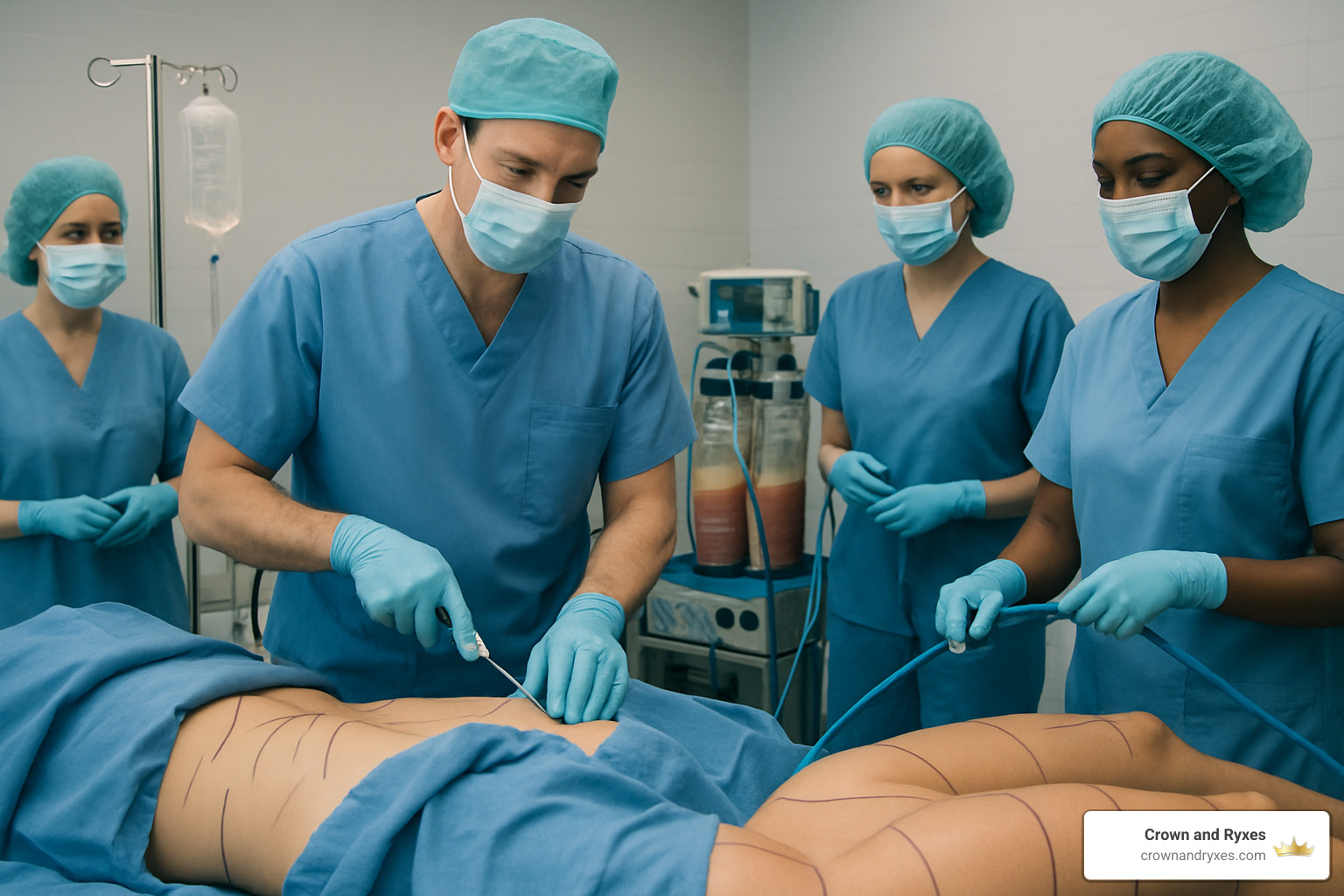
When patients ask me about liposuction recovery, I explain that pain is highly personal and varies based on several key factors. Think of it like how some people barely flinch at a flu shot while others need to look away and squeeze someone’s hand!
The treatment area plays a significant role in your comfort level. Abdominal liposuction typically involves more discomfort than arms or outer thighs. Why? Your core muscles engage with nearly every movement you make, from sitting up to laughing at your favorite show. When these areas are treated, you’ll notice the tenderness more frequently throughout your day.
The amount of fat removed directly impacts your recovery comfort. It’s simple physics – more extensive removal means more tissue manipulation and consequently more soreness afterward. For safety reasons, we typically limit removal to about five liters (roughly 10 pounds) in a single outpatient procedure at Crown and Ryxes. Many patients are surprised to learn there’s actually a safety cap on how much can be removed at once!
Your surgeon’s choice of liposuction technique significantly affects your recovery experience. Traditional methods involve more mechanical action, while newer energy-assisted approaches can be gentler on surrounding tissues. One patient told me, “After my SmartLipo procedure, I was back to light activities within days – nothing like the weeks of discomfort my sister described after her traditional lipo years ago.”
| Technique | Description | Pain Level | Recovery Time |
|---|---|---|---|
| Traditional Liposuction | Manual cannula suction | Moderate | 1-2 weeks |
| Tumescent Liposuction | Fluid injection before suction | Mild to moderate | 1-2 weeks |
| Ultrasound-Assisted (VASER) | Uses ultrasound energy to break up fat | Mild to moderate | 1-2 weeks |
| Laser-Assisted (SmartLipo) | Uses laser energy to liquefy fat | Mild | 3-7 days |
| Power-Assisted | Mechanical cannula movement | Mild to moderate | 1-2 weeks |
Your individual pain tolerance is perhaps the most unpredictable factor. Some patients breeze through recovery with minimal medication, while others with similar procedures require more support. This varies based on genetics, previous pain experiences, and even psychological factors like anxiety levels about the procedure.
Finally, never underestimate the importance of surgeon skill and technique. An experienced surgeon using gentle, meticulous movements can significantly minimize tissue trauma and subsequent discomfort. This is why choosing a provider with extensive experience is crucial for your comfort.
Traditional vs. Energy-Assisted Lipo
Traditional liposuction is like manually scooping ice cream – it gets the job done but requires more physical effort. The surgeon moves a cannula (thin tube) back and forth to break up fat before suctioning it away. This mechanical action creates more tissue disturbance and typically results in more post-operative tenderness.
Energy-assisted methods like VASER (ultrasound) or SmartLipo (laser) are more like using a warm scoop on that ice cream – the fat cells are first softened or liquefied with energy before removal. This gentler approach offers several benefits: less physical force is needed, more precise targeting of fat cells is possible, and there are often potential skin-tightening effects as a bonus.
Many of our Clermont, FL patients report reduced bruising and swelling with these advanced techniques. As one woman shared after her SmartLipo procedure: “My friend had traditional liposuction and told me to prepare for significant pain. I was genuinely surprised when my recovery was much easier—I only needed prescription pain medication for two days.”
Role of Anesthesia in Pain Control
The anesthesia approach we choose doesn’t just keep you comfortable during surgery—it can dramatically shape your entire recovery experience.
The magic of tumescent fluid lies in its extended action. This special solution contains lidocaine (a local anesthetic) that continues working for 12-24 hours after your procedure ends. This gives you a comfortable head start on recovery during those crucial first hours when discomfort would otherwise peak.
Many patients don’t realize that the type of anesthesia can affect how they feel days later. When tumescent liposuction is performed under local anesthesia rather than general anesthesia, patients typically experience less post-operative nausea and enjoy a quicker return to normal activities. General anesthesia, while necessary for some procedures, can cause side effects like nausea and grogginess that compound discomfort.
At Crown and Ryxes, we carefully tailor the anesthesia approach to your specific procedure and medical history. For smaller areas, local anesthesia with sedation often provides the best balance of comfort during the procedure and an easier recovery afterward. For more extensive treatments, general anesthesia might be recommended for your safety and comfort.
Does liposuction hurt less with proper anesthesia management? Absolutely. The right approach can make a world of difference in your recovery journey.
Recovery Timeline & Pain Expectations
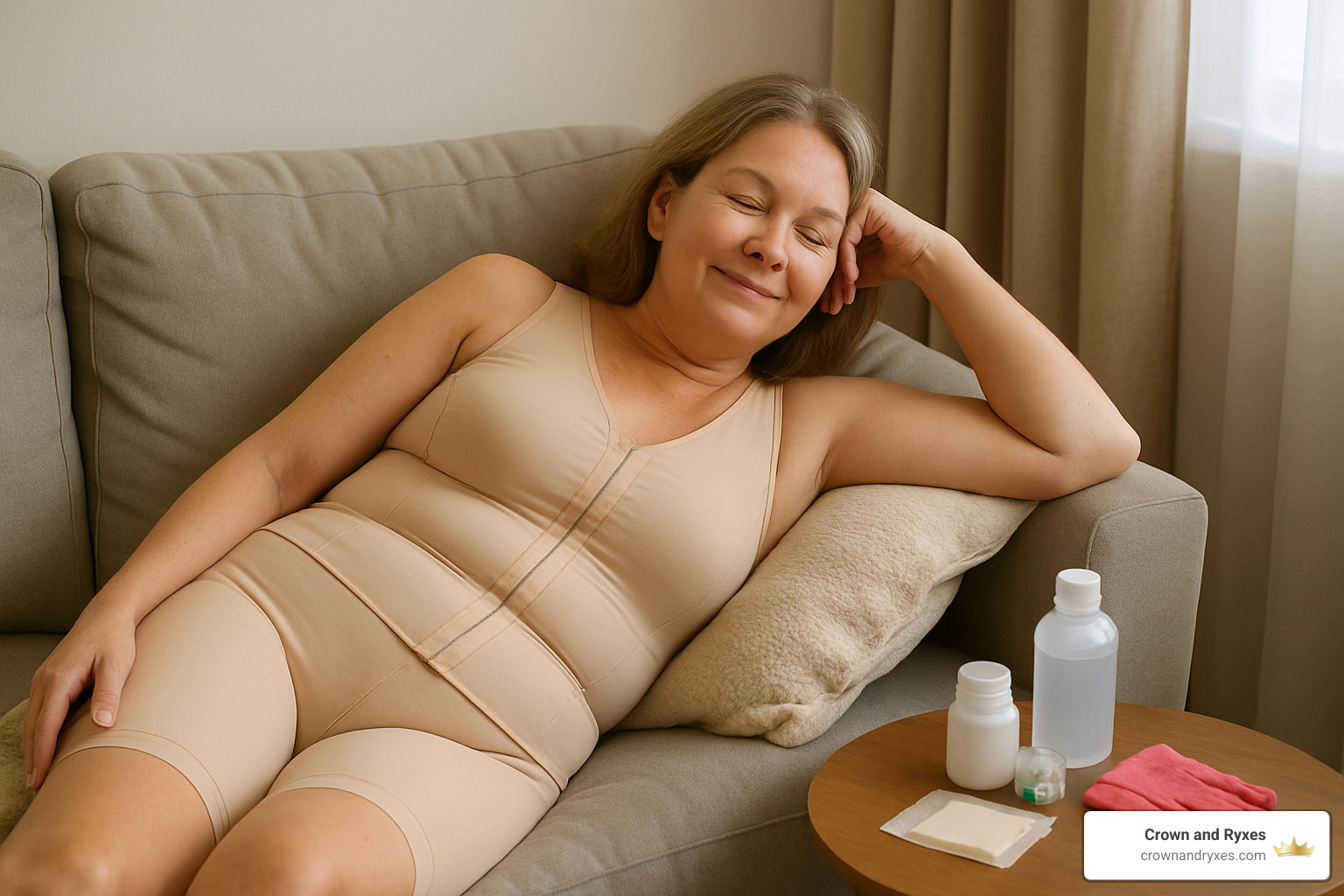
Wondering exactly when you’ll feel better after liposuction? I’ve guided hundreds of patients through recovery, and I’m happy to share what you can realistically expect during each phase. Having a clear timeline helps you plan your life around your healing process.
The First 48 Hours: Peak Discomfort
The first couple of days after your procedure will likely be the most challenging. Does liposuction hurt the most during this time? Yes, but it’s completely manageable with proper care.
Your body is responding to the surgical trauma with inflammation, which creates that characteristic tightness and tenderness in treated areas. Think of it as your body’s natural healing response kicking into high gear. You’ll be wearing your compression garment, which might feel snug but is crucial for reducing swelling and helping your skin adapt to your new contours.
If you have drainage tubes, don’t worry—they’re typically removed within a few days and help prevent fluid buildup. The prescription pain medication we provide will keep you comfortable during this initial phase.
“I spent most of the first two days watching Netflix and taking short walks around my living room,” one of our Clermont patients told me. “It wasn’t nearly as bad as I feared—more like recovering from a tough gym session than actual pain.”
Days 3-7: Gradual Relief
By day three, most patients notice a significant improvement. That initial intense discomfort begins to fade, and you’ll likely find yourself needing less pain medication. Many patients switch to over-the-counter options like acetaminophen around this time.
Your compression garment, once feeling restrictive, often becomes more comfortable as swelling decreases. This is also when gentle movement becomes even more important—short walks around your home or neighborhood promote better circulation and can actually speed your healing.
Most patients can resume driving around day 5-7, provided they’re no longer taking prescription pain medication. This milestone often feels like the first real step back toward normal life.
“I was surprised by how quickly things improved after that third day,” shared a patient from The Villages, FL. “By the end of the week, I was moving around comfortably and even went out for dinner with friends—though I was careful to wear loose clothing over my compression garment!”
Weeks 2-4 and Beyond
The second week marks the transition from recovery to resuming your normal routine. Does liposuction hurt during this phase? For most patients, the answer is barely—if at all.
Most people return to work within 7-10 days, though desk jobs allow for an earlier return than more physically demanding positions. Your compression garment will remain your constant companion for a total of 4-6 weeks, playing a crucial role in shaping your final results.
Physical activity can gradually be reintroduced, starting with light cardio around the two-week mark. More vigorous exercise typically waits until the 4-6 week point, when your body has healed enough to handle the increased demands.
The majority of your swelling resolves after four weeks, though some mild swelling may persist for several months. This is completely normal and nothing to worry about. Most patients see about 80% of their final results by 6-8 weeks, with the complete change visible around 3-6 months post-procedure.
“The funny thing is, I almost forgot I’d had surgery by week three,” one patient told me. “I was back at work, wearing normal clothes, and feeling great. The only reminder was putting on my compression garment each morning.”
For a more detailed breakdown of the recovery journey, including tips for each stage, visit our comprehensive guide on how long does it take to recover from liposuction. And remember, at Crown and Ryxes, we’re with you every step of the way, from your first consultation through your final follow-up.
Smart Strategies to Control Pain and Heal Faster
At Crown and Ryxes, we believe recovery shouldn’t be a mystery. Our patients in Clermont, FL and The Villages, FL often ask, “does liposuction hurt after I go home?” While some discomfort is inevitable, we’ve developed effective strategies to help you heal more comfortably and quickly.
Medications & Alternative Relief
The first few days after liposuction are when you’ll need the most help with pain management. Take your prescribed medications exactly as directed, especially during those first 48-72 hours when discomfort peaks. Most patients find they can transition to over-the-counter acetaminophen (Tylenol) after 3-4 days.
“I was surprised how quickly I was able to switch from the prescription meds,” shared Maria, a recent patient. “By day four, regular Tylenol was enough to keep me comfortable.”
Cold therapy works wonders for many of our patients. Apply cold compresses (never direct ice) over your compression garment for 20-minute sessions to reduce both swelling and pain. Remember to always keep a thin cloth between any cold pack and your skin.
Many patients find that simple distraction techniques—binge-watching a new series, listening to audiobooks, or catching up on podcasts—help take their mind off any discomfort. Your brain can only focus on so many things at once, so give it something enjoyable to process!
Lifestyle Habits That Speed Recovery
Your compression garment is your new best friend. While it might feel tight and a bit uncomfortable initially, it’s actually working to reduce swelling, shape your results, and minimize pain by supporting the treated tissues. Wear it exactly as long as recommended—typically 4-6 weeks.
Staying hydrated is crucial for healing, but many patients don’t realize that what you eat matters just as much. A low-sodium diet prevents excess fluid retention that can increase pressure and discomfort in treated areas. Try eating smaller, more frequent meals rather than three large ones, especially if you’ve had abdominal liposuction.
“The eating smaller meals tip was a game-changer for me,” one patient from The Villages told us. “It made such a difference in my comfort level, especially in the first week.”
Gentle movement promotes circulation and actually speeds healing. Short walks around your home or neighborhood (once approved by your doctor) help prevent blood clots while reducing stiffness. Just don’t overdo it—this isn’t the time to break personal fitness records.
Many of our patients benefit from lymphatic drainage massage once their initial healing is complete (usually after 1-2 weeks). This specialized technique helps move excess fluid out of treated areas, reducing swelling and the discomfort that comes with it. Always wait for your surgeon’s approval before scheduling any type of massage.
Quality sleep is when your body does its best healing work. Create a comfortable sleeping environment and follow your surgeon’s advice about optimal positions. Most patients find liftd positions (using pillows to prop up treated areas) most comfortable initially.
Finally, avoid nicotine and alcohol completely during your recovery. Both significantly impair your body’s healing abilities and can increase complication risks. Your body is already working hard to heal—don’t make its job harder!
For patients who’ve undergone more extensive procedures like 360 liposuction, these recovery strategies are particularly important to ensure optimal results and comfort.
Your recovery experience is unique to you. At Crown and Ryxes, we’re just a phone call away if you have questions about managing your recovery or if something doesn’t feel right. Most patients are pleasantly surprised by how manageable their recovery is with these strategies in place.
Normal Discomfort vs. Warning Signs: When to Call Your Surgeon
Let’s talk about something really important – knowing the difference between “normal” post-liposuction feelings and when you should be reaching for the phone to call us. This distinction can give you peace of mind during recovery and ensure you stay safe throughout the process.
After your procedure at Crown and Ryxes, you’ll experience certain sensations that are completely normal parts of healing. Most patients describe feeling sore and tender, similar to how you might feel after an intense workout. You’ll notice swelling and bruising in the treated areas – this is your body’s natural inflammatory response to surgery. That tight, firm feeling? Also normal as your tissues adjust to their new contours.
Many patients also experience temporary numbness or reduced sensation where we worked. This happens because the procedure temporarily disrupts some of the sensory nerves in the area. Don’t worry – this typically resolves within a few weeks to months. You might also notice some clear or slightly pinkish drainage from your incision sites during the first couple of days – this is expected as excess tumescent fluid drains from your body.
“When I got home after my procedure, I was so worried about every little sensation,” shared one of our Clermont, FL patients. “But knowing what was normal really helped me relax and focus on recovery instead of worrying.”
Red Flags You Shouldn’t Ignore
While most recoveries progress smoothly, there are certain warning signs that warrant immediate attention. Does liposuction hurt intensely, increasingly, or in a way that medications don’t touch? That’s a red flag. Pain should gradually improve, not worsen over time.
If you notice excessive bleeding or drainage that soaks through bandages, that’s another reason to call us right away. Signs of infection are particularly important to watch for – fever above 101.5°F, increasing redness or warmth, foul-smelling discharge, or red streaking from your incisions.
Pay attention to asymmetric swelling too. While some unevenness is normal, dramatic differences between sides could indicate a collection of fluid (seroma) that may need to be drained. According to research on post-op complications, early intervention for these issues leads to better outcomes.
More serious concerns include shortness of breath, chest pain, rapid heartbeat, severe nausea and vomiting, dizziness, or calf pain and swelling. These could indicate rare but serious complications like blood clots or fat embolism (where fat enters the bloodstream). These situations require emergency care – don’t hesitate to seek immediate medical attention if you experience these symptoms.
One of our Lady Lake, FL patients shared: “I developed a small area of extra swelling on one side about a week after surgery. Instead of panicking, I called the office, sent a photo, and they had me come in. It turned out to be a small seroma that Dr. Casavant quickly drained. The relief was immediate, and it prevented any impact on my final results.”
Protecting Your Results & Satisfaction
Your recovery journey doesn’t end when you leave our office. Regular follow-up appointments are crucial for monitoring your healing progress and addressing any concerns before they become problems. At Crown and Ryxes, we schedule several check-ins during your recovery period to ensure everything is progressing beautifully.
Having realistic expectations about both your results and recovery experience significantly impacts your overall satisfaction. Your final contours will emerge gradually as swelling subsides over several months. Those occasional “zingers” or shooting pains that might surprise you during recovery? Those are typically nerve regeneration signals – a good sign that healing is progressing.
“I found it helpful to track my recovery with photos,” another patient told us. “Looking back at weekly pictures showed me how much the swelling was actually improving, even on days when I felt like nothing was changing.”
By understanding what’s normal versus what requires medical attention, you can recover with confidence and protect the investment you’ve made in your new contours. Our team at Crown and Ryxes is always just a phone call away if you have any concerns during your recovery journey.
Frequently Asked Questions About Liposuction Pain

How long does liposuction pain last?
I hear this question in almost every consultation at our Clermont and The Villages offices. The truth is, does liposuction hurt after the procedure? Yes, but it’s temporary and follows a predictable pattern.
Most of our patients experience their highest discomfort during the first 2-4 days. Think of it like the soreness after your most intense workout, but concentrated in specific areas. By the end of that first week, you’ll likely notice a significant improvement—enough that most people can switch from prescription pain medication to simple over-the-counter options.
“I was surprised how quickly the worst of it passed,” shared Maria, a recent patient from Clermont. “By day five, I was just dealing with some tenderness rather than actual pain.”
Some mild soreness might stick around for 2-3 weeks, especially when touching the treated areas or making certain movements. But by the 4-6 week mark, virtually all our patients report being pain-free, even though some swelling might still be visible.
Are compression garments uncomfortable?
Let’s be honest—compression garments aren’t exactly loungewear! During that first week, they can feel quite tight and somewhat restrictive, especially while you’re dealing with peak swelling. The good news is that as swelling decreases during the second week, most patients report that the garment becomes much more tolerable.
Many of our patients at Crown and Ryxes actually find their compression garment comforting after a few days—the gentle, consistent pressure can reduce discomfort and provide a sense of security during healing.
Modern compression garments are significantly more comfortable than older versions. They’re designed with breathable, stretchy fabrics that move with your body while still providing the necessary support. I always recommend getting two garments so you can wash one while wearing the other—trust me, you’ll appreciate the freshness!
Can pain affect my final results?
Pain itself doesn’t directly impact your final contours, but how you respond to that discomfort might. If severe pain prevents you from moving around, you could face increased risks of complications like blood clots. If discomfort makes wearing your compression garment unbearable, you might miss out on its benefits for reducing swelling and shaping your results.
This is precisely why we take pain management so seriously at Crown and Ryxes. When patients are comfortable, they’re more likely to follow all post-operative instructions, which directly contributes to better outcomes.
I often reassure worried patients that moderate discomfort doesn’t mean something has gone wrong with their procedure. In most cases, it’s simply your body’s normal response to the changes we’ve made—not a sign that your results are in jeopardy.
Will I need someone to help me after liposuction?
While you won’t be completely helpless, having a support person for at least the first 24-48 hours makes a world of difference in your comfort and safety. This helper will be essential for driving you home (you absolutely cannot drive yourself after anesthesia), managing your medications while you’re still groggy, preparing simple meals, and handling basic household tasks.
This becomes especially important if you have young children at home. You’ll have lifting restrictions for a while after your procedure—typically nothing heavier than 10 pounds for the first couple of weeks.
By the second or third day, most patients can manage basic self-care independently, but having someone available to help with more demanding tasks for the first few days will make your recovery much smoother.
Is liposuction pain worth the results?
When I follow up with patients months after their procedures at our Clermont or The Villages locations, the answer is almost universally “absolutely yes.” The temporary discomfort fades from memory while the improvements in body contour and self-confidence continue to bring joy.
As Tom, a recent patient, told me: “Those few days of discomfort seem like nothing compared to how I feel every morning when I look in the mirror now. I’d do it again in a heartbeat.”
For patients particularly concerned about pain, we offer personalized pain management protocols at Crown and Ryxes. Some patients may benefit from techniques like laser-assisted liposuction, which some studies suggest may result in a slightly more comfortable recovery experience.
Does liposuction hurt is a valid concern, but with proper expectations and management, it’s a temporary challenge on the path to long-lasting results.
Conclusion
When considering liposuction, the question “does liposuction hurt?” naturally rises to the top of most patients’ concerns. I’ve found in my years of practice that while some discomfort is indeed part of the surgical journey, the reality is much less daunting than many imagine. Most of my patients at Crown and Ryxes describe their discomfort as temporary and entirely manageable with the right approach.
Recovery is a personal experience – what feels moderately uncomfortable to one person might feel more challenging to another. That’s why we take such care to create individualized recovery plans for each patient who visits us in Clermont, FL, and The Villages, FL. Your comfort matters to us at every stage, from consultation through your final follow-up.
I often tell my patients that the temporary discomfort of recovery represents a small chapter in a much larger story. When you see your transformed contours in the mirror and experience the confidence that comes with them, most find the brief recovery period was absolutely worth it. As one patient recently told me, “I’d do it all again tomorrow if I had to – the results have changed how I feel about myself every single day.”
The strategies we’ve discussed throughout this article – from proper compression garment use to gentle movement and thoughtful pain management – can significantly improve your comfort during recovery. Following your personalized aftercare instructions isn’t just about minimizing discomfort; it’s about protecting and optimizing your results.
If you’re weighing whether liposuction is right for you and have lingering concerns about pain or recovery, I’d welcome the opportunity to discuss your specific situation. During a personal consultation, we can address your unique health history, body goals, and concerns about comfort to develop a treatment approach custom specifically to you.
The journey to your ideal body contour should feel supported and comfortable at every step. That’s our commitment to you at Crown and Ryxes – personalized care that prioritizes both your results and your comfort along the way.
To learn more about our approach to liposuction and other services we offer, visit our website or contact our office to schedule your consultation. Your change journey begins with a conversation – we’re here when you’re ready.