

Understanding Your Post-Hair Transplant Recovery
Donor area pain is a common concern after a hair transplant. Here’s what you need to know:
Quick Facts About Donor Area Pain:
- Duration: Pain typically subsides within 2-5 days, with significant relief by day 3-4.
- Is it normal? Yes, mild to moderate discomfort is a normal part of the healing process.
- Peak discomfort: Usually occurs within the first 24-48 hours.
- Most cases: Discomfort is manageable with over-the-counter pain medication.
- When to worry: Severe or worsening pain after the first week, signs of infection, or persistent bleeding require immediate medical attention.
If you’ve recently had a hair transplant, soreness or tenderness where hair follicles were harvested is your body’s natural response to the procedure. While pain is a top concern, understanding why it happens and what to expect can help you steer your recovery with confidence.
The discomfort is temporary. Pain in the donor area usually fades within 2 to 5 days, and the donor area fully recovers within a few months.
I’m Dr. Matthew Casavant. Throughout my career, I’ve helped countless patients understand and manage donor area pain. My approach to patient education and post-operative care ensures every patient knows what to expect during their healing journey.

Understanding the “Why” Behind Donor Area Pain
When you hear “donor area,” we’re talking about the back and sides of your head, where healthy, balding-resistant hair follicles are harvested. Harvesting these follicles is a surgical procedure, and your scalp needs time to heal from this controlled injury.
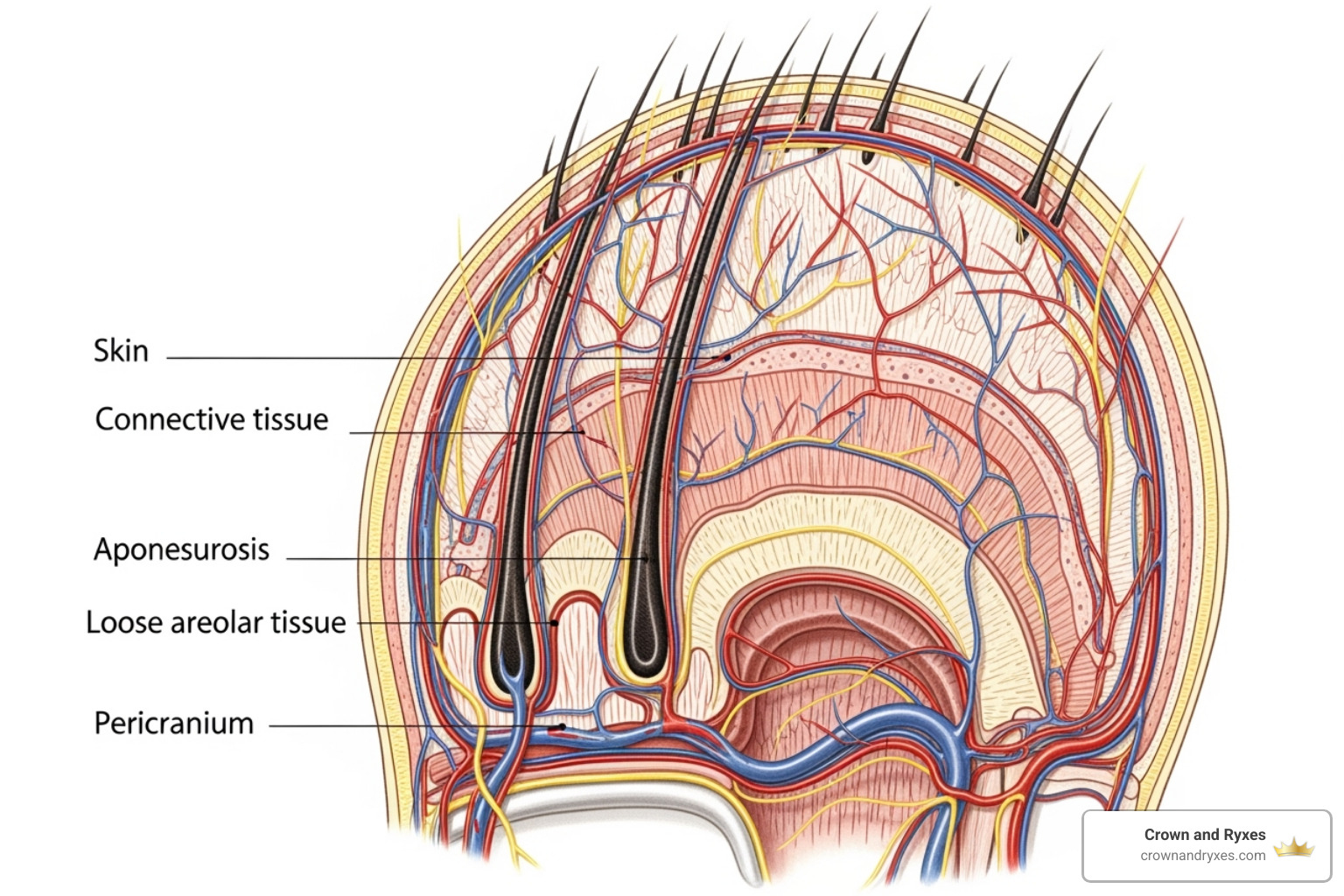
Here’s what causes donor area pain: your scalp is a complex structure of skin, blood vessels, and nerves. The surgical extractions create micro-wounds, triggering a natural inflammation response. Your body sends healing fluids to the area, causing some swelling and redness. This process, along with the irritation of superficial nerves, causes discomfort. Additionally, the tumescent fluid injected to numb the area and reduce bleeding creates temporary pressure and soreness as it dissipates. This combination of factors is normal, expected, and temporary.
Common Sensations You Might Experience
Knowing what’s normal can help you feel more confident during recovery. You may experience:
- Soreness and tenderness: Similar to a bruise, especially when you move your head or lie down.
- Burning sensation: Often felt after FUE procedures, this comes from nerve irritation and feels like a mild sunburn.
- Itching: Typically starts around day 4 or 5. While annoying, it’s a positive sign that your skin is regenerating.
- Numbness: Patches of dulled sensation are common due to temporary nerve trauma. Sensation gradually returns over weeks or months.
- Tightness: Especially common with FUT due to the sutured incision line, but can also occur with FUE as the skin heals.
- Aching: A dull, persistent ache is common in the first few days and usually responds well to pain medication.
How FUE and FUT Techniques Differ in Pain and Recovery
The surgical technique—FUE (Follicular Unit Extraction) or FUT (Follicular Unit Transplantation)—affects your recovery experience. Both are effective, but they harvest donor follicles differently.
With FUE, individual follicular units are extracted one by one, creating tiny micro-incisions. This approach is less invasive, and most patients report minimal donor area pain, often described as soreness or a burning sensation that is manageable with over-the-counter pain relief. The tiny extraction sites heal quickly, leaving behind small, dot-like scars that are often unnoticeable.
With FUT, a thin strip of scalp is removed, and the incision is closed with sutures. Because it’s more invasive, FUT patients typically experience more noticeable donor area pain and a feeling of tightness. This discomfort usually subsides significantly by day 3. Recovery takes longer, and the procedure leaves a fine linear scar.
Here’s how they stack up:
| Feature | FUE (Follicular Unit Extraction) | FUT (Follicular Unit Transplantation) |
|---|---|---|
| Extraction Method | Individual follicular units extracted with small punches | Linear strip of scalp removed |
| Donor Area Pain | Generally minimal; mild soreness, burning sensation | More noticeable; pulling, aching sensation |
| Peak Pain Duration | 1-3 days, often less intense | 1-3 days, can be more intense |
| Healing Time (Donor) | 1-2 weeks for micro-wounds to close and initial healing | 2-4 weeks for incision to heal, sutures/staples removed |
| Scarring | Tiny, scattered white dots (often imperceptible) | Linear scar |
| Return to Activity | Quicker return to light activities | May require slightly longer restriction on strenuous activities |
At Crown and Ryxes, we use advanced techniques to minimize discomfort and support a smooth recovery, whether you choose FUE or FUT.
The Healing Timeline: What to Expect and When
Understanding the recovery timeline can make the process feel more manageable. Donor area pain follows a predictable pattern, and knowing what to expect helps you feel in control.
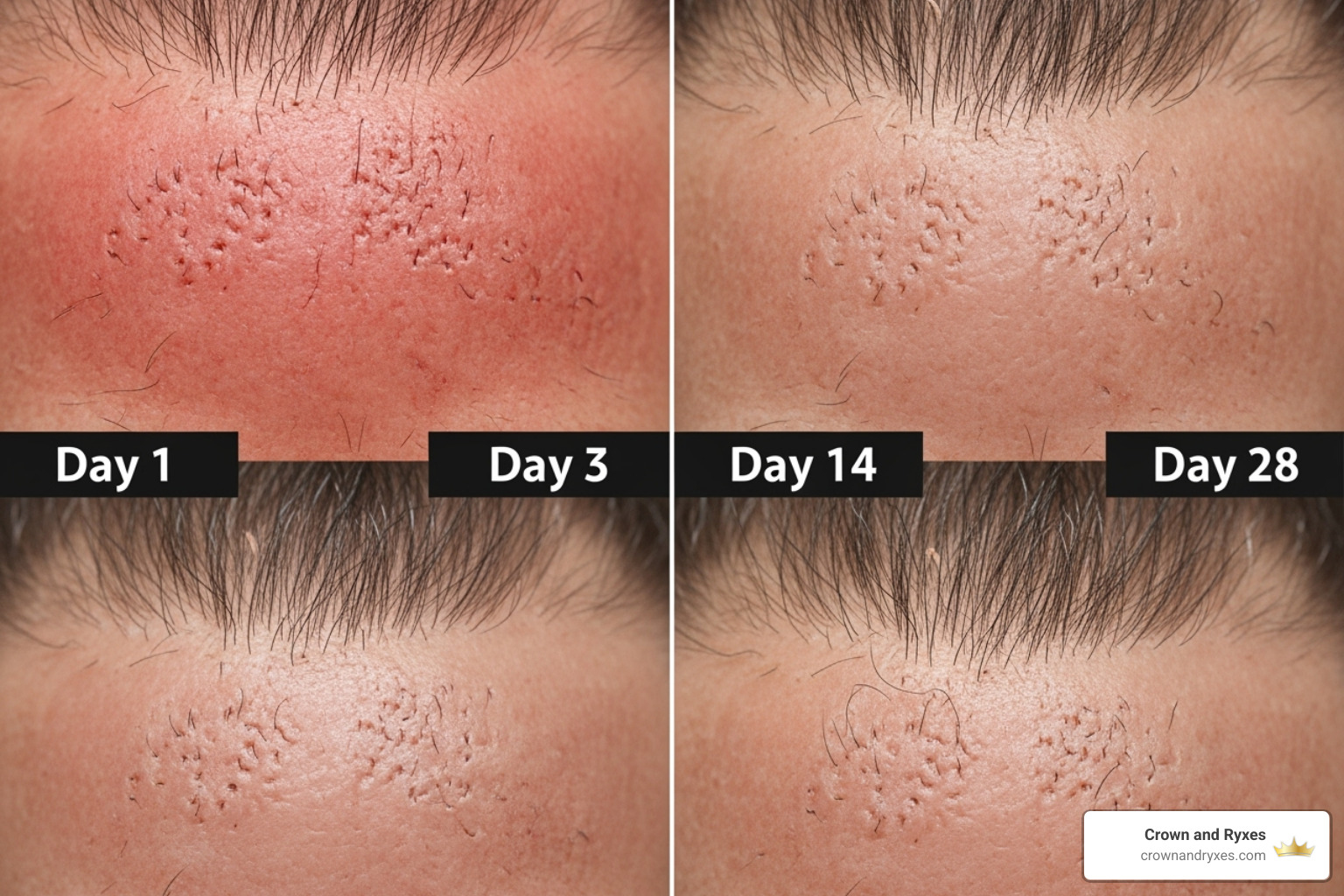
Your recovery is a gradual journey toward comfort. Most patients find the discomfort fades much faster than they expected.
The First Week: Peak Discomfort and Initial Healing
The first seven days are when your body begins the healing process. Days 1-3 mark the peak of discomfort, with soreness and tenderness that feels like a mild bruise. This is typically highest in the first 24-48 hours and is manageable with prescribed pain medication. Most patients notice their discomfort is reduced by half by the end of day three. From days 4-7, the acute pain subsides considerably, replaced by mild soreness. Scabs will form over the extraction sites, and you may begin to experience itching—a positive sign of skin regeneration.
Weeks 2-4 and Beyond: The Road to Full Recovery
As you move into the second week, your recovery shifts to ongoing healing. During weeks 2-4, any lingering donor area pain typically disappears. Scabs will fall off, and redness will decrease noticeably. You might still feel occasional itching or tightness.
From month 3 onward, the focus is on final healing. Numbness, which can last for several weeks or months, will gradually resolve as nerves regenerate. By the six-month mark, your donor site should be completely healed, with scars from FUE or FUT continuing to fade and soften. Between months 6-12, the tissue fully matures, blending seamlessly with the surrounding skin and resolving any lingering sensitivity.
Your Guide to Managing and Minimizing Donor Area Discomfort
Managing donor area pain is a team effort. Your adherence to our post-operative instructions is key to a comfortable recovery.
Immediate Pain Management Strategies
During the first few days, focus on these strategies:
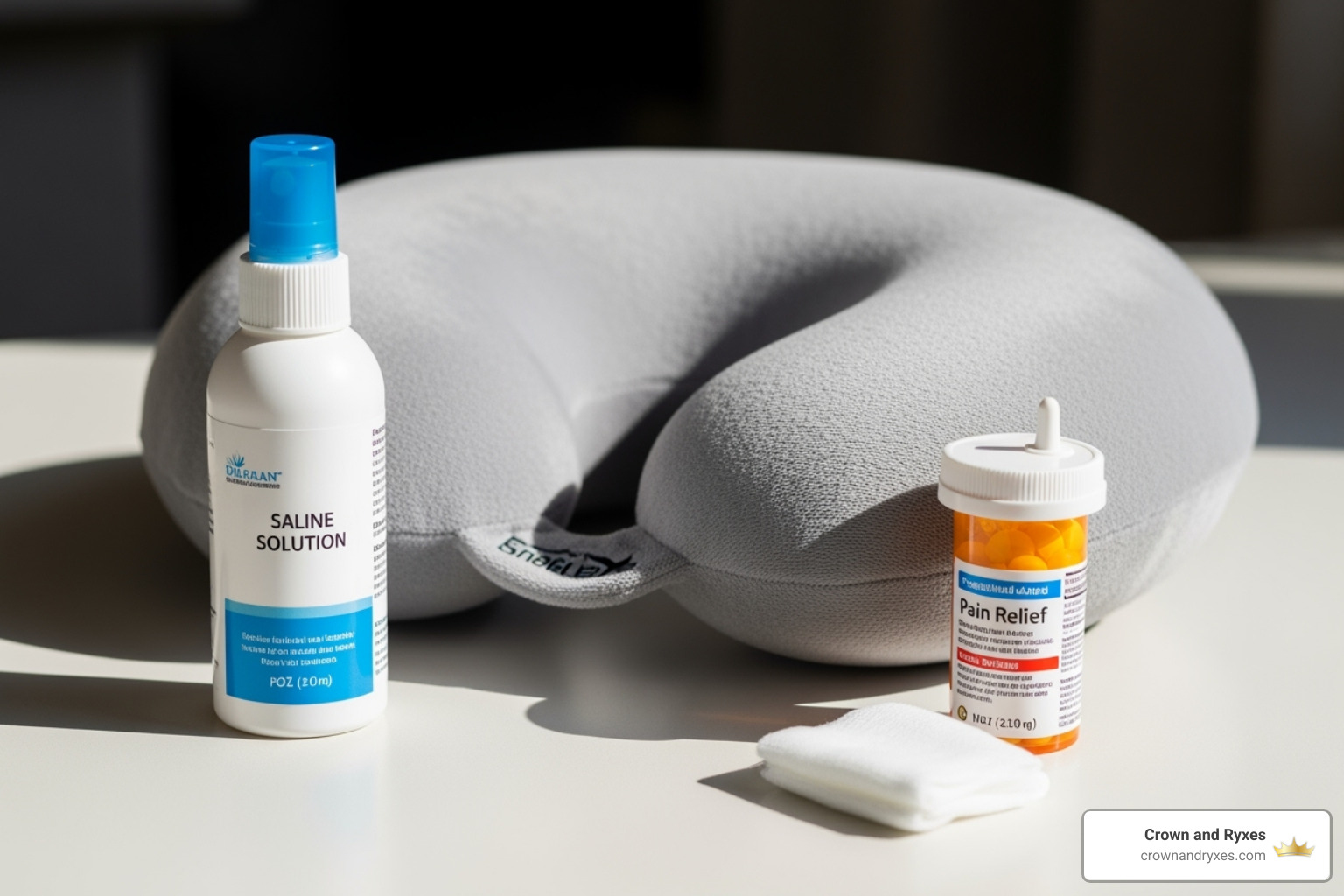
- Use prescribed pain medication: Take it as directed to stay ahead of the pain, especially for the first three days.
- Transition to over-the-counter options: Ibuprofen or acetaminophen can manage lingering discomfort after the initial phase.
- Sleep with your head liftd: Use a recliner or pillows to reduce swelling and pain.
- Apply cool compresses: Place a gentle, cool compress on your forehead or neck—not directly on the surgical area—to reduce swelling.
- Avoid pressure on the donor area: Use a travel pillow to prevent rolling onto the treated area and avoid tight hats.
Best Practices for a Smooth and Comfortable Recovery
Your daily habits significantly impact healing:
- Follow your washing routine: Gently cleanse your scalp with the provided shampoo and lukewarm water. Do not scrub; pat and rinse to allow scabs to fall off naturally.
- Use saline spray: Regular application keeps the donor area hydrated, which aids healing and reduces itching.
- Avoid strenuous exercise: Wait at least one to two weeks before resuming heavy lifting or intense workouts to prevent swelling and bleeding.
- Stay hydrated and eat well: Water and a balanced, protein-rich diet provide the building blocks your body needs to repair tissue.
- Avoid alcohol and smoking: Both can impair circulation and slow down the healing process. This is critical for optimal recovery.
- Attend follow-up appointments: These check-ins allow us to monitor your progress and address any concerns.
Our team provides a comprehensive care package with detailed instructions to guide you. For those interested in the medical research, studies explore techniques to reduce pain associated with hair transplantation.
At Crown and Ryxes, we’re committed to ensuring your comfort and the best possible outcome.
Red Flags: When to Be Concerned About Your Donor Area
While some donor area pain is normal, it’s important to know the warning signs that require medical attention. The vast majority of patients recover without complications, but being aware of potential issues helps ensure a safe recovery. Please contact us if anything feels off.
Warning Signs That Require Medical Attention
Contact us immediately if you notice any of these symptoms:
- Severe or worsening pain: Your pain should steadily decrease after the first few days. If it intensifies or becomes unbearable, it’s a red flag.
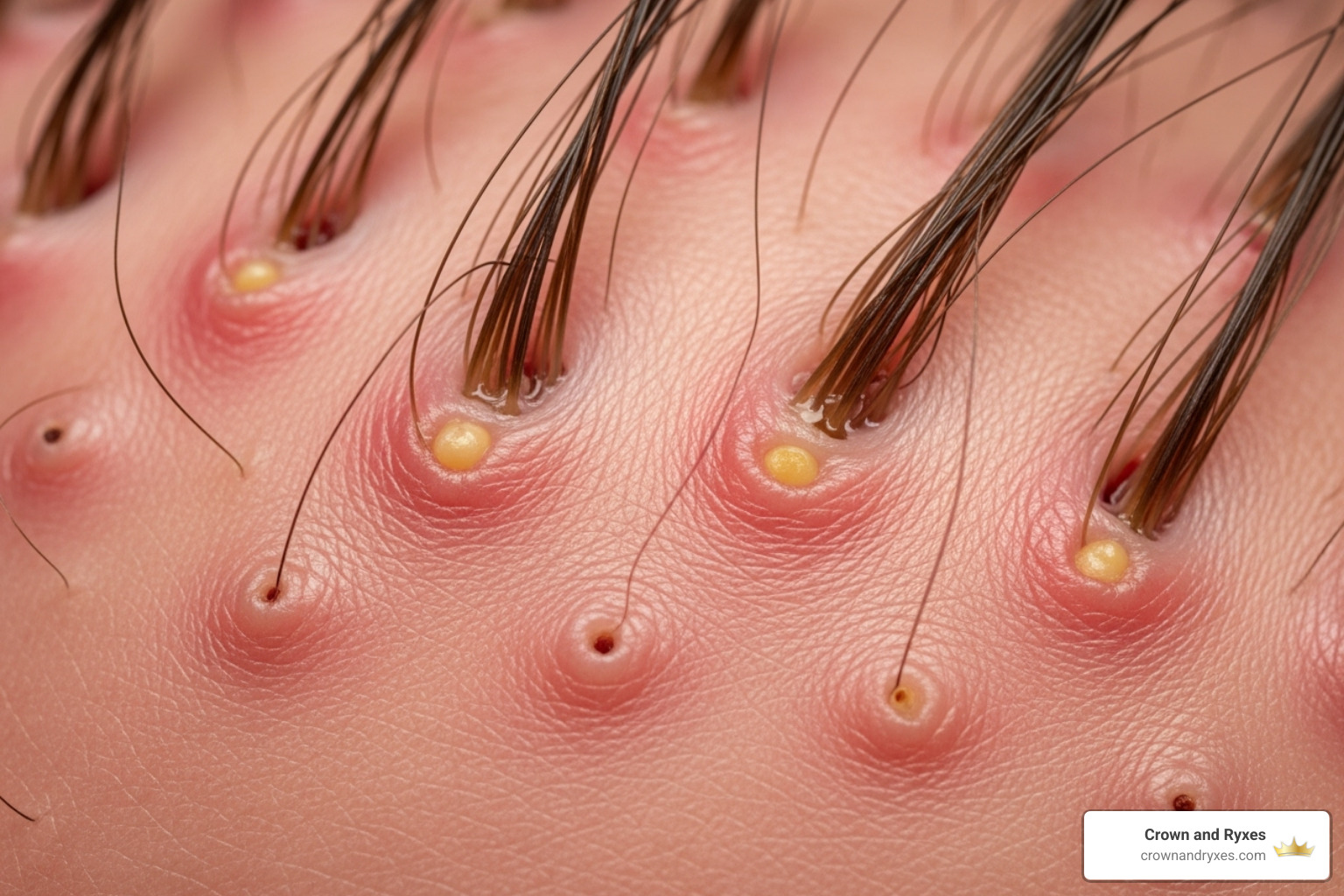
- Signs of infection: Watch for yellow or green discharge, a foul smell, a fever over 100.4°F (38°C), or spreading redness. Hot, painful, itchy bumps (folliculitis) may also require treatment.
- Excessive swelling: If swelling continues to increase after day 4 or becomes severe, it’s unusual.
- Persistent bleeding: While minor oozing is normal on day one, any active bleeding afterward that doesn’t stop with gentle pressure needs to be addressed.
Factors That Influence Donor Area Pain
Everyone’s experience with donor area pain is different, influenced by several factors:
- Individual pain tolerance: Pain perception varies from person to person.
- The number of grafts extracted: Larger sessions involve more tissue trauma and may lead to slightly longer-lasting discomfort.
- Your surgeon’s technique and skill: A meticulous surgeon minimizes trauma, which leads to less pain and a smoother recovery.
- Adherence to post-operative care: Following instructions is the most controllable factor in reducing pain and preventing complications.
Potential Long-Term Issues and Complications
These complications are rare, but it’s important to be informed:
- Chronic pain (neuralgia): In very uncommon cases, nerve irritation can persist long-term. Even when this rare complication occurs, effective solutions exist, as shown in studies like this one on Successful Treatment of Chronic Donor Site Pain.
- Persistent numbness: While sensation almost always returns, small patches may remain numb for an extended period in rare instances.
- Overharvesting effects: Extracting too many grafts can leave the donor area looking thin or patchy. A skilled surgeon avoids this by carefully managing the donor site.
- Visible scarring: An FUT procedure leaves a linear scar, while FUE leaves tiny dot-like scars. The visibility of these scars depends on surgical skill and technique.
Choosing an experienced, reputable clinic like Crown and Ryxes is the best way to minimize risks and ensure your donor area is treated with care.
Frequently Asked Questions about Donor Area Discomfort
Here are answers to some of the most common questions we hear from patients about donor area pain and recovery.
How long does itching in the donor area typically last?
Itching is a positive sign of healing and nerve regeneration. It usually starts around day 4-5 and can last from a few days to a month, gradually decreasing over time. To manage it, use a saline spray or medicated shampoos as recommended by your surgeon. Most importantly, do not scratch, as this can damage healing tissues.
Why does my donor area feel tight and numb?
These sensations are normal. Tightness occurs as the skin heals and contracts, especially after an FUT procedure where an incision is sutured. It subsides over several weeks. Numbness is caused by temporary irritation of superficial nerves during the extraction process. Sensation gradually returns over several weeks to months as these nerves repair themselves. It can take up to six months for full sensation to return in some cases.
Can I do anything to speed up the healing of my donor area?
While your body has its own healing timeline, you can create an optimal environment for recovery. The most important actions are:
- Follow all post-operative instructions diligently. This is the single most effective way to ensure a smooth recovery.
- Maintain proper nutrition and hydration. A balanced diet and plenty of water provide the fuel your body needs to repair tissue.
- Avoid smoking and alcohol. Both significantly slow down healing by impairing blood flow and increasing swelling.
- Protect the area from sun exposure. Wear a loose-fitting hat (when approved) to prevent irritation and hyperpigmentation.
- Get adequate rest. Sleep is when your body does most of its repair work.
Conclusion: A Smooth Path to Your New Hairline
Undergoing a hair transplant is a significant step. You now know that donor area pain is a normal, temporary, and manageable part of the healing process. The initial discomfort, soreness, and itching are short-lived phases on your journey to renewed confidence.
For most patients, the worst of the discomfort is over within a few days. By following our aftercare instructions and being patient with your body, you can ensure a recovery that is smoother than you might have expected.
At Crown and Ryxes, we are with you every step of the way. From your initial consultation in Clermont, FL, or The Villages, FL, through your recovery, we provide detailed, personalized support. Your comfort and results are our top priority. Our commitment to comprehensive care also extends to advanced REGENmax, addressing your health with the same expertise.
Focus on the final result: a natural-looking hairline and lasting confidence. The temporary discomfort is a small price for a life-changing outcome.
Ready to begin your journey? Learn more about our advanced hair transplant services