

Why Your Donor Area Deserves Expert Care
Donor area repair addresses the challenge of restoring a depleted or overharvested donor zone from a previous hair transplant. When too many grafts are extracted, you can be left with visible thinning, patchy gaps, or scarring that’s hard to hide, especially with shorter haircuts.
Key Repair Options for an Overharvested Donor Area:
- FUE Repair: Transplanting follicles into the thinned donor zone to restore density.
- Body Hair Transplantation (BHT): Using beard or chest hair to supplement depleted scalp reserves.
- Scalp Micropigmentation (SMP): Creating the visual illusion of density through specialized tattooing.
- Combined Approach: Using FUE repair plus SMP for optimal camouflage.
Expected Outcomes: While extracted follicles don’t regenerate, skilled surgeons can restore up to 80-90% of the natural look through strategic repair techniques.
Your donor area is a finite resource that must be managed carefully. Unfortunately, nearly 40% of patients seeking hair restoration today need reparative work. The good news is that modern repair methods offer real hope for restoring your donor area’s appearance and your confidence.
As Dr. Matthew Casavant, I have over two decades of experience in advanced minimally invasive procedures, including donor area repair. My meticulous approach ensures patients receive the aesthetic outcomes they deserve when addressing previous transplant complications.
Understanding Donor Area Overharvesting
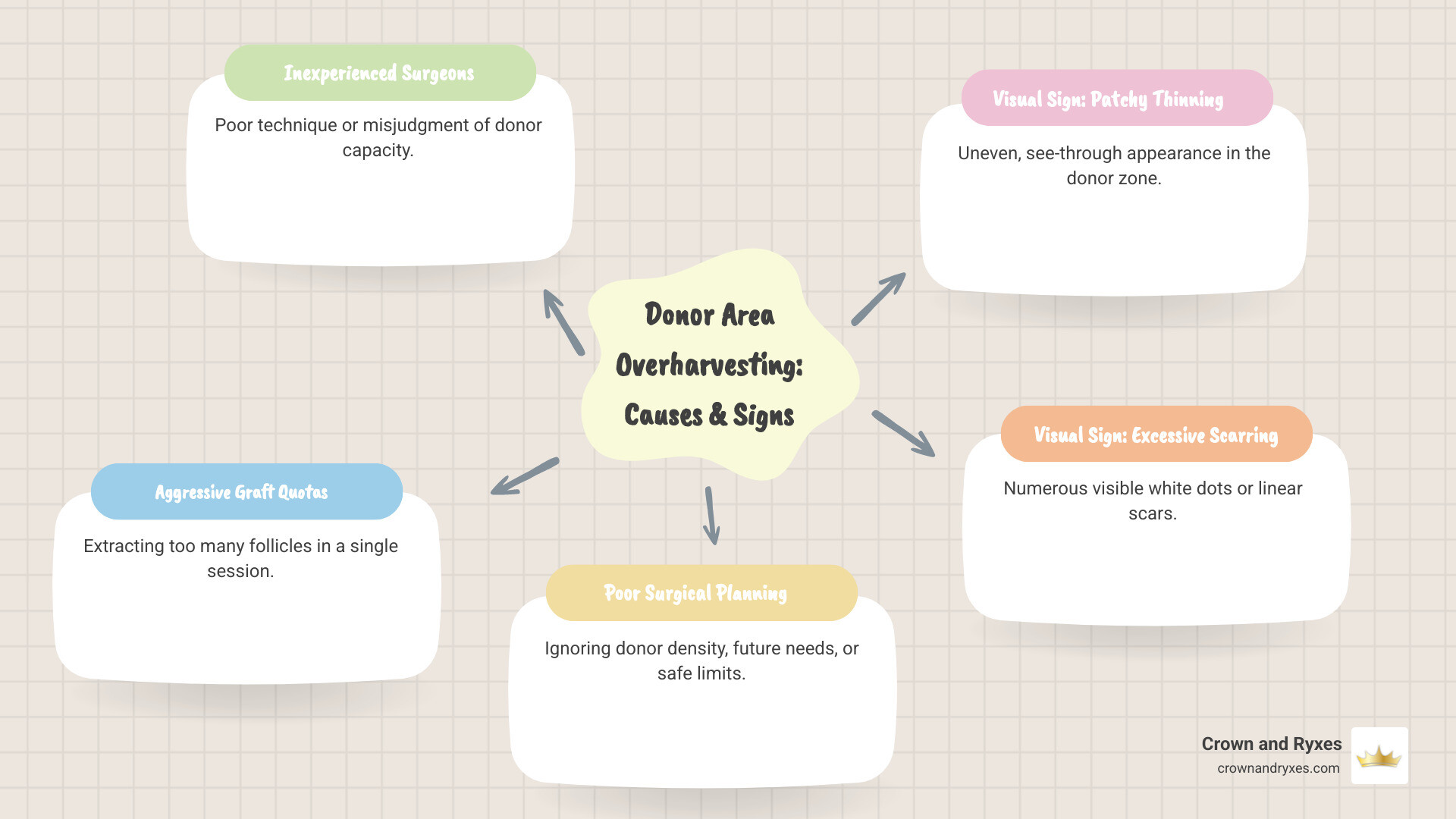
An overharvested donor area occurs when too many hair follicles are taken from the back and sides of your scalp during a hair transplant. Your donor zone contains a limited supply of follicles genetically resistant to balding. When those limits are ignored, the results can be devastating.
What Constitutes an Overharvested Donor Area?
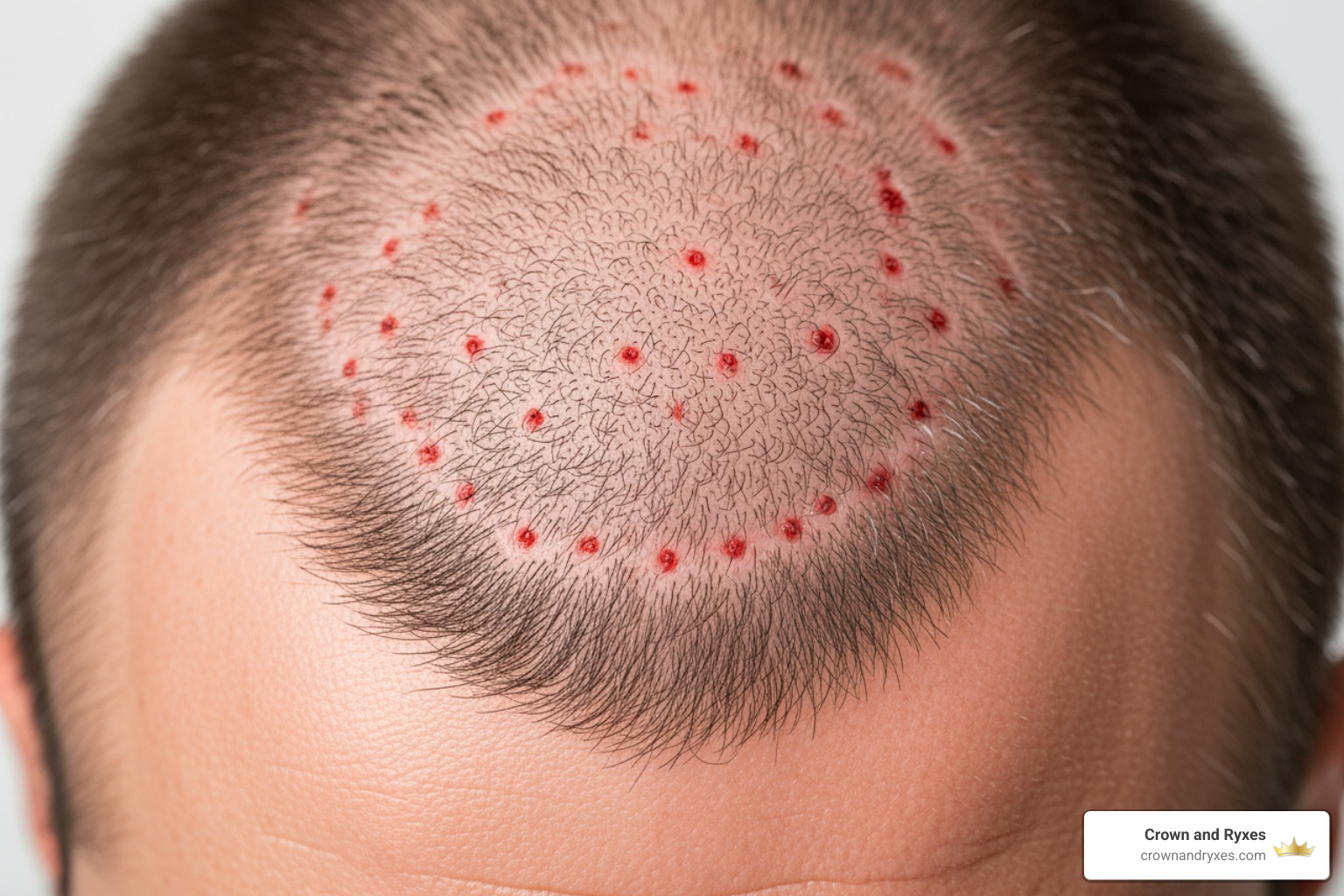
Donor area overharvesting means more grafts were extracted than your scalp could safely provide, resulting in visible thinning, scarring, and patchy areas. It’s a heartbreaking situation, but one that can often be addressed with the right donor area repair approach.
What Are the Signs and Visual Characteristics?
The signs are often impossible to miss, especially with shorter hair. Key characteristics include:
- Patchy Thinning: A “moth-eaten” appearance with irregular gaps and uneven density.
- See-Through Appearance: Reduced density makes the scalp look thin or translucent, especially in bright light.
- Visible Empty Gaps: Barren patches where follicles were extracted too closely together.
- Shiny or Scarred Skin: The skin texture may change, creating a noticeable contrast with surrounding hair.
What Are the Common Causes of Donor Area Overharvesting?
Overharvesting is almost always preventable and is typically caused by:
- Inexperienced Surgeons: Clinics that allow technicians with minimal training to perform extractions, prioritizing volume over patient results.
- Aggressive Graft Quotas: Promising “megasessions” without proper planning gambles with your donor area’s future.
- Poor Surgical Planning: This includes random extraction patterns, using oversized punches (>0.9 mm), or failing to distribute extractions evenly.
We cover these issues in our guide on hair transplant mistakes, because understanding what can go wrong is the first step to avoiding or fixing these problems.
What Is the Safe Limit for Graft Extraction from the Donor Area?
Protecting your donor area for life requires adhering to strict extraction limits. The 30% single-session rule is critical; removing more than 30% of follicles in one procedure will likely look depleted. For lifetime sustainability, the safe limit is 40-50% of your donor area’s total capacity.
Your individual donor density determines your lifetime graft limit. High density might allow for 6,000–7,000 grafts, average density for 5,000–6,000, and low density for only 3,000–4,000. Responsible specialists follow these guidelines to prevent the need for donor area repair.
A Comprehensive Guide to Donor Area Repair
When dealing with an overharvested donor area, it’s important to know what repair can and cannot do. The primary goal of donor area repair is not to regenerate extracted follicles—once they’re gone, they’re gone for good. However, we can achieve remarkable visual restoration and camouflage. With the right techniques, we can often restore 80-90% of your donor area’s natural appearance, a significant improvement that can transform how you look and feel.
At Crown and Ryxes, we create a highly individualized treatment plan for every repair case. For more information on our corrective work, visit our page on hair transplant repair.
Surgical Options for Donor Area Repair
Surgical interventions offer the most direct and lasting results for adding new hair to a depleted donor area.
FUE Repair (Follicular Unit Extraction)
One of the most effective approaches is performing a targeted FUE procedure into the thinned or scarred regions of the donor zone. We strategically redistribute your remaining hair resources by transplanting healthy follicles into overharvested areas. This technique increases overall density, camouflages scars from previous FUE or FUT procedures, and restores a natural texture. Our expertise in FUE hair restoration involves using micro punches (0.9 mm or smaller) to minimize trauma and maximize graft survival.
Body Hair Transplant (BHT)
When scalp donor reserves are severely depleted, body hair transplantation is an invaluable option for donor area repair. Beard-to-scalp grafts are the gold standard, as beard hair is thick, robust, and has a growth yield of 80-95%. This makes it highly effective for adding density and camouflaging scars. Chest hair grafts are another option, though the growth yield is lower (around 60%) and the texture may differ from scalp hair.
Scar Revision Techniques
For prominent linear scars from FUT or FUE, surgical scar revision can make a meaningful difference. As detailed in this look at donor scar repair, methods include scar excision (removing scar tissue and re-closing the wound) or grafting directly into the scar tissue to conceal it with new hair growth.
Non-Surgical Options for Donor Area Repair
For those who prefer a less invasive approach, non-surgical methods focus on creating the visual illusion of density.
Scalp Micropigmentation (SMP)
SMP is a game-changing non-surgical solution. A trained specialist uses micro-needles to deposit tiny pigment dots into the scalp, replicating the appearance of hair follicles and creating the illusion of a full head of closely shaved hair.
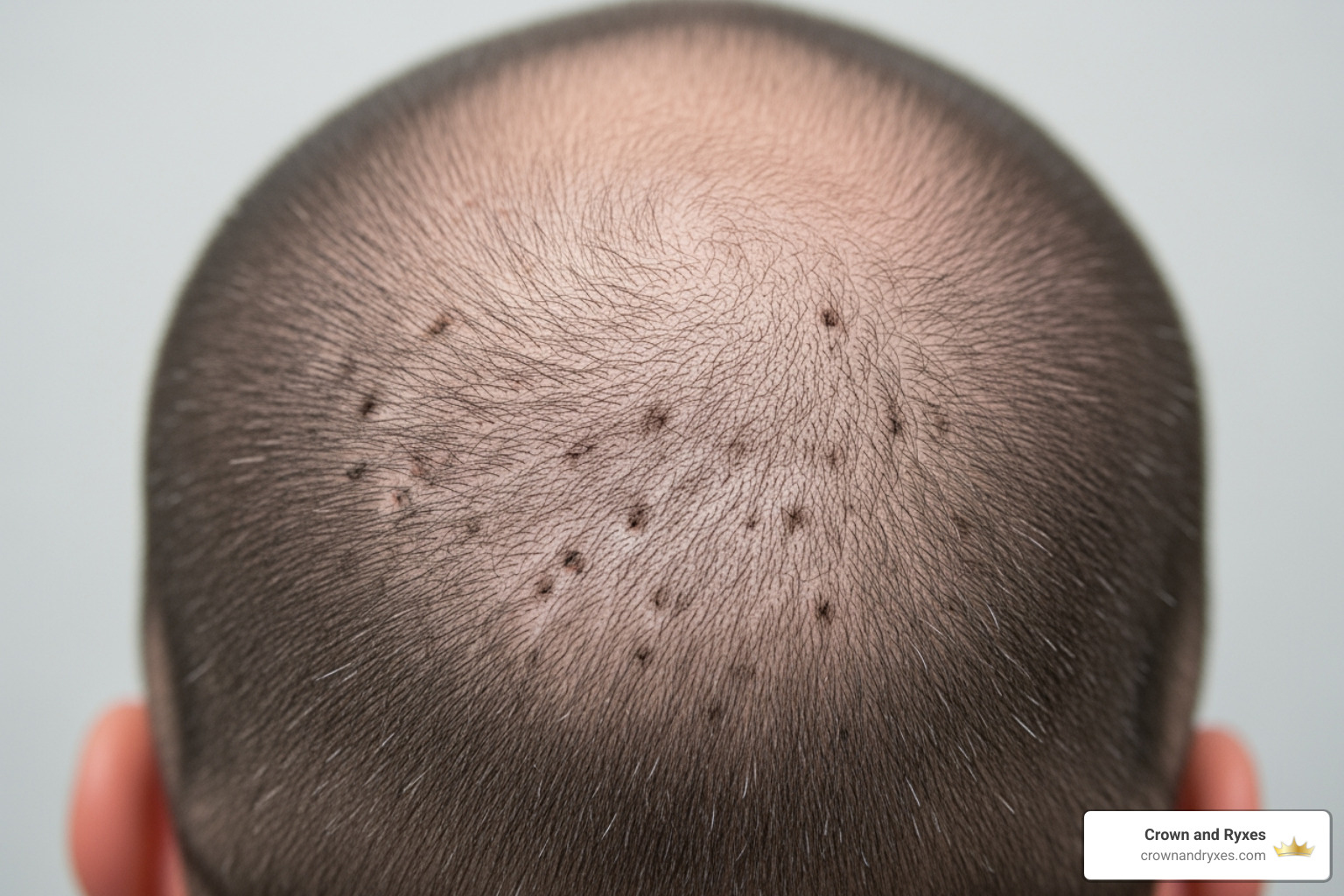
For an overharvested donor area, SMP can fill in sparse patches, reduce the contrast between hair and scalp, and make the area appear much denser. It is also exceptional for camouflaging both FUE and FUT scars. For extensive damage, combining SMP with FUE repair often produces the best results, with transplanted hair providing texture and SMP improving visual density.
Comparing Repair Techniques
- FUE Repair: Offers permanent, natural hair growth. It’s ideal when sufficient scalp donor hair remains. Full results take 12-18 months.
- Body Hair Transplant (BHT): Also provides permanent growth and is best when the scalp donor is severely depleted. The timeline is similar to FUE.
- Scalp Micropigmentation (SMP): A non-surgical cosmetic procedure that provides immediate visual improvement. It excels at creating the illusion of density for a shaved look and camouflaging scars. It may require touch-ups over the years.
The Repair Process: What to Expect
Understanding the donor area repair journey can help you approach it with confidence. Our team at Crown and Ryxes in Clermont, FL, and The Villages, FL, will guide you through every stage.
Healing Timeline
The recovery path depends on your chosen technique.
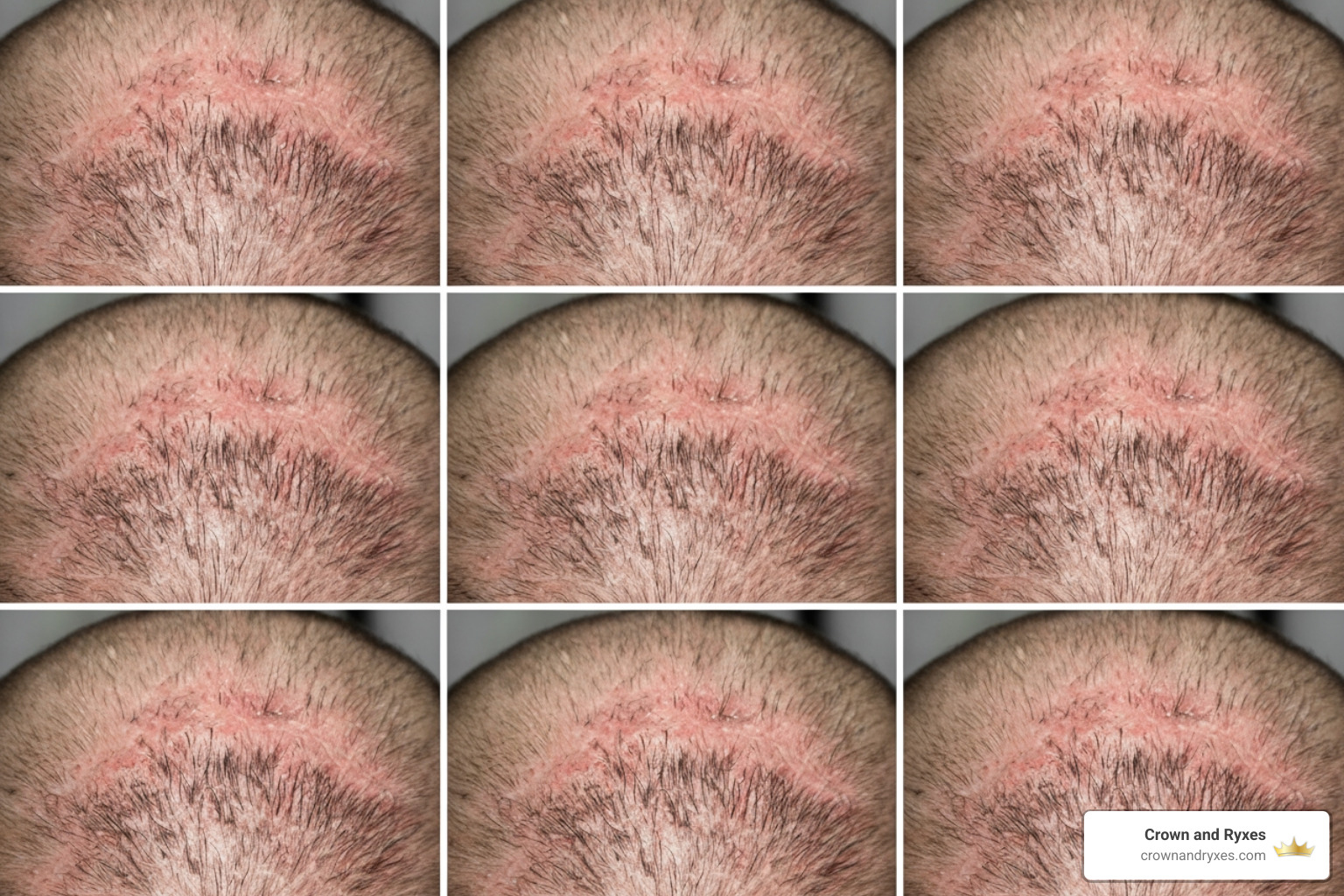
- First 7-14 Days (Surgical): Expect surface healing with some redness, mild swelling, and tiny scabs. Follow aftercare instructions carefully. The newly transplanted hairs will fall out (a normal process called “shock loss”).
- First Few Days (SMP): Initial recovery is quick, with most redness fading within days and immediate visual improvement.
- 3-4 Months (Surgical): The first signs of new, fine hair growth will emerge.
- 6 Months (Surgical): The repaired area will show significantly improved density.
- 12-18 Months (Surgical): Full visual recovery is complete, with mature hair growth and settled scars.
Potential Risks and Complications Associated with Donor Area Repair
While donor area repair is generally safe with an experienced specialist, all procedures carry some risk. We minimize these through meticulous technique and clear post-operative instructions.
- Infection: Rare, but possible. Minimized by following aftercare guidelines.
- Poor Graft Survival: Not every transplanted follicle may grow, influenced by your healing response and surgical skill.
- Further Scarring: Any new incision carries a minimal risk of new marks, which we mitigate with micro-punch techniques.
- Temporary Side Effects: Numbness, sensitivity, swelling, and bruising are common and typically resolve within weeks.
For more details, see our guide on hair transplant risks and complications: what you need to know.
What Are the Costs Associated with Donor Area Repair and Restoration?
There is no one-size-fits-all price for donor area repair. The cost depends on several factors:
- The extent of damage
- Your chosen repair technique (surgical vs. non-surgical)
- The number of grafts needed
- Your surgeon’s expertise and geographic location
Our clinics in Clermont, FL, and The Villages, FL, offer competitive pricing for specialized repair services. A consultation is the best way to get a personalized cost estimate. For general pricing information, see our guide on factors that affect the cost of hair transplant surgery.
Prevention and Long-Term Donor Management
The best donor area repair is the one you never need. Prevention is key, as your donor area is a finite resource. Making smart choices from the beginning is crucial.
How Can Patients Prevent Donor Area Overharvesting in the First Place?
Protecting your donor area begins with education and choosing the right surgical partner. Key prevention strategies include:
- Strategic Planning: A responsible clinic will perform detailed donor mapping and density analysis to calculate a safe extraction number and ensure even distribution.
- Respecting Safe Limits: Adhere to the 30% single-session and 40-50% lifetime extraction limits. Be wary of clinics promising unrealistic graft counts.
- Using Micro Punches: Insist on punches of 0.9 mm or smaller for FUE to minimize trauma and scarring.
- A Conservative Approach: Especially for younger patients, a conservative plan preserves donor reserves for potential future hair loss.
- Medical Therapies: Combining surgery with treatments like finasteride, minoxidil, PRP, or REGENmax can slow hair loss and conserve your donor supply.
What Should Patients Look for When Choosing a Clinic or Surgeon for Donor Area Repair?
Repair work demands a higher level of skill and experience. When choosing a surgeon, look for:
- Credentials and Experience: Seek board-certified surgeons with specific, experience in hair restoration repair.
- Before-and-After Photos: A reputable clinic will readily share photos of their repair work. Pay close attention to the donor area results.
- Patient-Centric Care: The clinic should perform detailed analysis, emphasize long-term donor preservation, and provide thoughtful answers, not sales pitches.
- Avoidance of “Hair Mills”: Be wary of suspiciously cheap transplants or clinics that use unlicensed technicians. The ISHRS warns against these dangerous practices, so beware of work done by the Black Market Clinics.
For more guidance, our article on how to choose the right hair transplant clinic for your needs offers comprehensive advice.
How Does Donor Area Management Play a Role in Long-Term Hair Restoration Planning?
Effective donor management means planning for decades ahead, not just for today’s hair loss. This involves:
- Building a Donor Reserve: Spreading extractions evenly and never taking too much at once ensures grafts are available for future sessions if hair loss progresses.
- Adapting the Plan: A well-designed plan can evolve with your needs, ensuring a natural look over your lifetime.
- Integrating Medical Therapy: Using treatments to protect native hair reduces the need for future transplants, extending your donor’s lifespan.
Treating your donor area with respect and foresight is the key to a lifetime of natural-looking hair.
Frequently Asked Questions about Donor Area Restoration
Patients worried about overharvested donor areas often have the same questions. Here are straightforward answers based on over two decades of experience in advanced hair restoration.
Can an overharvested donor area be completely restored to its original state?
No, not biologically. Once a hair follicle is extracted, it cannot regenerate. However, the goal of donor area repair is visual restoration. Using advanced techniques like FUE, BHT, and SMP, we can achieve an 80-90% visual improvement. This means the overharvested area becomes virtually undetectable, allowing you to wear your hair short with confidence.
How long does it take to see results from a donor area repair?
The timeline depends on the chosen technique:
- Scalp Micropigmentation (SMP): You will see immediate visual improvement. The aesthetic change is apparent right after your first session.
- FUE Repair or Body Hair Transplant (BHT): These surgical repairs follow the natural hair growth cycle. You’ll see initial growth around 3-4 months, with more significant results by 6 months. The full, mature results typically appear between 12 to 18 months after your procedure.
Can body hair really be used to repair a scalp donor area?
Absolutely. Body hair transplantation (BHT) is an invaluable tool for donor area repair, especially when the scalp’s donor supply is severely depleted.
Beard hair is often the preferred choice. It is thick, has a robust growth cycle, and offers an impressive success rate of 80-95% growth yield. It is highly effective for adding density and camouflaging scars in an overharvested donor area.
Chest hair is another option, though it generally has a lower growth yield (around 60%) and a finer texture. We carefully assess your available body hair to ensure the best possible match and outcome for your repair.
Conclusion
If you’re frustrated by an overharvested donor area, with its patchy thinning and visible scars, we want you to know that you are not stuck with these results forever.
Modern donor area repair techniques offer real hope. Through a careful combination of treatments—like targeted FUE repair, body hair transplantation (BHT), or Scalp Micropigmentation (SMP)—we can help restore up to 80-90% of your donor area’s natural appearance. This represents renewed confidence for patients who thought their options had run out.
Corrective surgery demands a higher level of artistry and expertise, which is why choosing the right surgeon is critical. At Crown and Ryxes, our practice is built on ethical extraction limits, transparent communication, and a commitment to your long-term hair health.
If you’re in Clermont, FL, or The Villages, FL, and are dealing with the aftermath of a poor hair transplant, we would be honored to help. We will evaluate your donor area and create a customized repair plan based on honest guidance and realistic goals. Your journey doesn’t have to end with disappointment.
Let us help you write a better next chapter. Schedule your hair transplant services consultation with us today and let’s start the process of restoring not just your donor area, but your confidence too.