
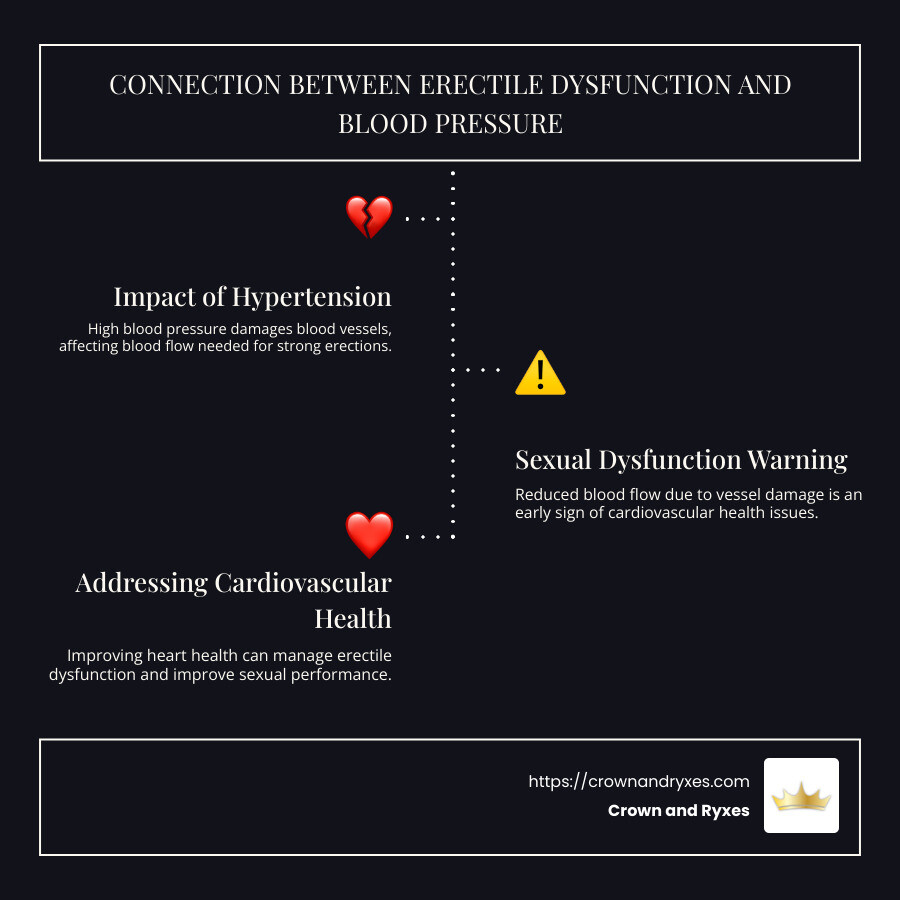
Erectile dysfunction and blood pressure are closely linked, often creating challenges for those affected. Here’s a quick overview of how they connect:
- Hypertension: High blood pressure can damage blood vessels, limiting blood flow crucial for a strong erection.
- Sexual Dysfunction: This is often an early sign of cardiovascular health issues. Reduced blood flow due to damaged vessels impacts sexual performance.
- Cardiovascular Health: Addressing heart health is essential for managing both conditions safely and effectively.
Understanding and managing these relationships can improve overall well-being.
As Dr. Matthew Casavant, my background in healthcare and expertise in addressing issues like erectile dysfunction and blood pressure focuses on patient-centered care. This approach aims to create partnerships that improve both sexual and cardiovascular health.
Erectile dysfunction and blood pressure glossary:
– erectile dysfunction and mental health
– erectile dysfunction lifestyle changes
– improve sexual performance naturally
Understanding Erectile Dysfunction and Blood Pressure
Erectile dysfunction (ED) and high blood pressure are more connected than you might think. Let’s explore how they relate, starting with the anatomy of an erection and the causes of ED.
Anatomy of an Erection
An erection is a complex process involving several parts of the body. At the heart of it are two chambers called the corpora cavernosa, which run along the length of the penis. These chambers are made of spongy tissue filled with small arteries, veins, and smooth muscle fibers.
When arousal happens, signals from the brain or nerve endings cause these smooth muscles to relax. This relaxation allows blood to rush into the corpora cavernosa, filling the empty spaces. As the blood fills these spaces, the pressure builds up, causing the penis to expand and stiffen.
The sheath around the chambers presses on the veins, trapping the blood in the penis and maintaining the erection. Once the excitement ends, the smooth muscles contract, and blood flows back out, returning the penis to a flaccid state.
Causes of Erectile Dysfunction
Artery Damage: High blood pressure can damage blood vessels over time. This damage restricts blood flow to the penis, making it difficult to achieve or maintain an erection.
Medication Side Effects: Some blood pressure medications like beta-blockers and diuretics can cause ED as a side effect. They might reduce blood flow to the penis or affect nerve signals related to arousal. If you notice changes after starting a new medication, it’s important to discuss this with your healthcare provider.
Psychological Factors: Anxiety, stress, and depression can also contribute to ED. The mind plays a significant role in sexual arousal, and mental health issues can disrupt this process.
Understanding these causes can help in identifying the right treatment and management strategies. Addressing both physical and psychological factors is key to improving sexual health.
Up next, we’ll explore how high blood pressure specifically impacts sexual health and the challenges it poses for both men and women.
Impact of High Blood Pressure on Sexual Health
High blood pressure, or hypertension, can significantly impact sexual health. This condition doesn’t just affect the heart; it also takes a toll on your arteries, blood flow, and even hormone levels. Let’s look at how these changes create challenges for both men and women.
Challenges for Men
For men, artery hardening due to high blood pressure is a major concern. Over time, hypertension damages the lining of blood vessels, leading to a condition called atherosclerosis. This narrowing and hardening of the arteries restrict blood flow to various parts of the body, including the penis. When blood flow is reduced, it becomes difficult to achieve and maintain an erection, a condition known as erectile dysfunction (ED).

Ejaculation issues can also arise. Some hypertensive medications might lower testosterone levels, affecting sex drive and ejaculation. This can lead to anxiety, as men may worry about their sexual performance and avoid intimacy altogether.
Challenges for Women
The effects of high blood pressure on women’s sexual health are less understood but no less significant. Just like men, women can experience reduced blood flow due to artery damage. This can lead to lower levels of nitric oxide, a molecule that helps relax smooth muscles and increase blood flow. Reduced nitric oxide levels might cause decreased sexual arousal, vaginal dryness, and difficulties in achieving orgasm.
These physical changes can affect sexual satisfaction, leading to anxiety and relationship stress. Women may feel less interested in sex or find it less pleasurable. It’s crucial for women to discuss these issues with their healthcare providers to explore potential solutions.
Understanding these challenges highlights the importance of managing blood pressure to maintain sexual health. Next, we’ll look into ways to manage erectile dysfunction and hypertension, focusing on lifestyle changes and medication options.
Managing Erectile Dysfunction and Blood Pressure
Managing erectile dysfunction and blood pressure involves a combination of lifestyle changes and medication options. By working closely with your healthcare team, you can find the right balance to improve both your heart health and sexual function.
Lifestyle Modifications
Healthy Diet:
Eating well is crucial. A balanced diet that includes plenty of fruits, vegetables, whole grains, and lean proteins can help lower blood pressure and improve overall health. Consider the DASH diet, which is specifically designed to combat hypertension. Reducing salt intake is also important, as high sodium levels can increase blood pressure.
Regular Exercise:
Exercise is a powerful tool. Just 30 minutes of moderate activity, like walking or cycling, five days a week, can make a significant difference. Exercise not only helps lower blood pressure but also boosts mood and reduces stress, which can improve erectile function.
Smoking Cessation:
If you smoke, quitting is one of the best things you can do for your health. Smoking damages blood vessels and restricts blood flow, making erectile dysfunction worse. Seek support from your healthcare team to find a quitting plan that works for you.
Medication Considerations
PDE5 Inhibitors:
Medications such as Viagra and Cialis are known as PDE5 inhibitors. They help increase blood flow to the penis, making it easier to achieve an erection. These are often effective for men with both hypertension and erectile dysfunction, but they should never be taken with nitrates, as this combination can dangerously lower blood pressure.
Beta Blockers and Diuretics:
Some blood pressure medications, like beta blockers and diuretics, may contribute to erectile dysfunction. If you experience this side effect, talk to your doctor. They may adjust your medication or suggest alternatives that have a lower risk of affecting sexual function.
Working with your healthcare team is key to managing both erectile dysfunction and blood pressure. They can help tailor a plan that fits your unique needs, ensuring both your heart and sexual health are prioritized.
Next, we’ll address some frequently asked questions about erectile dysfunction and blood pressure.
Frequently Asked Questions about Erectile Dysfunction and Blood Pressure
Is erectile dysfunction related to high blood pressure?
Yes, erectile dysfunction and blood pressure are closely linked. High blood pressure, or hypertension, can damage blood vessels, including those in the penis. This damage can reduce blood flow, making it difficult to achieve and maintain an erection.
Experts estimate that about 80% of erectile dysfunction cases are due to physical causes, with high blood pressure being a significant factor. Keeping blood pressure in check is crucial for maintaining healthy erectile function.
What vitamins are good for erectile strength?
Certain vitamins can support erectile health by improving blood flow and reducing inflammation:
- Vitamin B9 (Folate): Helps improve blood flow by supporting the production of nitric oxide, which relaxes blood vessels.
- Vitamin D: Low levels of Vitamin D have been linked to erectile dysfunction. It helps regulate blood pressure and supports overall vascular health.
- Vitamin B3 (Niacin): Known for improving cholesterol levels and blood flow, niacin can improve erectile function.
Including these vitamins in your diet through foods like leafy greens, fish, and nuts, or through supplements, can support better erectile health.
What is the best exercise for erectile dysfunction?
One of the best exercises for improving erectile function is Kegel exercises. These exercises strengthen the pelvic floor muscles, which play a key role in maintaining erections.
To perform Kegels, focus on the muscles you use to stop urinating. Tighten these muscles, hold for a few seconds, and then release. Repeat this process several times a day. Consistent practice can improve muscle control and improve erectile strength.
Incorporating regular physical activity, including Kegel exercises, into your routine can boost your overall sexual health and well-being.
Next, we’ll dive deeper into the role of lifestyle changes and medications in managing erectile dysfunction and high blood pressure.
Conclusion
At Crown and Ryxes, we understand that erectile dysfunction and blood pressure are not just medical issues—they’re personal. Our approach is to provide personalized wellness solutions that address these concerns holistically. We believe that achieving balance in your health can lead to a more satisfying and fulfilling life.
Our sexual wellness services are designed to support you on your journey to better health. Whether it’s through lifestyle modifications, custom treatment plans, or advanced therapies, we’re here to help you regain control over your sexual health.
We know that discussing erectile dysfunction can be difficult. That’s why we focus on creating a supportive and understanding environment. Our team is dedicated to helping you find the right solutions, with compassion and expertise.
By addressing the root causes of erectile dysfunction, such as high blood pressure, and focusing on overall wellness, we aim to improve your quality of life. Our personalized approach ensures that each individual’s needs are met, fostering a path to improved health and well-being.
Taking the first step towards managing your health is a powerful move. At Crown and Ryxes, we’re committed to walking this journey with you, ensuring you have the support and care you need to thrive.