
Navigating Your Options for Erectile Dysfunction Treatment
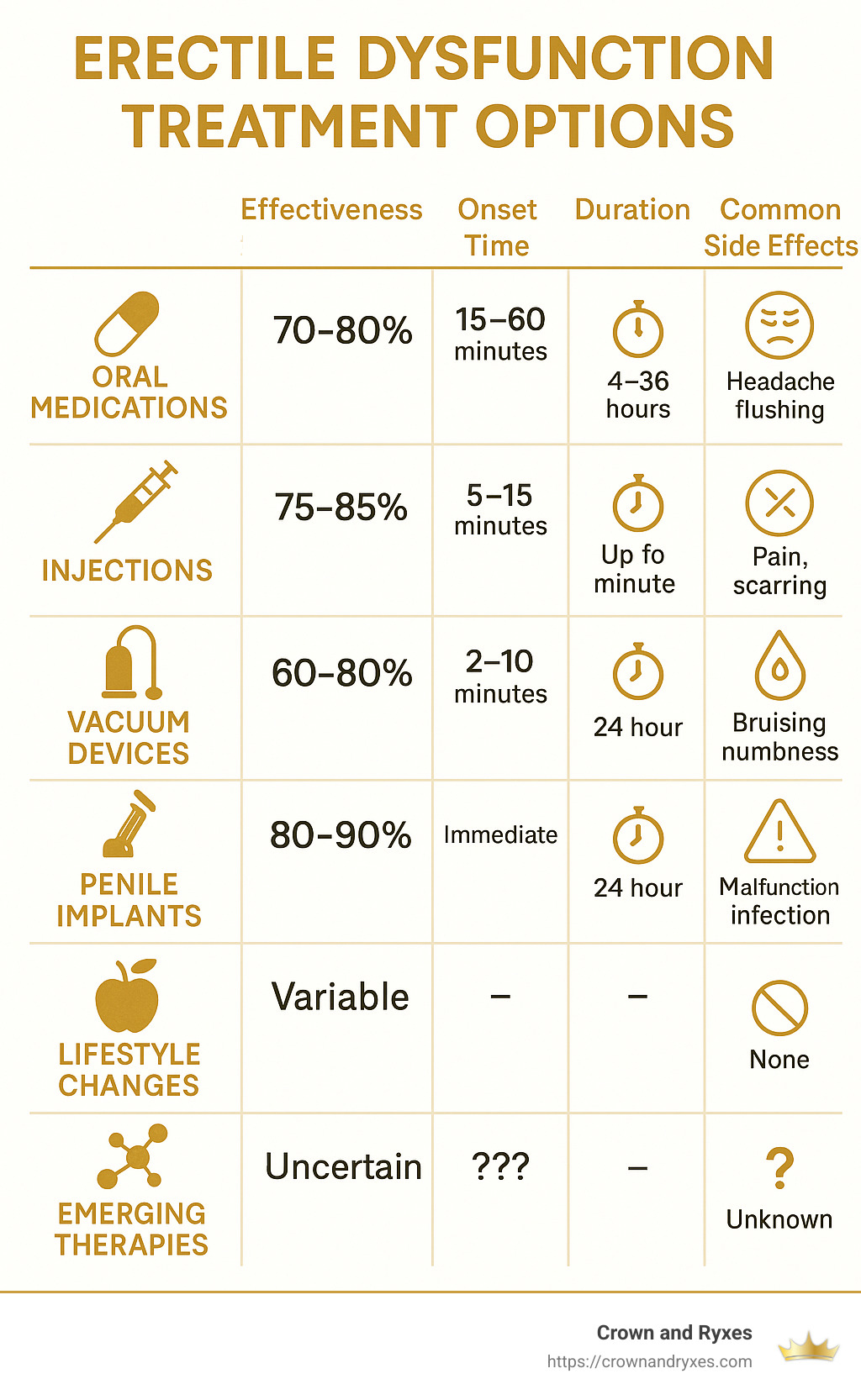
Erectile dysfunction treatment options include both medical interventions and lifestyle modifications. Here’s a quick overview of the main treatment approaches:
| Treatment Type | Examples | Effectiveness | Considerations |
|---|---|---|---|
| Oral Medications | Sildenafil (Viagra), Tadalafil (Cialis) | Effective for ~70% of men | May interact with other medications |
| Injections/Suppositories | Alprostadil | Up to 85% success rate | Requires proper administration technique |
| Vacuum Devices | Penis pumps | ~75% effectiveness | Mechanical solution with immediate results |
| Penile Implants | Inflatable or malleable rods | Over 90% satisfaction rate | Surgical procedure, considered when other options fail |
| Lifestyle Changes | Exercise, diet improvements, smoking cessation | Can improve or prevent ED | Important complement to medical treatments |
| Shockwave Therapy | Low-intensity sound waves | Emerging treatment with promising results | May require multiple sessions |
Erectile dysfunction (ED) affects as many as 30 million men in the United States alone. While the likelihood of experiencing ED increases with age—affecting approximately 50% of men in their 50s and 60% of men in their 60s—it’s important to understand that this condition is both common and treatable.
ED can impact more than just your sex life. Many men report feelings of embarrassment, frustration, and diminished self-confidence. Relationships may suffer, and the condition can sometimes indicate underlying health issues like cardiovascular disease, diabetes, or hormonal imbalances.
The good news is that modern medicine offers numerous effective treatment options, from prescription medications to mechanical devices and surgical interventions. What works best for you will depend on your overall health, the underlying cause of your ED, and your personal preferences.
I’m Dr. Matthew Casavant, a physician with experience in addressing erectile dysfunction treatment options through a comprehensive approach that considers both physical and psychological factors. My practice emphasizes creating personalized treatment plans that address each patient’s unique needs and circumstances.
Relevant articles related to erectile dysfunction treatment options:
Understanding Erectile Dysfunction
Before exploring treatment options, it’s important to understand what erectile dysfunction is and what causes it. ED is defined as the consistent inability to achieve or maintain an erection sufficient for satisfactory sexual performance over a period longer than three months. While occasional difficulties with erections are normal and often related to temporary factors like stress or fatigue, persistent problems warrant medical attention.

I often share with my patients what Dr. Kohler, a urologist at Mayo Clinic, so eloquently puts it: “If you take great care of your penis, your penis will take great care of you.” This isn’t just a catchy phrase—it highlights an important medical reality. Your penile health is directly connected to your overall physical wellbeing. Because penile blood vessels are smaller than those in other parts of your body, ED can actually serve as an early warning system, potentially predicting heart attacks or strokes years before they happen.
Common Causes of ED
When a man walks into our clinic with erectile concerns, we rarely find just one culprit. Most often, erectile dysfunction treatment options need to address a combination of physical and psychological factors working together. Understanding these causes helps us create the most effective treatment plan for each individual.
The physical side of ED often involves blood flow issues. Cardiovascular disease is a leading cause—conditions like atherosclerosis (hardened arteries), high blood pressure, and high cholesterol can all restrict the blood flow needed for firm erections. Think of your penile blood vessels as small pipes that need to be clear and flexible to work properly.
Diabetes significantly increases ED risk, making men with this condition two to three times more likely to experience erectile problems. The high blood sugar levels can damage both blood vessels and the delicate nerves controlling erections.
Hormone balance matters too. Low testosterone doesn’t directly cause erections, but it does kick-start the process by stimulating your brain to produce nitric oxide—an essential chemical for erectile function.
Your nervous system plays a crucial role as well. Conditions like Parkinson’s disease, multiple sclerosis, and stroke can interrupt the complex communication between your brain and reproductive system. Similarly, many common medications—from antidepressants to blood pressure pills—can interfere with erections as an unwanted side effect.
The psychological aspects of ED are equally important. Stress and anxiety can trigger a vicious cycle where worry about performance makes performance worse. Depression often reduces both sexual desire and function. And relationship problems can create emotional barriers that manifest physically.
What many men don’t realize is how these physical and psychological causes often overlap and feed each other. A man with minor physical issues might develop anxiety about his performance, which then worsens his ED—creating a frustrating cycle that needs to be addressed from multiple angles.
The Impact of Lifestyle on ED
Your daily habits can either contribute to erectile problems or help resolve them. A revealing 2014 study found that lifestyle changes alone significantly reduced ED in many participants—sometimes eliminating the need for medication entirely.
The connection between smoking and ED is particularly strong. Tobacco restricts blood flow throughout your body, including to your penis. If you smoke, you’re about twice as likely to develop erectile problems compared to non-smokers. I’ve seen remarkable improvements in patients who quit, often within just a few months.
Alcohol presents a paradox for many men. While a drink or two might help you relax, heavy or regular drinking damages your body in ways that directly impact erectile function. Alcohol can harm your liver, lower testosterone levels, and cause nerve damage—all bad news for your sexual health.
Your activity level matters tremendously. Regular exercise improves circulation and helps maintain healthy blood vessels—essential for strong erections. It also helps prevent conditions like diabetes and heart disease that commonly lead to ED. Even modest activity like brisk walking for 30 minutes most days can make a difference.
What you eat affects your erections too. A diet rich in fruits, vegetables, whole grains, and fish—with fewer red meats and processed foods—supports better erectile function. The Mediterranean diet pattern has shown particularly good results for improving sexual health.
Weight management is crucial because excess weight, especially around the midsection, increases your risk for vascular problems and diabetes. Even losing a modest amount of weight can improve erectile function for many men.
Don’t underestimate the impact of stress and sleep. Chronic stress increases cortisol, which can lower testosterone and interfere with normal sexual function. Poor sleep, particularly conditions like sleep apnea, is strongly associated with increased ED risk.
At Crown and Ryxes, we believe in treating the whole person, not just the symptom. While medical interventions are often part of the solution, addressing these lifestyle factors can dramatically improve outcomes. Our specialists in Clermont and Lady Lake, FL, work closely with each patient to develop personalized erectile dysfunction treatment options that include appropriate lifestyle modifications alongside medical treatments when needed.
We often find that making several small changes can add up to significant improvements in erectile function—and better overall health as a welcome bonus. The body’s systems are all connected, and improvements in one area often lead to benefits in others.
Erectile Dysfunction Treatment Options
When it comes to treating erectile dysfunction, there’s no one-size-fits-all solution. The most appropriate erectile dysfunction treatment options depend on the underlying cause, the severity of symptoms, overall health, and personal preferences. Let’s explore the range of available treatments, from oral medications to surgical interventions.

Oral Medications for ED
If you’ve been struggling with ED, you’re probably familiar with those little blue pills you see advertised everywhere. These medications, known as phosphodiesterase type 5 (PDE5) inhibitors, are typically the first treatment doctors recommend—and for good reason. They work by enhancing the effects of nitric oxide, a natural chemical your body produces that relaxes muscles in the penis, increasing blood flow and helping you achieve an erection when you’re sexually aroused.
The four main FDA-approved options include sildenafil (Viagra), the original ED medication that typically works within 30-60 minutes with effects lasting 4-5 hours; tadalafil (Cialis), available as both a daily pill and an as-needed option that can work for up to 36 hours (hence its nickname “the weekend pill”); vardenafil (Levitra, Staxyn), similar to sildenafil but potentially less affected by food or alcohol; and avanafil (Stendra), the newest option that may work more quickly and cause fewer side effects.
The good news? Research shows nearly 80% of men experience improvement with these medications. The not-so-good news? They aren’t right for everyone. If you take nitrate drugs for chest pain, these medications could cause a dangerous drop in blood pressure. Similarly, if you have certain heart conditions, very low blood pressure, or severe liver or kidney disease, these might not be safe options for you.
Common side effects include headaches, facial flushing, stuffy nose, indigestion, back pain, muscle aches, dizziness, and temporary vision changes. In rare cases, more serious issues can occur, including an erection lasting more than 4 hours (which requires immediate medical attention) or sudden vision or hearing loss.
As Dr. Liroff wisely notes: “Oral medications for ED can cause dangerous interactions if you take them with nitrates, which are medications that treat angina or chest pain.” This highlights why it’s crucial to have an honest conversation with your healthcare provider about all medications you’re currently taking.
Non-Oral Treatments for ED
What happens if pills aren’t working for you or aren’t an option? Don’t worry—about 30% of men don’t respond to oral medications or can’t take them, and there are several effective alternatives.
Penile injections might sound intimidating (yes, it’s exactly what it sounds like), but many men find the slight discomfort is worth the results. Using a fine needle, you inject medication—typically alprostadil (Caverject, Edex)—directly into the base or side of your penis. This increases blood flow and creates an erection that typically lasts 30-60 minutes. Clinical studies show up to 85% of men achieve good results with this approach. Your first injection will be done in a medical office to determine the right dose and teach you proper technique. Potential side effects include mild bleeding at the injection site, prolonged erection, or development of fibrous tissue with long-term use.
If needles aren’t your thing, urethral suppositories offer another way to use alprostadil. Known as MUSE (Medicated Urethral System for Erection), this treatment involves inserting a tiny suppository into the urethra using a special applicator. It’s less invasive than injections but generally less effective too. About 10 minutes after insertion, you’ll typically develop an erection that lasts 30-60 minutes. Side effects may include pain, minor bleeding, dizziness, or formation of fibrous tissue.
Then there are vacuum erection devices (VEDs), or penis pumps—mechanical devices that create a vacuum around the penis, drawing blood into the shaft to cause an erection.
Once you’ve achieved an erection, you place a tension ring at the base of your penis to maintain it for up to 30 minutes. About 75% of users find these effective, making them a solid option if you prefer to avoid medications altogether. They’re also often recommended after prostate surgery to help maintain penile health during recovery. The downsides? The erection might not feel completely natural, your penis may feel cold to the touch, the tension ring can be uncomfortable, and ejaculation might be restricted.
At Crown and Ryxes, we take time to guide you through all these options, ensuring you’re comfortable with whichever treatment you choose. Our team in Clermont and Lady Lake, FL provides proper training and ongoing support—because we understand this is a sensitive topic that deserves careful attention.
Surgical Options: Penile Implants
When other treatments haven’t worked or aren’t suitable for you, penile implant surgery offers a more permanent solution. This surgical procedure involves placing devices into both sides of your penis, giving you control over when and how long you have an erection.
There are two main types of implants. Inflatable implants come in two-piece or three-piece versions. The two-piece includes cylinders in the penis and a pump in the scrotum—when you squeeze the pump, it fills the cylinders with saline solution, creating an erection. The three-piece version adds a fluid reservoir under the abdominal wall, offering a more natural erection and deflation. Malleable (semi-rigid) rods are the simpler option—bendable rods surgically placed inside the penis that keep it semi-rigid at all times, making it easier to have an erection but potentially harder to conceal under clothing.
Here’s a comparison of the different types of penile implants:
| Type of Implant | Advantages | Disadvantages | Durability |
|---|---|---|---|
| Two-Piece Inflatable | Natural appearance when flaccid, easier to use than three-piece | Less rigid than three-piece, may have mechanical issues | 70-80% working after 5 years |
| Three-Piece Inflatable | Most natural erection and flaccid state, greatest rigidity | More complex surgery, higher risk of mechanical failure | 79-90% working after 10 years |
| Malleable (Semi-Rigid) | Simple to use, lower risk of mechanical failure | Always semi-rigid, may be difficult to conceal | 70-80% working after 10 years |
The surgery is typically performed as an outpatient procedure, with about 4-6 weeks of recovery before you can resume sexual activity. Despite being the most invasive option, penile implants have an impressive satisfaction rate—over 90% among men and their partners—making them one of the most successful treatments when other options fail.
Like any surgery, there are risks to consider: infection (the most serious complication), device malfunction, erosion (where the device wears through the skin), or changes in sensation. It’s also generally considered irreversible since the natural erectile tissue is altered during the procedure. That’s why it’s typically considered only after you’ve tried other treatments.
At Crown and Ryxes, our specialists can discuss whether this option might be right for you and connect you with experienced surgeons if needed. We believe in providing all available options and the information you need to make decisions about your sexual health that you’ll feel good about long-term.
For more detailed information about penile implant surgery and outcomes, you can review this scientific research on penile implant surgery published in the National Library of Medicine.
Alternative and Emerging Treatments
The world of erectile dysfunction treatment options is always evolving, with researchers constantly exploring innovative approaches to help men regain their sexual confidence and function. While traditional treatments remain the go-to for most patients, several promising alternatives are gaining traction, though many are still being studied and refined.
Shockwave therapy represents one of the most exciting developments in ED treatment. Unlike what the name suggests, low-intensity shockwave therapy (LI-ESWT) is actually quite gentle. The treatment sends gentle pulses of energy into penile tissue, stimulating your body’s natural healing response.
“Shockwave therapy emits pulses of energy into the tissues of the penis, which generates a natural healing process,” explains Dr. Liroff. “We’re essentially encouraging the body to repair itself.”
What makes this approach particularly interesting is that it addresses the root cause of many ED cases – poor blood flow – rather than just temporarily enabling erections. Clinical trials have shown positive results, with many men experiencing improved function after completing the recommended six treatment sessions. These benefits can last up to a year or longer for some patients.
It’s worth noting, however, that not all “wave” therapies are created equal. True medical-grade shockwave therapy has scientific backing, while similar-sounding treatments marketed as “acoustic wave” or “radial wave” therapy may lack the same evidence base.
Another treatment generating buzz is platelet-rich plasma (PRP) therapy, sometimes marketed as the “P-Shot.” This procedure begins with drawing your own blood, which is then processed to concentrate the platelets – cells rich in growth factors that stimulate healing. This concentrated solution is then injected into specific areas of the penis.
The theory is compelling: your body’s own healing factors might regenerate tissue and improve blood flow. While some men report significant improvements, the scientific evidence is still developing. We’re watching the research closely as more studies evaluate PRP’s effectiveness.
Stem cell therapy represents perhaps the most cutting-edge approach to treating erectile dysfunction. This experimental treatment involves injecting stem cells – the body’s “master cells” that can develop into different cell types – into the penis. The goal is to regenerate damaged tissues and restore normal function.
Early research is encouraging, particularly for men whose ED stems from prostate surgery or diabetes. One phase I clinical trial found that approximately 73% of patients recovered erectile function within three months of receiving stem cell treatment. Despite these promising results, stem cell therapy remains experimental, with researchers still working to establish its long-term safety and effectiveness.
As one research paper notes, “Stem cell intracavernosal therapy has shown promising results in animal models and phase I human clinical trials, but larger studies are needed before it can be recommended as a standard treatment.” This reflects our approach at Crown and Ryxes – we’re excited about innovation, but we prioritize treatments with proven safety records.
Some men also explore more traditional alternative approaches like acupuncture. This ancient practice involves placing thin needles at specific points on the body to influence energy flow. While some studies suggest potential benefits for ED, the evidence remains inconsistent and more research is needed before we can confidently recommend it.
When it comes to herbal supplements marketed for erectile dysfunction – products containing ingredients like ginseng, L-arginine, or horny goat weed – we urge caution. These products aren’t FDA-regulated, and most have little scientific evidence supporting their effectiveness. More concerning is that they can sometimes interact dangerously with other medications.
“At best, you’re paying for something that won’t give you results,” Dr. Liroff cautions. “And at worst, you could experience dangerous interactions and side effects.” Always consult with a healthcare provider before trying any supplement.
At Crown and Ryxes, we maintain a balanced perspective on emerging treatments. We stay informed about the latest developments and can discuss which options might suit your particular situation. For established treatments, we offer guidance based on solid evidence. For those interested in experimental options, we can provide information about clinical trials and research studies that might be appropriate.
For the latest research on experimental ED treatments, you can review this comprehensive study on emerging ED therapies published in the National Library of Medicine.
Psychological Counseling and Therapy
Behind many cases of erectile dysfunction lies a complex interplay of physical and psychological factors. Even when ED stems primarily from physical causes, the emotional impact – frustration, embarrassment, anxiety – can create a vicious cycle that makes recovery more challenging.
“ED is often a complex interplay of physical and psychological factors. Even when the primary cause is physical, the psychological impact can create a cycle that makes recovery more difficult. Breaking this cycle through therapy can be an essential part of treatment.”
This is why psychological support often plays a crucial role in comprehensive erectile dysfunction treatment options. Working with a mental health professional can help address the emotional aspects of ED while medical treatments tackle the physical components.
Individual counseling provides a private space to explore personal concerns that might be contributing to erectile difficulties. A skilled therapist can help you work through performance anxiety, stress, depression, or past sexual trauma. Cognitive-behavioral therapy (CBT) is particularly helpful for identifying and changing negative thought patterns that may be interfering with sexual function.
Many men find that specialized sex therapy offers practical strategies for overcoming erectile difficulties. Sex therapists understand the unique challenges of sexual health issues and can recommend specific exercises to help rebuild confidence and pleasure. For example, sensate focus techniques encourage couples to explore touch without the pressure of sexual performance, helping to reduce anxiety and rebuild intimacy naturally.
Couples counseling recognizes that ED affects both partners in a relationship. When one partner experiences erectile difficulties, the other may feel rejected, unattractive, or unsure how to offer support. These feelings, if left unaddressed, can strain the relationship and potentially worsen ED symptoms. A couples therapist can facilitate open communication, reduce blame, and help both partners adjust their expectations and approach to physical intimacy.
For younger men especially, the psychological component of ED often outweighs physical factors. The pressure to perform, concerns about measuring up to perceived standards, or anxiety about a new relationship can all trigger erectile difficulties. “For younger men, ED is often more about confidence issues than physical problems,” notes one specialist. In these cases, addressing the psychological aspects through therapy may be more effective than medication alone.
At Crown and Ryxes, we understand that restoring sexual health involves treating the whole person, not just physical symptoms. Our approach includes connecting patients with qualified mental health professionals who specialize in sexual health when appropriate. We believe that combining medical interventions with psychological support offers the best chance for lasting improvement in both erectile function and overall sexual satisfaction.
By addressing both mind and body, we help our patients break free from the frustrating cycle of ED and refind confidence in their sexual relationships.
Choosing the Right Erectile Dysfunction Treatment Option
With so many erectile dysfunction treatment options available, selecting the right approach can feel overwhelming. The best choice depends on various factors, including the underlying cause of your ED, your overall health, personal preferences, and lifestyle considerations.

As Dr. Liroff wisely states, “There’s no single ED treatment that’s right for everyone, so getting to know the patient’s needs is important.” This personalized approach is at the heart of how we address erectile dysfunction at Crown and Ryxes.
Finding the right treatment isn’t about checking boxes on a form—it’s about understanding your unique situation and goals. Start with a thorough evaluation from a healthcare provider who specializes in men’s sexual health. This should include a physical exam, medical history review, and possibly blood tests to check for underlying conditions like diabetes or hormonal imbalances.
Often, addressing underlying health issues can improve erectile function on its own. If you’re managing conditions like high blood pressure or depression, getting these under better control might make a significant difference in your erectile function.
Consider both the severity and cause of your ED when weighing treatment options. If you’re experiencing mild difficulties that seem tied to stress or relationship issues, counseling and lifestyle changes might be your best first step. More persistent or physically-based ED might respond better to medical interventions.
Your personal preferences matter tremendously in this decision. Some men value spontaneity above all else and prefer a daily medication that allows for natural timing. Others might be concerned about medication side effects and prefer a mechanical solution like a vacuum device. There’s no wrong answer here—just what works best for you and your partner.
Speaking of partners—they’re an essential part of this journey. ED affects both people in a relationship, and including your partner in treatment decisions can strengthen your connection and improve outcomes. Many couples find that working through ED together actually improves their emotional intimacy.
It’s usually best to start with less invasive options before considering more involved treatments. Lifestyle changes and oral medications are typically the first line of approach before moving to injections or surgical options. This stepped approach helps minimize risks while giving you the chance to find relief with simpler solutions.
Many men find the most success with combination approaches. Perhaps oral medication plus counseling, or testosterone replacement alongside another ED therapy. At Crown and Ryxes, we often create treatment plans that address multiple aspects of sexual health simultaneously.
Finally, be prepared for some trial and error. Finding your perfect solution might take time and patience. What works wonderfully for one man might not be ideal for another. The good news is that with persistence and open communication with your healthcare provider, most men can find an effective treatment.
Our specialists in Clermont and Lady Lake, FL guide patients through this very personal decision-making process. We take the time to understand your specific circumstances and help you weigh the benefits and drawbacks of each option.
What to Consider Before Starting Treatment
Before beginning any erectile dysfunction treatment, take some time to think through several important factors.
Your medical history and current medications could significantly impact your treatment options. Some ED treatments can interact dangerously with other medications—particularly nitrates used for chest pain, which can cause life-threatening drops in blood pressure when combined with ED medications. Always give your healthcare provider a complete picture of everything you’re taking, including supplements and over-the-counter drugs.
Underlying health conditions also matter tremendously. Heart disease, uncontrolled high blood pressure, liver or kidney disease—these and other conditions can make certain treatments unsafe or less effective for you. Being honest about your overall health helps ensure you get a treatment that’s both safe and effective.
Take some time to reflect on your expectations and goals for treatment. Are you hoping to restore spontaneous sexual function, or are you comfortable with planning ahead? How important is the naturalness of the erection versus simply being able to have intercourse? Understanding your priorities will help guide your treatment choices.
Side effects are another important consideration. All treatments have potential downsides, from the headaches sometimes associated with oral medications to the minor discomfort that might come with mechanical devices. Consider your personal tolerance for these effects and how they might impact your quality of life.
The practical matter of cost and insurance coverage can’t be ignored. ED treatments vary widely in price, and many insurance plans offer limited coverage. Think about what you can afford, both initially and long-term, as some treatments require ongoing expenses while others involve a one-time investment.
Some treatments, particularly surgical options, require recovery time that might temporarily impact your lifestyle. Consider whether you can accommodate these requirements before making your decision.
Your partner’s comfort with different treatment options can be a crucial factor. Some treatments may affect spontaneity or sensation for both partners. Having open conversations about preferences and concerns can help you choose an option that works for both of you.
Finally, consider the long-term outlook for your treatment choice. Are you looking for a temporary solution or a more permanent approach? Some options, like penile implants, represent a long-term commitment, while others can be used as needed or discontinued if circumstances change.
Carefully weighing these factors before starting treatment increases your chances of finding an approach that fits seamlessly into your life and relationships.
Supporting Your Partner Through ED Treatment Options
Erectile dysfunction is never just one person’s challenge—it affects both partners in profound ways. Supporting your partner through ED and its treatment can strengthen your bond while improving the chances of successful treatment.
Open, honest communication forms the foundation of this support. Create a safe space where both of you can express feelings without fear of judgment or rejection. Avoid language that might sound like blame (“you never can…” or “you always…”) and instead focus on understanding each other’s perspective. Something as simple as “I care about us finding solutions together” can make a world of difference.
Learning about erectile dysfunction treatment options together can be incredibly empowering. When both partners understand the condition and its treatments, anxiety often decreases, and decision-making becomes more collaborative. Consider researching options together or preparing questions for healthcare providers as a team.
When appropriate and desired, attending doctor appointments together demonstrates solidarity and ensures both partners have accurate information. Many men find it helpful to have their partner present both for emotional support and to help remember details discussed during appointments.
Perhaps most importantly, satisfying intimacy extends far beyond intercourse. ED doesn’t have to mean the end of physical closeness. Many couples find new dimensions to their physical relationship by exploring other forms of intimacy—massage, oral pleasure, using toys, or simply focusing on sensual touch without performance pressure. These explorations often improve overall satisfaction even after erectile function improves.
Patience truly is a virtue when dealing with ED. Recovery can take time, and treatments may require adjustment periods. Acknowledging progress, no matter how small, helps maintain motivation and reduces performance anxiety. Simple affirmations like “I’m enjoying being close to you” can remove pressure and create space for healing.
Managing expectations realistically prevents unnecessary disappointment. Finding the right treatment often involves some trial and error, and perfect results rarely happen immediately. Understanding this from the outset helps both partners maintain perspective during the treatment journey.
While supporting your partner, don’t forget to practice self-care. Supporting someone with ED can be emotionally challenging, and attending to your own emotional needs is essential. This might mean talking with a trusted friend, engaging in stress-reducing activities, or seeking your own counseling if needed.
For many couples, professional help through couples counseling or sex therapy provides valuable strategies specific to their situation. A trained professional can help steer the complex emotions that often accompany ED and offer techniques to improve intimacy during treatment.
As one relationship expert beautifully expressed, “Sexual intercourse isn’t the only way to increase intimacy between partners.” This perspective helps couples maintain a fulfilling connection while addressing erectile dysfunction.
At Crown and Ryxes, we understand the importance of partner involvement in ED treatment. We provide resources and support for couples navigating this challenge together, ensuring that both partners’ needs are addressed throughout the treatment journey. Our approach recognizes that the strongest outcomes come when partners face these challenges as a united team.
Frequently Asked Questions about ED Treatment Options
What Lifestyle Changes Can Improve ED?
When it comes to tackling erectile dysfunction, sometimes the most powerful medicine isn’t a pill at all. Simple changes to your daily habits can make a remarkable difference in your sexual health.
Regular exercise stands at the top of the list. Getting your heart pumping for just 30 minutes most days does wonders for blood flow—including to those critical areas below the belt. One patient told me he noticed improvements after just three weeks of daily brisk walking.
Your plate matters too. A healthy diet rich in colorful fruits, vegetables, and heart-healthy fats can work magic for your performance in the bedroom. The Mediterranean diet in particular has shown impressive results for improving erectile function. As one of my patients put it, “What’s good for your heart is good for your other parts.”
Carrying extra pounds puts extra pressure on your vascular system. Weight management isn’t just about looking good—it’s about feeling good too. Many men report that shedding even 5-10% of their body weight improved their erections significantly.
If you smoke, here’s yet another reason to quit. Smoking cessation can reverse ED effects, especially if you’re younger or have mild symptoms. The improvements can begin surprisingly quickly after your last cigarette.
While a glass of wine might set the mood, too much can ruin the night. Limiting alcohol to no more than two drinks daily helps maintain your sexual function. As one gentleman told me with a wink, “I’d rather enjoy my wife than my whiskey.”
Modern life comes with modern stress, which wreaks havoc on your hormones and sexual performance. Stress reduction techniques like meditation or even simple deep breathing can lower cortisol levels that interfere with healthy sexual function.
Never underestimate the power of a good night’s rest. Adequate sleep is when your body rebuilds and rebalances hormones. Poor sleep is strongly linked to ED, so aim for those 7-9 hours of quality shut-eye.
Finally, pelvic floor exercises aren’t just for women. These simple, discreet exercises strengthen the muscles that help maintain erections. You can do them anywhere—even during your commute!
A landmark 2014 study found that these lifestyle changes alone significantly reduced ED symptoms in many men. At Crown and Ryxes, we often start with these approaches before moving to medical interventions.
How Effective Are Non-Oral Treatments?
When pills don’t work or aren’t an option, several highly effective alternatives can restore your confidence and function. Each offers different benefits and success rates worth considering.
Penile injections might sound intimidating at first—I won’t sugarcoat that. But the impressive 85% success rate explains why many men overcome their initial hesitation. These medications work directly where you need them, bypassing the digestive system entirely. The needle is very fine, and most men report the discomfort is minimal compared to the benefits of a reliable 30-60 minute erection.
For those who prefer something less invasive, urethral suppositories (MUSE) offer an alternative approach. While they work for a smaller percentage of men (about 30-40%), they can be a good option for those uncomfortable with injections. One patient described it as “slightly unusual but completely manageable.”
Vacuum erection devices have stood the test of time for good reason—they work for about 75% of men regardless of what’s causing their ED. These mechanical solutions draw blood into the penis using simple physics, making them particularly valuable for men with neurological conditions or after prostate surgery. They require no medications and have virtually no systemic side effects.
For men with low testosterone levels, hormone replacement therapy can address the underlying cause of their ED. While it typically takes several weeks to feel the full effects, many men report improved energy, mood, and sexual function. It often works best when combined with other treatments for optimal results.
When other approaches fall short, penile implants boast the highest long-term satisfaction rates of any ED treatment—over 90%. Modern implants look and feel remarkably natural, allowing for spontaneous intimacy without anyone being the wiser. As one patient told me with a smile, “It’s like having a secret superpower.”
The newest kid on the block, shockwave therapy, uses sound waves to stimulate blood vessel growth and tissue regeneration. Early research shows promise, with 60-70% of carefully selected patients experiencing improvements. It’s completely non-invasive, though results typically develop gradually over several months and multiple sessions.
At Crown and Ryxes, we take time to explain all these erectile dysfunction treatment options in detail, helping you find the approach that best fits your life and preferences.
Are There Risks Associated with Penile Implants?
While penile implants offer the highest satisfaction rates among all ED treatments, they’re also the most invasive option. Understanding the potential risks helps you make an informed decision about whether this approach is right for you.
As with any surgical procedure, infection is perhaps the most significant concern. Despite careful sterilization and preventive antibiotics, a small percentage of men develop infections that may require removing the implant. Modern surgical techniques have reduced this risk considerably, but it remains important to follow all post-operative care instructions carefully.
The devices themselves can experience mechanical failure over time. Think of it like any mechanical device—with regular use, parts can wear out. The more complex three-piece inflatable implants have slightly higher failure rates than simpler semi-rigid rods, though advances in materials have extended the typical lifespan to 15-20 years for most modern implants.
In rare cases, the implant may push through tissue, a complication called erosion. This typically happens only with improper sizing or in men with certain tissue disorders, but when it occurs, the device must be surgically removed.
Some men experience persistent pain after surgery, though this typically resolves during the healing process. As one patient described it, “The first two weeks were uncomfortable, but by week four, I couldn’t even tell it was there.”
Changes in sensation are possible, with some men reporting differences in how orgasm feels after implantation. However, most men maintain normal sensation and the ability to ejaculate and orgasm.
A concern I hear frequently involves penis length. Some men notice their penis appears shorter after implant surgery. This usually isn’t because the penis actually shrinks, but because the implant doesn’t extend to the very tip of the penis. A skilled surgeon will discuss realistic expectations about this before proceeding.
Perhaps the most important consideration is the permanence of the decision. The implant procedure generally alters the natural erectile tissue, meaning that if you later remove the implant without replacement, natural erections are unlikely to return. This makes it usually the last treatment option we consider.
Recovery requires patience—typically 4-6 weeks before resuming sexual activity. As one gentleman put it, “It was like waiting for Christmas as a kid, but absolutely worth it in the end.”
Despite these considerations, the remarkable 90%+ satisfaction rate tells the real story. Modern implants function reliably, look and feel natural, and allow for spontaneous intimacy without planning or preparation. Many men tell me it’s the best decision they ever made for their relationship and confidence.
At Crown and Ryxes, we ensure you understand both the benefits and risks of all erectile dysfunction treatment options, helping you steer this important decision with confidence and clarity.
Conclusion
Navigating erectile dysfunction treatment options can be challenging, but understanding the available choices is the first step toward finding a solution that works for you. From oral medications and lifestyle changes to mechanical devices and surgical interventions, there are effective treatments for nearly every man experiencing ED.

I’ve worked with countless men facing erectile dysfunction, and if there’s one thing I’ve learned, it’s that you’re not alone in this journey. ED affects up to 30 million men in the United States, making it an incredibly common condition—and more importantly, one that’s treatable.
What works best varies significantly from person to person. Your ideal treatment depends on several factors: the root cause of your ED, your overall health picture, personal preferences, and lifestyle considerations. This is why working with a healthcare provider who listens to your specific concerns is so crucial.
Most men find success by starting with the least invasive approaches first. Simple lifestyle changes like improving your diet, getting regular exercise, and managing stress can make a remarkable difference. For many, these modifications combined with oral medications like sildenafil or tadalafil provide sufficient improvement without needing to explore more invasive options.
Addressing underlying health conditions is absolutely essential. If you’re managing diabetes, heart disease, or depression, getting these conditions under better control often improves erectile function dramatically. Your sexual health is deeply connected to your overall health—they’re simply two sides of the same coin.
Even when physical factors are primarily responsible for ED, don’t underestimate the psychological component. Performance anxiety, stress, and relationship tensions can worsen the problem. Many men benefit tremendously from counseling or therapy alongside medical treatment. At Crown and Ryxes, we often see the best results when both aspects are addressed simultaneously.
Your partner plays a vital role in your treatment journey. Including them in discussions and decisions not only improves treatment outcomes but can actually strengthen your relationship. Open communication about expectations and experiences helps both of you steer this challenge together.
Finding the right treatment solution takes time and patience. It’s normal to try several approaches before finding what works best for you. If the first medication doesn’t provide the results you hoped for, don’t get discouraged—there are many alternatives to explore.
The field of ED treatment continues to evolve, with promising new therapies like shockwave treatment and regenerative medicine on the horizon. Staying informed about emerging options may open new possibilities for your treatment plan.
At Crown and Ryxes, we’re deeply committed to helping men in Clermont and Lady Lake, FL, find the erectile dysfunction treatment options that best suit their individual needs. Our approach considers both physical and psychological factors, and we work closely with each patient to develop a treatment plan as unique as they are.
Seeking help for erectile dysfunction shows strength, not weakness. With the right treatment approach, most men can return to a satisfying sex life and experience significant improvements in their overall quality of life and confidence.
For more information about our sexual wellness solutions, visit our services page or contact us to schedule a consultation. Our experienced team is ready to help you steer your options and find the solution that works best for you.