
The female sexual health questionnaire is a valuable tool designed to assess and improve women’s sexual health and satisfaction. By helping women pinpoint specific aspects of their sexual wellness—such as desire, arousal, pain, and satisfaction—these questionnaires provide insights that can lead to better communication with healthcare providers and partners, ultimately improving quality of life. If you’re seeking a quick understanding of what these questionnaires offer, here’s the crux:
- Purpose: Identifies areas needing attention in female sexual health.
- Application: Used in clinical settings for diagnosis and treatment of sexual dysfunctions.
- Components: Evaluates desire, arousal, lubrication, orgasm, satisfaction, and pain.
Sexual health is an integral part of overall well-being, impacting emotional, mental, and relational dynamics. Understanding it requires attention to personal, medical, and sometimes psychological issues. Tools like the female sexual health questionnaire shine a light on these areas, empowering women to take control of their sexual wellness.
I’m Dr. Matthew Casavant, a seasoned professional dedicated to women’s healthcare. With experience in minimally invasive surgery and women’s sexual health, I emphasize a compassionate, holistic approach in utilizing the female sexual health questionnaire. Let’s explore how these tools can improve your journey to a healthier, more satisfying sex life.
Know your female sexual health questionnaire terms:
markdown
 - [female orgasmic disorder](https://crownandryxes.com/female-orgasmic-disorder/)
 - [female sexual health supplements](https://crownandryxes.com/female-sexual-health-supplements/)
 - [sexuality definition](https://crownandryxes.com/sexuality-definition/)
Understanding Female Sexual Health Questionnaires
Female sexual health questionnaires are essential tools for assessing and improving women’s sexual wellness. They help identify specific areas that may require attention, such as desire, arousal, pain, and satisfaction. By using these questionnaires, women can better communicate with healthcare providers and partners, leading to improved quality of life.
Key Questionnaires: FSFI, SQOL-F, GRISS
1. Female Sexual Function Index (FSFI):
The FSFI is widely used to evaluate six dimensions of sexual function: desire, arousal, lubrication, orgasm, satisfaction, and pain. It is considered a reliable tool for diagnosing sexual dysfunction in women. The FSFI has been validated for use in various populations, including heterosexual and lesbian women, and has been adapted for specific groups like breast cancer survivors.
2. Sexual Quality of Life-Female (SQOL-F):
The SQOL-F focuses on the quality of life related to sexual functioning. It assesses how sexual health impacts overall life satisfaction, addressing both physical and emotional aspects. This questionnaire is particularly popular in the Brazilian population and includes domains related to the couple’s relationship, which is not covered by the FSFI.
3. Golombok Rust Inventory of Sexual Satisfaction (GRISS):
GRISS evaluates sexual satisfaction and identifies potential dysfunctions in both women and men. It covers domains such as frequency of sexual activity, communication between partners, and individual satisfaction levels. While it provides valuable insights, it may not be as comprehensive as the FSFI for diagnosing specific sexual dysfunctions.
Domains and Psychometric Scales
Each questionnaire covers different domains of sexual health, using psychometric scales to ensure accuracy and reliability. These scales measure various aspects of sexual function and satisfaction, providing a comprehensive overview of a woman’s sexual health.
- FSFI: Known for its detailed assessment of specific sexual functions, it offers excellent domain discrimination.
- SQOL-F: Emphasizes the quality of life and relationship dynamics.
- GRISS: Focuses on satisfaction and communication, offering insights into relational aspects of sexual health.
Why Use These Questionnaires?
These tools are crucial for diagnosing and monitoring sexual dysfunction. They allow healthcare providers to tailor treatments and interventions to individual needs, enhancing the effectiveness of care. By using these questionnaires, women can gain a deeper understanding of their sexual health, empowering them to make informed decisions and communicate more effectively with their partners and healthcare providers.

In conclusion, female sexual health questionnaires like the FSFI, SQOL-F, and GRISS provide invaluable insights into different aspects of sexual wellness. They are essential for identifying areas of concern and guiding effective treatment strategies, ultimately improving women’s sexual health and quality of life.
The Female Sexual Health Questionnaire: Key Components
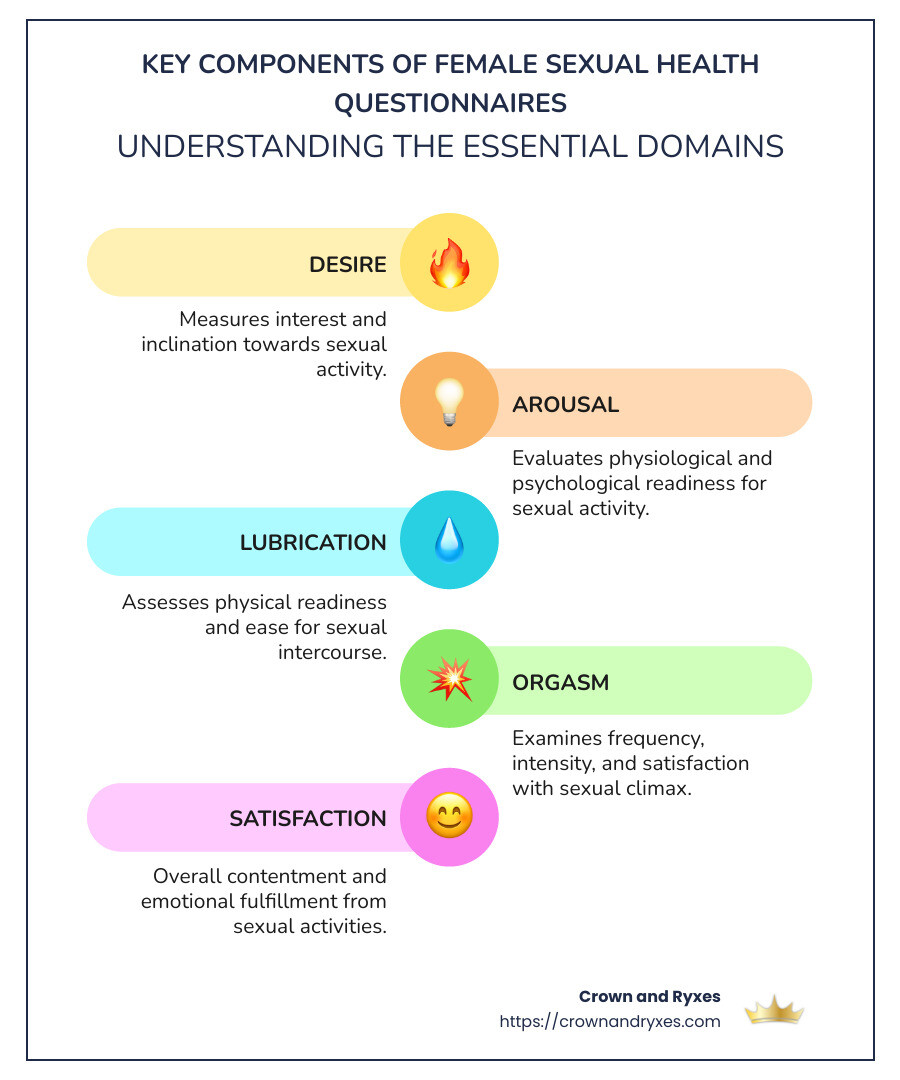
When it comes to understanding female sexual health, several key components play a crucial role. These include desire, arousal, lubrication, orgasm, satisfaction, and pain. Each of these elements helps paint a complete picture of a woman’s sexual function and potential areas for improvement.
Desire
Desire refers to the interest or longing to engage in sexual activity. It’s the spark that gets things started. For many women, low desire can be a significant issue. According to research, about 27% to 32% of women report a lack of interest in sex, making it one of the most common sexual complaints.
Arousal
Arousal is the body’s physical response to sexual stimuli. It includes increased heart rate, blood flow to the genitals, and heightened senses. Arousal and desire are closely linked but are not the same. Some women may experience arousal without initial desire, which complicates the diagnosis of sexual dysfunction.
Lubrication
Lubrication is vital for comfortable and enjoyable sexual experiences. It reduces friction and can improve pleasure. Vaginal dryness, a common issue, particularly during menopause, can lead to discomfort and pain during intercourse.
Orgasm
Orgasm is the peak of sexual pleasure, often described as an intense release of sexual tension. Unfortunately, about 22% to 28% of women report difficulty reaching orgasm. This can affect satisfaction and overall sexual health.
Satisfaction
Satisfaction is the feeling of contentment with one’s sexual life. It’s not just about orgasm but also involves emotional intimacy and connection with a partner. Satisfaction is a crucial component of sexual health, influencing overall well-being and relationship happiness.
Pain
Pain during sex, known as dyspareunia, is a significant barrier to sexual enjoyment. It affects 8% to 21% of women, according to studies. Pain can result from various physical and psychological factors and requires careful assessment and treatment.
Understanding these components through a female sexual health questionnaire like the FSFI can help identify specific issues and guide treatment. By addressing each element, women can work towards a healthier and more satisfying sexual life.
Comparing Popular Questionnaires
When it comes to evaluating female sexual health, three popular questionnaires stand out: the Female Sexual Function Index (FSFI), the Sexual Quality of Life-Female (SQOL-F), and the Golombok-Rust Inventory of Sexual Satisfaction (GRISS). Each of these tools has its own strengths and weaknesses in terms of accuracy and reliability.
FSFI
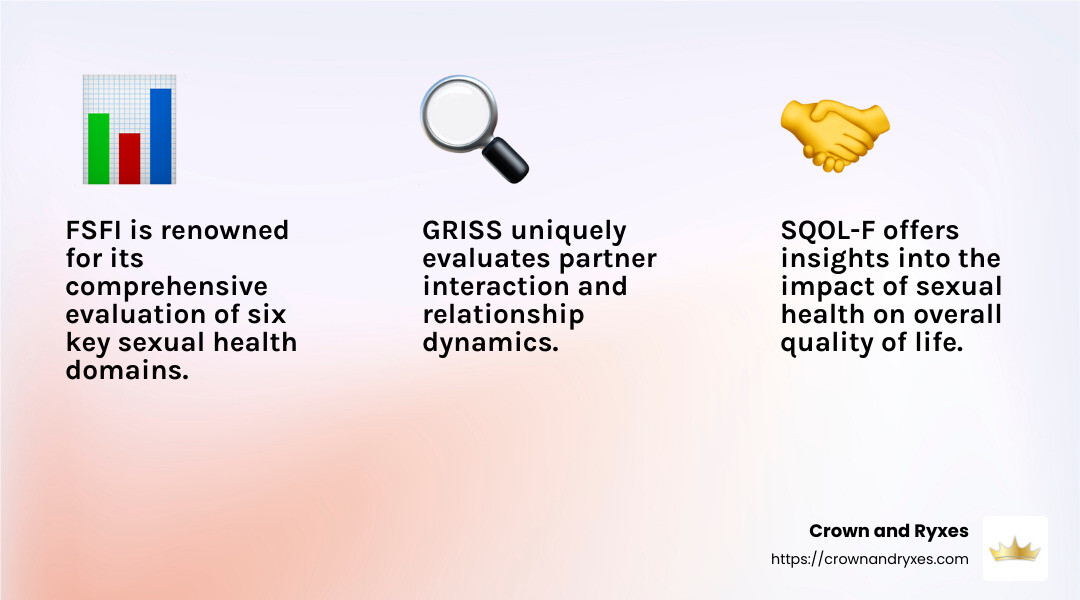
The FSFI is widely recognized for its comprehensive approach. It evaluates six key domains: desire, arousal, lubrication, orgasm, satisfaction, and pain. This makes it a robust tool for identifying sexual dysfunction. Research has shown that the FSFI provides excellent accuracy, with a high area under the ROC curve (AUC) for most domains, making it a reliable choice for clinicians. However, its specificity is moderate, suggesting it might sometimes flag issues that aren’t there.
SQOL-F
The SQOL-F focuses on the broader impact of sexual function on a woman’s quality of life. While it offers valuable insights, it is often seen as less precise than the FSFI. The SQOL-F tends to have a fair to poor domain discrimination accuracy. This is partly due to its fewer questions, which might not capture the full spectrum of sexual health issues. Despite this, it remains a useful tool for understanding the overall sexual well-being of women.
GRISS
The GRISS is particularly notable for including partner interaction as part of its assessment. This makes it unique among the three. It evaluates areas such as communication and avoidance, which are critical for understanding relationship dynamics. The GRISS has shown good accuracy in distinguishing between normal and dysfunctional sexual responses. However, like the SQOL-F, its reliability can be influenced by the limited number of questions in certain domains.
Accuracy and Reliability
In terms of accuracy, the FSFI often leads the pack with its detailed scoring system and strong validation across different populations. The GRISS also performs well, particularly in relationship-focused domains. The SQOL-F, while less accurate in some areas, offers a unique perspective on the emotional and social aspects of sexual health.
Reliability is another crucial factor. The FSFI is consistently reliable due to its comprehensive nature and widespread use. The GRISS’s focus on partner interaction adds a layer of reliability in assessing relational dynamics. The SQOL-F, while not as reliable in pinpointing specific dysfunctions, provides a broader view of sexual quality of life.
In summary, each questionnaire serves a different purpose and can be chosen based on the specific needs of the assessment. The FSFI is ideal for detailed clinical evaluation, the SQOL-F for quality of life insights, and the GRISS for understanding relationship dynamics.
Next, we’ll explore the benefits of using a female sexual health questionnaire, focusing on how these tools aid in diagnosis, monitoring, and treatment of sexual dysfunction.
Benefits of Using a Female Sexual Health Questionnaire
Using a female sexual health questionnaire can be incredibly beneficial for both women and healthcare providers. These tools play a crucial role in the diagnosis, monitoring, and treatment of sexual dysfunction. Let’s explore how.
Diagnosis
One of the primary benefits of these questionnaires is their ability to help diagnose sexual dysfunction. Many women experience sexual issues, but as noted in the Global Study of Sexual Attitudes and Behaviors, only a small percentage seek medical help. Questionnaires like the FSFI can identify specific areas of concern, such as desire, arousal, or pain, helping healthcare providers to pinpoint issues accurately.
Monitoring
Once a diagnosis is made, monitoring progress is essential. Regular use of these questionnaires allows both the patient and the doctor to track changes over time. This is particularly important for assessing the effectiveness of any treatments or interventions. For instance, if a woman is undergoing therapy for arousal disorders, periodic assessments using the FSFI can show improvements or highlight areas that still need attention.
Treatment
In terms of treatment, these questionnaires are invaluable. They provide a structured way to assess the impact of different therapies. For example, if a woman is dealing with sexual pain disorders, the questionnaire can help evaluate whether pain levels are decreasing with treatment. The SHOW-Q study highlighted the importance of reliable and valid tools like these for measuring treatment outcomes.
Addressing Sexual Dysfunction
Sexual dysfunction is a complex issue, involving anatomical, psychological, and social factors. As the Crown & Ryxes resource explains, recognizing symptoms early is key. These questionnaires help women articulate their experiences, reducing embarrassment and encouraging open discussions with healthcare providers. This can lead to more personalized and effective treatment plans.
Overall, female sexual health questionnaires are essential tools in the journey towards improved sexual health. They provide clarity, foster communication, and support ongoing care, empowering women to take control of their sexual well-being.
Next, we’ll address some frequently asked questions about female sexual health questionnaires, including details about the SQOL-F and FSFI.
Frequently Asked Questions about Female Sexual Health Questionnaires
What is the Female Sexual Quality of Life Questionnaire?
The Female Sexual Quality of Life Questionnaire (SQOL-F) is a tool designed to assess how sexual functioning impacts a woman’s quality of life. This questionnaire dives into various dimensions of sexual health, capturing aspects like emotional well-being, relationship satisfaction, and personal fulfillment. Unlike other tools, the SQOL-F focuses on the overall quality of life rather than just specific sexual dysfunctions.
What is the FSFI and its cutoff score?
The Female Sexual Function Index (FSFI) is a widely used questionnaire that measures different dimensions of sexual functioning. It covers six key areas: desire, arousal, lubrication, orgasm, satisfaction, and pain. Each area is scored, and the total score helps identify potential sexual dysfunction. A score below 26.5 typically indicates a risk of sexual dysfunction. This cutoff score is crucial for healthcare providers to diagnose issues accurately and develop effective treatment plans.
How do these questionnaires help in clinical settings?
Female sexual health questionnaires are valuable tools in clinical settings for several reasons:
Diagnosis: They help clinicians identify specific areas of sexual dysfunction, such as low desire or painful intercourse, enabling targeted interventions.
Treatment: By providing a structured way to assess the impact of treatments, these questionnaires help clinicians evaluate the effectiveness of therapies over time. For instance, improvements in FSFI scores can indicate successful treatment of a sexual disorder.
Sexual Health: They facilitate open communication between patients and healthcare providers, making it easier to discuss sensitive topics. This openness can lead to more personalized care and better outcomes for patients.
These tools empower both patients and clinicians to address sexual health issues comprehensively, ensuring a better quality of life for women.
Conclusion
At Crown and Ryxes, we understand that every individual’s journey to sexual wellness is unique. Our commitment is to provide personalized wellness solutions that cater to the diverse needs of women seeking to improve their sexual health.
Female sexual health questionnaires are essential tools in this journey. They help identify specific issues, guide treatment, and monitor progress. By using these questionnaires, we can tailor our services to meet the unique needs of each individual, ensuring that our clients receive the most effective care possible.
Our Women’s Sexual Wellness services offer a holistic approach to sexual health, focusing on both physical and emotional well-being. We provide a safe and welcoming environment where women can discuss their concerns openly and receive expert guidance.
Whether you’re in Clermont, FL, or Lady Lake, FL, our team is here to support you on your path to a fulfilling and satisfying sexual wellness experience. We invite you to explore our services and find the benefits of a personalized approach to sexual health. Your journey to improved well-being starts with us.