

The Life-Changing Solution for Hair Loss
Looking in the mirror and seeing thinning hair can be tough. I’ve seen how hair loss affects not just appearance, but confidence too. That’s why I’m passionate about sharing how FUE hair replacement has transformed thousands of lives, including many of my patients.
Follicular Unit Extraction (FUE) hair replacement is a game-changer in hair restoration. Unlike older “hair plug” techniques that often looked unnatural, this minimally invasive surgical approach harvests individual hair follicles from donor areas (typically the back of your head) and carefully transplants them to balding or thinning regions. The result? Natural-looking, permanent hair that grows just like your original hair.
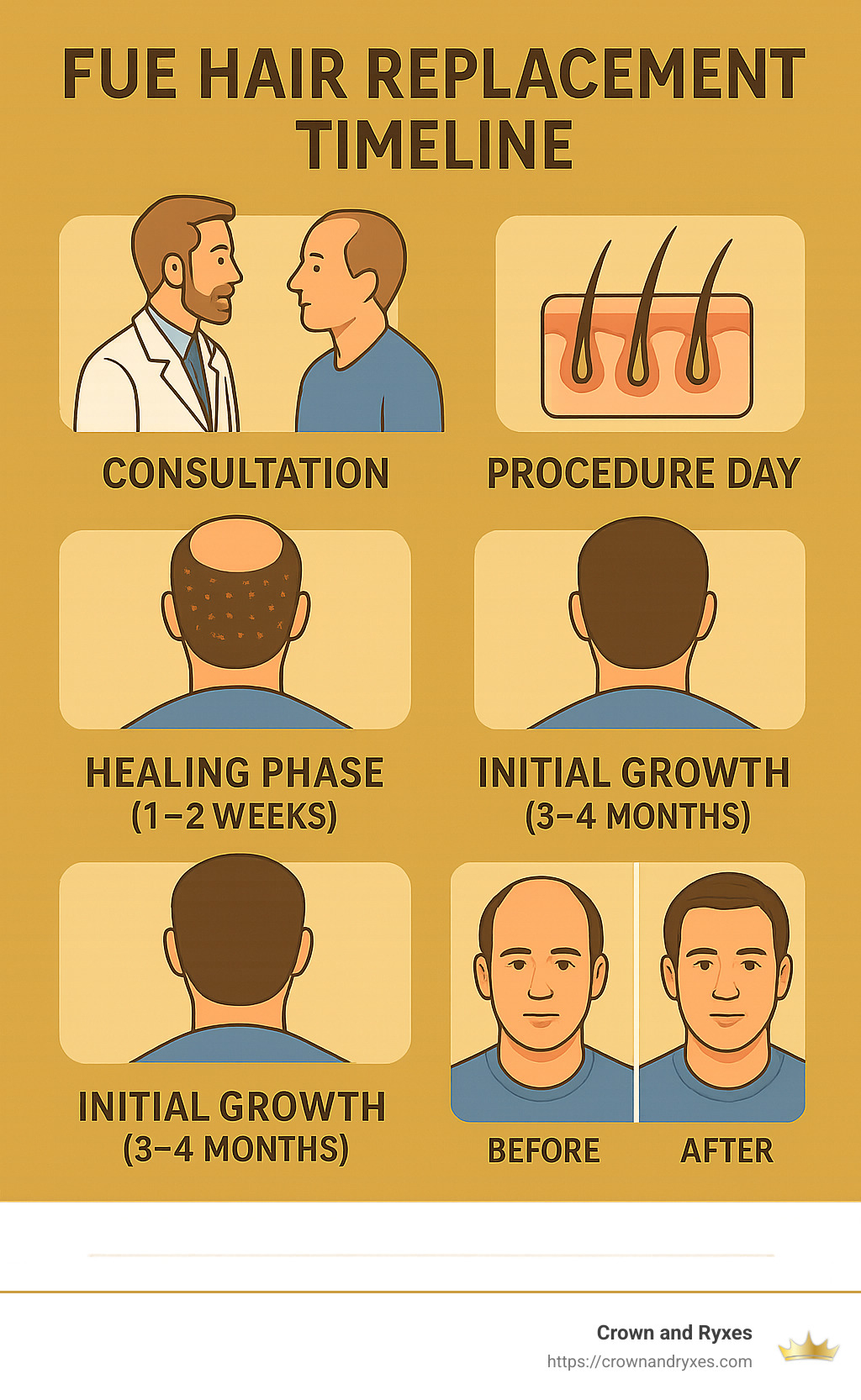
When you undergo an FUE hair replacement procedure, we use tiny micro-punches (just 0.7-1.2mm in diameter) to extract individual follicular units containing 1-4 hairs each. After applying local anesthesia for your comfort, we carefully extract these follicles, prepare them for transplant, create recipient sites, and precisely place each graft for optimal growth and natural appearance. Most people return to work within 2-5 days, with tiny white dot scars healing within a week.
The best part? Your new hair starts visibly growing at 3-4 months, with significant results appearing at 6-9 months. By the one-year mark, you’ll see the full, final results of your change. While costs typically range from $4,000-$15,000 per session depending on how many grafts you need and your clinic’s location, most patients find the investment in their confidence well worth it.
I’m Dr. Matthew Casavant, and over my 10+ years specializing in minimally invasive surgical techniques including FUE hair replacement, I’ve witnessed countless patients walk out not just with restored hair, but with renewed self-assurance and improved quality of life. The procedure has revolutionized hair restoration by eliminating the linear scar associated with traditional methods, allowing you to wear shorter hairstyles without worrying about visible scarring.
If you’re specifically concerned about thinning at the crown of your head, our fue crown hair transplant procedures address this common problem area with specialized techniques. And when you’re ready to take the next step, you’ll want to research the top fue hair transplant surgeons to ensure you get the best possible results.
At Crown and Ryxes, we understand that hair loss is more than just a physical change—it affects how you feel about yourself every day. That’s why we’re committed to providing personalized solutions that restore not just your hair, but your confidence too.
Understanding FUE Hair Replacement: Basics & Candidacy
When it comes to modern hair restoration, FUE hair replacement stands as the gold standard for those seeking natural results with minimal downtime. Before diving into the procedure itself, let’s explore what makes this technique unique and who can benefit from it.
FUE has come a long way since its early days. In fact, the terminology itself has evolved—what was once called “Follicular Unit Extraction” is now officially termed “Follicular Unit Excision” by the International Society of Hair Restoration Surgery (ISHRS). This change better reflects the actual surgical process involved.
Today, FUE hair replacement accounts for over 75% of all hair transplant procedures worldwide—a clear testament to its effectiveness and popularity among patients. It’s not hard to see why so many people choose this approach over traditional methods.
| Feature | FUE (Follicular Unit Excision) | FUT (Follicular Unit Transplantation) |
|---|---|---|
| Scarring | Tiny dot scars (0.7-1.2mm) | Linear scar across donor area |
| Recovery time | 2-5 days | 10-14 days |
| Post-op pain | Minimal | Moderate to significant |
| Hairstyle restrictions | None – can wear hair very short | Cannot wear hair shorter than 1/2 inch in donor area |
| Session length | 4-8 hours | 4-6 hours |
| Transection rate | 5-10% | 1-2% |
| Cost | Generally higher | Generally lower |
| Donor area | Scalp, beard, body | Scalp only |
What Is Follicular Unit Excision (FUE)?
FUE hair replacement is a surgical technique that harvests individual follicular units directly from your scalp using specialized micropunch tools. Unlike the strip method (FUT), which removes a strip of tissue from the back of your head, FUE gently extracts each follicular unit one by one.
“Follicular units are the natural hair-bearing structures of the scalp,” explains Dr. William Rassman, who first described FUE in medical literature. “They contain 1-4 hair follicles along with sebaceous glands, muscles, nerves, and blood vessels—essentially a complete physiological unit.”
The beauty of this procedure lies in its precision. Your surgeon uses a tiny circular punch (typically 0.7-1.2mm in diameter) to make a small incision around each follicular unit, separating it from surrounding tissue. This incision goes about 2mm deep—just enough to free the upper portion of the follicle while leaving the lower portion connected by a thin attachment. The follicular unit is then gently extracted using specialized forceps or suction.
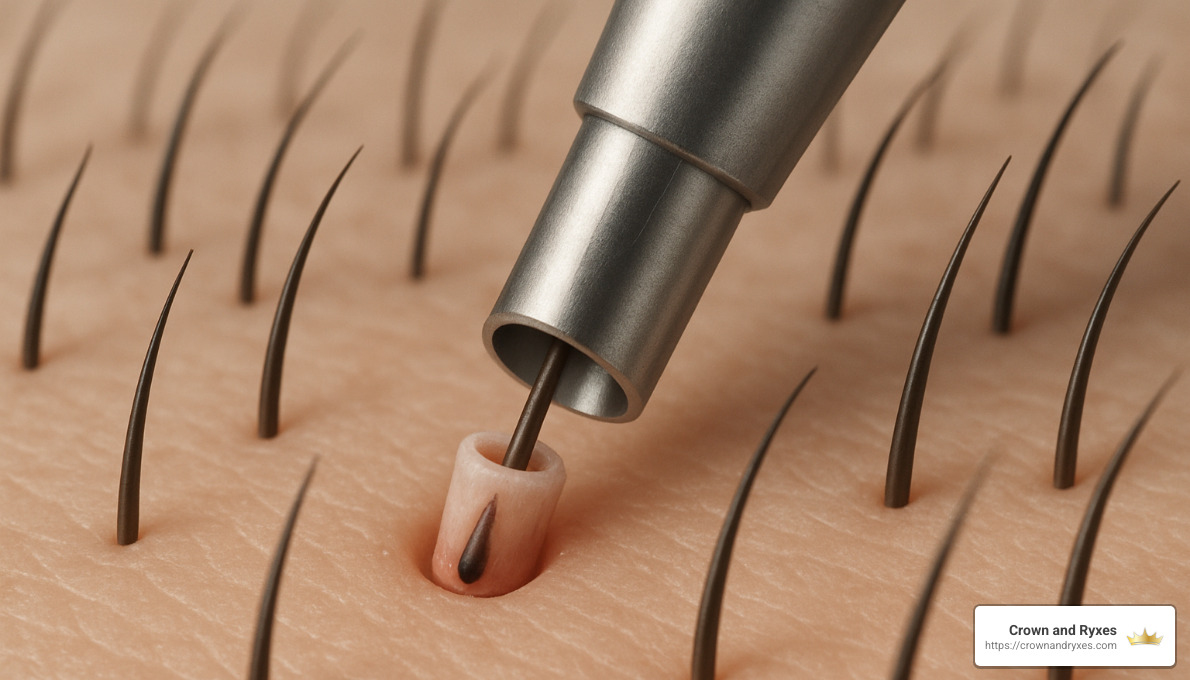
What makes FUE hair replacement truly special is what it doesn’t leave behind—instead of a linear scar, FUE leaves only tiny, round white dots that heal within 3-7 days. Once healed, these dots are virtually undetectable, even with very short haircuts. This means you can feel confident wearing any hairstyle you choose after recovery.
The science behind FUE builds on our understanding of hair follicle anatomy. Each follicular unit exists as a discrete entity in the mid-dermis of the scalp, with its own blood supply and supporting structures. By extracting these units intact, we preserve their viability and improve graft survival rates. For more technical details, you might find this scientific research on FUE principles fascinating, or this deeper dive into follicle anatomy.
Who Makes a Good Candidate?
Not everyone is an ideal candidate for FUE hair replacement. At Crown and Ryxes, we carefully evaluate each person to determine if FUE is the right approach. You’re likely a good candidate if you have:
Stable hair loss pattern. We typically recommend that patients, especially men with male pattern baldness, wait until at least age 25. This gives us a clearer picture of your hair loss progression and helps us create a treatment plan that will look natural for years to come.
Good donor hair density. The success of any transplant depends on having sufficient donor hair. We look for at least 40 follicular units per square centimeter in the donor area. The denser your donor area, the more grafts we can harvest for transplantation.
Realistic expectations. While FUE hair replacement can create remarkable improvements, it’s important to understand that results depend on your existing hair characteristics and donor supply. We’ll have an honest conversation about what you can realistically achieve.
Good general health. As with any surgical procedure, candidates should be in good overall health without conditions that might impair healing. During your consultation, we’ll review your medical history to ensure FUE is safe for you.
Appropriate hair characteristics. Certain hair types—particularly curly, wavy, or coarse hair—can provide better coverage with fewer grafts than fine, straight hair. This doesn’t mean you can’t get great results with fine hair; it just might require more grafts to achieve the desired density.
Before recommending FUE, we conduct a FOX test (Follicular Excision Test) where we extract about 100 test grafts to evaluate how easily your follicles can be removed and how well your skin heals. Patients graded FOX 1-3 are suitable candidates, while those graded FOX 4-5 may need to consider alternative treatments.
“The FOX test is crucial for determining FUE suitability,” notes Dr. Robert Bernstein, a pioneer in hair restoration. “About 74% of patients are FOX grade 1-3 and suitable candidates for FUE.”
For more comprehensive information about hair transplant procedures and candidacy, visit our Hair Transplant Surgery overview.
When Is FUE Not Recommended?
While FUE hair replacement offers excellent results for many patients, there are situations where we might advise against this procedure:
Extensive baldness with limited donor supply. If you have advanced hair loss (Norwood 6-7) and insufficient donor hair, you may not achieve satisfactory coverage. In these cases, we might recommend combining FUE with other treatments for better results.
Cicatricial (scarring) alopecia in active phase. If you have active inflammatory conditions affecting your scalp, we’ll recommend controlling these before considering any transplant. The inflammation can compromise graft survival and worsen scarring.
FOX test grades 4-5. These grades indicate difficult extraction and higher transection rates (damaged follicles), which could compromise your results. We won’t proceed with FUE if your FOX test suggests poor outcomes.
Bleeding disorders or anticoagulant therapy. These conditions increase surgical risk and may affect graft survival. Your safety always comes first, so we might recommend alternative approaches if you have bleeding concerns.
Unrealistic expectations. If you’re expecting the full restoration of adolescent hair density, you might be disappointed even with the best possible outcome. We’ll always be upfront about what’s achievable with your specific situation.
Young age with unpredictable future hair loss. For patients in their early 20s, the future pattern of hair loss can be difficult to predict, making transplant planning challenging. Sometimes waiting or starting with non-surgical treatments makes more sense.
Certain autoimmune conditions. Active flare-ups of conditions like alopecia areata can compromise graft survival and overall results. We might recommend waiting until your condition stabilizes.
At Crown and Ryxes, we believe in honest assessments. If FUE hair replacement isn’t right for you, we’ll recommend alternative approaches that might better address your specific situation, whether that’s medical therapy, non-surgical options, or a different type of transplant procedure. Your satisfaction and results are our priority, even if that means suggesting a different path forward.
The FUE Hair Replacement Procedure: Preparation to Implantation
The journey of FUE hair replacement combines medical precision with artistic vision to create natural, life-changing results. At Crown and Ryxes, we’ve fine-tuned every step of this remarkable process to ensure your comfort and satisfaction throughout.
Pre-Op Preparation for fue hair replacement
Getting ready for your procedure is just as important as the transplant itself. In the weeks before your big day, we’ll guide you through several key preparation steps.
First, we’ll ask you to put that cigarette down. Smoking restricts blood flow and can significantly impact how well your grafts take hold, so we recommend stopping at least two weeks before surgery. Similarly, alcohol needs to take a backseat for at least three days before your procedure to reduce bleeding risk.
Your medication routine might need temporary adjustments too. Blood thinners like aspirin can increase bleeding during surgery, so with your primary doctor’s blessing, we’ll help you safely pause these medications 7-14 days beforehand.
Want to give your scalp a head start? Daily gentle massages in the weeks leading up to surgery can boost blood circulation to both donor and recipient areas. Think of it as preparing the soil before planting!
While traditional FUE hair replacement typically requires shaving the donor area, we understand that’s not everyone’s cup of tea. We offer non-shaven options for those who prefer to keep their current style, though this might limit how many grafts we can harvest.
We’ll also run standard lab tests to ensure you’re in good health for the procedure, and on the morning of surgery, we recommend washing your hair with a gentle, fragrance-free shampoo.
As Dr. James Harris, a pioneer in FUE techniques, often says: “Preparation is just as important as the procedure itself. A well-prepared patient typically experiences better graft survival rates and faster recovery.”
For more recovery insights, check out our Recovery process guide.
Step-by-Step Surgical Day
The day you’ve been waiting for has arrived! Your FUE hair replacement journey at Crown and Ryxes begins with a warm welcome and a final review of your treatment plan. We’ll answer any lingering questions before getting started.
Next, we’ll prepare your donor area (usually the back and sides of your head) by trimming the hair to 1-2mm. This shorter length makes it easier to extract those precious follicular units with precision.
Comfort is our priority, so we’ll administer local anesthesia and offer mild sedation if you prefer. Most of our patients report feeling some pressure during the procedure, but no pain – many even catch up on their favorite shows or take a nap!
The harvesting phase is where the magic begins. Using tiny micropunches (just 0.7-1.2mm in diameter), we carefully extract individual follicular units one by one. This meticulous process typically takes 1-4 hours depending on how many grafts you need.
Behind the scenes, our skilled technicians examine each extracted graft under powerful microscopes, sorting them by hair count into singles, doubles, triples, and quadruples. These delicate structures are kept in a special hydrating solution to ensure they remain viable.
Now comes the artistic part – creating your new hairline. Your surgeon will make tiny, precisely angled incisions in the recipient area, controlling the direction and density of your future hair growth. This artistic aspect is what separates good results from truly natural-looking ones.
With the foundation set, our technicians delicately place each graft into its new home. We use single-hair grafts along the hairline for a soft, natural appearance, while multiple-hair grafts create fullness and density behind it.

As Dr. Koray Erdogan, a leading FUE specialist, explains: “The key to natural results lies in the meticulous placement of each graft. The angle, direction, and distribution must match the patient’s natural hair growth pattern.”
Most procedures at Crown and Ryxes take between 4-8 hours, depending on the number of grafts. For larger sessions over 2,000 grafts, we might recommend splitting the procedure over two days to ensure optimal quality and reduce fatigue for everyone involved.
After we’ve placed the final graft, we’ll clean the area and apply a light bandage to the donor zone. Then you’re ready to begin your recovery journey!
For a deeper dive into procedure details, visit our Procedure details guide.
Advanced Technologies & Techniques
At Crown and Ryxes, we accept cutting-edge technology that takes FUE hair replacement to the next level of precision and comfort.
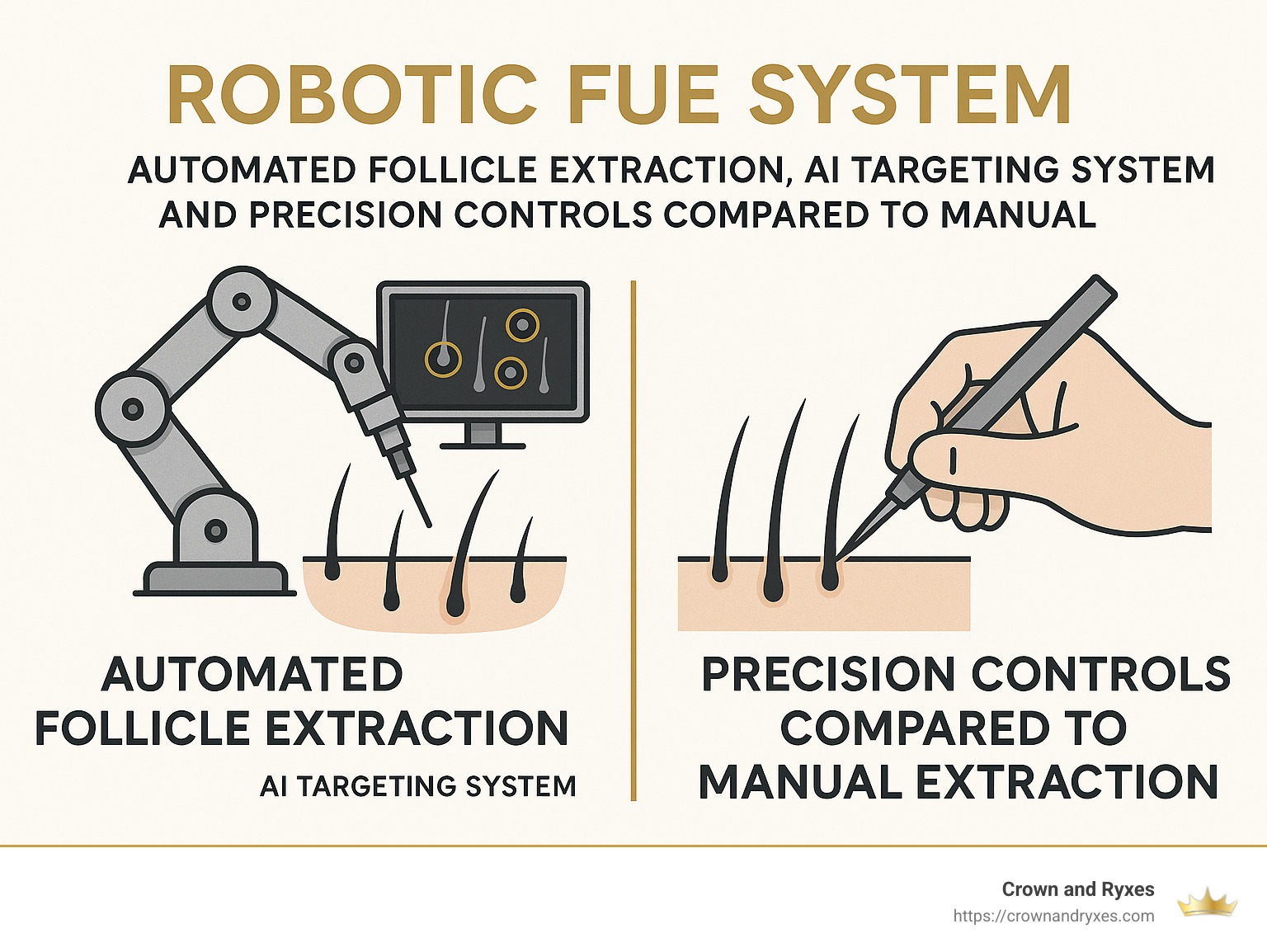
The ARTAS robotic system represents a remarkable fusion of medicine and machine. This FDA-approved technology uses artificial intelligence to identify and harvest follicular units with incredible accuracy, reducing damage to grafts and improving consistency. Think of it as having superhuman precision working for your hairline!
For patients who prefer a blend of human touch and technological assistance, our NeoGraft system combines gentle suction with extraction, minimizing handling of those delicate grafts and potentially boosting their survival rates.
When creating recipient sites, we often use sapphire blades instead of traditional steel. These ultra-sharp instruments create cleaner, more precise incisions that may reduce trauma and improve healing. Similarly, our specialized trumpet punches are designed to accommodate the natural widening of follicular units below the skin surface, further reducing trauma during extraction.
Many of our patients also benefit from combining their transplant with Platelet-Rich Plasma (PRP) therapy. This innovative approach uses growth factors from your own blood to potentially improve graft survival and stimulate healing.
As Dr. John Cole, who developed several FUE instruments, notes: “Technological advancements have dramatically improved FUE outcomes. Today’s tools allow for higher graft survival rates and less trauma than early FUE techniques.”
Beyond the Scalp: Eyebrow, Beard & Body Applications
The versatility of FUE hair replacement extends far beyond treating male pattern baldness. At Crown and Ryxes, we’ve mastered specialized applications that address a wide range of aesthetic needs.
For those seeking to restore thinning eyebrows or create entirely new ones, our eyebrow restoration service uses the finest single-hair grafts to match your natural arch and direction. The result? Beautifully defined brows that frame your face and require no daily makeup.
Men with patchy or thin facial hair can benefit from our beard and mustache improvement services. Whether you’re looking for a fuller beard or trying to fill in specific areas, we can help you achieve the facial hair you’ve always wanted.
When scalp donor hair is limited, we can turn to body hair transplantation (BHT). By harvesting grafts from the chest, back, or legs, we can provide additional coverage for your scalp. While body hair has different growth characteristics than scalp hair, it can provide valuable additional density when needed.
FUE hair replacement also excels at disguising scars from injuries, previous surgeries, or even older hair transplants that left visible scarring. By placing grafts directly into scar tissue, we can help these areas blend seamlessly with your surrounding hair.
In some specialized cases, we’ve even used FUE for innovative purposes like vitiligo repigmentation, where the transplanted follicles bring melanocytes (pigment cells) to depigmented areas.
“FUE’s precision makes it ideal for delicate work like eyebrow restoration,” explains Dr. Sara Wasserbauer, a hair restoration specialist. “Each hair must be placed at the precise angle and direction to mimic natural eyebrow growth.”
For a complete overview of our specialized hair transplant services, visit our Hair Transplant Services page.
Recovery, Results & Longevity
The road to your new hairline after FUE hair replacement is a journey with distinct phases. One of the biggest perks? You’ll be back to your normal life surprisingly quickly, with minimal downtime compared to older transplant methods.
Day 0–14: Immediate Aftercare
Those first two weeks are crucial for ensuring your new hair follicles settle in properly. Here’s what to expect:
When you leave our clinic on surgery day, you’ll have a light bandage over your donor area. Most of our patients are pleasantly surprised by how little discomfort they feel – any pain is typically easily managed with the medication we prescribe. You’re free to head home or back to your hotel right after your procedure.
During those first few days, don’t be alarmed if you notice some swelling, especially around your forehead and eyes. This is completely normal and usually disappears within 2-3 days. You’ll also see tiny scabs forming around each transplanted follicle – these are signs of healing, not causes for concern.
“I recommend sleeping with your head liftd for the first few nights,” says Dr. James Harris. “This simple step can significantly reduce swelling and improve your comfort.”
You’ll come back to see us for your first post-op check and hair wash around day 3. This is when we’ll show you exactly how to clean your scalp gently without disturbing the grafts. By days 4-7, most patients feel comfortable returning to work and regular activities, though you should still avoid intense exercise. Those tiny dot scars in your donor area will be healing nicely by the end of the second week, and the redness in your recipient area will start fading.
For a complete roadmap through your recovery, check out our detailed Aftercare guide.
Months 1–12: Growth Timeline & Expectations
The change from surgery to full results unfolds over several months, and understanding this timeline helps manage expectations:
The most surprising phase for many patients comes between weeks 2-8, when most transplanted hairs enter a resting phase and fall out. This “shedding phase” can be alarming if you’re not expecting it, but rest assured – the follicles remain alive beneath your scalp, just resetting for new growth.
Around months 3-4, you’ll spot the first exciting signs of new growth. These initial hairs might be finer and more delicate than your final result, but they’re a promising indication that your transplant is working. By months 5-6, you’ll see continued improvement with about half of your final results becoming visible.
The 7-9 month mark brings significant changes – about 60% of your new hair growth will be apparent, and the hair will be thickening nicely. Many patients find they can start styling their hair with more confidence during this period.
When you reach the 10-12 month milestone, you’ll see your transplant at full maturity. The transplanted hair will have normal texture and thickness, blending seamlessly with your existing hair. You can cut and style it just like the rest of your hair.
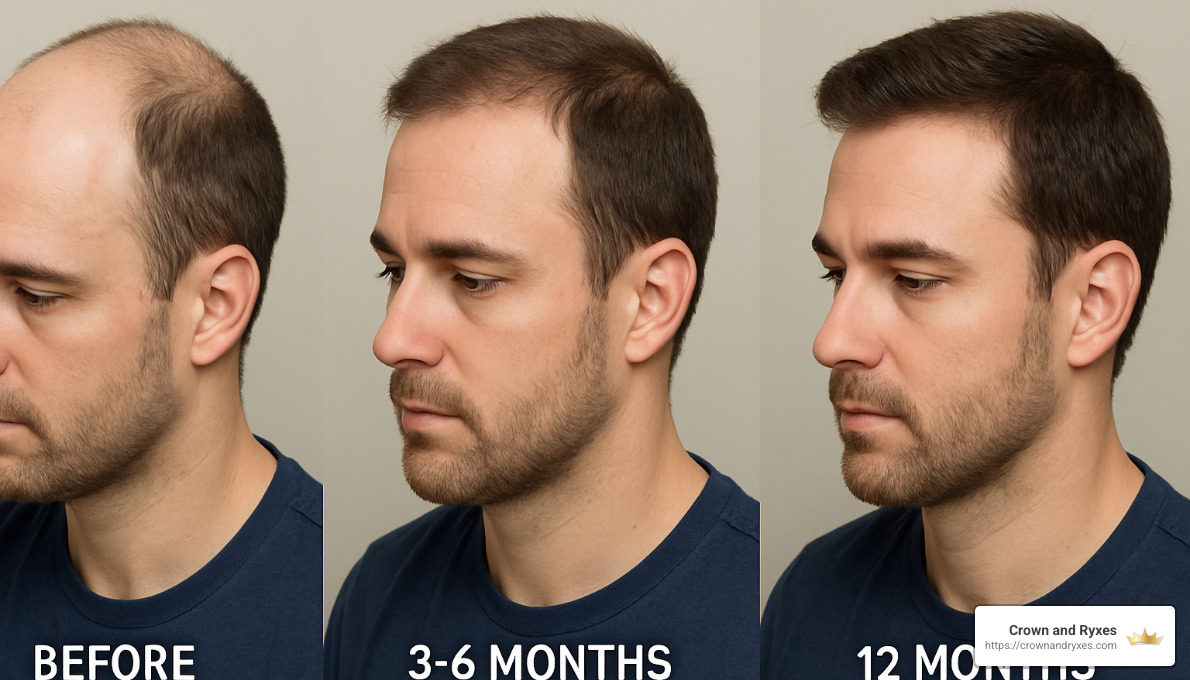
That results vary between individuals. Clinical data shows patients typically experience between 10-80% regrowth of transplanted follicles, with most achieving a healthy 60-70% growth rate. Factors that influence your personal results include your surgeon’s skill, how carefully the grafts were handled, how well you followed aftercare instructions, and your body’s natural healing characteristics.
For visual inspiration, browse our Hair Transplant Before and After gallery to see real changes.
Is fue hair replacement permanent?
“Will my new hair last?” It’s the question nearly everyone asks, and we’re happy to report that yes, FUE hair replacement results are indeed permanent – with some important nuances to understand.
The science behind this permanence is fascinating. It hinges on something called “donor dominance,” first described by Dr. Norman Orentreich. The hair follicles from the back and sides of your head possess genetic resistance to dihydrotestosterone (DHT), the hormone responsible for most hair loss. When we transplant these DHT-resistant follicles to your thinning areas, they bring their genetic programming with them, allowing them to continue growing throughout your lifetime.
That said, a few factors influence your long-term results:
While your transplanted hair is permanent, the native hair surrounding your transplants may continue thinning over time. This is why we often recommend supportive treatments like finasteride or minoxidil to help preserve your existing hair and improve the overall appearance.
Not every transplanted follicle will successfully take root. Most patients can realistically expect 60-70% of transplanted grafts to produce permanent hair – which is why we calculate graft numbers carefully during your consultation.
Your age at the time of transplantation matters too. Younger patients may experience continued native hair loss as they age, potentially requiring touch-up procedures down the road.
To enjoy the longest-lasting results possible, consider these strategies: medical therapy with proven hair loss medications, periodic follow-up treatments every few years if needed, and maintaining a healthy lifestyle with good nutrition and stress management.
“Think of your hair transplant as a partnership,” explains Dr. Robert Bernstein. “We provide the technical expertise, but your commitment to aftercare and maintenance significantly impacts your long-term satisfaction.”
At Crown and Ryxes, we’re committed to not just giving you great hair today, but helping you maintain it for years to come. We’ll create a personalized long-term plan to protect your investment and keep you looking your best.
Risks, Costs & Choosing the Right Surgeon
Let’s have an honest conversation about FUE hair replacement. While it’s a remarkable solution for hair loss, like any medical procedure, it comes with considerations you should understand before taking the plunge. I’ve guided hundreds of patients through this journey, and transparency is essential for making confident decisions.
Potential Side Effects & How to Minimize Them
Most of my patients are pleasantly surprised by how smooth their recovery is, but it’s important to know what could potentially happen:
Those tiny dot scars in the donor area? With proper technique, they’re virtually invisible once healed. The key is using the right punch size for your specific scalp characteristics – something we take very seriously at Crown and Ryxes.
Occasionally, some patients experience “shock loss” – a temporary shedding of existing hair near the transplanted area. Don’t panic if this happens! This hair typically returns within 3-4 months as your scalp recovers from the procedure.
While infections are rare (affecting less than 1% of cases), we take no chances. That’s why we provide prophylactic antibiotics and detailed aftercare instructions to keep your scalp healthy during healing.
“The most common complications from FUE are entirely preventable with proper technique and aftercare,” notes Dr. William Rassman, a pioneer in FUE development.
What about those horror stories of unnatural-looking hairlines? These almost always stem from inexperienced providers. The difference between a natural-looking result and an obvious transplant often comes down to the artistic skill of your surgeon – something that simply can’t be rushed or automated.
For a deeper dive into potential risks and our prevention strategies, check our comprehensive Hair Transplant Risks and Complications guide.
How Much Does FUE Cost?
I’m often asked, “What’s this going to cost me?” The honest answer is: it depends on your unique situation.
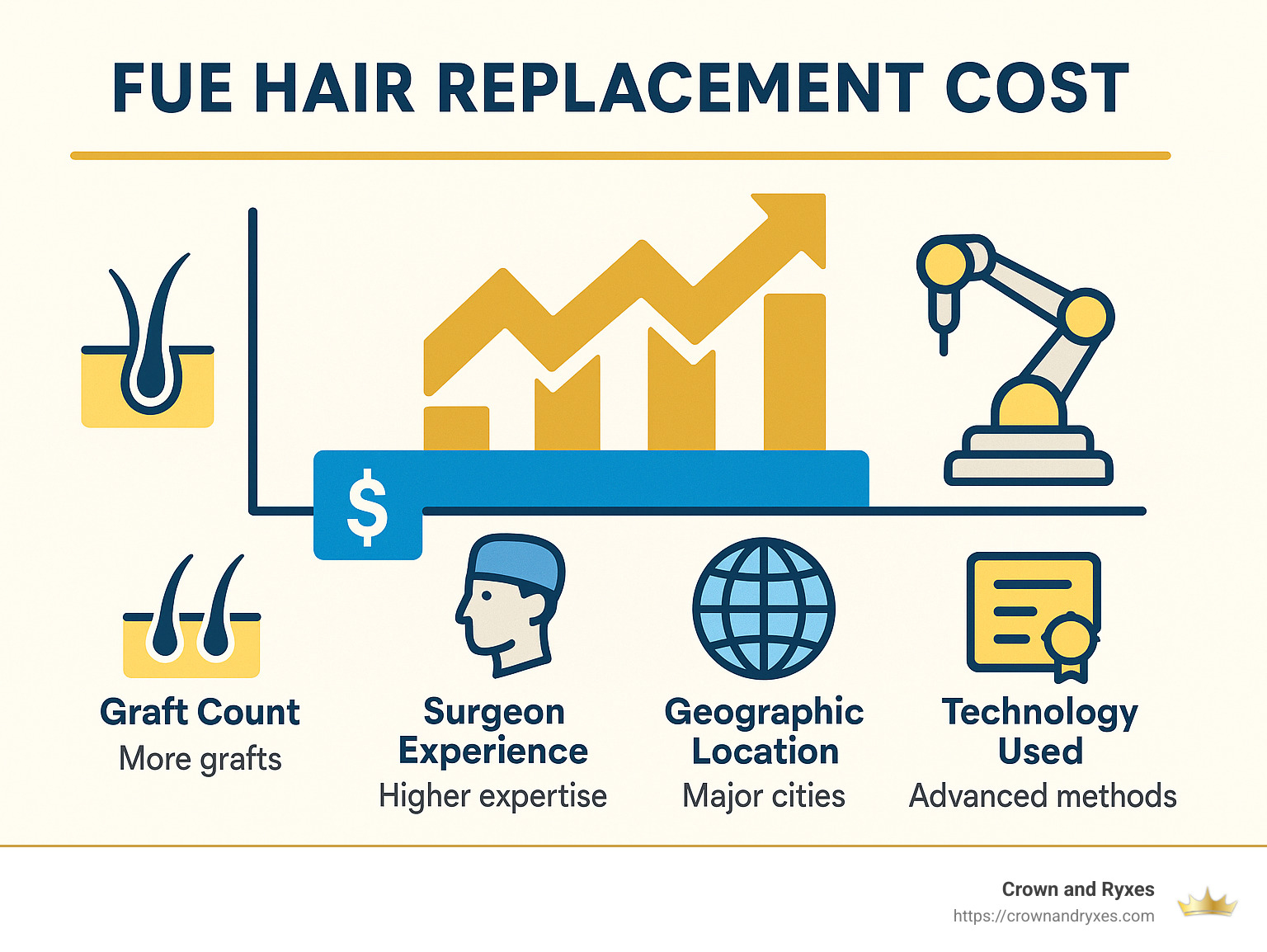
FUE hair replacement typically ranges from $4,000 to $15,000 per session. Why such a wide range? Several factors influence the final price:
The number of grafts you need makes the biggest difference – most clinics (including ours) charge per graft, with prices ranging from $4 to $15 each. A typical procedure involves 1,500-3,000 grafts.
Your geographic location matters too. Procedures in major metropolitan areas generally command higher prices than those in smaller cities.
The experience level of your surgeon significantly impacts cost – and for good reason. Would you rather have a discount procedure or one performed by someone with thousands of successful cases?
At Crown and Ryxes, we believe in transparent pricing. During your consultation, we’ll provide a detailed breakdown based on your specific needs. We also understand this is a significant investment, which is why we offer financing options to make treatment more accessible.
While insurance typically doesn’t cover hair transplantation (considering it cosmetic), we can provide documentation for flexible spending accounts (FSAs) or health savings accounts (HSAs), which many patients successfully use.
For detailed pricing information and financing options, visit our FUE Hair Restoration services page.
Selecting a Qualified Provider
This might be the most important section you read today. Why? Because the surgeon you choose matters more than any other factor in your hair restoration journey.
I’ve seen too many patients come to us for repair work after disappointing results elsewhere. These heartbreaking situations are almost always preventable with proper research.
Start with credentials. Look for surgeons who are board-certified in relevant specialties and members of respected organizations like the International Society of Hair Restoration Surgery (ISHRS) or American Board of Hair Restoration Surgery (ABHRS).
Examine their work closely. Request to see multiple before-and-after photos of patients with similar hair loss patterns to yours. Pay special attention to hairline design – does it look age-appropriate and natural? Is the density consistent? These details reveal a surgeon’s technical skill and artistic vision.
Ask the tough questions: Who actually performs the procedure? In some clinics, physicians are barely involved, with technicians handling most of the work. At Crown and Ryxes, our physicians participate in every critical step.
Be wary of suspiciously low prices. The unfortunate reality is that “black market” providers exist, often employing unlicensed technicians to perform surgeries. The savings aren’t worth the risks to your health and appearance.
“The single most important factor in transplant success is surgeon selection,” emphasizes Dr. Robert Bernstein. “Technical skill, artistic vision, and ethical practice are essential qualities to seek.”
I always recommend scheduling an in-person consultation before making your decision. This gives you the opportunity to connect with your potential surgeon, discuss your specific goals, and determine if they truly understand the artistic principles that make for natural-looking results.
You can use the ISHRS Find a Doctor tool to locate qualified surgeons in your area. To learn more about our experienced team at Crown and Ryxes, visit our Top FUE Hair Transplant Surgeons page.
This is a decision that will literally be with you for life – take the time to make it wisely.
Conclusion
The journey through FUE hair replacement brings us to an important realization—this isn’t just about hair. It’s about change, confidence, and reclaiming a part of yourself that may have been slipping away.
At Crown and Ryxes, we’ve witnessed countless moments of joy as patients see their results take shape over those important months following their procedure. The technology behind FUE has evolved remarkably since its early days, offering increasingly natural results with less downtime and virtually invisible scarring. What once seemed like science fiction has become a reliable, life-changing solution for many.
Hair loss affects more than your appearance—it touches how you feel about yourself in business meetings, social gatherings, and even quiet moments alone with the mirror. We understand this deeply. Our approach accepts both the technical excellence needed for outstanding results and the emotional support that makes the journey worthwhile.
Knowledge is power when it comes to hair restoration. By understanding the procedure from candidacy through recovery, you’re already taking important steps toward a successful outcome. Realistic expectations combined with expert care create the foundation for results you’ll love for years to come.
The relationship with our patients doesn’t end when you leave our clinic. We’re with you throughout recovery, answering questions, addressing concerns, and celebrating milestones as your new hair emerges and matures. Many patients tell us their FUE hair replacement journey marked a turning point—not just in their appearance, but in how they move through the world with renewed confidence.
Whether you’re in the early stages of research or ready to schedule your procedure, our team at Crown and Ryxes is here to guide your path forward. Our Clermont and Lady Lake, Florida locations offer state-of-the-art care in a warm, welcoming environment where your comfort and results are our highest priorities.
We invite you to take the next step with a personalized consultation. During this one-on-one meeting, we’ll assess your unique situation, answer your specific questions, and develop a treatment approach custom precisely to your needs and goals.
For more information about our FUE hair replacement services or to schedule your consultation, visit our FUE hair restoration services page or reach out to our team directly.
Your journey to a fuller head of hair and the confidence that comes with it starts with a single conversation—and we’d be honored to have that conversation with you.