

Understanding What You’ll Really Pay for an FUE Hair Transplant
FUE hair transplant cost typically ranges from $4,000 to $15,000 in the United States, depending on several key factors:
- Number of grafts needed: 1,000-2,000 grafts (small session) = $4,000-$8,000; 2,000-3,500 grafts (medium session) = $8,000-$12,000; 3,500+ grafts (large session) = $12,000-$15,000+
- Surgeon experience and clinic location: Board-certified surgeons in established clinics typically charge more.
- Technology used: Manual FUE vs. robotic systems vs. DHI technique.
- Additional services: PRP therapy, medications, and post-operative care packages.
- Geographic location: Costs vary significantly between regions.
Hair loss is a personal journey, and for many, a solution like Follicular Unit Extraction (FUE) is a way to reclaim a piece of themselves. But the question of cost often weighs heavily on the mind.
Unlike temporary solutions with ongoing expenses, an FUE hair transplant offers a permanent solution. The procedure involves extracting individual hair follicles from donor areas and transplanting them to thinning or balding areas, resulting in natural-looking hair that grows for a lifetime.
However, the investment isn’t one-size-fits-all. Your FUE hair transplant cost depends on how many grafts you need, your location, and your surgeon’s expertise.
I’m Dr. Matthew Casavant. My background in advanced minimally invasive surgery has taught me the importance of transparent pricing and patient education for elective procedures. Understanding the full scope of any procedure, including its financial investment, is crucial for making an informed decision.
Understanding Hair Transplant Techniques: FUE and DHI
If you’re exploring hair restoration, you’ve likely encountered the acronyms FUE and DHI. Both represent the cutting edge of hair restoration, and understanding them helps explain why FUE hair transplant cost varies.
Think of these methods as the difference between a craftsman using hand tools versus one using precision instruments. Both create beautiful results, but the approach differs. Let’s break down what makes each technique special.
What is FUE and How Does it Work?
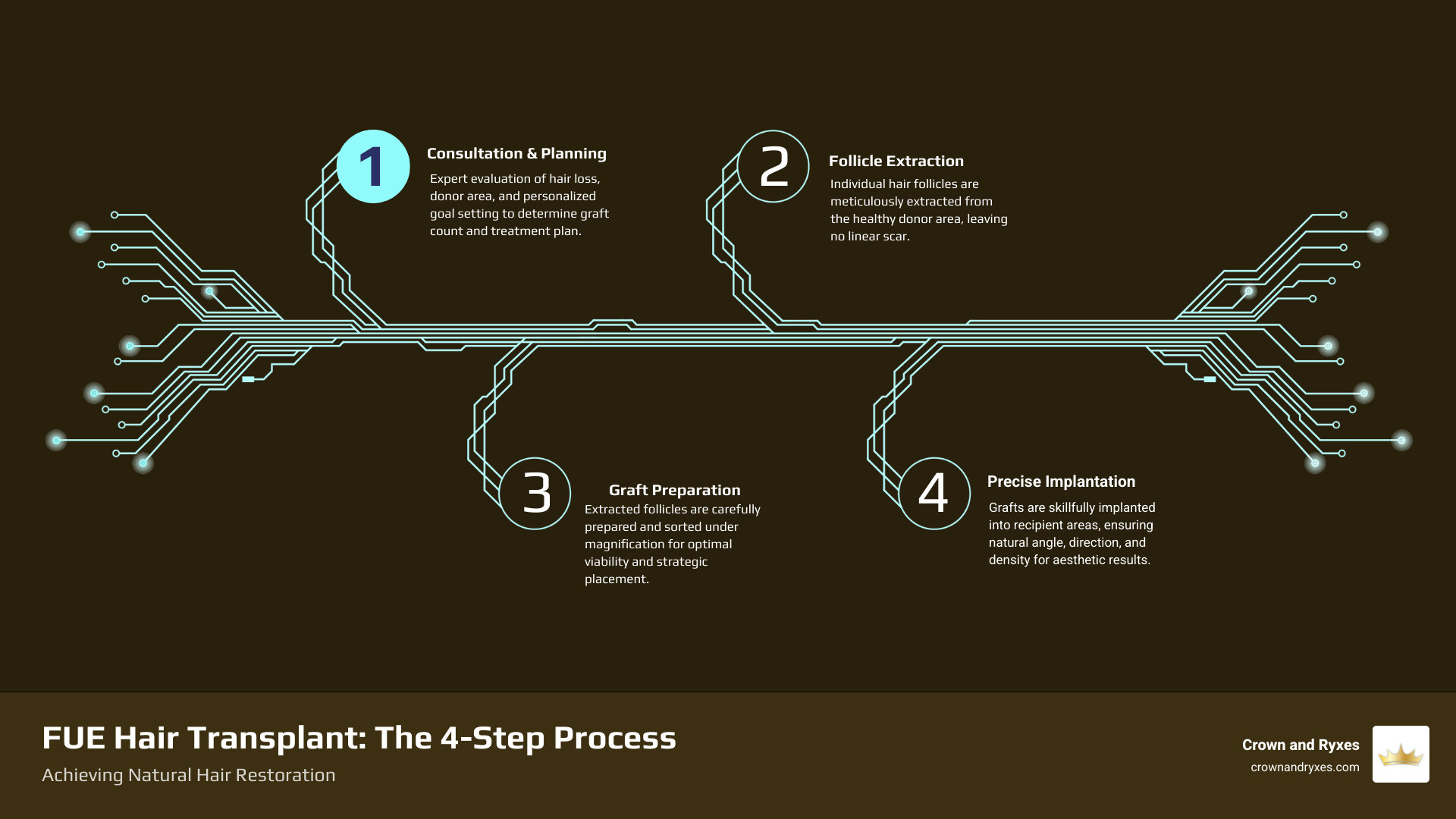
FUE, or Follicular Unit Extraction, is the gold standard in modern hair restoration. Instead of removing a strip of scalp, FUE is about precision and minimal invasion.
Your surgeon uses a specialized micropunch tool (less than a millimeter wide) to extract individual hair follicles one by one from your donor area—the back and sides of your head, where hair is naturally resistant to balding.
The process begins by preparing the donor area, often with a close shave for a clear view. The surgeon then carefully extracts each follicular unit (containing one to four hairs), leaving nearly invisible circular marks that heal beautifully.
Next, the surgeon creates tiny incisions in the recipient area where you want more hair. The angle, depth, and direction of these incisions are critical for natural-looking results. Finally, each extracted follicle is carefully implanted into its new home.
The best part? There’s no linear scar, so you can wear your hair short without worry. The results look completely natural because it’s your own hair. For more technical details, this article on Follicular Unit Extraction hair transplant dives deeper into the science.
What is DHI and How is it Different?
DHI (Direct Hair Implantation) is an advanced FUE method that takes precision to the next level. While the extraction process is the same as FUE, the implantation is where it differs.
DHI uses a specialized tool called a Choi Implanter Pen. This pen allows the surgeon to create the recipient site and implant the graft in one smooth motion. It’s direct implantation without pre-made incisions. This means less handling of the grafts, potentially better survival rates, and often a faster healing process.
The main advantage is the surgeon’s exceptional control over angle and depth. This precision can lead to higher density potential, especially for hairlines where every follicle counts.
Both techniques offer excellent, natural-looking results. The choice often depends on your specific needs, the extent of your hair loss, and your surgeon’s expertise. DHI’s advanced precision sometimes carries a higher price tag than standard FUE, which is a factor when evaluating your FUE hair transplant cost.
| Feature | FUE (Standard) | DHI (Direct Hair Implantation) |
|---|---|---|
| Scarring | Tiny, diffuse pinpoint scars (almost imperceptible) | Tiny, diffuse pinpoint scars (same as FUE extraction) |
| Recovery | 3-5 days for donor area, recipient area heals quickly | Potentially faster recipient area healing (less trauma) |
| Implantation | Incisions made first, then grafts implanted | Grafts implanted directly using Choi pen |
| Density Potential | Excellent, natural-looking results | Potentially higher density, very natural look |
| Surgeon Control | Good | Improved control over angle, depth, direction |
| Cost | Mid-range | Generally higher than standard FUE |
| Best Use Cases | Moderate to extensive hair loss, larger areas | Smaller areas, hairline refinement, higher density needs |
Whether you choose FUE or DHI, you’re investing in proven technology that has helped thousands restore not just their hair, but their confidence.
Key Factors That Determine Your FUE Hair Transplant Cost
When researching hair restoration, the first question is usually, “What will this cost me?” The truth is, FUE hair transplant cost varies significantly because every patient’s hair loss is unique.
Asking about the cost of a hair transplant is like asking about the cost of a house—it depends on the size and scope. Some clinics price per graft, while others use an area-based model (small, medium, or large). Regardless of the pricing model, the goal is to restore your hair naturally and effectively. Let’s break down the main factors that influence your investment.
The Number of Grafts: The Biggest Price Driver
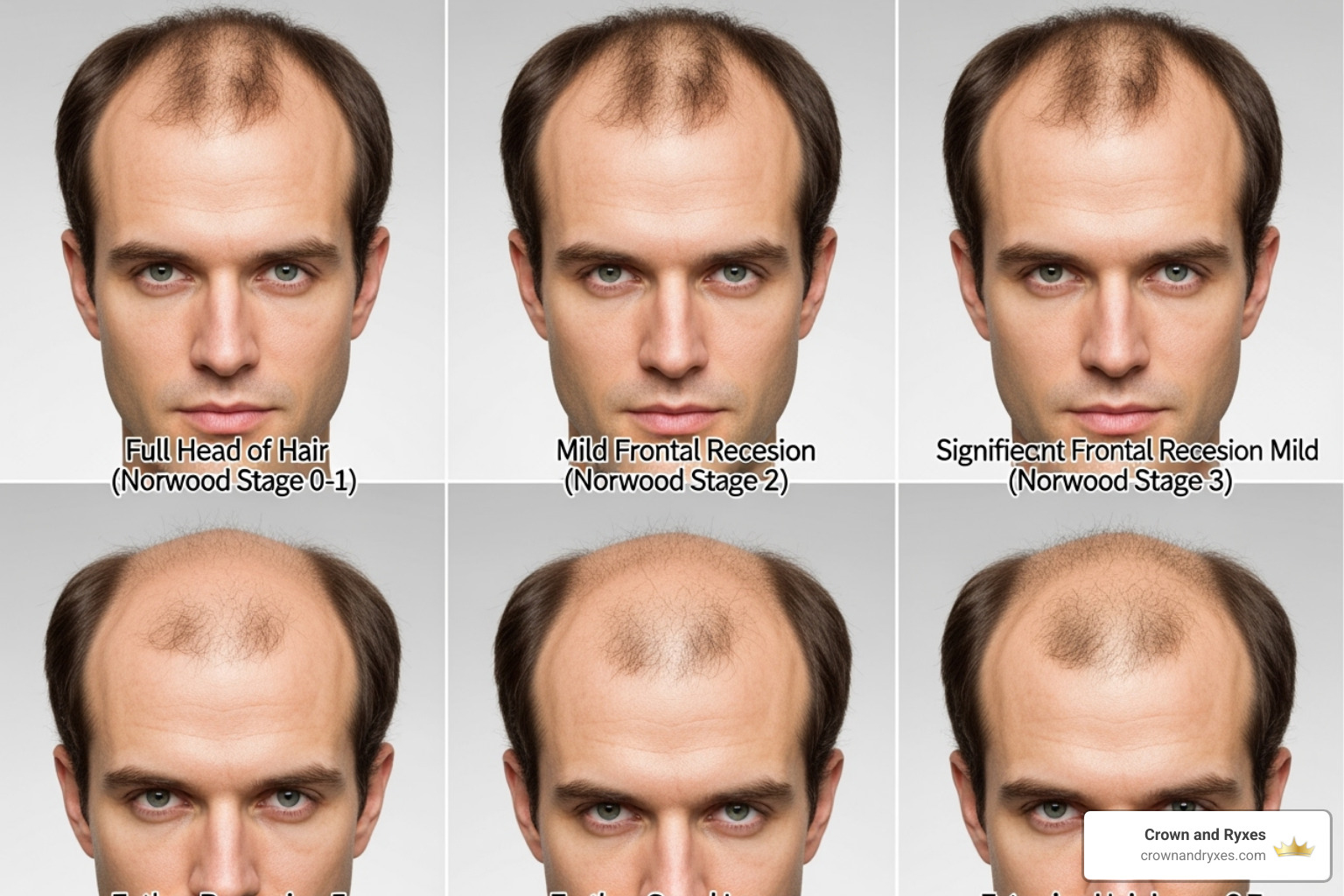
The number of grafts you need is the single biggest factor influencing your FUE hair transplant cost. A graft is a tiny follicular unit containing one to four hairs, extracted from your donor area (the back and sides of your head) and moved to thinning areas.
The required number of grafts depends on the extent of your hair loss and your desired density. Someone with minor thinning will need far fewer grafts than someone with extensive baldness.
Here are some realistic numbers:
- A small session (1,000-2,000 grafts) for minor hairline recession or a small thinning spot typically costs between $4,000 and $8,000.
- A medium session (2,000-3,500 grafts) for more noticeable hair loss, like a receding hairline and crown thinning, usually runs from $8,000 to $12,000.
- A large session (3,500-5,000+ grafts) for extensive baldness can range from $12,000 to $15,000 or more.
For context, a receding hairline might need 800-2,500 grafts, while the crown can require 1,500-3,000 grafts. Full coverage could need 3,000-5,000+ grafts. During your consultation, we’ll provide a personalized graft estimate based on your hair loss pattern and goals.
Surgeon Experience and Clinic Location
The experience and skill of your surgeon play a massive role in your results and the FUE hair transplant cost. A board-certified surgeon with thousands of successful procedures brings technical skill and an artistic eye to design a natural-looking hairline. This expertise is a worthwhile investment for a permanent procedure.
Clinic location also affects pricing. Operating a modern facility in areas like Clermont, FL, or The Villages, FL, comes with higher overhead costs than in less populated regions. While some consider traveling internationally for lower prices (e.g., Turkey, from $2,000-$8,000), this involves extra costs and logistical challenges. In the United States, the national average for FUE is around $6,684, with a typical range of $5,160 to $12,513.
Technology and Additional Treatments
Hair restoration technology is constantly evolving, and the methods used can impact your FUE hair transplant cost.
- Manual FUE: The surgeon extracts each graft by hand. It’s meticulous work that yields excellent results.
- Robotic FUE: Systems like ARTAS assist with extraction, offering precision and speed, but the investment in this technology often means a higher patient cost.
- DHI technique: This advanced method uses Choi implanter pens for simultaneous channel creation and implantation, offering exceptional control and density at a premium price.
Many clinics also offer additional treatments to improve results:
- Platelet-Rich Plasma (PRP) therapy: Using your own blood’s growth factors, PRP is injected into the scalp to stimulate healing and promote healthier hair growth.
- Post-operative care packages: These may include specialized shampoos, medications, or follow-up sessions to support your recovery.
- Medications: Your surgeon might recommend Finasteride or Minoxidil to maintain existing hair and support new growth, representing an ongoing investment.
While these additions increase the upfront cost, they are designed to improve the quality and longevity of your results.
The Price Tag: Average Costs and Financing Options
Let’s talk numbers. Understanding the investment is as important as understanding the procedure itself.

The average FUE hair transplant cost in the United States typically ranges from $4,000 to $15,000 per session. This wide range reflects the factors we’ve discussed: graft count, location, surgeon experience, and technology.
However, the base price isn’t always the whole story. Consider additional expenses like consultation fees (many clinics offer free consultations), post-operative medications, and aftercare products like special shampoos. If you’re traveling to a clinic in Clermont, FL, or The Villages, FL, remember to factor in transportation and accommodation.
Does Insurance Cover Hair Transplants?
Unfortunately, most insurance providers view hair transplants as cosmetic procedures, which means they typically won’t cover the cost. Hair loss is generally not considered medically necessary, making the procedure elective in the eyes of insurance companies.
There are extremely rare exceptions, such as hair loss from a burn or physical trauma, where partial coverage might be possible with extensive documentation. For the vast majority of patients, however, the FUE hair transplant cost is an out-of-pocket expense. Knowing this upfront helps you plan accordingly.
Managing Your Investment: Financing and Payment Plans
The good news is that financing options can make the procedure accessible. Many clinics, including ours, offer in-house payment plans that break the cost into manageable monthly installments after an initial down payment.
Third-party financing companies that specialize in medical procedures can provide loans with fixed interest rates. Medical credit cards like CareCredit are another popular option, often featuring deferred-interest promotional periods.
Additionally, you can use funds from a Health Savings Account (HSA) or Flexible Spending Account (FSA) for your hair transplant. Using these pre-tax dollars effectively reduces your overall cost.
During your consultation, we’ll walk you through all available financing options to find a plan that fits your budget. Our goal is to help you restore your confidence without adding financial stress.
Your Hair Transplant Journey: From Consultation to Full Growth
When considering the FUE hair transplant cost, remember you’re not just paying for a procedure; you’re investing in permanent results and a genuine boost in self-confidence. Understanding the entire journey helps you appreciate what you’re really investing in.
What to Expect During a Consultation and Recovery
Your journey begins with a thorough consultation. This is a conversation about your hair loss, goals, and whether FUE or DHI is right for you. We’ll evaluate your hair loss pattern, assess your donor hair supply, and provide a transparent quote with the estimated number of grafts and the associated FUE hair transplant cost. This is your time to ask questions and feel completely informed.
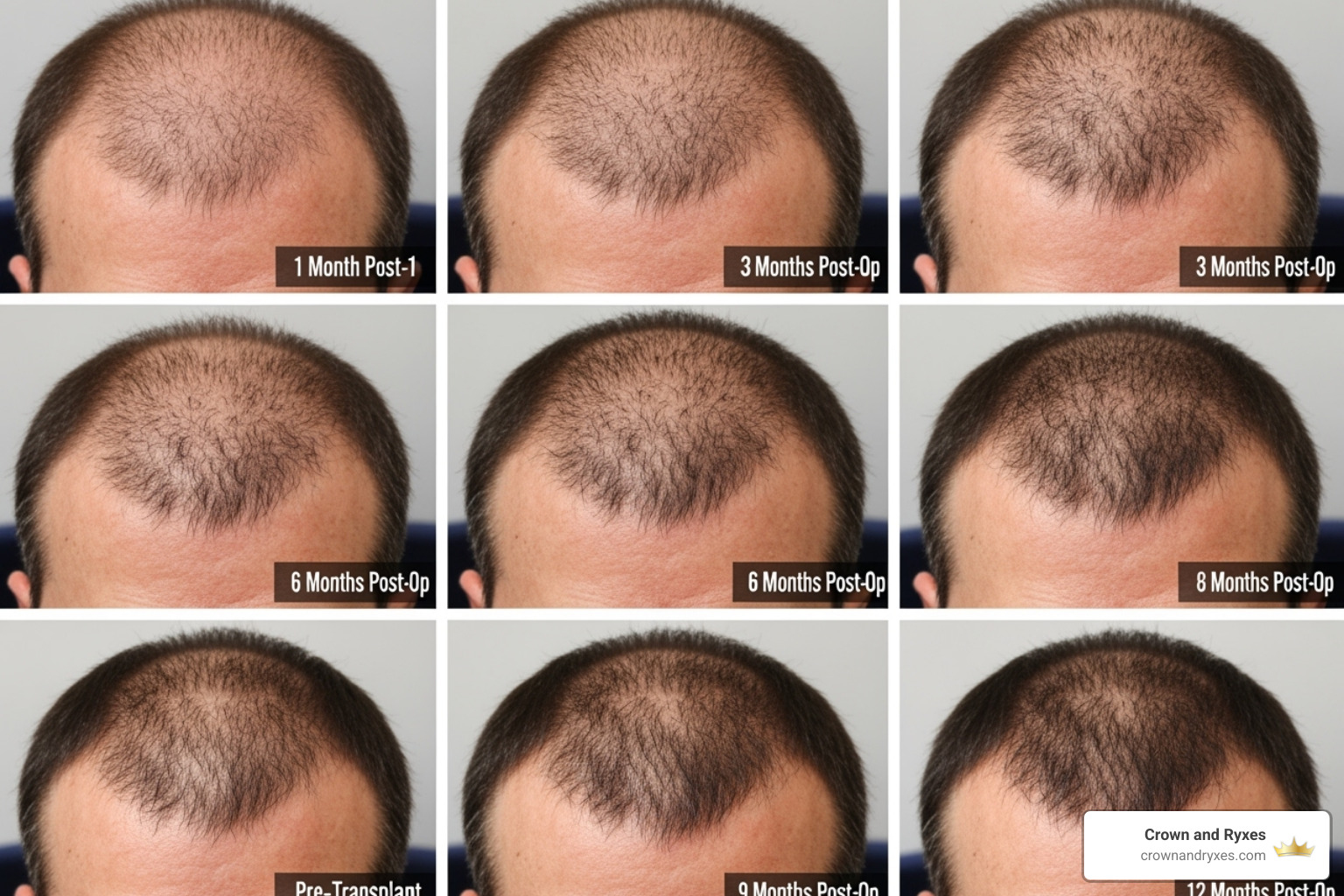
Understanding the recovery timeline helps set realistic expectations:
- Initial Healing (3-5 days): Expect some redness, swelling, and minor discomfort, similar to a mild sunburn. We’ll provide detailed post-operative instructions for scalp care.
- Shedding Phase (“Shock Loss,” 2-4 weeks): The transplanted hairs will shed. This is a normal and temporary phase as the follicles prepare for new growth.
- New Growth (3-4 months): Fine, new hairs will begin to emerge. They will gradually thicken over the coming months.
- Significant Growth (6-9 months): You’ll see a substantial increase in density and coverage, and your hair will be long enough to style.
- Full Results (12-18 months): Your transplanted hair will have fully matured, achieving its final natural density and coverage that will last a lifetime.
Following our post-operative instructions is essential for the best outcome. For more on recovery, the American Society of Plastic Surgeons offers an excellent guide on what to expect during recovery.
Potential Risks and Ensuring Good Value
FUE is generally safe, but like any medical procedure, it has potential side effects, most of which are minor and temporary. These can include swelling, bruising, minor pinpoint scarring in the donor area, and temporary numbness. Infection is rare, as are folliculitis (inflammation) and unnatural growth patterns, the latter of which is why choosing an experienced surgeon is critical. For more clinical details, see this article on side-effects from follicular unit extraction.
To get genuine value for your FUE hair transplant cost, prioritize quality over bargain hunting:
- Choose a qualified provider: Look for board-certified surgeons with specialized experience in hair restoration.
- Review before-and-after photos: A reputable clinic will proudly showcase consistent, natural-looking results.
- Read patient reviews: Get insight into a clinic’s quality of care and patient satisfaction.
- Demand a transparent quote: Ensure all costs are broken down, with no hidden fees.
- Consider the long-term value: A permanent solution is often more cost-effective over time than temporary fixes.
At Crown and Ryxes, we are committed to providing personalized care that respects your goals and your investment.
Frequently Asked Questions about Hair Transplants
Here are clear, straightforward answers to some of the most common questions we hear from patients.
What is the success rate of an FUE hair transplant?
The success rate of FUE hair transplants is very high, typically between 95% and 98%. This refers to the survival rate of the transplanted grafts. Success depends heavily on the surgeon’s skill in extracting and implanting follicles without damage. Your adherence to post-operative instructions is also crucial for proper healing.
Individual biology, including overall health and donor hair quality, also plays a role. While the graft survival rate is high, you can expect about 10 to 80 percent of the transplanted hairs to ultimately grow back, with modern FUE techniques typically yielding results at the higher end of this spectrum.
How long do the results of a hair transplant last?
FUE hair transplant results are designed to be permanent. The hair follicles harvested from the back and sides of your scalp are genetically resistant to Dihydrotestosterone (DHT), the hormone responsible for pattern baldness. When moved to a new area, these follicles retain their DHT-resistant properties and continue to grow for a lifetime.
While the transplanted hair is permanent, your existing, non-transplanted hair may still be susceptible to future thinning. For this reason, many patients use a long-term maintenance plan with medications like Finasteride or Minoxidil to preserve their native hair and maximize the value of their FUE hair transplant cost.
Am I a good candidate for an FUE hair transplant?
Determining your candidacy is a personalized process, but several key factors are considered:
- Sufficient donor hair: You must have a healthy supply of hair follicles on the back and sides of your head to harvest without causing noticeable thinning in the donor area.
- Realistic expectations: It’s important to have a clear understanding of what can be achieved. The goal is natural-looking restoration, not necessarily the density of your youth.
- Age: It is often advised that patients be over 25. This is because hair loss patterns in younger individuals may not have stabilized, and an early transplant could look unnatural later on.
- Overall health: You should be in good general health with no medical conditions that could complicate surgery or healing. Your scalp should also be free from active infections or certain skin conditions.
During your consultation, we will perform a thorough evaluation to determine if FUE is the right approach for you.
Is an FUE Hair Transplant Worth the Investment?
After exploring the costs, procedures, and possibilities, you might be asking the most important question: Is it worth it?
The FUE hair transplant cost, ranging from $4,000 to $15,000+, is more than a number—it’s an investment in how you see yourself. We’ve discussed how factors like your location, whether in Clermont, FL, or The Villages, FL, surgeon expertise, and technology all contribute to the final price.
But what those numbers don’t capture is the confidence that comes from knowing your hair is yours—permanent, natural, and growing. For many, this shift in self-perception is life-changing.
Unlike temporary fixes with recurring costs, an FUE hair transplant is a one-time investment that keeps giving. No more monthly bills for medications or worrying about hairpieces. Just your own hair, growing naturally for a lifetime.
At Crown and Ryxes, we understand this decision is deeply personal. Our personalized approach means we take the time to understand your goals and budget, offering transparent costs and financing options to make your restoration achievable.
We also recognize that confidence extends beyond your hairline. That’s why we offer comprehensive wellness solutions, including REGENmax for sexual wellness, because we believe in supporting your overall well-being.
The real question isn’t whether a hair transplant is worth the cost, but what it’s worth to you to feel like yourself again.
If you’re ready to take the first step, we’re here to walk beside you. To start your journey, explore our hair loss treatments. Your consultation is where we begin creating the natural-looking results you deserve.