

Understanding Grey Hair Vitamin Deficiency: What You Need to Know
Grey hair vitamin deficiency is a reversible cause of premature graying that affects many people, particularly those lacking Vitamin B12, iron, or Vitamin D. While genetics and aging are the primary drivers of hair turning gray, research shows that specific nutritional deficiencies can accelerate this process—and in some cases, correcting these deficiencies can actually restore your natural hair color.
Key Vitamins Linked to Grey Hair:
- Vitamin B12 – The most common reversible cause of premature graying
- Iron (Ferritin) – Low levels significantly correlate with early graying
- Vitamin D – Deficiency linked to premature hair graying in multiple studies
- Calcium – Plays a role in melanin production at the follicle level
- Copper – Essential for the enzyme that produces hair pigment
Can Grey Hair Be Reversed?
Yes, but only if caused by a deficiency. Research shows that supplementing deficient nutrients like B12 can lead to hair repigmentation, sometimes within just a few months. However, gray hair caused by genetics or normal aging cannot be reversed through nutrition alone.
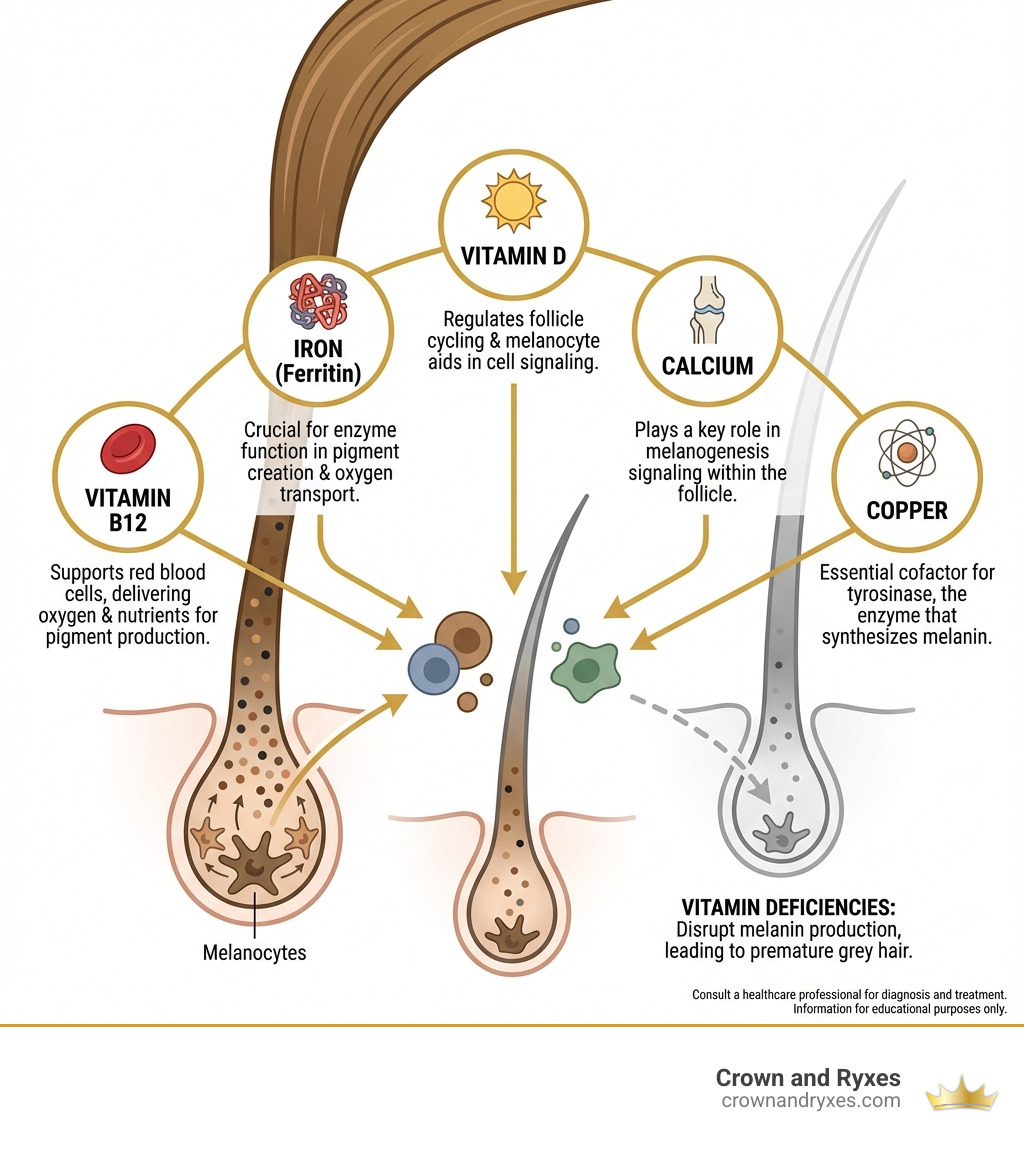
Hair turns gray when melanocytes—the cells in your hair follicles that produce pigment—stop functioning properly. While this is a natural part of aging, certain vitamin and mineral deficiencies can trigger premature graying by disrupting melanin production. Studies have found significantly lower levels of ferritin, Vitamin B12, and calcium in individuals with premature hair graying compared to those with normal pigmentation.
The good news? Unlike age-related graying, deficiency-related graying is often reversible. Multiple case studies document patients whose gray hair darkened after correcting B12 deficiencies, and research on young Indian patients found that those with premature graying had measurably lower levels of key nutrients.
However, not all gray hair is caused by poor nutrition. Most graying is genetic, with up to 90 percent of premature cases having a family history. Environmental factors like smoking, stress, and oxidative damage also play significant roles. Understanding the difference between reversible nutritional causes and permanent genetic factors is crucial before investing in supplements or dietary changes.
I’m Dr. Matthew Casavant, a physician with over 20 years of experience in comprehensive healthcare and wellness, including nutritional approaches to common health concerns like grey hair vitamin deficiency. Through my practice, I’ve helped countless patients understand the connection between their overall health, nutrition, and visible signs of aging.
The Science of Hair Color: Why Does Hair Turn Gray?
To understand why our hair turns gray, we first need a quick lesson in hair biology. Each strand of hair on our head grows out of a tiny pouch in the skin called a hair follicle. At the base of these follicles are specialized cells called melanocytes. These incredible cells are responsible for producing melanin, the pigment that gives our hair its natural color.
There are two main types of melanin: eumelanin, which produces black and brown shades, and pheomelanin, responsible for red and yellow tones. The unique combination and quantity of these pigments determine our individual hair color, whether it’s raven black, fiery red, golden blonde, or rich brown.
As we age, these hardworking melanocytes start to slow down. They produce less melanin, and eventually, they can even die off. When a hair follicle stops producing pigment, the new hair that grows in lacks color, appearing white, silver, or gray. This process, known as age-related graying, is a natural part of life, often beginning after age 35 for most people. The exhaustion of the pigmentary potential of the hair follicle is a key concept here. It’s essentially the melanocyte stem cells, which replenish the pigment-producing cells, becoming depleted over time.
For a deeper dive into the overall process of hair graying, you can explore resources like the Cleveland Clinic’s explanation: Why Does Hair Turn Gray?.
Age-Related Graying vs. Premature Graying
While gray hair is an inevitable part of aging for most, the timing of its arrival can vary significantly. This leads us to distinguish between age-related graying and premature graying.
Age-related graying typically follows a predictable pattern, often summarized by the “50-50-50” rule of thumb – the idea that 50% of people have 50% gray hair by age 50. However, recent studies challenge this, showing a global range of 6% to 23% for this metric, indicating that the timing is far more diverse than once thought. This type of graying is primarily driven by genetics; if your parents or grandparents started graying in their 40s or 50s, chances are you will too.
Premature Hair Graying (PHG), on the other hand, is when gray hairs appear much earlier than expected. The definition of PHG varies slightly by ethnicity:
- Before age 20 in fair-skinned individuals
- Before age 25 in Asians
- Before age 30 in Africans
We assess graying by observing the presence and extent of depigmented hair strands. In research settings, a Hair Whitening Score (HWS) might be used to quantify the severity, ranging from trace (less than 25% white hair) to complete (100% white hair).
The key difference lies in the underlying causes. Age-related graying is largely unavoidable due to the natural decline of melanocytes. Premature graying, however, can be a red flag, potentially indicating underlying factors beyond genetics, such as environmental influences, certain medical conditions, and critically, nutritional deficiencies. This is where the concept of grey hair vitamin deficiency truly comes into play.
The Link Between Grey Hair Vitamin Deficiency and Premature Graying
It’s fascinating how intimately our hair’s color is tied to the micronutrients we consume. These tiny but mighty vitamins and minerals are crucial for the health and function of our hair follicles and the melanocytes within them. When our bodies don’t get enough of these essential elements, the delicate process of hair pigmentation can be disrupted, leading to premature graying.
Scientific studies have increasingly highlighted the role of specific nutrient deficiencies in PHG, offering hope that some cases of early graying might be reversible. A review of research suggests that proper supplementation may reverse premature graying in those who are deficient in certain nutrients, including iron, vitamin D, and vitamin B12. Let’s dig into the specific deficiencies that commonly contribute to grey hair vitamin deficiency.
Vitamin B12 Deficiency: A Primary Reversible Cause
Among the various nutrient deficiencies, Vitamin B12 deficiency stands out as one of the most common and rare reversible causes of premature graying. This vital vitamin, also known as cobalamin, plays a critical role in numerous bodily functions, including metabolism, DNA production, and the formation of red blood cells.
When we lack sufficient B12, our bodies struggle to produce healthy red blood cells, which are essential for carrying oxygen to all tissues, including our hair follicles. Researchers have noted that vitamin B12 deficiencies are often concurrent with folic acid and biotin deficiencies in people whose hair has started to turn gray early. The mechanism by which B12 deficiency leads to graying is not fully understood, but it’s believed to impact melanocyte function.
The exciting news is that for those whose premature graying is indeed due to a B12 deficiency, repigmentation of hair can occur after B12 repletion. We’ve seen cases where hair can repigment after B12 repletion, often within months of starting supplementation. A 2020 review suggests that vitamin B supplementation is only useful to reverse hair greying where there was an underlying vitamin B deficiency initially.
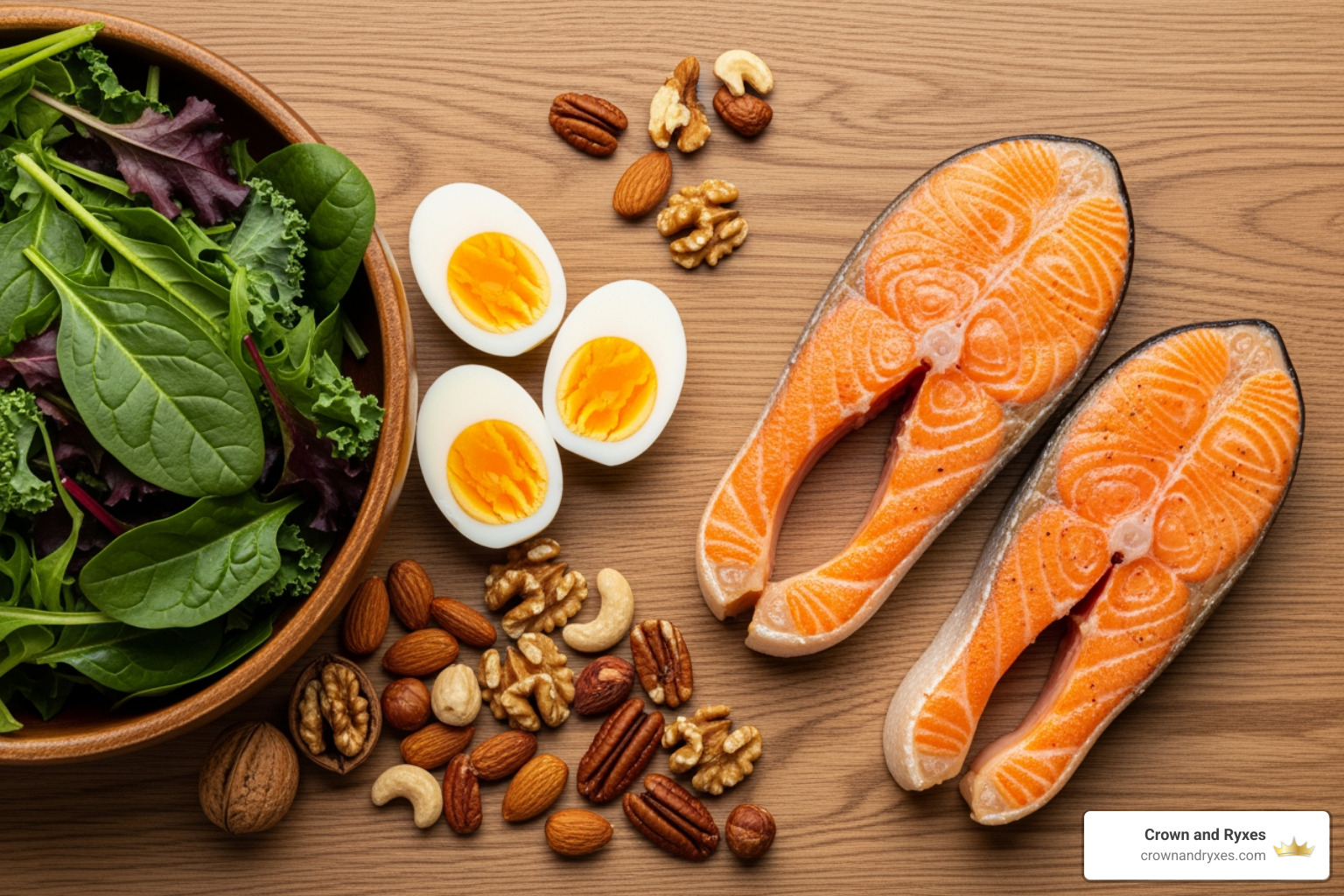
Food sources rich in Vitamin B12 primarily include animal products such as meat, poultry, fish, eggs, and dairy. For our vegetarian and vegan friends in Clermont, FL, and The Villages, FL, fortified cereals and nutritional yeast are excellent options, but supplementation is often necessary to ensure adequate intake. For more on B12 and hair repigmentation, you can check out this Research on B12 and hair repigmentation.
Iron and Ferritin: The Connection to Hair Pigment
Iron, an essential mineral, is another critical player in maintaining our hair’s vibrant color. Its primary role in the body is to produce hemoglobin, the protein in red blood cells that carries oxygen from our lungs to every cell, including those in our hair follicles. Without enough iron, our red blood cells can’t deliver adequate oxygen, leading to symptoms like fatigue, brittle nails, and, you guessed it, hair issues, including premature graying.
Low serum ferritin, which is a measure of the body’s stored iron, has been strongly associated with PHG. Studies, including one focusing on a young Indian population, found that individuals with premature hair graying had significantly lower serum ferritin levels compared to control groups. For women with PHG, mean serum ferritin levels were 34.4 ng/mL compared to 75.78 ng/mL in controls (P = 0.014), and for men, 73.68 ng/mL versus 126.16 ng/mL (P = 0.001). Furthermore, serum iron levels were found to be significantly reduced in patients with PHG, with a statistically significant decrease (P = 0.046). There was even a significant negative correlation between PHG severity and serum iron levels (P=0.021). This provides compelling evidence for the iron-pigment connection.
Food sources rich in iron include red meat, poultry, lentils, beans, and dark leafy greens like spinach. To improve iron absorption from plant-based sources, we recommend pairing them with foods rich in Vitamin C, such as citrus fruits or bell peppers. You can dig deeper into the connection between trace elements and PHG in this Study on trace elements and PHG.
The Role of Vitamin D, Calcium, and Copper
While B12 and iron often steal the spotlight, other micronutrients also play crucial roles in preventing grey hair vitamin deficiency.
Vitamin D: Often dubbed the “sunshine vitamin,” Vitamin D is vital for overall health, including stimulating cell growth and boosting immunity. Research suggests a link between Vitamin D deficiency and premature graying, indicating it may affect melanin production in hair follicles. People with prematurely graying hair tend to have Vitamin D deficiencies.
Calcium: This mineral is well-known for its role in bone health, but it also participates in the complex process of melanogenesis, the production of melanin. Studies have shown significantly lower serum calcium levels in individuals with PHG compared to controls (P = 0.045), and a significant negative correlation between PHG severity and serum calcium levels (P=0.002).
Copper: Copper is another essential trace element crucial for hair pigmentation. It helps the body metabolize iron and is a key component of tyrosinase, an enzyme necessary for melanin production. Copper deficiency can interfere with energy production, affect blood cells, connective tissues, and, importantly, hinder melanin production. While one study found lower serum copper levels in PHG patients, the difference was not always statistically significant, suggesting its role might be more nuanced or context-dependent.
To ensure adequate intake of these nutrients, we recommend:
- Vitamin D: Moderate sun exposure, fatty fish (salmon, mackerel), and fortified milk or cereals.
- Calcium: Dairy products (milk, yogurt, cheese), leafy greens (kale, collard greens), and fortified foods. Aim for at least three servings of calcium per day.
- Copper: Peanuts, almonds, lentils, beef liver, crabmeat, and white mushrooms.
Ensuring a diet rich in these minerals and vitamins is an important step in preventing premature graying linked to grey hair vitamin deficiency.
Can Supplements and Diet Really Reverse Gray Hair?

The question of whether we can reverse gray hair is a hopeful one, and the answer, as we’ve explored, depends on the cause. If your premature graying is indeed linked to a grey hair vitamin deficiency, then targeted supplementation and dietary changes can make a remarkable difference.
However, it’s crucial to differentiate between targeted supplementation and simply taking a general multivitamin. When we talk about reversing gray hair due to deficiency, we’re referring to addressing a specific, diagnosed shortage of a nutrient like B12 or iron. This isn’t about popping a pill and hoping for the best; it’s about identifying and correcting a genuine nutritional imbalance.
The importance of blood tests cannot be overstated. Before you start any new supplement regimen, especially for hair concerns, we strongly recommend consulting a healthcare professional. A doctor can order the necessary blood tests to accurately diagnose any underlying deficiencies. This personalized approach ensures you’re taking the right supplement, at the correct dosage, for a genuine need.
It’s also important to remember that dietary supplements are not evaluated by the U.S. Food and Drug Administration (FDA) for efficacy or safety before they hit the market. This means that even if a supplement is marketed as “anti-graying,” there aren’t any studies that prove they work, unless they are specifically addressing a diagnosed deficiency. Always prioritize professional medical advice over marketing claims.
Creating a Hair-Healthy Diet
While supplements can be powerful tools to correct deficiencies, a balanced, nutrient-rich diet is the foundation of healthy hair and can prevent many instances of grey hair vitamin deficiency. Here are some key dietary components and top foods we recommend for maintaining natural hair color:
- Protein: Hair is primarily made of keratin, a protein. Ensuring sufficient protein intake is vital for keratin production.
- Top Foods: Lean meats, fish, eggs, beans, lentils, nuts, seeds.
- Antioxidants: These compounds help combat oxidative stress, which is implicated in hair graying.
- Top Foods: Berries, dark leafy greens, colorful vegetables, green tea.
- B Vitamins: Especially B12, B9 (folate), and B5 (pantothenic acid).
- Top Foods: Meat, dairy, fortified cereals, leafy greens, asparagus, fish, poultry.
- Iron: Essential for oxygen transport to hair follicles.
- Top Foods: Red meat, lentils, spinach, fortified grains.
- Copper: Crucial for melanin production.
- Top Foods: Peanuts, almonds, lentils, beef liver, crabmeat, mushrooms.
- Vitamin D: Linked to melanin production and overall hair health.
- Top Foods: Fatty fish, fortified milk, moderate sun exposure.
- Calcium: Plays a role in melanogenesis.
- Top Foods: Dairy products, leafy greens, fortified foods.
- Zinc: Supports cell and immune function, and protein synthesis.
- Top Foods: Oysters, beans, whole grains, red meat.
- Omega-3 Fatty Acids: Promote scalp health and hair strength.
- Top Foods: Fatty fish (salmon, mackerel), flaxseeds, walnuts.
- Hydration: Water is essential for every bodily function, including healthy hair growth.
By focusing on a diet rich in these nutrients, we can provide our hair follicles with the building blocks they need to thrive and potentially ward off premature graying caused by nutritional gaps.
The Risks of Over-Supplementation
While the idea of reversing gray hair through vitamins is appealing, it’s crucial to approach supplementation with caution. More isn’t always better, and taking excessive amounts of certain vitamins and minerals can actually be detrimental to our health, including our hair.
This is why consulting a healthcare professional before starting any supplement regimen is non-negotiable. They can help us understand the recommended daily allowances (RDAs) for each nutrient and determine if we truly have a deficiency that warrants supplementation.
For example, taking more than the recommended daily amount of vitamins and minerals can lead to different hair problems, including hair loss. Excessive intake of Vitamin A and selenium, in particular, has been linked to hair shedding. Iron, while vital, can be toxic in very high doses.
Our bodies are complex systems, and nutrient levels need to be in a delicate balance. Over-supplementation can throw this balance off, leading to unexpected side effects that range from mild discomfort to serious health issues. Always follow your doctor’s dosage instructions for any recommended supplements, and don’t hesitate to ask for brand recommendations. Our goal is optimal health, not just a change in hair color, and that always starts with a safe, informed approach.
Beyond Nutrition: Other Factors That Accelerate Graying
While addressing grey hair vitamin deficiency is a key focus, hair graying is a multifaceted process. Nutrition is just one piece of the puzzle. A holistic approach to hair health requires us to look at other significant factors that can accelerate the graying process, even if they don’t directly cause pigment loss.
Stress and “Overnight” Graying: Myth vs. Reality
We’ve all heard the dramatic stories, like Marie Antoinette’s hair supposedly turning white overnight before her execution. While these anecdotes are captivating, the reality of stress and graying is a bit more nuanced.
Hair color is set when the hair follicle produces it; once a hair strand emerges, its color cannot change. So, stress doesn’t literally “turn” existing hair gray. However, stress can indirectly contribute to the appearance of graying through a phenomenon called telogen effluvium. This condition causes accelerated hair shedding, where hair can fall out about three times faster than normal. If you have a mix of pigmented and gray hairs, a sudden shedding of only the pigmented hairs can make the existing gray hairs much more apparent, creating the illusion of “overnight” graying.
Beyond this, new research is exploring more direct links. A 2020 study of mice demonstrated how stress can lead to their fur turning gray under stress. The study suggested that acute stressors can lead to hair graying via rapid depletion of melanocyte stem cells, possibly because psychological stress leads to oxidative stress. Whether this applies directly to humans and how often it plays a role in human hair graying are still unclear, but it highlights the complex interplay between our nervous system and hair follicles.
Lifestyle Choices: Smoking, Diet, and Oxidative Stress
Our daily habits significantly impact our overall health, and our hair is no exception. Lifestyle factors can contribute to accelerated graying, often by increasing oxidative stress.
- Smoking: This habit is a well-documented culprit. Smokers have a higher prevalence of premature graying. The toxins in cigarette smoke generate exogenous free radicals, which can speed up oxidative insults in the hair follicle, damaging melanocytes and their ability to produce pigment.
- Irregular Eating Habits: Beyond specific nutrient deficiencies, a generally poor or irregular diet can contribute to graying. A study on young Indian patients with PHG found a significant proportion admitted to having irregular eating habits. This can lead to a consistent lack of necessary nutrients over time, even if a severe deficiency isn’t immediately apparent.
- Environmental Pollutants and UV Damage: Exposure to environmental pollutants and excessive UV radiation can also generate free radicals, contributing to oxidative stress in the hair follicles and potentially accelerating the graying process.
Underlying Medical Conditions
Sometimes, premature graying can be a symptom of an underlying medical condition. If you notice a sudden or significant increase in gray hairs, especially at a young age, it’s wise to consult a doctor to rule out these possibilities:
- Thyroid Disease: Both an overactive (hyperthyroidism) and underactive (hypothyroidism) thyroid can affect hair health, including premature graying. Hypothyroidism is even considered a reversible cause of hair graying.
- Vitiligo: This autoimmune condition causes the loss of pigment in patches of skin and can also affect hair, leading to localized graying or whitening.
- Alopecia Areata: This autoimmune disorder causes patchy hair loss. When pigmented hairs fall out, the remaining gray hairs can become more noticeable, creating the appearance of rapid graying.
- Other Rare Conditions: Certain genetic disorders like neurofibromatosis and tuberous sclerosis, or conditions like pernicious anemia (which causes B12 deficiency), can also be associated with premature graying.
If you’re concerned about premature graying, particularly if it’s accompanied by other symptoms, seeking professional medical advice is essential. A doctor can help determine if there’s an underlying condition that needs attention.
Frequently Asked Questions about Gray Hair and Nutrition
We understand that navigating hair health and nutrition can bring up many questions. Here are some of the most common inquiries we receive regarding gray hair and nutrient deficiencies:
What is the first step if I suspect a grey hair vitamin deficiency is causing my graying?
The most crucial first step is to consult a healthcare professional. They can order blood tests to accurately diagnose specific deficiencies in nutrients like Vitamin B12, iron (ferritin), and Vitamin D, ensuring you get a targeted treatment plan instead of guessing. Self-diagnosing and self-treating can be ineffective and potentially harmful. A medical professional, like those at Crown and Ryxes in Clermont, FL, and The Villages, FL, can provide guidance custom to your specific needs.
Can I just take a generic multivitamin to prevent or reverse gray hair?
While a multivitamin can support overall health, it’s not a targeted solution for gray hair. Graying is often linked to a significant deficiency in a specific nutrient. Taking a generic supplement may not provide a high enough dose to correct the deficiency and carries a risk of over-supplementing other vitamins. For instance, if you have a severe B12 deficiency, a standard multivitamin might not contain enough B12 to make a difference. It’s always best to identify and address the exact deficiency under medical supervision.
How long does it take to see hair color return after correcting a deficiency?
Results vary based on the individual, the severity of the deficiency, and the nutrient in question. However, some studies and case reports have noted repigmentation beginning within a few months of starting a proper supplementation regimen as prescribed by a doctor. For example, hair repigmentation after B12 repletion has been observed. It’s important to be patient, as hair growth is a slow process, and new pigmented hair needs time to grow out. Consistent adherence to your doctor’s recommendations is key.
Conclusion
As we’ve journeyed through the science of hair color and the intricate factors that influence it, one thing becomes clear: our hair is a remarkable indicator of our overall health. While genetics and the natural aging process are undeniably the primary drivers of gray hair, we’ve seen compelling evidence that grey hair vitamin deficiency can play a significant role in premature graying.
The good news is that unlike age-related graying, the graying caused by specific nutrient deficiencies – particularly Vitamin B12, iron, calcium, and Vitamin D – is often reversible. Research consistently points to lower levels of these essential micronutrients in individuals experiencing premature graying, and in many cases, correcting these deficiencies can lead to the return of natural hair color.
However, the path to understanding and potentially reversing gray hair is not a one-size-fits-all solution. It requires a thoughtful, informed approach. Relying on anecdotal evidence or unproven “anti-graying” supplements can be ineffective and even risky due to the potential for over-supplementation.
At Crown and Ryxes, we believe in a personalized approach to wellness. Whether you’re concerned about hair loss, seeking sexual wellness solutions like REGENmax, or exploring the causes of premature graying, we emphasize the importance of professional diagnosis before treatment. Consulting with a healthcare professional for accurate blood tests and custom advice is the most effective and safest way to address your concerns.
A balanced diet rich in protein, antioxidants, and key vitamins and minerals remains the foundation of healthy hair. Coupled with managing stress and avoiding harmful lifestyle choices like smoking, we can empower ourselves to support our hair’s vitality.
To learn more about a holistic approach to hair health and how targeted nutritional strategies can play a role, we invite you to explore further: Learn more about a holistic approach to hair health with vitamins for hair loss.