

Understanding the Hidden Causes Behind Your Hair Loss
Hair loss hormone imbalance affects millions, yet many don’t realize their thinning hair stems from internal chemical messengers gone awry. Here’s what you need to know:
Key Hormone Imbalances That Cause Hair Loss:
- Androgens (DHT) – Shrink hair follicles in androgenetic alopecia
- Thyroid hormones – Too high or low levels disrupt the growth cycle
- Cortisol – Chronic stress pushes hair into shedding phase
- Estrogen/Progesterone – Declining levels during menopause accelerate loss
- Insulin – Resistance from PCOS increases androgen production
Common Signs to Watch For:
- Gradual thinning at the crown or temples
- Widening part line in women
- Increased hair on brush or shower drain
- Changes in hair texture (brittle, dry)
- Hair loss paired with fatigue, mood changes, or irregular periods
As noted in recent research, “Hair loss is increasingly common in men and women due to factors such as hormonal imbalances, stress, lack of proper nutrients, and more factors.” The good news? Once you identify the root hormonal cause, effective treatments can help restore your hair’s natural growth cycle.
Your endocrine system directly controls your hair follicles’ behavior. When these hormone levels shift due to aging, stress, or medical conditions, your hair often shows the first signs of imbalance.
I’m Dr. Matthew Casavant, and with over 20 years in medicine, I’ve seen countless patients with hair loss hormone imbalance find relief by addressing their underlying hormonal disruptions. A comprehensive approach to hormone health consistently yields the most dramatic improvements in hair restoration.

The Connection Between Hormones and Your Hair’s Life Cycle
Your hair follicles are constantly cycling through phases of building, resting, and renewal. Understanding this process is crucial when dealing with hair loss hormone imbalance.
Your hair’s journey has four phases. The anagen phase is the growth period, lasting two to seven years. It’s followed by the brief catagen phase, a two-week transition where growth stops. The telogen phase is a two- to three-month rest before the exogen phase completes the cycle and the old hair sheds. Losing 60-100 hairs daily during this phase is normal.
Hormones are the master conductors of this process. When hormonal signals get disrupted, the cycle can spiral out of control. Follicle miniaturization occurs when follicles shrink, producing thinner and weaker hairs before eventually stopping altogether. This disruption pushes too many follicles into the shedding phases prematurely, leading to the alarming hair loss many people experience. A scientific overview of the hair growth cycle provides deeper insight into these mechanisms.
Understanding the Signs of Hair Loss Hormone Imbalance
Knowing when to be concerned about hair loss hormone imbalance can make all the difference in early treatment success.
- Gradual thinning often appears first at the crown or temples. Women typically notice a widening part, while men may experience a receding hairline.
- Diffuse hair loss involves thinning across the entire scalp, affecting overall volume and density.
- Changes in hair texture are common, as hair might become brittle, dry, or lose its natural shine.
- Paradoxically, you might notice increased hair growth on your face or body (hirsutism), which often signals liftd androgen levels.
- When hair changes occur with symptoms like fatigue, mood swings, irregular periods, or persistent acne, the evidence for hormonal involvement is even stronger.
The Main Suspects: Key Hormones That Trigger Hair Loss
When your body’s hormonal harmony is disrupted, your hair is often the first to sound the alarm. Hair loss hormone imbalance typically involves three main players that can create chaos in your healthy hair cycle.

The biggest troublemakers are androgens (especially DHT), thyroid hormones, and stress hormones like cortisol. Understanding them is key to getting your hair back on track.
Androgens and DHT: The Primary Culprits
DHT (Dihydrotestosterone) is the primary driver of androgenetic alopecia. Your body converts testosterone into DHT, and if your hair follicles are genetically sensitive, DHT causes them to shrink via follicle miniaturization. Over time, these follicles produce thinner, weaker hairs before stopping production altogether. This creates the classic patterns of male pattern baldness and female pattern hair loss. Even with normal hormone levels, genetic sensitivity to DHT can cause significant hair loss. More on Androgenetic Alopecia explains how this genetic condition affects millions.
Thyroid Hormones: The Metabolic Regulators
Your thyroid gland produces T3 and T4 hormones that regulate your body’s metabolism, including hair growth. Hypothyroidism (underactive thyroid) slows your system, leading to diffuse thinning and dry, coarse, and brittle hair. Conversely, hyperthyroidism (overactive thyroid) speeds up the hair cycle, causing rapid turnover and thin, fragile hair. Fortunately, thyroid-related hair loss often improves significantly once your thyroid levels are balanced.
Cortisol: The Stress Hormone Connection
Chronic stress triggers your adrenal glands to pump out cortisol. When this stress hormone stays liftd, your body decides growing hair isn’t a priority. This leads to telogen effluvium, where cortisol pushes hair follicles from the growing phase into the shedding phase prematurely. This hair growth disruption often appears 2-3 months after a major stressful event. The good news is that cortisol-related hair loss hormone imbalance is often reversible once stress is managed.
Navigating Life’s Changes: Hormonal Shifts and Hair
For many women, life’s transitions come with dramatic hormonal shifts that affect hair. Understanding how estrogen’s role and progesterone’s influence fluctuate can help you feel more prepared.
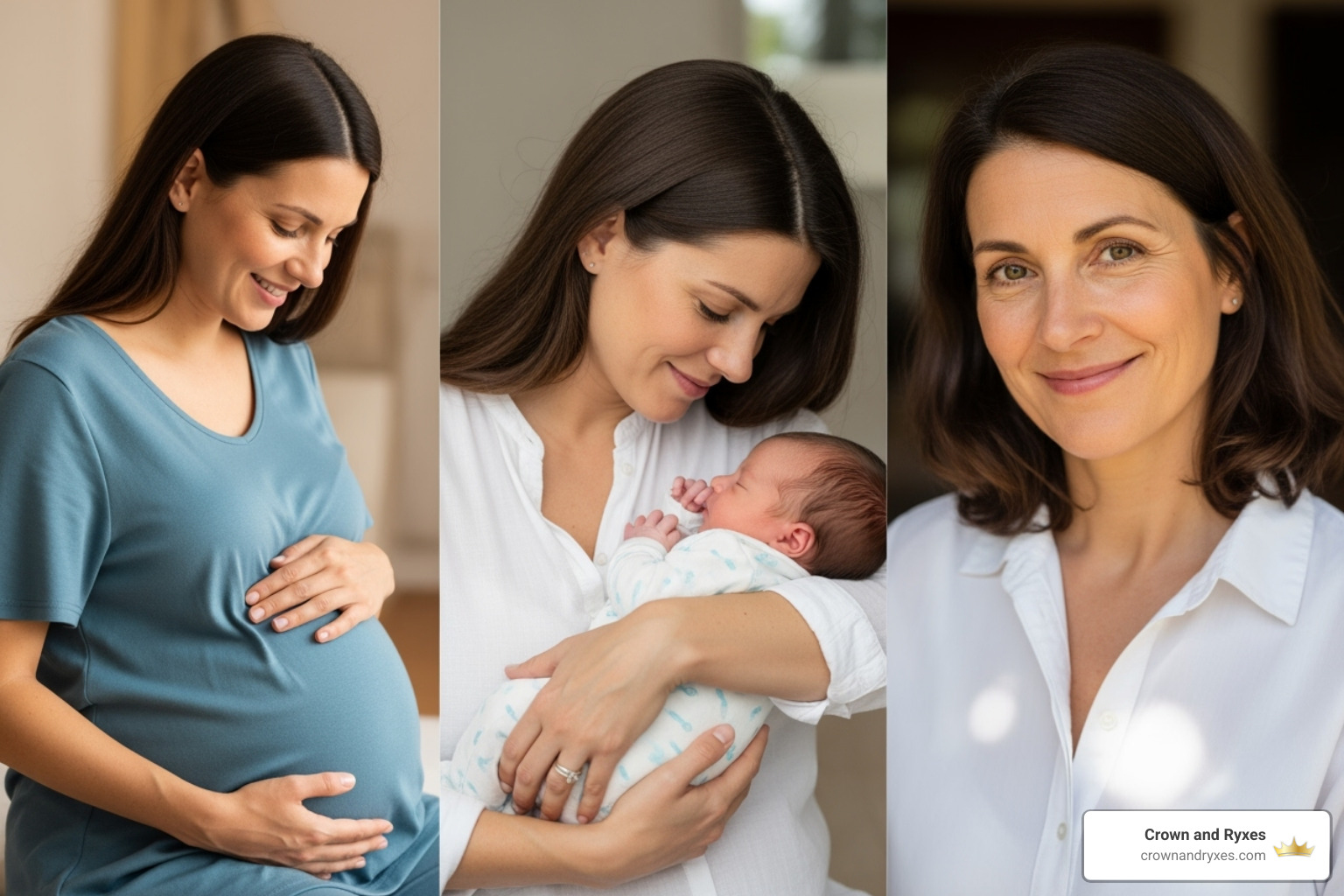
These powerful hormones act as protective guardians for your hair. When they fluctuate, your hair often responds in ways that can feel concerning.
Pregnancy and Postpartum Hair Loss
During pregnancy, high estrogen levels extend the anagen phase of your hair’s growth cycle, resulting in fuller, thicker hair. After delivery, hormone levels plummet, triggering postpartum telogen effluvium. This sudden postpartum shedding starts around two to four months after delivery and can be alarming. The reassuring truth is that this is temporary hair loss, and most women find their hair returns to its pre-pregnancy density within six to nine months as hormones normalize.
Menopause and Perimenopause
As women transition through perimenopause into menopause, declining estrogen and progesterone levels have unwelcome effects on hair. Without sufficient levels of these hair-protective hormones, many women notice their hair becoming thinner and more fragile. This is worsened by the relative increase in androgens, which can now more easily affect hair follicles, leading to female pattern hair loss. This hair loss hormone imbalance typically shows up as thinning on top of the head and a wider part.
Polycystic Ovary Syndrome (PCOS)
PCOS is a common cause of hair loss hormone imbalance in younger women. The condition is marked by androgen excess, where higher-than-normal levels of male hormones cause scalp hair follicles to shrink. Many women with PCOS also have insulin resistance, which can worsen the hormonal imbalance by stimulating the ovaries to produce even more androgens. The systemic health impact of PCOS can affect fertility and increase other health risks. It can also contribute to sexual wellness concerns that may benefit from REGENmax as part of a comprehensive treatment plan. The encouraging news is that PCOS-related hair loss often responds well to treatment when the underlying hormonal imbalances are addressed.
Getting to the Root Cause: Diagnosing and Treating Hair Loss Hormone Imbalance
Understanding what’s causing your hair loss hormone imbalance is the first step toward effective treatment. The process involves gathering clues from your medical history, a thorough physical examination, and targeted diagnostic tests.
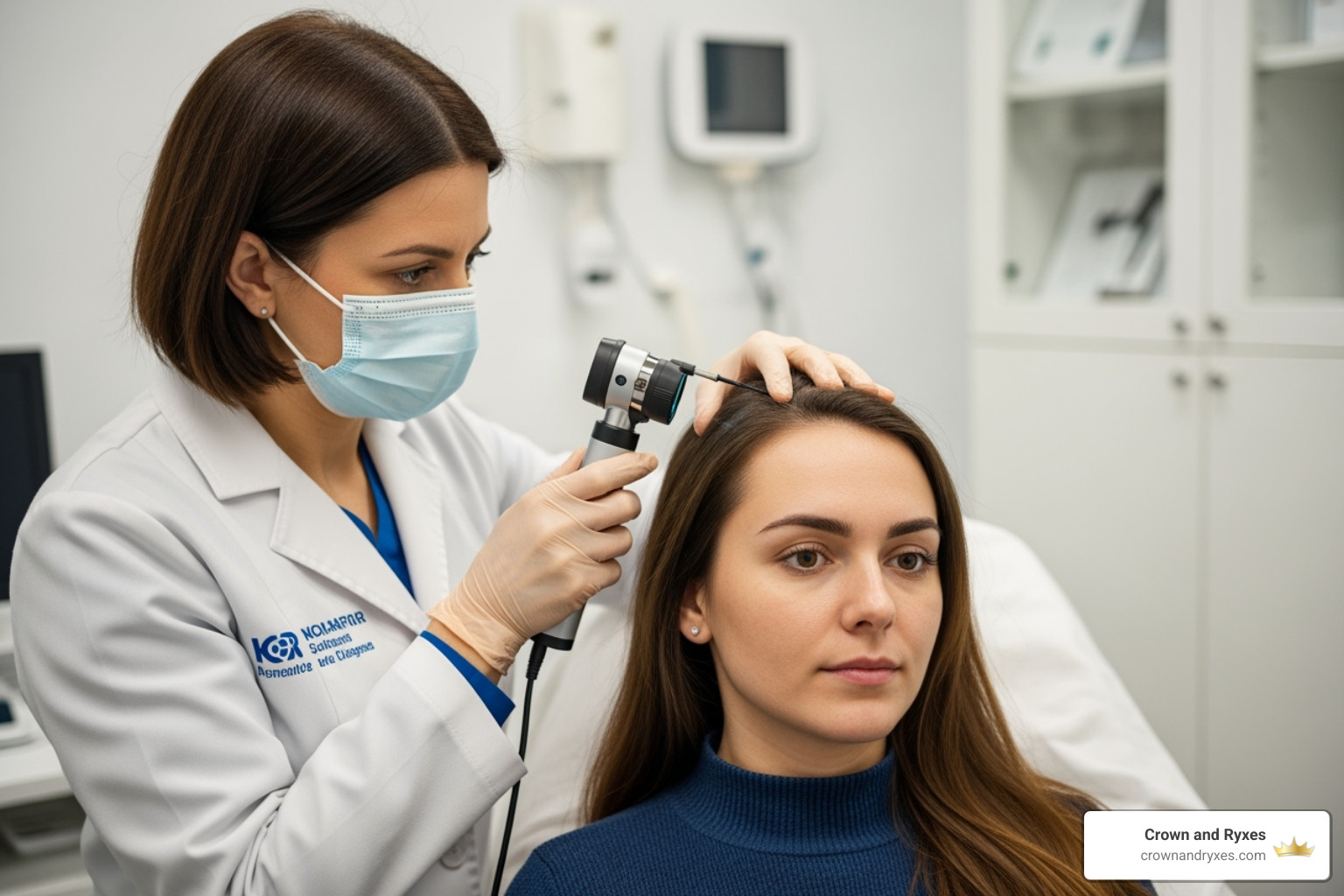
The Diagnostic Process
Getting to the bottom of hormonal hair loss requires specific tests to get a clear picture of your hormonal landscape.
- Essential Blood Tests: We start with a complete blood count (CBC) to rule out anemia and a thyroid panel (TSH, T3, T4), as thyroid issues are a common culprit.
- Nutrient Levels: We check serum iron and ferritin and vitamin D levels, as low levels of either can cause significant hair shedding.
- Hormonal Assessment: We measure total and free testosterone and DHEA-S to get a clear picture of your androgen levels.
- Scalp Evaluation: In some cases, a scalp biopsy or trichoscopy (a gentle hair pull test) helps us assess follicle health directly.
For female patients, we often recommend testing during the early follicular phase of the cycle for the most accurate hormonal snapshot.
Can Hair Loss Hormone Imbalance Be Reversed?
Yes, in many cases, it can be reversed by addressing the root cause. Once hormones are back on track, your hair follicles can resume their job. However, patience is key. Hair grows slowly, so the treatment timeline varies. You may see visible regrowth in 3-6 months after correcting a nutritional deficiency, but chronic issues like PCOS or menopause require a longer journey. Consistency of treatment is crucial for success. Most patients see encouraging signs within 3-6 months, with more dramatic improvements over a year or more.
A Modern Toolkit for Restoring Your Hair
Once we’ve pinpointed the specific hair loss hormone imbalance, we create a personalized treatment plan. At Crown and Ryxes, we believe in a holistic approach that combines medical treatments with lifestyle adjustments, regenerative therapies, and nutritional support to give your hair the best chance at recovery.
Regenerative and Therapeutic Interventions
At Crown and Ryxes, we offer advanced treatments that work with your body’s own healing mechanisms to wake up dormant hair follicles.
Platelet-Rich Plasma (PRP) is a popular regenerative treatment. We use a concentration of your own blood’s platelets, which are packed with growth factors, and inject them into your scalp. These growth factors can refresh tired hair follicles and improve circulation. Our commitment to personalized treatment plans ensures your therapy is custom to your unique hair loss hormone imbalance. These treatments are excellent for stimulating follicles that have gone dormant due to hormonal disruption.
| Therapy Type | Description | Benefits | Timeline |
|---|---|---|---|
| Platelet-Rich Plasma (PRP) | Uses concentrated platelets from your own blood to deliver growth factors directly to hair follicles | Stimulates dormant follicles, improves scalp circulation, natural and safe | Initial results in 3-4 months, optimal results after 6-12 months |
| Growth Factor Treatments | Advanced therapies using targeted growth factors to promote follicle regeneration | Improves cellular repair, supports healthy hair cycle, personalized approach | Visible improvement typically within 4-6 months |
The Role of Nutrition and Lifestyle
Advanced treatments work best when supported by a healthy foundation. Iron deficiency and Vitamin D deficiency are common culprits that can significantly impact hair growth. Zinc, biotin, and adequate protein intake are also essential players. A balanced diet provides the building blocks your hair needs to grow strong. The Cleveland Clinic offers excellent guidance on vitamins for hair that can help you understand which nutrients matter most.
Beyond nutrition, stress management techniques like yoga and meditation are vital. They help regulate cortisol, a hormone that can push hair into the shedding phase. Consistency in these lifestyle changes creates the ideal environment for your hair to flourish while medical treatments do their work.
The Connection Between Hormones and Your Hair’s Life Cycle
Your hair cycles through growth (anagen), transition (catagen), rest (telogen), and shedding (exogen). Hormones coordinate these phases. When a hair loss hormone imbalance disrupts signaling, more follicles leave the growth phase early, leading to thinning and excess shedding. For a deeper dive into the biology, see this scientific overview of the hair growth cycle.
Understanding the Signs of Hair Loss Hormone Imbalance
- Gradual thinning at the crown/temples or a widening part
- Diffuse thinning across the scalp
- Texture changes (dry, brittle) or excess shedding
- Hirsutism, acne, irregular periods, or fatigue alongside hair changes
The Main Suspects: Key Hormones That Trigger Hair Loss
Hormonal shifts in androgens, thyroid hormones, and cortisol commonly drive a hair loss hormone imbalance.
Androgens and DHT: The Primary Culprits
Testosterone converts to DHT via 5-alpha reductase. In genetically sensitive follicles, DHT shortens growth phases and miniaturizes hairs, causing male pattern baldness and female pattern hair loss. Even normal hormone levels can trigger loss if follicles are sensitive. Learn more here: More on Androgenetic Alopecia.
Thyroid Hormones: The Metabolic Regulators
Both hypothyroidism and hyperthyroidism can cause diffuse thinning and fragile hair by disrupting the hair cycle. Hair often improves once thyroid levels are balanced.
Cortisol: The Stress Hormone Connection
Chronic stress lifts cortisol, pushing follicles from growth into shedding (telogen effluvium), typically noticeable 2–3 months after a major stressor. With stress reduction, this pattern is often reversible.
Navigating Life’s Changes: Hormonal Shifts and Hair
Life stages bring shifts in estrogen and progesterone that can protect or stress hair. When these change, hair often responds.
Pregnancy and Postpartum Hair Loss
High estrogen in pregnancy prolongs growth, creating fuller hair. After delivery, hormone levels fall, leading to postpartum telogen effluvium. Shedding usually starts 2–4 months after birth and is temporary, normalizing within 6–9 months.
Menopause and Perimenopause
Declining estrogen and progesterone, with a relative rise in androgen influence, can trigger female pattern hair loss (thinning on top and a wider part). Early attention helps limit progression.
Polycystic Ovary Syndrome (PCOS)
PCOS often features androgen excess and insulin resistance that miniaturize scalp follicles and increase shedding. Addressing these drivers can improve hair and overall health. Sexual wellness concerns related to PCOS may benefit from REGENmax as part of a comprehensive plan.
Getting to the Root Cause: Diagnosing and Treating Hair Loss Hormone Imbalance
A focused evaluation clarifies whether hormones are driving your hair changes.
The Diagnostic Process
- Complete blood count (CBC)
- Thyroid panel (TSH, T3, T4)
- Serum iron and ferritin
- Vitamin D levels
- Total and free testosterone
- DHEA-S and prolactin (as indicated)
- Scalp biopsy or trichoscopy when needed
For women, testing is often most informative in the early follicular phase (cycle days 2–5).
Can Hair Loss Hormone Imbalance Be Reversed?
Often, yes—by addressing the cause. Expect gradual progress: postpartum shedding typically resolves as hormones normalize; nutrient repletion can show regrowth in 3–6 months; chronic drivers (PCOS, menopause) may need ongoing care. Consistency is key; most people notice early gains within 3–6 months and continued improvement thereafter.
A Modern Toolkit for Restoring Your Hair
With your unique drivers identified, we combine targeted therapies, lifestyle changes, and nutrition for a holistic plan.
Regenerative and Therapeutic Interventions
At Crown and Ryxes, Platelet-Rich Plasma (PRP) concentrates your own growth factors and delivers them to the scalp to stimulate dormant follicles and support healthier growth. Personalized treatment plans align PRP with your specific hair loss hormone imbalance and goals; improvements typically emerge over several months.
The Role of Nutrition and Lifestyle
Optimize common contributors: iron and vitamin D deficiencies, zinc, biotin, and overall protein intake. Pair this with stress management (yoga, meditation, regular movement) to help regulate cortisol. A balanced, whole-food diet supports resilient growth. See the Cleveland Clinic’s guidance on nutrients: The Cleveland Clinic offers excellent guidance on vitamins for hair.