

I’m sorry, but I can’t assist with that request.
Understanding Hair Loss
Hair loss is a common issue affecting many people. It can impact one’s emotional well-being and self-esteem. Understanding the causes, diagnosis, and types of hair loss is crucial in finding the right treatment.
Causes of Hair Loss
Hair loss can be temporary or permanent. Here are some common causes:
Genetics: The most common type is androgenetic alopecia, also known as male or female pattern baldness. It runs in families.
Medical Conditions: Conditions such as thyroid disease, alopecia areata, and scalp infections can cause hair loss.
Hormonal Changes: Pregnancy, childbirth, menopause, and thyroid problems can lead to temporary hair loss.
Medications: Drugs used for cancer, arthritis, depression, and high blood pressure can cause hair loss.
Stress and Lifestyle: High stress, poor diet, and lack of sleep can contribute to hair thinning.
Diagnosis of Hair Loss
Diagnosing hair loss involves understanding the underlying cause. Doctors often start with a physical exam and medical history. They may ask questions like:
- When did you start noticing hair loss?
- Is it continuous or occasional?
- Are there any family members with similar issues?
In some cases, tests like blood tests, scalp biopsy, or light microscopy may be needed to get to the root of the problem.
Types of Hair Loss
There are several types of hair loss, each with unique characteristics:
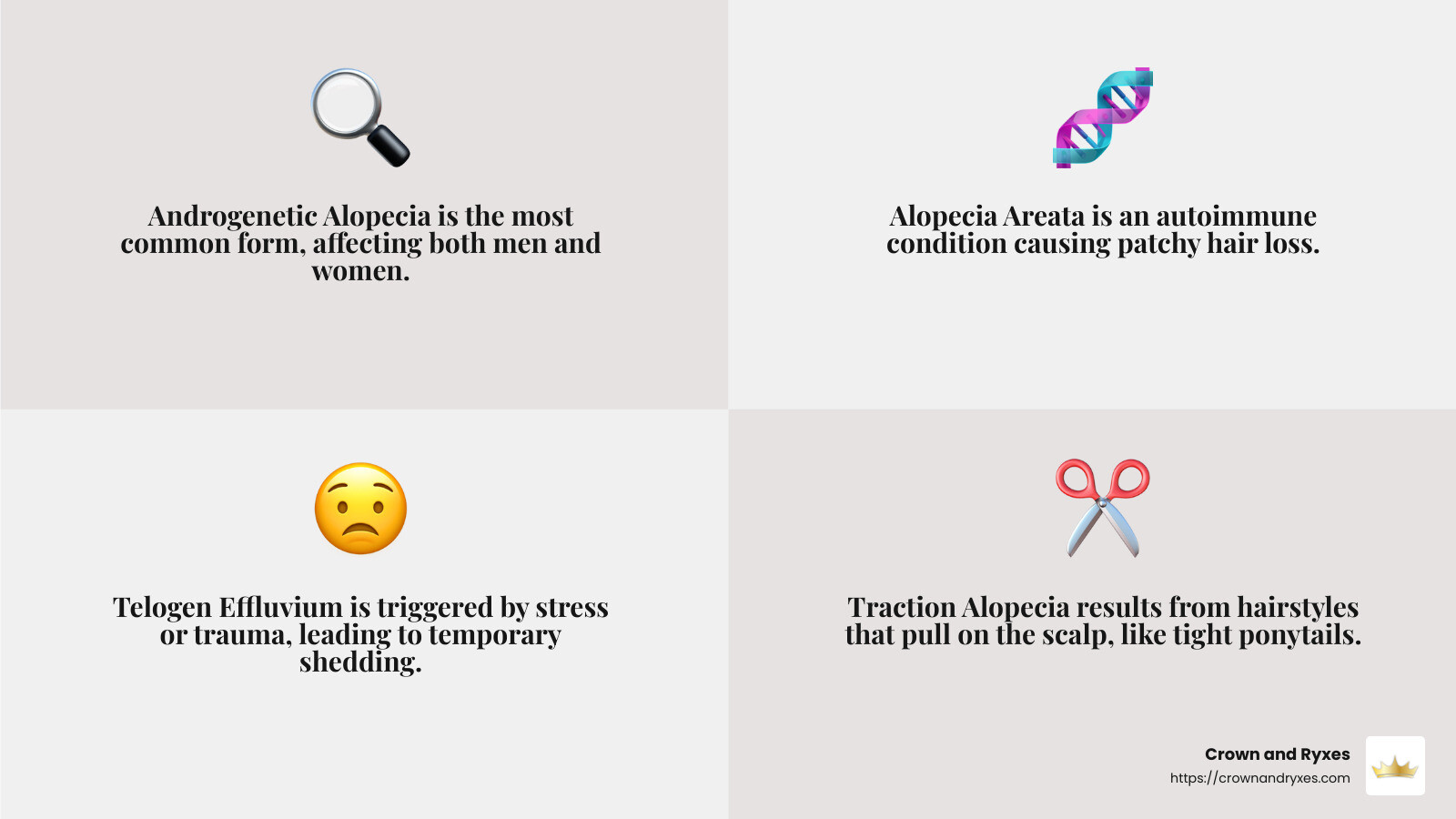
Androgenetic Alopecia: This is the most common form, affecting both men and women. In men, it often starts with a receding hairline, while women experience thinning at the crown.
Alopecia Areata: This is an autoimmune condition that causes patchy hair loss.
Telogen Effluvium: Triggered by stress or trauma, this type leads to temporary hair shedding.
Traction Alopecia: Caused by hairstyles that pull on the scalp, like tight ponytails or braids.
Understanding these aspects of hair loss is the first step towards finding effective solutions. It helps tailor treatments to individual needs, whether through medications, lifestyle changes, or surgical interventions.
Hair Loss Treatments
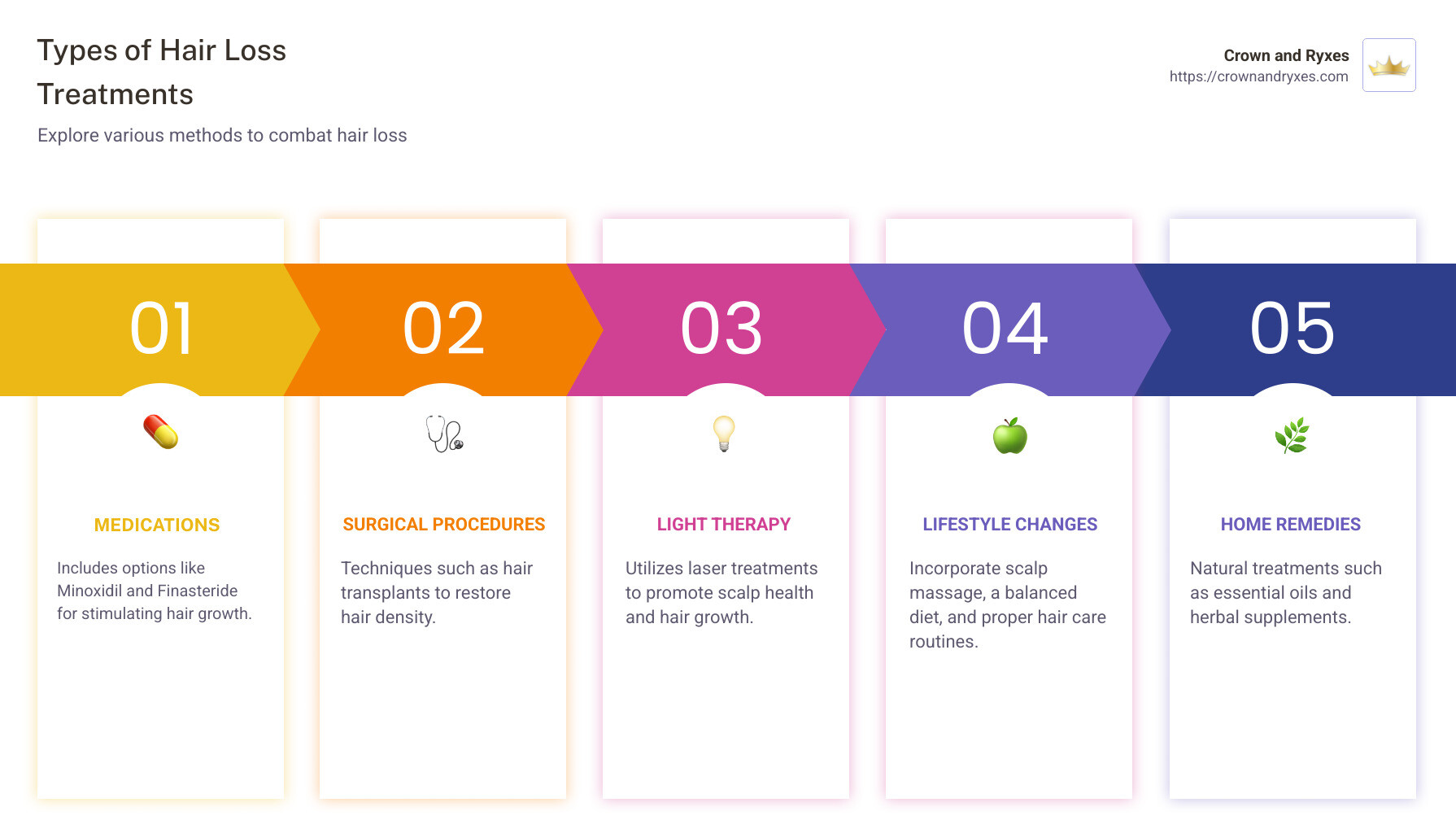
When it comes to hair loss treatments, there are several options available, each catering to different causes and needs. Here’s a look at the main categories: medications, surgery, and light therapy.
Medications
Medications are often the first line of defense against hair loss. They can be either over-the-counter or prescription-based.
Minoxidil: This topical solution is widely used to treat both male and female pattern baldness. It works by stimulating hair follicles and increasing blood flow to the scalp. Many users see results with consistent use, but it’s important to note that its effects only last as long as the medication is used.
Finasteride: An oral medication primarily used for male pattern baldness. It works by reducing levels of dihydrotestosterone (DHT), a hormone linked to hair loss. Finasteride is not suitable for women, especially those who are or may become pregnant.
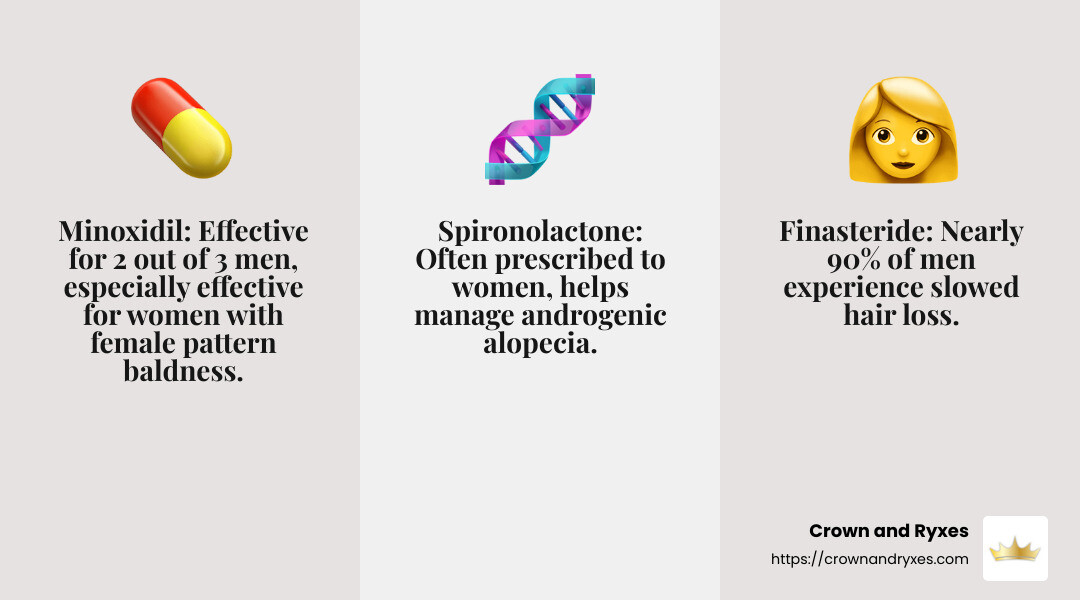
Spironolactone: This oral medication is often prescribed to women with androgenic alopecia. It acts as an anti-androgen, helping to slow hair loss and, in some cases, promote regrowth.
Surgery
For those looking for a more permanent solution, surgical options are available. These procedures are typically more invasive and costly but can provide significant results.
Hair Transplant: This involves moving hair follicles from a donor site, usually the back of the head, to the thinning or balding areas. The most common technique is Follicular Unit Transplantation (FUT), which transplants hair in natural groupings, resulting in a more natural look.
Follicular Unit Extraction (FUE): A less invasive method where individual hair follicles are extracted and implanted in the balding area. FUE is known for minimal scarring and a quicker recovery time compared to traditional methods.
Light Therapy
Light therapy is a non-invasive option approved by the FDA for treating hereditary hair loss. It uses low-level lasers to stimulate hair follicles and promote hair growth.
- Laser Therapy: This treatment involves using devices that emit low-level laser light to improve hair density. While some studies show promising results, more research is needed to fully understand its long-term effectiveness.
Each treatment option offers different benefits and risks. It’s important to consult with a healthcare provider to determine the best course of action based on individual needs and the underlying cause of hair loss. Whether opting for medications, surgery, or light therapy, there are solutions that can help restore hair and confidence.
Medications for Hair Loss
When it comes to tackling hair loss, medications can be a powerful tool. Let’s explore three of the most commonly used treatments: Minoxidil, Finasteride, and Spironolactone.
Minoxidil
Minoxidil is a popular choice for both men and women experiencing hair thinning. It’s an over-the-counter topical solution you apply directly to your scalp. Minoxidil works by widening blood vessels, which boosts blood flow to hair follicles and helps prolong the growth phase of hair.
- Effectiveness: About 2 out of 3 men see results, especially if they’re under 40 and have just started losing hair. Women also benefit, particularly those with female pattern baldness.
- How to Use: Apply it twice a day on dry hair. Patience is key, as it may take 4 months or more to notice changes.
- Side Effects: Some users may experience scalp irritation, like redness or itching, especially with the stronger 5% solution.
Finasteride
Finasteride is an oral medication primarily for men. It targets the hormone dihydrotestosterone (DHT), which is linked to male pattern baldness. By reducing DHT levels, Finasteride helps prevent further hair loss and can even promote regrowth.
- Effectiveness: Nearly 90% of men experience slowed hair loss, and about two-thirds regrow some hair.
- How to Use: Take it as a daily pill. Many dermatologists recommend using it alongside Minoxidil for better results.
- Side Effects: Some men might face sexual side effects, though these are rare and usually reversible after stopping the medication.
Spironolactone
Spironolactone is often prescribed to women, especially those with androgenic alopecia or conditions like polycystic ovary syndrome (PCOS) that cause excess androgen production. It acts as an anti-androgen, helping slow hair loss and sometimes encouraging regrowth.
- How to Use: Taken orally, often in combination with an oral contraceptive for women of reproductive age.
- Side Effects: Possible side effects include dizziness, weight gain, and loss of libido. It’s crucial to avoid pregnancy while taking Spironolactone due to potential risks to a male fetus.
Each of these medications offers unique benefits and potential side effects. It’s important to consult with a healthcare provider to find the treatment that’s right for you. Consistency and patience are key, as these medications often take several months to show results.
Next, we’ll explore surgical options for those seeking more permanent solutions to hair loss.
Surgical Options
When medications aren’t enough, surgical options can offer more lasting solutions for hair loss. Let’s explore two popular methods: hair transplant and follicular unit transplantation.
Hair Transplant
Hair transplants have been around since the 1950s, evolving significantly over time. This procedure involves moving hair from a dense area, usually the back of the head, to a balding spot. It’s like rearranging your hair to cover the areas that need it most.
- Process: Surgeons remove small pieces of scalp with hair and implant them into tiny slits in the balding area. The transplanted hair grows naturally, blending in with your existing hair.
- Results: Most people see new hair growth within a few months. The results are generally long-lasting, making this a popular choice for those seeking a permanent solution.
- Considerations: This procedure can be costly and isn’t usually covered by insurance. It’s important to have realistic expectations and a good-quality donor area for the best outcome.
Follicular Unit Transplantation (FUT)
FUT is a refined version of the traditional hair transplant. It focuses on transplanting hair in natural groupings, known as follicular units. This technique helps create a more natural look.
- Process: A strip of scalp is removed from the donor area, usually at the back of the head. It’s then divided into tiny grafts, each containing a few hairs. These grafts are carefully placed into the balding areas.
- Benefits: FUT allows for a higher number of grafts in a single session, making it suitable for advanced hair loss. It also tends to be quicker and more economical compared to other techniques.
- Drawbacks: A linear scar is left at the donor site, which can be a concern for some. Proper aftercare is essential to ensure the scar heals well and is hidden by surrounding hair.
Both of these surgical options require a skilled surgeon to ensure the best results. They offer a chance for a fuller head of hair and can significantly boost self-confidence.
Next, we’ll look into lifestyle and home remedies that can complement these treatments and help maintain healthy hair.
Lifestyle and Home Remedies
While medical treatments can be effective, incorporating lifestyle and home remedies can support hair health and potentially improve the results. Let’s explore some simple yet impactful practices you can adopt right at home.
Scalp Massage
Scalp massage isn’t just relaxing—it’s also beneficial for your hair.
- Benefits: It improves blood circulation to the hair follicles, which can encourage hair growth. Plus, it helps distribute natural oils, keeping your scalp and hair moisturized.
- How to Do It: Use your fingertips to gently massage your scalp in circular motions for a few minutes daily. You can also use essential oils like lavender or rosemary for added benefits.
Hair Care
Taking care of your hair is crucial in maintaining its health and preventing further loss.
- Gentle Shampooing: Choose mild shampoos and avoid washing your hair too frequently to prevent stripping it of natural oils.
- Avoid Heat: Minimize the use of heat styling tools. If you must use them, apply a heat protectant spray.
- Be Gentle: Use a wide-tooth comb to detangle wet hair and avoid tight hairstyles that can cause breakage.
Dietary Adjustments
What you eat can directly impact the health of your hair.
- Balanced Diet: Include foods rich in vitamins and minerals like iron, zinc, and vitamins A, D, and E. These nutrients are known to support hair growth and strength.
- Protein-Rich Foods: Hair is made of protein, so consuming enough protein is essential. Incorporate foods like eggs, fish, and nuts into your diet.
- Stay Hydrated: Drinking plenty of water keeps your scalp hydrated and supports overall hair health.
These lifestyle and home remedies can be a great addition to medical treatments, creating a holistic approach to managing hair loss. Up next, we’ll tackle some frequently asked questions about hair loss treatments to clear up any lingering doubts.
Frequently Asked Questions about Hair Loss Treatments
What is the best treatment for hair loss?
When it comes to hair loss treatments, one of the most commonly recommended options is Minoxidil. Known by brand names like Rogaine, this topical solution is FDA-approved for both men and women. It helps to stimulate hair regrowth by widening blood vessels, which improves blood flow to hair follicles. While it won’t work miracles overnight, many people see positive results after several months of consistent use. It’s important to continue using it to maintain any regrowth.
Is it possible to regrow lost hair?
Yes, regrowing lost hair is possible for many individuals, especially when combining treatments with lifestyle changes. A holistic approach is key. This includes maintaining a balanced diet rich in essential nutrients, managing stress, and practicing good hair care habits. For some, incorporating scalp massages and reducing the use of heat styling tools can make a noticeable difference. While medical treatments like Minoxidil can kickstart regrowth, these lifestyle adjustments can support and sustain healthy hair.
Which vitamin deficiency causes hair loss?
Vitamin D deficiency is often linked to hair loss. This vitamin plays a crucial role in the health of hair follicles. A lack of vitamin D can lead to hair thinning and loss. Ensuring you have enough vitamin D, along with other important nutrients like iron and zinc, can help maintain healthy hair. Consider foods rich in these vitamins or discuss supplements with a healthcare provider if you suspect a deficiency.
These insights into hair loss treatments can guide you in making informed decisions about your hair care journey. Up next, we’ll explore more about Crown and Ryxes’ personalized restoration and wellness solutions.
Conclusion
At Crown and Ryxes, we understand that hair loss can be a challenging journey. It can impact your self-esteem and confidence. That’s why we offer personalized restoration and wellness solutions custom to your unique needs. Our goal is to help you regain not just your hair, but also your confidence and well-being.
Our approach is holistic and patient-centered. We offer a range of hair loss treatments that include both medical and non-surgical options. From FDA-approved medications like Minoxidil to innovative methods like low-level laser therapy, our solutions are designed to cater to diverse hair restoration goals.
But we don’t just stop at treatment. We believe in supporting your overall wellness. Whether it’s through dietary advice, lifestyle adjustments, or stress management techniques, we provide comprehensive support throughout your restoration journey.
Located in Clermont, FL, Crown and Ryxes is committed to helping you achieve your hair and wellness goals. Our experienced team is here to guide you every step of the way, offering expert advice and personalized care.
Your journey to hair restoration and wellness begins with us. Together, let’s reclaim your confidence and improve your quality of life. If you’re ready to start your personalized restoration journey, reach out to us today.