

Why Hair Regrowth Treatment Foam Matters for Thinning Hair
Hair regrowth treatment foam is a topical medication with minoxidil, the only FDA-approved over-the-counter ingredient clinically proven to regrow hair and slow hair loss. Here’s what you need to know:
Key Facts About Hair Regrowth Treatment Foam:
- Active Ingredient: Minoxidil 5% (men) or 2% (women)
- How It Works: Increases blood flow to follicles, reverses miniaturization, extends growth phase
- Application: Half capful applied to dry scalp twice daily
- Results Timeline: 8-16 weeks for initial results, 3-6 months for visible improvement
- Effectiveness: Clinically proven to regrow hair in 4 out of 5 men; up to 25% more hair regrowth
- Best For: Early-stage hereditary hair loss (androgenetic alopecia)
- Key Requirement: Continuous use needed to maintain results
Hereditary hair loss (androgenetic alopecia) affects up to 50 million men and 30 million women in the US. Starting treatment early is key; men who used minoxidil foam in earlier stages saw 46% more hair regrowth compared to those who waited. The foam offers a convenient, mess-free alternative to liquids. It dries quickly, targets the scalp directly, and works to reactivate shrunken follicles, boost hair protein, and extend the hair’s growth phase.
In hereditary hair loss, hormones shrink follicles, leading to thinner hair. Minoxidil foam increases blood flow to these follicles, helping them produce thicker strands. Commitment is essential. Expect to apply the foam twice daily for at least 8 weeks before seeing new growth, with optimal results around 3-6 months. Temporary shedding in the first 2-6 weeks is a positive sign that the treatment is working.
I’m Dr. Matthew Casavant, and I understand the importance of comprehensive wellness solutions. Crown and Ryxes offers evidence-based treatments, from hair regrowth treatment foam for hair thinning to REGENmax for sexual wellness, to help restore your confidence.
The Science Behind Hair Regrowth Treatment Foam
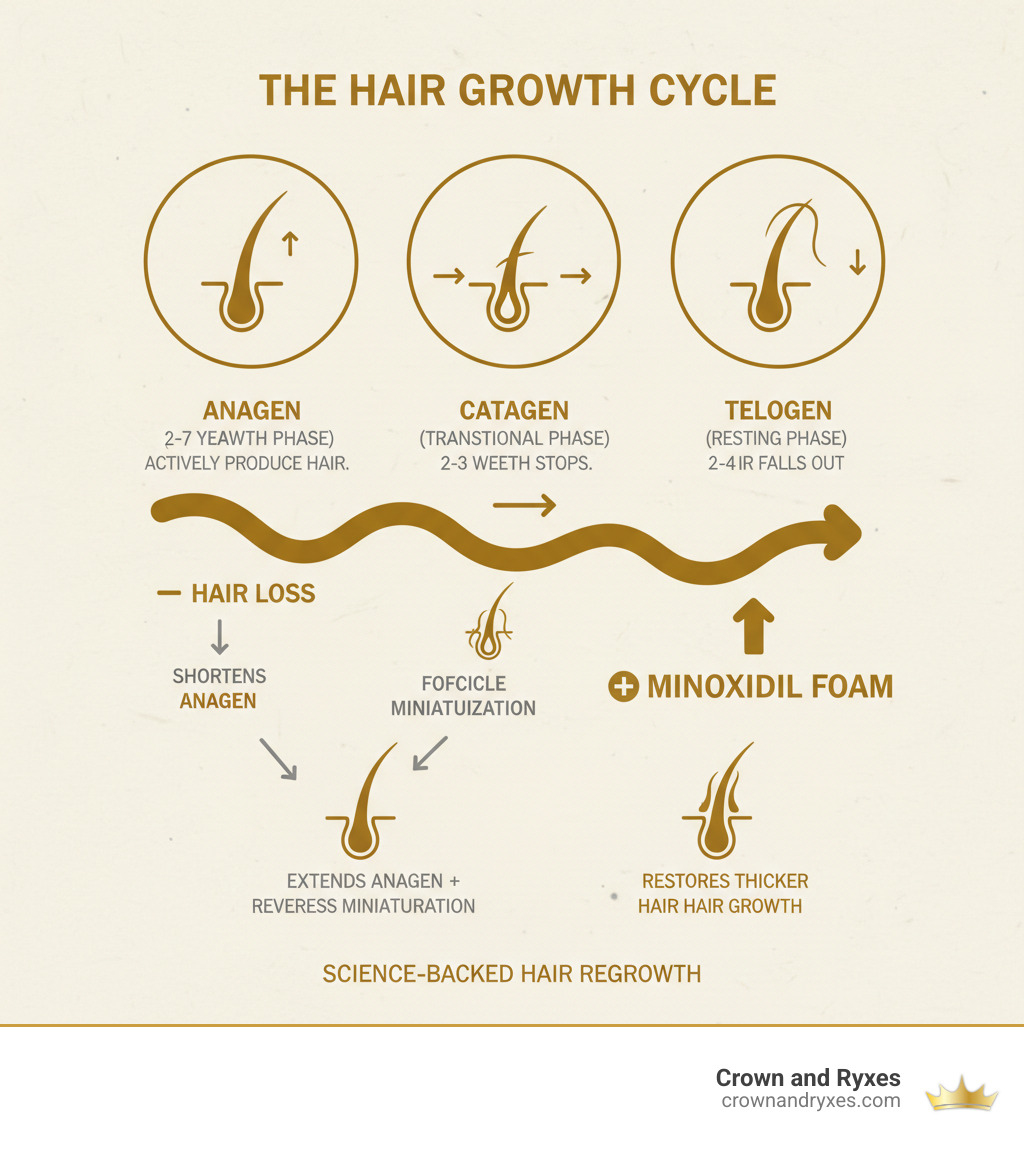
Minoxidil is the FDA-approved cornerstone of hair regrowth treatment foam, backed by decades of research. Unlike trendy supplements with questionable claims, minoxidil is proven to work by tackling hair loss from multiple angles.
First, it acts as a vasodilator, widening blood vessels in your scalp to deliver more oxygen and nutrients to hair follicles. This nourishment is vital for struggling follicles. Second, it works to reverse follicle miniaturization, a process in hereditary hair loss where follicles shrink and produce progressively weaker hair. Minoxidil encourages these follicles to grow larger and produce thicker strands. Finally, it extends the anagen (growth) phase of your hair cycle, keeping more hairs on your head for longer and improving overall density. For more on how different compounds support hair health, our page on hair growth medicine offers additional insights.
What is Minoxidil and How Does It Work?
Minoxidil is the active ingredient that makes hair regrowth treatment foam effective. Originally a blood pressure medication, its hair-growing side effect led to its use as a topical treatment. Once applied to the scalp, it works to:
- Reactivate dormant follicles: It gives shrinking follicles a wake-up call, helping them return to a healthier size to produce hair again.
- Increase hair protein production: Since hair is made of protein, boosting its production leads to thicker, stronger growth.
- Extend the hair’s growth cycle: It keeps hair in the active anagen phase longer, meaning less shedding and more hair on your head.
The FDA’s scientific research on Minoxidil provides comprehensive clinical data confirming its effectiveness through rigorous testing.
Other Key Ingredients Found in Foam Formulations
While minoxidil is the star, other ingredients in hair regrowth treatment foam are essential for a user-friendly experience. Propellants like butane create the light, airy foam that stays put and doesn’t drip. Fatty alcohols such as cetyl and stearyl alcohol moisturize the scalp and stabilize the texture, while glycerin draws in moisture to prevent dryness. Citric acid helps keep the formula stable and gentle on your skin.
These ingredients work together to create a foam that is easy to apply, dries quickly, and minimizes scalp irritation, making your path to fuller hair as straightforward as possible.
A Practical Guide to Using Minoxidil Foam
Using hair regrowth treatment foam is straightforward, but consistency is the key to success. Think of it as a non-negotiable part of your morning and evening routines. Following the instructions on dosage and frequency is crucial—using more foam won’t speed up results and may increase the risk of side effects.
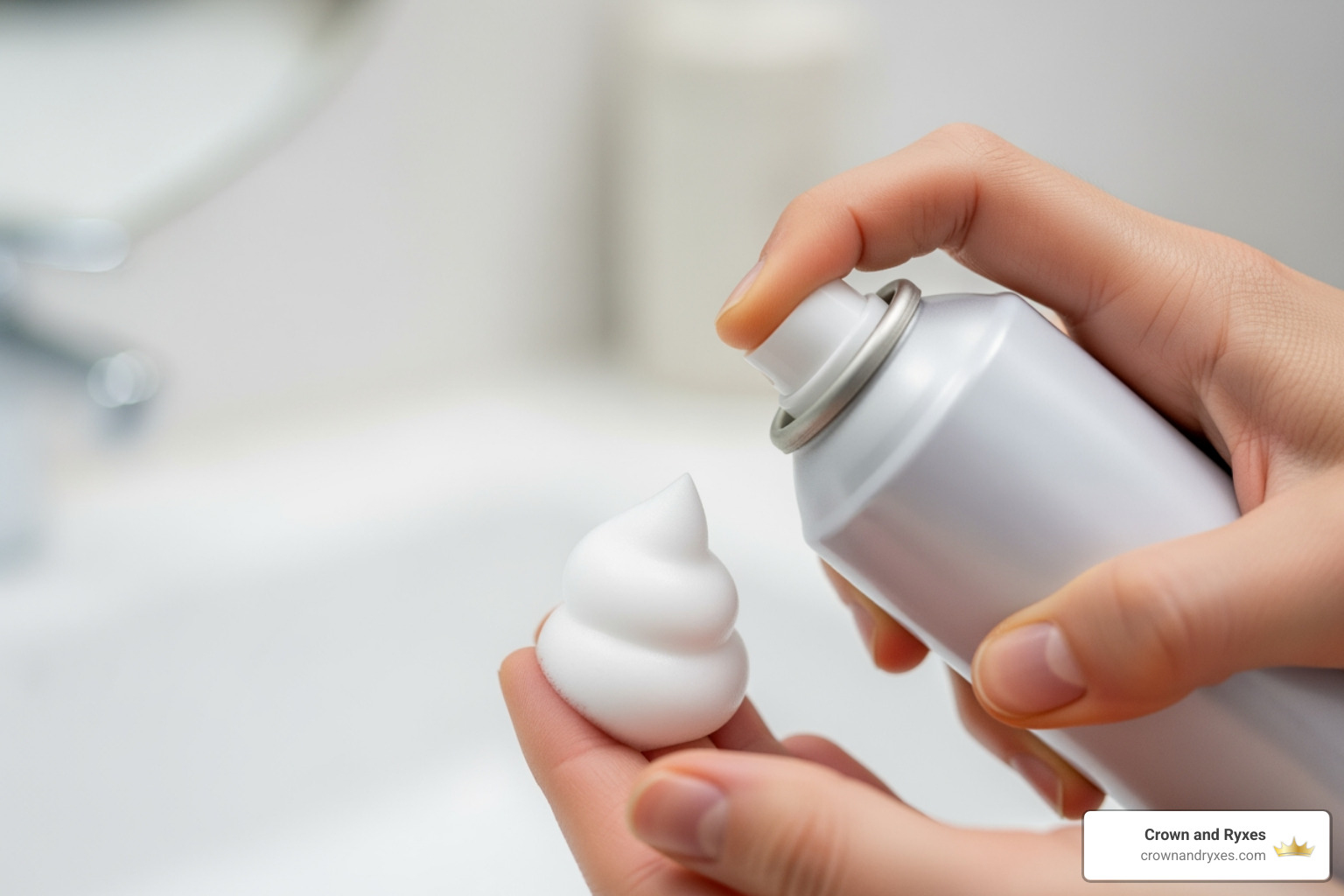
Be prepared for a timeline that requires patience. Hair growth is slow, and you may even notice temporary shedding in the first few weeks. This is a positive sign that the treatment is making way for stronger hair. This is a long-term investment in your confidence, and continuous use is necessary to maintain your results. For a broader look at available options, see our page on non-surgical hair restoration.
Recommended Application Process
Correct application is vital for maximizing effectiveness. Here’s a simple guide:
- Start with a dry scalp and hair. Applying foam to wet hair dilutes the product and hinders absorption.
- Part your hair in rows to expose the scalp in thinning areas.
- Dispense half a capful of foam onto your fingers. This is the recommended dose; more is not better.
- Gently massage the foam into the affected areas of your scalp, ensuring direct contact.
- Apply twice daily, once in the morning and once in the evening.
- Wash your hands thoroughly with soap and water immediately after application to prevent unwanted hair growth elsewhere.
- Let the foam air dry completely before styling, wearing a hat, or going to bed.
What to Expect: Timeline for Results
Patience is essential when using hair regrowth treatment foam. Understanding the timeline helps manage expectations.
- Weeks 2-6: Initial Shedding. You may notice a temporary increase in hair loss. This is a normal, positive sign that weaker hairs are being pushed out to make way for new, stronger ones.
- Weeks 8-16: First Signs of Growth. Initial regrowth may appear as soft, fine “baby” hairs. With continued use, these will mature into thicker, more visible hairs.
- Months 3-6: Visible Improvement. This is when you and others will likely notice a real difference in hair density and coverage.
- Month 12 and Beyond: Peak Results. Full benefits are typically seen after a year of continuous use. After this point, the goal is to maintain the hair you’ve regrown. For more on treatment timelines, visit our page on hair restoration solutions.
What Happens if You Stop Using Hair Regrowth Treatment Foam?
Hair regrowth treatment foam is a long-term commitment, not a cure. Minoxidil works only as long as you use it. If you stop, the stimulating effect on your hair follicles ceases.
The regrown hair will typically fall out within three to four months of discontinuing treatment. Your pattern of hair loss will likely resume as if you had never started. Think of it as a daily management strategy for a chronic condition. The benefits of fuller hair and restored confidence are often worth the ongoing commitment. If you’re exploring different long-term strategies, our page on balding treatment options provides valuable insights.
Foam vs. Other Hair Loss Solutions
When tackling hair loss, the number of options can be overwhelming. Hair regrowth treatment foam is a popular choice because it’s convenient, accessible, and delivers results directly to your scalp. Unlike treatments that require pills or in-office procedures, foam fits easily into your daily routine at home.
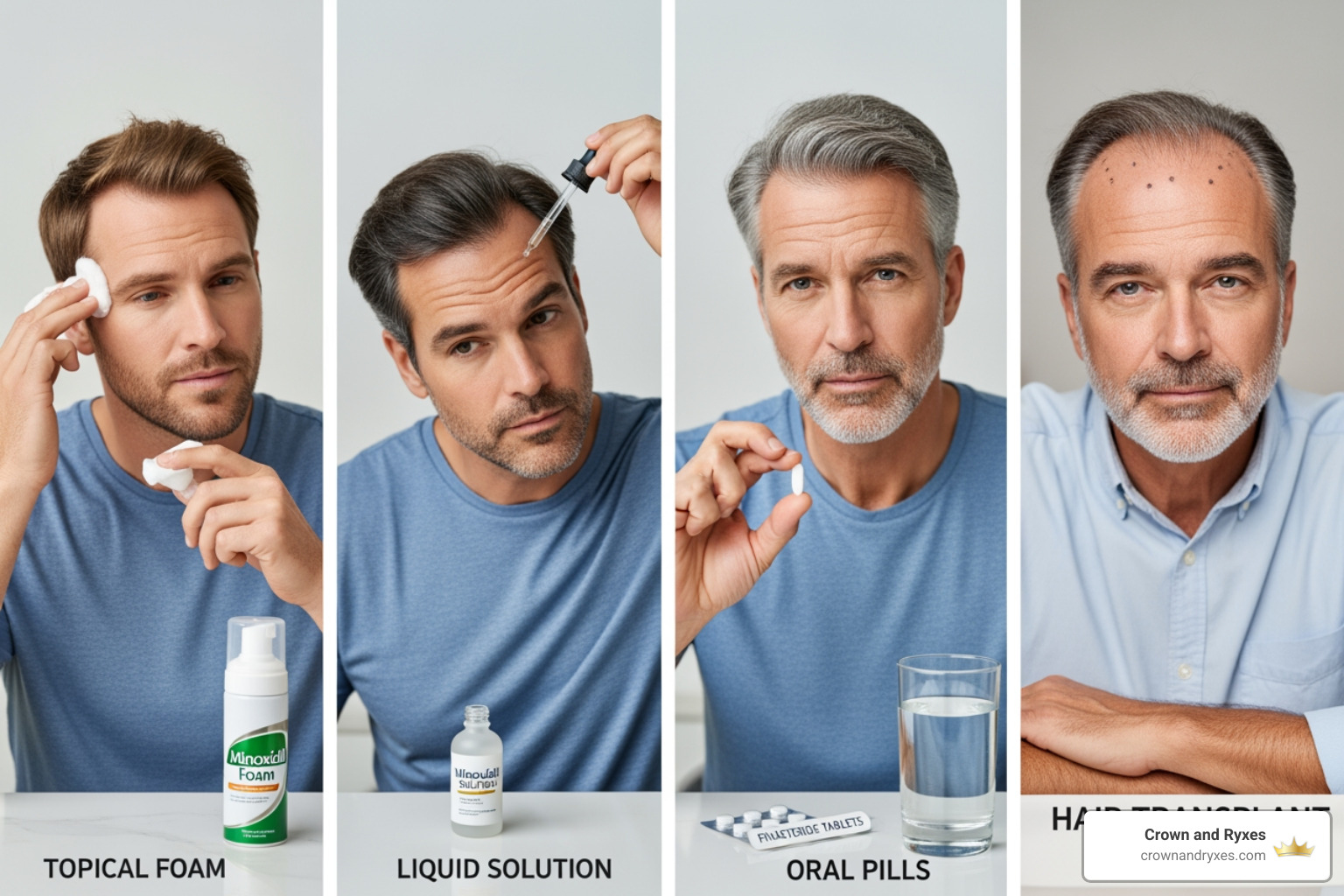
Its topical approach minimizes the risk of systemic side effects, and its over-the-counter availability makes it a budget-friendly first step for those noticing early signs of thinning. However, it’s helpful to understand how it compares to other solutions.
Minoxidil Foam vs. Minoxidil Liquid
While both foam and liquid contain minoxidil, the formulation matters for your daily experience. Foam is generally preferred for several reasons:
- Less Mess: Foam stays where you put it, unlike liquid which can drip. It also dries faster.
- Less Irritation: Most foams are propylene glycol-free, an ingredient in many liquids that can cause itching and redness.
- Better Texture: The light, airy foam is less greasy and won’t weigh down your hair.
For comfort and convenience, foam is often the superior choice, which can make sticking with the treatment much easier long-term.
Topical Foams vs. Other Non-Surgical Solutions
Hair regrowth treatment foam offers unique advantages over other non-surgical options. Because it’s applied topically, the active ingredient has a localized effect, targeting hair follicles without circulating through your body. This is a key difference from oral medications, which can carry a broader range of potential side effects.
Systemic side effects with topical foam are minimal for most users. The biggest advantage is its accessibility—no prescription is required, making it an easy first step for anyone wanting to take action quickly. For men dealing with early-stage hair loss, our guide on male pattern baldness treatment offers more information.
Comparing Hair Regrowth Foam to Other Crown and Ryxes Treatments
At Crown and Ryxes, we know hair restoration isn’t one-size-fits-all. While hair regrowth treatment foam is an excellent starting point, we offer a range of solutions for different needs at our locations in Clermont, FL, and The Villages, FL.
- Hair Regrowth Foam is a non-invasive topical medication you apply daily at home. It works by stimulating follicles and is best for early or general thinning.
- Non-Surgical Restoration refers to advanced, non-invasive therapies performed in a series of sessions. These treatments support overall follicle health and are ideal for diffuse thinning.
- FUE Hair Transplant is an invasive surgical procedure that relocates healthy follicles to areas of advanced hair loss. It’s a one-time procedure that provides a permanent solution.
If foam isn’t delivering the desired results, or if your hair loss is more extensive, our team can create a personalized plan that may include these other effective options.
Is Minoxidil Foam Right for You? Candidates and Considerations
Deciding if hair regrowth treatment foam is the right choice starts with understanding your specific type of hair loss. It isn’t a magic bullet for every situation, but for the right person, it can be transformative.
Minoxidil foam works best for hereditary hair loss (androgenetic alopecia)—the gradual thinning on the crown or a receding hairline that runs in families. The key is to start early, as the treatment is most effective on follicles that are shrinking but still active. It is generally recommended for adults 18 and older. It will not work for sudden, patchy hair loss (alopecia areata) or hair loss due to medical conditions or tight hairstyles, which require a doctor’s diagnosis and a different treatment plan.
While minoxidil foam has a strong safety profile, it’s important to understand the precautions before you begin.
The Ideal Candidate for Hair Regrowth Treatment Foam
You are likely an excellent candidate for hair regrowth treatment foam if you fit these characteristics:
- You have gradual, hereditary hair loss. Both men and women can benefit, though concentrations may differ.
- You are in the early stages of thinning. Starting early yields the best results, with studies showing up to 46% more regrowth for those who act sooner.
- Your thinning is on the top of the scalp (vertex). This is where minoxidil is most effective.
- You have realistic expectations. The goal is to slow hair loss and achieve noticeably thicker hair, not to restore a full head of hair from extensive baldness.
- You are committed to long-term, twice-daily application. Consistency is non-negotiable for success.
For women experiencing hair thinning, minoxidil foam can be particularly impactful. Learn more on our women’s hair restoration page.
Precautions and Potential Side Effects
Hair regrowth treatment foam is generally well-tolerated, but it’s important to be aware of potential side effects.
- Mild Scalp Irritation: Some users may experience temporary itching, redness, or dryness. This is less common with foam than with liquid and often subsides as your scalp adjusts.
- Unwanted Facial Hair Growth: This can occur if the product drips or if hands are not washed thoroughly after application. Be meticulous with your technique to avoid this.
- Initial Shedding: A temporary increase in shedding during the first few weeks is a normal, positive sign that the treatment is working.
Serious side effects are rare but require immediate medical attention. Stop use and contact your doctor if you experience chest pain, rapid heartbeat, dizziness, or sudden, unexplained weight gain. You should consult a doctor before starting if you have a heart condition, are pregnant or nursing, or are unsure of the cause of your hair loss.
If you need personalized advice, our team at Crown and Ryxes in Clermont, FL, and The Villages, FL, is here to help. You can also use our resources for finding a doctor for hair loss near you.
Frequently Asked Questions about Hair Regrowth Foam
We know you have questions about hair regrowth treatment foam. Here are clear, concise answers to some of the most common inquiries.
Can I use styling products or dye my hair while using minoxidil foam?
Yes. You can continue to use styling products and dye your hair. The key is to apply minoxidil foam to a dry scalp first and let it dry completely (about 10-15 minutes) before applying any other products. There is no interference with hair dye, but we recommend skipping your foam application on the day of a chemical treatment to avoid potential scalp irritation. It’s also a good idea to inform your stylist that you’re using a regrowth treatment.
How long does a can of foam typically last?
A standard 60g can of hair regrowth treatment foam is designed to last for one month when used as directed (half a capful, twice daily). Since consistency is crucial for results, it’s wise to plan for refills. Many users purchase a multi-month supply or use a subscription service to ensure they never run out and interrupt their progress.
Will using more foam or applying it more often speed up results?
No. Using more than the recommended dose of hair regrowth treatment foam or applying it more often will not speed up hair growth. Your follicles can only absorb a certain amount of minoxidil at a time. Overuse is wasteful and significantly increases your risk of side effects, such as scalp irritation or systemic issues like dizziness. Success comes from consistency, not quantity. Stick to the recommended dose and trust the process.
Conclusion: A Foaming Start to Fuller Hair
Starting on a journey to combat hair loss is a significant step, and with hair regrowth treatment foam, you have a powerful, clinically proven ally. The active ingredient, minoxidil, works to revive dormant follicles and extend your hair’s natural growth cycle, offering a convenient and effective way to address hereditary thinning at home.
The key to success is consistency and patience. Visible results typically emerge within 3 to 6 months, rewarding your dedication with thicker hair. Continuous use is required to maintain these benefits for long-term success.
At Crown and Ryxes, we believe foam is a great start, but a comprehensive strategy often yields the best results. Our teams in Clermont, FL, and The Villages, FL, are dedicated to creating personalized plans that may combine topical regimens with non-surgical therapies or other advanced options. We are here to guide you toward restoring not just your hair, but your confidence. To take the next step, we invite you to Explore men’s hair restoration services or contact us for a personalized consultation.