

Why Hair Restoration Information Matters for Your Confidence and Well-being
Hair restoration information is vital for the millions experiencing hair loss. Statistics show that at least 70% of men and over 50% of women will face some degree of hair loss. Understanding your options can transform not just your appearance, but your confidence and quality of life.
Key Hair Restoration Information at a Glance:
- Non-Surgical Options: PRP therapy, medications (Minoxidil, Finasteride), laser therapy
- Surgical Solutions: FUE and FUSS hair transplant techniques
- Timeline: Results typically visible in 6-12 months
- Cost Range: Generally $4,000-$15,000 depending on technique and grafts needed
- Success Rate: 68% of surgeons report needing only one procedure for successful results
- Recovery: Most patients return to normal activities within 3-4 days
Whether you’re noticing a receding hairline or overall thinning, modern hair restoration offers more effective and natural-looking solutions than ever before. This guide covers everything from the causes of hair loss to the full range of treatment options, including procedures, recovery, costs, and how to choose a specialist.
I’m Dr. Matthew Casavant, a board-certified physician with over 20 years of experience. My expertise in providing comprehensive hair restoration information and personalized care has helped countless individuals in Clermont, FL and The Villages, FL achieve their aesthetic and wellness goals.
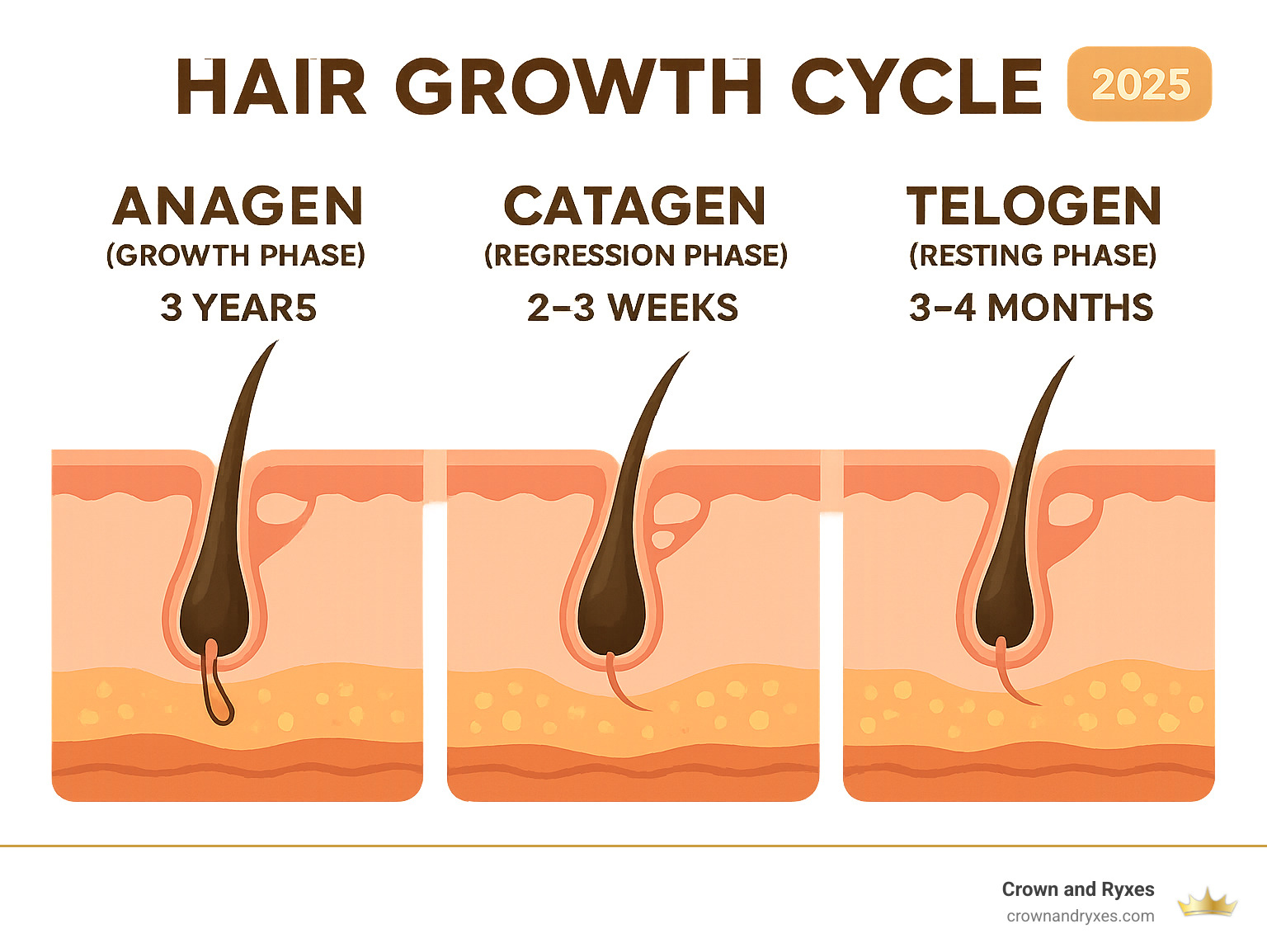
Understanding Hair Loss: The First Step to Restoration
While shedding 50-100 hairs daily is normal, persistent thinning can signal a deeper issue. The right hair restoration information starts with understanding the specific type of hair loss you’re experiencing, which guides you toward the most effective solutions.
Common Types and Causes of Hair Loss
Androgenetic Alopecia, or pattern baldness, accounts for 95% of hair loss in men and is also common in women. It’s largely genetic. In men, it appears as Male Pattern Baldness—a receding “M” shaped hairline or thinning crown. Women experience Female Pattern Hair Loss as overall thinning on top of the scalp, usually with the frontal hairline intact.
The primary cause is the hormone DHT (dihydrotestosterone), which shrinks hair follicles until they stop producing hair. Other causes include hormonal changes (pregnancy, menopause, thyroid issues) and stress, which can trigger temporary shedding.
Alopecia Areata is an autoimmune condition where the body attacks its own hair follicles, causing round, smooth bald patches. Telogen Effluvium is a temporary shedding phase triggered by major events like illness, surgery, or extreme stress; hair typically regrows once the trigger is resolved.
Other factors like age, certain medications, aggressive styling, and poor nutrition can also contribute to hair loss.
How Hair Loss is Professionally Diagnosed
An accurate diagnosis is crucial before starting any treatment. A professional evaluation typically includes:
- Physical Exam: A close look at your scalp to examine the hair loss pattern and follicle health.
- Medical History: A discussion about family history, medications, recent illnesses, and lifestyle.
- Pull Test: A gentle tug on small sections of hair to check for active shedding.
- Scalp Biopsy: A small tissue sample is examined under a microscope to identify inflammatory conditions or other issues.
- Blood Tests: These can reveal underlying causes like thyroid problems, iron deficiency, or hormonal imbalances.
- Light Microscopy: Examination of individual hair strands for structural abnormalities.
If you’re experiencing sudden or significant hair loss that affects your confidence, seek professional help. Early intervention often leads to better outcomes. If you’re looking for a doctor for hair near me in Clermont, FL, or The Villages, FL, our team can provide the expert care you need.
A Spectrum of Solutions: From Non-Surgical to Hair Transplants
The path to hair restoration offers a spectrum of options, from non-invasive treatments to transformative surgical procedures. The key is finding the right approach for your specific needs and goals, and modern hair restoration information shows there’s a solution for nearly everyone.
Non-Surgical Hair Restoration Options
Non-surgical treatments are often the first line of defense and work best when hair loss is caught early. They can also be used to complement surgical results.

- Minoxidil (Rogaine): A topical treatment applied directly to the scalp to stimulate follicles and extend the hair’s growth phase. Consistent, long-term use is required to see and maintain results.
- Finasteride (Propecia): A prescription pill for men that blocks the follicle-shrinking hormone DHT. It can slow hair loss and often promotes regrowth.
- Platelet-Rich Plasma (PRP) Therapy: Our advanced PRP Hair Treatment uses growth factors from your own blood, which are injected into the scalp to awaken dormant follicles and improve hair density.
- Stem Cell Scalp Injections: This cutting-edge field uses your body’s regenerative power to potentially reactivate dormant hair follicles. Learn more about our Stem Cell Scalp Injections.
- Low-Level Laser Therapy (LLLT): FDA-approved devices like a Laser Hair Growth Cap use gentle light to energize cellular activity in hair follicles, and can be used conveniently at home.
- Vitamins and Supplements: While not a cure for genetic hair loss, ensuring you have enough biotin, iron, and zinc supports overall hair health. See our guide to Vitamins for Hair Loss.
An Introduction to Hair Transplant Surgery
For a more permanent solution, hair transplant surgery offers life-changing results. The procedure involves moving healthy, genetically-resistant hair follicles from a donor area (typically the back and sides of the head) to thinning or balding areas.
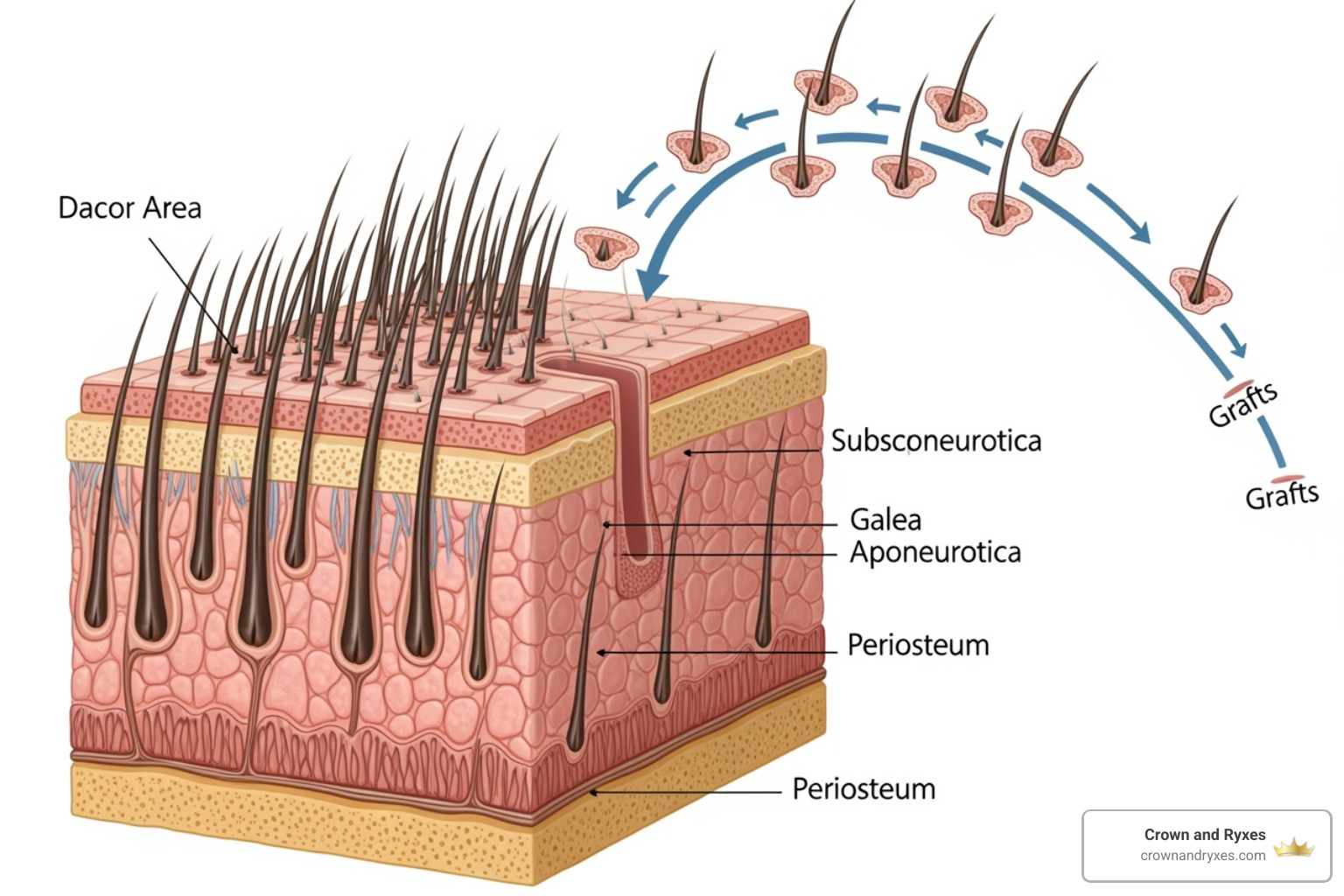
This principle, known as donor dominance, ensures that the transplanted hair continues to grow for a lifetime in its new location. Modern techniques transplant individual follicular units (groups of 1-4 hairs), creating a completely natural look. Both men and women can be excellent candidates, provided they have sufficient donor hair. Learn more in our guide: Hair Transplant Surgery: What You Need to Know About the Procedure.
Comparing Surgical Techniques: FUE vs. FUSS
The two primary hair transplant methods are Follicular Unit Strip Surgery (FUSS) and Follicular Unit Extraction (FUE).
| Feature | Follicular Unit Strip Surgery (FUSS) | Follicular Unit Extraction (FUE) |
|---|---|---|
| Harvesting | A strip of skin with hair is surgically removed from the back/sides of the scalp | Individual follicular units are extracted directly from the scalp using a micro-punch tool |
| Scarring | Leaves a linear scar at the donor site, which may be visible if hair is cut very short | Leaves tiny, punctate scars (small dots) that are less noticeable and can be hidden by short hair |
| Recovery | Donor area may be more painful and require longer healing due to the incision. Stitches need removal | Generally less painful donor area recovery; no stitches required |
| Procedure | Usually takes less time (4-8 hours for average procedure) | Can be more time-consuming, especially for larger sessions, as each follicle is extracted individually |
| Ideal Candidate | Good for patients needing a large number of grafts and who don’t mind a linear scar (e.g., if they wear their hair longer) | Preferred by patients who want to avoid a linear scar, prefer shorter hairstyles, or need fewer grafts |
FUSS allows for a large number of grafts to be harvested efficiently but leaves a linear scar that is best hidden by longer hair. FUE is a less invasive technique where we extract individual follicular units, avoiding a linear scar and allowing for shorter hairstyles. Our advanced FUE Hair Restoration procedures use the latest technology, like the SmartGraft Hair Transplant system, to ensure precision and optimal results. The best choice depends on your hair loss, goals, and lifestyle, which we will discuss during your consultation.
The Hair Transplant Experience: What to Expect Before, During, and After
Deciding on a hair transplant is a big step, but knowing what to expect makes the process easier. Having the right hair restoration information helps you prepare for this life-changing procedure.
The Procedure and Recovery Timeline
Your hair transplant is an outpatient procedure performed under local anesthesia, so your scalp will be numb and you’ll remain comfortable. A typical session of 500 to 2,000 grafts takes about 4 to 8 hours, during which you can relax, listen to music, or chat with our team.

Recovery follows a predictable path. Most patients return to light activities within 3-5 days. Around 2-3 weeks post-procedure, the transplanted hairs will shed—this is a normal phase called “shock loss” that makes way for new growth. You can resume all exercise after three weeks.
New, permanent hair begins to emerge around 3-4 months. By 6-9 months, you’ll see about 60% of your new growth, with full results visible within 6-12 months. The wait is worth it for the final change. For more details, see The Recovery Process: What to Expect After a Hair Transplant.
Potential Risks and Side Effects
While serious complications are rare, it’s important to have complete hair restoration information. Potential side effects are typically minor and temporary:
- Common Effects: Minor bleeding, swelling of the scalp and forehead, and bruising are common and usually fade within a few days.
- Infection: Uncommon when post-care instructions are followed carefully.
- Scarring: FUSS leaves a linear scar, while FUE leaves tiny, dot-like scars that are less noticeable.
- Folliculitis: Small pimple-like bumps may appear but are usually minor and treatable.
- Temporary Numbness or Itching: These sensations are a normal part of the healing process and resolve over time.
- Shock Loss: Temporary shedding of some existing hair around the treated area can occur but typically resolves.
We minimize these risks with expert care. Learn more from our guide on Hair Transplant Risks and Complications.
Understanding Hair Transplant Costs
The investment for a hair transplant typically ranges from $4,000 to $15,000. As a cosmetic procedure, it is not usually covered by insurance.
Costs are generally calculated per graft, and the final price depends on several factors:
- Technique Used: FUE is often priced higher per graft than FUSS due to the meticulous nature of the extraction.
- Number of Grafts: The primary factor determining the total cost.
- Surgeon Experience: Expertise and a proven track record are an investment in quality results.
- Geographic Location: Costs can vary by region.
- Included Services: Ensure you know if post-op care and follow-up visits are included in your quote.
Many patients consider this a worthwhile investment in their confidence and quality of life. For a deeper look, explore our guide on Factors That Affect the Cost of Hair Transplant Surgery.
Making an Informed Choice with Key Hair Restoration Information
Navigating hair restoration is easier when you know what to look for. This hair restoration information will serve as your roadmap to making a confident decision.
Essential hair restoration information for your consultation
Your initial consultation is a fact-finding mission. Come prepared with questions to get the most value from your visit.
- Am I a good candidate? An honest specialist will assess your hair loss pattern, donor hair quality, age, and health to determine your suitability for surgery or non-surgical options.
- Which technique (FUE or FUSS) is best for me? A skilled surgeon will explain their recommendation based on your hair, goals, and lifestyle.
- What are realistic results? A reputable surgeon will be upfront about the density and look you can achieve.
- Can I see before-and-after photos? Always ask to see photos of patients with similar hair loss patterns. We are proud to share our Hair Transplant Before and After results to demonstrate our work.
Also, ask about the recovery process, what’s included in the cost, and if ongoing treatments are needed to protect non-transplanted hair.
Finding a Specialist: The Most Crucial Hair Restoration Information
Your results are only as good as your surgeon. Look for:
- Board Certification: Choose a board-certified surgeon, such as a dermatologist or plastic surgeon, who specializes in hair restoration.
- Experience: Find a surgeon who performs hair transplants regularly and stays current with the latest techniques.
- Artistic Skill: A great transplant requires creating a natural-looking hairline. Scrutinize before-and-after photos for naturalness.
- Technology: Clinics using advanced systems often provide better outcomes. Our Top FUE Hair Transplant Surgeons guide explains what to look for.
- Reviews: Patient testimonials offer insight into the entire experience.
- Credentials: You can verify a specialist’s credentials through organizations like the American Academy of Dermatology’s tool to find a board-certified dermatologist.
Solutions for Everyone: Men, Women, and Beyond
Hair loss affects everyone differently, so treatment must be personalized.
- For Men: We address male pattern baldness (receding hairlines, thinning crowns) with our specialized Men’s Hair Restoration services, creating a more youthful and confident appearance.
- For Women: Female hair loss is often diffuse thinning. Our Women’s Hair Restoration solutions focus on increasing overall density while addressing underlying causes.
- Facial Hair: We also offer Beard Implants to create fuller, more defined beards.
- Eyebrows: For sparse brows due to over-plucking, genetics, or aging, our Eyebrows Implants can restore natural shape and fullness.
Frequently Asked Questions about Hair Restoration
When considering hair restoration, many people share the same questions. Here are honest answers to provide the hair restoration information you need to feel confident in your decision.
How painful is a hair transplant?
This is the most common concern, but the procedure itself is not painful. We use local anesthesia to completely numb your scalp, so you will only feel slight pressure or movement. Most patients relax comfortably during the procedure.
Afterward, you may experience mild tenderness, similar to a sunburn, which is easily managed with over-the-counter pain relievers. This discomfort typically fades within a few days.
How long do hair transplant results last?
This is the best part: hair transplant results are permanent. The transplanted hair follicles are taken from a donor area that is genetically resistant to balding. They retain this characteristic in their new location and will continue to grow for your lifetime.
However, the transplant does not stop potential future loss of your existing, non-transplanted hair. To maintain overall density, we may recommend combining your procedure with maintenance treatments like Minoxidil or Finasteride.
Can I get a hair transplant if I am completely bald?
This depends on whether you have enough healthy donor hair, which is typically found on the back and sides of the head. A hair transplant works by redistributing your existing hair. If you have a sufficient donor supply, a transplant is possible even with extensive loss on top. If there is no suitable donor hair on the scalp or body, a transplant is not an option.
Realistic expectations are key. With a limited donor supply, we can still achieve significant improvement, but perhaps not a full head of hair. During your consultation, we will honestly assess your donor area and discuss what results are genuinely achievable for you.
Conclusion: Start Your Hair Restoration Journey in Clermont, FL and The Villages, FL
This guide has equipped you with the essential hair restoration information to make a confident decision. You now understand the full spectrum of solutions, from non-surgical treatments like PRP to permanent hair transplants that can restore your hairline and your confidence.
The most empowering takeaway is that you have options. You don’t have to accept hair loss. Modern restoration offers natural, effective solutions that can transform your appearance and quality of life.
At Crown and Ryxes, we provide personalized care for every unique hair loss journey, whether it’s for men, women, or for specialized procedures like beard and eyebrow restoration. Our focus is on your complete wellness. As part of our comprehensive approach, we also offer REGENmax for sexual wellness, supporting multiple aspects of your health and confidence.
The next step is to schedule a consultation with our experienced team in Clermont, FL, and The Villages, FL. We will assess your situation, discuss your goals, and create a personalized treatment plan. Don’t let another day pass wondering “what if.” Take action now to slow, stop, or even reverse your hair loss.
Learn more about hair restoration in Clermont, FL, and The Villages, FL and start your change today.