

Why Understanding Hair Transplant Mistakes Is Crucial to Your Success
Hair transplant mistakes can turn a life-changing procedure into a costly disappointment. While modern hair restoration boasts success rates of 90-95%, a significant number of suboptimal results are entirely preventable. The most common issues stem from choosing an unqualified surgeon or failing to follow post-operative care.
The most common hair transplant mistakes include:
- Choosing an unqualified surgeon: Black market clinics and inexperienced practitioners cause the majority of failed procedures.
- Ignoring post-operative care: Scratching, sun exposure, and early exercise can destroy grafts.
- Poor hairline design: Results in an unnatural, “pluggy” appearance.
- Donor area over-harvesting: Leads to visible scarring and depleted hair reserves.
- Inadequate patient screening: Operating on unsuitable candidates with unstable hair loss.
- Smoking and alcohol consumption: Severely impairs healing and graft survival.
- Skipping follow-up appointments: Prevents early detection of complications.
Data from the ISHRS shows that 96.4% of hair transplant repairs were needed due to previous black market procedures. This highlights the critical importance of choosing qualified providers. Your role as a patient is crucial. From selecting a credentialed surgeon to following aftercare instructions, the decisions you make directly impact your outcome. The good news is that most complications are avoidable when you know what to watch for.
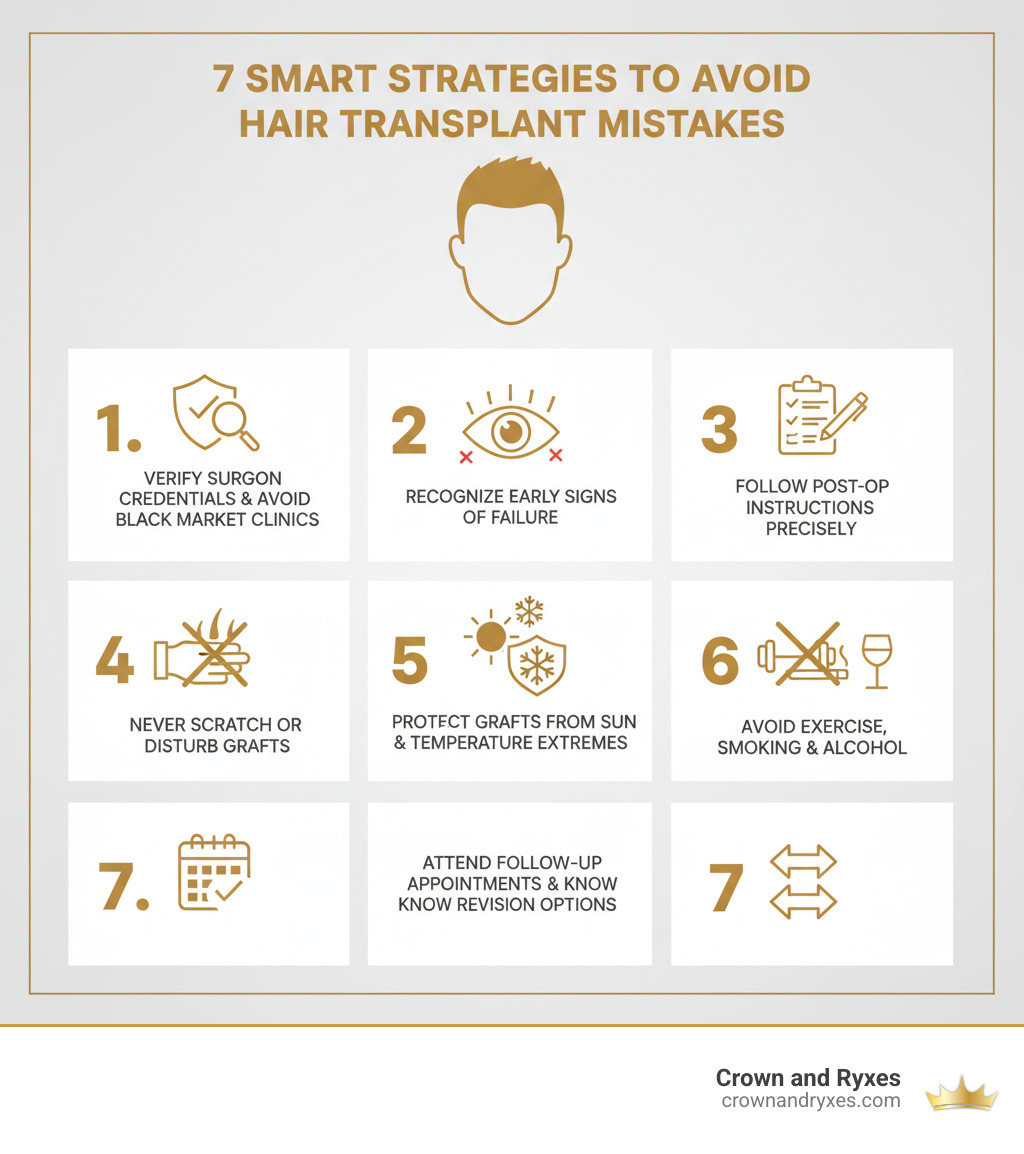
Strategy 1: Vetting Your Surgeon to Avoid Critical Hair Transplant Mistakes
Your surgeon’s skill is the single most important factor in your success. Proper vetting goes beyond scrolling through a clinic’s curated before-and-after photos or testimonials. It’s the most critical step in avoiding hair transplant mistakes.
Start with credentials. Your surgeon should be board-certified in a relevant specialty. In the UK, you can check surgeon credentials with the GMC and look for membership in the British Association of Hair Restoration Surgery (BAHRS). These registries separate qualified professionals from unqualified practitioners.
A reputable clinic will be transparent, showing you real hair transplant before and after photos and connecting you with previous patients. Be wary of red flags like “unlimited grafts” for a low price or promises of “10,000 grafts in one session.” These are warnings of impending disaster.
The rise of medical tourism has led to an increase in “black market clinics”—unlicensed facilities with no oversight, often using untrained technicians instead of surgeons. ISHRS members report that 96.4% of hair transplant repairs they perform are to fix botched jobs from these clinics. The risks of unlicensed clinics include not only poor results but also serious medical complications with little legal recourse.
How Inexperience Leads to Common Hair Transplant Mistakes
An inexperienced practitioner can ruin your results in numerous ways. Hair transplantation is an art that requires surgical skill and an aesthetic eye.
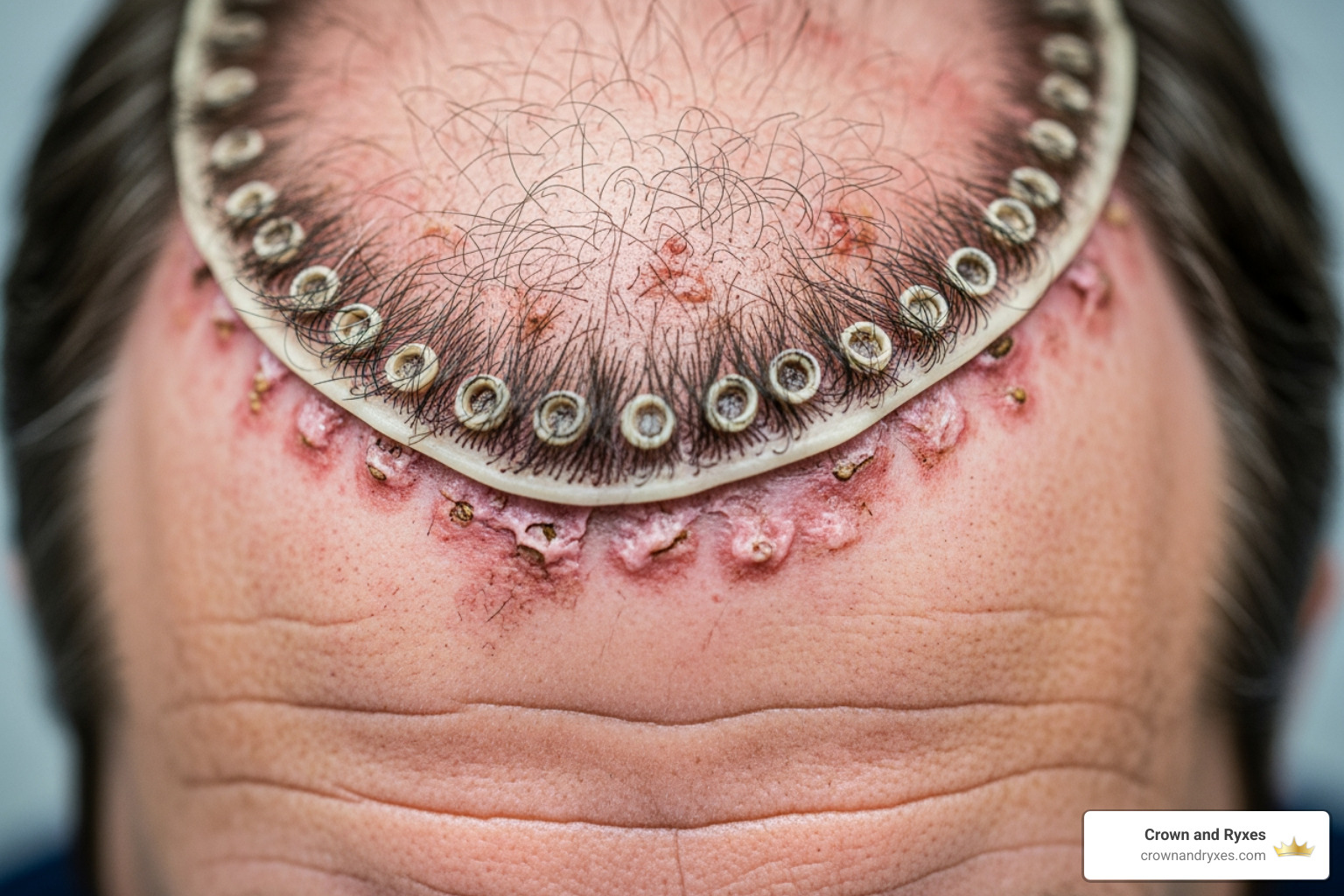
- Poor hairline design: A hairline that is too low, too straight, or asymmetrical creates an unnatural, “doll’s head” look.
- Incorrect graft angle and direction: Hair must be placed to match the natural growth pattern. Incorrect placement results in hair that sticks out at odd angles, creating a “pluggy” appearance.
- Over-harvesting the donor area: The back and sides of your head have a finite supply of donor hair. Taking too much can cause permanent thinning, patchiness, or scarring, depleting reserves for any future procedures.
- Visible scarring: While modern FUE is minimally invasive, poor technique with oversized punches can leave noticeable white dots. With FUT, an unskilled surgeon can leave a wide, raised scar.
- Low density: Damaged grafts or insufficient placement leads to sparse coverage that looks thin and unconvincing.
To ensure quality, find top FUE hair transplant surgeons who prioritize patient safety and natural-looking results.
Strategy 2: Become an Educated Patient Before Day One
Understanding what a successful hair transplant looks like—and what warning signs to watch for—makes you an active partner in your care. While final results take 9-12 months to appear, certain signs warrant immediate attention.
Signs of a Failed Transplant
- An unnatural hairline: A line that is too low, too straight, or lacks the subtle irregularities of a natural hairline is a clear sign of hair transplant mistakes.
- A “pluggy” look: This outdated appearance occurs when hair grows in obvious clumps or tufts instead of blending seamlessly.
- Poor hair growth after 12 months: If you see minimal growth or density far below what was promised after a full year, it likely indicates poor graft survival.
- Excessive scarring: With FUT, a thin linear scar is expected. With FUE, tiny white dots are normal but shouldn’t be widespread or highly visible. Prominent scarring points to poor technique.
- Scalp necrosis: This rare but serious complication involves tissue death, appearing as black, dead skin. It is a medical emergency that can lead to severe infection.
- Signs of infection: Persistent pus, worsening redness or swelling, escalating pain, or fever require immediate medical attention. Infections occur in only 1-3% of cases but must be treated promptly. For more, review this scientific research on Complications in Hair Transplantation.
It’s essential to learn about hair transplant risks before your procedure.
Understanding the Causes of Hair Transplant Failure
Failure often results from a combination of factors:
- Graft rejection: Though uncommon, autoimmune conditions like Lichen planopilaris can cause the body to attack transplanted follicles.
- Poor donor area quality: A weak or sparse donor area cannot provide the robust follicles needed for a successful transplant.
- Unstable hair loss: Transplanting hair while surrounding native hair continues to fall out results in an unnatural, patchy pattern. Reputable surgeons wait for hair loss to stabilize.
- Inadequate aftercare: Patients can unknowingly sabotage their results by not following post-operative instructions.
- Surgical error: This covers all technical hair transplant mistakes, from improper graft handling to poor hairline design and over-harvesting.
Understanding these causes and signs empowers you to make informed decisions and recognize when to seek professional help.
Strategy 3: Follow Post-Op Instructions Religiously
Once your procedure is done, you become the most important member of your hair restoration team. Following post-operative instructions is essential to avoid hair transplant mistakes that can compromise your results. The first few weeks are a make-or-break period for the vulnerable new grafts.
Our guide on the recovery process: what to expect after a hair transplant provides detailed steps. The most critical aspects include:
Washing the scalp gently: For the first several days, your scalp is a healing wound. You will receive specific instructions, usually involving a gentle misting spray or light dabbing. Avoid direct water pressure from a shower, rubbing, or vigorous shampooing. This temporary inconvenience protects your investment.
Medication compliance: Your surgeon prescribes antibiotics to prevent infection and anti-inflammatories to reduce swelling. Take every pill exactly as directed for the full duration to ensure proper healing and graft survival.
Sleeping position: For at least the first week, you must sleep with your head liftd at a 45-degree angle to minimize swelling. Use a travel neck pillow or sleep in a recliner. Avoid sleeping on your stomach or sides, as pressure from a pillow can dislodge fresh grafts and create permanent gaps in your new hairline.
Every guideline is based on years of experience and is designed to ensure your investment pays off with the natural, dense results you desire.
Strategy 4: Resist the Urge to Scratch or Touch
This may be the hardest instruction to follow, making it a common source of post-op hair transplant mistakes. Your scalp will itch as it heals, but scratching is one of the worst things you can do.
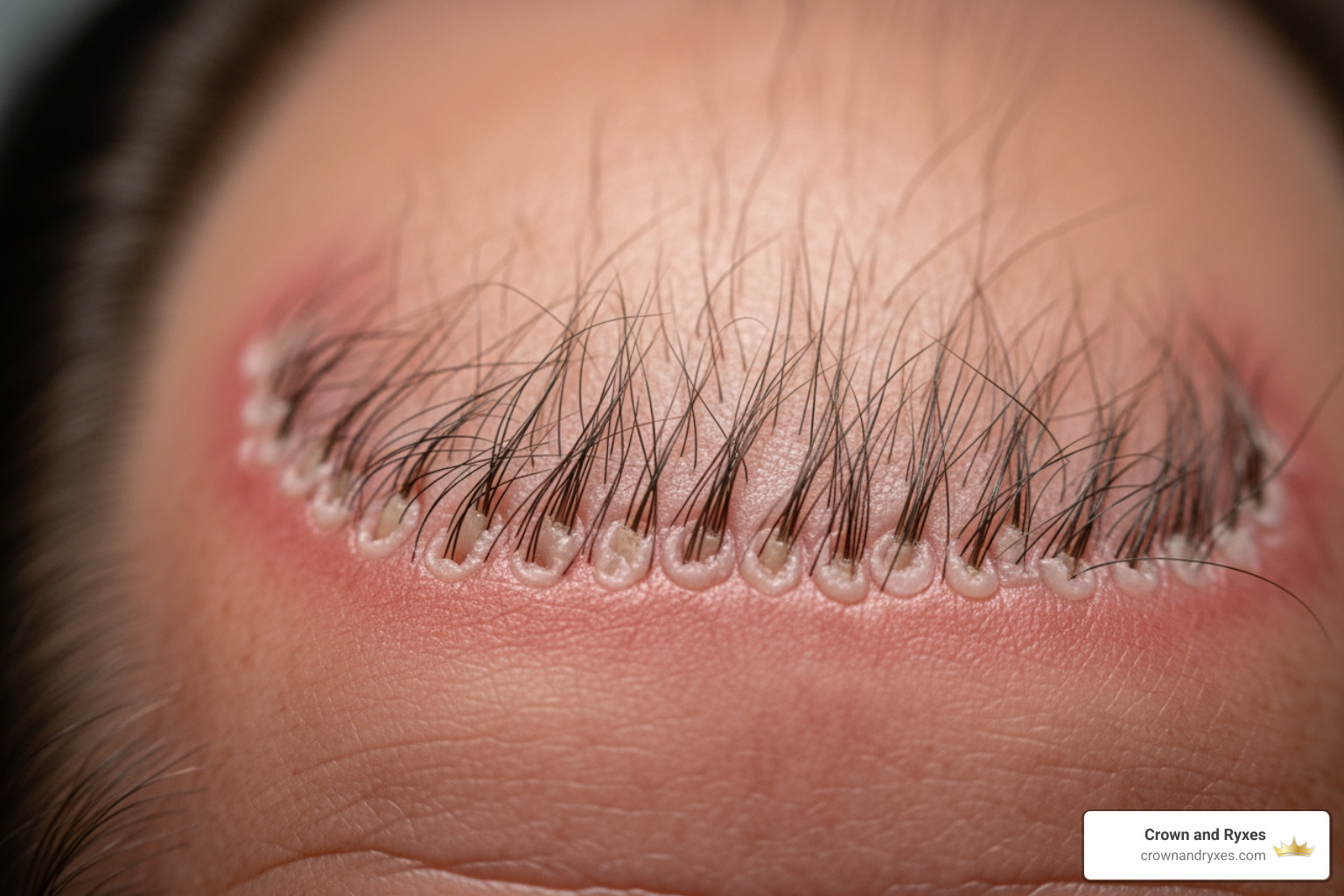
Newly transplanted grafts are like tiny seedlings with no roots. It takes 10-14 days for them to anchor securely. Scratching, even lightly, can dislodge them permanently, creating bald spots. It can also damage the hair roots, leading to weak growth or no growth at all.
Furthermore, scratching introduces bacteria from your fingernails into tiny open wounds, creating a serious infection risk. An infection can cause grafts to fail and may lead to scarring.
To manage the itch safely:
- Gently pat the area with the flat pads of your fingers, never your nails.
- Use the saline sprays or topical solutions prescribed by your surgeon.
- Keep the scalp clean according to your washing instructions to reduce itchiness as scabs heal.
- Stay well-hydrated by drinking plenty of water to support skin health.
Those first two weeks of self-control are critical. Your patience during this phase is just as important as the surgical skill that got you here.
Strategy 5: Shield Your New Grafts from the Environment
Think of your new grafts as tender seedlings that need protection. Exposing them to harsh environmental elements is an overlooked hair transplant mistake that can compromise your results. Your scalp is vulnerable and needs an ideal environment to heal.
Direct sunlight is dangerous for your healing scalp. UV rays can cause sunburn and inflammation. More importantly, sun exposure can trigger blood clot formation around the follicles, cutting off the vital blood supply they need to survive. Avoid direct sun for at least three to four weeks.
Extreme temperatures, both hot and cold, can also hinder recovery. Excessive heat from hot showers, saunas, or steam rooms increases swelling. Extreme cold constricts blood vessels, reducing the crucial circulation your follicles need. Keep showers lukewarm and avoid saunas for the first month.
Wearing a hat requires careful timing. You cannot wear a tight cap right after surgery. Once your surgeon gives approval (typically after 7-10 days), a loose-fitting hat is excellent for protection. Think bucket hats, not tight beanies. The hat should not put any pressure on the transplanted or donor areas.
Protect both your donor and recipient areas equally. A few weeks of extra caution can make the difference between a good result and a great one.
Strategy 6: Put Strenuous Activity and Vices on Hold
The weeks following your hair transplant are for recovery, not for pushing your limits. You’ve made a significant investment; don’t let preventable hair transplant mistakes derail it. Your body needs to focus all its energy on healing.
Avoid strenuous exercise for at least two to four weeks. Intense workouts spike your blood pressure, which can cause bleeding or swelling in the transplanted area and potentially dislodge grafts. Sweat also creates a moist environment, increasing the risk of infection in the healing implantation sites.
Smoking severely hinders healing. Nicotine is a vasoconstrictor, meaning it narrows your blood vessels. This dramatically reduces blood flow to the scalp, starving the new follicles of the oxygen and nutrients they need to survive. Quitting, at least temporarily, is non-negotiable for success.
Alcohol also causes problems. It dehydrates you when your body needs hydration for healing. It also thins your blood, increasing the risk of bleeding and bruising. Avoid alcohol for at least a week before and several weeks after your procedure.
A few weeks of restraint can mean the difference between a mediocre result and the full, natural-looking head of hair you’re hoping for. A healthy lifestyle also supports your long-term results, which can be improved with options like non-surgical hair restoration.
Strategy 7: Plan for Long-Term Success and Correction
Your hair transplant journey continues long after surgery day. Staying engaged with your recovery process is key to achieving transformative results.
Follow-up appointments are not optional. These check-ins allow your surgeon to monitor your progress and spot any early signs of complications. It’s also important to be patient, as final results take a full 9-12 months to become visible. Rushing to judgment can lead to unnecessary interventions.
If, after this waiting period, you are unhappy with the outcome, you have options. Many hair transplant mistakes can be addressed with revision surgery. Our hair transplant repair services are designed to help patients who didn’t get their desired results the first time. This specialized procedure can focus on correcting unnatural hairlines, improving density, or repairing visible scarring.
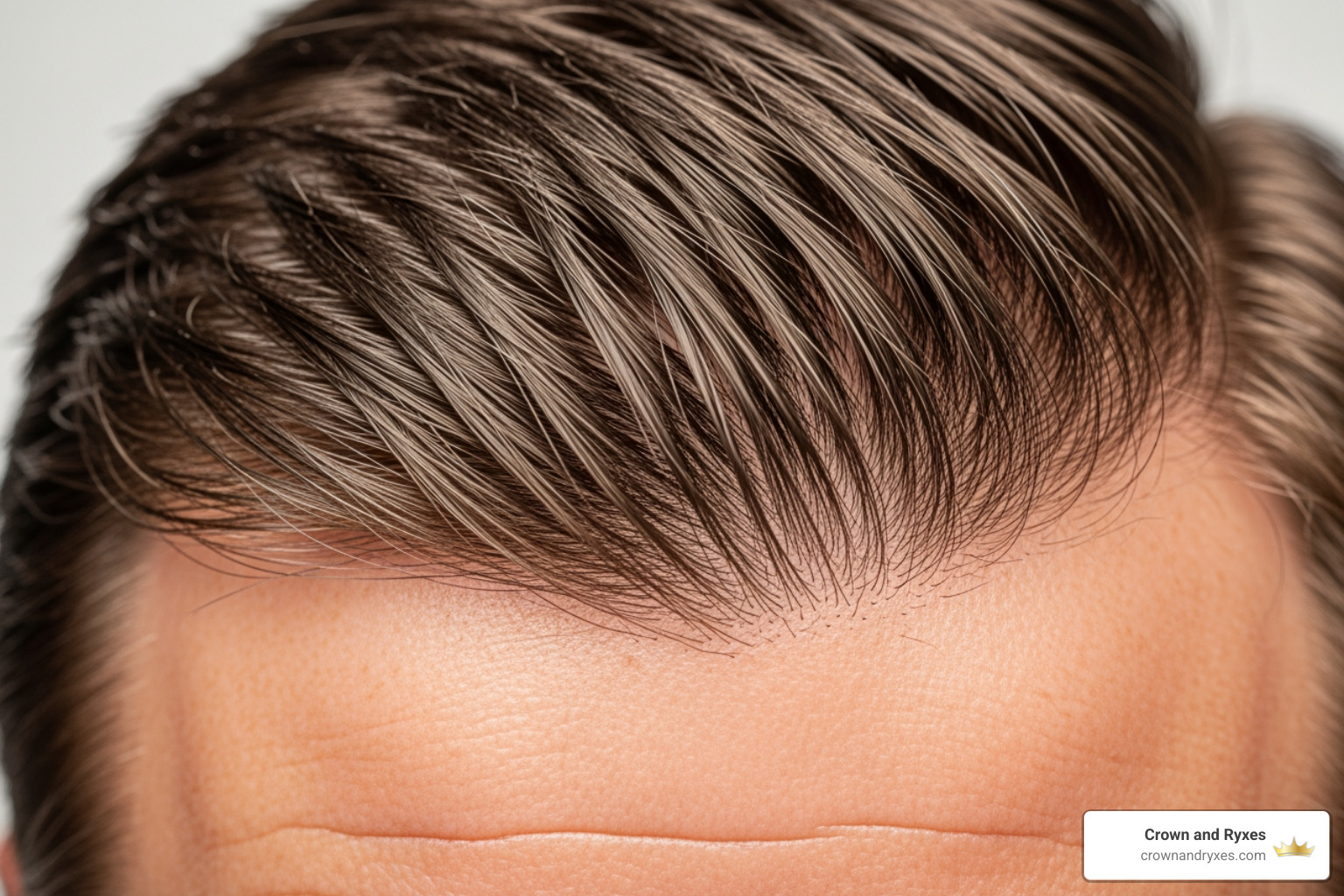
Exploring Alternatives to a Second Surgery
A full second surgery isn’t always the only answer. Less invasive options can also dramatically improve your appearance.
Scalp Micropigmentation (SMP) is a sophisticated “hair tattoo” that creates the illusion of density. It is brilliant for camouflaging scars from FUT or FUE procedures and can make thinning areas appear fuller.
Complementary therapies like PRP Hair Treatment use your body’s own platelet-rich plasma to stimulate follicles and improve hair health. These non-surgical options work well alongside surgical procedures for a comprehensive approach.
Staying connected with your care team is the key to long-term satisfaction. We’re here for the long haul, not just the day of surgery.
Frequently Asked Questions about Hair Transplant Mistakes
Understanding hair transplant mistakes means knowing what can go wrong and what can be done about it. Here are answers to the most common questions.
How can you tell if a hair transplant has failed?
Patience is key, as full results take 9-12 months. However, clear warning signs of failure include:
- Poor growth after one year: Minimal or very sparse coverage after 12 months is a major red flag.
- An unnatural appearance: This includes a hairline that is too straight or low, a “pluggy” look where hair grows in clumps, or hair growing at odd angles.
- Excessive scarring: Prominent linear scars from FUT or widespread white dots from FUE indicate poor technique.
- Persistent infection: Ongoing redness, swelling, pain, or discharge beyond the first few weeks requires immediate medical attention.
Reviewing hair transplant before and after photos from reputable clinics provides a benchmark for what successful results should look like.
Can a bad hair transplant be fixed?
Yes, in most cases, a bad hair transplant can be significantly improved or corrected. It’s always best to get it right the first time, but revision is often possible.
- Revision surgery is the primary solution. It can involve removing poorly placed grafts, redesigning a hairline, or adding density to sparse areas.
- Scar repair can be done using FUE techniques to camouflage scars from previous procedures.
- Scalp Micropigmentation (SMP) is a non-surgical option that tattoos tiny dots to create the illusion of density, effectively hiding scars or making thin areas look fuller.
Choosing an expert in hair transplant repair is crucial, as these procedures are more complex than initial transplants.
What is the main cause of hair transplant failure?
The single biggest cause of hair transplant mistakes is an inexperienced or unqualified surgeon. This leads to poor technique, bad planning, and improper hairline design. Statistics from the ISHRS show that 96.4% of repairs were needed to fix work from black market clinics, which often use untrained technicians.
Other significant factors include:
- Poor patient candidacy: Not everyone is a good candidate. Unstable hair loss, insufficient donor hair, or scalp conditions like Lichen planopilaris can lead to failure. A reputable surgeon will be honest about your suitability.
- Inadequate aftercare: The patient’s failure to follow post-op instructions is a major contributor to poor outcomes.
The solution is to do your homework. Research your hair transplant clinic and verify your surgeon’s credentials with bodies like the GMC or organizations like BAHRS.
Conclusion: Your Path to a Successful Hair Transplant
Your hair transplant is a partnership where your active participation is as vital as your surgeon’s skill. By understanding and avoiding the common hair transplant mistakes discussed in this guide, you create the conditions for a successful, life-changing outcome.
The majority of complications stem from preventable issues, like choosing an unqualified practitioner or neglecting post-operative care. Thorough research and a commitment to following instructions are your best protection against disappointment.
At Crown and Ryxes, we believe in a transparent partnership with our patients. Whether you’re in Clermont, FL, or The Villages, FL, we are committed to guiding you through every phase of your restoration journey. Your investment in understanding the process will pay dividends for years to come.
If you have concerns about a previous procedure, know that our specialized hair transplant repair services can often help. For those just starting their journey, we offer comprehensive solutions custom to your needs.
Ready to begin? Explore our Hair Transplant Services to see how we can help you achieve the natural, lasting results you deserve.