
Why Hormone Replacement Therapy Matters for Your Well-Being
Hormone replacement therapy (HRT) is a medical treatment that replaces hormones your body no longer produces in sufficient amounts, primarily estrogen and progesterone, to relieve symptoms of menopause and hormonal imbalances.
Quick Overview of Hormone Replacement Therapy:
- What it is: Treatment using estrogen and/or progestogen to replace declining hormones
- Main uses: Hot flashes, night sweats, vaginal dryness, mood changes, sleep problems, bone loss prevention
- Types: Estrogen-only therapy or combination therapy (estrogen + progestogen)
- Forms: Pills, patches, gels, creams, rings, sprays, and injections
- Timing matters: Most effective when started within 10 years of menopause or before age 60
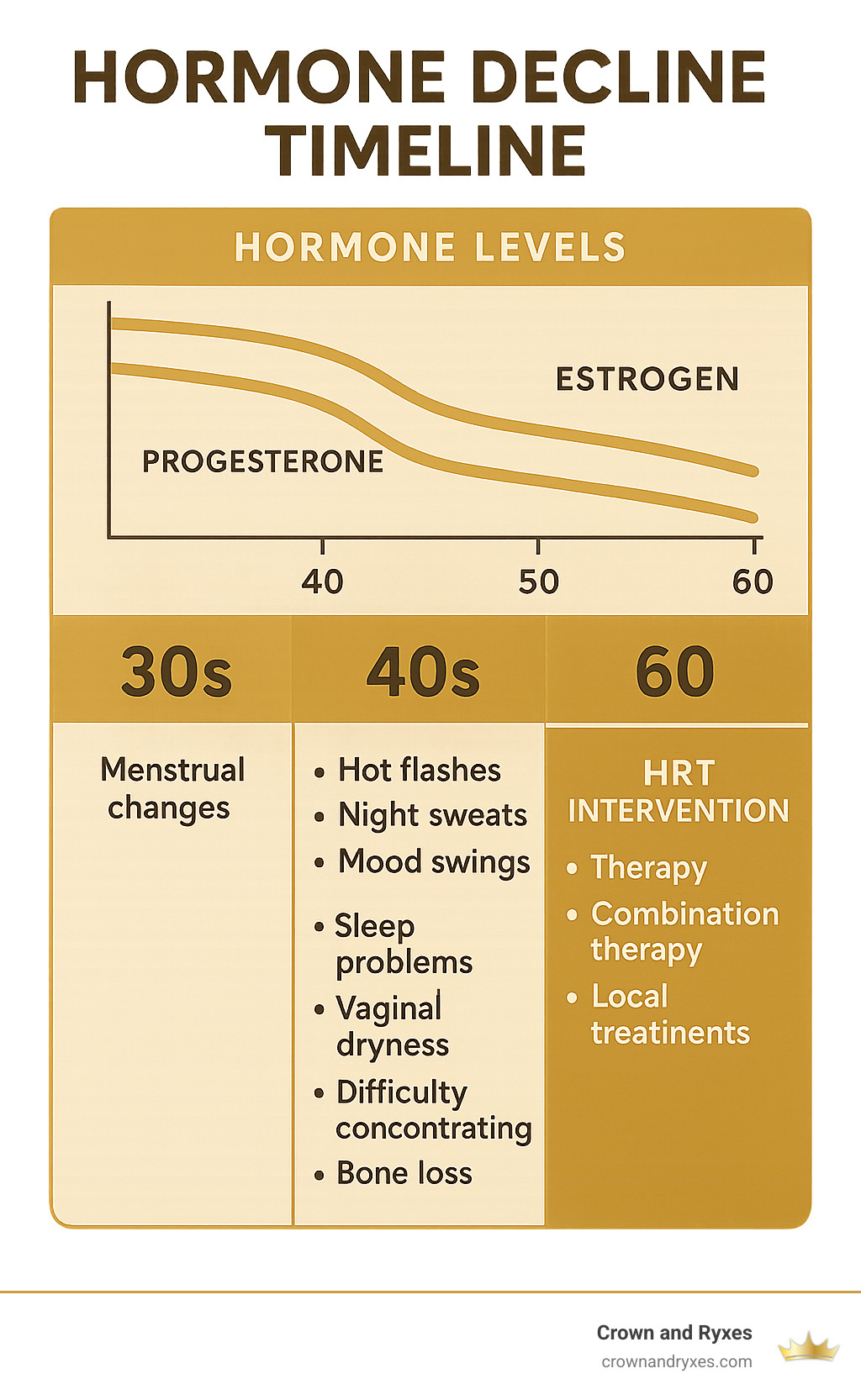
As we age, our bodies naturally produce fewer hormones. This decline can start as early as our 30s and accelerates during menopause. The result? Symptoms that can significantly impact your quality of life, energy levels, and overall well-being.
The good news: Modern HRT offers multiple options to help restore hormonal balance and improve your daily life. From relieving uncomfortable symptoms to protecting your long-term health, hormone therapy can be a game-changer when used appropriately.
The key is understanding your options and working with a qualified healthcare provider to determine what’s right for your unique situation.
I’m Dr. Matthew Casavant, an Ob/Gyn with over 20 years of experience helping patients steer hormone replacement therapy decisions. As a pioneer in minimally invasive procedures and women’s healthcare, I’ve seen how properly managed HRT can transform lives and restore vitality.
Must-know hormone replacement therapy terms:
Hormone Replacement Therapy 101
Hormone replacement therapy involves replacing the hormones your body stops producing naturally as you age. During menopause, your ovaries gradually stop making estrogen and progesterone – the hormones that regulate your menstrual cycle and affect many other body functions.
Understanding the terminology can help you steer your options better. While “hormone therapy” (HT) and “hormone replacement therapy” (HRT) are often used interchangeably, HRT specifically refers to replacing hormones lost during menopause, especially in younger patients who experience early menopause.
There are two main categories of hormone therapy:
Systemic hormone therapy delivers hormones throughout your body via your bloodstream. This includes pills, patches, gels, and sprays that treat symptoms like hot flashes, night sweats, and mood changes.
Local hormone therapy applies hormones directly to specific areas, like vaginal creams or rings that treat vaginal dryness and urinary symptoms with minimal systemic absorption.
The two primary hormones used in HRT are:
- Estrogen: The main female hormone that regulates many body functions including temperature control, bone density, and vaginal health
- Progestogen: A synthetic form of progesterone that protects the uterine lining when combined with estrogen
When your estrogen levels drop during menopause, you may experience vasomotor symptoms like hot flashes and night sweats. These occur because estrogen helps regulate your body’s thermostat. Without adequate estrogen, your temperature control system becomes unstable.
Vaginal atrophy is another common issue. As estrogen levels decline, vaginal tissues become thinner, drier, and less elastic. This can cause discomfort during intercourse and increase your risk of urinary tract infections.
Key Mechanisms Behind Hormone Replacement Therapy
Hormone replacement therapy works by restoring hormone levels to help your body function more normally. Here’s how it addresses specific issues:
Thermoregulation: Estrogen helps regulate your body’s temperature control center in the brain. When levels drop, your internal thermostat becomes hypersensitive, triggering hot flashes and night sweats. HRT stabilizes this system, reducing the frequency and intensity of these symptoms.
Bone remodeling: Estrogen plays a crucial role in bone health by slowing bone breakdown and promoting bone formation. Without adequate estrogen, you lose bone density faster than you can rebuild it, increasing your risk of osteoporosis and fractures. HRT helps maintain bone strength by preserving this delicate balance.
Lipid profile: Estrogen affects how your body processes cholesterol and other fats. It tends to increase “good” HDL cholesterol while helping manage “bad” LDL cholesterol levels. This is one reason why cardiovascular risk may increase after menopause when estrogen levels drop.
Benefits & Risks: Evidence-Based Overview
The decision to use hormone replacement therapy involves weighing potential benefits against risks. Let’s examine what the research tells us about both sides of this equation.
Benefits of HRT:
Hot flash control is one of the most dramatic benefits. Studies show that estrogen therapy can reduce hot flashes by 85% in many women. If you’re experiencing moderate to severe hot flashes, HRT is considered the most effective treatment available.
Sleep improvements often follow hot flash relief. When you’re not waking up multiple times per night drenched in sweat, your sleep quality naturally improves. Many women report feeling more rested and energetic within weeks of starting HRT.
Mood stabilization is another significant benefit. Estrogen affects neurotransmitters in your brain that regulate mood. While HRT isn’t a treatment for clinical depression, it can help with mood swings and irritability related to hormonal changes.
Bone fracture prevention is well-documented. HRT reduces hip and vertebral fractures by approximately 1 case per 1,000 women under 70 after 5 years of combined therapy. For women at high risk of osteoporosis, this protection can be substantial.
Cardiovascular timing hypothesis: This is where timing becomes crucial. Research suggests that starting HRT within 10 years of menopause onset may provide cardiovascular benefits, while starting later may increase risks. The “window of opportunity” concept suggests your arteries are more responsive to estrogen’s protective effects when therapy begins early.
Risks of HRT:
Venous thromboembolism (blood clots) risk increases with oral HRT but not with transdermal (patch, gel, spray) forms. The risk is higher with oral estrogen because it passes through your liver first, affecting clotting proteins.
Breast cancer risk is perhaps the most discussed concern. The Women’s Health Initiative found that combined estrogen-progestogen therapy increases breast cancer risk after about 5 years of use. However, estrogen-only therapy (for women who’ve had hysterectomies) actually decreased breast cancer risk by 23%.
Endometrial cancer risk increases with estrogen-only therapy in women who still have a uterus. This is why progestogen is added – it protects the uterine lining from overstimulation.
Ovarian cancer risk shows a small increase, with about one additional case per 1,000 users. However, this risk appears to decrease after stopping therapy.
Uncommon side effects can include gallbladder disease, with studies showing 78 vs. 47 cases per 10,000 person-years for estrogen therapy vs. placebo.
Scientific research on menopause guidelines provides comprehensive evidence-based recommendations for HRT use.
Hormone Replacement Therapy and Long-Term Health Outcomes
The Women’s Health Initiative (WHI), which studied over 27,000 women starting in 1991, fundamentally changed how we understand HRT. While initial results in 2002 showed increased risks, longer follow-up revealed a more nuanced picture.
Recent mortality data from the WHI shows that women who started estrogen-only therapy had reduced all-cause mortality. This finding was particularly strong for women who began therapy within 10 years of menopause.
The ELITE trial specifically tested the timing hypothesis, comparing early vs. late initiation of HRT. Results supported the concept that starting therapy soon after menopause provides cardiovascular benefits that aren’t seen with later initiation.
Cochrane reviews, which analyze multiple high-quality studies, generally support HRT for symptom relief when started appropriately. They emphasize individualized decision-making based on personal risk factors and symptom severity.
Choosing the Right HRT: Types, Forms & Dosing
Hormone replacement therapy isn’t one-size-fits-all. Your treatment should be custom to your specific needs, medical history, and preferences.
Types of HRT:
Estrogen-alone therapy (ET) is used for women who’ve had hysterectomies. Since there’s no uterus to protect, progestogen isn’t needed. This approach carries lower risks than combined therapy.
Estrogen-progestogen therapy (EPT) combines estrogen with progestogen to protect the uterine lining in women who still have a uterus. This can be given cyclically (mimicking natural cycles) or continuously.
Bioidentical hormones are chemically identical to hormones your body produces. Most FDA-approved HRT products are actually bioidentical, despite marketing claims that suggest otherwise. Custom-compounded bioidentical hormones aren’t proven safer or more effective than approved products.
Tibolone is a synthetic hormone available in Europe but not in the United States. It has estrogen, progestogen, and androgen-like effects in a single medication.
Systemic vs. low-dose vaginal therapy serves different purposes. Systemic therapy treats whole-body symptoms like hot flashes, while low-dose vaginal estrogen specifically addresses vaginal and urinary symptoms with minimal systemic absorption.
Delivery methods each have advantages:
Transdermal patches provide steady hormone levels and bypass liver metabolism, reducing blood clot risk compared to oral therapy.
Oral tablets are convenient and familiar but increase clotting risk because they pass through the liver first.
Gels and creams offer flexible dosing and avoid liver metabolism, but require daily application.
Sprays provide precise dosing and quick absorption through the skin.
Rings for vaginal use remain in place for 90 days and provide steady local hormone delivery.
Pellets implanted under the skin provide consistent hormone levels for about three months but require a minor procedure.
Testosterone add-on may be considered for persistent low libido or energy, though it’s not FDA-approved for this use in women. Our REGENmax sexual wellness program can help address these concerns comprehensively.
Hormone Replacement Therapy Forms at a Glance
Patches stick to your skin and release hormones steadily for 3-7 days depending on the type. They’re convenient and provide consistent hormone levels while avoiding liver metabolism.
Pills are taken daily and are the most familiar form for many women. However, they do increase blood clot risk compared to non-oral forms.
Gels are applied daily to arms, shoulders, or thighs. They absorb quickly and allow for dose adjustments, but you need to avoid skin contact with others for a few hours after application.
Rings are inserted into the vagina and left in place for three months. They’re particularly good for vaginal symptoms and provide steady hormone delivery.
Implants (pellets) are inserted under the skin in a minor office procedure. They provide consistent hormone levels for 3-6 months but require a healthcare provider for insertion and removal.
Personalized Dosing & Monitoring Strategies
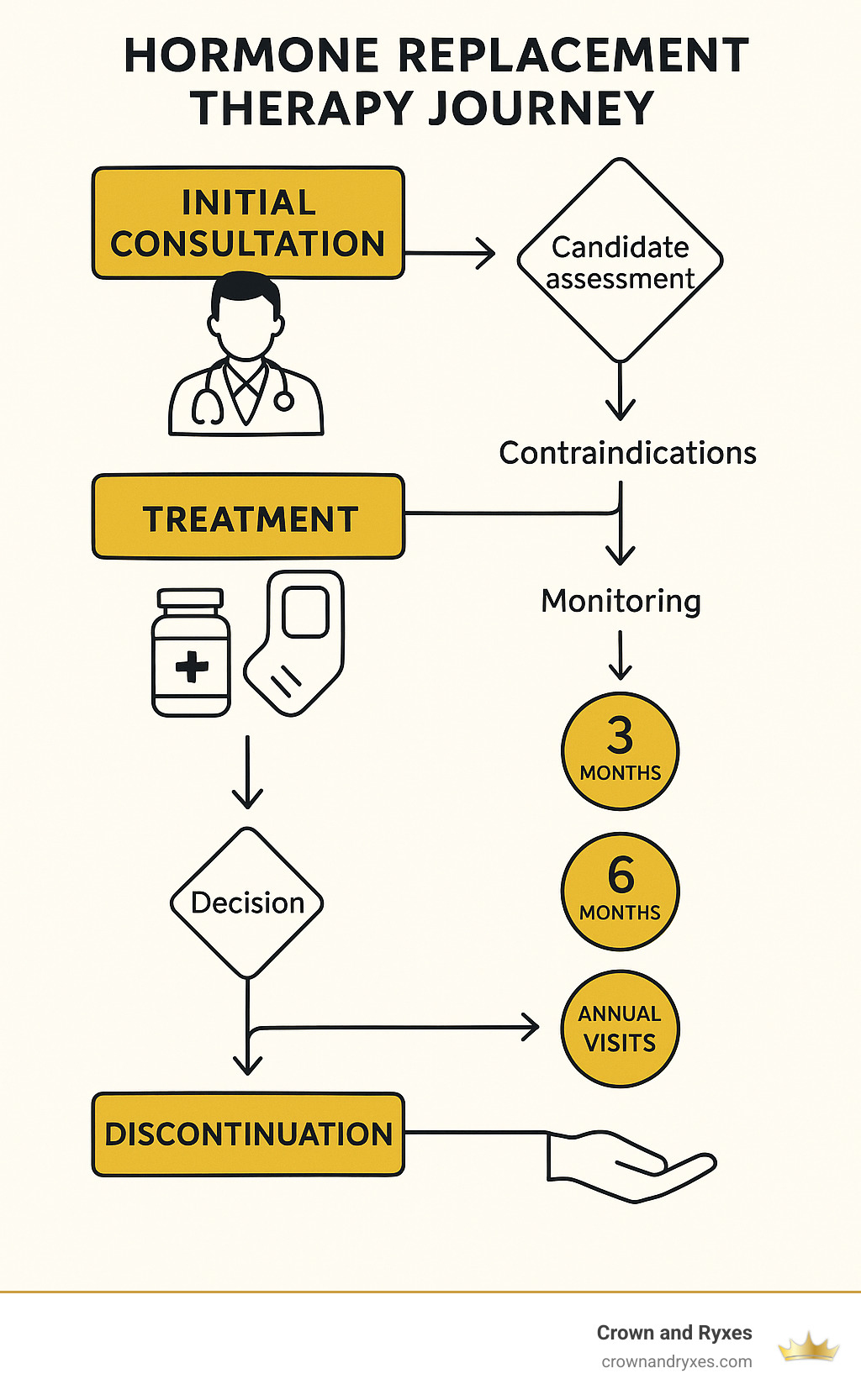
Starting hormone replacement therapy requires careful assessment and monitoring. We begin with baseline labs including hormone levels, complete blood count, lipid profile, and liver function tests.
Symptom tracking helps determine if your therapy is working. We recommend keeping a diary of hot flashes, sleep quality, mood, and any side effects for the first few months.
The minimum effective dose principle guides our approach. We start with the lowest dose that provides symptom relief and adjust as needed. This minimizes risks while maximizing benefits.
Regular follow-up appointments allow us to monitor your response and adjust treatment. We typically schedule visits at 3 months, 6 months, and then annually, with additional appointments as needed.
Health Impacts Across Life Stages and Conditions
Hormone replacement therapy affects different people differently based on their age, health status, and specific circumstances.
Premature menopause (before age 45) or premature ovarian insufficiency (before age 40) often warrants HRT until the typical age of natural menopause. The benefits of hormone replacement generally outweigh risks in these younger women.
Hysterectomy patients who’ve had their ovaries removed experience sudden hormone loss and often benefit significantly from estrogen therapy. Since there’s no uterus to protect, estrogen-only therapy is appropriate.
BRCA carriers face complex decisions about HRT. While they have increased breast cancer risk, they also have higher rates of preventive ovarian removal, which causes sudden menopause. Decisions require careful individualized assessment.
Post-cancer survivorship considerations vary by cancer type. Breast cancer survivors are generally advised against HRT, while those with other cancers may be candidates depending on their specific situation.
Heart disease prevention relates to the timing hypothesis. Starting HRT within 10 years of menopause may provide cardiovascular benefits, while later initiation may increase risks.
Cognition and Alzheimer’s research shows mixed results. Some studies suggest HRT may protect against cognitive decline when started early, but results from the Women’s Health Initiative Memory Study were concerning for older women.
Parkinson’s disease may be influenced by estrogen, with some research suggesting protective effects, though more study is needed.
Skin aging can be slowed by estrogen, which helps maintain collagen production and skin thickness.
Muscle mass tends to decline after menopause, and HRT may help preserve muscle strength and mass.
Sexual function often improves with HRT, particularly when combined with comprehensive approaches like our REGENmax program.

Age and Timing Matter
The “window of opportunity” concept is crucial for understanding HRT benefits and risks. Research consistently shows that starting therapy under age 60 or within 10 years of menopause provides the most favorable benefit-to-risk ratio.
Starting HRT later in life (after age 60 or more than 10 years post-menopause) may increase risks without providing the same cardiovascular benefits seen with earlier initiation.
This timing effect appears related to arterial health. Younger, healthier arteries respond better to estrogen’s protective effects, while older arteries with existing atherosclerosis may be more vulnerable to estrogen’s potential risks.
Testosterone, Androgens & REGENmax Sexual Wellness
While estrogen gets most of the attention in women’s hormone replacement therapy, testosterone and other androgens also play important roles in female health.
Testosterone levels naturally decline with age, contributing to decreased libido, energy, and muscle mass. Some women benefit from testosterone supplementation, though it’s not FDA-approved for this use in women.
Our REGENmax sexual wellness program takes a comprehensive approach to addressing sexual health concerns. This includes evaluating hormone levels, addressing relationship factors, and providing targeted treatments for sexual dysfunction.
Hypoactive sexual desire disorder affects many postmenopausal women and may respond to combined estrogen-testosterone therapy. However, this requires careful monitoring for side effects like acne, hair growth, and voice changes.
Getting Started, Follow-Up & Stopping Safely
Starting hormone replacement therapy requires thorough evaluation to ensure you’re a good candidate and to minimize risks.
Candidate assessment includes reviewing your medical history, current symptoms, and personal risk factors. We evaluate your family history of breast cancer, heart disease, and blood clots, as well as your personal history of these conditions.
Contraindications to HRT include:
- Current or past breast cancer
- Unexplained vaginal bleeding
- Active liver disease
- History of blood clots or stroke
- Suspected pregnancy
Migraines with aura may be a relative contraindication due to increased stroke risk, though this requires individual assessment.
Clot history is generally a contraindication to oral HRT, though transdermal therapy might be considered in some cases.
Stroke history typically precludes HRT use due to increased risk of recurrence.
Breast cancer survivors are generally advised against HRT, though exceptions might be made for severe symptoms in consultation with oncologists.
VTE risk screening includes evaluating personal and family history of blood clots, current medications, and other risk factors.
Follow-up schedule typically includes:
- Initial consultation and baseline testing
- 3-month follow-up to assess response and side effects
- 6-month visit for continued monitoring
- Annual visits thereafter with regular mammograms and other screening
Duration of therapy is individualized. Many women use HRT for 3-5 years, though some continue longer if benefits outweigh risks.
Tapering vs. cold-turkey discontinuation is debated. Some women prefer gradual dose reduction to minimize symptom return, while others stop abruptly without problems.
Starting Hormone Replacement Therapy Safely
Shared decision-making is essential. We discuss your individual risk factors, symptom severity, and treatment goals to develop a plan that’s right for you.
Individualized planning considers your medical history, lifestyle, and preferences. There’s no one-size-fits-all approach to HRT.
Lifestyle synergy means combining HRT with healthy habits like regular exercise, good nutrition, stress management, and smoking cessation for optimal results.
When and How to Discontinue
Symptom recurrence is common when stopping HRT. About 50% of women experience return of hot flashes and other symptoms, though these often improve over time.
Step-down dosing may help minimize symptom return. We might reduce your dose gradually over several months rather than stopping abruptly.
Alternative therapies can help manage symptoms if you decide to stop HRT. These include lifestyle modifications, non-hormonal medications, and complementary approaches.

Frequently Asked Questions about Hormone Replacement Therapy
Is hormone replacement therapy safe for women over 60?
Hormone replacement therapy for women over 60 requires careful consideration. The risk-benefit ratio is generally less favorable for women who start HRT after age 60, particularly if it’s been more than 10 years since menopause.
However, women who started HRT earlier and are doing well may continue past age 60 with careful monitoring. The key is that the “window of opportunity” for maximum benefit appears to be within 10 years of menopause onset.
For women over 60 experiencing severe symptoms, low-dose vaginal estrogen for local symptoms may be appropriate, as it has minimal systemic absorption.
Do bioidentical hormones carry fewer risks than conventional HRT?
Despite marketing claims, bioidentical hormones don’t carry fewer risks than conventional HRT. Most FDA-approved hormone products are actually bioidentical – chemically identical to hormones your body produces.
Custom-compounded bioidentical hormones aren’t proven safer or more effective than approved products. In fact, they may be less safe because they’re not tested for purity, potency, or consistency.
The risks of HRT relate more to the type of hormone, dose, duration, and route of administration rather than whether they’re labeled “bioidentical.”
Can I use HRT if I live with cardiovascular disease?
Having cardiovascular disease doesn’t automatically disqualify you from HRT, but it does require careful evaluation. The timing of HRT initiation relative to menopause and your cardiovascular health is crucial.
Women with existing heart disease who start HRT more than 10 years after menopause may face increased cardiovascular risks. However, those who start within the “window of opportunity” may experience benefits.
Transdermal estrogen may be preferred over oral forms for women with cardiovascular concerns, as it doesn’t affect liver-produced clotting factors to the same degree.
Each case requires individual assessment considering your specific cardiovascular condition, overall health, and symptom severity.
Conclusion
Hormone replacement therapy can significantly improve quality of life for many women experiencing menopausal symptoms. The key is understanding that HRT isn’t right for everyone, and the decision should be based on your individual circumstances, risk factors, and treatment goals.
The research clearly shows that timing matters. Starting HRT within 10 years of menopause or before age 60 provides the most favorable benefit-to-risk ratio. For women in this window experiencing moderate to severe symptoms, HRT can be transformative.
At Crown and Ryxes, we specialize in personalized restoration and wellness journeys. Our approach to hormone replacement therapy involves comprehensive evaluation, individualized treatment planning, and ongoing monitoring to ensure optimal outcomes.
Whether you’re dealing with hot flashes, sleep disruption, mood changes, or sexual health concerns, we’re here to help. Our locations in Clermont, FL and The Villages, FL offer convenient access to expert care.
For comprehensive sexual wellness solutions, including our REGENmax program, we address the full spectrum of hormonal and sexual health concerns for both men and women.
The next step is scheduling a consultation to discuss your symptoms, evaluate your candidacy for HRT, and develop a personalized treatment plan. The goal isn’t just to treat symptoms – it’s to help you feel like yourself again and maintain your health and vitality for years to come.
More info about REGENmax