

Understanding Your Liposuction Recovery Journey
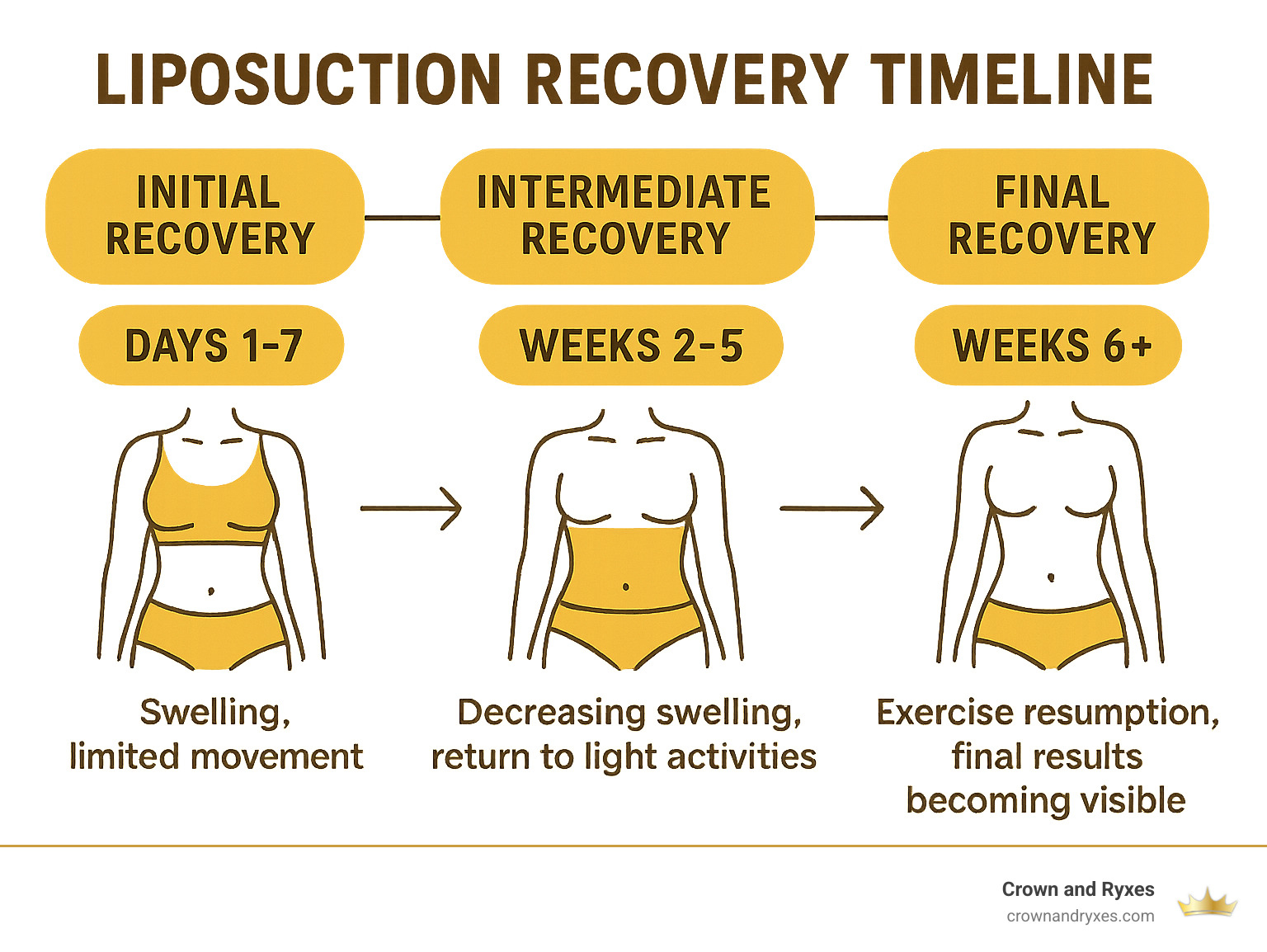
How long does it take to recover from liposuction varies from person to person, but here’s a quick overview of what most patients can expect:
| Recovery Phase | Timeline | What to Expect |
|---|---|---|
| Initial Recovery | 1-3 days | Rest, drainage, pain management |
| Return to Work | 3-10 days | Depends on job type and areas treated |
| Daily Activities | 2-5 weeks | Gradual return to normal routines |
| Exercise | 4-6 weeks | Light walking early, full exercise later |
| Compression Garment | 3-6 weeks | Worn continuously to reduce swelling |
| Final Results | 1-3 months | Swelling fully subsides, final contours visible |
| Complete Healing | Up to 6 months | All tissue healing complete |
Liposuction is one of the most popular cosmetic procedures in the United States, with over 250,000 procedures performed annually. While many people think of it as a quick fix, the reality is that recovery is a process that requires patience and proper care.
When patients ask me about recovery expectations, I always emphasize that healing occurs in phases. The first few days are the most challenging, with swelling and discomfort at their peak. Most people can return to desk jobs within a week, but those with physically demanding occupations may need two weeks off.
The key to a smooth recovery? Following post-operative instructions carefully, wearing compression garments as directed, and giving your body adequate time to heal.
As Dr. Matthew Casavant, I’ve performed numerous liposuction procedures and guided patients through how long does it take to recover from liposuction by creating personalized recovery plans that consider their unique circumstances and surgical details.
How long does it take to recover from liposuction definitions:
– does insurance cover liposuction
– abdominal liposuction cost
– chin liposuction before and after
What Is Liposuction and How the Procedure Works
Think of liposuction as body sculpting rather than weight loss. It’s the art of removing stubborn fat pockets that just won’t budge, even when you’re eating well and hitting the gym regularly.
When you undergo liposuction, your surgeon uses a slender tube called a cannula to gently vacuum away unwanted fat cells. But before that happens, they inject the area with tumescent fluid – a special cocktail of saline, lidocaine (to keep you comfortable), and epinephrine (which shrinks blood vessels to reduce bleeding). This fluid makes the fat easier to remove and minimizes discomfort during the procedure.
Depending on how much work you’re having done, you might be under local anesthesia with some sedation for smaller areas, or general anesthesia if you’re treating multiple or larger zones. The good news? Most patients go home the same day – this is typically an outpatient procedure, though some folks might stay overnight if they’ve had a significant amount of fat removed.
“I was nervous about being ‘put under,’ but my surgeon explained everything so clearly that by the day of my procedure, I felt completely at ease,” shared Maria, one of our recent patients.
Procedure Snapshot
Your liposuction journey unfolds in a carefully choreographed sequence. First, your surgeon marks the target areas while you’re standing – this mapping is crucial for achieving natural-looking contours. Once you’re comfortable under anesthesia, they make tiny incisions (about the size of your pinky fingernail) in spots that can be easily concealed.
The surgeon then introduces the tumescent fluid, allowing it to work its magic before inserting the cannula. With skillful back-and-forth movements, they break up the fat cells and suction them away. Finally, those tiny incisions are either closed with a stitch or two or sometimes left open slightly to allow drainage.
One of the most remarkable aspects of modern liposuction is how minimal the scarring is. As one patient told us: “I was surprised at how small the incisions were. After six months, you can barely see them unless you know exactly where to look.”
How long does it take to recover from liposuction depends partly on the technique used and the extent of your procedure. The gentler the fat removal process, the smoother your healing journey tends to be. That’s why at Crown and Ryxes, we focus not just on beautiful results, but on techniques that promote faster recovery.
Liposuction permanently removes treated fat cells – they don’t grow back. However, maintaining your results depends on keeping a stable weight through healthy habits. The procedure reshapes your silhouette, but it’s up to you to preserve those lovely new contours.
Types of Liposuction & Recovery Implications
Not all liposuction procedures are created equal. Different techniques can affect both your results and how long does it take to recover from liposuction. Here are the most common types:
When patients visit our clinic, they’re often surprised to learn about the variety of liposuction techniques available today. Tumescent liposuction remains the gold standard and foundation for most procedures. With this approach, we inject a special solution of saline, lidocaine, and epinephrine before removing fat. This helps numb the area, reduce bleeding, and make fat removal easier. Recovery typically involves moderate swelling and bruising that gradually improves over a few weeks.
For patients looking for more definition, Ultrasound-Assisted Liposuction (UAL) might be the answer. This technique uses sound waves to break down fat cells before removal, making the process gentler on surrounding tissues. The popular VASER Hi-Def Lipo falls into this category and allows for more precise sculpting—perfect for revealing abdominal muscles or enhancing jawlines. While you might experience more initial swelling, many patients report less bruising overall.
Those concerned about skin laxity might benefit from Laser-Assisted Liposuction techniques like SmartLipo. The laser energy not only liquefies fat but also stimulates collagen production, which can help tighten loose skin. One thing to note: treated areas might feel firmer during recovery as your body responds to the heat energy.
For extensive areas or denser fat, we might recommend Power-Assisted Liposuction (PAL). The powered cannula moves rapidly back and forth, making fat removal more efficient and potentially less traumatic. Many of my patients appreciate the slightly faster recovery this can offer.
SAFELipo takes a three-step approach: separation, aspiration, and fat equalization. This methodical process creates smoother results and reduces complications like contour irregularities. If you’re concerned about a natural-looking outcome, this might be worth discussing during your consultation.
For those looking to transform their entire midsection, 360° Liposuction treats the abdomen, flanks, and back in one comprehensive session. While results can be dramatic, be prepared for a more involved recovery due to the extensive treatment area.
The size of your treatment area matters tremendously when planning your recovery. Small-area treatments, like under the chin, might only leave you feeling uncomfortable for a few days. Large-area treatments or multiple areas will likely require several weeks before you feel back to normal.
Minimally Invasive vs. Traditional
Energy-based devices add exciting possibilities to modern liposuction. Technologies using ultrasound, laser, and radiofrequency not only remove fat but can also tighten skin and reduce bleeding during the procedure.
As one of our consulting physicians, Dr. Dallas Buchanan, explains: “Smaller areas of lipo, like under the chin, will likely require a shorter procedure and less anesthesia, begetting a quicker, less severe recovery than that which comes with more extensive body work involving energy.”
It’s worth noting that energy-assisted techniques sometimes create temporary nodules or firmness that can take three to six months to fully resolve. While these advanced devices often deliver superior contouring results, you should be mentally prepared for potentially longer resolution of all symptoms.
Your recovery timeline will vary based on which technique we use for your procedure. During your consultation, we’ll discuss which approach might work best for your unique body and goals, always balancing the benefits of advanced techniques with their impact on your recovery experience.
Key Factors Influencing Recovery Time
When my patients ask me how long does it take to recover from liposuction, I always explain that recovery isn’t one-size-fits-all. Your healing journey depends on several personal factors that make each experience unique:
Volume of Fat Removed plays a huge role in your recovery timeline. Think of it this way: the more fat removed, the more healing your body needs to do. For safety reasons, we typically limit outpatient procedures to about 5 liters of fat removal. Anything more might require an overnight stay and longer recovery.
The Number of Treatment Areas matters too. Having liposuction on just your abdomen will naturally heal faster than treating your abdomen, flanks, and thighs all at once. Each area needs its own healing time, and multiple sites can mean more overall soreness.
Your BMI and Overall Health create the foundation for healing. I’ve consistently seen that patients who are closer to their ideal weight and maintain good health bounce back faster. Your body is already running optimally, which means it can dedicate more resources to healing.
Age and Skin Elasticity affect not just your recovery but your results too. Younger skin with good elasticity tends to “snap back” better after fat removal. One of my 32-year-old patients recently told me, “I was surprised how quickly my skin tightened up after my procedure compared to my mom’s experience at 58.”
Your Smoking Status significantly impacts healing. Smoking restricts blood flow, and good circulation is essential for recovery. That’s why I ask all my patients to quit smoking at least two weeks before and after surgery. Your body will thank you with faster healing and better results.
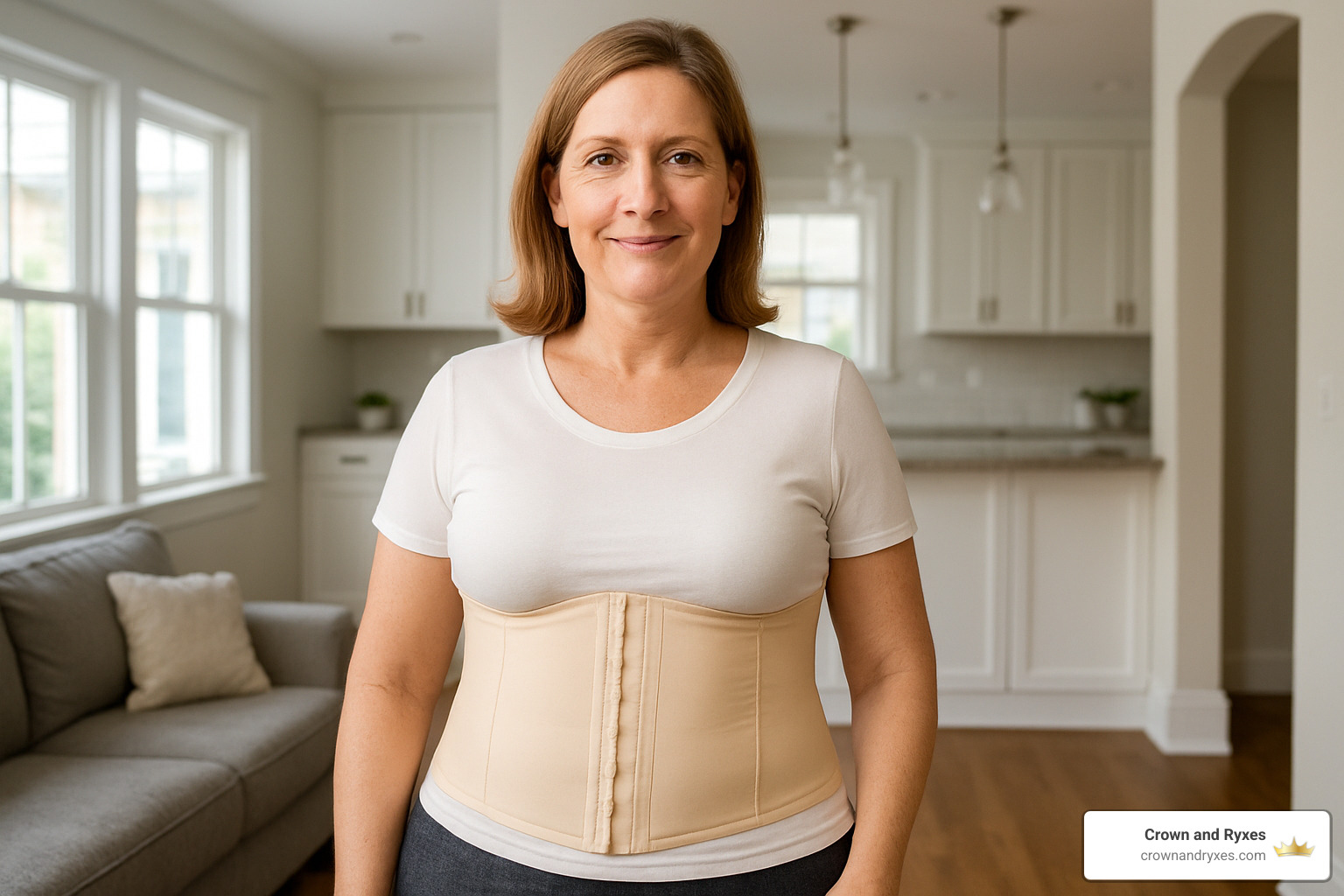
Compression Garment Compliance might be the most controllable factor in your recovery. I can’t stress this enough: wearing your compression garments as directed can dramatically reduce swelling and improve your final outcome. As one of my colleagues bluntly puts it, “If you want a better result – wear your garments.” The science backs this up too – research shows compression is crucial in those first 72 hours for reducing pain, swelling, and bruising.
The Surgeon’s Skill and Technique makes a tremendous difference in your recovery experience. A board-certified surgeon with extensive experience knows how to minimize trauma during the procedure, which means less healing time for you afterward.
Scientific research published on Healthline confirms that consistent compression wear accelerates drainage of anesthetic fluid and speeds up the overall recovery process. Dr. Daniel P. Friedmann’s studies show that proper compression is particularly important in those critical first three days.
When Recovery Takes Longer
Sometimes recovery extends beyond the typical timeline. Here’s when you might need extra patience:
Combined Procedures naturally require more healing time. If you’re having liposuction alongside a tummy tuck or breast augmentation, your body has multiple surgical sites to heal. The results can be amazing, but expect a longer recovery journey.
High-Volume Liposuction removing more than 5 liters of fat is considered large-volume and requires more healing time. Your body needs to adjust to significant changes, which doesn’t happen overnight.
Pre-existing Conditions like diabetes, autoimmune disorders, or circulation problems can slow down the healing process. Your body is already working harder to manage these conditions, which can delay recovery.
A patient from Lady Lake, FL recently shared her experience with me: “I had liposuction combined with a tummy tuck, and my recovery was definitely longer than my friend who had just lipo. It took about three weeks before I felt comfortable returning to my office job, but the results were worth it.”
Your recovery timeline isn’t just about getting back to normal activities—it’s about giving your body the time it needs to heal properly for the best possible results.
How Long Does It Take to Recover from Liposuction? Full Timeline
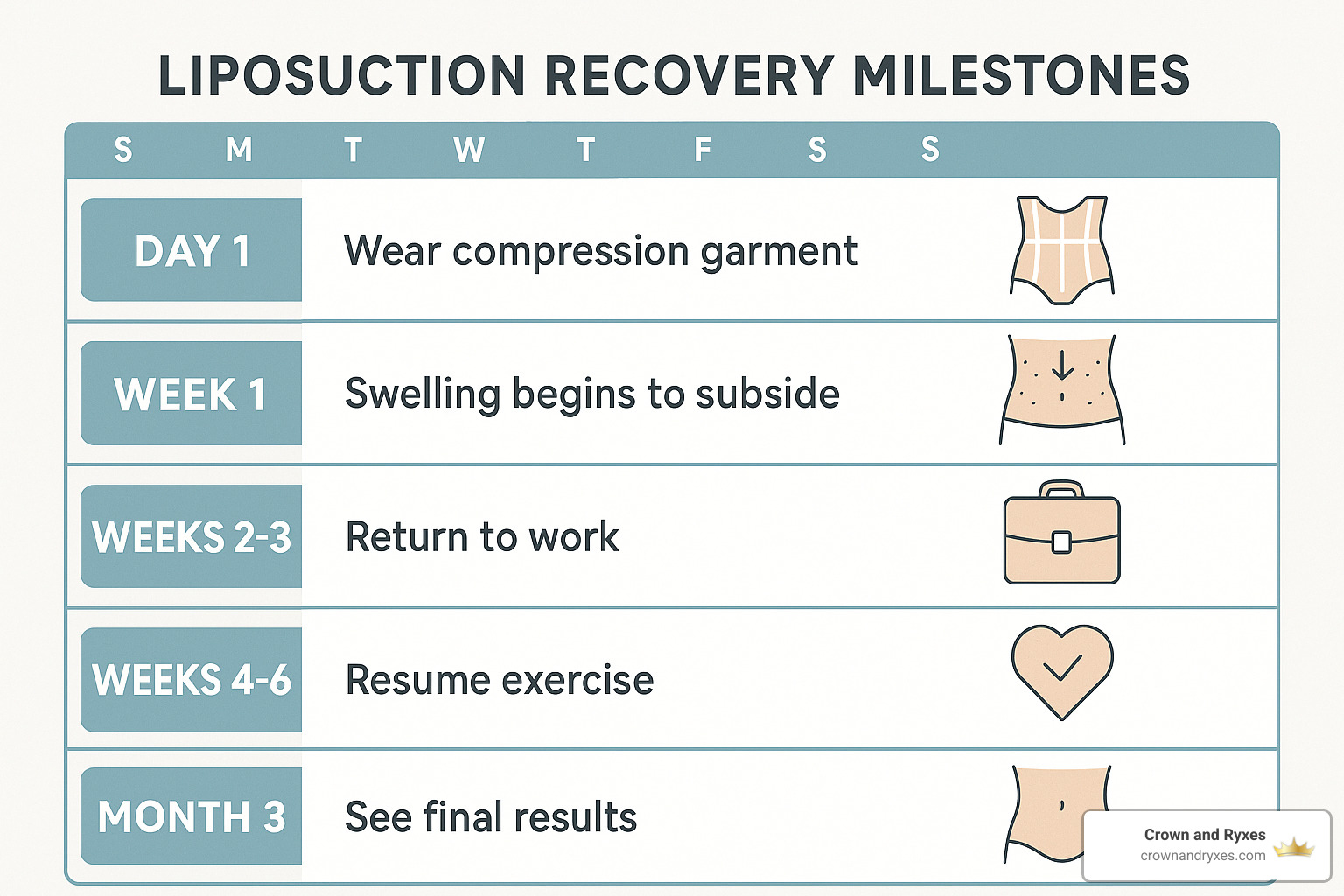
Understanding how long does it take to recover from liposuction means looking at your healing journey as a series of milestones. Everyone’s body responds differently, but this timeline gives you a realistic picture of what to expect as you heal:
Day of Surgery
You’ll head home the same day (unless you’ve had large-volume lipo), feeling groggy from anesthesia. Your surgeon will have already fitted you with compression garments before you leave. You’ll need someone to drive you home and stay with you that first night – no exceptions!
Days 1-3
These first few days are the toughest part of your journey. You’ll experience peak swelling and discomfort, with some drainage from your incision sites. This drainage typically starts as slightly bloody and transitions to clear fluid – completely normal! Your prescribed pain medications will help manage your comfort level. Though you’ll have limited mobility, those short walks to the bathroom are actually beneficial.
Days 4-7
By now, you’ll likely notice your pain decreasing – many patients switch to over-the-counter pain relievers at this point. While swelling and bruising continue, they’re no longer intensifying. If your surgeon placed drains, they’ll likely remove them during your first follow-up appointment this week. Keep up with those short walks around the house – they’re doing more good than you realize!
Days 0–7: how long does it take to recover from liposuction early stage?
The first week is where you’ll face the most challenges. Swelling reaches its peak during these days, and drainage tubes (if used) help prevent fluid buildup. Most patients have these removed within the first few days.
Many of my patients describe the sensation as more of a “burning” than sharp pain. Your prescribed pain medication schedule is crucial during this initial phase – stay ahead of the pain rather than chasing it.
Even on day one, light walking is essential – not for fitness, but to promote healthy blood circulation and prevent complications like blood clots. As one of my colleagues, Dr. Rady Rahban, puts it: “Liposuction is a surgery like any other surgery… you need to be careful to not be overly active too soon.”
Most patients manage bathroom trips on the first day and progress to slightly longer indoor walks by the end of the week. This gradual movement helps your body begin the healing process while preventing complications.
Weeks 1-2
This is when many patients with desk jobs return to work. Your bruising begins fading, though swelling remains significant. Your compression garments stay on continuously (except when showering), and you’ll still need to limit yourself to light activities. That feeling of tightness and occasional discomfort is perfectly normal. If you had non-dissolvable stitches, they’ll typically be removed during this period.
Weeks 2-4
Now you’re getting back to non-strenuous daily activities. Most bruising has resolved, and you’ll notice the swelling decreasing (though still present). Your energy levels improve, though some numbness or altered sensation in treated areas is normal. Those with physical jobs might return to work with modifications and your surgeon’s approval.
Weeks 4–6 & Beyond: how long does it take to recover from liposuction long-term?
By the 4-6 week mark, you’ll likely feel much more like yourself again. This is typically when you can:
Resume regular exercise (starting gradually and building up)
Return to all normal activities without restrictions
Potentially stop wearing compression garments (though some surgeons recommend continuing longer)
Begin to see more defined results as swelling continues to decrease
Months 2-3
The majority of your swelling has resolved, and those new contours are becoming visible! Continue your scar care routine as directed, and you’ll notice normal sensation returning to treated areas. You can now enjoy your full exercise routine again.
Months 3-6
This marks complete healing of all tissues, with your final results on display. Your tiny scars continue fading, and you’re now in the maintenance phase of your journey.
One of my patients from Clermont, FL shared: “I started seeing real definition around the 3-month mark. Before that, I was worried because I still felt swollen, but my surgeon assured me this was normal. By month 4, I was thrilled with my results.”
While you’ll look and feel significantly better within just a few weeks, your body continues its internal healing process for up to six months. Patience truly is your best friend when it comes to achieving those optimal results you’re dreaming of!
Essential Aftercare for a Smooth Recovery
The question of how long does it take to recover from liposuction is closely tied to how well you follow your aftercare plan. Think of recovery as a partnership between you and your body—give it what it needs, and it’ll heal more efficiently.
Compression garments are your new best friends during recovery. These snug-fitting pieces might not win fashion awards, but they’re crucial for reducing swelling and helping your skin conform to your new shape. Most patients wear them 24/7 (except during showers) for 3-6 weeks. Yes, they can be uncomfortable at times, but patients consistently tell us the results are worth it.
Around the two-week mark, consider adding lymphatic massage to your recovery routine. This gentle, specialized technique helps move excess fluid out of treated areas. Many patients describe feeling immediate relief after these sessions, with one patient noting, “I felt lighter and less puffy after just one treatment—it was like someone finally opened the drain!”
Hydration plays a starring role in your healing process. Aim for 80-100 ounces of water daily to flush your system and reduce swelling. Think of water as your body’s internal cleansing system during recovery.
Your diet choices can significantly impact healing time. Focus on fresh fruits, vegetables, lean proteins, and healthy fats while giving processed foods, excess salt, and sugar the cold shoulder. Your body needs premium fuel to repair itself.
Sleep positioning matters more than you might think. Try to sleep on your back with your head slightly liftd for the first three weeks. This position helps minimize swelling and prevents putting pressure on treated areas. If you had lipo on your sides or back, your surgeon will provide specific positioning guidelines.
Take all prescribed medications as directed, especially antibiotics—complete the full course even if you’re feeling better. Pain medication should be used as prescribed, typically transitioning from prescription to over-the-counter options as discomfort decreases.
Getting moving early is essential, but we’re talking gentle movement. Begin with short, slow walks as soon as you feel able, gradually increasing distance as comfort allows. Early movement improves circulation and helps prevent complications like blood clots.
At Crown and Ryxes, every Liposuction Orlando FL patient receives personalized aftercare instructions. Scientific research consistently shows that early gentle activity significantly reduces complications and speeds recovery.
Top Tips to Speed Healing
Want to be on the faster end of the recovery spectrum? Here’s how to give your body its best chance:
Prioritize protein in your meals to support tissue repair. Aim for at least 0.8g of protein per kilogram of body weight daily. Your body needs these building blocks to reconstruct tissues.
Stay super hydrated with 80-100 ounces of water daily. Think of swelling as your body’s way of holding onto fluid when it feels stressed—providing plenty of fresh water signals that it’s safe to release that excess.
Avoid smoking and alcohol completely during recovery. Both significantly impair healing by restricting blood flow and interfering with tissue repair. Abstain from smoking for at least two weeks before and after surgery, and skip alcohol for at least two weeks post-op.
Keep it shower-only for the first two weeks. Baths, swimming pools, hot tubs, and saunas are off-limits to keep incisions clean and dry. Your surgeon has created small openings in your body—protect them from potential infection sources.
Take daily walks starting with short 5-10 minute strolls several times daily, gradually increasing as tolerated. One patient shared, “Those first few walks around my living room felt like marathons, but by week two, I was comfortably walking around the neighborhood.”
Wear your compression garments consistently. The most common mistake patients make is removing them too early. Your surgeon will advise when it’s safe to reduce wear time.
Many patients find that incorporating anti-inflammatory foods helps reduce swelling naturally. Berries, fatty fish like salmon, leafy greens, nuts, olive oil, turmeric, ginger, and green tea are all excellent choices to include in your healing diet.
A patient from Winter Park recently told us: “The lymphatic massages made a huge difference in my recovery. I noticed significantly less swelling after just two sessions, and they helped with the tight, uncomfortable feeling too. Definitely worth adding to your recovery plan.”
Recovery isn’t just about waiting for time to pass—it’s about actively creating the optimal conditions for your body to heal. By following these guidelines, you’ll not only improve your comfort during recovery but potentially shorten how long does it take to recover from liposuction overall.
Results, Maintenance & Warning Signs
Most patients begin to see their true results around 1-3 months after surgery when the majority of swelling has subsided. However, subtle improvements continue for up to 6 months as the skin contracts and tissues settle.

When patients ask me if liposuction results are permanent, I give them the honest answer: yes and no. The fat cells removed during your procedure are gone forever—they won’t regenerate. However, this doesn’t mean you can’t gain weight in treated areas. The remaining fat cells can still expand if you gain significant weight after your procedure.
Think of it like this: if you had 100 fat cells in an area and 70 were removed, those 30 remaining cells can still grow larger if you consume excess calories. This is why maintaining your beautiful new contours requires a commitment to healthy living.
To preserve your liposuction results long-term, I recommend maintaining a stable weight through balanced nutrition and regular physical activity. Staying well-hydrated helps your tissues remain healthy and supports your metabolism. Many of my patients find success by following the CDC’s recommendations for a balanced diet—plenty of fruits, vegetables, lean proteins, and whole grains.
I often suggest continuing to wear your compression garments for as long as your surgeon recommends. Some of my colleagues even suggest extended wear (up to 6 months) for optimal skin tightening, especially for patients with moderate skin laxity.
Once you’re fully cleared for exercise—typically around the 6-week mark—establishing a consistent routine combining cardiovascular activity and strength training will help maintain your new shape. One of my patients, a 42-year-old from Orlando, told me: “Six months after my procedure, I’m actually in better shape than before surgery because I’m so motivated to maintain these results!”
While most recoveries proceed smoothly, it’s crucial to recognize warning signs that require immediate medical attention. How long does it take to recover from liposuction can be affected by complications, so don’t ignore these red flags:
- Fever over 101°F, which may indicate infection
- Pain that increases rather than decreases over time
- Excessive or asymmetric swelling
- Redness, warmth, or pus at incision sites
- Shortness of breath or chest pain (could indicate pulmonary embolism)
- Calf pain or swelling (could indicate deep vein thrombosis)
- Bleeding that soaks through bandages
If you experience any of these symptoms, don’t wait—contact your surgeon immediately or go to the emergency room. Early intervention can prevent serious complications.
For patients weighing their body contouring options, understanding the recovery differences between procedures can help with decision-making. Those interested specifically in facial contouring might want to explore information about Chin Liposuction Cost to make an informed choice.
Comparing Recovery: Liposuction vs. CoolSculpting vs. Tummy Tuck
| Aspect | Liposuction | CoolSculpting | Tummy Tuck |
|---|---|---|---|
| Downtime | 3-10 days | None | 2-4 weeks |
| Compression Garment | 3-6 weeks | Not required | 6-8 weeks |
| Return to Exercise | 4-6 weeks | Immediate | 6-8 weeks |
| Final Results Visible | 1-3 months | 2-3 months | 6-12 months |
| Result Permanence | Permanent (with weight maintenance) | Permanent (with weight maintenance) | Permanent (with weight maintenance) |
| Pain Level | Moderate | Mild discomfort | Significant |
I love sharing Dr. Jonathan Brower’s straightforward recovery advice with my patients: “If it hurts, don’t do it.” This simple guideline helps prevent complications and ensures optimal healing. Your body is remarkably good at telling you what it needs during recovery—listening to those signals is one of the wisest things you can do.
Frequently Asked Questions about Liposuction Recovery
What impacts how long does it take to recover from liposuction?
When patients ask me this question, I always explain that recovery is highly individual. Think of it like a recipe with several key ingredients that all influence your healing time.
First, the scope of your procedure makes a huge difference. If you’re having a small area treated—like just under your chin—you might be back to your routine within days. But if you’ve opted for treating multiple areas like your abdomen, flanks, and thighs, your body naturally needs more time to heal.
Your personal health profile is another major factor. I’ve seen patients with robust immune systems and no underlying health conditions bounce back remarkably quickly. Your body’s natural healing abilities play a starring role in your recovery timeline.
Perhaps most importantly, how well you follow aftercare instructions can dramatically speed up or slow down your healing. Patients who diligently wear their compression garments, take medications as prescribed, keep follow-up appointments, and ease back into activities gradually typically experience much smoother recoveries.
As one of my patients from Winter Park recently told me, “I was religious about following every instruction, and I think that’s why I felt so much better by week three than my friend who kept ‘cheating’ on her compression garment wear.”
How soon can I work out again?
I know how eager many of my fitness-enthusiast patients are to get back to their routines! Here’s what I typically recommend:
Those gentle walks you’ll take starting around day 2 aren’t really “exercise”—they’re medicine. This light movement helps prevent blood clots and promotes healing, but it’s not about fitness yet.
For the first two weeks, walking is your only “workout.” Between weeks 2-4, if you’re feeling comfortable, you might introduce some very light, non-impact activities like gentle stationary cycling without resistance. Listen to your body during this time—discomfort is a signal to slow down.
Around the 4-6 week mark, with your surgeon’s blessing, you can begin gradually returning to more vigorous activities. Most patients are cleared for full exercise routines after 6 weeks, though high-intensity workouts might require a bit more patience.
One of my marathon-running patients shared: “The waiting was the hardest part, but when I finally got back to running at week 7, I was surprised how quickly my stamina returned. The gradual approach my doctor recommended definitely prevented setbacks.”
Are results permanent and how do I keep them?
Good news—the fat cells removed during liposuction are gone for good! However (and this is important), the remaining fat cells in your body can still expand if you gain weight after your procedure.
Think of liposuction as reshaping your body’s fat distribution, not as a weight management solution. To maintain your beautiful new contours long-term, you’ll want to accept healthy habits:
Balance your diet with plenty of whole foods, lean proteins, and vegetables. Regular exercise (aim for at least 150 minutes of moderate activity weekly) keeps both your body and your results in great shape. Staying well-hydrated, limiting alcohol, getting adequate sleep, and finding effective ways to manage stress all contribute to maintaining your results.
One patient described her experience perfectly: “Liposuction gave me the jumpstart I needed to commit to healthier habits. Three years later, I’ve kept the weight off because the procedure helped me see what was possible, but it was the lifestyle changes that made it last.”
At Crown and Ryxes, we believe liposuction works best as one tool within a comprehensive approach to wellness. The procedure can sculpt your body beautifully, but your daily choices are what preserve those results for years to come.

Conclusion
The journey of how long does it take to recover from liposuction is truly unique for each person. While you’ll likely return to work and daily routines within 1-2 weeks, your body continues its healing journey behind the scenes for 3-6 months as it reveals your new contours.
Think of recovery as a marathon rather than a sprint. The patients who achieve the most beautiful, long-lasting results are those who accept the process with patience and follow their aftercare instructions diligently. Those compression garments might not be the most fashionable items in your wardrobe, but they’re working overtime to reduce swelling and help your skin conform to your new shape!
Proper nutrition plays a starring role in your recovery story. Your body needs fuel to heal—plenty of protein, fruits, vegetables, and those 80-100 ounces of water daily we mentioned earlier. Small, consistent walks help too, gradually building back to your normal exercise routine as your body allows.
At Crown and Ryxes, we’ve walked alongside hundreds of patients through this journey. We’ve celebrated their victories (fitting into clothes they hadn’t worn in years) and supported them through the challenging days (when swelling made them question their decision). Our team in Clermont and Lady Lake, FL remains committed to your success from your first consultation through your final follow-up and beyond.
Liposuction removes fat cells permanently, but maintaining your results depends on your lifestyle choices moving forward. Think of your procedure as a fresh start—a reset point from which to build healthy habits that support your overall wellness for years to come.
Start your personalized wellness journey with Crown and Ryxes today, and find how our supportive, experienced team can help you achieve the contours you’ve been dreaming of. We’ll be there every step of the way, answering questions, providing guidance, and celebrating your change alongside you.
Your future self is waiting to thank you—not just for the investment in the procedure itself, but for the care and patience you showed during recovery. Those weeks of healing truly are the foundation upon which your beautiful results are built.