
The Real Cost of ED Treatment: What You Need to Know
When men face erectile dysfunction, one of the first questions that comes to mind is: how much does ED treatment cost? The answer isn’t straightforward because prices vary dramatically based on the treatment path you choose. From affordable generic medications costing just a few dollars per pill to sophisticated surgical solutions that can run into tens of thousands, understanding the financial landscape helps you make informed decisions about your sexual health.
Let me break down the real costs you might encounter:
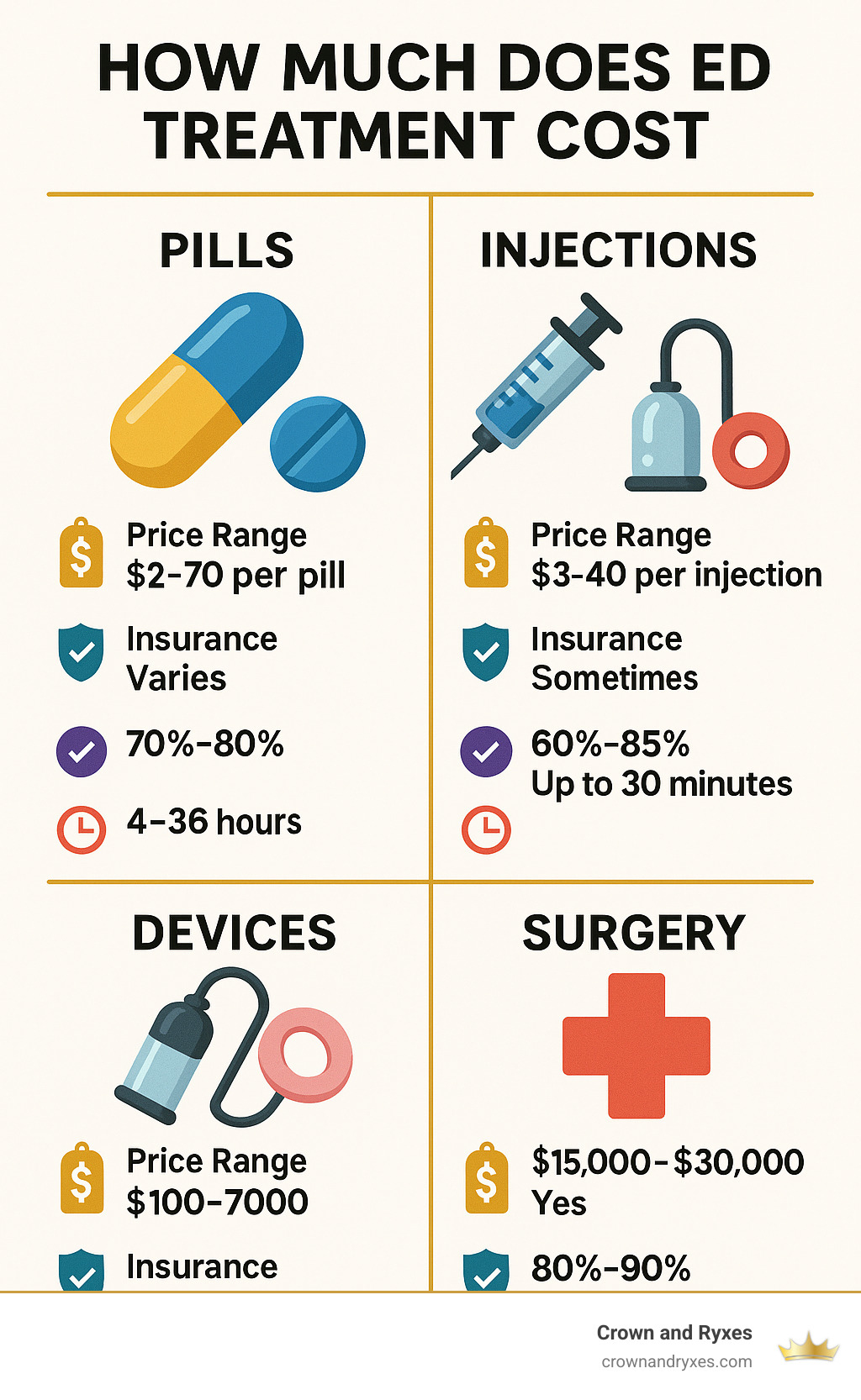
| ED Treatment Option | Price Range | Average Annual Cost |
|---|---|---|
| Generic ED Pills (sildenafil, tadalafil) | $2-$10 per pill | $300-$1,500 |
| Brand-name ED Pills (Viagra, Cialis) | $25-$70 per pill | $3,000-$10,900 |
| Penile Injections | $3-$40 per injection | $470-$2,080 |
| Vacuum Pumps | $100-$700 one-time | $0 after purchase |
| Medical Rings | $2-$5 each or $750/year subscription | $750/year |
| Shockwave Therapy | $400-$500 per session (6+ sessions) | $2,400-$3,000 |
| Penile Implant Surgery | $15,000-$30,000 upfront | $0 for 10-15 years |
I’ve seen how the cost of treating erectile dysfunction affects millions of men each year. Some of my patients initially focus solely on the price tag, but I always encourage them to consider the bigger picture: effectiveness, convenience, and long-term value all matter just as much as the upfront cost.
As a physician who’s been helping men overcome ED since 2002, I’ve guided countless patients through these financial decisions at Crown and Ryxes. The right solution often involves finding that sweet spot where your budget meets your lifestyle needs and treatment goals.
Many men wonder about insurance coverage for these treatments. The landscape is complex, but knowing your options can save you thousands. You might also be curious about cutting-edge solutions or natural approaches that could offer cost-effective alternatives.
For more specific information on these topics, you might find these resources helpful:
– Is ED treatment covered by insurance
– What are the newest treatments for ED
– Natural treatments for ED
When considering how much does ED treatment cost, the most expensive option isn’t always the best, and the cheapest may not deliver the results you’re hoping for. Your sexual health deserves a thoughtful approach that balances cost with effectiveness and quality of life improvements.
How Much Does ED Treatment Cost? (2024 Snapshot)
Let’s talk dollars and cents – because when it comes to treating erectile dysfunction, your wallet matters just as much as your wellbeing. I’ve seen how understanding the true costs upfront helps men find treatments they can actually stick with.
The price tag for ED treatment in 2024 varies dramatically based on which path you choose. Some options require a significant upfront investment but minimal ongoing costs, while others might seem affordable initially but add up over time.
| Treatment Type | Initial Cost | Ongoing Costs | Insurance Coverage | Effectiveness Rate |
|---|---|---|---|---|
| Lifestyle Changes | $0-$300 | Variable | Usually not covered | 20-30% |
| Generic ED Pills | $2-$10/pill | $300-$1,500/year | Sometimes covered | 60-70% |
| Brand-name Pills | $25-$70/pill | $3,000-$10,900/year | Rarely covered | 60-70% |
| Penile Injections | $3-$40/injection | $470-$2,080/year | Sometimes covered | 70-80% |
| Vacuum Devices | $100-$700 once | Minimal | Often covered | 50-80% |
| Penile Implants | $15,000-$30,000 | $0 for 10-15 years | Usually covered | 90-95% |
| Shockwave Therapy | $2,400-$3,000 | Possible maintenance | Rarely covered | 60-70% |
I’ve heard countless stories from men who started treatments only to abandon them – not because they weren’t working, but because they simply couldn’t manage the ongoing expense. As one urologist with 40+ years of experience puts it: “The financial aspect of ED treatment shouldn’t be overlooked. Many men quit effective treatments simply because they can’t sustain the costs.”
How much does ED treatment cost isn’t just about the sticker price – it’s about finding a sustainable solution that fits your budget long-term. At Crown and Ryxes, we’ve noticed that men who understand the complete financial picture from day one are much more likely to find a treatment path they can maintain without breaking the bank.
The most affordable options aren’t always obvious at first glance. For example, lifestyle modifications might seem free, but specialized diets, exercise equipment, or smoking cessation aids can add up. Meanwhile, a penile implant’s hefty upfront cost might actually be more economical than years of medication for some men, especially with good insurance coverage.
Effectiveness and cost don’t always correlate perfectly. Some of the most expensive treatments boast the highest success rates, but more affordable options might work perfectly well depending on the underlying cause of your ED.
Pill by Pill: What Oral Medications Really Cost
When it comes to treating erectile dysfunction, oral medications are usually the first stop on most men’s journeys. These little pills—known as PDE5 inhibitors—work their magic by enhancing your body’s natural nitric oxide, relaxing muscles in the penis and boosting blood flow when you’re in the mood.
The ED medication landscape features four main players, each with their own personality:
Sildenafil (Viagra) – The classic blue pill that started it all, now available as a much more affordable generic
Tadalafil (Cialis) – The weekend warrior that can last up to 36 hours, perfect for spontaneity
Vardenafil (Levitra) – Sildenafil’s cousin with similar timing and effectiveness
Avanafil (Stendra) – The new kid on the block, often with fewer side effects but a higher price tag
Research from the National Library of Medicine shows these medications help about 60-70% of men with ED get back in the game. But while they all work similarly, their costs can vary dramatically—especially between those fancy brand names and their generic counterparts.
Want to dive deeper into which pill might be your perfect match? Check out our comprehensive guide on the Best ED Medication.
Brand vs Generic: how much does ed treatment cost at the pharmacy?
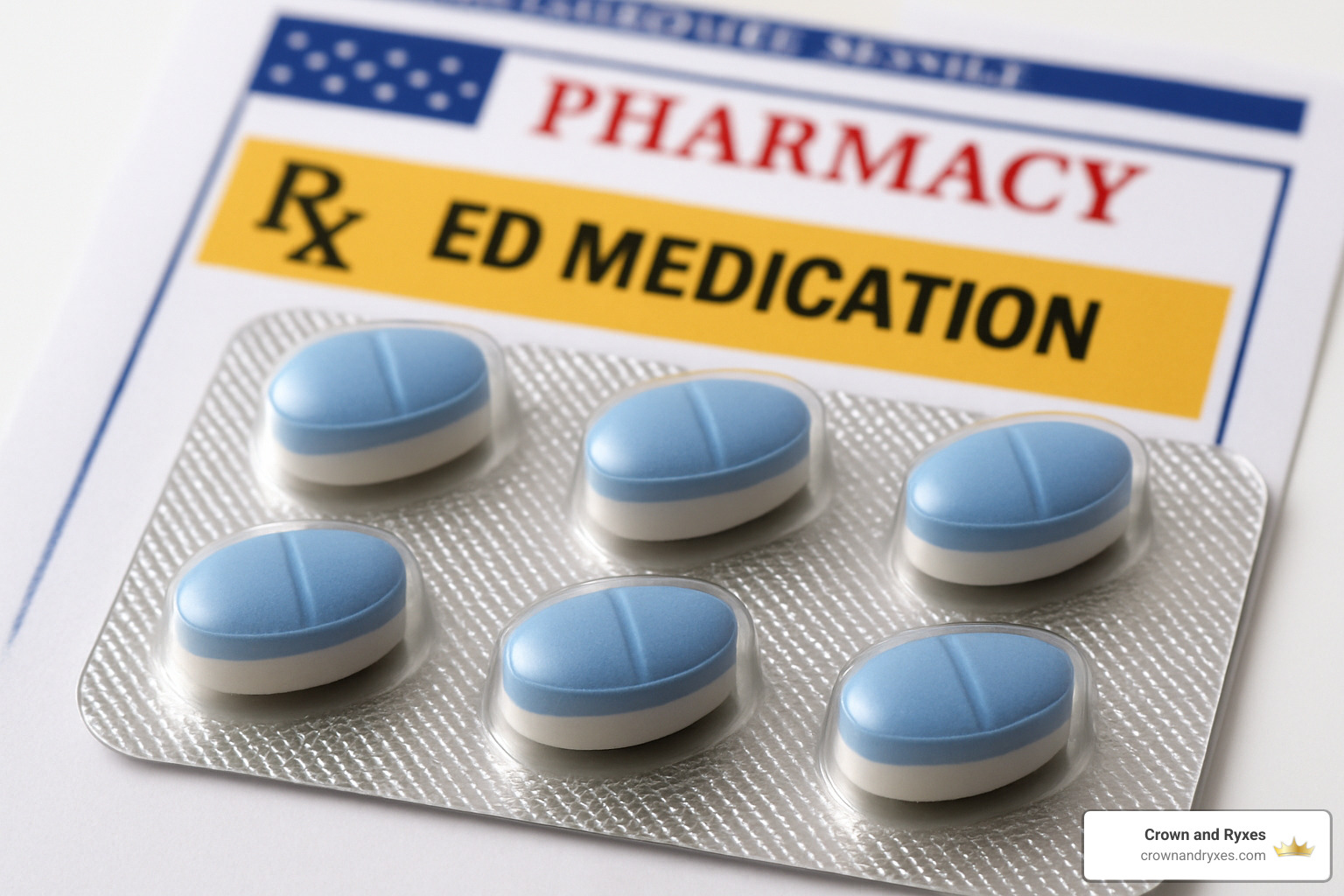
The price gap between brand-name ED pills and their generic versions can be eye-opening. Here’s what your wallet can expect at the pharmacy counter:
When you go brand-name, you’re looking at premium prices:
– Viagra will set you back $70-$91 per pill
– Cialis runs $25-$45 for each tablet
– Levitra costs around $35-$45 per dose
– Stendra (with no generic available yet) commands $60-$80 per pill
Switch to generic, and suddenly things become much more affordable:
– Generic sildenafil? Just $2-$10 per pill
– Generic tadalafil? Also $2-$10 per pill
– Generic vardenafil? A bit more at $7-$15 per pill
I recently met with Michael, a 58-year-old gentleman at our Lady Lake clinic, who shared: “I was throwing away over $70 per pill on Viagra until my doctor mentioned generic sildenafil. Now I pay just $8 per pill with a discount card—that’s over $6,000 saved every year!”
For a typical man using ED medication twice weekly, the annual math tells a compelling story:
– Brand-name Viagra: A whopping $7,280-$9,464 yearly
– Generic sildenafil: A much more manageable $208-$1,040 yearly
Services like GoodRx can knock these prices down even further. Their data shows generic sildenafil available for as little as $4 per pill at certain pharmacies when using their discount card—worth checking out if you’re watching your budget.
Daily vs On-Demand: Calculating Annual Spend
When figuring out how much does ED treatment cost annually, your usage pattern makes a huge difference. There are two main approaches to taking these medications:
On-demand dosing is like having an umbrella only when it rains—you take the pill 30-60 minutes before intimacy.
Daily dosing (primarily with tadalafil) is like wearing a raincoat all the time—you take a lower dose every day, so you’re always ready for whatever weather comes your way.
Here’s how your frequency affects what you’ll spend each year:
| Usage Pattern | Generic Sildenafil | Generic Tadalafil | Brand Viagra | Brand Cialis |
|---|---|---|---|---|
| Once weekly | $104-$520/year | $104-$520/year | $3,640-$4,732/year | $1,300-$2,340/year |
| Twice weekly | $208-$1,040/year | $208-$1,040/year | $7,280-$9,464/year | $2,600-$4,680/year |
| Daily (5mg) | N/A | $730-$3,650/year | N/A | $9,125-$16,425/year |
For best results without wasting money:
– Take sildenafil on an empty stomach—food (especially fatty meals) can delay absorption and reduce effectiveness
– With tadalafil, remember its effects can last up to 36 hours, so you might not need it as often as you think
– Ask your doctor about pill-splitting higher doses (with their approval)—this simple hack can cut costs nearly in half
Insurance Check: how much does ed treatment cost with coverage?
Navigating insurance coverage for ED medications can feel like solving a puzzle with missing pieces. The landscape is patchy at best:
Medicare typically gives ED medications the cold shoulder unless they’re prescribed for another condition entirely. Sorry, gentlemen.
Private insurance plans vary wildly—many limit quantities to just 4-6 pills monthly (which might explain why your pharmacist gives you that knowing look when you try to refill early).
Prior authorization forms are often required, where your doctor needs to document why you medically need these medications.
Dr. Sarah Patterson, a urologist specializing in men’s health, explains it perfectly: “Many insurance plans consider ED treatments ‘lifestyle drugs’ rather than medically necessary. This outdated classification often leaves men facing limited coverage or high copays for what is actually an important medical condition.”
If you’re lucky enough to have coverage, typical copays range from:
– $10-$30 for generic medications (not too painful)
– $30-$60 for preferred brand-name drugs (getting pricier)
– $60-$100+ for non-preferred brand-name medications (ouch!)
At Crown and Ryxes, we’ve helped countless men steer these insurance problems by providing thorough documentation for prior authorizations. We understand that how much does ED treatment cost shouldn’t stand between you and a fulfilling intimate life.
Beyond Pills: Devices, Shots & Cutting-Edge Therapies
While oral medications are often the first treatment option, they don’t work for everyone. Men with certain medical conditions, those taking nitrate medications, or those who don’t respond to pills may need to explore alternative treatments.
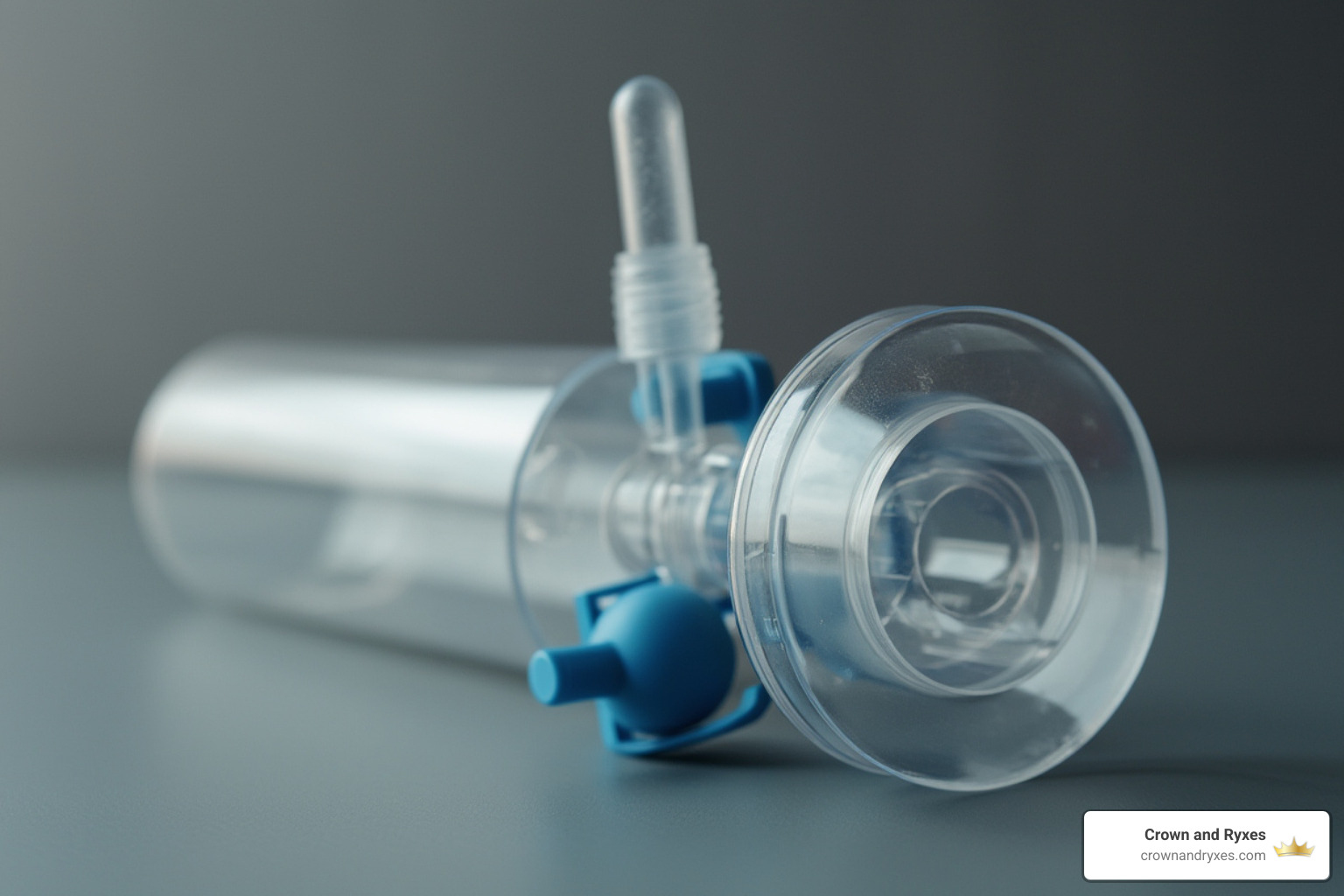
When pills aren’t the answer, many men wonder exactly how much does ED treatment cost for these alternatives. Let’s explore your options beyond the medicine cabinet.
Injections & Suppositories: Dollars per Dose
I’ve had many patients who were initially hesitant about injections, but after trying them, they’re often surprised by both the effectiveness and the minimal discomfort.
Injectable medications work directly where you need them, bypassing many of the systemic effects of pills. Alprostadil (Caverject or Edex) runs about $35-$40 per injection for brand names, or $25-$35 for generics. Using this twice weekly means an annual investment of $2,600-$4,160.
The more affordable option is TriMix, a compounded combination of three medications that many of my patients prefer. At just $3-$10 per injection, your annual cost stays between $312-$1,040 for twice-weekly use.
“I was spending nearly $7,000 a year on Viagra that was becoming less effective,” shares Michael, a 58-year-old patient. “Switching to TriMix not only improved my results but dropped my annual cost to under $800.”
Don’t forget the urethral suppository option (MUSE), which costs $20-$30 per dose. While less invasive than injections, it’s also typically less effective and still costs $2,080-$3,120 annually.
Remember to factor in the initial training session ($50-$150) and sharps disposal containers ($5-$20 every few months). While rare, treatment for priapism (prolonged, painful erection) can add unexpected costs from $356 for outpatient treatment to over $8,000 for hospitalization.
Vacuum Pumps & Rings: One-Time vs Subscription Costs
Vacuum devices offer a completely different approach with a one-time investment rather than ongoing costs.
Medical-grade vacuum pumps typically cost $300-$600, while non-prescription options range from $100-$300. The only ongoing expense might be battery replacements at $5-$15 annually. This makes them incredibly cost-effective over time.
James, a 62-year-old patient from our Clermont office, told me, “After years of pills with side effects, I switched to a vacuum device. My insurance covered 80% after my deductible, so I paid just $120 out-of-pocket. Three years later, I haven’t spent another dime on ED treatment.”
Constriction rings work with or without pumps to maintain erections by preventing blood outflow. Basic rings cost just $2-$5 each, though some men prefer premium subscription services that run about $750 annually.
Good news: Medicare and many insurance plans cover prescribed vacuum devices, typically at 80% after meeting your deductible. For more on non-pharmaceutical approaches, check our guide on Erectile Dysfunction Lifestyle Changes.
Penile Implants: Upfront Investment, Long-Term Savings
For men with severe ED who haven’t responded to other treatments, penile implants offer a permanent solution with remarkably high satisfaction rates.
The upfront costs are significant: $18,000-$25,000 for inflatable (3-piece) implants or $15,000-$20,000 for semi-rigid (malleable) implants. Many surgical centers offer package pricing between $16,000-$19,000 that covers everything from pre-op to follow-up care.
What surprises many of my patients is that Medicare and most insurance plans cover medically necessary implant surgery, typically at 80% after meeting your deductible.
Consider Robert’s experience: After spending $8,000 on ED pills over four years with diminishing results, he opted for an implant covered by Medicare. His out-of-pocket cost was approximately $3,000. By year 10, his total ED treatment costs were $8,128—significantly less than the projected $24,000 he would have spent continuing with medications.
“The satisfaction rate for implants hovers between 90-95% among patients and their partners,” I often tell my patients. “While the initial cost seems high, implants typically last 10-15 years, making them surprisingly cost-effective over time compared to ongoing medication expenses.”
Shockwave, PRP & Stem Cell: Paying for Promising Alternatives
Several cutting-edge therapies are gaining popularity, though they vary in their FDA approval status and rarely receive insurance coverage.
Shockwave therapy (often marketed as GAINSWave) uses acoustic waves to improve blood flow and stimulate tissue regeneration. At $400-$500 per session with 6-12 recommended sessions, the total investment ranges from $2,400-$6,000. Many men need maintenance sessions after 1-2 years.
I’ve seen promising results with Platelet-Rich Plasma (the P-Shot), which uses your own blood components to stimulate tissue regeneration. At $1,500-$2,000 per procedure with 1-3 recommended treatments, you’re looking at $1,500-$6,000 total.
Stem Cell Therapy represents the cutting edge, costing $1,600-$5,000 per procedure with 1-2 recommended treatments ($1,600-$10,000 total).
Elena, a 54-year-old patient’s wife, shared: “After trying everything else, my husband did six shockwave sessions at $2,700 total. It wasn’t cheap, but two years later, he’s still seeing benefits we never got from pills, and we haven’t spent another dollar on treatment.”
At Crown and Ryxes, we offer shockwave therapy and carefully evaluate each patient’s candidacy for these advanced treatments. The Cleveland Clinic’s research on shockwave therapy shows promising results for the right candidates.
While these treatments represent a significant investment, many men find the potential for lasting improvement worth considering, particularly when looking at the long-term costs of other options.
The Bigger Picture: Long-Term, Hidden & Insurance Factors
When evaluating how much does ED treatment cost, look beyond the immediate price tag. Long-term considerations, hidden expenses, and insurance factors all play crucial roles in determining the true financial impact of ED treatment.

How much does ED treatment cost per year vs upfront?
To understand the true cost of ED treatment, we need to examine expenses over time. Let me share three real patient journeys that illustrate different approaches.
Jack chose the medication-only path, using generic sildenafil at $8 per pill, three times weekly. Over ten years, his medication costs totaled $12,480. Add in yearly doctor visits at about $200 each, and Jack’s grand total reached $14,480. Not insignificant, but manageable when spread across a decade.
Gabriel’s journey looked different. He started with brand-name Viagra at $70 per pill for three years, costing him nearly $33,000. When the side effects became problematic, he switched to TriMix injections at $5 per dose for the next seven years. Unfortunately, he experienced one episode of priapism requiring medical intervention. His total over ten years? A whopping $40,576 including doctor visits.
Robert took yet another approach. After four years on generic tadalafil ($6,240 total), he opted for a penile implant. With insurance covering 80% of the $18,000 procedure, his out-of-pocket cost was $3,600. The best part? No additional costs for the next five years beyond occasional check-ups. Robert’s ten-year total came to just $10,840.
“When I counsel patients about ED treatment costs, I always encourage them to think long-term,” says Dr. Michael Thompson from Crown and Ryxes. “What seems expensive initially, like an implant, often becomes the most economical option over a decade of treatment.”
Hidden Costs: What Else Ends Up on Your Bill?
The sticker price rarely tells the whole story. Many of my patients are surprised by the “extras” that add up over time.
Medical appointments form a significant part of these hidden costs. Beyond your initial consultation ($100-$300), you’ll likely need follow-up visits ($75-$200 each) and possibly specialist referrals ($200-$500). These appointments aren’t just about getting prescriptions—they’re essential for monitoring your response to treatment and adjusting as needed.
Diagnostic tests also factor into your total investment. Blood tests to check hormone levels and other markers typically cost $50-$200. More specialized tests like Doppler ultrasound ($200-$400) or nocturnal penile tumescence testing ($300-$500) might be recommended in complex cases.
Each treatment option brings its own set of ancillary expenses. If you’re using injections, you’ll need sharps containers ($5-$20) and alcohol swabs ($5-$10). Vacuum device users should budget for lubricant ($10-$20) and occasional replacement parts ($30-$100).
Don’t forget about the practical costs of treatment—time off work for appointments, transportation costs, and even relationship strain. While harder to quantify, these factors deserve consideration when mapping out your treatment plan.
Dr. Rebecca Chen, a financial health counselor, notes: “Even something as simple as the gas money for multiple doctor visits can add hundreds to your annual treatment costs.”
How much does ED treatment cost with insurance or Medicare?
The insurance landscape for ED treatment can feel like a maze, but understanding the basics helps tremendously.
With private insurance, coverage varies dramatically depending on your plan. Most policies cover 50-80% of approved treatments after you meet your deductible. However, many plans place strict limits on quantities—typically 4-6 pills per month—and often require prior authorization, a process where your doctor must justify the medical necessity of your treatment.
Medicare has its own set of rules. Part B covers 80% of medically necessary treatments like penile implant surgery and vacuum devices. However, Medicare generally doesn’t cover ED medications unless they’re prescribed for other conditions (like pulmonary hypertension). If you have a Medicare Advantage plan, check your specific coverage, as some offer additional benefits.
Don’t overlook Health Savings Accounts (HSAs) and Flexible Spending Accounts (FSAs). These tax-advantaged accounts can be used for most ED treatments, even those not covered by insurance. This approach essentially gives you a discount equal to your tax rate on qualified expenses.
For brand-name medications, pharmaceutical manufacturers often offer Patient Assistance Programs based on income. These programs can reduce costs by 50% or more for qualifying patients. At Crown and Ryxes, we regularly help patients steer these applications—they’re worth exploring if medication costs are straining your budget.
Frequently Asked Questions about ED Treatment Costs
My patients often ask about the most cost-effective ED treatment. The answer depends on your specific situation, but generally, generic PDE5 inhibitors like sildenafil and tadalafil offer the best value for most men. If pills don’t work for you, vacuum devices provide excellent bang for your buck with a one-time investment. For those needing long-term treatment, penile implants often become the most economical option after 5-7 years.
As for truly free or low-cost options, lifestyle modifications can make a significant difference, especially for mild ED. Weight loss, regular exercise, quitting smoking, and stress management cost little but can yield impressive results. Many community health centers also offer sliding-scale fees based on income, making professional care more accessible.
To maximize discounts on medications, I recommend a multi-pronged approach. Use pharmacy discount cards like GoodRx or SingleCare, which can save up to 80% off retail prices. Compare prices at multiple pharmacies—the difference can be substantial. Ask about manufacturer coupons, especially for brand-name drugs. Consider mail-order pharmacies for better pricing on regular prescriptions. And explore telehealth services with integrated pharmacy options, which sometimes offer competitive pricing.
At our Clermont and Lady Lake locations, we work with patients to find affordable treatment options. This includes helping with insurance prior authorizations, identifying patient assistance programs, and offering package pricing for certain treatments. We believe that financial concerns shouldn’t prevent anyone from receiving effective ED treatment.
Conclusion & Next Steps
Let’s be honest – figuring out the costs of ED treatment can feel like trying to solve a puzzle with missing pieces. But now that we’ve broken down the options, you’re in a much better position to find a solution that works for both your body and your wallet.
We’ve seen throughout this guide that how much does ED treatment cost isn’t a simple question with a one-size-fits-all answer. The price tag swings dramatically depending on whether you’re looking at daily pills, occasional injections, one-time device purchases, or surgical solutions.
When mapping out your personal ED treatment journey, think about these key factors:
Effectiveness matters most – are you looking for reliable performance every time, or just occasional support? Budget considerations will naturally guide your choices, both in terms of what you can afford upfront and what you can sustain long-term. Your lifestyle preferences play a huge role too – some men prioritize spontaneity while others don’t mind a bit of planning. And of course, your overall health profile might make certain options more suitable than others.
“I always tell my patients that the most expensive ED treatment isn’t necessarily the priciest one on paper,” says Dr. Thompson from our team. “It’s actually the treatment you start but can’t afford to continue. That’s why finding a sustainable solution from day one is so crucial.”
At Crown and Ryxes, our approach in both our Clermont and Lady Lake offices is refreshingly straightforward. We sit down with you, understand your unique situation, and help craft a treatment plan that delivers results without breaking the bank. We’ve helped countless men steer the sometimes confusing world of insurance authorizations, discount programs, and treatment alternatives to find their optimal path forward.
Investing in treating erectile dysfunction isn’t just about improving your sex life – though that’s certainly important! It’s about investing in your overall wellbeing, your self-confidence, and often, your most important relationship.
Ready to take the next step? Our men’s sexual dysfunction services page has all the information you need about our approach and how we can help you find an ED solution that fits your life. Because when it comes to sexual health, you deserve effective care that you can actually afford to maintain.