

How Estrogen HRT Transforms Body Hair Growth
HRT body hair changes are one of the most noticeable effects of feminizing hormone replacement therapy. When you start estrogen and testosterone blockers, your body hair typically becomes:
- Finer and softer in texture
- Lighter in color
- Slower-growing with reduced density
- Less noticeable on chest, back, arms, and legs
- More manageable for grooming and removal
Note: Facial hair is often less affected and may require separate treatment.
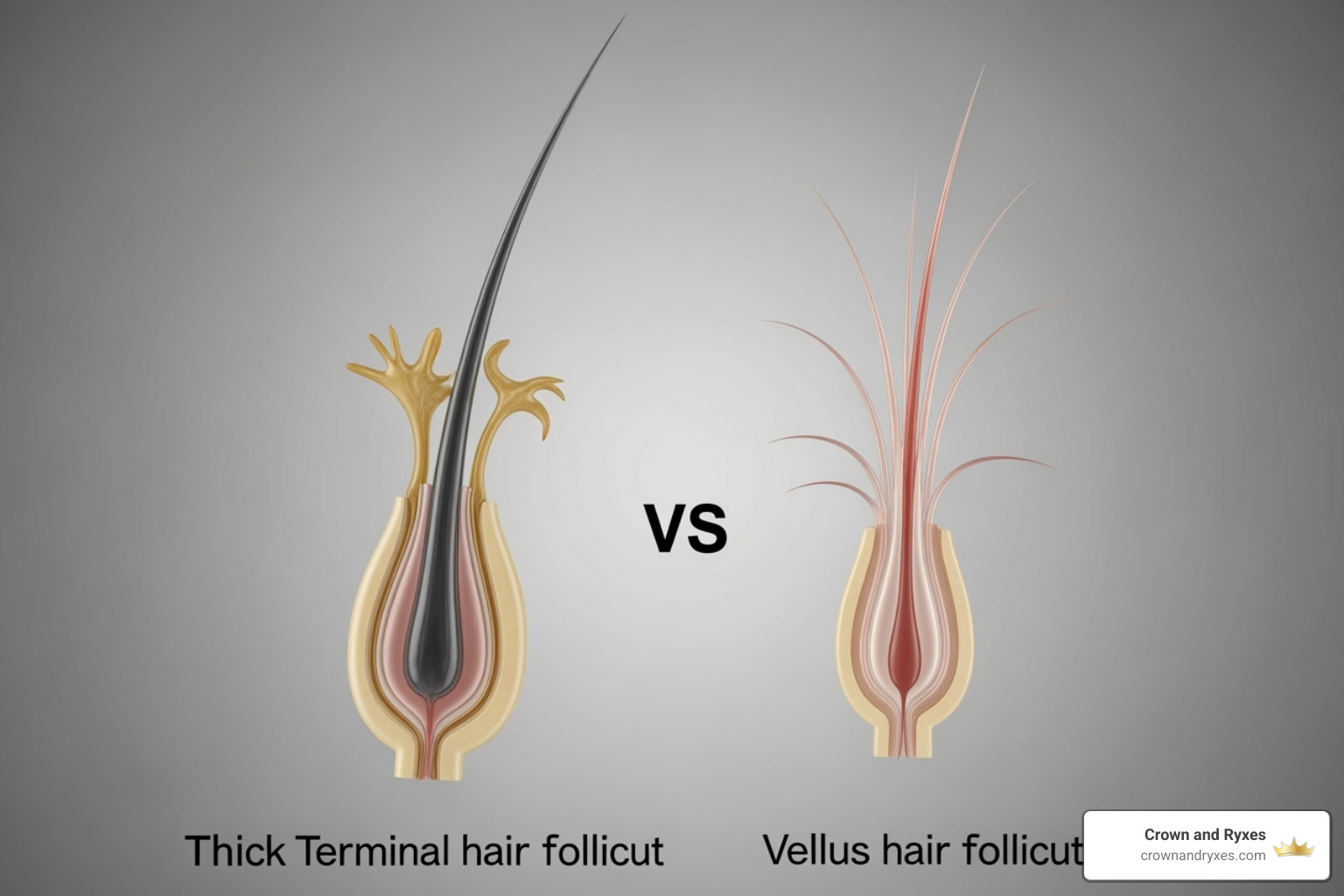
The science behind these changes is straightforward. Estrogen reduces testosterone production while anti-androgens like spironolactone block remaining testosterone from stimulating hair follicles. This shifts thick, dark terminal hairs toward finer vellus hairs – the soft, barely visible type that covers most of your body naturally.
Your results will vary based on genetics, age when starting HRT, and individual hormone sensitivity. Some people see dramatic reduction within months, while others need 1-3 years for maximum effect. Research shows that feminizing HRT with estradiol and antiandrogens can reduce facial and body hair growth, though the timeline differs for everyone.
Most people find that while HRT significantly improves body hair, combining it with professional removal methods like laser or electrolysis gives the smoothest, most lasting results.
I’m Dr. Matthew Casavant, and I’ve helped countless patients steer HRT body hair changes during their hormone therapy journey over my 20+ years in hormone therapy. My experience with minimally invasive procedures and patient-centered care helps ensure you get the personalized support you need throughout your transition.

When we talk about HRT body hair changes, it’s all about how hormones interact with your hair follicles. Before feminizing HRT, many individuals experience hair growth patterns that are largely influenced by androgens, often referred to as “male pattern” hair growth. These androgens, particularly testosterone, stimulate hair follicles to produce thick, coarse, and dark “terminal” hairs. Think of the luscious beard or a hairy chest – these are typically androgen-dependent.
When you begin feminizing HRT, a few key things happen:
- Estrogen takes the lead: Feminizing HRT introduces estrogen and often includes medications that block testosterone (anti-androgens) or reduce its production. Estrogen itself also helps to lower testosterone levels.
- Androgen suppression: With testosterone levels significantly reduced or blocked, the hair follicles that were previously stimulated by androgens begin to change. They become less active or even “shrink,” leading to a shift in the type of hair they produce.
- Terminal to Vellus Shift: Instead of producing thick terminal hairs, these follicles start to produce finer, lighter, and shorter “vellus” hairs. These are the soft, downy hairs that are barely noticeable, similar to the hair on a cisgender woman’s body. This process is like a reverse puberty for your hair, though it won’t completely eliminate every single hair follicle. As one person eloquently put it, “Estrogen causes hair to become finer and grow slower.”
- Hair Growth Cycle: Hair grows in cycles: anagen (growth), catagen (transition), and telogen (resting). Androgens typically prolong the anagen phase for terminal hairs, leading to longer, thicker growth. Estrogen and anti-androgens can shorten this growth phase and extend the resting phase, resulting in slower growth and less dense hair overall.
A systematic review on gender-affirming hormone therapy (GAHT) and hair changes highlights that feminizing GAHT with estradiol and/or antiandrogens can indeed reduce facial and body hair growth. While the exact quantitative data is still being researched, anecdotal evidence from the community strongly supports these changes.
Feminizing HRT Body Hair Changes: What to Expect
The journey of HRT body hair change is a personal one, and while the general direction is clear – less, finer, lighter hair – the specifics vary from person to person. Here’s what we’ve learned from our experience and the experiences of others:
- Slower Growth: One of the first things many people notice is that they don’t need to shave as often. Where daily or every-other-day shaving might have been the norm, you might find yourself shaving once or twice a week, or even less frequently. As one individual shared, “I used to shave 3 times a week, these days I only shave once a week and it’s pretty unnoticeable.”
- Finer Texture: The coarse, bristly hairs you might have had will start to feel softer to the touch. This change in texture makes the hair less noticeable and more pleasant against the skin.
- Lighter Color: Darker hairs often become lighter, sometimes even blond or translucent. This, combined with finer texture, makes the hair much less visible to the naked eye.
- Areas Most Affected: We typically see the most significant changes on the chest, back, abdomen, and arms. Many report a dramatic reduction in density and visibility in these areas. “In my case it reduced it very quickly to the point now where it is almost completely gone from my chest/stomach. The density in other places has reduced too, legs, armpits, etc.” and “My back hair stopped growing completely and chest hair is minimal.” are common sentiments. Leg and arm hair also tends to thin out and grow slower.
- Facial Hair Persistence: This is a crucial point: facial hair, particularly beard growth, is often the most stubborn. While some thinning and slowing of growth may occur, significant reduction or elimination of facial hair typically requires dedicated hair removal treatments like laser or electrolysis. As many have noted, “My face didn’t really see much reduction.”
- Genetics and Individual Results (YMMV): Your mileage may truly vary! Genetics play a huge role in how your body responds to hormones. Some individuals will see dramatic changes, almost to the point of being hairless in certain areas, while others will experience more subtle shifts. As one user shared, after 1.5 years on HRT, their body hair was “almost completely gone from my chest/stomach,” while another, after the same duration, had “zero effect on their body hair.” This highlights the unique nature of each person’s journey.
- Follicle Count: HRT won’t “un-grow” hair follicles. The number of follicles remains unchanged. What changes is the type of hair those follicles produce. So, while the hair might seem “almost completely gone,” it’s more about the hair becoming so fine and light that it’s practically invisible.
Understanding your body’s unique response to hormones is part of the journey. For more insights into how to achieve a harmonious hormonal balance, especially for women, we invite you to explore our resources on More info about Hormonal Balance for Women.
Timeline for Hair Reduction
Patience, dear friend, is not just a virtue but a necessity when it comes to HRT body hair changes. Hormonal shifts take time, and their effects on hair growth are gradual, mirroring a second puberty. Here’s a general timeline based on collective experiences, but remember, every body is unique:
- Initial Changes (3-6 months): Within the first few months, some individuals might start to notice subtle shifts. Hair might feel slightly softer, and growth might seem a tiny bit slower. For transfeminine people, other changes like breast budding and skin softening also begin in this timeframe. One person noted, “My experience: I’ve been on HRT for 2 months now… Leg and arm hair, though, that grows so slowly now and has thinned out too.”
- Noticeable Reduction (6-12 months): This is when many people report more significant changes. Hair on the body, especially the chest, back, and legs, may appear thinner, lighter, and grow noticeably slower. You might find yourself shaving less frequently. “After 8 months, hair on legs, stomach, chest and arms is almost gone with ultra fine sporadic traces left.” Another user observed “significant slowdown in hair growth at around a year on E. I used to shave 3 times a week, these days I only shave once a week and it’s pretty unnoticeable.”
- Maximum Effect (1-3+ years): The full extent of HRT body hair reduction can take a considerable amount of time, sometimes up to three years or even longer. Just like first puberty, these changes don’t happen overnight. Some individuals report that effects continue to progress well into their second and third years on HRT, with some even noticing improvements after 1.5 years and the introduction of progesterone. The Mayo Clinic also confirms that “less facial and body hair growth begins 6 to 12 months after treatment starts, with full effect within three years.”
It’s a marathon, not a sprint! While some might see dramatic changes quickly, others will need to accept the slow and steady progress. Don’t be discouraged if your timeline differs from others; consistency with your HRT regimen is key. To understand more about the broader effects and timelines of hormone replacement therapy, we encourage you to read our comprehensive guide on More info about Hormone Replacement Therapy.
Managing Unwanted Hair During and After HRT
While feminizing HRT works wonders in changing HRT body hair patterns, many people find they still want to achieve that perfectly smooth, silky feeling. Think of HRT as your helpful teammate – it does the heavy lifting by making hair lighter, finer, and less dense, but you might still need some backup strategies to reach your ultimate hair-free goals.
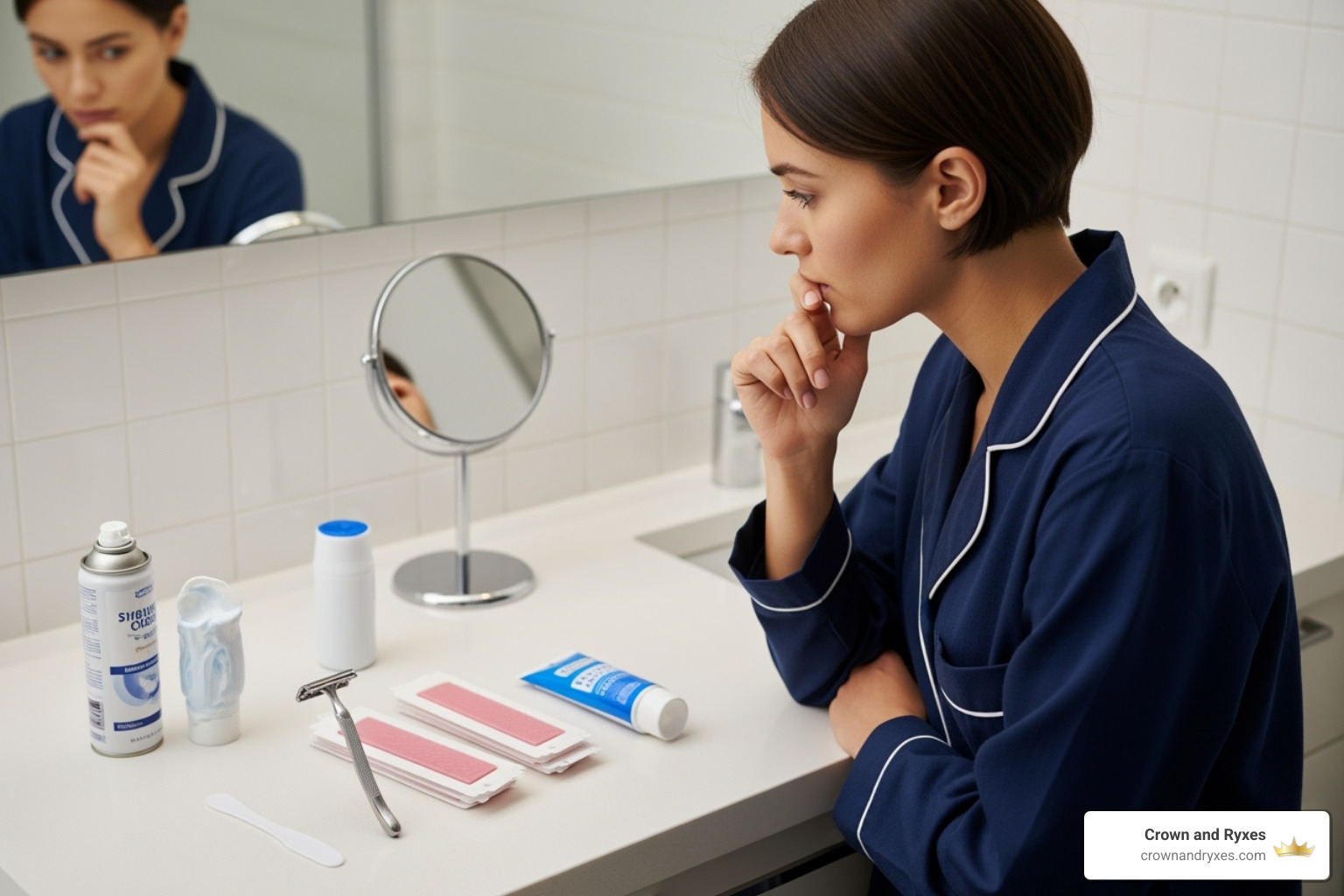
The good news? With HRT already changing your hair texture and growth rate, temporary removal methods become much more manageable. Shaving remains the quickest daily option, and you’ll likely find yourself reaching for that razor far less often than before. Many people find they can go from daily shaving to once or twice a week – a welcome change!
For longer-lasting smoothness, waxing and sugaring pull hair from the root, giving you weeks of hair-free skin. Some people even notice that regular waxing combined with HRT seems to weaken hair follicles over time, though this isn’t scientifically proven.
Depilatory creams like Nair offer another option by chemically dissolving hair just below the skin’s surface. Just remember that HRT often makes your skin softer and more sensitive, so always do a patch test first to avoid irritation.
Epilation – using a device that plucks multiple hairs at once – can be intense at first, but many people swear by it for maintaining smoothness over larger body areas. As one person shared, “Epilating is a painful process, but it works.” The pain typically lessens over time, especially as HRT makes your hair finer and easier to remove.
For those ready to move beyond temporary solutions, Crown and Ryxes offers advanced, long-term hair reduction options custom to your specific needs and goals.
Professional Hair Removal Options
When temporary methods aren’t cutting it (pun intended!), professional treatments can provide the lasting results you’re looking for. The two main champions in permanent hair reduction are laser hair removal and electrolysis, each bringing unique strengths to your HRT body hair journey.
Laser hair removal works by targeting the pigment in hair follicles with concentrated light energy. It’s incredibly effective for people with darker hair and lighter skin, though newer technologies have expanded options for different skin tones. The process is relatively quick – you can treat large areas like legs or back in a single session. Most people need multiple sessions spaced weeks apart, but the results can be dramatically long-lasting.
Electrolysis, on the other hand, is the only FDA-approved method for permanent hair removal. It works by inserting a tiny probe into each individual hair follicle and destroying it with electrical current. While this sounds intense, it’s actually quite tolerable and works on all hair colors and skin types. Electrolysis takes longer per session since each hair is treated individually, but it’s incredibly thorough and effective.
The beauty of combining either method with HRT? Your hormones have already done much of the work by weakening and lightening your hair, making professional treatments more comfortable and effective than they would have been before starting HRT.
Finding an affirming provider who understands your journey makes all the difference. At Crown and Ryxes, our experts understand the unique considerations for people undergoing HRT and can help you choose the best approach for your specific situation and goals.
At-Home Management and Skincare
Your skin becomes your canvas during HRT, often growing softer and more sensitive as estrogen works its magic. This means your HRT body hair removal routine needs some thoughtful adjustments to keep your skin happy and healthy.
Topical treatments like Vaniqa (eflornithine) can slow hair growth when recommended by your healthcare provider. This prescription cream works by blocking an enzyme that hair follicles need to grow, making it a nice complement to your HRT regimen.
At-home IPL devices have become increasingly popular and effective. These handheld gadgets use intense pulsed light technology similar to professional laser treatments, though they’re less powerful. They work best on darker hair against lighter skin, and consistency is key – you’ll need regular sessions over several months to see results.
Your post-hair-removal skincare routine becomes even more important on HRT. Gentle exfoliation helps prevent ingrown hairs, which can be more common as your hair texture changes. Use a soft brush or mild scrub a few times per week, but don’t overdo it on your newly sensitive skin.
Moisturizing isn’t just nice-to-have anymore – it’s essential. HRT often changes your skin’s oil production, so finding a good moisturizer helps maintain your skin’s barrier and prevents irritation from hair removal methods.
For comprehensive support throughout your hormone journey, including guidance on managing all the changes HRT brings, explore our resources on BHRT to learn how bioidentical hormone replacement therapy can be custom to your specific needs.