

Is ED treatment covered by insurance? If you’re wondering whether treatments for erectile dysfunction (ED) are covered by your insurance plan, you’re not alone. In a nutshell:
- Coverage varies: Some insurance plans may cover ED treatments, while others may not.
- Depends on medical necessity: Insurance usually covers treatments deemed medically necessary.
- Check specifics: Review your insurance plan for detailed coverage policies.
Navigating the complexities of insurance coverage for ED treatment can feel overwhelming. From understanding medical necessity to exploring different types of coverage (like Medicare, Veterans Affairs, and private insurance), there are several steps you can take to ensure you’re getting the best possible support for your needs.
As a physician who has spent years dealing with insurance-related queries, I’m Matthew Casavant, and I’m here to guide you through the maze of whether ED treatment is covered by insurance. With my background in medical practice and familiarity with the health insurance landscape, I’m committed to helping you find the information you need with clarity and ease.
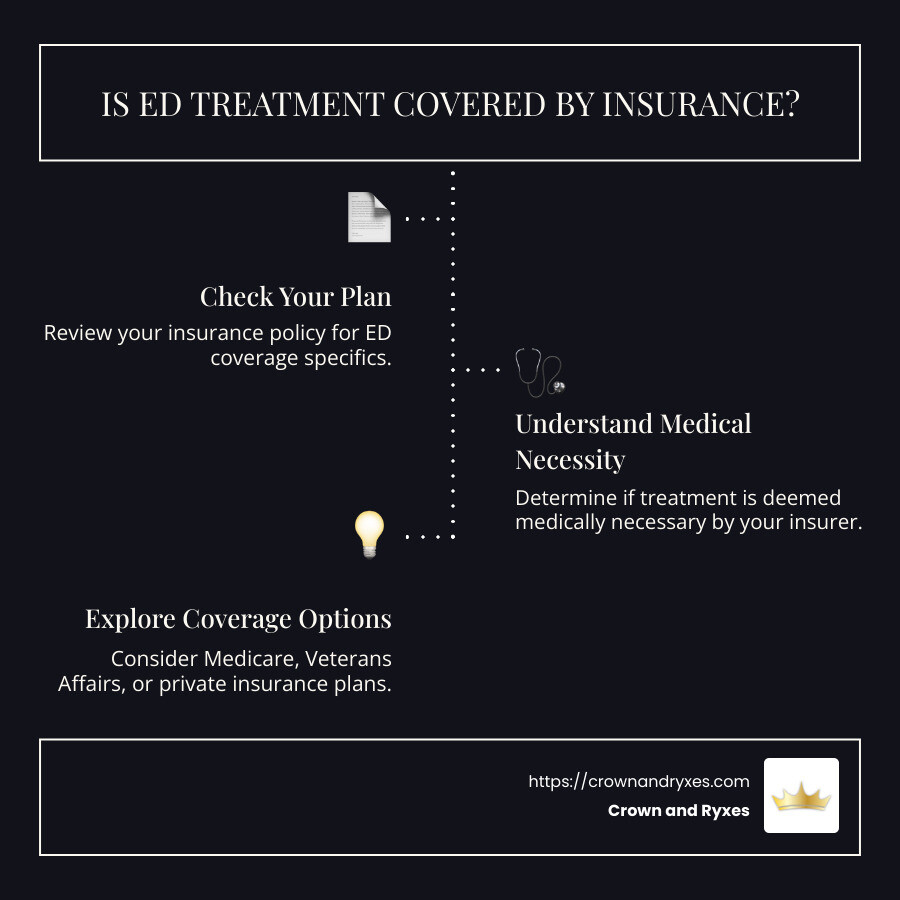
Essential is ed treatment covered by insurance terms:
Understanding Insurance Coverage for ED Treatment
When it comes to insurance coverage for ED treatment, the key factor is often medical necessity. Insurance companies typically cover treatments that are considered essential for a patient’s health and well-being. For ED, this means your doctor needs to document why the treatment is medically necessary for you. This documentation can make a big difference in whether your insurance will cover the costs.
Health Insurance Plans and Coverage Policies
Insurance plans can vary widely in what they cover for ED treatments. Some plans might include coverage for certain medications or procedures, while others might not cover any ED treatments at all. It’s crucial to review your specific insurance policy or talk directly to your insurance provider to understand what is included.
Here are some tips to help you steer:
- Review your policy: Check your insurance plan documents for information on ED treatment coverage.
- Ask specific questions: When contacting your insurance provider, ask clear questions like, “Is treatment for ED covered by my insurance?” and “What documentation is needed to prove medical necessity?”
- Consider different types of insurance: Medicare, Veterans Affairs, and private insurance all have different policies regarding ED treatment. For instance, Medicare Part B might cover certain treatments if they are deemed medically necessary, while private insurance coverage can vary even more.

Coverage Policies
Insurance companies have specific policies and guidelines that determine what treatments they will cover. These policies can include:
- FDA-approved treatments: Insurance is more likely to cover treatments that are FDA-approved, as they are considered safe and effective.
- Pre-authorization requirements: Some plans may require pre-authorization before covering ED treatments, so make sure to check if this applies to you.
- Out-of-pocket costs: Even if a treatment is covered, you may still have to pay copays or deductibles. Understanding these costs can help you budget for your treatment.
Navigating these policies can be challenging, but with the right information and documentation, you can improve your chances of getting your ED treatment covered by insurance. That each insurance provider and plan can have unique requirements, so gather all necessary information and ask questions when needed.
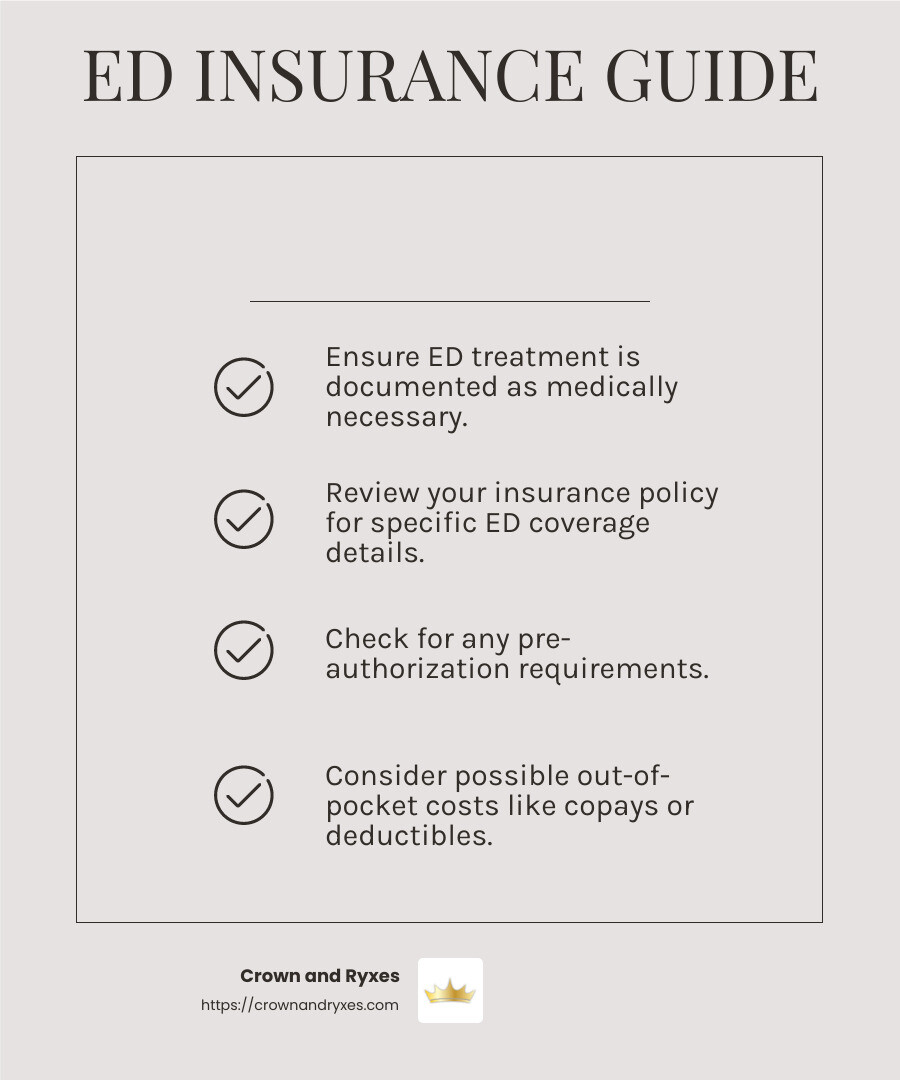
Is ED Treatment Covered by Insurance?
When exploring whether ED treatment is covered by insurance, it’s important to consider the different coverage options available through Medicare, Veterans Affairs, and private insurance.
Medicare Coverage
Medicare offers several parts, each with different coverage options. Medicare Part B might cover certain ED treatments if they are medically necessary, but it typically does not cover oral medications like Viagra. However, Medicare Advantage (Part C) plans, which are provided by private insurers, may offer additional coverage, including some prescription medications like generic sildenafil. It’s essential to check with your Medicare Advantage provider to understand what specific ED treatments are covered.
Veterans Affairs (VA) Benefits
For veterans, the Veterans Affairs healthcare system provides coverage for ED treatments. The level of coverage can vary based on individual circumstances and medical necessity. If you’re a veteran, it’s a good idea to contact your VA healthcare provider to discuss your options and understand what treatments are available to you.
Private Insurance
Private insurance plans can vary widely in their coverage for ED treatments. Some plans may cover oral medications, injections, or even devices, while others may not cover any ED treatments at all. It’s crucial to:
- Review your policy documents to see if ED treatment is included.
- Contact your insurance provider directly with specific questions about coverage for ED treatments, such as oral medications or other interventions.
- Consider out-of-pocket costs like copays and deductibles, even if a treatment is covered.
Each insurance plan has its own set of rules and requirements, so gather all necessary information and ask questions to fully understand your coverage.
Next, we will dig into the common ED medications and their insurance coverage options.
Common ED Medications and Their Insurance Coverage
When it comes to treating erectile dysfunction, several medications are widely used. Let’s explore these common options and their insurance coverage:
Sildenafil (Viagra)
Sildenafil, commonly known by its brand name Viagra, is a popular choice for treating ED. It works by increasing blood flow to the penis, helping achieve and maintain an erection.
Insurance Coverage: While Viagra is a well-known brand, its cost can be a barrier. The good news is that many insurance plans, including Medicare Part D, often cover the generic version, sildenafil. However, there might be limits on the number of pills you can receive each month. After reaching this limit, out-of-pocket costs can range from $15 to $50 per tablet. Always check your specific plan for details.
Tadalafil (Cialis)
Tadalafil, or Cialis, is another effective medication for ED. It stands out because it can be taken daily or as needed, offering flexibility in treatment.
Insurance Coverage: Like sildenafil, the generic version of tadalafil is more likely to be covered by insurance, including some Medicare and Medicare Advantage plans. Coverage specifics can vary, so reviewing your plan’s drug formulary is crucial to understand what is included.
Vardenafil (Levitra, Staxyn)
Vardenafil is similar to sildenafil but might work faster for some men. It provides an option for those who may experience different side effects or who need a quicker onset of action.
Insurance Coverage: Coverage for vardenafil can be tricky. While some insurance plans may cover it, others might only cover the generic version. As with other ED medications, quantity limits and prior authorization requirements can apply.
Avanafil (Stendra)
Avanafil, known by its brand name Stendra, is a newer medication that works similarly to the others but may offer fewer side effects for some users.
Insurance Coverage: This medication is less commonly covered compared to the others. It’s important to check with your insurance provider to see if avanafil is included in your plan. If not, you might consider exploring discount programs or coupons to reduce costs.
When considering these medications, always consult with a healthcare professional to determine the best option for your specific needs. Understanding your insurance coverage for these treatments can help manage costs and ensure you have access to the most effective ED solution for you.
Next, we’ll discuss how to check your insurance plan for ED coverage, ensuring you have all the information you need to make informed decisions.
How to Check Your Insurance Plan for ED Coverage
Navigating insurance coverage for erectile dysfunction (ED) treatment can feel like solving a puzzle. But don’t worry, here’s a simple guide to help you check if your plan covers ED medications.
Check Your Policy Documents
Start by digging into your insurance policy documents. These documents might include a benefits summary that lists what’s covered under your plan. Look for sections about prescription drug coverage. If your plan includes this, there’s a chance ED meds might be on the list.
Tip: Look for terms like “formulary” or “drug list.” This is where insurance companies list medications they cover. Drugs are often categorized into tiers, with higher tiers being more expensive for you.
Contact Your Insurer
Sometimes, the best way to get a clear answer is to call your insurance provider. Have your policy number ready, which you can find on your insurance card. Ask them directly: “Is ED treatment covered by insurance?” Be specific about the medication you’re interested in, like sildenafil or tadalafil.
Tip: Write down the answers you get, including any names of people you speak to. This can be helpful if you need to refer back to it later.
Explore the Drug Formulary
Most insurance plans have a formulary, a list of medications they cover. This list might include both generic and brand-name drugs. Formularies can usually be found on your insurer’s website. Check if your ED medication is listed and note any quantity limits or pre-authorization requirements.
Tip: If you find your medication on the formulary, take note of any special conditions, like the need for a doctor’s note or prior authorization.
By following these steps, you can better understand your insurance coverage for ED treatment. This knowledge can help you make more informed decisions about your health care options.
Frequently Asked Questions about ED Treatment and Insurance
Are ED visits covered by insurance?
When it comes to emergency department services, coverage can vary. If you have Medicare Part B, it generally covers outpatient care, including some emergency services. However, it’s important to note that while the visit itself might be covered, any specific ED treatments or medications prescribed during the visit may not be. Always check with your insurance provider to understand what is included under your plan.
Is Viagra ever covered by insurance?
The coverage for Viagra, or its generic version sildenafil, often depends on your insurance plan. Many insurers are more inclined to cover generic versions because they are less expensive. Sildenafil, the generic form of Viagra, is chemically the same as the brand-name drug and is usually covered more frequently. Similarly, tadalafil (the generic form of Cialis) and vardenafil (the generic form of Levitra) may also be covered, but it’s crucial to confirm with your specific plan.
For those with Medicare, Medicare Part D or Medicare Advantage plans might cover some ED medications, including sildenafil. Always verify with your plan provider to ensure coverage and understand any potential out-of-pocket costs.
What is the number 1 ED treatment?
Among the various treatments for erectile dysfunction, sildenafil (Viagra), tadalafil (Cialis), and vardenafil (Levitra) are among the most commonly prescribed and well-known. These medications are part of a group called phosphodiesterase-5 (PDE5) inhibitors, which work by increasing blood flow to the penis to help achieve and maintain an erection.
While these medications are popular, the choice of treatment should be personalized to each individual’s health needs and preferences. Consulting with a healthcare professional can help determine the best option for you.
Conclusion
Navigating insurance coverage for ED treatment can be a challenge. At Crown and Ryxes, we believe that understanding your options is the first step toward making informed decisions about your sexual wellness. We offer personalized wellness solutions that cater to your unique needs, helping you on your journey to improved sexual health.
Our services are designed to provide clarity and support, ensuring you have access to the most effective treatments available. Whether you’re exploring is ED treatment covered by insurance or seeking the best ED medications, our team is here to guide you every step of the way.
It’s essential to review your insurance policy, consult with your healthcare provider, and explore all available options to optimize your treatment plan. At Crown and Ryxes, we are committed to helping you achieve your wellness goals with confidence and ease.
For more information on how we can assist you in your journey, visit our Men’s Sexual Dysfunction Services. We are here to support you in making informed choices and reclaiming control over your sexual health.