

Understanding Liposuction Changes
Liposuction before and after results typically show significant body contouring improvements, with final results visible after 3-6 months when swelling subsides completely. Here’s what you can expect:
| Timeline | What to Expect |
|---|---|
| Before Surgery | Consultation, medical clearance, preparation instructions |
| 1-3 Days After | Significant swelling, bruising, drainage possible |
| 1-2 Weeks After | Return to work, reduced swelling, compression garment worn |
| 6 Weeks After | Resume normal activities, swelling continues to decrease |
| 3 Months After | 80-90% of swelling resolved, improved contour visible |
| 6 Months After | Final results with complete healing, permanent fat removal |
When considering liposuction before and after, it’s important to understand that this procedure isn’t about weight loss – it’s about body contouring. Each year, more than 200,000 Americans choose liposuction to sculpt areas resistant to diet and exercise. The procedure permanently removes fat cells from targeted areas, creating smoother contours and improved proportions.
Many people are surprised by the dramatic difference in liposuction before and after photos. These changes show how the procedure can improve your natural shape by removing stubborn fat pockets from areas like the abdomen, thighs, back, and flanks.
While results are permanent, maintaining your new contour requires commitment to a healthy lifestyle. Fat cells don’t regenerate in treated areas, but remaining cells can still expand if you gain weight.
I’m Dr. Matthew Casavant, a physician with experience in minimally invasive surgical techniques who has helped countless patients achieve their desired liposuction before and after results through meticulous surgical precision and personalized care. My approach combines advanced techniques with aesthetic sensitivity to ensure natural-looking outcomes for each patient.

Liposuction before and after terms to learn:
– how long does it take to recover from liposuction
– does insurance cover liposuction
– how much does liposuction cost
Liposuction 101: How the Procedure Works
Ever wondered how liposuction actually removes those stubborn fat pockets? It’s surprisingly straightforward. During the procedure, your surgeon makes tiny incisions and inserts a hollow tube called a cannula. They’ll move this tube back and forth to break up fat cells, which are then suctioned away through the tube using either a vacuum device or syringe. It’s like precision sculpting for your body!

Modern liposuction before and after results have improved dramatically thanks to several innovative techniques. The most common is tumescent liposuction, where your surgeon injects a special solution of saline, lidocaine, and epinephrine before removing fat. This genius mixture minimizes bleeding and discomfort while making fat removal more efficient.
For those who want improved precision, power-assisted liposuction (PAL) uses a rapidly moving cannula that helps surgeons remove fat with less physical effort and greater accuracy. If you’re concerned about surrounding tissues, VASER liposuction might be your answer – it uses ultrasound waves to break down fat cells before removal, making the process gentler on your body.
Looking for some skin-tightening benefits along with fat removal? Laser-assisted liposuction liquefies fat cells with laser energy before suctioning them away, potentially giving your skin a firmer appearance afterward. And for those wanting comprehensive midsection sculpting, Lipo360 addresses your entire torso – front, sides, and back – creating harmonious, natural-looking contours.
According to scientific research on liposuction safety, when performed by qualified professionals, the procedure has an excellent safety profile. That said, like any surgery, it’s important to have a thorough consultation about potential risks.
Who Is (and Isn’t) a Good Candidate?
Not everyone who wants liposuction should get it – and that’s actually good news! It means responsible surgeons are looking out for your best interests.
You’re likely a good candidate if you’re within 30% of your ideal weight (generally a BMI under 30), have good skin elasticity that can “snap back” after fat removal, and don’t smoke (or are willing to quit temporarily). Having realistic expectations is crucial too – liposuction sculpts your body; it doesn’t magically transform it or help you lose significant weight.
“I always tell my patients that liposuction is a body contouring tool, not a weight loss solution,” says Dr. Casavant. “The best candidates have specific trouble spots that haven’t budged despite healthy eating and regular exercise.”
On the flip side, liposuction isn’t recommended if you’re looking primarily for weight loss, have significant skin laxity (a tummy tuck might serve you better), or have certain medical conditions like heart disease or poorly controlled diabetes. If you smoke and aren’t willing to quit temporarily, or if you expect liposuction to completely change your body type, you might want to explore other options.
Body Areas Liposuction Can Treat
The versatility of liposuction is one of its greatest strengths. Those liposuction before and after photos you’ve been admiring likely showcase improvements in one or more of these common treatment areas:
The abdomen tops the popularity list, helping create that coveted flat stomach and defined waistline. Right alongside are those pesky flanks – better known as “love handles” – which respond beautifully to liposuction despite being notoriously resistant to diet and exercise.
Both inner and outer thighs can be reshaped, including those stubborn “saddlebags” that make finding jeans a nightmare. For many women, back fat (including those uncomfortable “bra rolls”) can be smoothed away for a sleeker silhouette.
If you’re bothered by a double chin, neck and submental liposuction can reveal a more defined jawline. Upper arms that jiggle more than you’d like (sometimes called “bat wings”) can be slimmed down for greater confidence in sleeveless tops.
Even the buttocks area can be refined, particularly the gluteal crease and “banana roll” where the buttock meets the thigh. Some patients even opt for calf and ankle contouring to achieve more proportionate lower legs.
At our Clermont, FL location, we recently treated a 43-year-old mother of six who felt self-conscious about her abdomen for years. Her liposuction before and after change was remarkable – not just physically, but in how she carried herself with newfound confidence.
Liposuction before and after: What Real Photos Reveal
Liposuction before and after photos are perhaps the most powerful tool for understanding what this procedure can achieve. These images tell stories of change that words alone cannot convey.
Real patient cases reveal several important patterns:
Volume Removed: Typical cases show removal of 500cc to 5000cc of fat, depending on the areas treated and the patient’s body size.
Age Range: Successful outcomes are seen across diverse age groups, from patients in their mid-20s to those in their mid-50s.
Gender Differences: Male patients often focus on abdominal etching and chest contouring (gynecomastia correction), while female patients frequently address thighs, hips, and abdomen.
Combination Procedures: Many impressive changes come from combining liposuction with other procedures like Brazilian Butt Lifts (using the removed fat for augmentation) or tummy tucks for skin tightening.
Case Study: A 37-year-old man treated at our Lady Lake, FL location achieved remarkable chest definition through power-assisted liposuction combined with tissue excision for gynecomastia. His liposuction before and after photos show not just fat reduction but improved masculine chest contours.

Reading Before-and-After Photos Like a Pro
To properly evaluate liposuction before and after photos, consider these key factors:
Consistent Lighting: Quality before and after photos use identical lighting conditions. Shadows can hide imperfections or create the illusion of definition.
Similar Posing: Patient positioning should be nearly identical in both images. Even slight turns can dramatically alter how contours appear.
Time Frame: Photos taken immediately after surgery don’t represent final results due to swelling. The most revealing comparisons show before images alongside results at 3-6 months post-procedure.
Surgical Markings: Pre-operative photos often show surgical markings that indicate target areas. These help understand exactly what was addressed.
Multiple Angles: Comprehensive galleries show patients from front, side, and oblique angles to fully appreciate the three-dimensional changes.
“When reviewing liposuction before and after galleries, look for patients with similar body types to your own,” advises Dr. Casavant. “This gives you the most realistic preview of your potential results.”
Realistic Expectations for Liposuction before and after
While liposuction before and after photos can be dramatic, maintain realistic expectations:
Contour, Not Weight Loss: Expect improved body shape and proportion, not significant weight reduction. Most patients lose only 2-5 pounds of actual weight.
Permanence with Caveats: Fat cells removed during liposuction don’t come back, but remaining fat cells can still expand with weight gain. One study showed that patients who gained weight after abdominal liposuction tended to accumulate fat in other areas like the arms or upper abdomen.
Skin Quality Matters: Liposuction removes fat but doesn’t significantly tighten loose skin. Patients with good skin elasticity achieve the most aesthetically pleasing results.
Timeline for Final Results: While improvements are visible immediately, final results emerge gradually as swelling subsides over 3-6 months.
Lifestyle Commitment: Maintaining your new contours requires commitment to healthy eating and regular exercise.
A 30-year-old patient from near Clermont, FL shared: “I was disappointed with my thigh and waist contours despite being active. After liposuction, I not only love my new shape but feel more motivated than ever to maintain it through healthy habits.”
Getting Ready: Steps to a Successful Surgery Day
Preparing properly for your liposuction procedure can make all the difference in your safety and your liposuction before and after results. Think of it as laying the groundwork for your change journey.
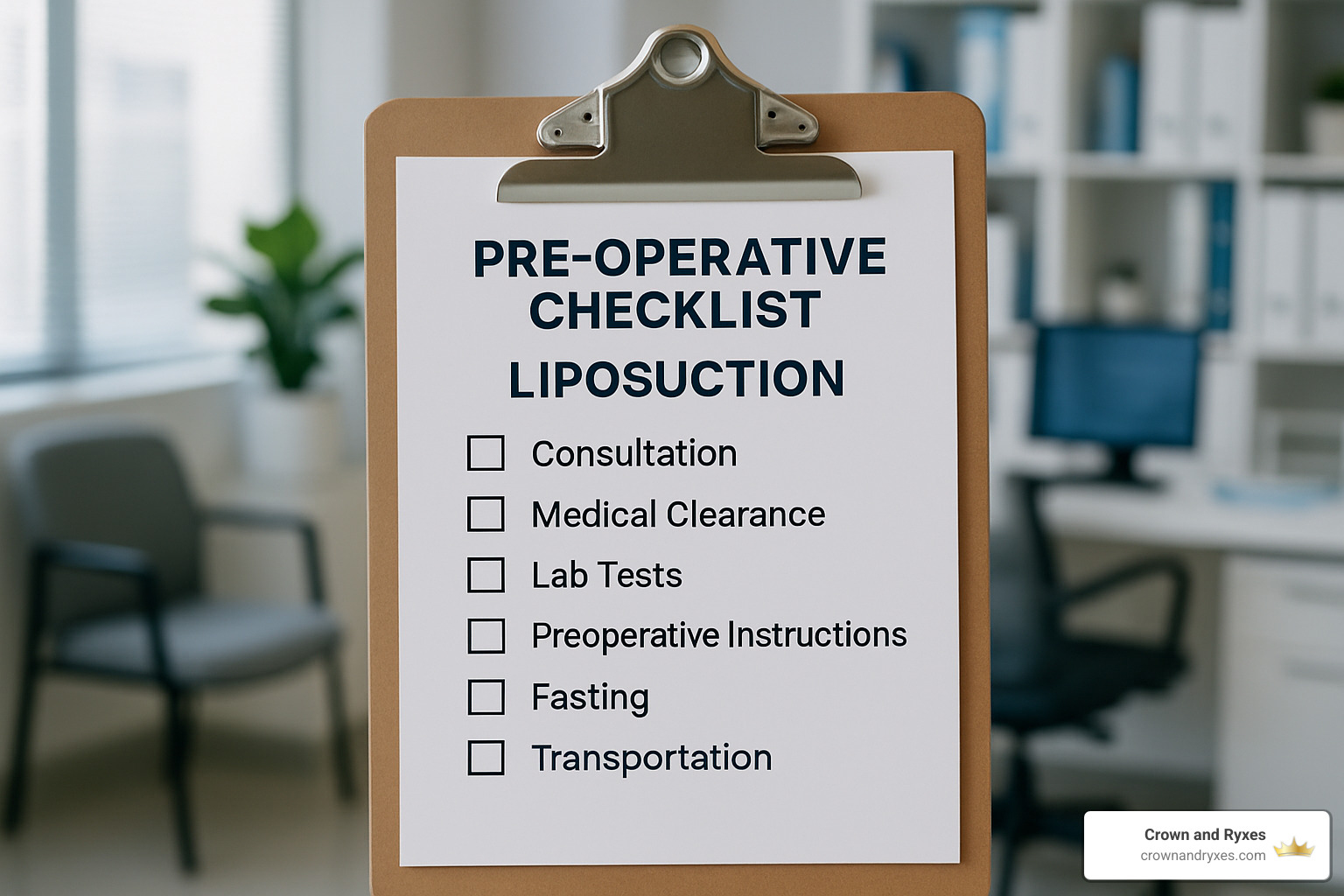
Your journey begins with a heart-to-heart consultation at Crown and Ryxes. We’ll sit down together to discuss what you’re hoping to achieve, examine your body’s unique contours, and review your health history to make sure liposuction is right for you. This is your time to ask questions and share concerns – we’re all ears!
Depending on your age and health background, we might need a green light from your primary care doctor. This extra step ensures you’re in optimal shape for surgery. We’ll also order blood work to check important health markers before proceeding.
About two weeks before your big day, you’ll need to press pause on blood-thinning medications and supplements. This includes common items like aspirin, ibuprofen, vitamin E, and certain herbal supplements that could increase bleeding during surgery.
If you’re a smoker, this is your cue to take a break – and it’s non-negotiable. Smoking impairs healing and increases complication risks, so we ask patients to quit at least 4 weeks before and after surgery. Think of it as a gift to your recovering body.
Your support system matters tremendously! Arrange for someone you trust to drive you home after surgery and stay with you for at least the first 24 hours. Their help will be invaluable as you begin your recovery journey.
Before the big day arrives, transform a cozy corner of your home into recovery headquarters. Keep essentials like water, medications, entertainment, and your phone within easy reach. Trust me – your future self will thank you for this preparation.
Don’t forget to purchase your compression garments before surgery. These special garments aren’t just medical necessities – they’re your new best friends during recovery, helping to reduce swelling and supporting your emerging new contours as you heal.
For more details about liposuction procedures in our area, our Liposuction Orlando FL page has comprehensive information.
Choosing a Qualified Plastic Surgeon
The difference between good and great liposuction before and after results often comes down to one crucial factor: your surgeon.
Board certification should be non-negotiable. Look specifically for certification by the American Board of Plastic Surgery or an equivalent board. This credential confirms your surgeon has completed specialized training in plastic surgery.
A qualified surgeon should maintain hospital privileges for liposuction procedures, even if they typically operate in an outpatient setting. This indicates they’ve met the hospital’s credentialing standards.
When it comes to experience, don’t be shy about asking direct questions. How many liposuction procedures does the surgeon perform yearly? What’s their experience with your specific problem areas? A confident surgeon welcomes these questions.
Take your time reviewing the surgeon’s before and after gallery. Pay special attention to patients with body types similar to yours – these photos offer the most realistic preview of your potential results.
Patient reviews and testimonials provide valuable insights into others’ experiences. Look for patterns in feedback about results, bedside manner, and the overall patient experience.
The right surgeon should make you feel heard and understood. During your consultation, assess their communication style. Do they explain things clearly? Do they listen to your concerns? The surgeon-patient relationship is built on trust and clear communication.
Finally, ensure the surgical facility is properly accredited and has emergency protocols in place. Your safety should always be the top priority.
At Crown and Ryxes, our physicians bring specialized experience in minimally invasive techniques and body contouring, focusing on natural-looking results and your safety above all else.
Combining Liposuction With Other Procedures
Many patients improve their liposuction before and after change by combining procedures for more comprehensive results.
The Brazilian Butt Lift (BBL) offers a beautiful two-for-one benefit. We remove unwanted fat through liposuction, purify it, and then inject it into the buttocks for improvement. One patient from Clermont, FL described it as “solving two problems at once – slimming my waist while giving me the curves I’ve always wanted.”
For those with loose abdominal skin or separated muscles (especially common after pregnancy), combining liposuction with a tummy tuck creates more dramatic results than either procedure alone. While liposuction addresses fat, the tummy tuck tackles skin laxity and muscle separation for a firmer, flatter abdomen.
Breast augmentation paired with liposuction creates harmony between upper and lower body proportions. This balanced approach often results in a more natural-looking silhouette that complements your overall frame.
The popular Mommy Makeover combines multiple procedures – typically liposuction, tummy tuck, and breast improvement – to address post-pregnancy body changes comprehensively. A 35-year-old mother of two from The Villages, FL shared her experience: “After two pregnancies, diet and exercise weren’t enough to restore my pre-baby body. The combined procedures gave me back my confidence and then some!”
Each combination is customized to your unique needs and goals. During your consultation, we’ll discuss which approach might work best for your body and desired outcome.
For more specific information about abdominal contouring results, our Stomach Lipo Before and After page showcases real patient changes and detailed information.
Recovery & Results: Life After Liposuction
The journey to your final liposuction before and after change doesn’t end when you leave the operating room. The recovery period plays just as crucial a role in your results as the surgery itself.
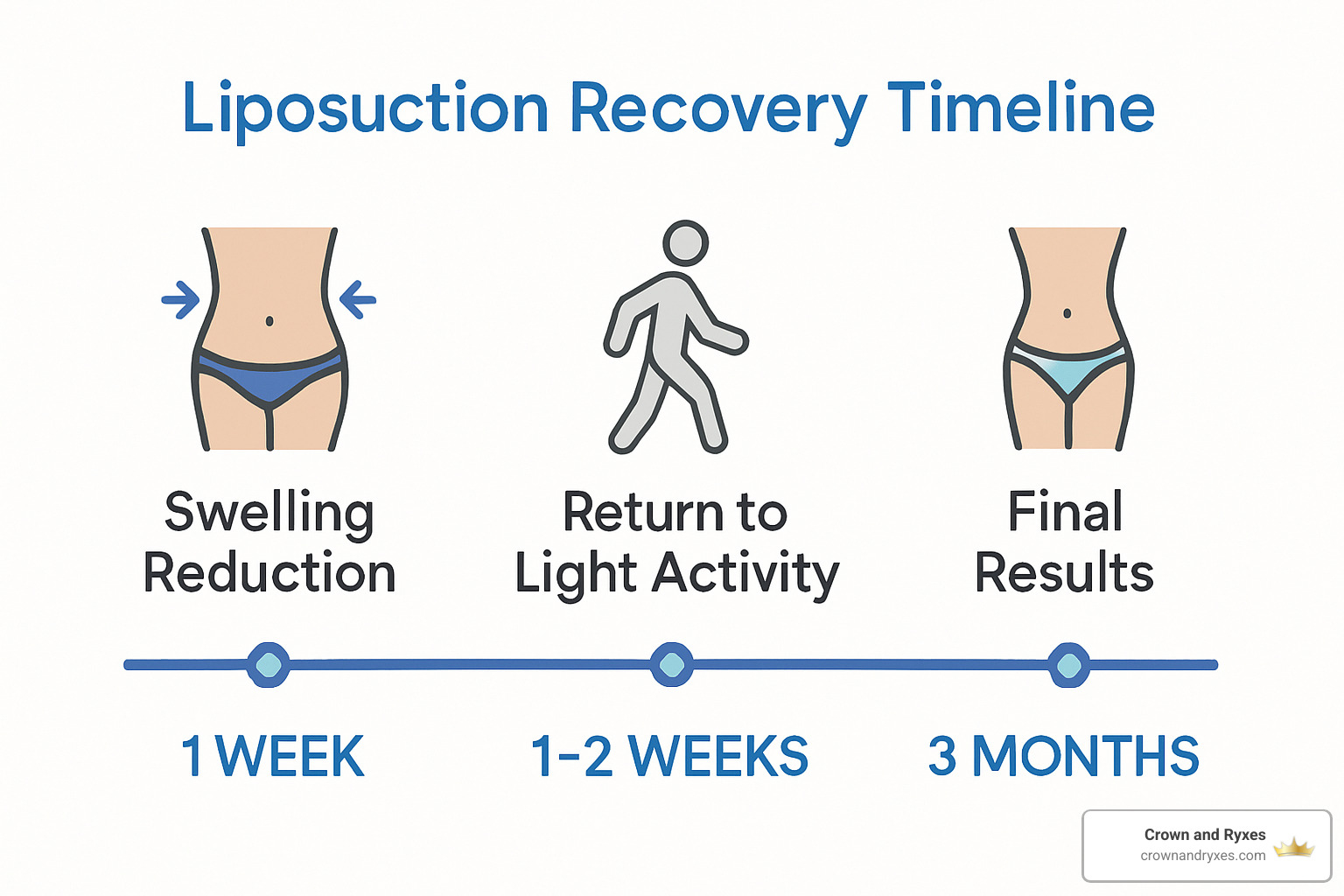
Those first few days after surgery bring a predictable set of experiences. You’ll notice swelling and bruising – completely normal reactions that peak during the first week. Small amounts of fluid drainage might appear at your incision sites for a day or two. As for discomfort, most of my patients describe it more as muscle soreness (like after an intense workout) rather than sharp pain.
“The recovery wasn’t nearly as uncomfortable as I’d imagined,” shared one 41-year-old patient from Clermont, FL. “The compression garment felt supportive rather than restrictive, and by day three, I was moving around comfortably.”
Your recovery toolkit will include several essential elements. Compression garments become your new best friend – these special supportive wear reduces swelling, guides healing tissues, and helps your skin adapt to your new contours. Most patients wear them 24/7 for the first 2-4 weeks, then just during daytime for another month or so.
Many patients benefit tremendously from lymphatic massage, a specialized technique that helps reduce swelling and prevents fluid buildup. While you’ll be encouraged to take light walks almost immediately, you’ll need to press pause on strenuous workouts for 4-6 weeks. And don’t underestimate the healing power of proper hydration and nutrition – your body needs these resources to repair and reveal your new contours.
For a complete breakdown of what to expect during recovery, check out our detailed guide on How Long Does It Take to Recover from Liposuction?
Week-by-Week Healing Milestones
Understanding the typical healing timeline helps set realistic expectations for your liposuction before and after journey.
Those first three days are usually the most intense. Swelling and bruising reach their peak, and you might see some drainage from your incisions. Most patients rely on prescription pain medication during this time, and we strongly encourage short walks to promote healthy circulation.
By week two, you’ll notice significant improvements. Swelling and bruising begin to subside noticeably. Most of our patients feel ready to return to desk jobs, and many can switch from prescription pain relief to over-the-counter options. You’ll still be wearing your compression garments faithfully.
When you reach week six, you’ll hit some exciting milestones. Most patients get cleared for moderate exercise and physical activities. The majority of visible swelling has resolved, though some subtle swelling persists. Many patients can stop wearing compression garments at this point, and most report their energy levels returning to normal.
At the three-month mark, you’re seeing the light at the end of the tunnel. About 80-90% of swelling has disappeared, revealing your emerging new contours. Your scars are beginning to fade (though this process continues for months), and you can return to all your favorite activities, including vigorous exercise.
Finally, at six months post-surgery, you’ve arrived at your destination. Any remaining swelling has resolved, revealing your final results. Your scars continue to mature and fade (a process that can take up to a year), and you’ve entered the long-term maintenance phase of your journey.
“Recovery is definitely a process, not an event,” I often tell my patients. “The patience you invest in proper healing pays dividends in your final liposuction before and after results.”
Long-Term Maintenance for Permanent Results
While liposuction before and after results show permanent fat removal from treated areas, maintaining your new contours requires ongoing commitment.
A balanced diet forms the foundation of long-term success. Focus on whole foods, lean proteins, plenty of fruits and vegetables, and proper hydration. Even though the treated areas have fewer fat cells, the remaining cells can still expand if you gain weight.
Regular exercise plays a crucial role too. I recommend combining cardiovascular activity (3-5 times weekly) with strength training to maintain muscle tone and metabolic health. Many patients find their new contours actually motivate them to stay more active.
Weight stability is perhaps the most important factor. Try to maintain your weight within 5-10 pounds of your post-recovery weight. Significant fluctuations can compromise those beautiful results you worked so hard to achieve.
Don’t skip your follow-up appointments – these check-ins allow us to monitor your healing and results, addressing any concerns early. And don’t forget about scar care – protecting incision sites from sun exposure for at least 12 months helps minimize visible scarring.
“After my mommy makeover with liposuction, I’m more motivated than ever to maintain my results,” shared a 52-year-old woman from The Villages, FL. “The procedure wasn’t just about changing my body—it changed my lifestyle habits for the better. Seeing my liposuction before and after photos whenever I feel tempted to skip a workout or overindulge reminds me of how far I’ve come.”
Costs, Risks & Common Myths Debunked
Let’s talk money, potential concerns, and separate fact from fiction when it comes to liposuction. Understanding these practical aspects helps you make confident decisions about your body contouring journey.
The price tag for your change varies widely based on several key factors. In metropolitan areas, you’ll typically pay more than in smaller cities, and surgeons with specialized expertise often command higher fees. Each additional treatment area increases your investment, and advanced techniques like VASER or laser-assisted approaches generally cost more than traditional methods.
“Many patients are surprised by the range of pricing factors,” explains Dr. Casavant. “Everything from the operating room fees to anesthesia time affects your final investment.”
Your total cost includes facility fees, anesthesia (usually charged hourly), and sometimes post-operative essentials like compression garments and follow-up visits. For a detailed breakdown of what you might expect to pay, check out our comprehensive guide on How Much Does Liposuction Cost?.
Since liposuction is generally considered cosmetic rather than medically necessary, insurance typically won’t cover the procedure. There are rare exceptions for certain medical conditions, which we explore in our article Does Insurance Cover Liposuction?.
When comparing body contouring options, many patients wonder about the differences between liposuction and tummy tucks:
| Liposuction | Tummy Tuck |
|---|---|
| Removes fat only | Removes fat, excess skin, and tightens muscles |
| Minimal scarring | Longer scar along lower abdomen |
| 1-2 week recovery | 2-4 week recovery |
| No muscle repair | Repairs separated abdominal muscles |
| Minimal skin tightening | Significant skin removal and tightening |
| Best for good skin elasticity | Better for loose, stretched skin |
| $2,500-$7,500 per area | $8,000-$15,000 |
How Much Fat Can Be Safely Removed?
Safety always comes first in cosmetic procedures. Medical guidelines recommend limiting fat removal to 5 liters (about 11 pounds) in a single session. This isn’t arbitrary—it’s carefully calculated to prevent serious complications.
“I’ve had patients request dramatic fat removal in one go,” shares Dr. Casavant, “but I always explain that their safety matters more than immediate results. When needed, we can stage procedures several months apart for those requiring more extensive contouring.”
Exceeding safe limits increases risks of fluid imbalances affecting your heart, greater chances of contour irregularities, and complications from extended anesthesia time. Liposuction before and after results aren’t about pounds lost—they’re about improved proportions and contours.
A 45-year-old patient from The Villages, FL initially requested extensive removal from multiple areas but appreciated our staged approach after understanding the safety benefits. “Looking back,” she told us, “I’m grateful my doctor prioritized my well-being over my impatience.”
Myth-Busting: The Truth About Cellulite & Skin Tightness
Let’s clear up some common misconceptions about what liposuction before and after results can realistically achieve:
Myth #1: Liposuction effectively treats cellulite.
Standard liposuction actually doesn’t significantly improve cellulite and might occasionally make it more noticeable by removing the fat that was “filling in” the dimpled areas. If cellulite is your primary concern, specialized treatments targeting this specific issue will serve you better.
Myth #2: Liposuction dramatically tightens loose skin.
While some skin retraction occurs naturally after fat removal, liposuction primarily addresses fat, not skin laxity. If you have significant loose skin (common after pregnancy or major weight loss), you might need additional procedures like a tummy tuck for optimal results.
Myth #3: Fat returns after liposuction.
Fat cells removed during the procedure are gone permanently—they don’t regenerate in treated areas. However, the remaining cells can still expand if you gain weight, which is why maintaining healthy habits matters for long-term results.
Myth #4: Liposuction is a weight-loss procedure.
This is perhaps the most common misconception. Liposuction is designed for body contouring, not weight reduction. Most patients lose only 2-5 pounds of actual weight but see significant improvements in their shape and proportions.
Myth #5: Results are immediate.
While you’ll notice changes right away, your final liposuction before and after change emerges gradually over 3-6 months as swelling subsides and tissues adapt to their new contours.
“Understanding these realities helps set appropriate expectations,” notes a 38-year-old patient from Clermont, FL. “My results weren’t instant, but watching my body transform over several months made the journey even more rewarding.”
Some newer technologies, like laser-assisted liposuction, may offer modest skin-tightening benefits, but it’s important to maintain realistic expectations about what the procedure can achieve for skin laxity. During your consultation at Crown and Ryxes, we’ll honestly assess what results you can expect based on your unique body characteristics.
Frequently Asked Questions about Liposuction before and after
Will I have visible scars after liposuction?
One of the most common concerns I hear from patients considering liposuction is about scarring. The good news? Liposuction incisions are typically tiny—just 3-4mm in length (about the size of a grain of rice). We strategically place these small openings in natural body creases or less visible areas whenever possible.
While all surgical procedures leave some mark, liposuction before and after photos often show that scars become barely noticeable over time. Most of my patients at Crown and Ryxes find their scars have faded significantly within 6-12 months.
“I was worried about having obvious scars after my procedure,” shared one 42-year-old patient from Clermont, FL. “But after a year, I have to actually search to find where my incisions were made!”
To help minimize scarring, I often recommend silicone scar sheets or gel during recovery. Sun protection is absolutely essential for incision sites during the first year—UV exposure can darken scars and make them more prominent, potentially affecting your liposuction before and after results.
How soon can I exercise after surgery?
Getting back to your workout routine happens gradually after liposuction. I always tell my patients to think of it as a journey, not a sprint:
Right after surgery, light walking is your best friend. It promotes circulation and reduces the risk of blood clots—just a few minutes several times daily is perfect.
During weeks 1-2, continue with gentle walking, gradually increasing how long you walk. Your body is doing important healing work during this time!
By weeks 3-4, you can typically resume light, low-impact activities like stationary cycling or elliptical training at moderate intensity. Listen to your body—if something hurts, back off.
Around the 6-week mark, most of my patients are cleared to return to all exercise activities, including strength training and higher-impact workouts. This is when many people start seeing their exciting liposuction before and after changes taking shape!
By 3 months post-surgery, you can generally resume high-intensity interval training or advanced exercise programs if those are part of your routine.
Always follow your surgeon’s specific recommendations. Your personal recovery timeline may vary based on how extensive your procedure was and your individual healing factors. As one of my patients from The Villages, FL noted, “I was eager to get back to my tennis game, but following Dr. Casavant’s timeline actually helped me heal faster in the long run.”
Can liposuction treat cellulite?
I wish I could tell you that traditional liposuction is the answer to cellulite, but I’d be doing you a disservice. The truth is, standard liposuction isn’t designed to effectively treat cellulite and can occasionally make it more noticeable in some patients.
Liposuction before and after results show fat reduction and body contouring, but cellulite is a different beast entirely. Cellulite results from fibrous bands pulling down on the skin, creating that characteristic dimpled appearance—it’s not simply about having excess fat.
Some specialized techniques, such as Cellulaze or subcision combined with fat grafting, are specifically designed to address cellulite by targeting these fibrous bands. If smooth skin texture is your primary concern rather than fat reduction, we should discuss these specialized treatments during your consultation.
“I came in wanting liposuction to fix my cellulite,” one 39-year-old patient told me. “I’m so grateful my provider at Crown and Ryxes explained the difference and guided me toward treatments that actually addressed my real concern.”
During your consultation at Crown and Ryxes, we’ll carefully assess your concerns and goals to determine whether liposuction or a different treatment approach would better address your specific situation. Our goal is always to match you with the procedure that will truly deliver the results you’re hoping for.
Conclusion
The journey from liposuction before and after change is both physical and emotional. I’ve seen how this procedure changes not just body contours but also renews confidence and improves quality of life for our patients in Clermont, FL and The Villages, FL.
Whether you’re thinking about treating a single stubborn area or considering a more comprehensive approach like Lipo360, your satisfaction depends on a few key elements:
First, having realistic expectations about what liposuction can achieve makes all the difference. This isn’t a weight loss procedure—it’s body sculpting that improves your natural shape by removing fat from areas resistant to diet and exercise.
Second, choosing the right provider matters tremendously. Your results are only as good as the hands creating them, which is why our team at Crown and Ryxes brings specialized experience to every procedure.
Third, your recovery period isn’t just something to endure—it’s an essential part of your change. Patients who diligently follow post-operative instructions typically experience smoother healing and better final results.
Finally, maintaining your new contours requires commitment. While the fat cells removed are gone forever, the remaining cells can still expand if you gain weight. Many patients tell me their liposuction before and after experience actually motivated them to adopt healthier habits long-term.
Some people achieve their desired outcome with a single liposuction session. Others benefit from a staged approach, addressing different areas over time or combining liposuction with complementary procedures like tummy tucks or BBLs for more dramatic change.
Your body is uniquely yours, and your treatment should reflect that individuality. At Crown and Ryxes, we don’t believe in one-size-fits-all approaches. Instead, we create personalized plans that consider your specific anatomy, goals, and lifestyle—not just the areas being treated.
Ready to explore how we can help you achieve your body contouring goals? Visit our comprehensive Crown and Ryxes services page or schedule a consultation at one of our convenient locations. Your change journey begins with that first conversation about what’s possible for your body.
The most beautiful liposuction before and after results come not just from the procedure itself, but from the thoughtful, comprehensive approach to your care—before, during, and long after your surgery day. We’re here to support you through every step of that journey.