

Why Male Hair Growth Pills Matter for Your Confidence and Well-Being
Male hair growth pills are among the most sought-after solutions for men experiencing thinning hair or male pattern baldness. If you’re looking for effective options, here’s what works:
Most Effective Male Hair Growth Pills:
- Finasteride (Prescription) – FDA-approved, blocks DHT hormone, clinically proven to slow hair loss and promote regrowth in 3-6 months
- Dutasteride (Prescription) – More potent DHT blocker, can decrease serum DHT by over 90%
- Nutrafol Men (Supplement) – Multi-targeted approach with 21 vitamins and minerals, 84% of men saw improved hair quality after 6 months
- Viviscal (Supplement) – Marine collagen and nutrient blend supporting hair health
- Biotin supplements – Only effective if you have a true biotin deficiency
Hair loss affects 30-50% of men by age 50, making it one of the most common concerns men face. The good news? Modern science has delivered real solutions. While you can’t change your genetics, you can take action to slow hair loss, support healthier hair growth, and in many cases, regrow hair you’ve already lost.
The two main categories of male hair growth pills are prescription medications (like Finasteride, which targets the hormonal cause of male pattern baldness) and over-the-counter supplements (which provide nutritional support for hair health). Prescription options are clinically proven to treat androgenetic alopecia, while supplements work best as complementary support for overall hair wellness.
Understanding your options means knowing how hair actually grows. Your hair goes through three phases: the growth phase (anagen), the transition phase (catagen), and the resting phase (telogen). Male pattern baldness disrupts this cycle by shortening the growth phase and causing follicles to shrink over time—a process called miniaturization.
I’m Dr. Matthew Casavant, and over my 20+ years as a physician specializing in patient-centered care, I’ve guided countless men through decisions about male hair growth pills and comprehensive hair restoration approaches. While my primary practice focuses on women’s health, understanding hormonal influences on hair loss—and helping patients steer treatment options with evidence-based information—has been a consistent part of providing holistic care to the communities I serve in Clermont, FL, and The Villages, FL.
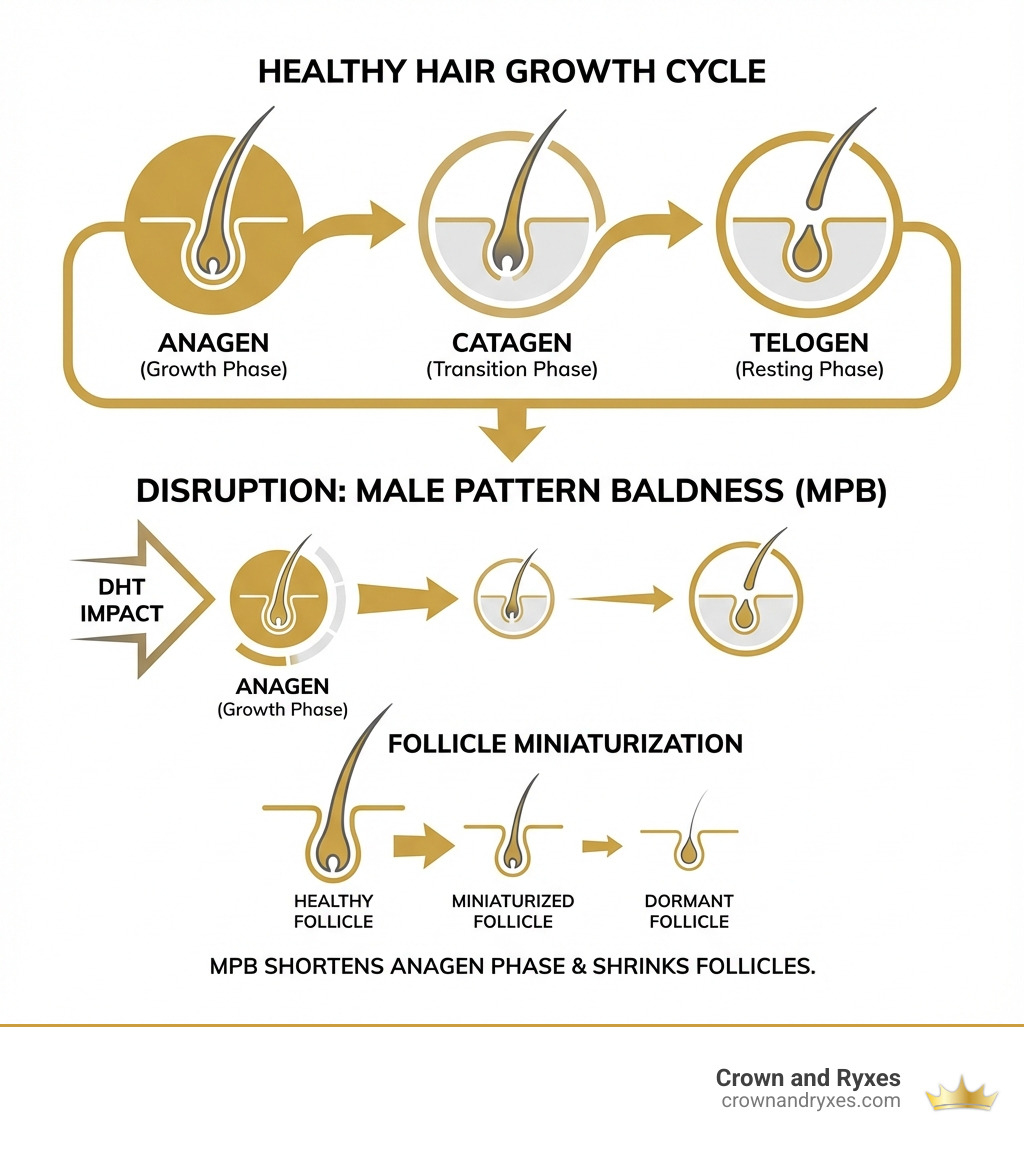
Male hair growth pills terms made easy:
Understanding Prescription Male Hair Growth Pills
When it comes to serious solutions for male pattern baldness, prescription male hair growth pills are often at the top of the list. These are medications designed to address the root causes of hair loss, specifically androgenetic alopecia, the most common form of hair loss in men.
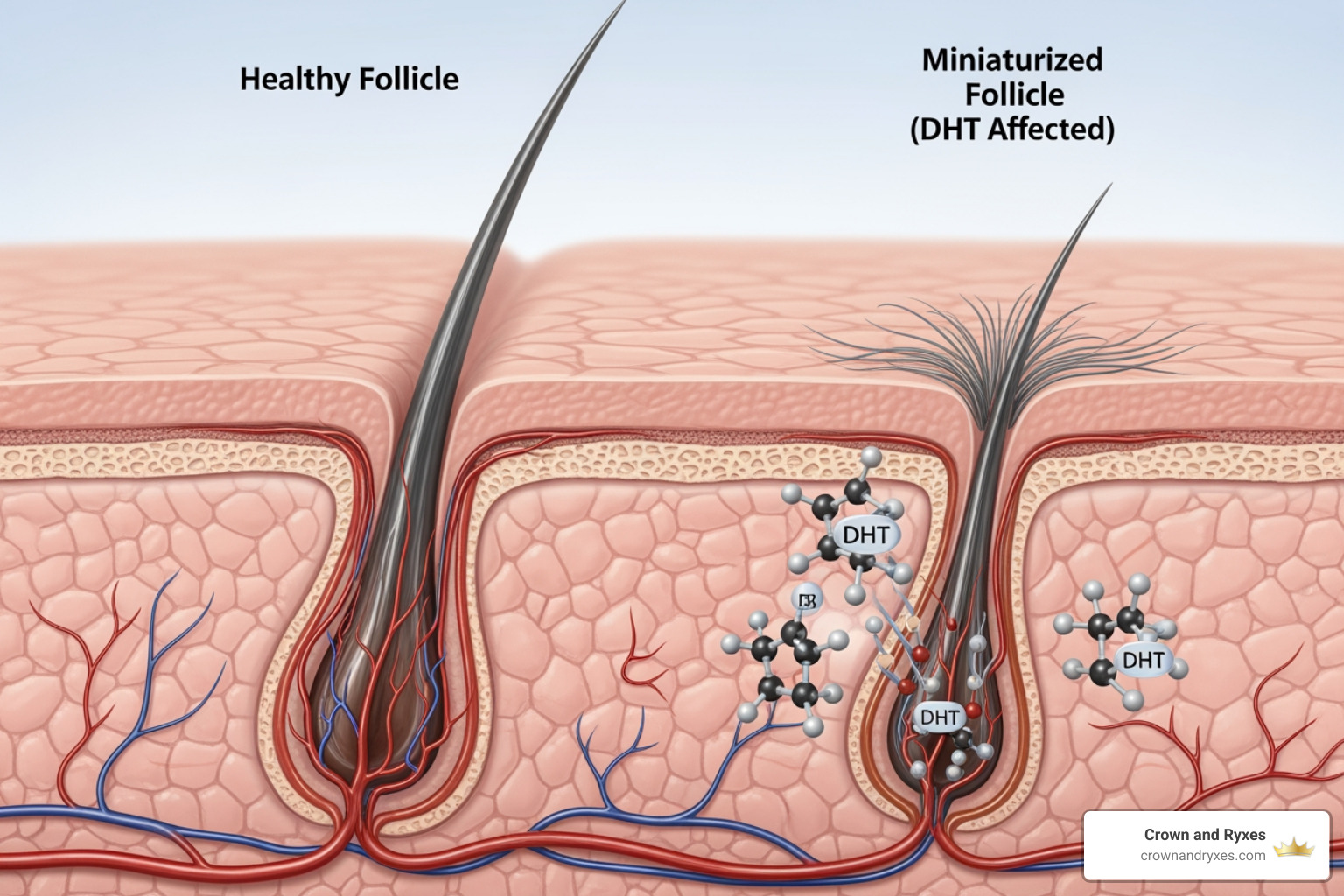
The key culprit in male pattern baldness is a hormone called Dihydrotestosterone, or DHT. Our bodies naturally convert testosterone into DHT using an enzyme called 5-alpha reductase. In men genetically predisposed to hair loss, DHT attaches to receptors in the hair follicles, causing them to shrink and eventually stop producing healthy hair. This process is known as follicle miniaturization. The good news is that the Food and Drug Administration (FDA) has approved treatments that can intervene in this process. These prescription male hair growth pills work to counteract the effects of DHT, offering a pathway to preserving and even regrowing hair.
How do prescription pills like Finasteride work?
Finasteride is one of the most well-known and effective prescription male hair growth pills. It works by targeting the very enzyme responsible for creating DHT: 5-alpha reductase. Specifically, Finasteride is a type II 5-alpha reductase inhibitor, meaning it blocks this enzyme from converting testosterone into DHT in the scalp. By reducing DHT levels, Finasteride helps to prevent further damage to hair follicles. This slows down the progression of hair loss and, for many men, can even reverse the miniaturization process, allowing dormant or shrinking follicles to produce thicker, healthier hair again. Think of it as putting a shield around your hair follicles, protecting them from the DHT attack.
For more detailed information on Finasteride’s role in hair loss, you can visit the NHS’s guide: About finasteride’s role in hair loss.
What is the scientific evidence for their effectiveness?
The effectiveness of prescription male hair growth pills like Finasteride is well-supported by scientific research. A daily oral Finasteride dose of 1 milligram has been shown to reduce scalp DHT by 64% and serum DHT by 68%. This significant reduction in the hair-damaging hormone directly translates to tangible results for men experiencing hair loss. In clinical trials, Finasteride has demonstrated beneficial effects, particularly for men with thinning at the crown and mid-scalp. A 10-year study of 118 men treated with Finasteride (1 mg/day) found that a remarkable 86% continued to benefit from the treatment, showing sustained efficacy over the long term. These studies indicate that Finasteride doesn’t just slow hair loss; it actively promotes regrowth and maintains it over many years.
To dig deeper into the scientific understanding of male hair loss and its treatments, explore this comprehensive resource: Scientific research on Male Androgenetic Alopecia.
How long does it take to see results?
Patience is a virtue, especially when it comes to hair regrowth. While Finasteride begins working internally to reduce DHT levels fairly quickly, visible results take time. We typically advise our patients to expect to see initial improvements within 3 to 6 months of consistent use. However, significant hair growth may not be noticeable until around 12 months. Consistency is absolutely key here. Skipping doses or stopping treatment prematurely will likely negate any progress made. What we often see in the first year is a slowing of hair loss progression, followed by an increase in hair density and thickness. Finasteride is effective at both preventing further hair loss and promoting regrowth, but it requires continuous commitment. If you stop taking it, any newly regrown hair will likely be lost within 12 months.
A Guide to Over-the-Counter Hair Growth Supplements
Beyond prescription options, a vast array of over-the-counter (OTC) male hair growth pills in supplement form promise fuller, healthier hair. These supplements operate differently from prescription drugs. While prescription medications like Finasteride treat a specific medical condition (androgenetic alopecia) by altering hormone levels, supplements primarily aim to support overall hair health by providing essential nutrients.

One significant distinction is regulation. Unlike prescription drugs, which undergo rigorous FDA approval processes to prove safety and efficacy for a stated medical purpose, dietary supplements are not regulated by the FDA in the same way. This means that while many contain beneficial ingredients, their claims of treating hair loss are not held to the same scientific standard. We view them as complementary tools to support healthy hair, rather than standalone treatments for advanced male pattern baldness.
What are the key ingredients in hair growth supplements for men?
The world of hair growth supplements is brimming with various ingredients, each claiming to play a vital role in hair health. Here’s a look at some of the most common components you’ll find in male hair growth pills and supplements:
- Biotin: A B-vitamin often lauded for its role in hair, skin, and nail health. It’s believed to strengthen hair and improve its structure.
- Saw Palmetto: A natural extract that some studies suggest may act as a DHT blocker, similar to Finasteride, but typically with less potency.
- Marine Collagen: As we age, our body’s collagen production decreases. Collagen is a vital protein for hair structure, and supplementing it can help with hair strength and elasticity.
- Ashwagandha: An adaptogenic herb known for its stress-reducing properties. Since stress can contribute to hair loss, Ashwagandha aims to mitigate this factor.
- Keratin: The primary protein that makes up our hair. Supplements may include hydrolyzed keratin to provide the building blocks for stronger hair.
- Vitamins (D, E, Zinc): Vitamin D plays a role in hair follicle cycling, Vitamin E is an antioxidant that can help protect hair follicles, and Zinc is essential for hair tissue growth and repair.
- Amino Acids: The building blocks of proteins, including keratin. Supplements often contain a blend of essential amino acids to support hair protein synthesis.
Can supplements like Biotin really help with male hair loss?
Biotin has become a superstar in the hair supplement world, and for good reason: it’s an essential B-vitamin crucial for the production of keratin, the protein that forms our hair. If you have a true biotin deficiency, which is quite rare, then supplementing with biotin can indeed help address hair loss. In such cases, hair loss can be a symptom of an underlying nutritional imbalance.
However, here’s the crucial insight: for the vast majority of men experiencing male pattern baldness, a biotin deficiency is not the cause. As our research confirms, no scientific studies have shown biotin to prevent or treat hair loss in individuals who are not deficient. Taking megadoses of biotin when your body already has sufficient levels is unlikely to give you more hair or stop male pattern baldness. While it’s generally considered safe, it’s not a magic bullet for androgenetic alopecia. Our approach at Crown and Ryxes is to ensure you address any deficiencies, but also to look beyond single ingredients for comprehensive solutions.
Evaluating Popular Supplement Blends
While individual ingredients like biotin might have limited impact on male pattern baldness, many popular male hair growth pills combine multiple ingredients into proprietary blends. These formulas often adopt a “drug-free” approach, aiming to support hair health through a multi-targeted strategy. The idea is that by addressing various factors contributing to hair thinning—such as nutritional deficiencies, stress, and inflammation—they can create a more optimal environment for hair growth.
For example, a supplement blend might include adaptogens like Ashwagandha to help the body manage stress and reduce cortisol levels, which can contribute to hair shedding. Other ingredients might have anti-inflammatory properties to support a healthy scalp, or provide a wide spectrum of vitamins and minerals crucial for hair follicle function.
When evaluating these blends, we look for clinically tested formulations. For instance, one notable supplement, Nutrafol Men, boasts a proprietary blend of 21 vitamins, minerals, and natural ingredients. A clinical study showed that 84% of men experienced improved hair quality and 72% saw improved scalp coverage after 6 months of using such a multi-targeted blend. This indicates that while not acting as a drug to block DHT, a well-formulated supplement can significantly improve hair health and appearance. These blends are designed to be supportive rather than curative, working best as part of a holistic approach to hair wellness.
Risks, Side Effects, and Making an Informed Choice
Choosing the right path for hair restoration requires careful consideration of both the potential benefits and any associated risks. It’s a personal journey, and for us, your safety and well-being are paramount. This is why professional medical advice is not just recommended, it’s essential. A personalized treatment plan, custom to your specific type of hair loss and overall health, is always the most effective strategy.
What are the potential side effects of hair growth pills?
When considering prescription male hair growth pills like Finasteride, it’s important to be aware of potential side effects, even if they are unusual. The most commonly discussed side effects are sexual in nature, including erectile dysfunction (ED) and decreased libido. While these occurrences are not common, they are a significant concern for many men.
Our research notes that Finasteride can cause erectile dysfunction and other sexual side effects, though this is unusual. If these side effects do occur, they typically resolve once the medication is stopped. However, for some men, these symptoms can persist for three months or more after discontinuation. This is a vital point to discuss openly with your doctor.
At Crown and Ryxes, we understand that sexual health is an integral part of overall well-being. If you experience sexual side effects from any treatment or are simply looking to improve your sexual wellness, we offer advanced solutions like REGENmax, custom to your needs. Always communicate any concerns about side effects with your healthcare provider in Clermont, FL, or The Villages, FL, to ensure the safest and most effective treatment course for you.
Are there risks with using over-the-counter supplements?
Generally, over-the-counter male hair growth pills and supplements are considered safer than prescription medications, primarily because they typically contain vitamins, minerals, and herbal extracts rather than pharmaceutical compounds. However, “safe” doesn’t mean “risk-free.”
One potential risk is over-supplementation, especially with fat-soluble vitamins or minerals, which can accumulate in the body and lead to toxicity. Another concern is the potential for allergic reactions to specific ingredients. Since supplements are less strictly regulated than drugs, the quality and purity can vary between brands. We always recommend choosing reputable brands that conduct third-party testing to ensure what’s on the label is actually in the bottle, and that it’s free from contaminants. Always discuss any supplements you plan to take with your doctor, particularly if you are on other medications, to avoid potential interactions.
When should a man see a doctor about hair loss?
Deciding when to consult a medical professional about hair loss can be a crucial step in effective treatment. We strongly recommend seeing a doctor in Clermont, FL, or The Villages, FL, if:
- You experience sudden or patchy hair loss: This can be a sign of an underlying medical condition, such as an autoimmune disorder, a scalp infection, or even significant stress.
- Your hair loss is accompanied by other symptoms: If you notice redness, itching, pain, or scaling on your scalp, or experience unexplained weight changes, fatigue, or other systemic symptoms, get a professional diagnosis.
- Before starting any prescription medication: Prescription male hair growth pills require a doctor’s evaluation to ensure they are appropriate for your health and type of hair loss.
- To get an accurate diagnosis: There are many causes of hair loss beyond male pattern baldness. A doctor can perform tests like blood work, a pull test, or even a scalp biopsy to pinpoint the exact cause, as detailed in the Mayo Clinic’s diagnostic guide: Diagnosing hair loss with a professional. This ensures you receive the most effective and safe treatment plan.
Don’t wait until hair loss becomes extensive or causes significant emotional distress. Early intervention often leads to better outcomes.
How Pills Compare to Other Hair Loss Treatments
While male hair growth pills are a powerful tool in our arsenal against hair loss, they are just one piece of a larger puzzle. At Crown and Ryxes, we believe in a holistic approach to hair restoration, recognizing that combining therapies often yields the best results. It’s about creating a comprehensive strategy that addresses your unique needs and setting realistic expectations for what each treatment can achieve.
Pills vs. Topical Minoxidil vs. Low-Level Laser Therapy (LLLT)
Here’s a quick comparison of some popular hair loss treatments to help you understand their differences:
| Treatment Type | How It Works – | Efficacy – | Cost – | Pros – | Cons -|
| Prescription Pills (Finasteride) | Blocks the hormone DHT, which causes hair follicle shrinkage. – | High for preventing loss and promoting regrowth. – | Ongoing monthly cost. – | Simple daily pill, scientifically proven. – | Requires prescription, potential side effects. -|
| Topical Minoxidil (Rogaine) | A vasodilator that may improve blood flow to hair follicles. – | Moderate, can slow hair loss and stimulate some growth. – | Ongoing monthly cost. – | Over-the–counter, easy to apply. – | Must be used continuously, can cause scalp irritation. – | Low-Level Laser Therapy (LLLT) | Uses red light to stimulate cellular activity in hair follicles. – | Varies, some studies show modest improvement. – | High initial investment for a device. – | Non-invasive, no known side effects. – | Time-consuming, less proven than other methods. – |
What are the most effective non-pill treatments?
- Topical Minoxidil (Rogaine): This is one of the most widely recognized over-the-counter treatments. Available in liquid or foam, it’s applied directly to the scalp. While its exact mechanism isn’t fully understood, it’s believed to increase blood flow to hair follicles and prolong the anagen (growth) phase of the hair cycle. It’s effective for various types of hair loss, including male and female pattern baldness, and often yields noticeable thickening within four to six months of consistent use.
- Low-Level Laser Therapy (LLLT): LLLT involves using devices like laser combs, helmets, or caps that emit low-level laser light. The theory is that this light stimulates cellular activity within hair follicles, improving blood flow and reducing inflammation, thus encouraging hair growth. While the FDA has approved some LLLT devices for hereditary hair loss, our research indicates that there isn’t enough robust evidence to definitively say these devices restore hair or prevent balding significantly. Small studies have shown some improvement in hair density, but more long-term research is needed.
- Platelet-Rich Plasma (PRP) Therapy: This advanced treatment involves drawing a small amount of your blood, processing it to concentrate the platelets (which are rich in growth factors), and then injecting this PRP into your scalp. These growth factors are thought to stimulate dormant hair follicles and promote healing and regeneration. PRP is increasingly popular, and while promising, it’s still considered an emerging treatment with ongoing research into its full efficacy and standardization.
- Hair Transplant Surgery: For men with significant hair loss, hair transplant surgery offers a more permanent solution. This procedure involves taking hair follicles from a donor area (typically the back or sides of the head, where hair is resistant to balding) and transplanting them to thinning or bald areas. Modern techniques like Follicular Unit Transplantation (FUT) and Follicular Unit Extraction (FUE) can achieve very natural-looking results. While effective, it’s a surgical procedure with associated costs and recovery time, and medical therapy is often recommended beforehand to stabilize existing hair.
Comparing Efficacy and Long-Term Cost
When evaluating male hair growth pills against other treatments, both efficacy and long-term cost are critical factors.
Prescription pills like Finasteride require continuous use. The monthly cost might seem manageable, but it adds up over years and decades. However, its proven efficacy in preventing further loss and promoting regrowth often makes it a cost-effective choice for long-term management of male pattern baldness.
For non-pill treatments:
- Topical Minoxidil also requires continuous application, so its cost, while generally lower than Finasteride, also accumulates over time.
- LLLT devices represent an upfront investment. Once purchased, the ongoing cost is minimal (electricity, device maintenance). However, given the current scientific evidence, the return on this investment for significant hair regrowth remains less certain than for pharmaceutical options.
- PRP therapy involves multiple sessions, making it a significant upfront and ongoing investment, with results varying.
- Hair transplant surgery has a substantial upfront cost, which is often not covered by insurance. While the transplanted hair is permanent, a second procedure may be needed to address continued thinning of non-transplanted hair.
The “best value” depends on your individual hair loss stage, personal goals, tolerance for side effects, and budget. A comprehensive consultation with a specialist can help you weigh these factors and choose the most suitable path.
Frequently Asked Questions about Male Hair Growth Pills
We understand you likely have many questions when considering male hair growth pills and other hair restoration options. Here, we address some of the most common inquiries we hear from men in Clermont, FL, and The Villages, FL.
Can hair growth pills prevent hair loss or only help with regrowth?
Certain male hair growth pills can do both. Prescription medications like Finasteride are highly effective at preventing further hair loss by blocking the conversion of testosterone to DHT. By reducing DHT levels, they halt the miniaturization process that leads to baldness. For many men, this also results in significant regrowth of hair that had thinned or stopped growing.
Over-the-counter supplements, while not directly treating androgenetic alopecia, primarily work to support the health of existing hair and optimize the conditions for growth. They aim to prevent hair loss by addressing nutritional deficiencies, reducing stress, and fostering a healthy scalp environment, which can indirectly aid in maintaining hair density. So, while prescription options offer both prevention and regrowth, supplements are more focused on supporting existing hair and creating an optimal environment for future growth.
What are the long-term effects of using hair growth pills?
For prescription male hair growth pills like Finasteride, long-term studies have shown sustained benefits for most men. Many individuals continue to experience slowed hair loss and maintained or increased hair density over many years of continuous use. It’s not a temporary fix; it’s a long-term management strategy. However, the long-term potential for side effects, particularly sexual side effects, is a topic of ongoing discussion. While uncommon, some men report persistent sexual issues even after stopping the medication. This underscores the importance of regular follow-ups with your doctor to monitor your health and discuss any concerns, including sexual wellness solutions like REGENmax.
For over-the-counter supplements, the long-term effects are generally less studied and can vary widely depending on the specific ingredients and formulation. While many are designed for continuous use, it’s always wise to periodically review your supplement regimen with a healthcare professional to ensure it remains beneficial and safe for your long-term health.
What is the difference between prescription and over-the-counter options?
The primary difference lies in their purpose, regulation, and mechanism of action:
- Prescription Male Hair Growth Pills: These are FDA-approved drugs designed to treat a specific medical condition, namely androgenetic alopecia (male pattern baldness). They contain active pharmaceutical ingredients (like Finasteride or Dutasteride) that directly intervene in physiological processes, such as hormone conversion. Because they are drugs, they undergo rigorous testing for safety and efficacy and require a doctor’s prescription. Their effectiveness is scientifically proven to treat the underlying cause of hair loss.
- Over-the-Counter Supplements: These are typically nutritional products containing vitamins, minerals, herbs, and other natural compounds. They are not regulated by the FDA as drugs, meaning they don’t require the same level of scientific proof for their claims. Their aim is to provide nutritional support for general hair health, address deficiencies, or mitigate factors like stress that contribute to hair thinning. They are best viewed as supportive rather than curative treatments for male pattern baldness.
Understanding this distinction is key to making informed decisions about your hair restoration journey.
Your Next Step Towards a Fuller Head of Hair
We’ve covered a lot of ground today, exploring male hair growth pills, from powerful prescription options like Finasteride to supportive over-the-counter supplements. We’ve seen that understanding the science behind hair loss, being aware of potential side effects, and having realistic expectations are all crucial steps on your journey to a fuller head of hair.
Prescription pills offer a medically proven way to combat the hormonal causes of male pattern baldness, while supplements can provide valuable nutritional support for overall hair health. However, the most crucial step you can take is to seek a professional consultation.
At Crown and Ryxes, we are dedicated to providing personalized hair restoration and wellness solutions. We understand that every man’s hair loss journey is unique. That’s why we invite you to connect with us in Clermont, FL, or The Villages, FL. Our team can help you understand the specific causes of your hair loss, discuss all available treatment options, and create a personalized plan custom to your specific needs, whether it involves male hair growth pills, other advanced therapies, or comprehensive sexual wellness solutions like REGENmax. Let us guide you toward renewed confidence.