

Why Mesotherapy Injections for Hair Loss Are Gaining Attention
Mesotherapy injections for hair loss represent a targeted approach to treating thinning hair by delivering nutrients, medications, and growth factors directly into the scalp. This minimally invasive technique uses micro-injections to nourish hair follicles at their source.
Quick Answer for Mesotherapy Effectiveness:
• Success Rate: Studies show >95% patient satisfaction with 25-50% improvement in hair density
• Timeline: Results typically visible after 2-3 months, full effects at 6 months
• Sessions Needed: Usually 10 sessions spaced 2-4 weeks apart, then maintenance every 3-6 months
• Compared to Minoxidil: Research shows comparable or superior results with fewer side effects
• FDA Status: Not FDA-approved but uses approved medications off-label
Hair loss affects millions of people worldwide, with 90% of cases being androgenetic alopecia caused by genetics and hormones. Traditional treatments like topical minoxidil only show 50% effectiveness, leaving many searching for better options.
Mesotherapy works by injecting a customized cocktail of vitamins, minerals, amino acids, and medications directly into the scalp’s mesoderm layer. This bypasses the skin barrier and delivers nutrients exactly where hair follicles need them most.
Recent systematic reviews analyzing 27 studies with 576 patients found that 7 out of 10 randomized controlled trials showed statistically significant hair growth improvements. The technique combines both mechanical stimulation from micro-injuries and chemical benefits from active ingredients.
As a physician with over 20 years of experience in minimally invasive procedures, I’m Dr. Matthew Casavant, and I’ve seen how mesotherapy injections for hair loss can complement comprehensive hair restoration strategies. My background in advanced surgical techniques and patient education helps me guide individuals through evidence-based treatment decisions that fit their unique needs.

Mesotherapy injections for hair loss terminology:
– injection for hair growth
– mesotherapy for hair loss cost
– mesotherapy hair benefits
Why Read This Guide?
If you’ve tried topical treatments without success or want to understand cutting-edge hair restoration options, this guide addresses your concerns. Whether you’re experiencing early thinning, postpartum hair loss, or genetic pattern baldness, we’ll explain how mesotherapy might fit into your treatment plan.
We understand the emotional impact of hair loss. It affects confidence, self-image, and quality of life for both men and women. That’s why we’ve compiled the latest research and clinical insights to help you make informed decisions about this promising therapy.
How Mesotherapy Works Beneath the Scalp
Mesotherapy targets the mesoderm layer of your scalp, located 2-4 millimeters below the surface. This is where hair follicles receive their blood supply and nutrients. By injecting therapeutic compounds directly into this layer, we bypass the skin’s natural barrier and achieve higher local concentrations than possible with topical applications.
The technique delivers micro-doses of active ingredients exactly where they’re needed most. This targeted approach increases local bioavailability while minimizing systemic exposure and side effects. Think of it as precision medicine for your hair follicles.

The injected cocktail improves local circulation, bringing more oxygen and nutrients to struggling follicles. This improved blood flow helps dormant follicles reactivate and existing ones produce thicker, healthier hair. The process also stimulates the release of growth factors and encourages new blood vessel formation around follicles.
Mechanism of Action Explained
Mesotherapy injections for hair loss work through multiple pathways. First, they can inhibit DHT (dihydrotestosterone), the hormone responsible for androgenetic alopecia. When dutasteride or finasteride are included in the cocktail, they block the enzyme that converts testosterone to DHT locally in the scalp.
The micro-injuries from needles trigger angiogenesis – the formation of new blood vessels. This improves circulation and nutrient delivery to hair follicles. The mechanical stimulation also activates stem cell signaling pathways that promote hair growth and follicle regeneration.
Collagen induction is another key mechanism. The controlled micro-trauma stimulates collagen and elastin production, strengthening the scalp’s foundation and improving hair anchor strength. This helps prevent premature hair shedding and supports healthier growth cycles.
Popular Mesotherapy Cocktails
The most effective formulations combine multiple active ingredients custom to individual needs:
Dutasteride-based cocktails are highly effective for androgenetic alopecia. Research shows dutasteride mesotherapy can significantly improve hair density when combined with supportive nutrients like biotin and pyridoxine.
Minoxidil 0.5% solutions provide vasodilation and growth stimulation. Studies demonstrate that intradermal minoxidil injections can be as effective as topical 5% solutions with better tolerability.
Biomimetic peptides like acetyl tetrapeptide-3 target specific cellular pathways involved in hair growth. These synthetic compounds mimic natural growth factors and can extend the hair growth phase.
PRP add-ons improve regenerative potential. Platelet-rich plasma contains concentrated growth factors from your own blood, making it a popular adjunct to traditional mesotherapy cocktails.
Multivitamin components commonly include:
– Biotin for keratin production
– B-complex vitamins for cellular metabolism
– Vitamin D for follicle cycling
– Zinc for protein synthesis
– Copper for melanin production
– Hyaluronic acid for hydration
– Amino acids for hair shaft structure
Mesotherapy Injections for Hair Loss: Indications, Candidacy & Expected Results
Understanding who benefits most from mesotherapy injections for hair loss helps set realistic expectations and ensures the best possible outcomes. This treatment shines brightest for specific types of hair loss, while certain conditions may require different approaches entirely.
Androgenetic alopecia – the fancy term for male and female pattern baldness – responds exceptionally well to mesotherapy. This genetic lottery affects up to 50% of women and a whopping 80% of men by their 50th birthday. The good news? Mesotherapy works best when hair follicles are weakened but haven’t completely given up the fight.
Telogen effluvium is another excellent candidate for treatment. This condition causes diffuse hair shedding across the entire scalp, often triggered by stress, illness, or major life changes. The targeted nutrition and improved circulation from mesotherapy can help reset your hair’s natural growth cycle.
New mothers dealing with postpartum shedding often find relief through mesotherapy. As hormone levels return to normal after pregnancy, the extra nutritional support delivered directly to follicles can speed up recovery during this vulnerable time.
Early thinning stages show the most dramatic improvements. When you first notice decreased density but can still see hair covering your scalp, mesotherapy often halts progression and improves thickness. Many patients who felt disappointed by topical treatments find better results when nutrients reach follicles directly.
Those unresponsive to topicals like minoxidil often become excellent mesotherapy candidates. Sometimes the skin barrier prevents adequate absorption, making direct injection the key to open uping your hair’s potential.
Who Is (and Isn’t) a Good Candidate?
Age factors play a starring role in treatment success. Patients between 25-65 typically see the most impressive results because their follicles remain responsive to stimulation. Very young patients might not need intervention yet, while advanced age can limit the scalp’s regenerative capacity.
Several medical exclusions require careful consideration. Active scalp infections need clearing before treatment begins. Bleeding disorders make the injection process risky. Certain autoimmune conditions can interfere with healing and results.
Pregnancy and breastfeeding represent absolute no-go zones for mesotherapy. We simply don’t know enough about how the injected compounds might affect developing babies, so safety comes first.
Scarred scalp areas with thick fibrosis show limited response since follicles may be permanently damaged. Think of trying to plant seeds in concrete – the foundation needs to support growth.
Autoimmune alopecia like alopecia areata requires completely different treatment strategies. The immune system attacking hair follicles needs addressing before mesotherapy can help.
Realistic expectations separate satisfied patients from disappointed ones. Advanced baldness (Norwood 6-7 or Ludwig 3) may see some improvement, but complete restoration isn’t realistic. The sweet spot includes early to moderate hair loss with reasonable remaining density.
Visible Results & Timelines
Most patients experience their first encouraging signs within 2-3 months of starting treatment. Hair shedding typically decreases first – you’ll notice fewer strands on your pillow and in the shower drain. Increased thickness of existing hair follows, making your current hair look fuller and healthier.
New growth becomes visible around month 3-4, appearing as fine “baby hairs” along the hairline and crown. These gradually thicken and lengthen with continued treatment.
The standard protocol involves 10 sessions spaced 2-4 weeks apart during the initial phase. Clinical studies prove this frequency optimizes follicle stimulation while allowing proper recovery between treatments. Most patients complete their initial series within 20 weeks.
Maintenance sessions every 3-6 months help sustain your hard-earned results. The exact frequency depends on your individual response and hair loss severity. Some lucky patients maintain benefits with quarterly treatments, while others need more frequent tune-ups.
Results typically last 12+ months after completing the initial series. A systematic review of 576 patients found that over 95% reported satisfaction with their outcomes, with only 5% experiencing any complications.
Mesotherapy Injections for Hair Loss vs. Other Treatments
| Treatment | Effectiveness | Timeline | Side Effects | Cost | Maintenance |
|---|---|---|---|---|---|
| Mesotherapy | 90-92% satisfaction | 2-3 months | Minimal, local | Moderate | Every 3-6 months |
| Topical Minoxidil | 50% effective | 3-6 months | Scalp irritation | Low | Daily application |
| Oral Finasteride | 80% stabilization | 6-12 months | Sexual dysfunction | Low | Daily pill |
| Hair Transplant | 95%+ graft survival | 6-12 months | Surgical risks | High | Possible touch-ups |
Research comparing mesotherapy injections for hair loss to minoxidil found no statistically significant difference in hair regrowth outcomes. However, mesotherapy showed better patient tolerability and satisfaction rates – fewer people complained about side effects or gave up on treatment.
The beauty of mesotherapy lies in its targeted approach. While oral medications affect your entire body and topical treatments struggle with absorption, mesotherapy delivers exactly what your follicles need, exactly where they need it.
Evidence & Controversy: What Does the Science Say?
When it comes to mesotherapy injections for hair loss, the scientific community has been busy gathering evidence. The results are encouraging, though not without some important caveats that every patient should understand.
A comprehensive 2024 systematic review took a deep dive into the research, analyzing 27 studies involving 576 patients. This wasn’t just a casual look at the literature – researchers examined everything from small pilot studies to large randomized controlled trials to get the full picture.
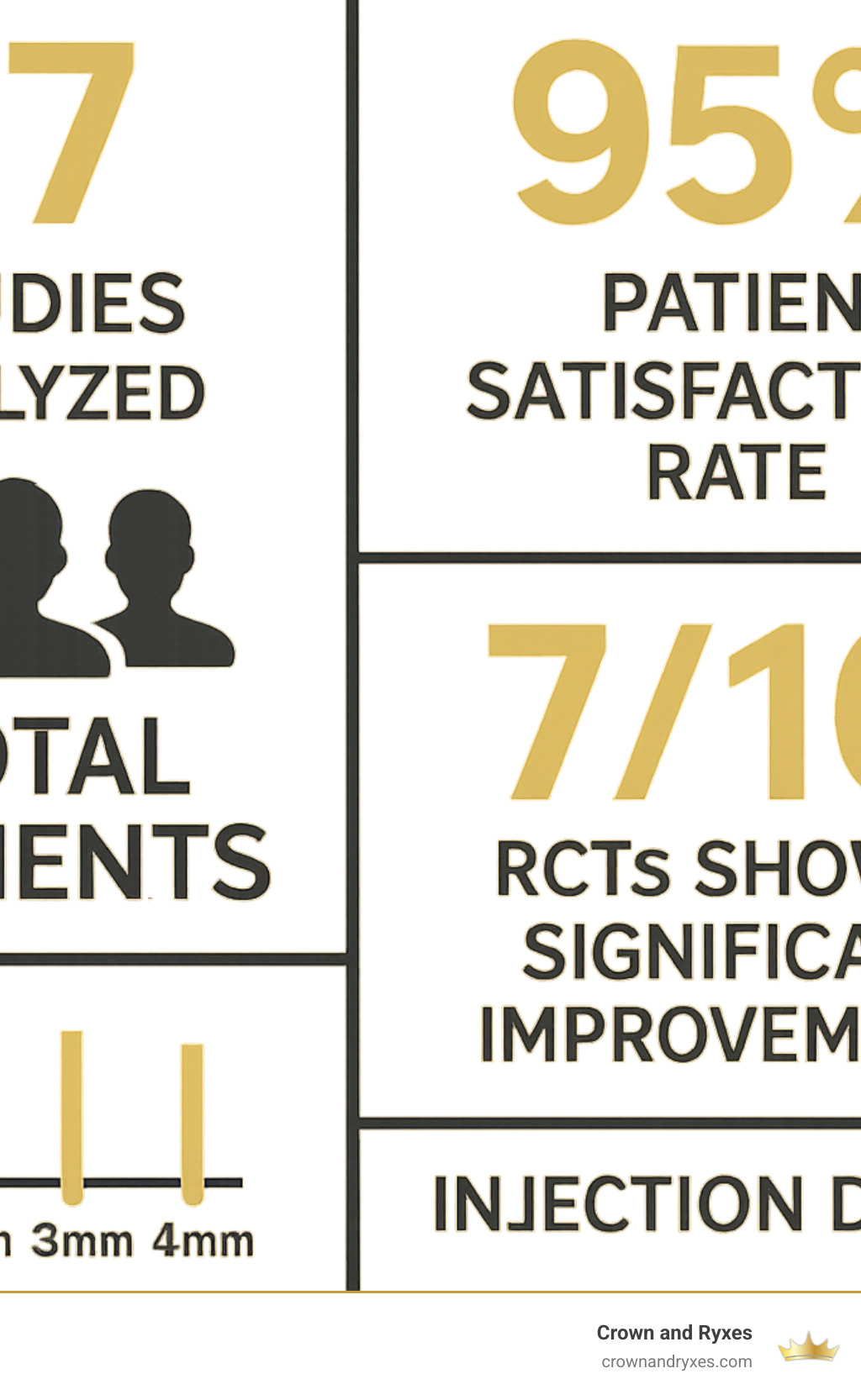
The headline number is impressive: 7 out of 10 randomized controlled trials showed statistically significant improvements in hair growth. That’s a 70% success rate in the gold-standard studies that scientists trust most. These weren’t just “my hair feels thicker” reports – they were measurable improvements documented with photography and microscopic analysis.
But here’s where things get interesting (and a bit messy). The research world hasn’t quite figured out the “best recipe” yet. Some studies used weekly injections, others monthly. Some doctors inject just under the skin surface, while others go deeper. It’s like having 27 different chefs all making the same dish with slightly different ingredients and techniques.
This variation makes it challenging to say definitively which approach works best. Sample sizes ranged dramatically – from intimate studies of 30 people to larger trials with nearly 400 participants. Follow-up periods also varied, with some tracking patients for just 4 months while others followed progress for nearly a year.
The scientific research on systematic review highlights these protocol differences as a key area needing standardization. Without consistent injection protocols, it’s harder to compare results across different clinics and regions.
Comparing Mesotherapy to Minoxidil Alone
One of the most valuable research questions is simple: how does mesotherapy stack up against treatments we already know work? Several non-inferiority trials have directly compared mesotherapy injections for hair loss to topical minoxidil – the current gold standard for many patients.
A randomized controlled trial involving 49 men with male pattern hair loss found that mesotherapy performed just as well as 5% topical minoxidil. But here’s the kicker – patients actually preferred the mesotherapy experience, reporting better satisfaction despite similar hair growth outcomes.
The scientific research on dermoscopic RCT used specialized imaging to measure actual hair density changes. Results showed 25-28% increases in average hair density after mesotherapy treatment. These weren’t subjective improvements – they were measurable changes visible under magnification.
What’s particularly interesting is that even diluted concentrations of minoxidil (0.5% instead of the usual 5%) showed significant results when injected directly into the scalp. This suggests that targeted delivery might be more important than high concentrations for some patients.
A study of 54 women receiving intradermal minoxidil injections versus placebo demonstrated clear improvements in the treatment group after just 10 weekly sessions. This provides solid evidence that the technique works for both men and women dealing with hair loss.
Limitations & Knowledge Gaps
Despite the encouraging results, the scientific community acknowledges several important limitations. Long-term safety data beyond 12 months remains limited – most studies follow patients for 6-12 months, leaving questions about what happens with years of treatment.
This timeline gap matters because hair loss is typically a lifelong concern. While we know mesotherapy appears safe in the short term, we don’t have decades of data like we do with oral medications or topical treatments.
Optimal dosing protocols need standardization across the field. Currently, practice varies widely between providers. Some use high concentrations with fewer sessions, while others prefer diluted solutions with more frequent treatments. Without standardized guidelines, patients in Clermont, FL might receive different protocols than those in The Villages, FL.
The regulatory landscape adds another layer of complexity. Mesotherapy injections for hair loss are not FDA-approved as a specific treatment, though individual components like minoxidil and dutasteride have approval for other uses. This off-label application requires careful informed consent and thorough risk-benefit discussions.
Cost-effectiveness studies are notably absent from the research literature. While we know the technique can work, we don’t have solid economic analyses comparing long-term costs to established treatments like daily medications or hair transplant surgery. This makes it harder for patients to make fully informed financial decisions about their hair restoration journey.
From Consultation to Aftercare: Your Procedure Roadmap
Starting your mesotherapy injections for hair loss journey feels much less overwhelming when you know what to expect. Think of your first visit as a detective mission where we solve the mystery of your hair loss together.
During your initial scalp assessment, we’ll examine how your hair has changed over time and measure exactly where thinning is occurring. Those baseline photographs might feel a bit awkward, but they become incredibly valuable when you’re celebrating your progress months later. It’s amazing how much we forget about our starting point!
Sometimes we’ll recommend blood work to check for sneaky culprits like vitamin deficiencies or hormonal imbalances that might be contributing to your hair loss. You’d be surprised how often we find underlying issues that, once addressed, make your mesotherapy results even better.
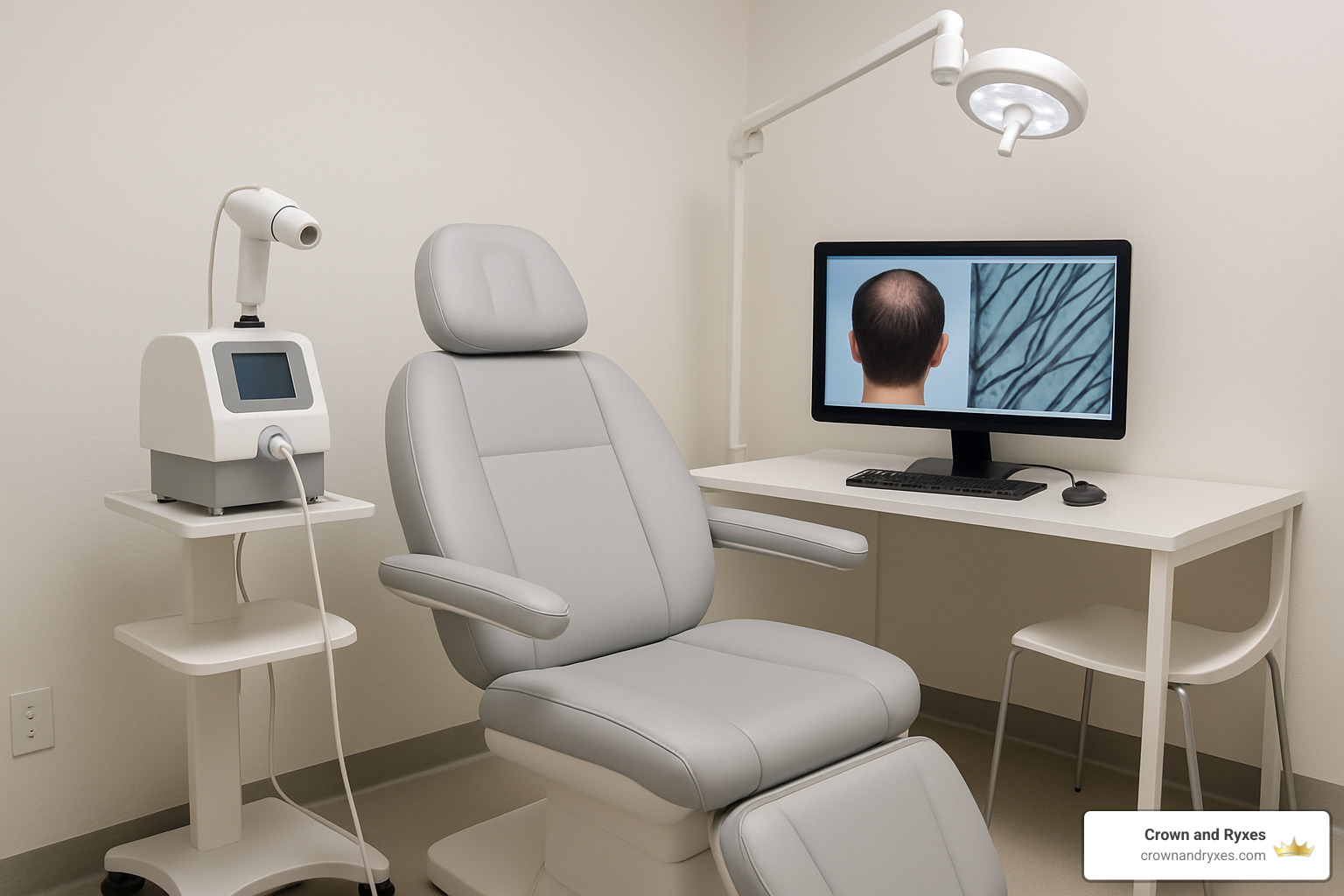
Allergy testing comes next, especially if you have sensitive skin or have reacted to medications before. We perform simple patch tests for the key ingredients in your customized cocktail. It’s a small step that prevents bigger problems down the road.
Don’t worry about pain – most people are pleasantly surprised by how comfortable mesotherapy feels. We use topical numbing cream applied about 30 minutes before treatment, and our needles are incredibly thin (28-30 gauge). Think more like acupuncture than a typical shot.
We have two main technique options: the mesogun device provides consistent depth and speed across your scalp, while manual nappage technique lets us customize exactly where each injection goes. We’ll choose the best approach based on your comfort level and specific hair loss pattern.
Session Day: Step-by-Step
Your treatment day starts with thorough scalp cleansing using antiseptic solution. We’re serious about keeping everything sterile – your safety always comes first. We’ll mark the treatment zones based on your unique hair loss pattern and carefully avoid any areas with irritation.
The actual injection process uses those ultra-thin needles at depths between 1-4mm depending on what works best for you. If you’re particularly sensitive, we might start with shallow intra-epidermal injections at 1mm. For more advanced thinning, deeper point-by-point injections at 4mm often deliver better results.
Each session flows by quickly – usually 20-30 minutes total including prep time. We inject tiny amounts (about 0.1-0.2ml) at multiple points across your treatment area. It’s like giving your scalp a series of tiny vitamin shots exactly where your follicles need them most.
After we finish, we apply antiseptic to all injection sites and make sure you understand your aftercare instructions. Before you leave, we’ll schedule your next appointment to keep your treatment momentum going strong.
Post-Treatment Care
Here’s the one rule that’s hardest for most people: no hair washing for 24 hours after treatment. I know it feels strange, but this waiting period lets your scalp fully absorb all those beneficial ingredients. Think of it as marinating your follicles!
For the next 7 days, skip the sauna, pool, and hot tub. The heat and chemicals can irritate your freshly treated scalp and potentially cause problems. Your relaxation can wait a week – your hair restoration can’t.
When you do resume washing, switch to a mild, sulfate-free shampoo. Those harsh chemicals in regular shampoos can irritate injection sites and interfere with healing. We’ll recommend specific products that work beautifully with your treatment.
If you notice some redness or swelling, don’t panic – it’s completely normal. A gentle anti-inflammatory lotion usually takes care of any discomfort within 24-48 hours. Most patients barely notice any side effects at all.
The key to great results is consistent spacing between sessions. That’s why we schedule your next visit before you leave each appointment. It helps us track your progress and keeps you on the path to thicker, healthier hair.
For more comprehensive information about various approaches, visit our hair loss treatments page.
Safety, Side Effects, Costs & Regulation
When considering mesotherapy injections for hair loss, most people worry about safety first. The good news? Serious complications are rare when you choose an experienced provider who follows proper protocols.
The most common side effects are actually quite mild. You’ll likely see some redness at injection sites that fades within a few hours – think of it like the temporary marks you get after acupuncture. Some patients notice mild itching or a tight feeling across their scalp for a day or two, which is completely normal as your skin heals.
About 1 in 10 patients experience headaches after treatment, usually lasting less than 24 hours. This might happen because your scalp feels a bit tender, or your body is adjusting to the new medications. Drinking plenty of water and skipping that evening glass of wine can help minimize this discomfort.
Frontal edema – basically swelling around your forehead – can occur, especially if you’re treating areas near your hairline. While it looks concerning, this puffiness typically disappears within 2-3 days. Ice packs and keeping your head liftd while sleeping can speed up recovery.
The rare but serious complications include scalp abscesses and paradoxical alopecia (hair loss at injection sites). These concerning outcomes usually result from poor sterile technique or reactions to low-quality compounds. This is exactly why choosing the right provider matters so much.
Risk mitigation starts with selecting a qualified clinician who has extensive experience with mesotherapy techniques. Your provider should use sterile, pharmacy-prepared compounds rather than questionable “cocktails” mixed in non-regulated facilities. Never compromise on quality to save money.
During your consultation, expect thorough informed consent discussions covering all potential risks, realistic outcomes, and alternative treatments. A reputable provider will document your allergies and review any medications that might interact with mesotherapy ingredients.
Cost considerations vary significantly based on several factors. In our Clermont and The Villages markets, individual sessions typically range from $200-400, with package pricing offering better value when you commit to a complete treatment series.
Price factors include the complexity of your custom formulation, number of injection sites needed, your provider’s experience and credentials, and additional services like PRP or growth factors. Geographic location also plays a role, though quality should always trump cost savings.
The regulatory landscape remains somewhat complex. The FDA hasn’t specifically approved mesotherapy for hair loss, though individual components may be approved for other medical uses. This means your treatment falls under “off-label” application, which requires careful provider oversight and thorough patient education.
Health Canada similarly lacks specific approval for mesotherapy in hair loss treatment. Ethical providers will clearly disclose regulatory status and evidence limitations rather than making exaggerated claims about effectiveness.
Understanding these regulatory nuances helps you make informed decisions and sets realistic expectations for your treatment journey.
For detailed cost information specific to your situation, visit our mesotherapy for hair loss cost page.
Frequently Asked Questions about Mesotherapy Injections for Hair Loss
How many sessions do I need and when will I see growth?
The journey with mesotherapy injections for hair loss typically requires patience and commitment. Most of our patients need 10 sessions spaced 2-4 weeks apart during their initial treatment phase. This means you’re looking at about 20 weeks – roughly 5 months – from your first appointment to completing the initial series.
Think of it like training for a marathon. Your hair follicles need consistent, repeated stimulation to wake up and start producing healthier hair. Some lucky patients with early-stage thinning might see benefits with fewer sessions, while those dealing with more advanced hair loss often need additional treatments to achieve their goals.
Here’s what most patients experience timeline-wise: hair shedding usually decreases first around the 6-8 week mark. This is actually a good sign – it means your follicles are responding to treatment. Then, around 2-3 months, you’ll notice your existing hair feeling thicker and stronger.
The really exciting part comes at months 3-4 when new growth becomes visible. It’s subtle at first – maybe your barber comments that your hair feels fuller, or you notice less scalp showing in photos. Full results typically emerge at the 6-month mark.
After completing your initial series, maintenance sessions every 3-6 months help keep your results going strong. Some patients love the quarterly “hair tune-ups,” while others prefer spacing treatments a bit further apart. We’ll work together to find what keeps your hair looking its best.
Are the injections painful and is there downtime?
Let’s be honest – nobody loves needles, but most patients are pleasantly surprised by how comfortable mesotherapy actually is. The sensation is more like mild pinching rather than sharp pain. We use incredibly thin needles (28-30 gauge) that are actually smaller than what you’d get for a typical flu shot.
We apply topical numbing cream 30 minutes before treatment, which makes a huge difference in comfort. Most patients describe the feeling as similar to having their hair styled with bobby pins – noticeable but not painful.
The most sensitive spots tend to be around the ears and back of the head where the scalp is thinner. Some of our female patients mention that treatments feel more uncomfortable during their menstrual cycle due to increased sensitivity throughout the body.
Downtime is practically non-existent. You can head straight back to work after your appointment, though we suggest skipping tight hats or headbands for the rest of the day. Most people experience only mild redness that fades within a few hours – less noticeable than a good workout flush.
The biggest “restriction” is avoiding hair washing for 24 hours, which gives the treatment cocktail time to fully absorb. Many patients actually enjoy having an excuse to skip their morning hair routine the next day!
Can mesotherapy be combined with REGENmax or hair transplant surgery?
Absolutely! Mesotherapy injections for hair loss often work beautifully alongside other treatments. We love creating comprehensive wellness plans that address multiple aspects of our patients’ health and confidence.
For patients dealing with both hair concerns and sexual wellness issues, our REGENmax treatments can be an excellent complement. When you’re addressing overall vitality and confidence, combining these approaches often leads to better satisfaction with your complete change journey.
Hair transplant surgery and mesotherapy make fantastic partners. Some patients receive mesotherapy before their transplant to optimize scalp health and prepare follicles for the procedure. Others start mesotherapy after surgery to improve graft survival and speed up healing. The nutrient delivery can really help those newly transplanted follicles settle in and thrive.
Many of our patients also continue using topical minoxidil or oral finasteride alongside mesotherapy. The direct delivery method can actually improve the effectiveness of these medications while potentially reducing unwanted side effects since you’re targeting the scalp directly rather than affecting your whole system.
Timing and coordination are key to getting the best results from combination treatments. We’ll work with you to create a personalized plan that maximizes benefits while keeping everything safe and manageable. Think of us as your hair restoration coaches – we’re here to guide you through the most effective approach for your unique situation.
Conclusion
Mesotherapy injections for hair loss offer real hope for people struggling with thinning hair, but they’re not magic bullets. Think of them as powerful allies in your hair restoration journey rather than standalone solutions.
The research tells an encouraging story. With over 95% patient satisfaction rates and measurable improvements in hair density across multiple studies, mesotherapy has earned its place in modern hair restoration. But here’s the thing – the best results come when you treat hair loss like the complex puzzle it actually is.
Your hair didn’t disappear overnight, and it won’t return overnight either. Mesotherapy injections for hair loss work best as part of a thoughtful strategy that might include better nutrition, stress management, and other proven treatments. It’s about building a foundation for healthy hair growth, not just hoping for a quick fix.
What makes mesotherapy special is its precision. Instead of hoping topical treatments penetrate your scalp properly, we deliver nutrients and medications exactly where your hair follicles need them most. This targeted approach means better results with fewer side effects – a win-win situation.
The future looks bright for this treatment. As researchers continue refining injection techniques and perfecting nutrient cocktails, we’re seeing more consistent results across different patients and providers. The wild west days of mesotherapy are giving way to standardized, evidence-based protocols.
Here’s what we’ve learned after years of helping patients in Clermont and The Villages: patience pays off. Hair restoration is often a marathon, not a sprint. The patients who see the best results are those who stick with their treatment plans and maintain realistic expectations throughout the process.
At Crown and Ryxes, we believe in honest conversations about what mesotherapy can and can’t do for you. Every person’s hair loss story is different, which is why cookie-cutter approaches rarely work. Whether you’re dealing with early thinning or more advanced loss, we’ll help you understand how mesotherapy injections for hair loss might fit into your personal restoration plan.
Your confidence and self-image matter. Hair loss affects more than just your appearance – it touches your daily life, your relationships, and how you see yourself. That’s why we take the time to understand your goals and create treatment plans that make sense for your lifestyle and budget.
If you’re curious about whether mesotherapy could help you, don’t wait until your hair loss progresses further. Early intervention often leads to better outcomes, and starting the conversation doesn’t commit you to anything.
Ready to explore your options? Visit our mesotherapy services page to learn more about how we can help open up your hair growth potential. Your future self might thank you for taking this step today.