

Understanding What Minoxidil Can (and Can’t) Do for Your Hair
Minoxidil for men results can be impressive, but understanding the timeline and realistic expectations is crucial. Here’s what you need to know:
Expected Timeline for Minoxidil Results:
- 1-3 months: Initial shedding phase (normal and temporary)
- 3-6 months: First visible new growth
- 6-12 months: Peak results with thicker, fuller hair
- Long-term: Continued use required to maintain results
Success Rates from Clinical Studies:
- Around two-thirds of men experience cessation of hair loss and regrowth
- 62% of patients see a reduction in balding area size
- 74% of men report improved hair density
Most Effective Areas:
- Works best on the crown (vertex) of the scalp
- Less effective for receding hairlines
If you’re dealing with thinning hair, you’ve likely heard of minoxidil. Originally a blood pressure drug, its hair growth side effect made it a top treatment for male pattern baldness. But what results can you actually expect?
Results vary based on your age, the extent of your hair loss, application consistency, and genetics. Some men see dramatic regrowth, while others experience more modest improvements.
I’m Dr. Matthew Casavant. With over two decades of medical experience, I’ve helped countless patients evaluate evidence-based solutions like minoxidil. Understanding what’s realistic is the first step in your hair restoration journey.
What is Minoxidil and How Does It Stimulate Hair Growth?
Minoxidil’s journey to a hair loss treatment is unique. Developed in the 1950s as a blood pressure medication, its unexpected side effect of hair growth led to its reinvention as one of today’s most trusted treatments for male pattern baldness.
So how does it work? The science is fascinating.
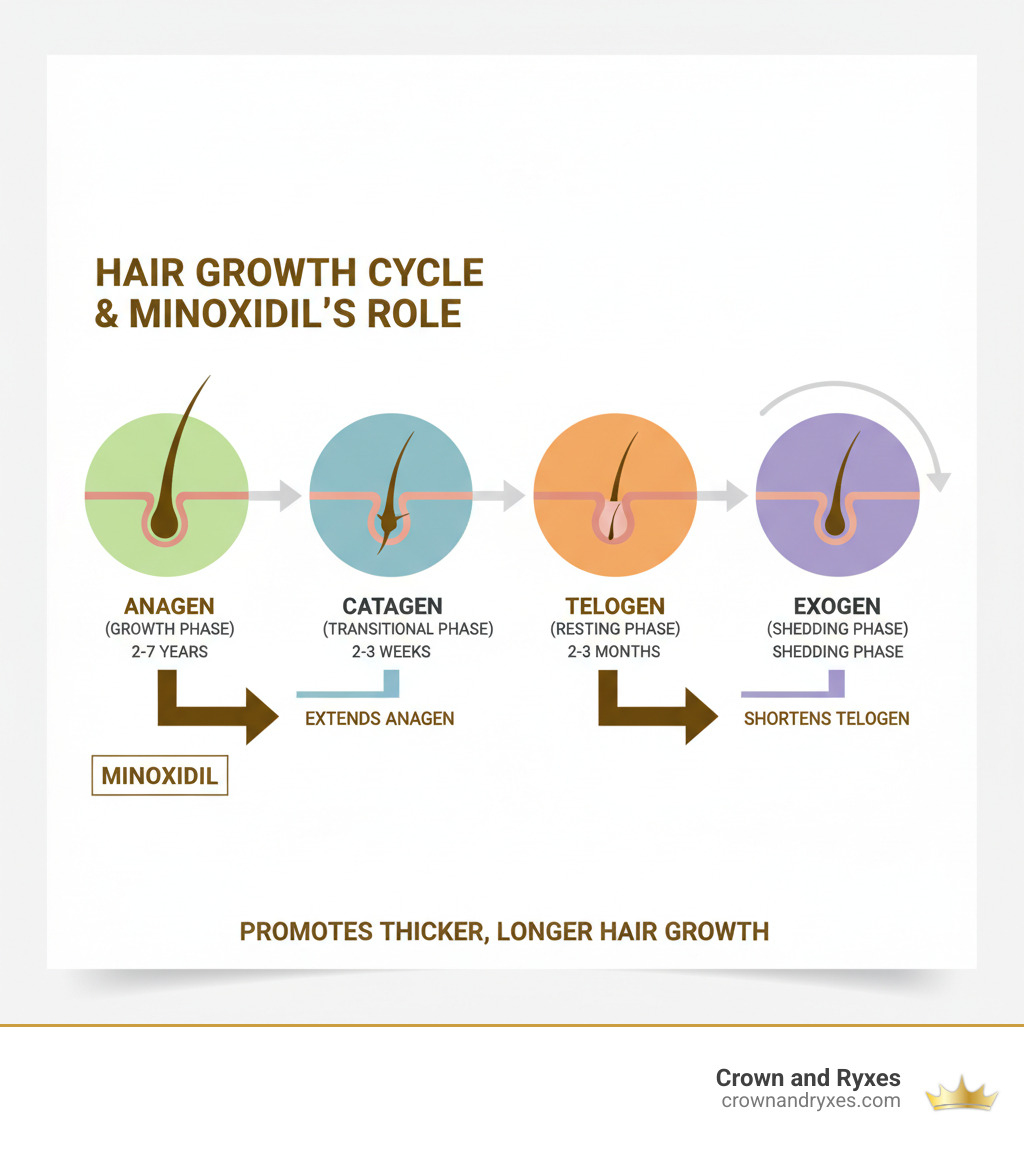
Minoxidil is a vasodilator, meaning it widens blood vessels. Applied to the scalp, it boosts blood flow, delivering more oxygen and nutrients to hair follicles.
It’s also a potassium channel opener. This action extends the anagen (growth) phase of the hair cycle and shortens the resting phase. The result is more hair actively growing at any given time.
Research also suggests minoxidil directly stimulates follicles and encourages growth factor release. These mechanisms work together to revitalize dormant or thinning follicles. For a deeper dive, see this comprehensive review on minoxidil’s use in hair disorders.
The Different Forms of Minoxidil
Choosing the right form of minoxidil can impact your experience and results.
Topical solution is the original form, available in 2% and 5% concentrations (5% is recommended for men). It’s applied twice daily. A downside is that its propylene glycol content can cause scalp irritation for some.
Topical foam was developed to be less irritating. The 5% foam dries faster, is less greasy, and is often preferred by those with sensitive skin. It is typically applied once daily.
Oral minoxidil is a low-dose pill (around 5 mg daily) prescribed “off-label” for hair loss. Because it works systemically, it requires a prescription and careful monitoring by a healthcare provider due to potential cardiovascular effects.
Understanding the Timeline: What Minoxidil for Men Results Look Like Over Time
I tell every patient at our offices in Clermont, FL, or The Villages, FL: minoxidil results take time. Hair growth is a slow process, but understanding the timeline helps you stay committed.
My best advice? Take monthly progress photos. Same angle, same lighting. You won’t see daily changes, but comparing month one to month six will reveal the real story.
Let’s walk through the typical timeline for minoxidil for men results.
The First 1-3 Months: The Shedding Phase and Early Signs
The first few months can be challenging. You might notice more hair loss, a phenomenon called the “shedding phase.” While alarming, it’s a positive sign. Minoxidil is pushing out old, weak hairs to make way for new, stronger ones.
This phase is temporary, lasting from two to eight weeks. By month three, shedding should decrease. Stick with it—patience is key.
Months 3-6: Visible Regrowth and Increased Density
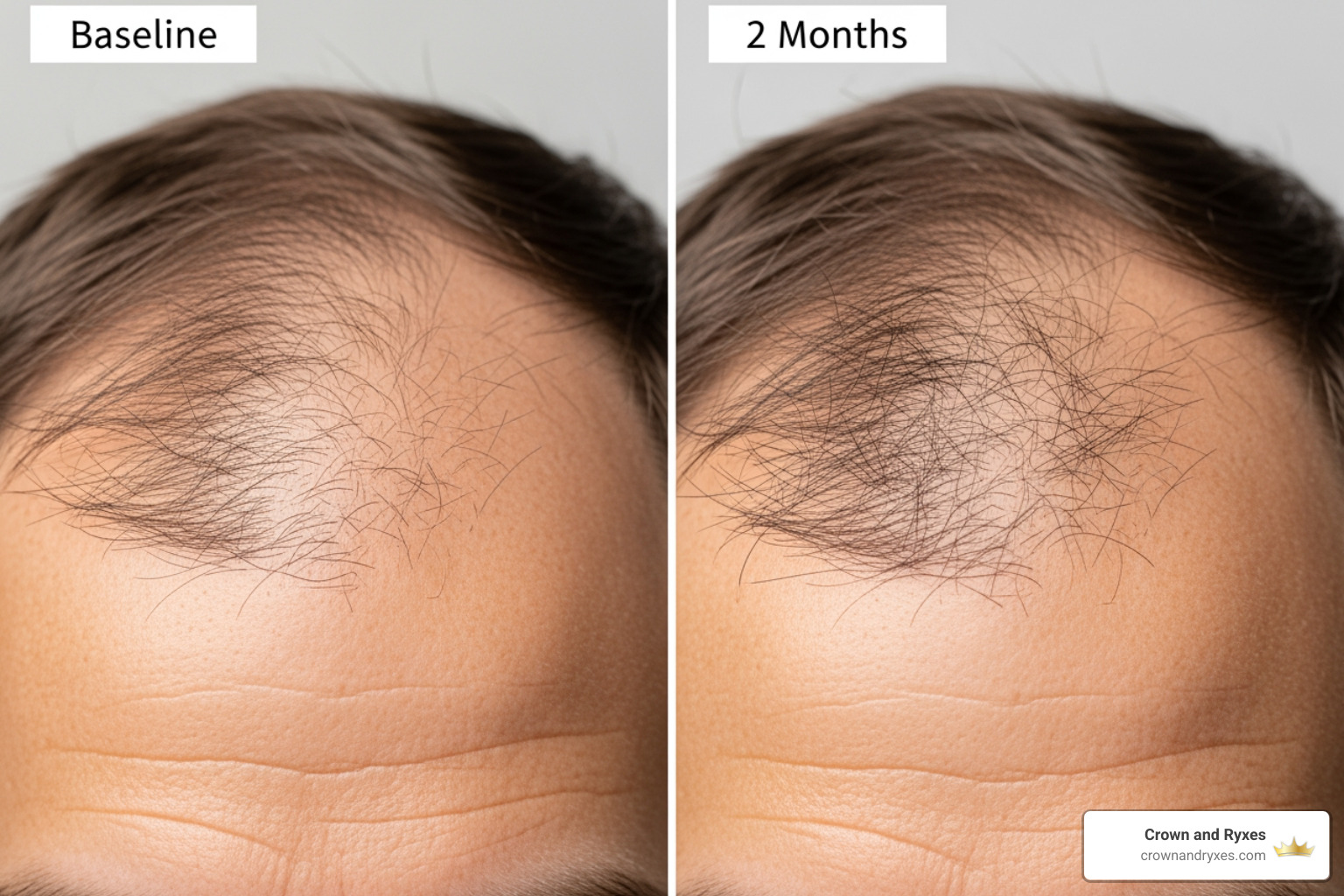
Around month three, the first signs of new growth appear. These initial hairs may be fine like peach fuzz (vellus hairs), but they will thicken with continued use.
By the six-month mark, minoxidil for men results become more obvious. Clinical studies show most men see significant improvements in hair density, especially on the crown (vertex). Minoxidil is most effective in this area.
Months 6-12 and Beyond: Maximizing and Maintaining Your Results
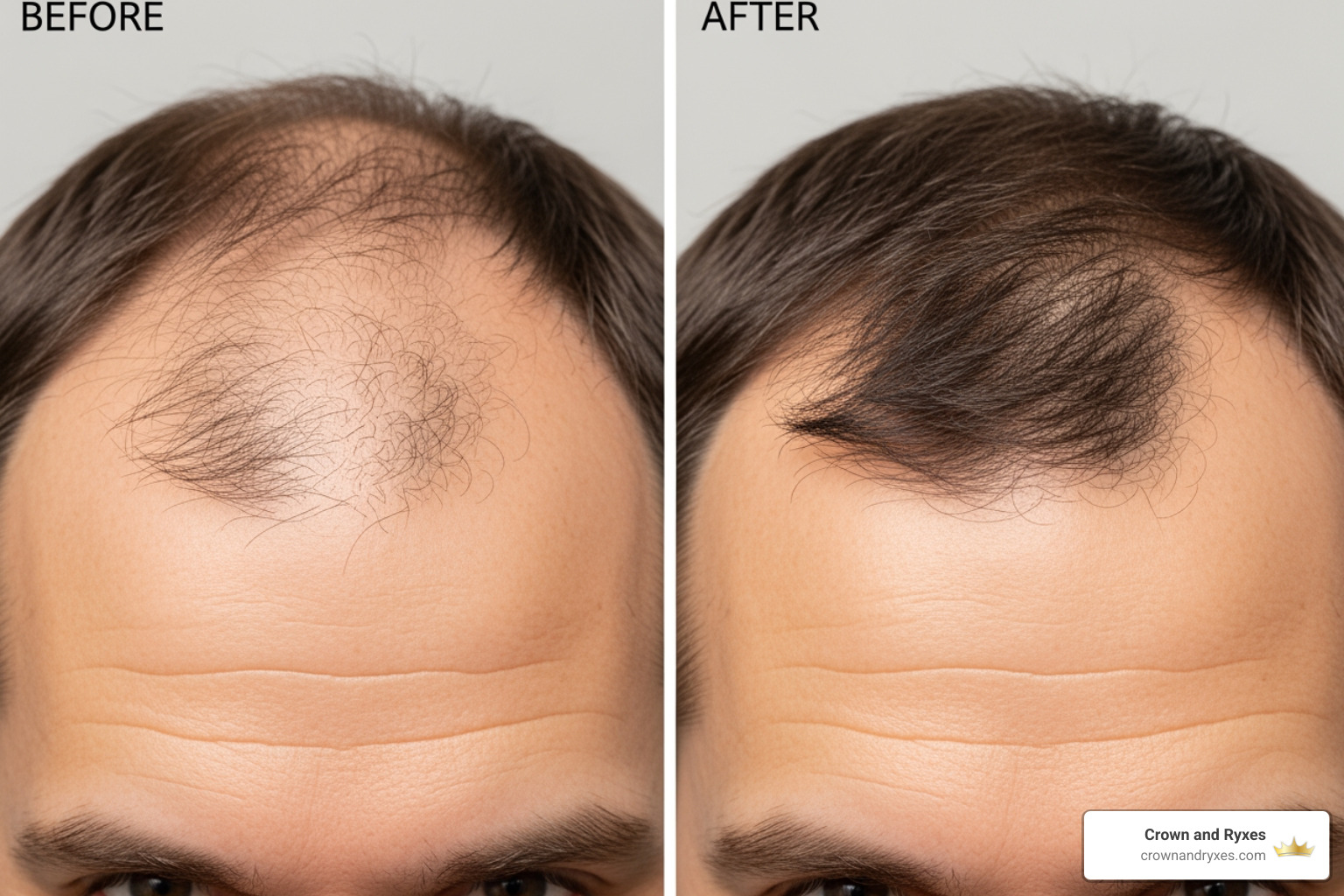
Most men reach peak results between six and twelve months. Hairs mature and thicken, and your scalp becomes less visible.
But after 12 months, you enter the maintenance phase. Minoxidil is not a cure; it’s a long-term treatment. If you stop using it, the hair you’ve gained will gradually disappear over a few months. Think of it like going to the gym—consistency is required to maintain results.
Long-Term Minoxidil for Men Results: Does Efficacy Fade?
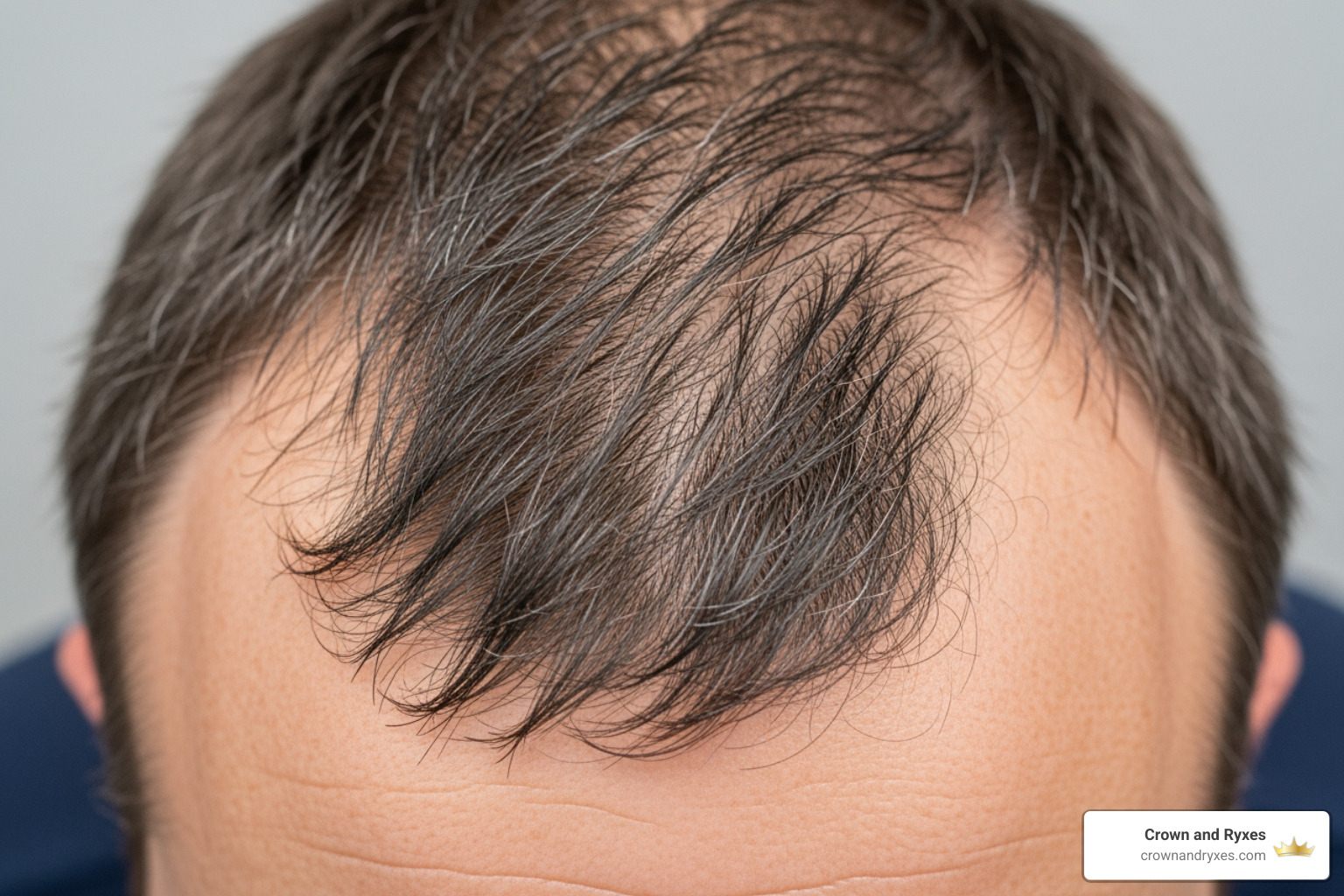
A common question is whether minoxidil loses effectiveness over time. The good news is that for most men who use it consistently, the results hold strong. Long-term studies show that after 30 months, about 70% of men maintain significant hair count increases over their baseline.
However, these results only last as long as you use the treatment. Minoxidil requires a long-term commitment to maintain its benefits.
Topical vs. Oral Minoxidil: A Comparison of Results and Side Effects
Choosing between topical and oral minoxidil is a key decision to make with your healthcare provider.
Topical minoxidil is the over-the-counter 5% solution or foam applied directly to the scalp. Its main advantage is that it’s localized, minimizing systemic side effects.
Oral minoxidil is a low-dose prescription pill (around 5 mg daily). It works systemically, which can lead to more widespread hair growth but also requires careful monitoring for different side effects.
Which is better? A recent clinical trial found that while oral minoxidil wasn’t clearly superior for overall density, it did show better photographic improvement on the crown. Some experts believe oral minoxidil may be more effective due to better compliance (a daily pill vs. topical application). Tolerability for topical minoxidil is generally excellent.
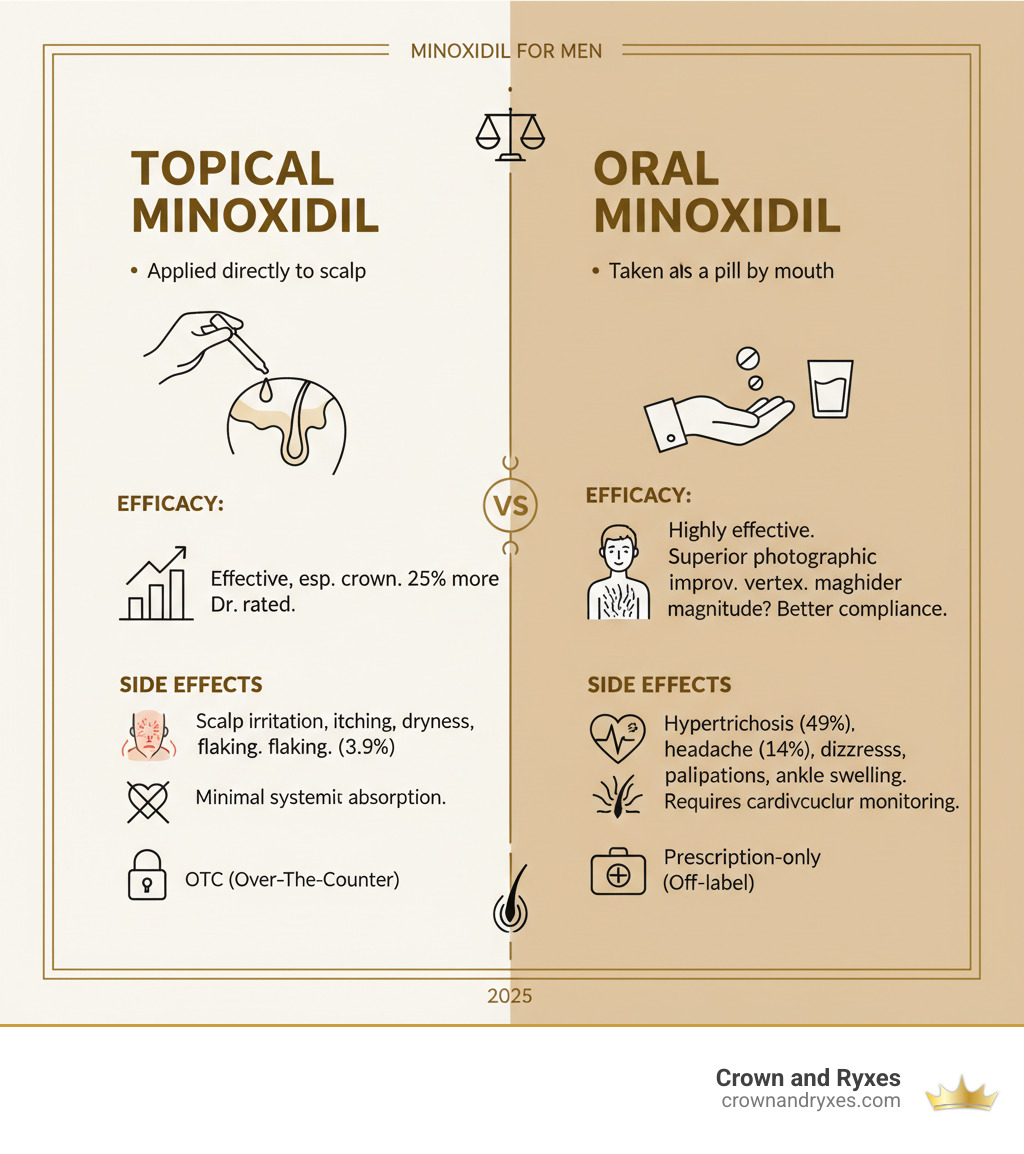
Side effects differ significantly. Topical minoxidil can cause scalp irritation, itching, and dryness, often due to propylene glycol in the solution. Switching to the foam version usually resolves this.
Oral minoxidil‘s most common side effect is hypertrichosis (excessive body hair). It can also cause headaches, dizziness, heart palpitations, and ankle swelling. Due to its cardiovascular effects, anyone considering oral minoxidil needs a thorough medical evaluation.
At our clinics in Clermont, FL, and The Villages, FL, we help patients weigh these factors to find the best approach.
Realistic Expectations for Minoxidil for Men Results
Your hair restoration journey is unique. While online before-and-after photos are real, they don’t represent every outcome.
Several factors influence your minoxidil for men results:
- Age and degree of hair loss: Starting treatment earlier, when follicles are still active, yields better results.
- Location of hair loss: Minoxidil is most effective on the crown (vertex). Results for a receding hairline are typically more modest. Expecting a full restoration of a teenage hairline with minoxidil alone is unrealistic.
Managing expectations is key to a satisfying experience. At Crown and Ryxes, we provide honest assessments to help you understand what’s achievable.
Enhancing Your Results: Combining Minoxidil with Other Treatments
While minoxidil works well alone, it often shines brightest when paired with another treatment.
The most effective partner for minoxidil is finasteride. They complement each other by tackling hair loss from different angles. Minoxidil stimulates growth, while finasteride, an oral medication, blocks the formation of DHT, the hormone responsible for shrinking hair follicles in male pattern baldness. This one-two punch protects existing hair while stimulating new growth.
Research on combination therapy confirms this. One study showed 80.5% of men on combination therapy saw improvement at 12 months, compared to 59% on minoxidil alone.
Finasteride does have potential side effects that are worth discussing with your healthcare provider. At Crown and Ryxes, we believe in informed decision-making, which means understanding both benefits and risks.
Other treatments can also improve your results, including low-level laser therapy (LLLT) and platelet-rich plasma (PRP) therapy.
At Crown and Ryxes, we take a comprehensive approach to men’s wellness. We understand hair loss is part of your overall well-being, which is why we also offer treatments like REGENmax for sexual health concerns. The key is finding the right combination for you. During a consultation at our Clermont, FL, or The Villages, FL, locations, we’ll create a personalized plan to meet your goals.
Potential Side Effects and How to Manage Them
No medication is without potential side effects, but most men tolerate minoxidil well. Knowing what to expect is key.
- Scalp Irritation: The most common issue is itching, redness, or flaking, often caused by propylene glycol in the liquid solution. Switching to a foam formulation is an easy fix, as it’s gentler on the skin.
- Unwanted Hair Growth (Hypertrichosis): This is more common with oral minoxidil but can occur with topical use if not applied carefully. You might notice fine hair on the forehead or cheeks. To manage this, be precise with application and wash your hands thoroughly afterward.
- Initial Shedding: As discussed, this temporary increase in hair fall is a sign the treatment is working. It’s a normal part of the process as new, stronger hairs push out old ones.
- Oral Minoxidil Side Effects: Because it’s a systemic medication, oral minoxidil can cause dizziness, lightheadedness, or headaches. More serious but less common side effects like heart palpitations or chest pain require immediate medical attention. This is why we conduct thorough cardiovascular assessments before prescribing it to patients in Clermont, FL, or The Villages, FL.
Most side effects are manageable. If you experience persistent or concerning symptoms, contact your healthcare provider. We can adjust your plan to ensure your journey is both safe and successful.
Frequently Asked Questions about Minoxidil
Here are answers to the most common questions I hear from patients about minoxidil.
What happens if I stop using minoxidil?
If you stop using minoxidil, the hair you’ve regained will gradually fall out over a few months. Your hair loss will resume its previous pattern. Minoxidil manages, but does not cure, male pattern baldness. Consistency is essential for maintaining minoxidil for men results, which is why I tell my patients in Clermont, FL, and The Villages, FL, to view it as a long-term part of their daily routine.
Does minoxidil work on a receding hairline?
Minoxidil is generally less effective on a receding hairline compared to the crown (vertex) of the scalp. Frontal hair follicles are often more sensitive to DHT. While you might see some stabilization or improvement in hair health, you shouldn’t expect a dramatic restoration of a receded hairline from minoxidil alone. For hairline concerns, a combination approach, perhaps including finasteride, is often more effective.
Can I use minoxidil for beard growth?
Yes, this is a popular off-label use. The mechanism is the same: it stimulates follicles and encourages thicker hair. Many men see impressive results in filling in patchy areas. However, results take several months, and facial skin can be more sensitive. Be precise with application to avoid unwanted hair growth on other parts of your face. It’s always best to discuss this with a healthcare provider.
Conclusion: Is Minoxidil the Right Choice for Your Hair Loss?
So, is minoxidil the right path for you? It’s a clinically proven, effective treatment for male pattern baldness, and we’ve seen it restore hair and confidence for countless men at our clinics in Clermont, FL, and The Villages, FL.
However, success with minoxidil for men results requires commitment. It’s a long-term daily treatment, not a quick fix. You must be patient through the initial shedding phase and understand that stopping the treatment means losing your results.
Your outcome will depend on factors like your age, degree of hair loss, and where you’re thinning. Minoxidil works best on the crown, and managing expectations for the hairline is important. While side effects are typically manageable, they should be discussed with a healthcare provider.
The best approach is always personalized. For some, minoxidil alone is enough. For others, combining it with finasteride or other modalities yields the best results. At Crown and Ryxes, we also offer comprehensive wellness solutions like REGENmax for sexual health, creating a plan that addresses your total well-being.
If you’re ready to take action, schedule a professional evaluation with our team. We’ll assess your hair loss, discuss your options, and chart a clear path forward. With the right guidance and a custom plan, meaningful improvement is within reach.