

The Growing Frustration of Patchy Beards

A patchy beard transplant is a surgical procedure that harvests hair follicles from one area of your body (typically the back of your head) and implants them into sparse areas of your facial hair to create a fuller, more uniform beard. This permanent solution can help men who struggle with uneven beard growth.
Quick Answer: Patchy Beard Transplant Essentials
| Factor | Information |
|---|---|
| Procedure Type | Follicular Unit Extraction (FUE) or Follicular Unit Transplantation (FUT) |
| Recovery Time | 7-10 days for initial healing; full results in 12 months |
| Cost Range | $3,000-$15,000 depending on extent and location |
| Graft Count | 500-2,500 typically (varies by area and desired density) |
| Success Rate | 97-100% with qualified surgeons |
| Permanence | Results are permanent |
More than half of men today sport facial hair, up significantly from just a decade ago. Yet for many, the dream of growing a full, even beard remains frustratingly out of reach. Patchy beard growth can stem from genetics, hormonal imbalances, or even scarring—factors largely beyond our control.
The psychological impact shouldn’t be underestimated. In a culture where beards have become symbols of masculinity and confidence, patchy growth can affect self-image and social comfort. Men with uneven facial hair often try countless remedies—from special oils to dietary supplements—before considering more permanent solutions.
“Everyone wants a full, thicker beard for its masculine charm and association with power, wisdom, and leadership,” notes one specialist in the field, highlighting why so many men seek solutions for patchy growth.
I’m Dr. Matthew Casavant, and I’ve helped countless men achieve their desired facial hair through patchy beard transplant procedures, combining my extensive surgical expertise with meticulous attention to natural-looking results that improve masculine features while maintaining authenticity.
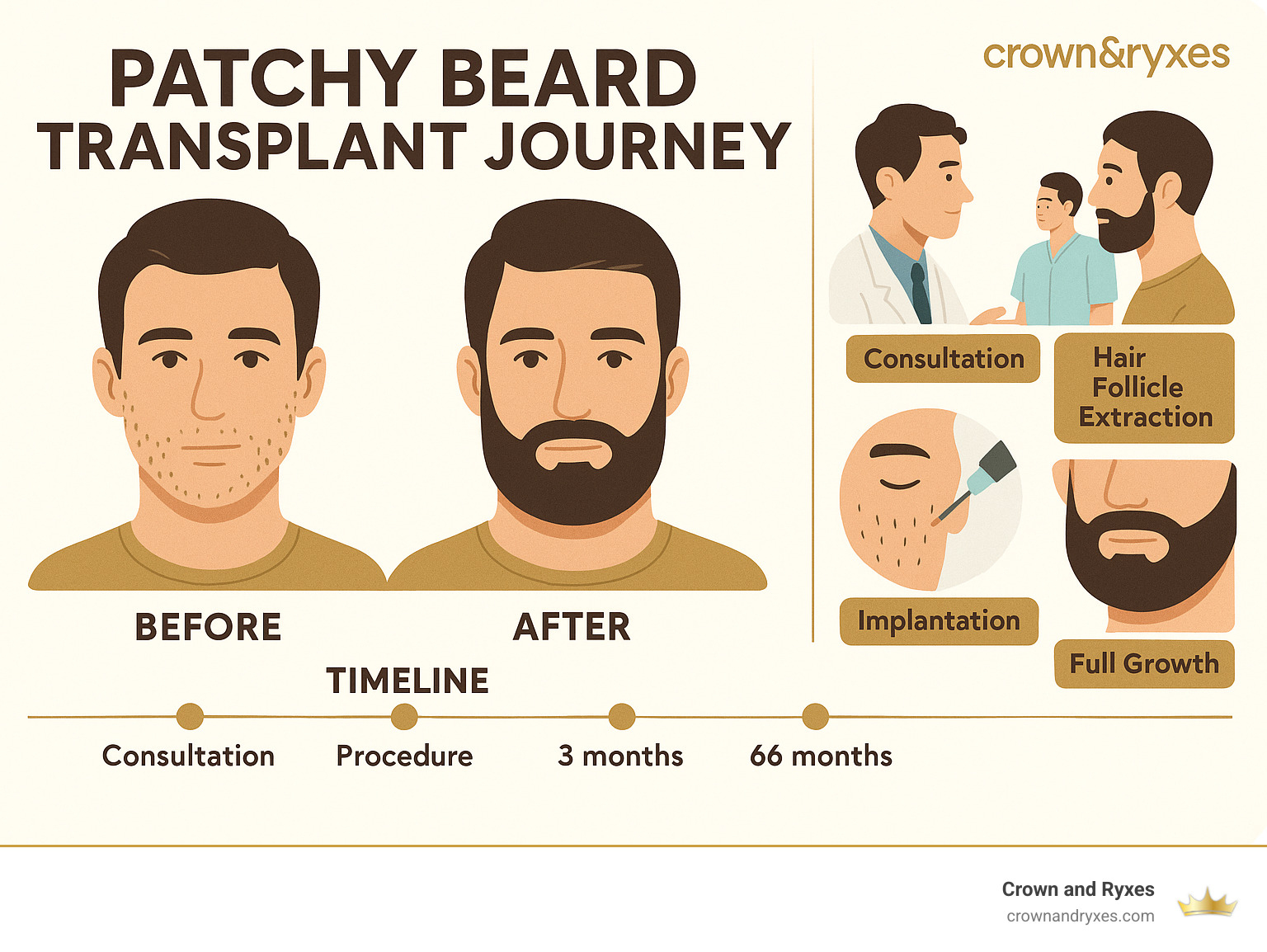
Patchy beard transplant word list:
Why Does Your Beard Grow Patchy & Are You a Candidate?
Ever looked in the mirror wondering why your facial hair resembles a patchy quilt rather than the majestic mane you envisioned? You’re not alone. While some men seem to sprout full beards overnight (those “natural born lumberjacks” we all envy), many of us struggle with uneven growth patterns that resist even our most dedicated growing efforts.
Common Causes of Patchy Beard Growth
Your beard’s patchiness isn’t random—it’s the result of specific factors that affect how your facial hair develops.
Genetics plays the starring role in your beard story. Just like eye color or height, your DNA largely determines your facial hair pattern. If your father or grandfather rocked a patchy beard, you’ve likely inherited those same growth tendencies. Those beard genes dictate everything from follicle distribution to hair thickness.
Hormonal factors significantly impact beard growth, particularly dihydrotestosterone (DHT). This powerful derivative of testosterone is essential for facial hair development. Some men’s follicles simply respond less enthusiastically to DHT, resulting in sparse areas. Ironically, the same hormone that might be thinning the hair on your head could be responsible for robust beard growth elsewhere.
Men with alopecia areata face a different challenge. This autoimmune condition affects approximately 7 million Americans, causing the immune system to mistakenly attack hair follicles. The result? Round, smooth patches of hairless skin that can appear on both scalp and face.
Scarring from burns, injuries, or surgeries can permanently damage follicles in affected areas. These damaged zones often remain stubbornly bare despite your best growth efforts.
Stress and lifestyle factors shouldn’t be underestimated. Chronic stress, poor nutrition, and inadequate sleep can disrupt hormone balance and reduce blood flow to hair follicles. The impact of stress on hair growth is well-documented, potentially triggering conditions like telogen effluvium that push follicles into a resting phase.
Finally, age matters more than you might think. Many men don’t achieve their full beard potential until their mid-20s or even 30s. That patchy beard at 19 might naturally fill in with a few more years of maturity.

Patchy Beard Transplant Candidacy Checklist
Not everyone with beard gaps is an ideal candidate for a patchy beard transplant. At Crown and Ryxes, we carefully assess several factors to determine if this procedure will give you the results you’re seeking:
Age consideration is crucial—we typically recommend waiting until at least your mid-20s before pursuing a beard transplant. Your natural facial hair pattern may still be developing, and patience could save you an unnecessary procedure.
Donor hair availability matters tremendously. You’ll need sufficient healthy hair follicles in donor areas (typically the back and sides of your scalp) that can be harvested without creating noticeable thinning elsewhere.
Realistic expectations form the foundation of satisfaction with your results. Understanding the potential outcomes, timeline, and limitations helps ensure you’ll be happy with your transformed appearance.
General health status affects your candidacy, as certain medical conditions or medications that impact healing or blood clotting may make the procedure inadvisable.
Previous treatment history gives us valuable information about what approaches you’ve already tried and their effectiveness.
Transgender considerations are important to note—facial hair transplants can be an excellent option for female-to-male transgender individuals, especially those on hormone therapy, who often make excellent candidates for the procedure.
During your consultation at Crown and Ryxes in Clermont, FL or The Villages, FL, we conduct a thorough assessment that includes a hair density test to evaluate both your existing facial hair and potential donor areas, a comprehensive medical history review to identify any conditions that might affect the procedure, an in-depth expectations discussion to align your goals with realistic outcomes, and personalized treatment planning that considers your unique facial structure and beard pattern.
By understanding both why your beard grows patchy and whether you’re a good candidate for transplantation, you’ll be well-equipped to make an informed decision about your facial hair journey. The path to a fuller beard starts with knowledge—and at Crown and Ryxes, we’re committed to guiding you every step of the way.
Patchy Beard Transplant: How the Surgery Works
The magic of a patchy beard transplant happens where medical precision meets artistic vision. This isn’t just about adding hair to your face—it’s about crafting a natural-looking beard that feels authentically you, complementing your unique facial structure and personal style.
At Crown and Ryxes, we’ve perfected advanced techniques that transform patchy beards into full, confidence-boosting facial hair that looks like you were born with it.
FUE Method for Patchy Beard Transplant
The Follicular Unit Extraction (FUE) method has become our go-to approach for most beard transplants, and for good reason. This technique offers minimal scarring and gets you back to your routine faster.
Picture this: while you relax with local anesthesia, our surgeon uses tiny punch tools (about the width of a ballpoint pen tip) to gently harvest individual follicular units from the back of your scalp. These hardy little powerhouses contain 1-4 hairs each and are genetically programmed to resist thinning—perfect for creating a lasting beard.
We then carefully prepare these follicles before creating micro-incisions in your beard area. The real artistry happens as we place each graft at precisely the right angle and direction to mimic your natural beard growth patterns. It’s meticulous work, but the natural-looking results are worth every minute.
The Follicular Unit Extraction (FUE) approach leaves only tiny dot scars that virtually disappear among surrounding hair—a huge plus if you prefer wearing your hair cropped short. Want to dive deeper? Check out our comprehensive guide to FUE Hair Restoration at Crown and Ryxes.
FUT Strip Method Explained
While FUE is our most requested method, the Follicular Unit Transplantation (FUT) or “strip method” offers distinct advantages in certain situations.
With FUT, we surgically remove a narrow strip of scalp from the back of your head and then, using specialized microscopes, carefully dissect it into individual follicular units. The implantation process mirrors FUE, with each graft strategically placed to create your ideal beard pattern.
Yes, FUT does leave a linear scar, but many men find it’s easily concealed with hair just a half-inch long. The big upside? We can harvest more grafts in a single session, making it ideal for creating fuller beards or working within tighter budgets.
Comparing FUE vs FUT for Patchy Beard Transplant
| Factor | FUE | FUT |
|---|---|---|
| Scarring | Minimal dot scars | Linear scar |
| Recovery Time | 3-5 days | 10-14 days |
| Pain Level | Minimal | Moderate |
| Graft Yield | Lower per session | Higher per session |
| Cost | Higher | Lower |
| Ideal For | Small to medium patches, visible donor area | Large areas, concealed donor area |
Designing Your New Beard
The design phase is where science meets art—and where our expertise at Crown and Ryxes truly shines. This crucial planning stage can make the difference between a beard that looks transplanted and one that looks like it grew there naturally.
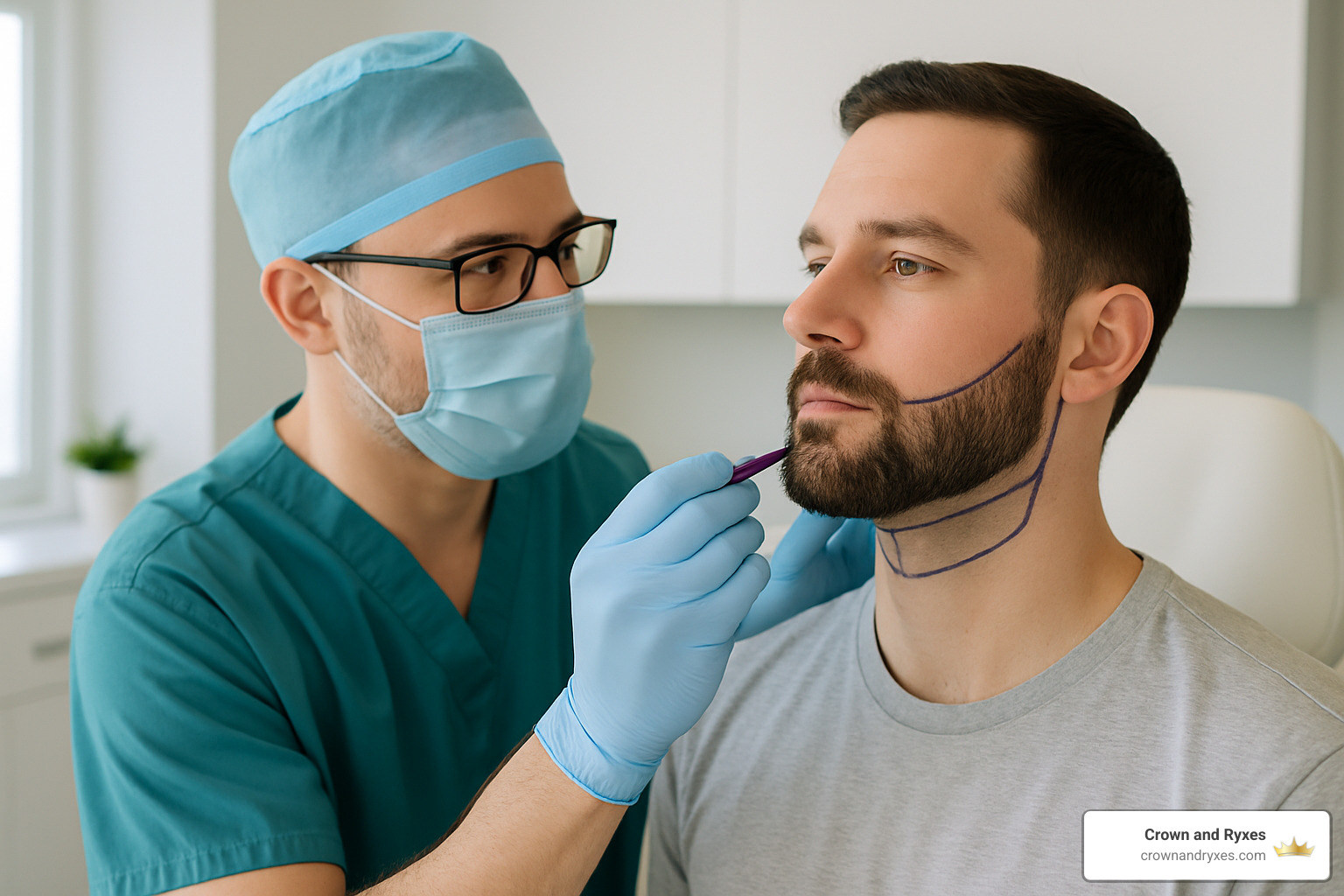
Before we place a single graft, we’ll map your facial structure, identifying how to improve your natural features. We’ll consider your face shape, your existing hair growth patterns, and even the subtle ways beard density naturally varies across different facial areas. The mustache and chin typically need more density than the cheeks—details that make the difference between an ordinary result and an extraordinary one.
The number of grafts you’ll need varies based on your goals and current situation. A small patch might require just a few hundred grafts, while creating a full Viking-worthy beard could need up to 2,500. Here’s a general breakdown:
Mustache: 350-500 grafts for that perfect upper lip coverage
Goatee: 600-700 grafts for a defined chin and connection to your mustache
Cheeks: 700-800 grafts per side to fill in those classic patchy areas
Sideburns: 350-500 grafts per side for that seamless hair-to-beard transition
Full beard: 2,000-2,500 grafts for comprehensive coverage
At Crown and Ryxes in Clermont, FL and The Villages, FL, we understand your beard isn’t just facial hair—it’s part of your identity. Our approach focuses on creating results that not only look completely natural but feel right for your individual style and facial structure. When you look in the mirror, you’ll see the you that you’ve always envisioned.
Recovery, Results & Grooming Timeline
The journey after your patchy beard transplant is just as important as the procedure itself. While the surgery takes just a few hours, your path to a fuller beard unfolds over several months – a timeline worth understanding before you commit.
Immediate Post-Procedure Phase (Days 1-5)
Those first few days are crucial for your new hair follicles to establish themselves in their new home.
Right after surgery, you’ll notice some redness and swelling – completely normal signs your body is beginning the healing process. Small crusts will form around each transplanted follicle, creating a protective shield as they establish blood supply.
During this critical period, your beard needs gentle care:
“Sleep with your head liftd for the first few nights,” I tell all my patients at Crown and Ryxes. “Think of it as pampering your new beard while it settles in.”
Keep your hands off the area – no touching, scratching or rubbing, no matter how tempting. The transplanted area needs to stay dry for the first 48-72 hours, and you’ll want to avoid anything that raises your blood pressure or causes sweating.
Early Recovery Phase (Days 6-14)
Around day 6-7, those protective scabs begin falling off naturally – and I always emphasize to my patients: let them fall on their own! Picking at them can dislodge the precious grafts we’ve just placed.
By days 8-10, most visible signs of your procedure have faded enough that many men feel comfortable returning to public activities. That initial redness and swelling should be mostly resolved by the two-week mark.
After day 5, you can typically begin gently washing the area, following the specific instructions we provide at your appointment.
The “Shock Loss” Phase (Weeks 2-4)
This phase often catches patients by surprise, despite our warnings.
“Don’t panic when your new hairs start falling out around week 3,” I reassure patients. “This ‘shock loss’ is completely normal and expected.”
What’s happening is that the transplanted follicles are entering a dormant phase after their journey. The roots remain alive beneath the surface, quietly preparing for new growth. Many men worry their transplant has failed during this phase – I promise you, it hasn’t!
The Growth Phase (Months 3-9)
Patience pays off around months 3-4, when you’ll spot the first new hairs emerging from the transplanted follicles. This is when excitement typically builds as your new beard begins taking shape.
Between months 4-6, growth accelerates dramatically, with about 30-50% of your final result becoming visible. The 6-9 month period brings continued thickening and growth.
One thing to note – these new hairs may initially appear finer than your natural beard, but don’t worry. They’ll gradually thicken to match your existing facial hair texture.
Final Results (Months 10-12)
The one-year mark brings the full revelation of your new beard. By now, the transplanted hairs will have fully matured to match your natural facial hair in both texture and thickness. This is when most of our patients at Crown and Ryxes send us those satisfying “after” photos!
Post-Op Care for Patchy Beard Transplant
Proper aftercare isn’t just recommended – it’s essential for optimal results from your patchy beard transplant. At our Clermont, FL and The Villages, FL locations, we provide comprehensive aftercare support throughout your recovery.
Medication adherence is crucial – take all prescribed antibiotics and anti-inflammatories exactly as directed. Follow our specific instructions for wound cleaning to keep both recipient and donor areas infection-free.
Activity restrictions are temporary but important: no swimming or submerging your face for at least 4 weeks, avoid direct sunlight for 2 weeks minimum, take a break from strenuous exercise for 7-10 days, and skip alcohol for at least 3 days.
Sleep with your head liftd that first week – it significantly reduces swelling. And please, attend all follow-up appointments we schedule. They’re our chance to monitor your progress and address any concerns before they become issues.
For inspiration during your recovery journey, many patients find comfort in reviewing our Beard Transplant Success Stories.
Long-Term Behavior of Transplanted Hairs
Here’s the good news – once fully healed, those transplanted hairs behave just like they’ve always been part of your beard.
“Can I still shave?” is perhaps the most common question I hear. Absolutely! Your transplanted beard can be trimmed, styled, and yes, even shaved completely. It will grow back normally, just like natural facial hair.
The growth rate typically mirrors that of the donor location, which might be slightly different from your native facial hair. But the best part? These hairs are permanent. Because we select donor hairs that are genetically resistant to the hormones causing hair loss, they’ll continue growing for life in their new location.
Feel free to use all your favorite beard products – oils, balms, and styling products are all fair game once healing is complete.
What I find most rewarding is when patients tell me, around the 12-month mark, that they’ve completely forgotten which parts of their beard were transplanted. The integration becomes so seamless and natural that even they can’t tell the difference anymore. That’s when I know we’ve done our job well at Crown and Ryxes.
Risks, Side Effects & Non-Surgical Alternatives
Let’s face it – any medical procedure comes with some level of risk, and a patchy beard transplant is no exception. While these procedures boast an excellent safety record when performed by qualified professionals like our team at Crown and Ryxes, it’s important to go in with your eyes wide open about potential downsides and alternatives.
Potential Risks and Side Effects
When considering a patchy beard transplant, understanding the possible complications helps you make an informed decision. Most men experience minimal issues, but temporary side effects like redness and swelling are common in the first week.
More significant but less common risks include infection at either the donor or recipient sites. Despite our stringent sterilization protocols, bacteria can occasionally find their way in – which is why we provide preventative antibiotics and detailed cleaning instructions.
Many men also experience temporary numbness in treated areas. Don’t worry – this sensation typically resolves within a few weeks as your nerve endings recover from the procedure. It’s your body’s natural response to the minor trauma of transplantation.
“The temporary numbness was strange at first, but my doctor assured me it was normal. By month two, all sensation had returned completely,” reports one of our satisfied patients.
Some men encounter “cobblestoning” – a bumpy appearance that occurs if grafts sit too close to the skin’s surface. Our surgeons at Crown and Ryxes carefully control insertion depth to minimize this risk. Similarly, ingrown hairs can appear as new growth begins, but proper aftercare usually prevents this complication.
While FUE significantly reduces visible scarring compared to older methods, some minimal scarring is inevitable with any surgical procedure. Your natural healing characteristics play a major role in how visible these tiny marks will be.
Perhaps the most concerning potential outcome is an unnatural appearance from poor planning or execution. This underscores why choosing experienced providers with artistic vision – like our team at Crown and Ryxes – makes all the difference in your final result.
It’s also worth noting that not every transplanted follicle will successfully establish itself. Even with perfect technique, a success rate of 85-95% is considered excellent, which is why we carefully calculate graft numbers to ensure optimal coverage.
Avoiding a Botched Patchy Beard Transplant
The growing popularity of beard transplants has unfortunately led to an increase in unqualified providers offering substandard procedures. Protecting yourself from disappointing results starts with proper research.

Begin by verifying your surgeon’s credentials. Board certification and specific training in hair restoration aren’t just nice-to-haves – they’re essential qualifications. Membership in the International Society of Hair Restoration Surgery (ISHRS) provides another layer of assurance, as this organization maintains strict standards for its members.
Take time to review before-and-after photos, specifically looking for beard transplants rather than just scalp procedures. These images offer insight into the surgeon’s aesthetic sense and technical skill. Patient reviews provide valuable perspective on the entire experience, from consultation through recovery.
A quality provider will conduct a thorough assessment and explain all aspects of the procedure without rushing you. Be wary of anyone who promises perfect results or seems more interested in closing a sale than understanding your goals. The consultation should feel educational rather than transactional.
At Crown and Ryxes, our specialists in Clermont, FL and The Villages, FL provide comprehensive aftercare and scheduled follow-ups to monitor your progress. This ongoing relationship helps ensure optimal healing and addresses any concerns promptly.
Non-Surgical Alternatives
Not quite ready for surgery? For men with mild patchiness or those exploring all options, several non-surgical approaches might help improve your beard’s appearance.
Minoxidil (commonly known as Rogaine) has shown effectiveness for beard improvement in some men. Originally developed for scalp hair loss, this topical treatment can stimulate follicle activity. Clinical studies indicate that increased beard growth may begin within four weeks of consistent application, though results vary significantly between individuals.
Platelet-Rich Plasma (PRP) treatments use platelets from your own blood to stimulate hair growth. This approach can be effective for mild patchiness and is sometimes combined with transplantation for improved results. The growth factors in your platelets may help revitalize dormant follicles.
While no supplement can overcome genetic limitations, ensuring adequate intake of key nutrients supports optimal hair growth. Biotin, vitamins A, C, and E, and minerals like zinc all play roles in follicle health. Interesting research on saw palmetto suggests it may contribute to improved hair density in some cases.
Your lifestyle choices also impact beard growth. Regular exercise increases circulation and can boost testosterone levels, while adequate sleep (7-9 hours) supports overall hormone balance. Stress reduction techniques like meditation may help minimize stress-related hair thinning, as cortisol can negatively impact hair growth cycles.
Don’t underestimate the power of strategic grooming. With the right techniques, you can minimize the appearance of patches even without medical intervention. Careful beard styling, subtle use of beard dyes, and regular exfoliation of the skin beneath your beard all contribute to a fuller appearance.
For those considering the investment in a permanent solution, visit our page on Beard Transplant Cost to understand the financial aspects of this life-changing procedure.
Whether you choose surgical or non-surgical approaches, the team at Crown and Ryxes is committed to helping you achieve the masculine, confident appearance you desire.
Frequently Asked Questions about Patchy Beard Transplant
How many grafts do I need to fix a patchy beard?
When men ask me this question during consultations at Crown and Ryxes, I always explain that it’s highly individual. The number of grafts needed depends on your unique situation and goals.
If you’re dealing with small isolated patches, you might need as few as 500-800 grafts for a significant improvement. For more extensive patchiness across your cheeks or jawline, we typically recommend 1,000-1,500 grafts for natural-looking coverage.
Your hair characteristics make a big difference too. If you have thick, dark hair, each graft provides more visual coverage than if your hair is fine or lighter in color. During your consultation in Clermont, FL or The Villages, FL, we’ll examine your beard pattern and discuss your desired style to determine your exact needs.
As a general guideline, here’s what different beard areas typically require:
- Mustache improvements need about 350-500 grafts
- A fuller goatee area requires 600-700 grafts
- Each cheek might need 700-800 grafts for complete coverage
- Sideburn improvements typically take 350-500 grafts per side
- A comprehensive full beard change can require 2,000-2,500 grafts
Are the results of a patchy beard transplant permanent?
Yes, your patchy beard transplant results are permanent. This is one of the most satisfying aspects of the procedure for my patients.
The science behind this permanence is fascinating. We harvest follicles from the back of your scalp—an area genetically programmed to resist the hormones that cause hair loss. When transplanted to your face, these follicles maintain their genetic programming. They’ll continue growing throughout your lifetime, just like your natural facial hair.
You’ll experience an initial shedding phase about 2-3 weeks after your procedure. Don’t panic when this happens! It’s completely normal and expected. The follicles remain alive beneath the skin, and new growth will begin emerging within 3-4 months.
Once fully established, you can treat these hairs just like the rest of your beard—shave them, trim them, or let them grow long. They’re truly yours for life.
Can the procedure cover facial scars or burns?
Patchy beard transplants excel at concealing scars and burns on the face. In fact, these cases are often among the most rewarding in my practice because of the profound difference they make in patients’ lives.
Scar tissue presents unique challenges that require specialized expertise. The tissue often has reduced blood supply and different characteristics than surrounding skin. At Crown and Ryxes, we carefully assess each scar to determine if it can support healthy hair growth. Sometimes we recommend a multi-session approach for optimal coverage.
I’ve worked with men who’ve carried the emotional burden of visible facial scars for years—from accidents, burns, surgeries, or even cleft palate repairs. The change goes beyond physical appearance. Watching a patient look in the mirror and see their face rather than their scar for the first time is truly powerful.
What is the expected density compared to my natural beard?
With modern patchy beard transplant techniques, we can achieve density that blends seamlessly with your natural beard. At Crown and Ryxes, we typically place 40-60 follicular units per square centimeter, creating a result that looks completely natural.
Your specific outcome depends on several factors. Donor hair availability is crucial—the more quality donor hair you have, the higher density we can achieve. Your natural beard pattern also matters. If you naturally grow a very dense beard in some areas, we’ll aim to match that density in the transplanted areas for a uniform look.
The contrast between your hair and skin color plays a role too. If you have dark hair and fair skin, you might need slightly higher density to create a visually consistent appearance compared to someone with less contrast.
During your consultation, we’ll discuss realistic density expectations based on your unique characteristics and ensure the result will look natural and balanced.
How do I care for my beard after the transplant is fully healed?
Once your patchy beard transplant has fully healed—typically around the 12-month mark—you can treat it just like your natural beard. This is when you’ll really start enjoying the full benefits of your procedure.
Gentle cleansing is important. Use a mild beard shampoo every other day to keep both your beard and the underlying skin clean. Follow with a quality beard conditioner to maintain softness and manageability.
I always recommend beard oil to my patients. It helps moisturize the skin beneath your beard, preventing dryness and flaking while keeping your facial hair looking healthy. Apply a few drops daily, massaging it down to the skin.
Feel free to trim, shape, and style your beard however you prefer. The transplanted hairs will respond just like your natural beard hair. If you enjoy a particular length or style, go for it—your new beard will accommodate your preferences.
For those who spend significant time outdoors, remember to apply sunscreen to any exposed skin within your beard area. And while this goes for everyone, maintaining good overall health through proper nutrition and avoiding smoking will help ensure your beard looks its best for years to come.
At Crown and Ryxes, we’re always available for follow-up questions about beard care, even years after your procedure. Your satisfaction with your results is our long-term commitment.
Conclusion
A patchy beard transplant represents a life-changing solution for men who’ve struggled with uneven facial hair growth. Whether your patchiness comes from genetics, scarring, or other factors, today’s advanced transplant techniques create results that look completely natural and last a lifetime.
At Crown and Ryxes, we understand the journey to a fuller beard is deeply personal. Many of our patients tell us how transformative the experience has been—not just for their appearance, but for their confidence and self-image as well.
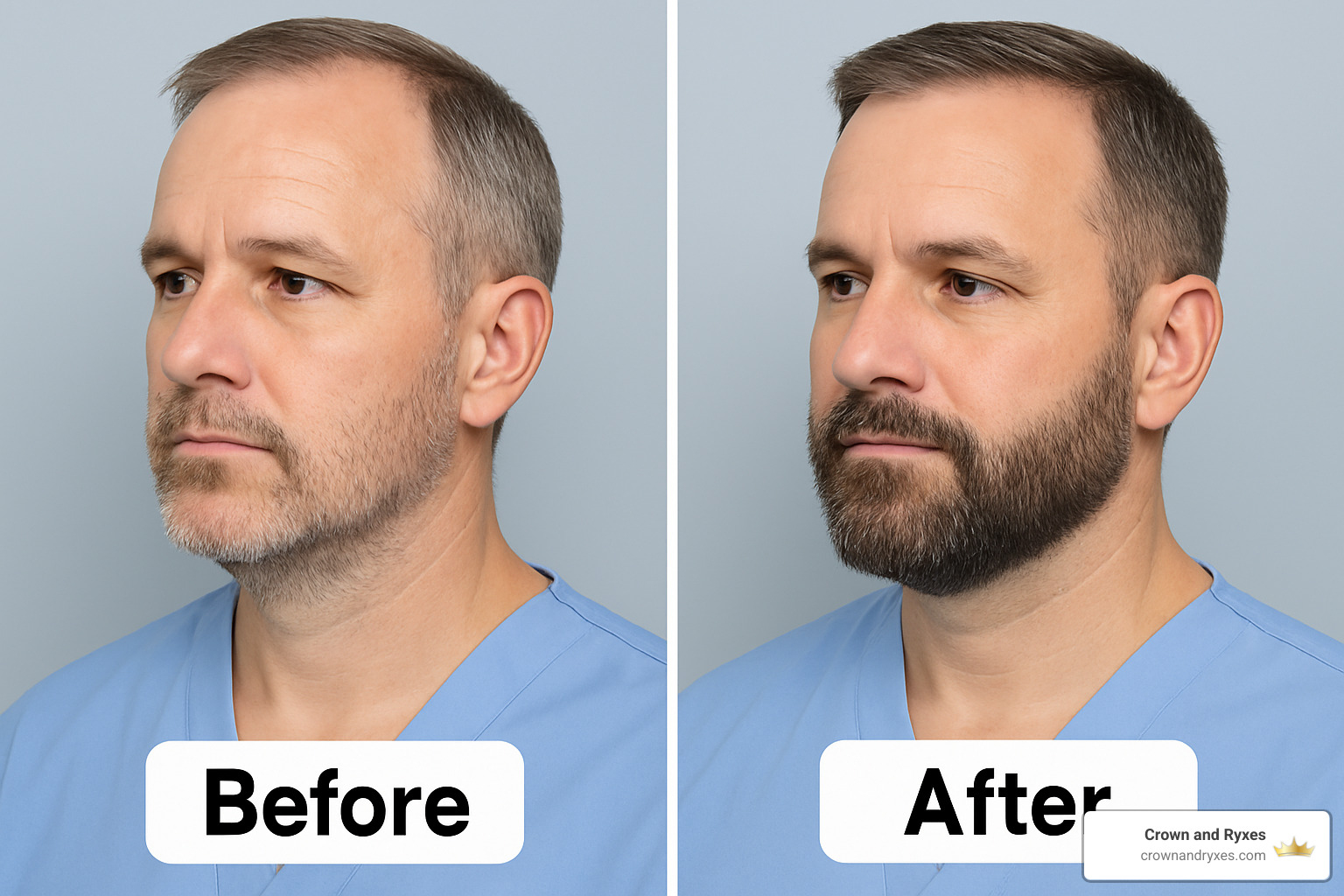
The beauty of modern patchy beard transplants lies in their reliability. With success rates of 97-100% in the hands of qualified surgeons like ours, you can feel confident in your investment. The transplanted follicles become a permanent part of your facial landscape, continuing to grow hair just like the rest of your beard for life.
While the complete growth process unfolds over about a year, most of our patients are pleasantly surprised by how manageable the recovery is. Most return to their normal activities within a week, with the exciting anticipation of watching their new beard gradually fill in over the coming months.
What makes us particularly proud at Crown and Ryxes is the natural appearance we achieve. When properly performed, even barbers can’t distinguish transplanted hair from natural growth. Our approach combines surgical precision with an artist’s eye for facial aesthetics, ensuring your beard complements your unique features perfectly.
We’re honest with our patients about candidacy—not everyone is an ideal candidate for this procedure. That’s why we place such importance on thorough consultations at our locations in Clermont, FL and The Villages, FL. Our specialists will provide a comprehensive assessment and straightforward recommendations custom to your specific situation.
If you’ve spent years trying oils, supplements, and endless grooming tricks without success, it might be time to explore a permanent solution. For more information about our beard restoration options, visit our page on beard implants.
At Crown and Ryxes, we believe everyone deserves to feel comfortable in their own skin. While nature might not have given you the beard genetics you wanted, we have the expertise to help you achieve the facial hair you’ve always envisioned—one that feels completely your own, because it is.