

Understanding PRP Therapy for Hair Loss
PRP injections for hair regrowth are becoming one of the most promising non-surgical treatments for people struggling with thinning hair. For those seeking quick answers:
| What is PRP? | How it Works | Results Timeline | Effectiveness |
|---|---|---|---|
| Platelet-Rich Plasma: A concentration of your own blood platelets | Growth factors in platelets stimulate inactive hair follicles | Initial results: 3-4 months Peak results: 6 months | Multiple studies show increased hair count (average 17.9 hairs/cm²) and improved thickness |
Hair loss affects approximately 56 million adults in the United States alone. Whether you’re experiencing androgenetic alopecia (pattern baldness), female pattern hair loss, or other forms of thinning, PRP therapy offers a natural approach that leverages your body’s own healing mechanisms.
The treatment works by drawing a small amount of your blood, processing it to concentrate the platelets, and then injecting this platelet-rich solution into areas of hair thinning. These platelets contain growth factors that can stimulate dormant hair follicles, extend the growth phase of hair, and improve overall thickness.
I’m Dr. Matthew Casavant, and I’ve been performing PRP injections for hair regrowth for patients experiencing various forms of hair loss throughout my medical practice, helping them achieve natural-looking results through this minimally invasive regenerative therapy. My experience has shown that PRP can be particularly effective when caught in the early stages of hair thinning, and when combined with a comprehensive treatment approach.

Quick prp injections for hair regrowth definitions:
– prp hair treatment woman
– prp injection for hair loss price
– prp hair treatment for receding hairline
How PRP Injections for Hair Regrowth Work
At Crown and Ryxes, we’ve seen how PRP injections for hair regrowth transform not just our patients’ hair, but their entire outlook on life. The science behind this remarkable treatment is both fascinating and straightforward.
Platelet-rich plasma is exactly what it sounds like – it’s your own blood, but with the platelets concentrated to boost their healing power. These tiny cell fragments might be small, but they pack a mighty punch when it comes to regeneration.
“Most people don’t realize that hair loss usually isn’t about dead follicles,” explains our lead specialist. “Those follicles are often just sleeping or shrinking. PRP is essentially an alarm clock that wakes them up and serves them breakfast in bed – all the nutrients they need to grow again.”
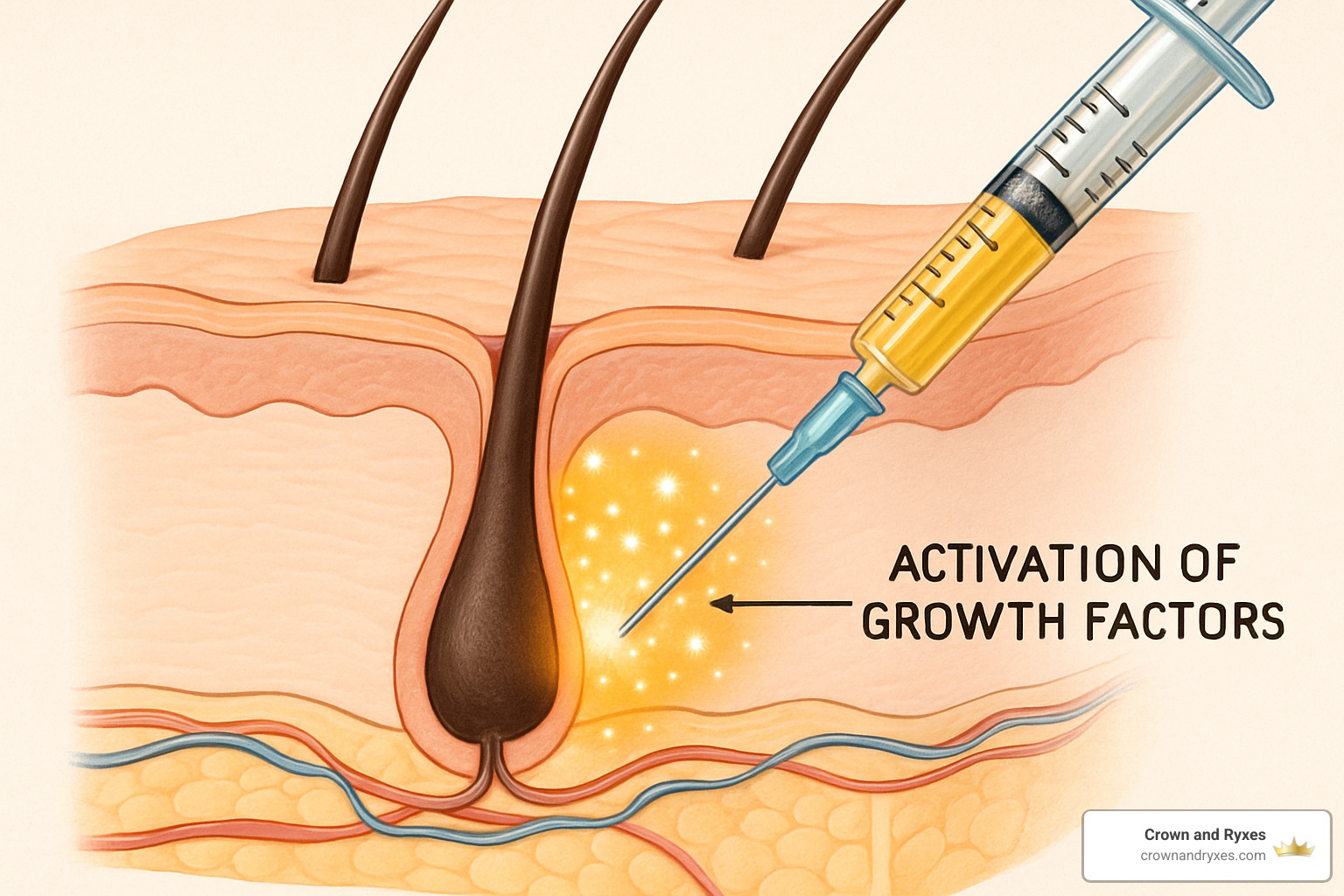
When we inject PRP into your scalp, several amazing things happen beneath the surface. The growth factors released by platelets stimulate your dermal papilla cells – the little powerhouses at the base of each follicle that control hair growth. At the same time, new tiny blood vessels begin forming through a process called angiogenesis, creating superhighways that deliver oxygen and nutrients to hungry follicles.
Perhaps most importantly, PRP extends your hair’s active growth phase (the anagen phase), giving each strand more time to grow longer and thicker before naturally shedding. It’s like giving your hair an extended growing season instead of an early frost.
The Science Behind PRP
The magic of PRP lies in specific growth factors that platelets release when activated. Think of these as specialized messengers carrying precise instructions for repair and rejuvenation:
VEGF (Vascular Endothelial Growth Factor) works like a tiny construction crew, building new blood vessels around your follicles. IGF-1 (Insulin-like Growth Factor) acts as both a growth promoter and bodyguard, preventing premature cell death. PDGF (Platelet-Derived Growth Factor) is the multiplication master, triggering cells to divide and replicate.
Other key players include cytokines and proteins like TGF-β, FGF, and EGF – all working together to wake up dormant stem cells in your follicles. A 2019 study in the Journal of Cosmetic Dermatology confirmed what we see in our practice: patients treated with PRP show increased expression of these growth factors in their scalp tissue, which directly correlates with thicker, denser hair.
PRP vs Traditional Treatments
When comparing PRP injections for hair regrowth to other hair loss treatments, it helps to understand how each works:
| Treatment | Mechanism | Advantages | Limitations | Maintenance |
|---|---|---|---|---|
| PRP Therapy | Stimulates follicles with growth factors | Natural, minimal side effects, works for men and women | Requires multiple sessions, results not permanent | Every 6-12 months |
| Minoxidil (Rogaine) | Vasodilator that increases blood flow | Over-the-counter, relatively affordable | Daily application, primarily works on crown, not frontal hairline | Daily, indefinitely |
| Finasteride (Propecia) | Blocks DHT production | Effective for male pattern baldness | Not for women, potential sexual side effects | Daily pill indefinitely |
| Hair Transplant | Relocates healthy follicles to thinning areas | Permanent solution for appropriate candidates | Surgical procedure, higher cost, recovery time | One-time (possibly multiple sessions) |
“What makes PRP truly special is that it’s regenerative, not just preventative,” our specialist often tells patients. “While medications like finasteride act like bouncers keeping troublemakers (hormones) out of the club, PRP is more like a renovation crew actively fixing up the place.”
Many of our Crown and Ryxes patients achieve their best results by combining treatments. PRP can boost the effects of minoxidil or finasteride, and we frequently use it to improve healing and graft survival after hair transplantation. It’s not about choosing one approach – it’s about finding the perfect combination for your unique hair restoration journey.
Scientific Evidence, Benefits & Limitations
The world of PRP injections for hair regrowth has come a long way in the scientific community. Over the last decade, researchers have been rolling up their sleeves and diving deep into what this treatment can really do. And guess what? The results are pretty exciting!
A 2022 review confirmed what we’ve been seeing at Crown and Ryxes for years – PRP not only stimulates new hair growth and improves thickness, but it also helps protect those precious follicles from calling it quits too early. It’s like giving your hair follicles a pep talk and some superfood all at once.
The numbers tell a compelling story too. One meta-analysis looked at six studies with 177 patients and found something that made us smile: people getting PRP injections saw an average increase of 17.90 hairs per cm² compared to control groups. That’s not just a statistic – that’s the difference between seeing scalp and seeing hair when you look in the mirror!

Another review from 2020 analyzing 13 studies backed this up, confirming improvements in both thickness and density. At Crown and Ryxes, we’ve found that taking standardized “before and after” photos helps our patients see these changes that might otherwise sneak up on them too gradually to notice.
Just like that gym membership though, maintenance matters. Most patients see their best results around 3-6 months after treatment, but without follow-up sessions, those gains might start to fade after about 6 months. That’s why we typically suggest maintenance treatments twice a year – keeping your hair game strong for the long haul.
Key Findings on PRP Injections for Hair Regrowth
The gold standard in medical research is the double-blind, randomized controlled trial (RCT), and PRP injections for hair regrowth have been put through this rigorous testing. Here’s what scientists consistently find:
First, there’s a measurable increase in hair count – we’re talking real numbers here, not just feelings or impressions. Second, individual hairs actually get thicker, which creates that coveted fullness we all want. Third, the active growth phase of your hair gets extended, so hairs stick around longer before naturally shedding.
Interestingly, men and women respond a bit differently. Women with female pattern hair loss often see their frontal hairline perk up, while men typically notice the biggest wow-factor in the crown area. And here’s a pro tip we’ve learned: combining treatments often works best. A 2019 study found that the triple threat of PRP, minoxidil, and microneedling outperformed any single treatment alone.
“What gets me excited,” shares our specialist at Crown and Ryxes, “is seeing PRP work its magic for folks who tried traditional treatments and got nowhere. There’s nothing like witnessing someone’s confidence bloom when they start seeing results after years of disappointment.”
When PRP Falls Short
Let’s keep it real – PRP injections for hair regrowth aren’t magic wands for every head. Understanding the limitations helps us have honest conversations with our patients:
If your hair loss is advanced and long-standing, the results typically won’t be as dramatic. Think of it like watering a garden – if some plants are just dormant, they’ll perk up with care, but if they’re gone completely, no amount of water brings them back.
PRP struggles with cicatricial alopecia (scarring hair loss) because those follicles have been replaced by scar tissue. Similarly, areas that have been completely bald for many years might not respond well because those follicles may have packed up and left the building.
Your genetic makeup plays a role too – some people are simply wired to respond better than others. And the field itself is still working on standardized protocols, which means results can vary depending on who’s providing your treatment.
One of our patients in Lady Lake, FL shared something that stuck with me: “I initially thought PRP would magically restore my hairline from 20 years ago. While I didn’t get my college look back, the thinning areas definitely filled in nicely. Once I understood what PRP could realistically do, I was actually thrilled with my results.”
For the most comprehensive understanding of the science behind PRP for hair regrowth, we recommend checking out this scientific research on PRP efficacy which dives deeper into the clinical evidence.
Are You a Candidate? Indications & Contraindications
Determining whether you’re a good candidate for PRP injections for hair regrowth is an important first step in your hair restoration journey. At Crown and Ryxes, we conduct thorough consultations to assess each patient’s unique situation and provide personalized recommendations.
PRP therapy shows the most promising results for these conditions:
Androgenetic Alopecia is the most common form of hair loss, affecting both men (male pattern baldness) and women. If you’re noticing that classic M-shaped recession or thinning at the crown, PRP might be perfect for you. For women experiencing Female Pattern Hair Loss, PRP is particularly effective for that frustrating diffuse thinning pattern where your part seems to widen over time.
Those in the early stages of hair loss typically see the best results – think of it as catching the problem while your follicles are still salvageable! Some patients with Alopecia Areata also respond well to PRP, though results for this autoimmune-related hair loss tend to be more variable.
A 44-year-old female patient at our Clermont location shared: “I started noticing my part widening and overall thinning about two years ago. After three PRP sessions, my hairdresser was the first to notice new growth along my part line. The before and after photos really showed the difference—it wasn’t dramatic, but it was definitely noticeable and gave me back my confidence.”
However, not everyone should jump into PRP therapy right away. Several factors may mean you should avoid or postpone treatment: pregnancy or breastfeeding, blood disorders or platelet dysfunction, current use of blood thinners that cannot be temporarily discontinued, active scalp infection or inflammation, history of keloid scarring, severe autoimmune disorders (especially during flares), cancer or chemotherapy treatment, severe liver disease, or uncontrolled diabetes.
Ideal Profiles for Successful PRP
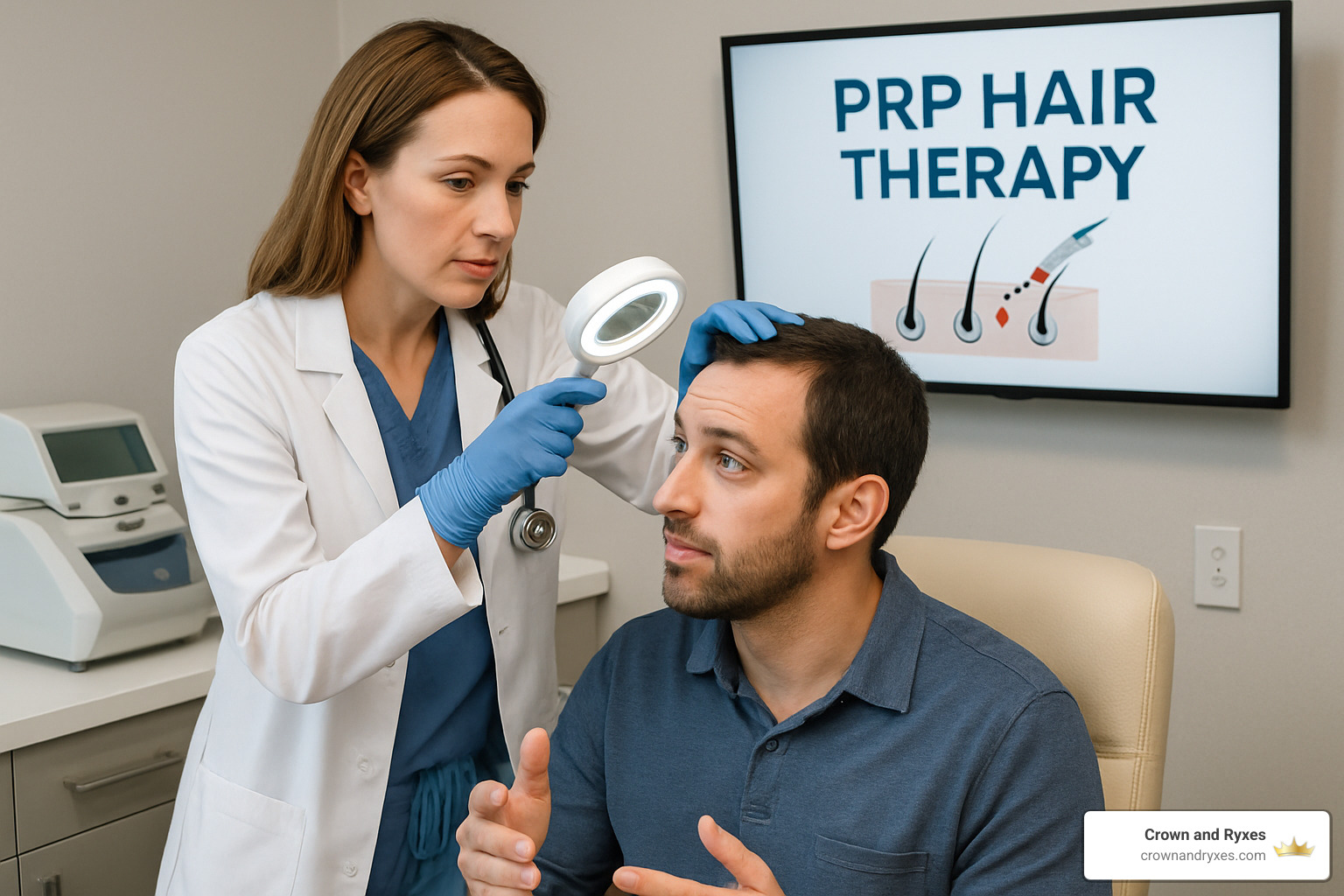
At Crown and Ryxes, we’ve watched enough patients go through the PRP journey to spot patterns in who tends to see the best results.
If your hair started thinning within the last 5 years, you’re already ahead of the game. Recent onset of hair loss typically responds better to PRP than long-standing baldness where follicles may have completely shut down.
Your overall health matters too. Patients with good general health and no significant underlying medical conditions often show more robust hair regrowth. While we’ve seen success across all age groups, younger patients (typically in their 30s-50s) often show more vigorous responses than those in their 70s or beyond – though we’ve certainly had some seniors with impressive results!
Perhaps most important is having realistic expectations. Sarah, our patient coordinator, often tells clients: “PRP isn’t about going from bald to having a full head of hair overnight. It’s about meaningful improvements that make you feel more confident.” Patients who understand this tend to be much happier with their results.
Finally, commitment to the process makes a huge difference. Those who stick with the recommended treatment series and maintenance sessions see the best long-term outcomes. This isn’t a one-and-done solution – it’s more like a relationship with your hair.
Our specialist notes: “The ideal candidate is someone in the early to moderate stages of hair thinning who’s committed to a comprehensive approach. PRP works best as part of a multi-faceted treatment plan rather than a standalone miracle solution.”
Who Should Avoid or Postpone PRP Injections for Hair Regrowth
For safety and effectiveness reasons, certain conditions warrant avoiding or delaying PRP treatment:
If you have a low platelet count, we might need to explore other options. Since the treatment relies on your own platelets, conditions that reduce platelet numbers or function can limit effectiveness.
Patients on anticoagulant therapy (blood thinners) that cannot be temporarily paused need special consideration. We always recommend consulting with your prescribing physician before making any changes to these important medications.
Any active infection, especially on the scalp, requires resolution before proceeding. Not only could the treatment be uncomfortable, but we don’t want to risk spreading infection.
Skin diseases affecting the scalp like psoriasis or eczema should be well-controlled before treatment. When your scalp is inflamed or irritated, adding needles to the mix isn’t the best idea!
If you’ve recently used isotretinoin (Accutane), we typically recommend waiting at least 6 months after completing therapy, as it can affect skin healing and regeneration.
Finally, if you’re expecting PRP to completely restore a full head of hair from slick baldness, you might want to adjust those expectations. PRP works wonders for many people, but it has its limitations.
At Crown and Ryxes, we believe in honest, transparent consultations. “Sometimes the most valuable service we provide is helping a patient understand whether PRP is right for them,” explains our Lady Lake specialist. “We never want to perform a treatment that isn’t likely to provide meaningful results for the patient.”
The Treatment Journey: Preparation, Sessions, Aftercare & Cost
When you’re considering PRP injections for hair regrowth, knowing what to expect can help ease any anxiety and prepare you for success. At Crown and Ryxes, we’ve carefully designed every step of the journey with your comfort and results in mind.
Before Your First Treatment
We recommend a few simple preparations before your appointment. First, we’ll take detailed baseline photos of your scalp—these “before” pictures will become invaluable as you track your progress. Try to stay well-hydrated for 1-2 days before your session, as this makes the blood draw much easier.
“I was nervous about the blood draw part,” shares Michael, a patient from our Lady Lake clinic. “But honestly, it was no different than a routine blood test—over before I knew it!”
With your primary doctor’s approval, you’ll want to pause blood-thinning medications like aspirin and ibuprofen for 1-2 days before treatment. Come with clean hair, skip the styling products that day, and be sure to eat a meal beforehand to prevent any light-headedness during the procedure.
What Happens During Your PRP Session
Your appointment at Crown and Ryxes typically unfolds like this:
First, we collect a small amount of your blood—between 10-60 mL depending on your treatment area. This goes into our specialized centrifuge, where the magic happens. Unlike some clinics, we use a sophisticated double-spin technique that creates a more concentrated and potent PRP solution.
While your blood spins, we’ll apply a topical numbing cream to ensure your comfort. Once your platelets are properly concentrated, we carefully inject the golden-colored PRP fluid into strategic areas of your scalp, typically in a grid pattern with injections spaced about 1 cm apart.

The entire visit takes about 60-90 minutes, though the actual injection portion only lasts about half an hour. Most patients describe the sensation as mild pressure—nothing too uncomfortable.
“I scrolled through social media during my injections,” laughs Sarah from our Clermont location. “The numbing cream worked so well I barely felt anything!”
Your Treatment Schedule and Aftercare
For optimal results, most patients follow a similar schedule: an initial series of 3-4 treatments spaced 4-6 weeks apart, followed by maintenance sessions every 6 months thereafter.
Aftercare is refreshingly simple. Avoid vigorous scalp massage for 48 hours, wait until the next day to shampoo, and skip intense workouts for 24 hours. We also recommend avoiding NSAIDs for 1-2 days after treatment as they can interfere with the healing process that stimulates growth.
Investment Considerations
Let’s talk about the financial aspect. At Crown and Ryxes, PRP injections for hair regrowth typically range from $600-$900 per session. With the recommended initial series, most patients invest between $1,800-$3,600 for their starter treatment course.
It’s worth noting that insurance typically considers this a cosmetic procedure and doesn’t provide coverage. However, many of our patients find the investment worthwhile when they see their results—especially with consistent maintenance sessions every six months.
“We understand this represents a significant commitment,” says our lead specialist. “That’s precisely why we’re so thorough in our consultations—we want to ensure you’re an excellent candidate before recommending treatment.”
Step-by-Step PRP Session Walk-Through
When you arrive for your appointment at Crown and Ryxes, we’ll make sure you’re comfortable and answer any lingering questions. The blood draw is quick and similar to any routine lab work—we typically take 10-60 mL depending on your specific treatment needs.
While your blood undergoes its change in our centrifuge (about 10 minutes), we’ll apply a topical anesthetic to your scalp. This numbing cream makes the upcoming injections virtually painless for most patients.
Our double-spin centrifugation protocol is something we’re particularly proud of—it creates a more concentrated solution with higher platelet counts than single-spin methods used at some clinics. The result is a golden-colored fluid rich in growth factors ready to stimulate your hair follicles.
Using very fine needles, we then carefully inject this platelet-rich plasma into your scalp at approximately 1 cm intervals across the treatment areas. The injections are shallow, targeting precisely the level where your hair follicles reside.
After treatment, your scalp may look slightly flushed, similar to a mild sunburn. Before you leave, we’ll review all aftercare instructions to ensure optimal healing and results.
“Most patients are pleasantly surprised by the comfort level,” notes our specialist. “Between the effective numbing and our gentle technique, it’s much easier than most people anticipate.”
Maximizing & Maintaining Results
The key to success with PRP injections for hair regrowth is consistency and complementary care. Commit to completing your full initial treatment series—those first 3-4 sessions build the foundation for your results.
Perhaps even more important is keeping up with maintenance sessions. The growth effects typically begin to diminish after 6-12 months, so scheduling regular “booster” treatments every six months helps maintain and even build upon your initial gains.
Consider a comprehensive approach for best results. Many of our most satisfied patients combine PRP with other proven treatments like topical minoxidil, low-level laser therapy, or prescription medications. This multi-faceted strategy often yields superior outcomes compared to any single treatment alone.
Your daily habits matter too. Gentle, high-quality hair care products create a healthy scalp environment for new growth. Proper nutrition—especially adequate protein, biotin, zinc, and vitamin D—supports hair health from the inside out (though always consult your healthcare provider before starting supplements).
Don’t underestimate the impact of stress management. Chronic stress can trigger telogen effluvium (stress-related shedding) that counteracts your PRP benefits. Regular stress-reduction practices can help protect your investment.
One patient’s experience proves particularly instructive: “After my initial treatments, I was thrilled with my results—especially the thickness at my crown. But I waited almost 18 months for my follow-up, and definitely noticed regression. Now I’m religious about my six-month maintenance sessions, and my results stay consistent.”
At Crown and Ryxes, we’re committed to supporting your entire hair restoration journey—from that first consultation through years of maintenance. With the right approach, PRP injections for hair regrowth can provide lasting improvements in both your hair and your confidence.
Safety, Side Effects & Combination Strategies
When it comes to PRP injections for hair regrowth, safety is one of the treatment’s strongest selling points. At Crown and Ryxes, we often reassure our concerned patients that because we’re using your own blood components, your body recognizes the material as “self” – virtually eliminating risks of allergic reactions or rejection.
That said, we believe in transparent communication about what you might experience during and after treatment. Most of our patients experience only mild, temporary side effects that resolve quickly. The most common include tenderness at injection sites (typically gone within 24-48 hours), mild scalp swelling or redness, occasional headaches that resolve quickly, tiny spots of bleeding at injection points, and sometimes a mild itching sensation during healing.
“I tell my patients to think of it like a mild sunburn sensation,” explains our Lady Lake specialist. “Most are pleasantly surprised by how minimal the discomfort actually is, especially compared to the anxiety they had before treatment.”
More serious side effects are exceptionally rare when performed by qualified providers using proper techniques. Infection is extremely uncommon with our stringent sterile protocols, nerve injury is very rare with proper technique, and tissue necrosis is virtually unheard of when PRP is properly prepared and injected.

Side Effects & Risk Mitigation
At Crown and Ryxes, we don’t just hope for good outcomes – we actively work to ensure them. Our comprehensive approach to minimizing risks begins before you ever sit in the treatment chair.
We start with thorough screening, reviewing your complete medical history to identify any potential contraindications. Our providers maintain rigorous sterile protocols throughout the blood drawing, processing, and injection phases. We’ve refined our injection techniques to use the optimal needle size and depth, balancing comfort with effectiveness.
“Safety isn’t something we improvise,” says our medical director. “It’s built into every step of our process, from the moment you schedule your consultation.”
We also partner with our patients in risk reduction. With your primary physician’s approval, we recommend avoiding blood-thinning medications and supplements for 1-2 days before and after treatment. Staying alcohol-free for 24 hours before and after helps too. Good hydration makes the blood draw easier and potentially more comfortable.
One thing we emphasize with all our patients is complete transparency about medications, supplements, and medical conditions. This information isn’t just paperwork – it helps us customize your treatment for maximum safety and effectiveness.
Most of our patients return to normal activities immediately after treatment, though we suggest avoiding strenuous exercise for about 24 hours. Any unusual symptoms should be reported promptly, though our complication rate remains remarkably low.
Synergistic Therapies with PRP Injections for Hair Regrowth
If there’s one thing we’ve learned at Crown and Ryxes, it’s that PRP injections for hair regrowth work best as part of a comprehensive approach. Research consistently shows that combination strategies yield superior results – a finding that matches our clinical experience.
“Think of PRP as a powerful tool, but not the only tool in your hair restoration toolkit,” explains our Clermont specialist. “When we combine approaches that work through different mechanisms, we often see results that are greater than the sum of their parts.”

Some of our most successful patients combine PRP with topical minoxidil (Rogaine), which works through a different mechanism to improve blood flow and maintain results between PRP sessions. For male patients, adding oral finasteride can address the hormonal component of hair loss while PRP stimulates regeneration.
Microneedling has proven to be a particularly effective companion to PRP therapy. This technique creates tiny channels in the scalp that both improve PRP penetration and stimulate additional collagen production. A 2021 study found that patients receiving this combination (PRP + minoxidil + microneedling) showed approximately 50% greater improvement in hair density compared to PRP alone.
Other powerful combinations include low-level laser therapy (LLLT), which uses red light wavelengths to stimulate cellular activity in hair follicles, and targeted nutritional support with supplements like biotin, zinc, and vitamin D (after consulting with your healthcare provider).
For patients considering or recovering from hair transplantation, PRP has become an invaluable adjunct therapy. When used before, during, or after transplantation, PRP can improve graft survival rates and accelerate healing.
“We’re not just treating hair – we’re treating the whole person,” notes our specialist. “Creating the optimal environment for hair growth means addressing multiple factors: growth stimulation, hormonal influences, blood flow, nutrition, and overall scalp health. When we coordinate these approaches thoughtfully, that’s when we see truly life-changing results.”
Frequently Asked Questions about PRP Injections for Hair Regrowth
How soon will I see new growth?
When patients ask about the timeline for PRP injections for hair regrowth, I always emphasize that this is a gradual journey that follows your natural hair growth cycle.
At Crown and Ryxes, we typically see patients progress through several phases after treatment begins. Most notice a reduction in hair shedding around the 1-month mark – often the first encouraging sign that the treatment is working. By months 2-3, many patients report their existing hair feels stronger and appears healthier, with improved texture and shine.
The exciting milestone comes around months 3-4, when those tiny new hairs typically begin emerging, especially in areas that were thinning rather than completely bald. By the 6-month point, after completing the initial treatment series, most patients see their most dramatic improvements.
“I tell all my patients that patience isn’t just helpful with PRP – it’s essential,” shares our hair restoration specialist. “Hair only grows about half an inch each month, so it takes time for those new hairs to become long enough to make a visible difference in your appearance. The before-and-after photos at 6 months often tell the most compelling story.”
One of our 70-year-old patients from Lady Lake recently told us: “I almost gave up after the first couple months when I didn’t see much happening. Thank goodness I stuck with it! By month four, my wife started noticing the difference, and my barber commented on all the new growth filling in my crown. The full treatment course really made the difference.”
How long do results really last?
The durability of PRP results is something we discuss honestly with every patient at Crown and Ryxes. Based on both research and our extensive clinical experience, we find that results typically begin to diminish after 6-12 months without maintenance treatments.
This timeline varies significantly between individuals – some patients maintain their improvements longer than others due to genetic factors, overall health, and lifestyle habits. Some fortunate patients see benefits lasting closer to the 12-month mark, while others notice changes around 6-8 months post-treatment.
A 2014 study confirmed what we’ve observed clinically: hair density tends to peak about 3 months after treatment but begins gradually declining by the 6-month point. This research supports our recommendation for biannual maintenance sessions for most patients.
“I like to compare PRP to exercise,” our specialist often explains. “Just as you can’t expect to stay fit from a single workout, PRP isn’t a one-time solution. The good news is that maintenance is much less intensive than your initial treatment series – typically just one session every six months to sustain and even build upon your results.”
Many of our long-term patients find that these twice-yearly maintenance visits become a simple part of their self-care routine, with each session helping to protect and improve the investment they’ve made in their appearance and confidence.
Can I wash or color my hair after treatment?
Post-treatment hair care questions are among the most common we receive, especially from patients who color their hair or have special styling routines.
For shampooing, we recommend waiting until the day after your PRP injections for hair regrowth before washing your hair. When you do wash, use gentle motions rather than vigorous scrubbing, and opt for a mild, sulfate-free shampoo if possible.
If you color your hair, it’s best to wait at least 72 hours (3 days) after your PRP treatment before applying any chemical processes. Your scalp needs this recovery time, and premature exposure to hair dyes or bleach could cause irritation or interfere with the healing process.
Most regular styling products can be used starting the day after treatment, but we suggest avoiding formulations containing high amounts of alcohol or other potential irritants for the first 2-3 days. Similarly, try to minimize heat styling with blow dryers, curling irons, and straighteners during this initial recovery period.
For our swimmers, we recommend staying out of chlorinated pools and salt water for 2-3 days post-treatment to prevent irritation of the injection sites.
“I find patients are often relieved to learn how minimal the disruption to their routine really is,” notes our specialist. “It’s just a matter of treating your scalp a bit more gently for a few days after each session. Most people find it’s a small adjustment that’s well worth the results.”
The good news is that between treatments – which are typically spaced 4-6 weeks apart for the initial series, and then every six months for maintenance – you can follow your normal hair care routine without restrictions.
Conclusion
PRP injections for hair regrowth have truly changed the landscape of non-surgical hair restoration in recent years. I’ve seen at Crown and Ryxes how this approach transforms not just hairlines, but lives – watching patients walk taller and smile more broadly as they regain confidence in their appearance.
The science backs up what we’re seeing in our offices. Multiple well-designed studies show measurable improvements in hair count (that average of 17.9 hairs per square centimeter isn’t just a number – it’s visible change in the mirror), increased thickness of individual hairs, and a longer growth phase that allows hair to reach its full potential.
That said, I always have honest conversations with patients about expectations. PRP isn’t a miracle cure that will turn a completely bald scalp into a full head of hair overnight. Where it truly shines is for those catching hair thinning in its earlier stages – that’s when we see our most dramatic changes.
Your PRP journey typically follows a predictable path: a foundation of 3-4 initial treatments spaced about a month apart, followed by maintenance sessions every 6 months to preserve and build on your gains. Think of it like fitness – you don’t exercise once and stay in shape forever. Your hair needs ongoing attention to maintain its best appearance.
“I was skeptical at first,” one of our Lady Lake patients told me recently. “But after completing my initial series and then coming in twice a year for maintenance, I’m a believer. My wife says my hair looks better now at 55 than it did at 45!”
What makes PRP injections for hair regrowth particularly valuable in our toolkit is their remarkable versatility. The treatment works effectively for both men and women (unlike some medications that are gender-specific), can complement virtually any other hair restoration approach, and harnesses your body’s own healing mechanisms rather than relying on external chemicals.
Perhaps most importantly, PRP can be custom to your unique situation. At Crown and Ryxes, we never take a one-size-fits-all approach. Your consultation begins with a thorough assessment of your hair loss pattern, medical history, and goals. From there, we develop a personalized plan that might include PRP alongside complementary therapies for optimal results.
If you’re noticing more hair in your brush or shower drain, seeing your part widening, or feeling self-conscious about thinning areas, don’t wait to seek help. The single most important factor in successful hair restoration is early intervention – the sooner you address the issue, the more options you’ll have and the better your outcomes are likely to be.
With the right approach, the fuller, healthier hair you remember isn’t just a distant memory – it may be closer than you think. We invite you to schedule a consultation at either our Clermont or Lady Lake, Florida locations to find what’s possible for your unique situation.