

Why Regrowing Hair from Male Pattern Baldness Matters
Regrow hair male pattern baldness is a goal for millions of men worldwide. Affecting up to 70% of men as they age, with 25% seeing signs before age 21, it’s a common concern. The good news is that you have options. Proven treatments can slow hair loss, maintain density, and even stimulate regrowth.
Quick Answer: Can You Regrow Hair from Male Pattern Baldness?
Yes, but results vary. Here’s what works:
- FDA-Approved Medications: Minoxidil (topical) and Finasteride (oral) are clinically proven to work.
- Best Results: Early intervention is key for the highest chance of regrowth.
- Combination Therapy: Using multiple treatments together often yields better outcomes.
- Surgical Options: Hair transplants offer permanent restoration for advanced cases.
- Timeline: Expect to wait 3-12 months to see noticeable results.
- Commitment Required: Continuous use is necessary to maintain benefits.
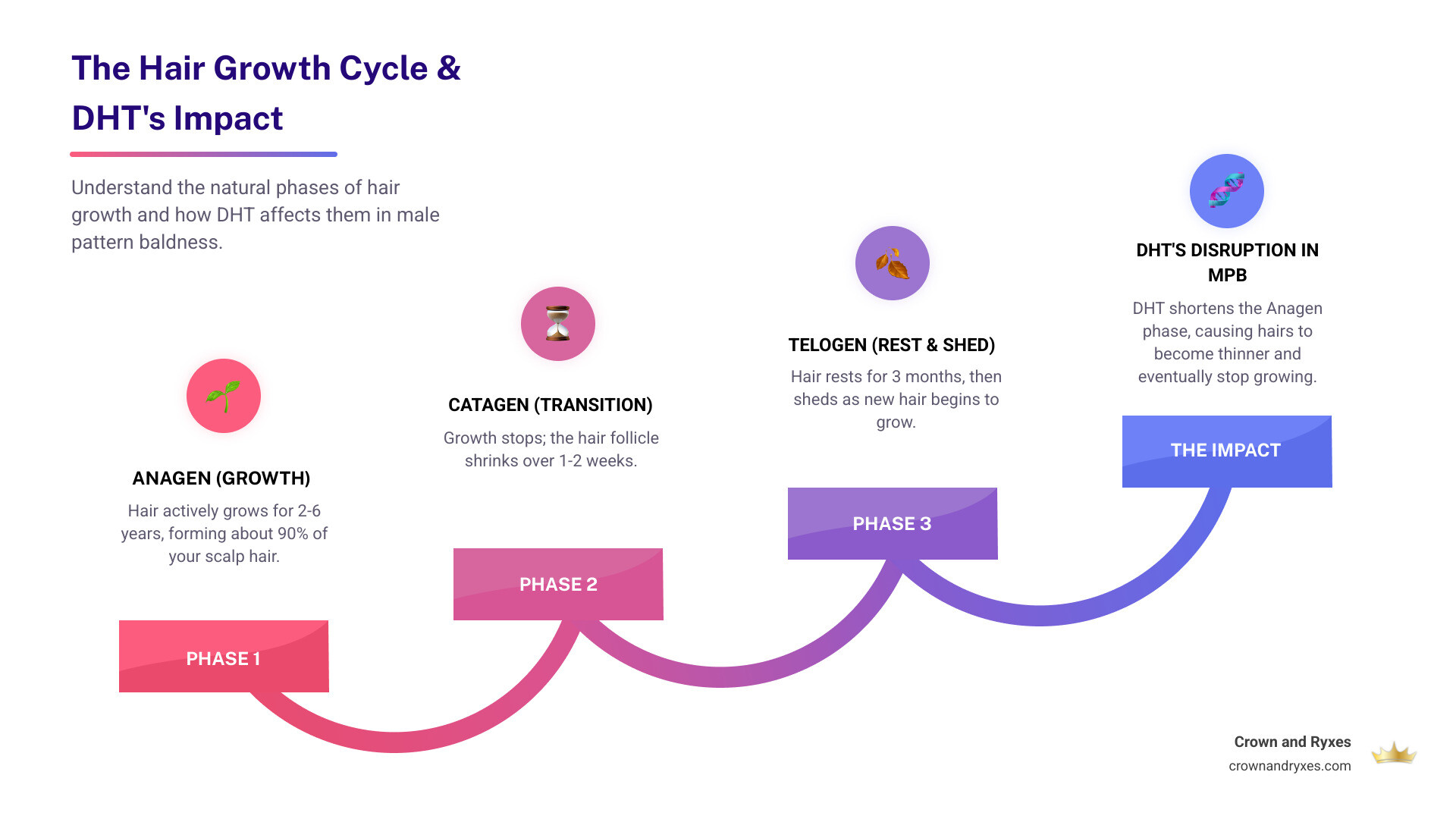
Hair plays a large role in self-image, and modern science has given us real answers beyond the “snake oils” of the past. Male pattern baldness, or androgenic alopecia, is driven by genetics and the hormone dihydrotestosterone (DHT). DHT causes hair follicles to shrink, producing thinner hairs until they stop growing, typically starting at the hairline and crown.
This process disrupts the natural hair growth cycle, shortening the growth phase from years to months. Understanding this is key to seeing why treatments take time to work.
I’m Dr. Matthew Casavant, a board-certified physician with over 20 years of experience. At Crown and Ryxes in Clermont, FL, and The Villages, FL, my team and I develop personalized strategies to help men regrow hair male pattern baldness and restore their confidence.
Understanding Male Pattern Baldness (Androgenic Alopecia)
If you’re noticing a receding hairline or a thin spot on your crown, you’re not alone. Male pattern baldness, or androgenetic alopecia, is the most common form of hair loss in men. It’s a progressive condition where hair gradually thins in predictable patterns. Unlike temporary shedding, it stems from a mix of genetic predisposition and your body’s response to male hormones (androgens). You can learn more from this general overview of Androgenetic Alopecia.
This condition affects up to 70% of men as they age. About 25% of men see the first signs before age 21, and roughly half experience noticeable hair loss by age 50.
What Causes Hair Loss in Men?
Three factors drive male pattern baldness: genetics, hormones, and age.
- Genetics: Your risk is higher if your father or maternal grandfather experienced baldness. Multiple genes are involved, explaining variations in pattern and timing.
- Hormones: The main trigger is dihydrotestosterone (DHT), a byproduct of testosterone. In genetically susceptible men, DHT binds to hair follicles and causes them to shrink, a process called hair follicle miniaturization. Over time, follicles produce thinner, weaker hairs until they stop producing visible hair.
- Age: The effects of DHT accumulate over time, which is why significant hair loss often appears in a man’s 30s or later.
The 7 Stages of Male Pattern Baldness
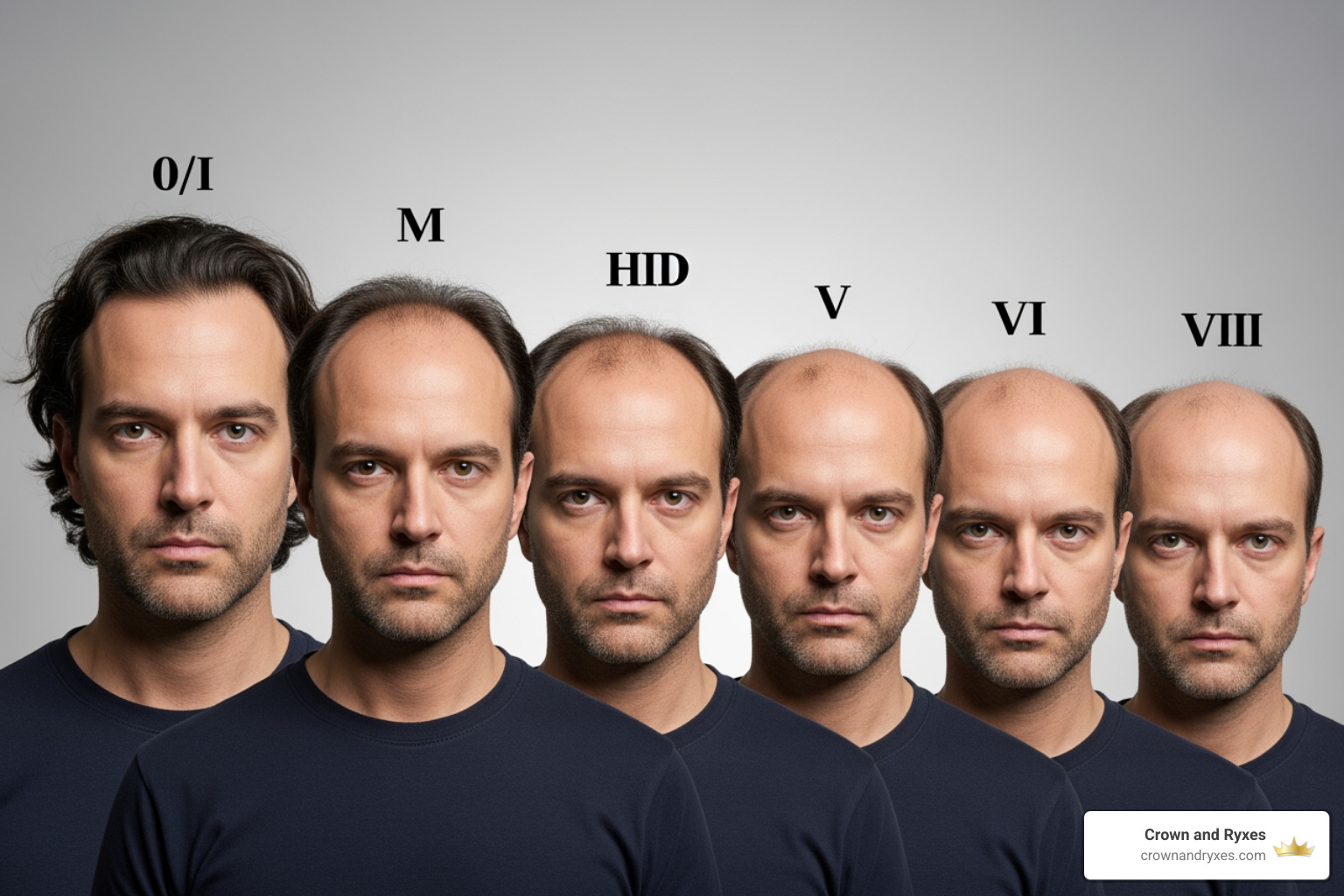
Male pattern baldness follows a predictable progression known as the Hamilton-Norwood scale. Knowing your stage helps set realistic expectations for treatment.
- Stage 1: No significant hair loss or hairline recession.
- Stage 2: Slight recession at the temples, often called a “mature hairline.”
- Stage 3: The first stage of significant baldness. The hairline recedes into an “M” or “U” shape. Some men also see thinning at the crown (vertex).
- Stage 3 Vertex: The hairline remains at Stage 2, but a noticeable bald spot develops on the crown.
- Stage 4: Hairline recession is more severe, and the crown spot is larger. A band of hair still separates the two areas.
- Stage 5: The band of hair separating the front and crown thins significantly.
- Stage 6: The bridge of hair disappears, merging the hairline and crown into one large bald area.
- Stage 7: The most severe stage, with only a horseshoe-shaped band of hair remaining around the sides and back of the head.
How is Hair Loss Diagnosed?
Diagnosis is usually straightforward. A consultation begins with a visual examination of your scalp and a detailed medical and family history. For most men, this is enough to confirm male pattern baldness.
In some cases, we may use additional tools:
- Trichoscopy: A magnifying device to see hair follicle miniaturization up close.
- Pull Test: Gently tugging on hair to assess the severity of active shedding.
- Blood Tests: To rule out other causes like thyroid issues or vitamin deficiencies.
- Scalp Biopsy: Rarely, a small tissue sample is examined to confirm a diagnosis if the pattern is unusual.
Early diagnosis matters tremendously. The best chance to regrow hair male pattern baldness has affected comes with early intervention. Follicles that have been dormant for years are much harder to revive. If you’re noticing changes, don’t wait. The sooner we start a treatment plan, the better your results will be.
Proven Treatments to Regrow Hair for Male Pattern Baldness
Fortunately, we’ve made remarkable progress in treating male pattern baldness. It’s possible to slow hair loss and even regrow hair male pattern baldness has taken. The goals are simple: stop progression, maintain existing hair, and stimulate new growth. Consistency is key, as most treatments require ongoing use to maintain benefits. We often find that combination therapy—using multiple approaches—delivers the best results.
FDA-Approved Medications: Minoxidil and Finasteride
Two FDA-approved medications are the cornerstone of treatment: topical Minoxidil and oral Finasteride.
Minoxidil (Rogaine®) is an over-the-counter topical treatment (foam or liquid) applied directly to the scalp. It works as a vasodilator, increasing blood flow and nutrients to hair follicles and extending their growth phase. While it can stimulate growth, it works best when started early. Results require at least six months of consistent use and will fade if you stop.
Finasteride (Propecia®) is a prescription pill that tackles the root hormonal cause. It blocks the enzyme 5-alpha reductase, which converts testosterone into DHT. By lowering DHT levels in the scalp, it prevents follicle miniaturization. Finasteride slows hair loss in 80-90% of men, and many experience regrowth, especially with early treatment. Like Minoxidil, it must be taken daily to maintain results.
| Feature | Minoxidil | Finasteride |
|---|---|---|
| Application | Topical (liquid, foam, shampoo) | Oral (pill) |
| Mechanism | Vasodilator; extends anagen phase | DHT blocker; inhibits 5-alpha reductase |
| Prescription | Over-the-counter (OTC) | Prescription only |
| Efficacy | Stimulates growth, strengthens hair, prevents loss; 5% more effective than 2% | Slows hair loss in 80-90% of men; some regrowth |
| Consistency | Daily application, continuous use required | Daily pill, continuous use required |
Natural Remedies and Supplements: What Does the Science Say?
While not FDA-approved for male pattern baldness, some natural options show promise as complementary therapies:
- Saw Palmetto: A botanical extract that may inhibit the 5-alpha reductase enzyme, similar to Finasteride.
- Pumpkin Seed Oil: A placebo-controlled trial showed it can promote hair growth in men with this condition.
- Rosemary Oil: One comparative trial found rosemary oil performed similarly to Minoxidil 2%.
- Microneedling: Using a device with tiny needles to create micro-injuries on the scalp, which stimulates growth factors and improves absorption of topical treatments. A systematic review on microneedling supports its potential.
- Caffeine Shampoos: May block DHT’s effects on hair follicles and encourage growth.
- Vitamins and Minerals: Deficiencies in Iron, Zinc, and Vitamin D can worsen hair thinning. A balanced diet supports overall hair health.
These options work best alongside established medical treatments. Always consult a healthcare professional before starting new supplements.
Surgical Solutions: The Role of Hair Transplants
For more advanced hair loss, hair transplant surgery offers a permanent solution. The procedure relocates healthy, DHT-resistant hair follicles from the back or sides of your scalp to thinning areas. The two main techniques are Follicular Unit Transplantation (FUT) and Follicular Unit Extraction (FUE). FUE is popular for its minimal scarring and natural-looking results, which we offer at Crown and Ryxes as part of our FUE hair restoration services.
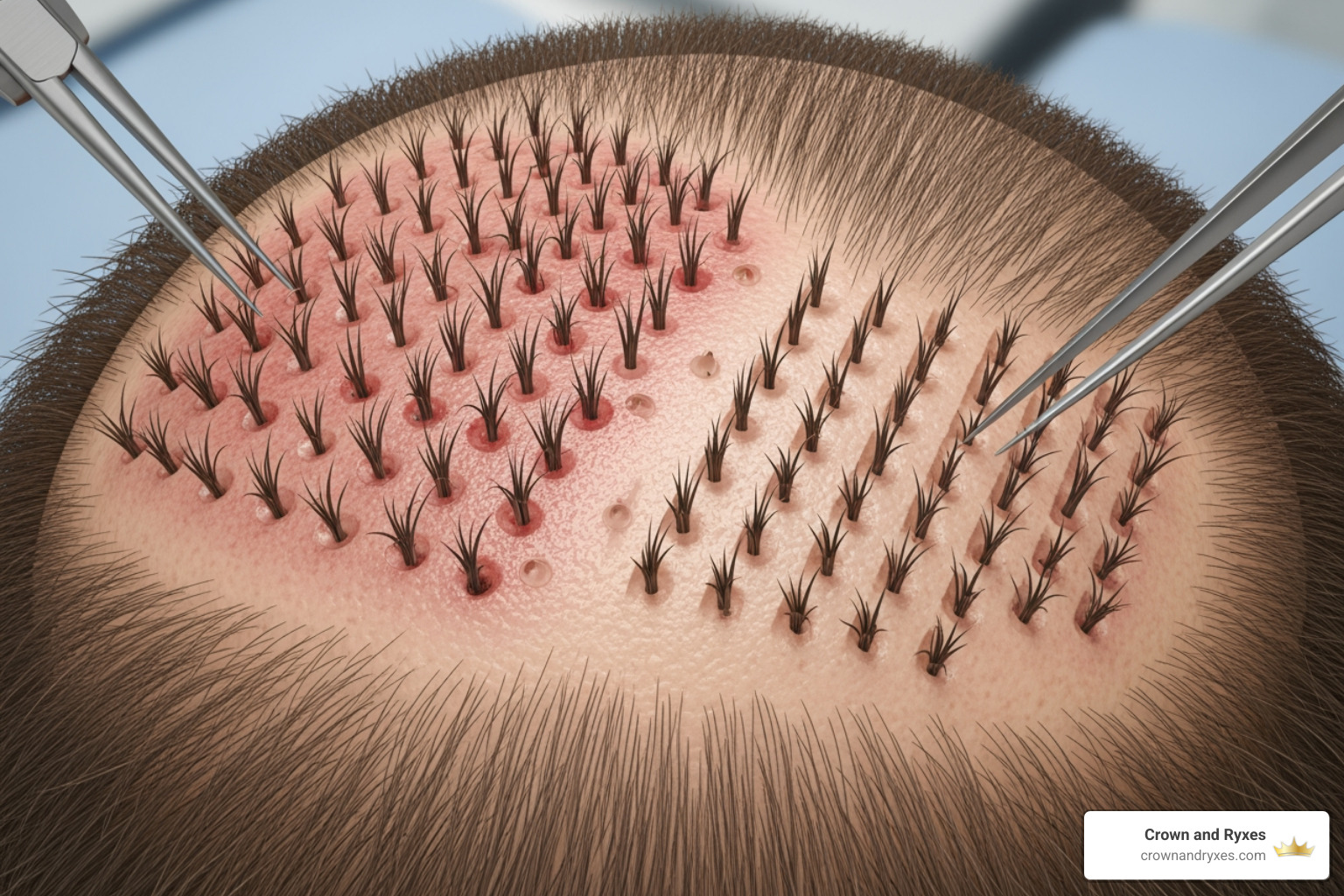
Transplanted follicles retain their DHT resistance, providing long-lasting results. However, surgery doesn’t stop hair loss in other areas, so we often recommend combining it with medical therapies to maintain your results. We offer comprehensive hair transplant services and can guide you through the entire process.
Emerging and Other Therapies
The field of hair restoration is constantly evolving with exciting new treatments:
- Low-Level Laser Therapy (LLLT): FDA-cleared devices use red light to stimulate follicles and increase blood flow. Learn more about laser hair therapy effectiveness.
- Platelet-Rich Plasma (PRP): This treatment uses growth factors from your own blood. We process a blood sample to concentrate the platelets and inject the PRP into your scalp to stimulate dormant follicles. Explore PRP injections for hair regrowth with us.
- Dutasteride: A more potent DHT blocker than Finasteride, sometimes used off-label for male pattern baldness.
- Stem Cell Scalp Injections: An innovative therapy using stem cells to activate hair follicle growth. Learn about stem cell scalp injections at Crown and Ryxes.
These diverse options provide genuine hope. At Crown and Ryxes in Clermont, FL, and The Villages, FL, we monitor the latest advancements to offer the most effective solutions.
Managing Your Hair Regrowth Journey
Starting a journey to regrow hair male pattern baldness requires patience. This is not a quick fix. Success depends on setting realistic expectations, maintaining consistency with treatments, and tracking your progress. Taking action is a positive step that can provide a psychological boost even before physical results appear.
Potential Side Effects and How to Manage Them
All medical treatments have potential side effects, and it’s important to be informed.
Minoxidil: The most common side effects are mild scalp irritation, itching, dryness, or flaking. In some cases, unwanted hair growth can appear on the forehead or face if the product drips. If irritation persists, talk to your doctor.
Finasteride: A small percentage of men experience sexual side effects, including decreased libido or erectile dysfunction. Less common effects include breast tenderness or mood changes. If you notice any of these, discuss them with your doctor immediately. Your overall wellness is the priority. At Crown and Ryxes, we can discuss REGENmax to support your sexual wellness and quality of life.
Open communication with your healthcare provider is key to managing side effects and ensuring your treatment plan is safe and effective.
How Long Until I See Results?
Results vary by treatment and individual response. Patience is essential.
Minoxidil: Expect to wait at least six months for noticeable results. An initial shedding phase is common and a positive sign that the medication is working.
Finasteride: Improvements usually appear in three to six months, with the greatest benefit often being the prevention of further loss. Regrowth can take 12 months or more to become apparent.
Hair Transplants: After surgery, transplanted hairs will shed before new growth begins. Full results are typically visible 12 to 18 months post-procedure, but they are permanent.
Other Therapies (PRP, LLLT): These also require several months of consistent sessions to see changes in hair density.
Achieving and maintaining results requires long-term commitment. We encourage patients to document their progress with photos and attend regular follow-ups.
Can lifestyle changes help regrow hair from male pattern baldness?
While lifestyle changes can’t reverse genetic baldness, they can support hair health and improve treatment effectiveness.
Scalp Health: A clean, healthy scalp is the foundation for hair growth. Use gentle products and avoid harsh chemicals.
Diet: A balanced diet is crucial. Ensure adequate protein (40-60 grams daily) and key nutrients like Vitamins A, B, C, D, and E, along with zinc and iron. A Mediterranean-style diet may be beneficial.
Stress Management: Chronic stress can accelerate hair loss in those who are predisposed. Practices like exercise and mindfulness can help manage stress levels.
Gentle Hair Care: Avoid aggressive brushing, tight hairstyles, and excessive heat styling to protect existing hair.
These practices create an optimal environment for your hair and can significantly support medical and surgical treatments.
Frequently Asked Questions about Regrowing Hair
We often receive many questions from men concerned about their hair loss. Here are some of the most common ones:
Can you completely reverse male pattern baldness?
Completely reversing advanced male pattern baldness is rare, but significant management and regrowth are possible. The goal is to stop progression, maintain current density, and stimulate new growth for a fuller appearance. Early intervention offers the best chance for noticeable regrowth. While a teenage hairline may not be achievable for everyone, we can help you achieve substantial cosmetic improvement.
Is it better to use Minoxidil or Finasteride?
Neither is inherently “better”; they work differently and are often most effective when used together. Finasteride targets the hormonal cause (DHT) to prevent further loss, while Minoxidil directly stimulates growth by improving blood flow. Combining them provides a comprehensive approach to regrow hair male pattern baldness. A consultation is essential to determine the best plan for you.
Does stress cause permanent baldness?
Stress can cause temporary hair shedding (Telogen Effluvium), which typically resolves once the stressor is gone. However, male pattern baldness is genetic and hormonal. Chronic stress doesn’t directly cause it, but it can potentially accelerate the process in those already predisposed. Therefore, managing stress is a healthy practice that supports your overall hair regrowth efforts.

Take Control of Your Hairline
Understanding how to regrow hair male pattern baldness has affected is the first step. Real solutions exist, and with the right, consistent approach, you can see meaningful progress. From FDA-approved medications like Minoxidil and Finasteride to surgical options and emerging therapies like PRP, there is a path forward.
Male pattern baldness is common, but you don’t have to simply accept it. Early intervention gives you the best chance of success, and today’s treatments are more effective than ever. The science is on your side.
At Crown and Ryxes, we understand that every hair loss journey is unique. We take a personalized approach, tailoring recommendations to your stage of hair loss, health profile, and goals. Our team in Clermont, FL, and The Villages, FL, is dedicated to helping you restore not just your hair, but your confidence.
We offer comprehensive consultations to assess your hair loss and develop a customized treatment plan that fits your needs. Regrowing hair is about feeling like yourself again.
Take the first step towards hair restoration and find how Crown and Ryxes can help you achieve the results you’re looking for. Your hairline and your confidence are within reach.