

The Truth About Hair Restoration Products
Restore hair products that actually work typically contain FDA-approved ingredients like minoxidil (2-5%) or finasteride (1mg daily), target DHT blocking, and stimulate follicle nutrition. The most effective options include Rogaine foam, Keeps finasteride, Nizoral shampoo, LLLT devices, and professional PRP treatments.
If you’re noticing thinning hair or a receding hairline, you’re not alone. Hair loss affects two-thirds of men by age 35, and even more as we age. The good news? Modern science has moved well beyond snake oil remedies to deliver restore hair solutions that are backed by clinical research.
The key is understanding what actually works versus what just empties your wallet. Hair restoration isn’t about magic—it’s about science, consistency, and choosing products that address the specific causes of your hair loss.
When evaluating hair restoration products, look for:
- FDA-approved active ingredients (minoxidil, finasteride)
- Clinical studies supporting effectiveness
- Realistic timelines (3-6 months minimum for visible results)
- Mechanism of action that addresses your specific type of hair loss
I’m Dr. Matthew Casavant, and as a physician with over 20 years of clinical experience, I’ve helped countless patients steer the complex world of hair restoration through evidence-based approaches and personalized treatment plans that actually restore hair and confidence.
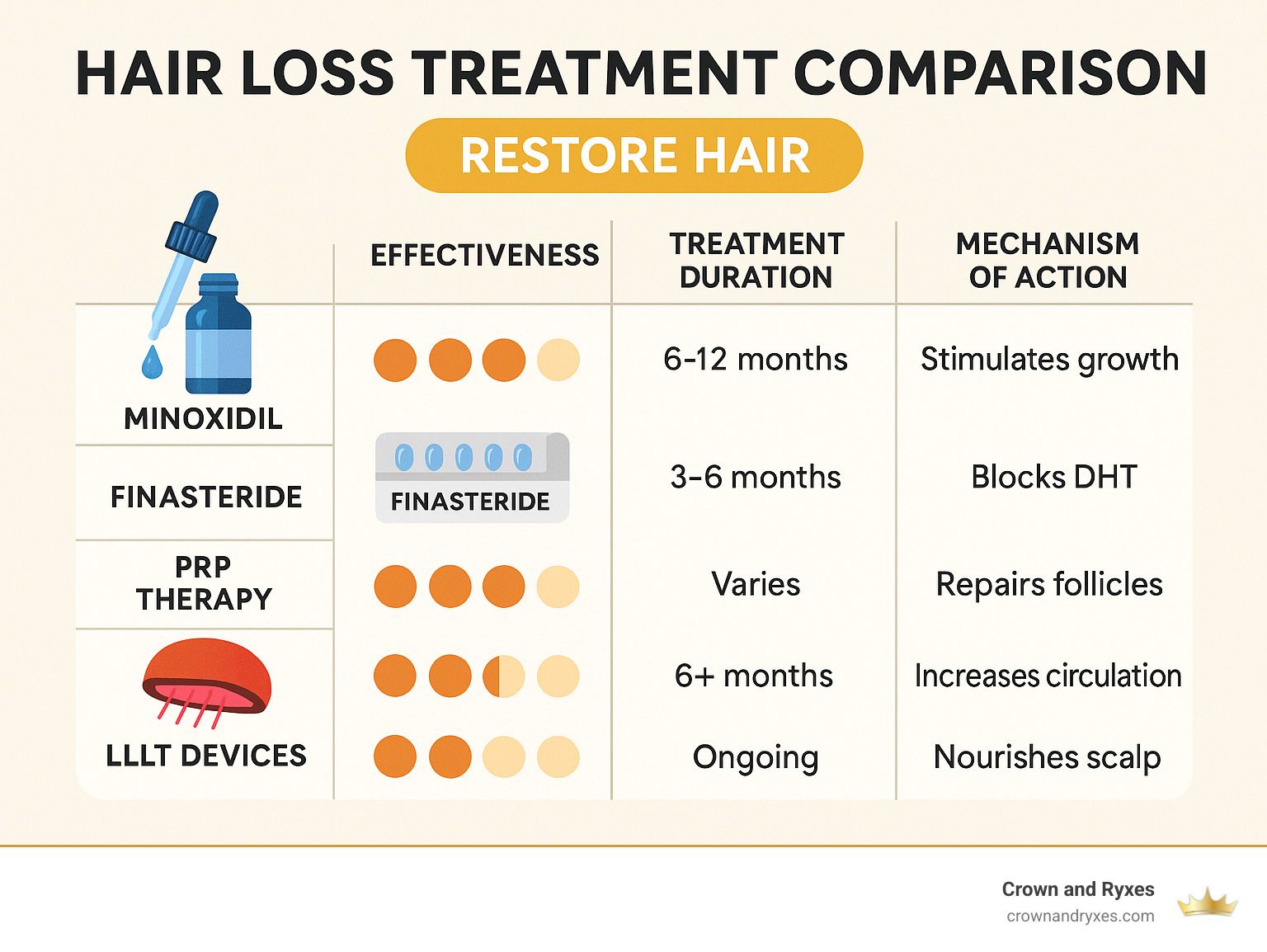
Simple restore hair word guide:
– laser cap for hair growth
– laser hair therapy
– therapie bikini laser
Key Criteria for Choosing Products That Truly Restore Hair
Let’s face it – navigating hair restoration can feel like wandering through a maze. But understanding what’s actually causing your hair loss is the compass you need to find products that work.
Hair loss isn’t just about bad luck – it’s usually driven by specific factors that can be addressed with the right approach. Most commonly, we see hair loss stemming from:
DHT (that pesky hormone that can shrink your follicles if you’re genetically predisposed), nutritional gaps that leave your hair hungry for essential building blocks, inflammation that irritates your scalp, natural aging processes, and those stress hormones that seem determined to thin your crown.
The most effective restore hair products target these root causes head-on. Some formulas block DHT before it can damage your follicles, while others nourish your scalp with the vitamins and minerals it’s craving.
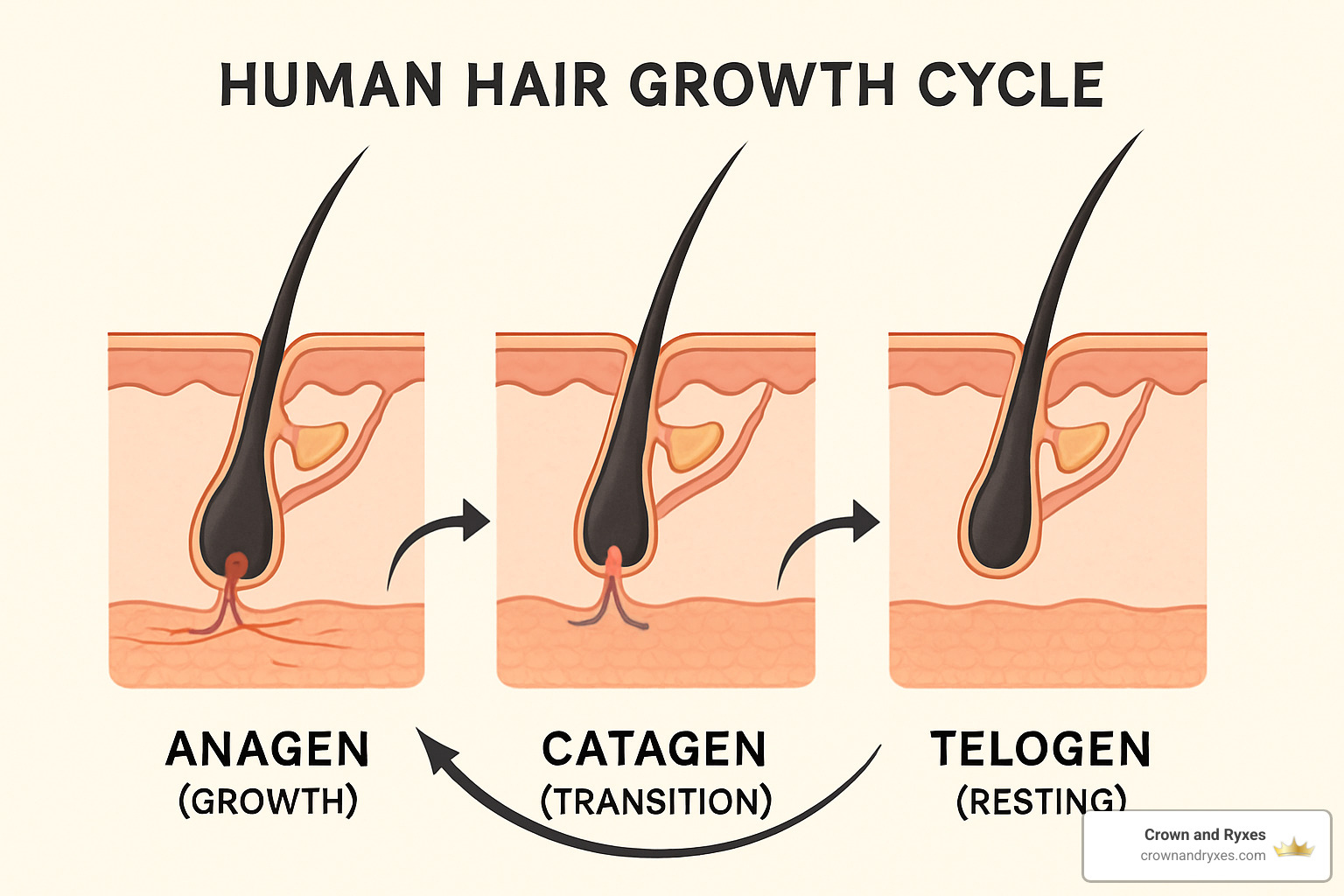
Great hair restoration solutions work with your natural hair growth cycle. They might extend that all-important growth phase, cut short the resting phase, boost blood flow to feed your follicles, deliver essential nutrients, or shield your scalp from environmental damage.
When weighing your options, it helps to understand the pros and cons of different approaches:
| Treatment Type | Pros | Cons | Best For |
|---|---|---|---|
| Topical Solutions | Non-systemic, easy to apply, fewer side effects | May cause scalp irritation, requires daily use | Early to moderate hair loss, those concerned about side effects |
| Oral Medications | Convenient, systemic effect, higher efficacy for some | Potential systemic side effects, requires prescription | Moderate to advanced hair loss, men not concerned about sexual side effects |
| LLLT Devices | Non-invasive, no chemicals, can complement other treatments | Expensive upfront cost, requires consistent use | All stages of hair loss, those seeking non-drug options |
| Natural Supplements | Minimal side effects, holistic approach | Variable efficacy, limited clinical studies | Early hair thinning, those preferring natural remedies |
| In-Clinic Procedures | Most effective for advanced loss, longer-lasting results | Higher cost, may require downtime | Advanced hair loss, those seeking dramatic results |
The “Restore Hair” Gold Standard Checklist
At Crown and Ryxes, we don’t recommend products unless they meet our rigorous standards. Think of this as your quality assurance checklist:
First and foremost, look for clinically proven effectiveness – not just marketing hype, but actual peer-reviewed research showing meaningful results. The best products balance power with safety, offering minimal side effects while still delivering results.
Be wary of miracle promises! Hair growth happens at about half an inch per month, so expect realistic timelines – typically 3-6 months before seeing noticeable improvement. Quality products also feature transparent ingredient lists so you know exactly what you’re applying to your scalp.
The right solution for you should match your specific hair loss pattern (receding hairline versus thinning crown respond differently to treatments), fit comfortably into your daily lifestyle, and be cost-effective for long-term use since most treatments require ongoing commitment.
Red Flags to Avoid
After years of helping folks restore hair at our Clermont, FL and The Villages, FL locations, we’ve seen plenty of products that overpromise and underdeliver. Watch out for these warning signs:
Products guaranteeing results in mere days or weeks are selling fantasy, not science. Hair growth simply doesn’t work that fast. Similarly, be skeptical of “secret formulas” or “proprietary blends” that won’t disclose their ingredients – what are they hiding?
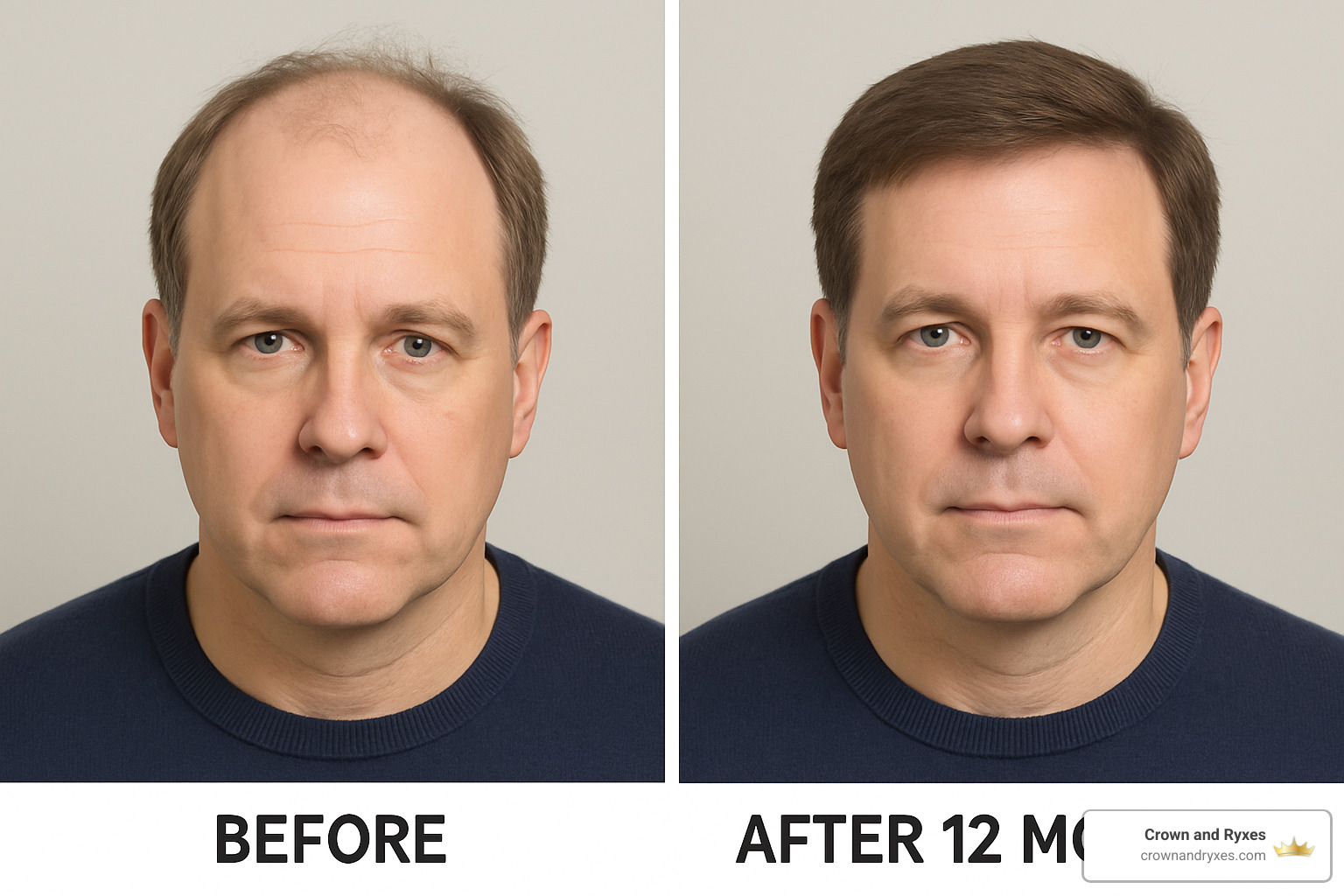
Those dramatic before-and-after photos with suspiciously different lighting? They’re designed to trick your eyes, not document real results.
Steer clear of harsh chemicals like sodium lauryl sulfate and parabens that can damage your scalp rather than heal it. Some products even contain hidden DHT analogues that might actually accelerate hair loss over time – the exact opposite of what you want!
Be wary of excessive claims of being “clinically proven” without specific studies to back them up. And remember that one-size-fits-all solutions rarely work because different types of hair loss require different approaches.
In hair restoration, if a promise sounds too magical to be true, your instincts are probably right. Real results come from science-backed solutions, consistent use, and a bit of patience – not miracle potions.
Best Products to Restore Hair in 2024
After years of helping clients and staying current with the latest research, I’ve seen which products genuinely help restore hair when used consistently. Let me share what actually works in 2024.
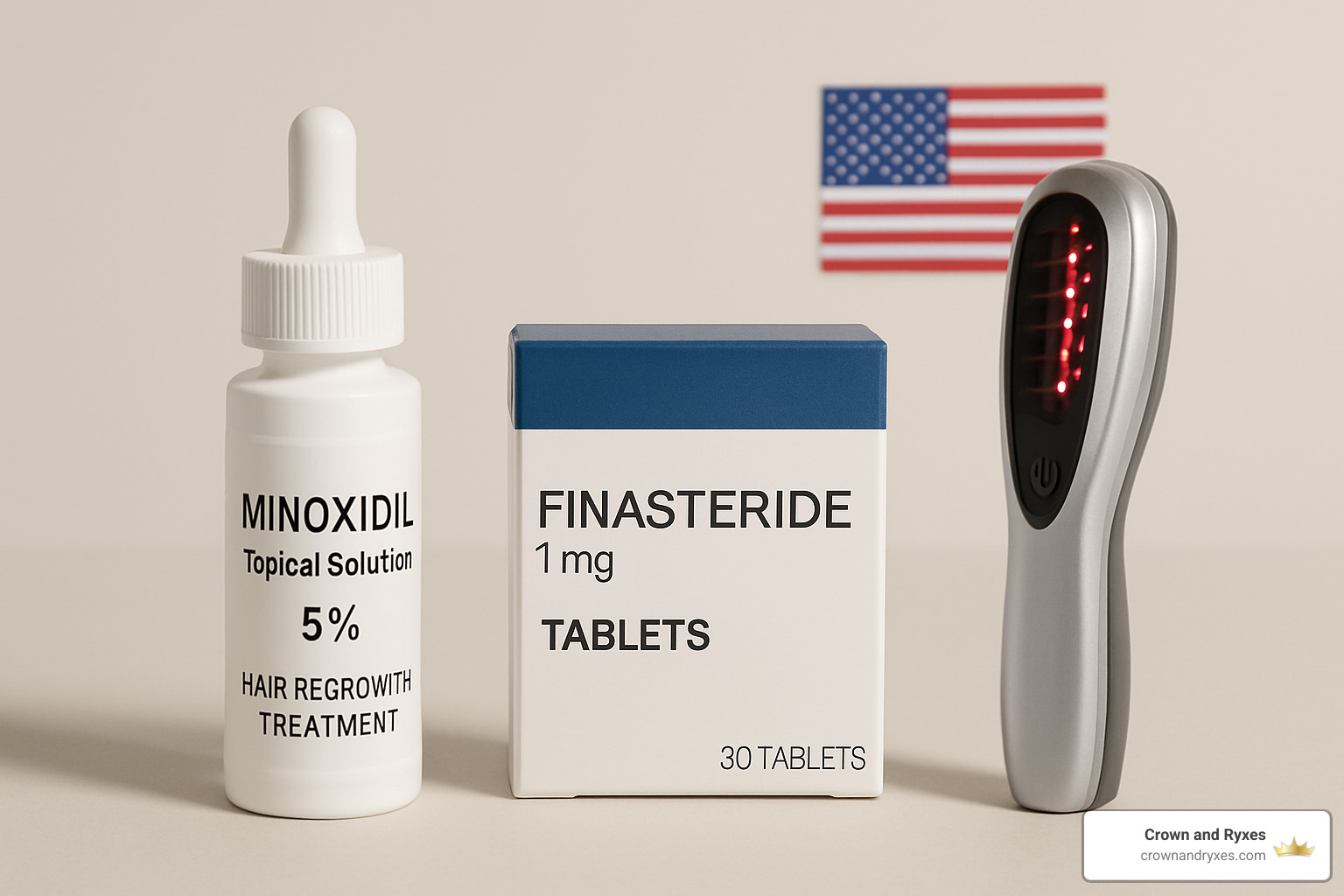
Shampoos & Topical Boosters That Restore Hair
Ketoconazole Shampoos do double duty – they were originally created for dandruff but have shown impressive results for hair loss too. They work by calming scalp inflammation and potentially blocking DHT right at the source. For best results, use these 2-3 times weekly and let them sit on your scalp for about 3-5 minutes before rinsing.
Minoxidil Solutions and Foams remain the gold standard in topical treatments. They’re FDA-approved for good reason – they extend your hair’s growth phase, increase follicle size, and boost blood flow to your scalp. The foam version tends to be less irritating and doesn’t leave that greasy feeling behind. Consistency is key here – apply twice daily and give it at least 3-4 months before expecting visible results.
Rosemary Oil Treatments aren’t just a natural alternative – they’re backed by science. A fascinating study in 2015 found that rosemary oil performed just as well as 2% minoxidil after six months of use. You can use it as a pre-shampoo treatment, add 5-10 drops to your regular shampoo, or dilute it with a carrier oil for a leave-in treatment.
Caffeine-Infused Products do more than just wake up your morning – they can wake up your follicles too! Research shows topical caffeine helps counteract testosterone’s effects on hair follicles and extends the growth phase. Look for products with at least 1% caffeine concentration for the best chance of seeing results.
Oral & Supplement Solutions to Restore Hair
Finasteride tackles hair loss at its hormonal source by blocking the conversion of testosterone to DHT. The numbers speak for themselves – it prevents further hair loss in 86% of men and promotes regrowth in about 65%. It’s a prescription medication, so you’ll need to discuss potential side effects with your doctor, which affect about 2-3% of users. Give it 3-6 months of daily use before looking for results.
Natural DHT Blockers offer non-prescription alternatives that many of my clients appreciate. Saw palmetto works similarly to finasteride (though not quite as powerfully), while pumpkin seed oil showed impressive results in a 2014 study where men taking it experienced 40% more hair growth than the placebo group after 24 weeks.
Supporting your hair with nutritional supplements can provide the building blocks for healthy growth. Biotin helps produce keratin (the protein your hair is made of), vitamin D assists in creating new follicles, iron is critical for growth (especially if you’re deficient), and omega-3 fatty acids reduce inflammation while supporting overall scalp health.
At-Home Tech: Laser Combs & Caps
Low-Level Laser Therapy (LLLT) devices have revolutionized at-home hair care. These clever gadgets use specific wavelengths of red light (usually 650-670nm) to stimulate your follicles, increase blood flow, reduce inflammation, and potentially wake up dormant follicles.
Laser Caps give you the most comprehensive coverage with multiple diodes working simultaneously. I’ve seen great satisfaction rates (around 83%) among our Crown and Ryxes clients who use them consistently for 15-30 minutes, 3-4 times weekly. Most people start seeing improvements within 4-6 months.
Laser Combs offer a more budget-friendly option, though they require you to manually move the device across your scalp. The key is patience and thoroughness – slow, methodical coverage yields the best results.
Laser Bands hit the sweet spot for many clients, treating both the hairline and crown without covering the entire scalp.
For best results with any LLLT device, use it on clean, dry hair, stick to the recommended schedule, and consider combining it with topical treatments for a synergistic effect. Patience is essential – most people need 3-4 months before seeing noticeable improvement.
More info about Laser Hair Therapy
In-Clinic Game-Changers
For those dealing with more advanced hair loss or seeking dramatic results, our in-office treatments at Crown and Ryxes offer powerful solutions to restore hair.
Platelet-Rich Plasma (PRP) Therapy harnesses your body’s natural healing abilities. We draw a small amount of blood, process it to concentrate growth factors, then carefully inject this powerful PRP into your scalp. These growth factors activate stem cells and extend your hair’s growth phase. Most clients need 3-4 initial treatments spaced 4-6 weeks apart, followed by maintenance every 4-6 months. About 70% of patients see improvements in both hair count and thickness.
REGENmax Therapy is our proprietary treatment at Crown and Ryxes that takes PRP to the next level by adding additional growth factors and using specialized delivery techniques. This comprehensive approach addresses multiple causes of hair loss simultaneously, improves overall scalp health, and improves the results of other treatments you might be using.
No-Shave FUE (Follicular Unit Extraction) offers a permanent solution for those with advanced hair loss – without requiring you to shave your head first. We carefully extract individual healthy follicles from donor areas and precisely implant them where you need them most. There’s no linear scarring, minimal downtime, and the results look completely natural because they are your own hairs, growing for life. Most clients can return to normal activities within days, with transplanted hairs beginning to grow naturally after 3-4 months.
Research has also shown that simple scalp massage can improve the effectiveness of these treatments by improving blood circulation and reducing tension that might restrict hair growth. It’s a simple, free addition to any hair restoration regimen.
The Science Behind How These Products Restore Hair
Ever wonder why some hair products work wonders while others collect dust in your bathroom cabinet? The science behind hair growth helps explain exactly what’s happening when products actually help restore hair – and why patience is such a crucial part of the process.
The Hair Growth Cycle
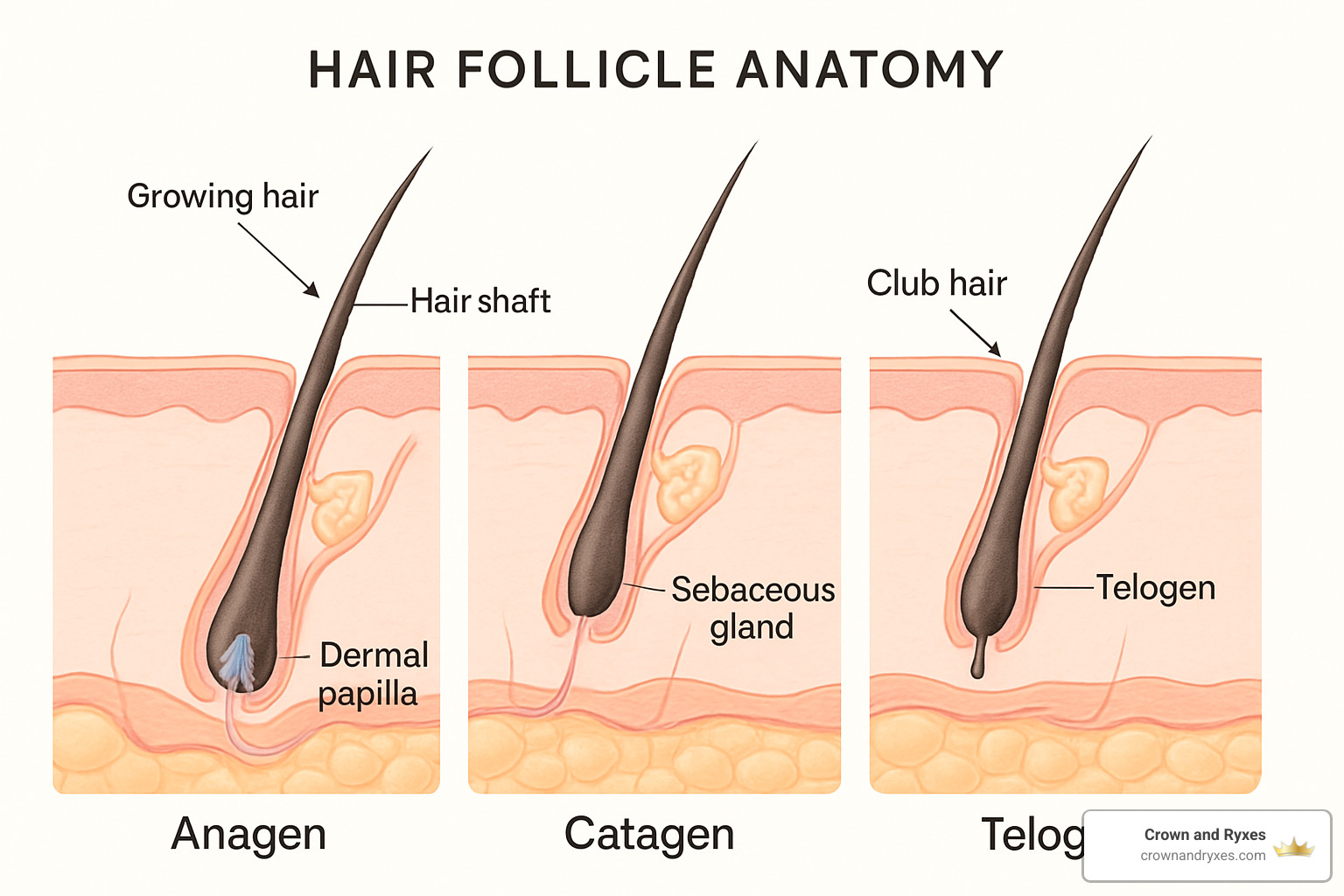
Your hair isn’t just growing all the time – it follows a fascinating cycle with three distinct phases:
The anagen phase is when all the magic happens. This growth phase lasts anywhere from 2-7 years, and healthy hair spends about 85% of its time here, actively growing about half an inch each month.
Then comes the brief catagen phase – a 2-3 week transition period when growth stops and your follicle begins to shrink, like a plant preparing for winter.
Finally, the telogen phase lasts 3-4 months. During this resting period, your old hair takes a break while a new hair begins forming beneath it, eventually pushing the old one out (which explains those hairs on your pillow or in your shower drain).
Here’s where problems start: In androgenetic alopecia (the medical term for male and female pattern baldness), DHT progressively shortens the anagen phase and shrinks your follicles. This produces increasingly thinner, shorter hairs until the follicle essentially falls asleep.
How Effective Products Work
When you understand the biology, you can see why certain ingredients actually work to restore hair.
DHT Blockers like finasteride and saw palmetto target the root cause of pattern baldness. They work by inhibiting the enzyme that converts testosterone to DHT, essentially turning down the volume on the main culprit behind hair thinning.
Minoxidil is a bit of a mystery worker – scientists aren’t 100% sure of its exact mechanism, but we know it opens potassium channels in cell membranes, boosts blood flow to hungry follicles, extends the growth phase, and helps enlarge those miniaturized follicles. It’s like giving your hair follicles a wake-up call and the resources they need to grow.
Laser Therapy (LLLT) might sound like science fiction, but it’s rooted in solid biology. Those specific red wavelengths penetrate your scalp tissue and get absorbed by the powerhouses of your cells – the mitochondria. This boosts ATP production (cellular energy), improves blood flow, reduces inflammation, and activates sleeping stem cells in your follicles. Think of it as recharging your follicles’ batteries.
Platelet-Rich Plasma (PRP) harnesses your body’s own healing powers. Those growth factors in your blood – with impressive names like PDGF, TGF, EGF, and VEGF – stimulate stem cell activity, promote new blood vessel formation, increase cell proliferation, and extend the growth phase. It’s like sending a team of microscopic construction workers to rebuild and revitalize your hair follicles.
Natural Oils like rosemary and pumpkin seed contain bioactive compounds that work in multiple ways – inhibiting DHT production, calming inflammation, improving microcirculation, and providing antioxidant protection. A scientific study comparing rosemary oil to minoxidil found that after six months, both treatments produced significant increases in hair count, with fewer scalp issues reported in the rosemary group. Nature sometimes knows best!
Why Consistency Beats “Miracle” Promises
I’ll be straight with you – your hair didn’t thin overnight, and it won’t restore hair overnight either. Here’s why consistency is the true secret weapon:
The 3-Month Rule exists because of biology, not marketing. Due to the hair growth cycle, visible improvements typically require at least 3 months of consistent treatment. New hair must progress through the entire growth cycle, follicles respond gradually, and existing hairs need time to strengthen and thicken. It’s like planting a garden – you can’t expect flowers the day after you plant seeds.
Many of my patients at Crown and Ryxes panic when they experience initial shedding after starting treatments like minoxidil. I reassure them that this “dread shed” is actually a good sign! The treatment is synchronizing hair cycles, pushing weak hairs out to make way for stronger ones. This normal phase typically lasts 2-4 weeks, and persistence during this time pays off.
Maintenance plans are essential because most non-surgical hair restoration treatments require ongoing use. When treatments like minoxidil or finasteride are discontinued, hair typically reverts to its pre-treatment state within 6-12 months as DHT effects resume. Think of it like fitness – you don’t go to the gym for three months and then expect to keep those results forever without maintenance.
Supporting Habits That Improve Product Results
At our clinics in Clermont, FL and The Villages, FL, we’ve seen that product effectiveness dramatically improves with these complementary habits:
Scalp massage for just 4-5 minutes daily can significantly boost your results. This simple practice increases blood flow to follicles, reduces tension that may restrict circulation, and helps distribute natural oils. It’s not just relaxing – it’s therapeutic! Scientific research on scalp massage demonstrates that this mechanical stimulation can increase hair thickness by stretching dermal papilla cells, which release growth factors.
Stress management matters more than you might think. Chronic stress lifts cortisol levels, which can disrupt the hair growth cycle, trigger excessive shedding, and worsen inflammatory conditions affecting the scalp. I’ve seen remarkable improvements in patients who incorporate stress-reduction practices like meditation, adequate sleep, and regular exercise alongside their hair treatments.
Nutrition for hair health provides the building blocks your body needs to restore hair. Your follicles are hungry for protein (the literal building block of hair), biotin and other B vitamins, iron, zinc, vitamins A, C, D, and E, and omega-3 fatty acids. For many of our clients, addressing nutritional deficiencies through diet or supplementation has been the missing puzzle piece in their hair restoration journey.
Hair restoration is a journey, not a quick fix. By understanding the science behind how these products work and committing to consistent use along with supportive habits, you’re setting yourself up for the best possible results. At Crown and Ryxes, we’re here to guide you through every step of that journey with evidence-based solutions and personalized care.
Frequently Asked Questions about Restore Hair Products
How long before I see visible results?
When you’re investing time and money into hair restoration, it’s natural to wonder when you’ll actually see those first new hairs. The truth is, your body follows its own timeline, and patience truly is your best friend here.
For most restore hair treatments, the 3-month mark is when the magic starts happening. Your hair grows about half an inch per month, and those new baby hairs need time to emerge and strengthen. Think of it like planting a garden – you can’t expect flowers the day after you plant seeds!
Different treatments have their own timelines:
With topical minoxidil, you’ll likely notice those first encouraging signs around months 3-4, with results continuing to improve for a full year. Finasteride typically shows noticeable improvements between months 3-6, with ongoing benefits for up to two years.
LLLT devices like laser caps start showing results around the 3-4 month mark, while our in-clinic PRP and REGENmax treatments often work a bit faster, with initial improvements in just 2-3 months.
A helpful tip from our clients: Take “before” photos in consistent lighting every month. Daily changes are too subtle to notice in the mirror, but comparing photos from several months apart can be truly eye-opening!
Can women safely use these products?
Absolutely! Many of our restore hair solutions work wonderfully for women, though there are some important distinctions to keep in mind.
Women can safely use topical minoxidil (the 2% version is FDA-approved specifically for women, though many of our female clients see better results with the 5% formula under professional guidance). LLLT devices, PRP treatments, and our exclusive REGENmax therapy are all excellent, safe options for women experiencing hair thinning.
Natural approaches like rosemary oil, ketoconazole shampoos, and most nutritional supplements are also perfectly suitable for women.
The main exception is finasteride, which is not FDA-approved for women and should be avoided during pregnancy due to potential risks. Some DHT-blocking supplements also require caution if you’re pregnant or trying to conceive.
At our Clermont, FL and The Villages, FL locations, we’ve helped countless women address their unique hair concerns. Female hair thinning often presents differently than male pattern baldness – typically with diffuse thinning across the crown rather than a receding hairline – and our treatment plans reflect these differences.
Will I need to keep using treatments forever?
This is perhaps the most common question we hear at Crown and Ryxes, and the answer depends largely on what’s causing your hair loss in the first place.
For genetic pattern baldness (androgenetic alopecia), most non-surgical treatments are more like ongoing maintenance than a one-time fix. Think of them like exercise for your hair follicles – stop the workout, and you’ll eventually lose the gains. When treatments like minoxidil or finasteride are discontinued, hair typically reverts to its pre-treatment state within 6-12 months as those genetic factors reassert themselves.
The good news? If your hair loss stems from temporary factors like stress, nutritional deficiencies, or certain medications, you may only need treatment until your hair recovers fully.
Hair transplantation is the exception, providing permanent results for the transplanted follicles, though you might still need maintenance treatments for your non-transplanted hair.
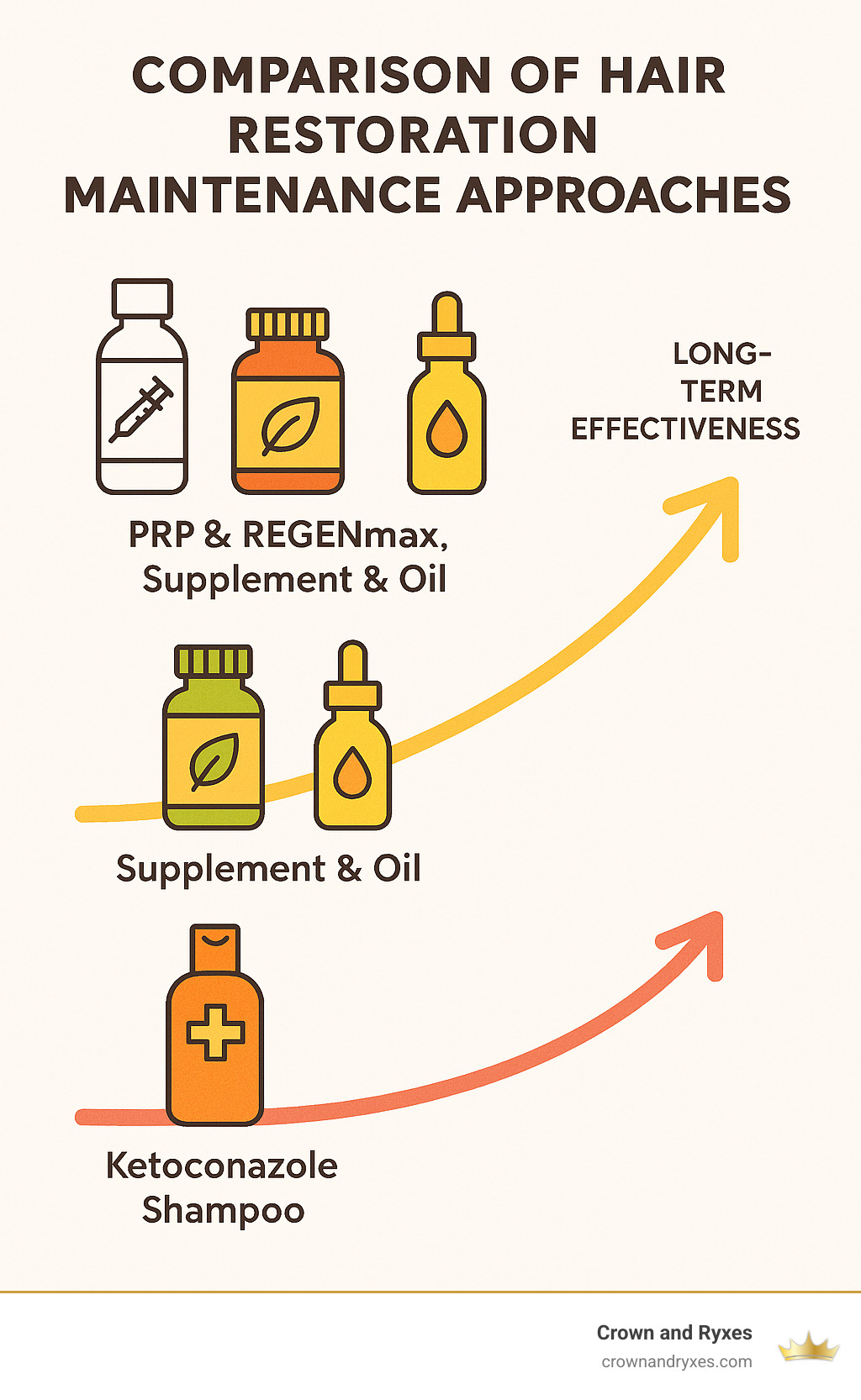
Most of our clients find their sweet spot with a “combination approach”:
1. An intensive initial phase to jump-start regrowth
2. A more relaxed maintenance regimen once results are achieved
3. Regular check-ins to adjust as needed
We work with you to find the minimum effective routine that maintains your results without becoming a burden on your time or wallet. After all, your restore hair journey should improve your life, not complicate it!
Conclusion
The journey to restore hair doesn’t have to be a maze of disappointment and wasted money. I’ve seen how focusing on science-backed solutions while keeping your expectations grounded can lead to remarkable improvements in your hair’s density, thickness, and overall appearance.
At Crown and Ryxes, we’ve guided countless clients in Clermont, FL, and The Villages, FL through personalized hair restoration journeys. What makes the difference? It’s our approach of combining proven products with professional guidance custom to your unique situation.
Think of successful hair restoration like tending a garden – it requires the right tools, consistent care, and a bit of patience. The most important lessons we’ve learned along the way:
Effective solutions exist for most types of hair loss, but they require your commitment. The “overnight miracle” products might catch your eye, but it’s the consistent, evidence-based treatments that deliver real results over time.
Combining approaches often works best. Just as your hair loss likely has multiple causes, the most successful restoration plans typically address different aspects of hair growth simultaneously. This might mean pairing a topical treatment with a laser device or nutritional support.
Your lifestyle matters enormously. Even the most effective products work better when supported by good nutrition, stress management, and gentle hair care. These factors aren’t just complementary – they’re foundational to your success.
Professional guidance saves time and money. With so many options available, having an experienced guide can help you avoid costly detours and create a plan that addresses your specific needs and goals.
We’d love to be part of your hair restoration journey. Our team at Crown and Ryxes offers complimentary consultations to discuss your goals and determine which products and treatments match your unique situation. For those interested in our advanced options, we also provide no-obligation REGENmax consultations to explore how this innovative therapy might complement your hair restoration plan.
When it comes to hair restoration, there’s no magic—just science, consistency, and finding the right approach for your individual needs. Your journey to thicker, healthier hair starts with that first step.