
Why Sexual Health Education is Your Gateway to Lifelong Wellness
Sexual health education is a comprehensive approach to learning about human sexuality, relationships, and well-being that extends far beyond basic biology. Here’s what you need to know:
Core Components of Sexual Health Education:
- Physical Health: Understanding anatomy, reproduction, STI prevention, and contraception
- Emotional Wellness: Building healthy relationships and communication skills
- Mental Well-being: Developing decision-making abilities and self-confidence
- Social Awareness: Learning about consent, respect, and cultural diversity
Key Benefits:
- Delays sexual activity initiation and promotes safer practices
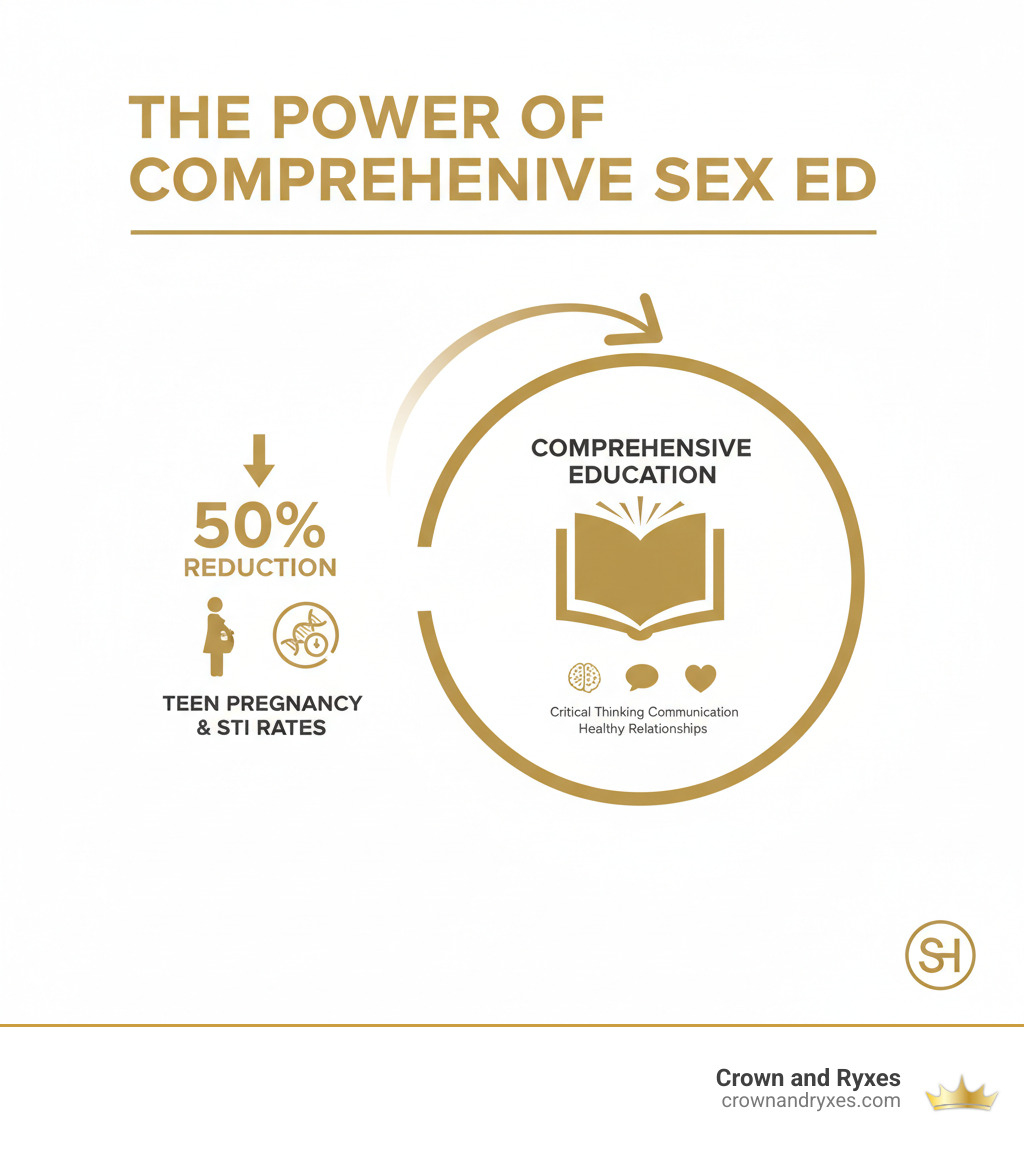
- Reduces teen pregnancy rates and STI transmission
- Improves communication and relationship skills
- Empowers informed decision-making about personal health
Sexual health education isn’t just for teenagers in health class – it’s a lifelong journey that evolves with your changing needs and circumstances. Whether you’re navigating puberty, building adult relationships, or addressing wellness concerns later in life, quality education empowers you to make informed decisions about your physical, emotional, and social well-being.
The research is clear: comprehensive sexual health education leads to better health outcomes, stronger relationships, and more confident individuals. Young people who receive quality education are more likely to delay sexual activity, use protection when they do become sexually active, and develop healthier relationship patterns that last into adulthood.
As Dr. Matthew Casavant, I’ve spent over two decades in women’s healthcare, witnessing how sexual health education transforms lives by empowering patients to take control of their wellness journey. My experience has shown that when individuals understand their bodies and have access to accurate information, they make better decisions and achieve greater satisfaction in their intimate relationships.

What is Comprehensive Sexual Health Education?
When most people hear “sexual health education,” they picture awkward biology lessons about reproduction. But comprehensive sexual health education is so much more than that uncomfortable classroom memory you might have. It’s actually a thoughtful, holistic approach that empowers people with the knowledge and skills they need to make informed decisions about their bodies, relationships, and overall well-being throughout their entire lives.
Think of comprehensive sexual health education as your personal toolkit for navigating the complex world of human sexuality with confidence and wisdom. It recognizes that sexuality is a normal, healthy part of being human – not something to be ashamed of or whispered about.
This comprehensive approach covers much more ground than traditional programs. Human development helps people understand puberty, anatomy, sexual orientation, and gender identity in age-appropriate ways. Relationships education goes beyond romance to include understanding yourself, family dynamics, friendships, and even how to communicate effectively with healthcare providers.
Personal skills development is where the real empowerment happens. This includes learning how to communicate your needs clearly, set healthy boundaries, negotiate respectfully, and make thoughtful decisions under pressure. These skills serve people well in all areas of life, not just intimate relationships.
The education also addresses sexual behavior in factual, non-judgmental ways, covers important sexual health topics like STI prevention and contraception, and explores how society and culture shape our understanding of sexuality through media, family values, and social expectations.
| Education Model | Description | Key Focus | Effectiveness |
|---|---|---|---|
| Comprehensive Sex Education | Teaches sexuality as healthy and normal. Covers human development, relationships, personal skills, and health topics. Emphasizes both abstinence and protection methods. | Informed decision-making, healthy relationships, risk reduction, communication | Highly effective: Delays sexual activity, increases protection use, reduces STIs and unintended pregnancies |
| Abstinence-Plus Programs | Encourages abstinence as preferred but provides contraception and STI prevention information for sexually active individuals. | Abstinence first, but practical information when needed | Moderately effective: Better than abstinence-only approaches |
| Abstinence-Only Programs | Focuses solely on no sexual activity outside marriage. Often omits or provides inaccurate contraception information. | Encouraging marriage-only sexual activity | Ineffective: Does not delay sexual activity and may increase risky behaviors |
The National Sexuality Education Standards provide a roadmap for what students should know at different ages. These standards ensure that information is medically accurate and age-appropriate, building knowledge gradually as young people develop.
The Goals of Quality Sex Ed Programs
Quality sexual health education programs aim to create healthier, more confident individuals who can steer life’s challenges with wisdom and self-respect. The focus is on skill development that serves people throughout their lives – critical thinking to evaluate information from friends, family, and media, and decision-making abilities that help in complex situations.
Communication skills are especially valuable, helping people express their needs, set boundaries, and advocate for their health. Programs also teach risk reduction strategies, not through fear tactics, but by providing practical knowledge about preventing STIs, HIV, and unintended pregnancies.
Perhaps most importantly, quality programs work to foster healthy attitudes about sexuality. This means promoting respect for yourself and others, understanding human rights including bodily autonomy, and developing a positive view of sexuality as part of overall wellness.
The goal isn’t to encourage or discourage any particular behavior, but to ensure that when people make decisions about their health and relationships, they’re making informed choices based on accurate information rather than myths, peer pressure, or fear.
An Inclusive and Respectful Approach
Effective sexual health education recognizes that students come from diverse backgrounds and have different needs, identities, and experiences. LGBTQ+ inclusivity means acknowledging that not everyone is heterosexual or cisgender, and ensuring that all students see themselves reflected in the curriculum.
Cultural sensitivity is equally important, adapting content to be respectful of different family values and cultural norms while still providing medically accurate information. Programs must also address diverse student needs, recognizing that students with disabilities, different learning styles, and varying life experiences all deserve education that serves them well.
When sexual health education accepts inclusivity and respect, it creates an environment where everyone can learn and grow, regardless of their gender identity, sexual orientation, or background. This approach helps build a foundation for healthier communities where people treat each other with dignity and understanding.
Why It Matters: The Impact of Education on Public Health
When we look at the numbers, the case for quality sexual health education becomes crystal clear. This isn’t just an academic debate – it’s a public health emergency that affects millions of young Americans every year.
Let’s start with something that hits close to home for many families: teen pregnancy. Despite recent improvements, the US teen birth rate remains stubbornly high compared to other developed countries. In 2017, we saw 18.8 births per 1,000 women aged 15-19 – a 7% drop from the previous year, which sounds promising until you consider the ripple effects.
Teen mothers face an uphill battle that often lasts a lifetime. They’re less likely to finish high school, more likely to live in poverty, and often depend on public assistance. Their children face higher risks of health problems and learning difficulties. It’s a cycle that quality sexual health education can help break.
The STI statistics are even more alarming. Young people and STIs data reveals a shocking reality: while people aged 15-24 make up just 25% of sexually active Americans, they account for half of all new STI cases. That’s roughly 10 million new infections each year among young people alone.
Here’s what’s particularly concerning – one in four sexually active teenage girls has an STI, and up to 35% of teens aged 14-19 have HPV. Many of these infections go undiagnosed, leading to serious long-term health problems, especially for young women who may face fertility issues later in life.
The HIV/AIDS crisis continues to impact young Americans significantly. About 21% of new HIV diagnoses in 2017 were among people ages 13-24. This is precisely why Washington state law requires annual HIV/AIDS prevention education starting in grade 5 – early education saves lives.
When we talk about the economic impact, the numbers are staggering. Teen pregnancy alone costs taxpayers at least $9.4 billion annually. But here’s the encouraging news: prevention works. Between 1991 and 2015, the teen birth rate dropped 64%, resulting in approximately $4.4 billion in public savings in just one year.
The medical costs of STIs add another $16 billion annually to our healthcare burden, with HIV infection accounting for over 81% of that total. The costs of teen childbearing make a compelling case for investing in comprehensive education programs.
Beyond the physical health statistics, sexual health education plays a crucial role in promoting healthy relationships and building a consent culture. Quality programs teach young people about communication, boundaries, and recognizing unhealthy relationship patterns. This education helps prevent sexual violence and challenges harmful gender stereotypes that can damage both young men and women.
Evidence consistently shows that comprehensive sexual health education delivers positive outcomes that last throughout life. Students learn to respect themselves and others, understand bodily autonomy, and develop the communication skills that form the foundation of healthy adult relationships.
The research is clear: when we invest in quality sexual health education, we’re not just preventing problems – we’re building a healthier, more respectful society for everyone.
A Closer Look: Sexual Health Education in Practice
When it comes to implementing sexual health education, theory only goes so far. The real magic happens when comprehensive policies translate into actual classroom experiences that empower students. Washington State provides an excellent example of how this change can work effectively.
Washington has taken a bold step forward by legally requiring all public schools to provide comprehensive sexual health education to every student. This isn’t just a suggestion or guideline – it’s the law. Every district and public charter school must deliver instruction that meets the state’s Health Education K-12 Learning Standards and follows the specific requirements outlined in Washington State law (RCW 28A.300.475).
What makes this approach so powerful is its consistency. When sexual health education becomes a legal mandate, students across the state receive the same high-quality, medically accurate information regardless of which school they attend or what community they live in.
Grade-Specific Sexual Health Education: K-12 Framework
Washington’s framework recognizes that sexual health education isn’t a one-size-fits-all approach. Instead, it carefully builds knowledge and skills as children grow and develop.
In kindergarten through third grade, the focus centers on social-emotional learning. This might sound simple, but it’s actually laying the most important foundation of all. Young children learn about their bodies in age-appropriate ways, understand feelings and boundaries, and begin developing healthy relationship skills. Think of it as planting seeds that will grow into confident, informed decision-making later in life.
From fourth grade through high school, the education becomes more comprehensive. Students receive what the law defines as “recurring instruction in human development and reproduction that is medically accurate, age-appropriate and inclusive of all students.” This means the conversations grow more detailed as students mature, covering everything from puberty and anatomy to reproduction and relationship dynamics.
Starting in fifth grade, students begin receiving annual HIV/AIDS prevention education. This requirement, established through the AIDS Omnibus Act, ensures that young people understand transmission, prevention, and the importance of making healthy choices related to HIV/AIDS from an early age.
Support Systems for Schools and Educators
Implementing quality sexual health education requires more than just good intentions – it needs solid support systems. Washington’s Office of Superintendent of Public Instruction (OSPI) has created a comprehensive network of resources to help educators succeed.
Teachers receive detailed guidance documents that take the guesswork out of curriculum development. These materials help educators understand not just what to teach, but how to teach it effectively and inclusively. OSPI also provides technical assistance and keeps schools updated through their Sexual Health Education newsletter.
Beyond basic health education, Washington addresses critical safety issues through specialized programs. Sex trafficking prevention becomes part of the educational framework, with initiatives like Erin’s Law focusing on child sexual abuse prevention. The Youth-centered Environmental Shift (YES!) Program specifically targets middle schools to prevent sexual violence and promote healthy relationships.
Schools also participate in sexual violence prevention programs that go beyond individual education. These initiatives help create safer school environments where all students can learn and thrive. Professional development opportunities teach educators how to recognize signs of abuse, foster understanding about consent, and respond appropriately when students need help.
The School Health Profiles survey provides valuable data about how well these programs are working. This biennial assessment helps OSPI understand which schools are succeeding and which might need additional support, ensuring that sexual health education continues to improve and reach every student effectively.
Sexual Wellness Throughout Adulthood
Your sexual health education journey doesn’t end when you graduate from school – it’s actually just getting started. Think of sexual wellness as a lifelong adventure that evolves with you, bringing new findies and sometimes new challenges at every stage of life.

Lifelong learning about your body and relationships becomes even more important as you steer the natural changes that come with aging. Your twenties bring different questions than your fifties, and that’s perfectly normal. What matters is staying curious, informed, and proactive about your sexual health.
Navigating physical changes is a natural part of the aging process, but it doesn’t mean you have to accept discomfort or dissatisfaction. For women, menopause often brings hormonal shifts that can affect everything from libido to vaginal health. Hot flashes, mood changes, and decreased lubrication are common, but they’re not something you have to simply endure.
Men experience their own version of hormonal changes, sometimes called andropause. Testosterone levels naturally decline with age, which can impact energy, mood, muscle mass, and sexual function. While this process is gradual and varies from person to person, understanding these changes helps you address them effectively.
Communication with partners becomes absolutely crucial during these transitions. When your body changes, honest conversations about needs, concerns, and desires can actually strengthen intimacy rather than diminish it. Many couples find that addressing these changes together brings them closer and opens up new ways to connect.
Addressing health concerns proactively is one of the best investments you can make in your overall quality of life. Erectile dysfunction, while common (affecting nearly 30 million American men), isn’t just an inevitable part of aging. Modern treatments, including our REGENmax solutions, can effectively restore function and confidence.
Hormonal imbalances affect both men and women and can impact far more than just sexual function. They influence energy levels, sleep quality, mood stability, and overall vitality. The good news is that our REGENmax treatments offer personalized approaches to hormone optimization.
Seeking professional help for sexual wellness concerns is a sign of wisdom, not weakness. Just as you wouldn’t ignore chest pain or persistent headaches, sexual health concerns deserve proper medical attention. The earlier you address issues, the more options you typically have for treatment.
Solutions for vitality have come a long way in recent years. At Crown and Ryxes, we offer advanced REGENmax treatments specifically designed for sexual wellness. These innovative approaches help both men and women regain confidence and satisfaction in their intimate lives.
Our personalized wellness approach recognizes that everyone’s journey is unique. What works for your friend or neighbor might not be the right solution for you, which is why we take time to understand your specific concerns, goals, and health history.
Holistic health approaches consider how your overall wellness affects your sexual health. Sleep quality, stress levels, nutrition, exercise, and mental health all play important roles in sexual satisfaction. By addressing these interconnected factors, you can often see improvements that go beyond just sexual function.
Whether you’re in Clermont, FL, or The Villages, FL, our dedicated team understands that sexual wellness is an integral part of your overall health and happiness. We’re here to guide you through this important aspect of your wellness journey with compassion, expertise, and cutting-edge treatments like REGENmax that can help you feel vibrant and connected at every stage of life.
Frequently Asked Questions about Sexual Health Education
As a healthcare professional with over two decades of experience, I’ve heard countless questions from parents, educators, and community members about sexual health education. Let me address some of the most common concerns with the facts and evidence we have today.
Does sexual health education encourage early sexual activity?
This question comes up in nearly every conversation I have with concerned parents, and I understand why. The short answer is absolutely not. Evidence consistently shows that quality sexual health education actually has the opposite effect – it helps young people make more thoughtful decisions about their bodies and relationships.
Here’s what the research tells us: well-designed sexual health education programs are consistently associated with young people delaying the onset of sexual activity. When these educated individuals do eventually become sexually active, they’re significantly more likely to practice safer behaviors, including using contraception and taking steps to prevent STIs.
Think of it this way – comprehensive programs don’t encourage sexual activity any more than driver’s education encourages reckless driving. Instead, they reduce risky behaviors by giving people the knowledge and skills they need to make responsible choices throughout their lives. The programs that focus solely on “just say no” without providing practical information? Research shows those approaches are largely ineffective and may even lead to increased risk-taking due to lack of accurate information.
When should this education begin?
Many parents ask me, “Isn’t my child too young for this?” The truth is, sexual health education should begin much earlier than most people think – but it looks very different at different ages.
Age-appropriate learning starts in early childhood with simple concepts that build over time. For our youngest children in grades K-3, we’re talking about body safety and boundaries – teaching them the correct names for body parts, helping them understand the difference between appropriate and inappropriate touch, and introducing the concept of consent in terms they can grasp, like “my body belongs to me.”
As children grow, the education builds incrementally through adolescence. We add layers of understanding about puberty, healthy relationships, communication skills, and eventually more detailed information about reproduction and health protection. This developmental approach ensures that information arrives when children are ready to understand and process it effectively.
I often tell parents that children are naturally curious about their bodies and relationships from a very young age. Quality sexual health education simply provides them with accurate, age-appropriate answers to questions they’re already asking – either out loud or in their minds.
What is the role of parents and guardians?
Parents and guardians hold the critical role as the primary educators for their children when it comes to sexual health. This might feel overwhelming, but you don’t have to do it alone.
Schools and healthcare providers like our team serve as valuable partners in this process. We provide the structured, medically accurate information that complements and supports what you’re teaching at home. The magic happens when there’s a strong school partnership built on trust and shared values.
Open communication between parents and children creates the foundation for healthy attitudes about sexuality throughout life. When parents are actively involved – whether that means discussing topics at dinner, reviewing what their children are learning in school, or simply creating an environment where questions are welcomed – it makes all the difference.
I encourage parents to think of themselves as creating a supportive home environment where their children feel safe asking questions and seeking guidance. This collaboration between home, school, and healthcare providers ensures that young people receive consistent, caring support as they steer their development.
At Crown and Ryxes, we see the results of this approach in our adult patients. Those who had comprehensive sexual health education and supportive family conversations growing up tend to be more comfortable discussing their health concerns and seeking help when they need it – whether that’s for our REGENmax treatments or other wellness services we provide in Clermont, FL, and The Villages, FL.
Conclusion: Your Journey to Lifelong Wellness
When you look back at everything we’ve explored about sexual health education, one thing becomes crystal clear: this isn’t just about classroom lessons or teenage health talks. It’s about empowerment through knowledge that lasts a lifetime. Every piece of information you gain, every skill you develop, and every healthy attitude you accept becomes part of your toolkit for taking control of your health and well-being.
The beauty of sexual health education lies in its continuous learning and growth nature. Just as you wouldn’t expect to learn everything about driving in one lesson, your understanding of sexual health evolves as you do. The confident communication skills you learn as a teenager serve you in adult relationships. The body awareness you develop helps you recognize changes that might need medical attention. The respect for consent you internalize creates healthier connections throughout your life.
Think of it this way: sexual health education gives you the foundation to build upon as life throws you curveballs. Whether you’re navigating the physical changes of aging, addressing health concerns like erectile dysfunction, or simply wanting to maintain vitality in your relationships, that foundational knowledge empowers you to seek help, ask the right questions, and make informed choices.
At Crown and Ryxes, we’ve seen how personalized support can transform lives. We understand that your sexual wellness journey is uniquely yours, which is why we offer advanced solutions like our REGENmax treatments custom to your specific needs and goals. Our team in Clermont, FL, and The Villages, FL, believes that optimal sexual health isn’t a luxury – it’s an essential part of living your best life.
Your journey doesn’t end here. In fact, it’s just beginning. Armed with knowledge, supported by professionals who care, and empowered to take charge of your wellness, you’re ready to accept every stage of life with confidence and vitality.