
Sexuality definition is about understanding who we are, how we connect with others, and how our bodies relate. It’s a deeply personal and ever-changing spectrum that includes our values, desires, and emotions. Each person experiences their sexuality uniquely and differently over time.
- Self-Defined: Everyone defines their sexuality in their own words and understanding, making it a part of their identity.
- Dynamic: As life unfolds, our experiences, relationships, and knowledge shape our sexual identity, which evolves with us.
As someone deeply invested in women’s health, I’m Dr. Matthew Casavant, and I’ve had the privilege of exploring how sexuality definition impacts wellness. My journey has taken me from advanced surgical care to understanding the emotional insights that our bodies hold.
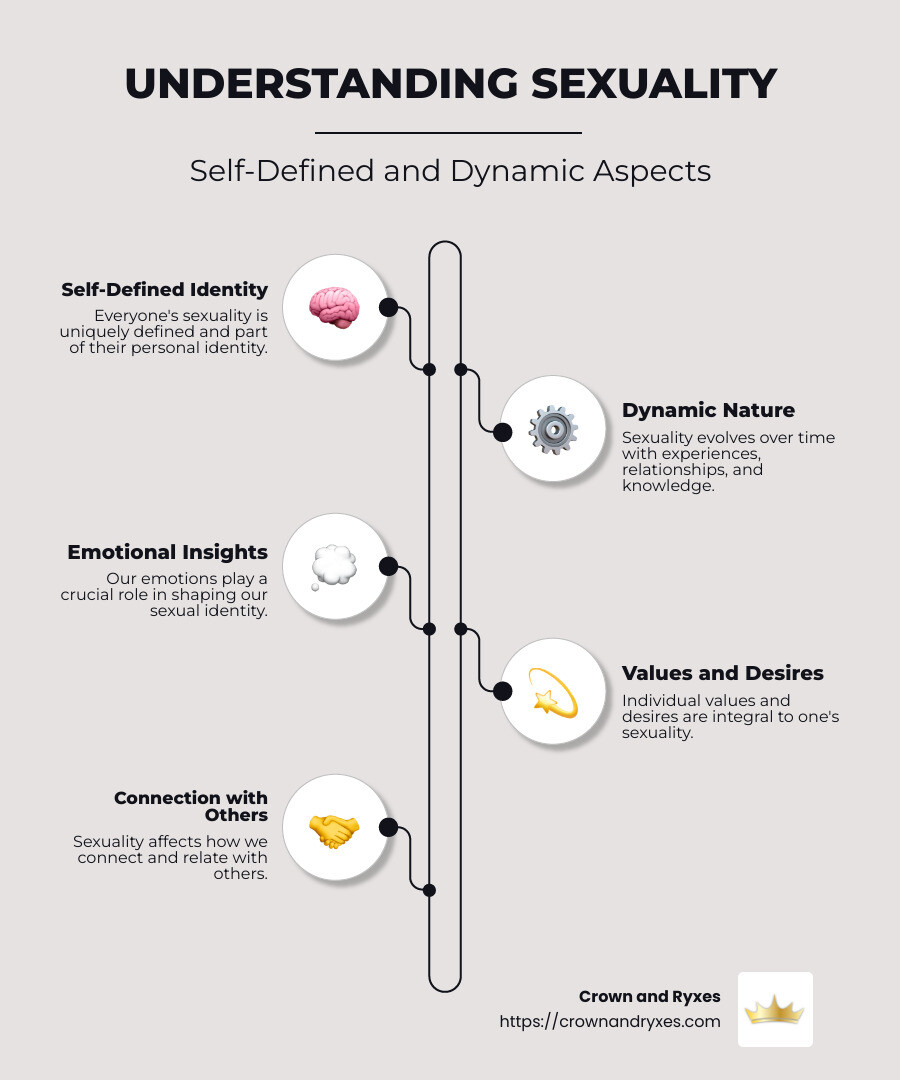
Understanding Sexuality
Sexuality is more than just who you’re attracted to; it’s a combination of your feelings, thoughts, attractions, and behaviors. It’s a fundamental part of being human and plays a significant role in how we interact with the world.
Sexual Feelings and Thoughts
Sexual feelings are the emotions that arise when you think about or engage in sexual activities. These feelings can be influenced by many factors, including hormones, social interactions, and personal experiences. For example, hormones like estrogen and testosterone can affect your desire and arousal levels, as noted in the research.
Thoughts about sexuality often begin in adolescence and continue to evolve throughout life. They help define what you find attractive and how you perceive your own sexual identity. This process can be exciting and liberating as you explore what feels right for you.
Attractions and Behaviors
Attractions can be physical, emotional, or both. You might find yourself drawn to someone’s appearance, their personality, or how they make you feel. Attraction is personal and can change over time, reflecting the dynamic nature of sexuality.
Sexual behaviors are the actions you take in response to your feelings and attractions. These can include physical expressions of intimacy, like kissing or hugging, as well as sexual activities. Your behaviors should always be consensual and reflect your personal comfort and values.
Understanding these aspects of sexuality helps you build a clearer picture of your own identity and how you relate to others. It’s about recognizing what makes you feel good and what aligns with your values and desires.
Sexuality is a journey, not a destination. It’s about finding what feels right for you at each stage of life. This understanding can lead to more fulfilling relationships and a healthier sense of self.
Sexuality Definition
Sexuality is a broad concept that encompasses sexual orientation, sexual identity, and romantic attraction. Let’s break these down to understand them better.
Sexual Orientation
Sexual orientation refers to who you are attracted to, whether it’s emotionally, romantically, or sexually. It includes orientations like heterosexual, homosexual (gay or lesbian), bisexual, and more. This is an enduring pattern of attraction that can be towards the opposite sex, the same sex, or both.

For example, heterosexual individuals are attracted to the opposite sex, while gay and lesbian individuals are attracted to the same sex. Bisexual individuals may be attracted to more than one gender. Orientation is not just about physical attraction but also includes emotional and romantic connections.
Sexual Identity
Sexual identity is how you label or define your sexuality. It’s a personal choice and can include terms like gay, straight, bisexual, and more. This identity is self-defined, meaning you have the freedom to choose how you identify and what terms feel right for you.
Your sexual identity can evolve over time as you learn more about yourself and your attractions. It’s a key part of how you see yourself and how you want others to understand you.
Romantic Attraction
Romantic attraction is about the desire to form romantic relationships and connections, which may or may not include sexual attraction. Some people might feel strong romantic attraction without the desire for sexual contact, and that’s perfectly valid.
For instance, a person might be aromantic, meaning they do not experience romantic attraction but may still have strong friendships or other kinds of relationships. Romantic attraction is an essential aspect of many people’s lives and can exist independently of sexual attraction.
Understanding these components helps clarify the sexuality definition and highlights the diversity of human experiences. Recognizing and respecting each person’s unique orientation, identity, and attractions fosters a more inclusive and supportive environment for all.
Types of Sexuality
Sexuality is a wide-ranging and deeply personal aspect of human identity. It includes a variety of orientations and attractions, each valid and significant. Let’s explore some of the types of sexuality within the LGBTQIA+ community, the concept of fluidity, and the idea of a spectrum.
LGBTQIA+
The LGBTQIA+ acronym represents a community of diverse sexual orientations and gender identities. Here’s a quick breakdown:
- L for Lesbian: Women attracted to women.
- G for Gay: Men attracted to men, though sometimes women use this term too.
- B for Bisexual: Attraction to more than one gender.
- T for Transgender: Gender identity different from the sex assigned at birth.
- Q for Queer: A reclaimed term for those who don’t fit into traditional categories.
- I for Intersex: Individuals with physical sex characteristics that don’t fit typical definitions of male or female.
- A for Asexual: Little or no sexual attraction to others.
The + includes other identities like pansexual, nonbinary, and more, acknowledging the vast diversity within human sexuality.
Fluidity
Sexuality isn’t always fixed. Many people experience sexual fluidity, where their attractions and identities can change over time. This means that someone might identify as one orientation at one point in their life and another later on.
This fluidity is a natural part of the human experience. It reminds us that sexuality can be complex and dynamic, not confined to rigid categories.
Spectrum
Think of sexuality as a spectrum rather than a set of boxes to tick. This concept recognizes that attractions can vary in intensity and direction. For example, someone might be mostly attracted to one gender but occasionally to another.
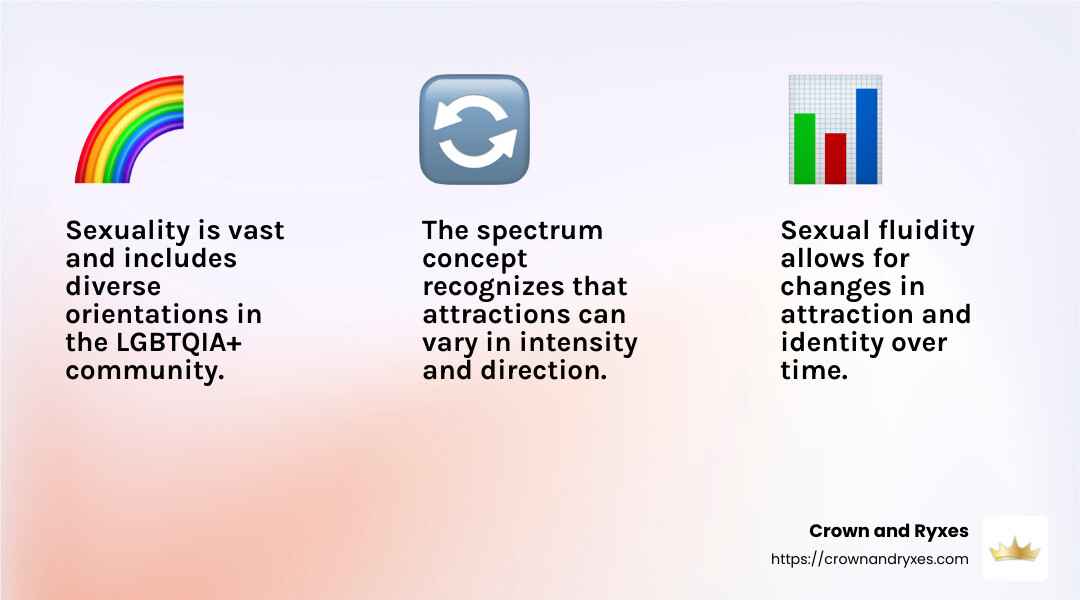
The Kinsey Scale was an early attempt to illustrate this by rating sexual orientation on a scale from 0 (exclusively heterosexual) to 6 (exclusively homosexual), with room for those in between. While not perfect, it was a step toward understanding the complexity of human attraction.
In summary, the spectrum of sexuality accepts the diversity and fluidity of human experiences. It allows for a broader understanding and acceptance of different orientations and identities, fostering a more inclusive world.
The Role of Sexuality in Human Experience
Sexuality plays a crucial role in shaping our identity, relationships, and health. It’s an integral part of who we are and how we connect with others.
Identity
Our sexuality is a key part of our identity. It influences how we see ourselves and how we express ourselves to the world. For many, understanding and accepting their sexual orientation or identity is a journey that can be empowering and affirming.
Self-definition is at the heart of this journey. As mentioned in the research, each person defines their own sexuality in a way that makes sense to them. This self-definition is important for personal growth and self-acceptance.
Relationships
Sexuality deeply affects our relationships. It influences whom we are attracted to and how we form connections with others. Healthy relationships are built on mutual respect, trust, and open communication about desires and boundaries.
Intimacy and sexual attraction are essential components of many relationships. They help to build strong emotional bonds and create a sense of closeness. According to studies, sexual intimacy increases levels of oxytocin, a hormone that fosters bonding and trust.
Health
Sexuality also impacts our health. Engaging in consensual and safe sexual activities has been shown to have several health benefits. These include stress reduction, improved sleep, and even a stronger immune system.
However, it’s important to be aware of the risks. Sexually transmitted infections (STIs) are a significant concern, especially among young people. Practicing safe sex and getting regular health check-ups are essential for maintaining sexual health.
Masturbation is another aspect of sexual health. It’s a natural and healthy way to explore one’s own body and desires. It can also provide some of the same health benefits as sexual intercourse, such as stress relief.
In summary, sexuality is a vital part of the human experience. It shapes our identity, influences our relationships, and affects our health. Embracing and understanding our sexuality can lead to a more fulfilling and balanced life.
Frequently Asked Questions about Sexuality
What is the meaning of sexuality?
Sexuality is more than just who you are attracted to. It includes your sexual feelings, thoughts, attractions, and behaviors. It’s about how you understand and express yourself in relation to others. This can involve physical, emotional, and romantic attractions.
Your sexuality is unique to you and can change over time. It’s about finding what feels right for you. It’s okay if you’re still figuring it out. Many people take time to understand their sexuality and may find that it evolves throughout their life.
How many kinds of sexuality are there?
There are many types of sexuality, and they exist on a spectrum. People often use labels like LGBTQIA+ to describe their sexual orientation or identity. This acronym includes:
- Lesbian: Women attracted to women.
- Gay: Men attracted to men (though some women use this term too).
- Bisexual: Attraction to more than one gender.
- Transgender: Gender identity different from the sex assigned at birth.
- Queer: An umbrella term for non-heterosexual identities.
- Intersex: Individuals with physical sex characteristics that don’t fit typical definitions of male or female.
- Asexual: Little or no sexual attraction to others.
These labels help people communicate their identity but aren’t strict boxes. Some people prefer not to label their sexuality at all. The key is that sexuality is diverse and personal.
What is the difference between sexuality and sexually?
While sexuality refers to your identity, attractions, and how you relate to others, the term sexually is more about actions or behaviors. For instance, when someone talks about acting “sexually,” they might mean engaging in sexual activities or expressing sexual attraction.
Understanding the difference helps clarify discussions about identity versus behavior. Your sexuality is part of who you are, while acting sexually is about what you do. Both are important aspects of human experience, but they focus on different elements of identity and expression.
Conclusion
At Crown and Ryxes, we understand that sexual wellness is a vital part of overall health and happiness. Our approach is all about personalized journeys, because we know that each person’s path to sexual well-being is unique.
In our Clermont, FL location, we offer a range of services designed to empower you on your journey. Whether you’re exploring your sexual identity, seeking support for sexual health issues, or simply looking to improve your intimate relationships, we’re here to help. Our team is committed to providing compassionate, expert care custom to your individual needs.
We believe that understanding and embracing your sexuality can lead to a more fulfilling and satisfying life. Our services aim to support you in this process, ensuring that you feel confident and informed every step of the way.
Explore more about our offerings and how we can support your sexual wellness journey by visiting our Women’s Sexual Wellness page.
Your journey to sexual wellness is personal, and we’re here to walk with you, providing the support and guidance you need to thrive.