

Understanding the Science Behind Hair Regeneration
Stem cell scalp injections are a cutting-edge treatment for hair loss that uses regenerative cells to stimulate dormant hair follicles and promote new growth. For those seeking quick answers about this innovative approach:
| Stem Cell Scalp Injection Basics | What You Need to Know |
|---|---|
| Definition | Procedure that injects stem cells (from fat, bone marrow, or hair follicles) into the scalp to regenerate hair |
| How It Works | Stem cells help activate dormant follicles and create growth factors that stimulate hair growth |
| Results Timeline | Initial results in 3-4 months; peak results at 6-12 months |
| Success Rate | Studies show approximately 29% increase in hair density |
| Sessions Needed | Typically 2-6 treatments, spaced 3-4 weeks apart |
| FDA Status | Currently investigational (not FDA approved) |
| Cost Range | $3,000-$10,000 depending on type and extent of treatment |
Hair loss affects millions of Americans, often leading to decreased confidence and self-esteem. While traditional treatments like minoxidil and finasteride offer modest benefits (only 0.4-2% increase in hair density), stem cell therapy represents a potentially approach with significantly better outcomes.
The science behind stem cell scalp injections is fascinating. These treatments don’t simply relocate hair like traditional transplants—they aim to regenerate your existing follicles from within. When injected into thinning areas, these powerful cells release growth factors that can “wake up” dormant hair follicles and create the right environment for new growth.
I’m Dr. Matthew Casavant, and I’ve dedicated over a decade to researching and implementing advanced regenerative therapies including stem cell scalp injections for patients experiencing hair loss at our clinic in Clermont, FL.

Stem cell scalp injections terms simplified:
– prp hair growth treatment
– prp injection for hair loss price
– prp hair treatment woman
What Are Stem Cell Scalp Injections?
Think of stem cell scalp injections as nature’s reset button for your hair. Unlike traditional hair loss treatments that simply slow down the inevitable or transplants that move hair from one spot to another, these innovative injections aim to breathe new life into your sleeping hair follicles.
At their heart, these treatments use mesenchymal stem cells (MSCs) – remarkable cells that can transform into different cell types and release powerful growth factors. Your body is actually full of these little miracle workers! Depending on your specific needs, these cells can come from your own body (that’s called autologous) or sometimes from carefully screened donors (allogeneic).
When it comes to stem cell scalp injections, there are several sources we typically use:
Adipose-derived MSCs: These come from your own fat tissue through a mini-liposuction, usually from your abdomen or thighs. It’s a relatively simple procedure that gives us access to a rich supply of stem cells.
Bone marrow-derived MSCs: Extracted from your bone marrow (typically the hip bone), these cells require a more involved collection process but pack a powerful regenerative punch.
Follicle-derived stem cells: Using a tiny punch biopsy from areas where you still have healthy hair, we can harvest cells already specialized for hair growth.
“What makes this approach so exciting is that we’re not just covering up symptoms,” explains Dr. Matthew Casavant. “We’re actually addressing what’s happening at the cellular level where hair loss begins.”
Key Differences From Traditional “Hair Grafting”
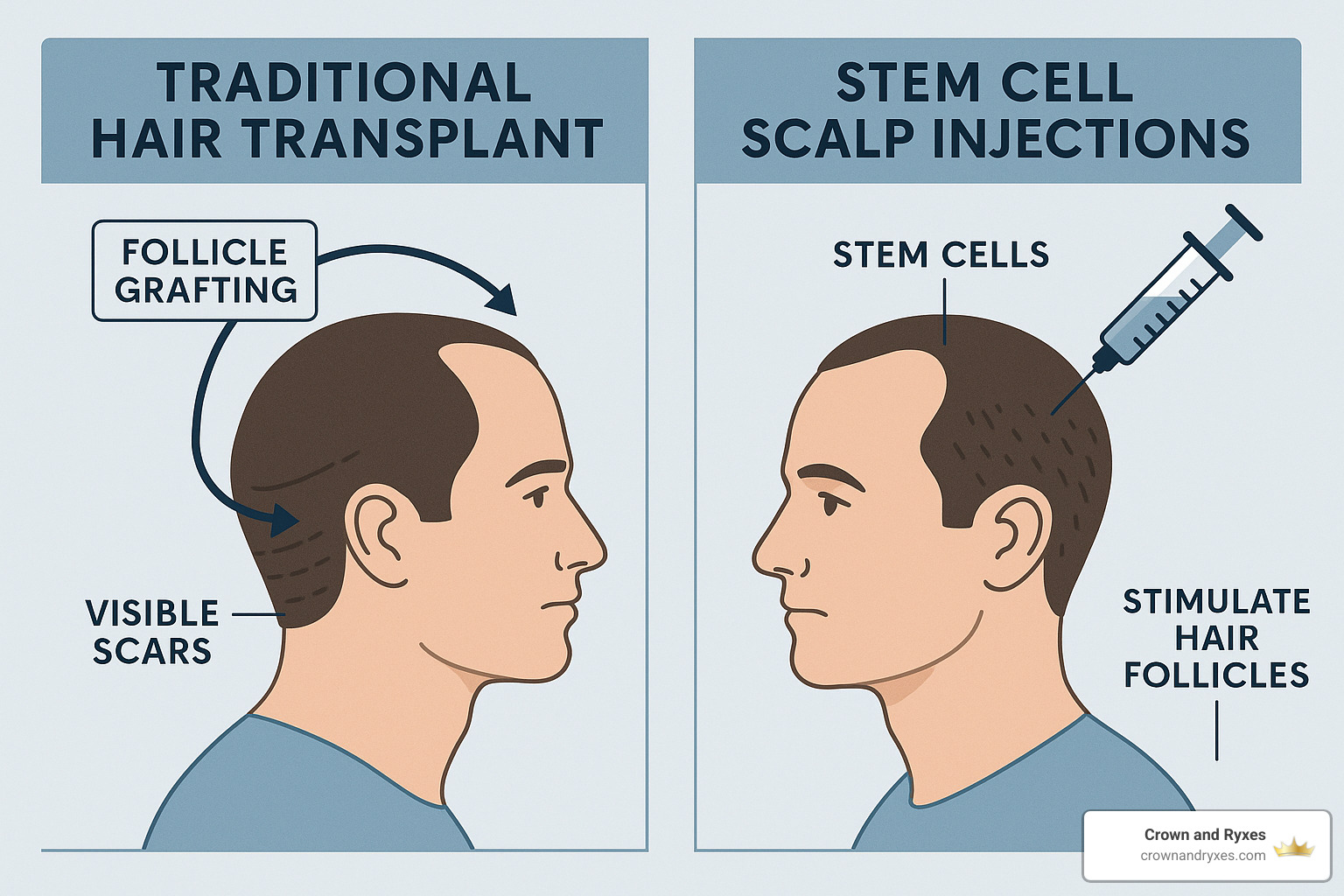
Traditional hair transplants (or “grafting”) and stem cell scalp injections take completely different approaches to hair restoration.
With traditional transplants, surgeons essentially play a game of musical chairs with your hair follicles. They remove healthy follicles from the back of your head (where they’re typically resistant to balding) and carefully relocate them to thinning areas. This approach leaves either a linear scar or multiple tiny dot scars, depending on the technique used. While effective for many people, transplants don’t create new hair – they just move what you already have.
Stem cell scalp injections, on the other hand, aim to wake up your dormant follicles. The process requires just a small tissue sample and results in minimal scarring. Rather than relocating hair, we’re encouraging your existing follicles to get back to work!
As James, one of our patients from Clermont, FL shared: “My transplant filled in the front of my hairline, but the stem cell injections gave me back the thickness I had in my twenties. The combination was perfect for me.”
Types of Stem Cells Used
The regenerative potential of your stem cell scalp injections can vary based on which cells we use and how they’re processed:
Stromal Vascular Fraction (SVF) contains concentrated adipose-derived stem cells plus growth factors and other regenerative cells. It’s remarkably potent – research shows SVF contains up to 300 times more mesenchymal stem cells per unit volume than bone marrow.
Dermal Sheath Cup Cells are specialized cells that surround your hair follicles and play a crucial role in the hair growth cycle. When isolated and reinjected, they can help jumpstart new follicle development.
Umbilical Cord MSCs come from donated umbilical tissue and have an impressive ability to multiply and transform into different cell types. Recent studies show particular promise for these cells in hair regeneration.
Hair Follicle Stem Cells (HFSCs) are located in the “bulge” region of hair follicles and naturally programmed to generate new hair. Scientific research on hair-follicle stem cells has shown these cells can be activated through various signaling pathways to kick off new growth cycles.
At Crown and Ryxes in Clermont, FL, we don’t believe in one-size-fits-all solutions. We’ll carefully evaluate your specific type of hair loss, overall health, and goals to determine which stem cell source might work best for your unique situation.
How They Work, Procedure & Session Schedule
I always find the science behind stem cell scalp injections absolutely fascinating. These tiny cells are true multitaskers when it comes to hair restoration! When we inject them into your scalp, they get to work through several powerful mechanisms.
First, they activate something called the Wnt/β-catenin pathway – think of this as flipping the “on switch” for your hair growth cycle. They also release a cocktail of growth factors (with names like VEGF, PDGF, and IGF-1) that essentially tell your follicles, “Hey, it’s time to grow again!”
What’s really cool is how these cells communicate with your existing follicles through paracrine effects – they don’t just change things directly but send chemical messages to neighboring cells. They even help create new blood vessels (angiogenesis) to ensure your follicles get all the nutrients they need. Plus, they calm inflammation that might be keeping your hair from growing properly.

Mechanism: Why Stem Cell Scalp Injections Restart Dormant Follicles
Here’s something many people don’t realize about hair loss – in most cases, your follicles aren’t actually gone. They’re just sleeping! With conditions like pattern baldness, your hair follicle stem cells (HFSCs) are still there in the “bulge” region, but they’ve become inactive due to hormones, inflammation, or simply aging.
Stem cell scalp injections work like a wake-up call for these sleepy follicles. They stimulate the dermal papilla (the little “command center” at the base of each follicle), release signaling molecules that tell resident stem cells to get back to work, and create a healthier environment by reducing harmful inflammation.
As Dr. Pietro Gentile, one of the leading researchers in this field, put it so well: “The key challenge in hair regrowth is not increasing stem cell count but activating dormant hair follicle stem cells that are already present.” That’s exactly what we aim to do at Crown and Ryxes.
Step-By-Step Treatment Day Walk-Through
Wondering what happens when you come in for your stem cell scalp injection treatment? Let me walk you through a typical day:
Your journey begins with a friendly 30-minute consultation where we’ll review your treatment plan, take some “before” photos, and answer any last-minute questions. Then we’ll apply a topical numbing cream to keep you comfortable during the procedure.
Next comes harvesting the stem cells – this takes about 30-45 minutes. If we’re using adipose-derived cells, we’ll perform a mini-liposuction (don’t worry, it’s much gentler than traditional lipo!) from your abdomen or thighs. For follicle-derived cells, we’ll take a few tiny punch biopsies from areas where your hair is still healthy.
While you relax with a magazine or your favorite podcast, our team spends about an hour processing your tissue in a specialized centrifuge to isolate those precious stem cells. We follow strict sterile protocols that comply with FDA guidelines.
After preparing the cells (sometimes combining them with PRP from your blood for even better results), we begin the micro-injection process. Using very fine needles, we inject the stem cell preparation across your treatment area at small intervals. Most of our patients tell us it’s more strange-feeling than painful!
We’ll finish up with some LED light therapy to activate the cells and reduce inflammation, then send you home with clear aftercare instructions. All in all, you’ll be with us for about 3-4 hours.
Typical Treatment Plan & Spacing
One thing I always emphasize to my patients at Crown and Ryxes: stem cell scalp injections aren’t a one-and-done treatment. For the best results, you’ll need a series of sessions.
Most of our patients follow a plan that includes 2-6 initial treatments spaced about 3-4 weeks apart. This spacing is crucial – we need to give the cells time to work their magic between sessions, but not wait so long that we lose momentum.
After your initial treatment phase, we’ll do a thorough assessment at the 6-month mark to see how you’re progressing. From there, most patients benefit from annual maintenance sessions to keep their results looking fresh.
The exact number of treatments you’ll need depends on several factors – how advanced your hair loss is, how well you respond to the initial treatments, what type of stem cells we’re using, and whether we’re combining them with other therapies.
I always remind my patients that patience is key. These treatments work by gradually regenerating your follicles and improving your scalp environment, which simply takes time. But when those new hairs start coming in – thicker and healthier than before – most people find the wait was absolutely worth it!
Candidate Checklist, Results Timeline & Maintenance
Wondering if stem cell scalp injections might be right for you? While this innovative therapy offers exciting possibilities, it’s not a one-size-fits-all solution. Let’s explore who tends to see the best results and what you can realistically expect on your hair restoration journey.
The ideal candidate for stem cell scalp injections typically has androgenetic alopecia (the common pattern baldness that affects both men and women) with early to moderate thinning. The key factor is having miniaturized follicles still present—those tiny, struggling hairs that produce fine, barely-visible strands. Think of these as “sleeping” rather than “dead” follicles that can potentially be reawakened.
Good candidates also maintain realistic expectations and understand that this is a gradual process requiring some patience. As one of our Clermont patients put it, “I had to remind myself that we were growing hair, not installing it!”
On the flip side, this treatment may not be ideal if you have complete baldness in treatment areas (with no visible follicles left), scarring alopecia, active scalp infections, certain autoimmune conditions, or blood clotting disorders. If you form keloid scars easily, we’ll need to evaluate your situation carefully.
Who Benefits Most From Stem Cell Scalp Injections
At Crown and Ryxes, we’ve seen particularly strong results in several groups of people:
Men and women between 20-65 years old tend to respond well, though for slightly different reasons. Younger patients often have more active follicle stem cells ready to be “reawakened,” while those in their 40s-60s typically have more miniaturized follicles rather than completely lost ones.
People with partial hair density are excellent candidates. When you still have some hair in the treatment area—even if it’s thin and wispy—there’s something for the stem cells to work with. As Dr. Casavant often tells patients, “We can’t resurrect what’s completely gone, but we can revitalize what’s struggling.”
Patients disappointed by other treatments often find success with stem cell scalp injections. Many come to us after trying minoxidil or finasteride with limited results, finding that this regenerative approach provides the additional boost they needed.
I’ve also seen remarkable improvements in post-transplant patients seeking increased density. After a traditional hair transplant, stem cell scalp injections can help improve the density between transplanted follicles, creating a more natural, fuller look.
What Results to Expect & When
One of the most common questions we hear at Crown and Ryxes is “When will I see results?” Understanding the timeline helps set realistic expectations:
During the initial phase (1-3 months), you probably won’t see dramatic visible changes, but important things are happening beneath the surface. Most patients first notice reduced shedding—fewer hairs in the shower drain or on your pillow. Your scalp may feel healthier, with less inflammation and better circulation.
The growth phase (3-6 months) is when things get exciting. This is typically when you’ll see the first visible signs of new growth, often starting as fine hairs that gradually thicken. Your existing hairs may also become more robust, and you’ll begin to notice more uniform coverage developing.
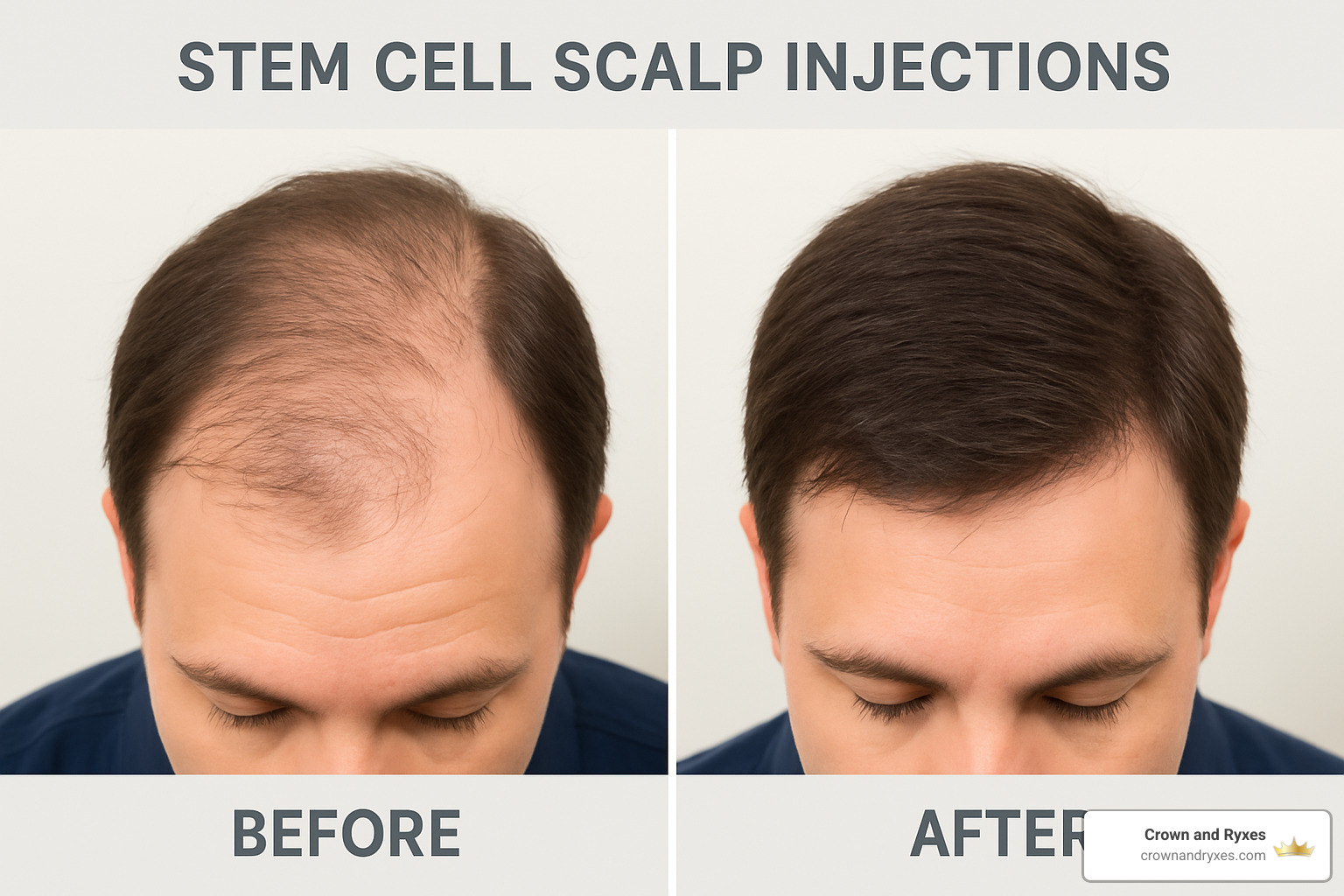
The maturation phase (6-12 months) is when patients see maximum benefit, typically around 9-12 months after beginning treatment. A landmark Italian study demonstrated approximately 29% increase in hair density 23 weeks after the final treatment—significantly better than the 0.4-2% increase typically seen with traditional treatments like minoxidil.
Michael, one of our patients from Clermont, described his journey perfectly: “I started noticing less hair in the shower drain around month two, but it wasn’t until month four that my wife commented on how my crown was filling in. By month nine, I had forgotten I even had a thinning spot there.”
Durability & Follow-Up
How long do results from stem cell scalp injections last? Based on our clinical experience and research:
Initial results typically last 2-4 years without maintenance, though this varies significantly between individuals based on genetic factors and ongoing care. The good news is that booster sessions (usually performed annually) can extend and improve these results.
For the best long-term outcomes, we recommend an annual assessment to check your hair density and follicle health. This allows us to determine if and when maintenance treatments might be beneficial. Most patients benefit from yearly “booster” injections to maintain and improve their results.
Complementary treatments can also extend your results. Many of our patients combine stem cell scalp injections with at-home care like low-level laser therapy, specialized shampoos, and sometimes topical medications for a comprehensive approach.
Don’t underestimate lifestyle factors, either. Managing stress, maintaining good nutrition, and avoiding harsh chemical treatments can all help extend your results. As we like to say at Crown and Ryxes, “What happens on your plate shows up on your scalp.”
We view hair restoration as a journey rather than a one-time event. We partner with our patients for the long term, adjusting treatment plans as needed to maintain both their results and their confidence. After all, your hair continues to age along with you—our approach evolves to match your changing needs.
Safety, Cost, Regulation & Choosing a Provider
When considering stem cell scalp injections, safety naturally comes first on most people’s minds. I’m happy to share that this is generally a low-risk procedure with minimal downtime. Most of my patients return to their normal activities within just a day or two, though I usually recommend taking it easy on exercise for about a week.
Like any medical procedure, there are some side effects to be aware of. Most commonly, you might experience some redness and swelling where we’ve done the injections, but this typically fades within 1-3 days. Some patients report mild soreness or tenderness (similar to a slight sunburn) that lasts up to 5 days, and occasionally a temporary headache that resolves within 48 hours. If we’ve harvested stem cells using liposuction, you might have minimal bruising at that donor site.
More serious complications are quite rare but include infection (less than 1% of cases), nerve injury resulting in numbness or tingling (extremely rare), allergic reactions (primarily with cells from donors rather than your own), and granuloma formation (unusual tissue growth at injection sites).

FDA Status & Ethical Considerations
Let’s talk about the regulatory landscape, which is admittedly a bit complicated. Stem cell scalp injections currently exist in what I’d call a regulatory gray area:
They’re considered investigational by the FDA and aren’t formally approved specifically for hair restoration. Many clinics (including ours at Crown and Ryxes) operate under what’s called the “same-surgical-procedure exception,” which allows us to minimally process cells that are both harvested and reinjected during the same procedure.
Some treatments may be performed under an FDA-cleared Investigational New Drug (IND) application, which provides additional oversight.
The FDA has published specific guidance regarding stem cell therapies, cautioning consumers about unproven claims. I believe in complete transparency with my patients – while the clinical evidence for stem cell scalp injections is promising and we see excellent results in many cases, these treatments are still considered investigational, and I can’t guarantee specific outcomes.
Side-Effect Profile & Contra-Indications
Not everyone is a good candidate for stem cell scalp injections. I carefully screen all potential patients to ensure both safety and the likelihood of good results.
Some absolute deal-breakers include active scalp infections, a history of keloid scarring, certain autoimmune disorders that might be triggered by stem cell therapy, bleeding disorders, current anticoagulant therapy, active cancer, or complete baldness with no remaining follicles.
There are also some conditions that don’t rule out treatment but require careful consideration, including diabetes (which may affect stem cell function), thyroid disorders (unless well-controlled), severe cardiovascular disease, pregnancy or breastfeeding, and recent use of isotretinoin (Accutane).
As I often tell my patients, “The key to safety is proper patient selection. A thorough medical history and examination are essential before proceeding with any treatment.”
What Does It Cost?
I’m often asked about the cost of stem cell scalp injections, and it’s a fair question given the investment involved. Prices vary widely based on several factors:
The cost typically ranges from $3,000-$5,000 per session for basic treatments, while more advanced protocols with specialized processing can range from $5,000-$10,000 per session. Since most treatment plans involve multiple sessions, the full course typically runs between $9,000-$25,000.
What accounts for these differences? Geographic location plays a role (prices tend to be higher in major metropolitan areas), as does provider expertise (more experienced specialists typically command higher fees). The specific cell source and processing techniques matter too – autologous treatments using sophisticated isolation methods cost more than simpler approaches.
At Crown and Ryxes in Clermont, FL, we believe in transparent pricing and create customized treatment plans based on each patient’s specific needs and budget. We also offer financing options to make these advanced treatments more accessible.
How to Vet a Clinic
With the growing popularity of stem cell scalp injections, it’s important to carefully evaluate potential providers. Here’s my advice after over a decade in this field:
Look for qualified medical professionals first and foremost. Treatment should be performed by or under the direct supervision of a board-certified physician with specific training in regenerative medicine and hair restoration.
Ask about regulatory compliance – do they operate under an IND or follow the same-surgical-procedure exception guidelines? A legitimate provider will have a transparent before/after gallery with consistent photography techniques and proper sterile processing facilities.
Be wary of anyone promising miraculous results or 100% success rates. The best providers often contribute to scientific literature or participate in formal clinical trials and will offer a comprehensive consultation including a detailed scalp examination before recommending treatment.
Don’t hesitate to ask how many stem cell scalp injection procedures they’ve performed, what type of stem cells they use and why, what their infection rate and complication history is, and if they have patients you can speak with about their experience.
Recovery & Aftercare Essentials
The aftercare for stem cell scalp injections is relatively straightforward but crucial for maximizing benefits. For the first 48 hours, avoid washing your hair or getting the scalp wet. I recommend sleeping with your head slightly liftd and applying cold compresses if you experience any discomfort. It’s also best to avoid direct sunlight on the treated area.
After those initial two days, you can wash your hair gently with a mild, sulfate-free shampoo. For the first week, avoid heat styling, hair dyes, or chemical treatments, and refrain from strenuous exercise that causes heavy sweating. I also advise patients to avoid alcohol and smoking, which can impair stem cell function.
Regarding medications, it’s important to avoid NSAIDs (like ibuprofen and aspirin) for at least 7 days before and after treatment as they may interfere with stem cell activity. If you’re using minoxidil, you can typically resume application on day 5. Some patients benefit from specific supplements to support stem cell function, which we can discuss during your consultation.
For long-term care, I recommend following a healthy diet rich in proteins and antioxidants, considering low-level laser therapy as a complementary treatment, attending all scheduled follow-up appointments, and documenting your progress with photos.
At Crown and Ryxes, we provide comprehensive aftercare instructions and remain available to address any concerns during your recovery process. Your success is our success, and we’re with you every step of the way.
Comparing Stem Cell Injections to PRP, Transplants & Looking Ahead
When it comes to hair restoration, you have several options to consider. Let’s explore how stem cell scalp injections stack up against other popular treatments:
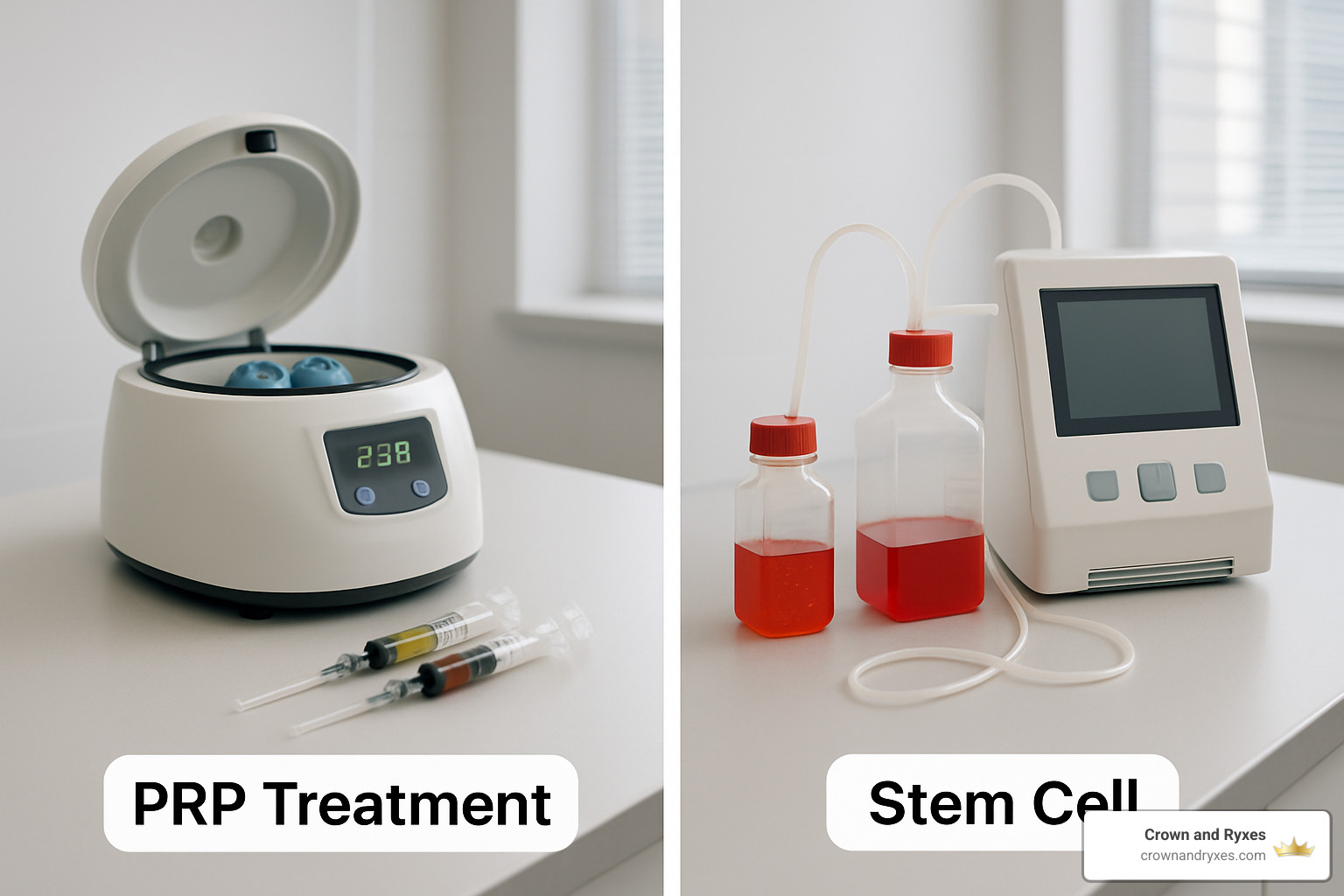
| Treatment | Mechanism | Typical Results | Sessions | Recovery | Cost |
|---|---|---|---|---|---|
| Stem Cell Injections | Regenerate dormant follicles through growth factors and cellular signaling | 29% increase in density | 2-6 sessions, 3-4 weeks apart | Minimal (1-2 days) | $3,000-$10,000 per session |
| PRP Therapy | Uses platelets from blood to release growth factors | 15-20% increase in density | 3-4 sessions, 4-6 weeks apart | Minimal (1 day) | $500-$2,500 per session |
| FUE/FUT Transplants | Surgically relocates healthy follicles to balding areas | Predictable coverage in transplanted areas | Single session (sometimes 2) | 1-2 weeks | $4,000-$15,000 per procedure |
Think of PRP therapy as the reliable friend who’s been around the block—it’s well-studied, reasonably priced, and gets the job done for early thinning. With minimal downtime and a solid track record, it’s no wonder many people start here. The downside? It struggles with severely miniaturized follicles.
Hair transplants are like moving day for your follicles—they physically relocate hair from dense areas to sparse ones. The results are immediate and permanent, which is fantastic if you have enough donor hair to work with. But once those follicles are moved, that’s it—you can’t increase density beyond what you’ve transplanted, and there will be some scarring.
Stem cell scalp injections take a different approach altogether. Rather than just relocating hair, they aim to wake up sleeping follicles and improve your scalp’s overall health. This treatment works with your natural hair pattern and requires minimal downtime. The tradeoff? It’s still considered investigational, results can vary, and it comes with a higher price tag.
Synergy: Combining Stem Cells With PRP or Medication
At Crown and Ryxes, we’ve found that combining treatments often creates the best results—it’s like having a team of specialists working together instead of relying on a single approach.
Pairing stem cell scalp injections with PRP creates a powerful duo. The growth factors in PRP help stem cells survive longer and work more effectively—like giving your hair restoration team both the players and the energy drinks they need to perform at their best. A 2019 Italian study confirmed what we’ve seen in our Clermont clinic: this combination significantly outperforms either treatment alone.
For many patients, adding medication to the mix makes perfect sense. Starting or continuing minoxidil after your stem cell scalp injections can help maintain and improve your results. Think of minoxidil as the maintenance crew, helping to extend the growth phase of those newly activated follicles.
Male patients often benefit from adding finasteride to block DHT, the hormone responsible for follicle miniaturization. It’s like removing the obstacles so your stem cells can work in a more favorable environment.
Some of our most dramatic changes come from what we call “triple therapy”—combining stem cell scalp injections, PRP, and appropriate medications for a comprehensive approach. It’s not necessarily right for everyone, but for many patients, this combination provides the most dramatic and long-lasting improvements.
Limitations & Unanswered Questions
Despite the exciting potential of stem cell scalp injections, we believe in being completely transparent about their limitations:
If you’re completely bald in certain areas, you might see less impressive results. Current evidence suggests this therapy works best when some follicles remain, even if they’re tiny and producing only wispy hairs.
The field is still evolving when it comes to standardized protocols. There’s ongoing debate about the optimal number of cells to inject and the best processing methods, which can lead to different approaches between providers.
Most studies follow patients for just 6-12 months, leaving questions about long-term results. While many of our patients at Crown and Ryxes continue to enjoy their results for years, the scientific literature on results beyond 2-3 years is still developing.
Scientists are still uncovering exactly how stem cells help regrow hair. We know they work, but the precise mechanisms and pathways involved remain under investigation.
Perhaps most frustratingly, we can’t yet perfectly predict who will achieve the best results. While we can identify good candidates, individual responses vary for reasons we’re still working to understand.
Finally, the regulatory landscape remains uncertain. The FDA hasn’t established a clear approval pathway for stem cell therapies for hair loss, which creates challenges for the field as a whole.
The Future of Regenerative Hair Medicine
The horizon of hair restoration looks incredibly promising. Several emerging technologies have us particularly excited:
3D-Printed Follicles may soon allow us to create brand new hair follicles in the lab using a patient’s own cells—potentially solving the “donor hair” limitation of traditional transplants.
Exosome Serums contain the growth factors and genetic material from stem cells without the cells themselves. These might eventually be available as at-home treatments, bringing regenerative medicine to your bathroom shelf.
Gene Editing technologies like CRISPR could someday allow us to correct genetic hair loss at its source by modifying the responsible genes.
Hair Follicle Organoids—tiny, lab-grown hair-producing structures—have already been successfully developed. This breakthrough could revolutionize treatment for even the most severe hair loss.
Wnt Pathway Modulators target the signaling pathway crucial for hair development. New drugs affecting this pathway show tremendous promise in early research.
At Crown and Ryxes, we’re committed to staying at the forefront of these innovations, continuously evaluating new technologies to offer our patients in Clermont and The Villages the most effective treatments available.
Frequently Asked Questions about Stem Cell Scalp Injections
Do stem cell scalp injections hurt?
Most of our patients are pleasantly surprised by how comfortable the procedure is. Thanks to local anesthesia, you’ll feel minimal discomfort during stem cell scalp injections—perhaps some pressure or a slight pinching sensation, but rarely actual pain. Afterward, you might experience mild soreness similar to a sunburn for 1-3 days. If needed, regular acetaminophen usually takes care of any discomfort.
How many cells are actually injected?
Typically, we inject between 2–5 million stem cells per treatment session. But here’s what really matters: it’s not just quantity but quality. At Crown and Ryxes, we use advanced isolation techniques to ensure maximum cell viability and function. Think of it like planting a garden—having more seeds only helps if they’re actually capable of growing.
Can I colour or style my hair after the procedure?
We recommend waiting at least 7 days before coloring your hair after receiving stem cell scalp injections. The chemicals in hair dye could irritate your scalp and potentially interfere with stem cell activity. For styling, you can resume gentle approaches after 48 hours, but please avoid heat styling (blow dryers, flat irons) for at least 5-7 days to prevent irritation to the treatment area. Your patience during this brief period helps ensure the best possible results from your treatment.
Conclusion
Stem cell scalp injections represent one of the most exciting developments in hair restoration today. While the technology is still evolving, the growing body of research and real patient results suggest these treatments offer genuine hope for people struggling with hair loss.
What makes this approach special is how it works with your body’s own regenerative abilities. Unlike transplants that simply move hair around, or medications that just slow down loss, stem cell scalp injections aim to wake up sleeping hair follicles and create the conditions for natural regrowth.
The advantages are compelling – minimal downtime compared to surgery, potential for your own natural hair to return, healthier scalp overall, and very few side effects. Most of our patients at Crown and Ryxes are back to their normal routines within a day or two.
That said, I always have honest conversations with my patients about what to expect. This isn’t an overnight miracle. Your new hair growth develops gradually over months, and results do vary from person to person. The treatment works best when you still have some existing hair follicles rather than areas of complete baldness.
At Crown and Ryxes, we believe the future of hair restoration isn’t about one-size-fits-all solutions. Instead, we create personalized treatment plans that might combine stem cell scalp injections with other proven therapies. We look at your unique hair loss pattern, medical history, lifestyle, and goals to design a comprehensive approach just for you.
I’ve seen how hair loss can shake someone’s confidence. But I’ve also seen the joy on patients’ faces when they look in the mirror and see hair where there was once only scalp. With locations in Clermont, FL and The Villages, FL, we’re committed to offering the most advanced options available to restore not just your hair, but your self-assurance too.
Wondering if stem cell scalp injections might be right for you? More info about hair restoration services is available on our website. Or better yet, come in for a consultation where we can look at your specific situation and discuss all your options in detail.
The science of hair restoration continues to make exciting leaps forward. What seems cutting-edge today may become standard practice tomorrow. We’re thrilled to be at the forefront of this revolution in regenerative medicine, helping our patients achieve the natural-looking results they deserve.