

Understanding Liposuction: What You Need to Know
Liposuction is a surgical procedure that removes excess fat from specific areas of the body through suction. If you’re considering this popular body contouring treatment, here’s what you should know:
Quick Facts About Liposuction:
* Purpose: Removes stubborn fat deposits resistant to diet and exercise
* Not for: Weight loss, obesity treatment, or cellulite removal
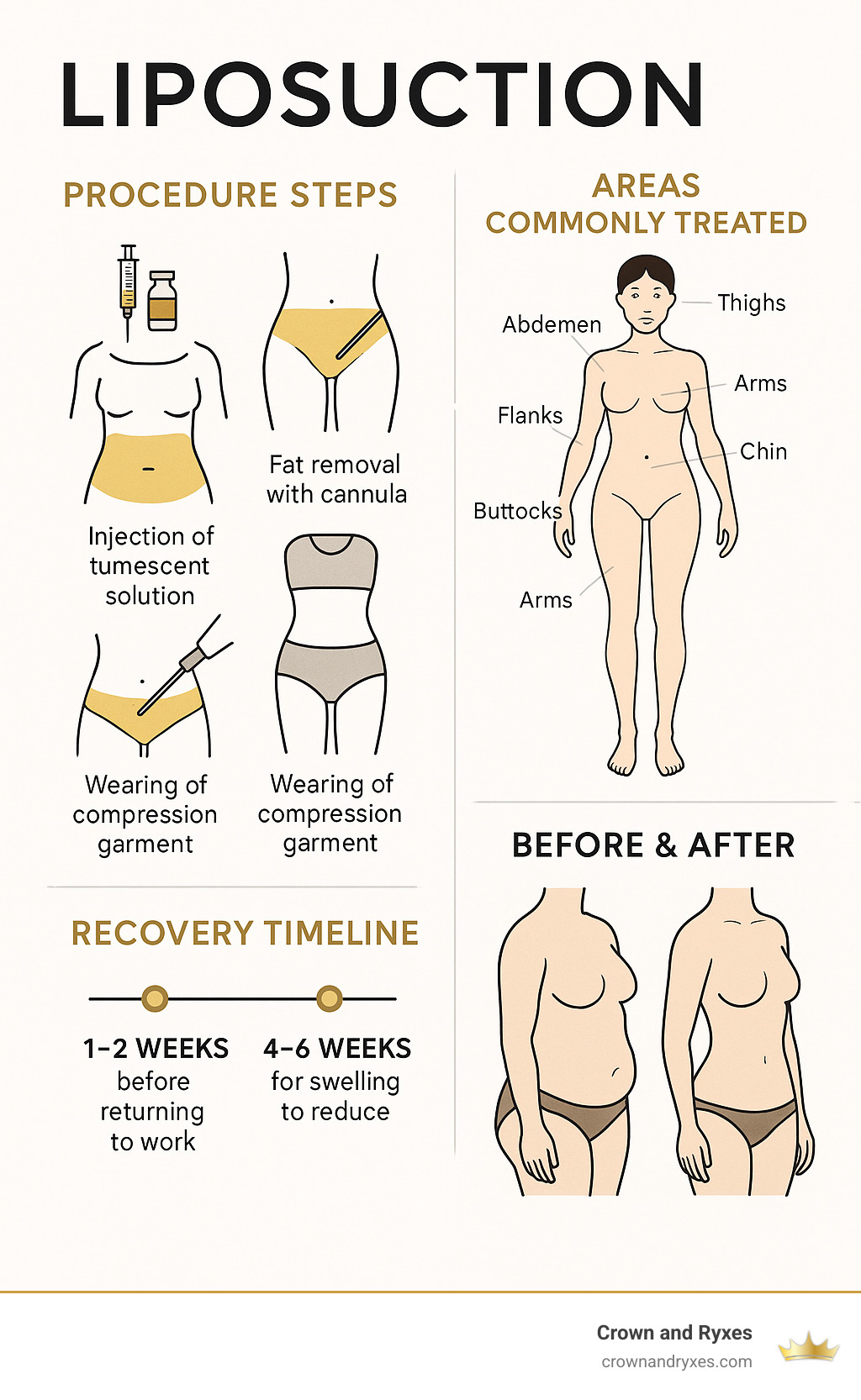
* Common areas: Abdomen, thighs, buttocks, arms, chin, neck
* Recovery time: 1-2 weeks before returning to work, 4-6 weeks for swelling to reduce
* Results: Permanent removal of fat cells when weight is maintained
* Cost range: $1,000-$20,000 depending on treatment areas
Liposuction sculpts and reshapes your body by removing unwanted fat deposits. This procedure is not a weight-loss solution but rather a contouring method for those already near their ideal weight.
The procedure uses a hollow tube called a cannula connected to a vacuum to suction out fat cells. Modern techniques include tumescent liposuction (using fluid to minimize bleeding), ultrasound-assisted, laser-assisted, and power-assisted methods.
Ideal candidates for liposuction are:
– Within 30% of their ideal weight
– Have good skin elasticity
– Have localized fat deposits
– Are in good overall health
– Don’t smoke
– Have realistic expectations
Results from liposuction can be long-lasting if you maintain a stable weight through diet and exercise. While the removed fat cells are gone permanently, you can still gain weight in other areas if your lifestyle changes.
I’m Dr. Matthew Casavant, founding physician at Crown and Ryxes with extensive training in minimally invasive surgical techniques including liposuction procedures that help patients achieve their desired body contours. My approach to liposuction combines meticulous surgical skill with a commitment to patient education, ensuring you understand all aspects of your procedure.
Basic Liposuction terms:
– 360 liposuction
– does insurance cover liposuction
– how long does it take to recover from liposuction
Liposuction Fundamentals: Definition, Candidacy & Body Areas
Liposuction, also called lipoplasty or suction-assisted lipectomy, has come a long way since doctors first introduced it in the 1970s. At its heart, this procedure is about permanently removing stubborn fat cells from specific body areas to create more balanced, harmonious contours that diet and exercise often can’t achieve on their own.
The Science Behind Fat Removal
Here’s something fascinating about your body: when you gain weight, your existing fat cells get bigger rather than your body creating new ones. Liposuction works by physically removing these fat cells, meaning they’re gone for good. While you can still gain weight in other areas, the treated spots will always have fewer fat cells, helping maintain their improved proportion even if your weight fluctuates a bit.
As one of our patients from Clermont, FL told us: “I’d look in the mirror and not recognize myself. Liposuction helped me achieve balance in a physical sense, as well as in an emotional sense.”
Who Makes an Ideal Candidate?
Not everyone is the perfect match for liposuction, and that’s okay! The best candidates tend to be:
People within 30% of their ideal body weight with good skin elasticity that will “bounce back” after fat removal. If you have specific stubborn fat deposits that just won’t budge despite your healthy lifestyle, you might be perfect for this procedure. Being a non-smoker (or willing to take a break before surgery) and having realistic expectations about what liposuction can achieve are also important factors.
Liposuction isn’t a weight loss solution or obesity treatment. It’s a body contouring procedure that typically removes between 1-10 pounds of fat, depending on your treatment areas.
Common Treatment Areas
Your body is unique, and so are the places where stubborn fat likes to hang out. Liposuction can effectively treat many troublesome spots:
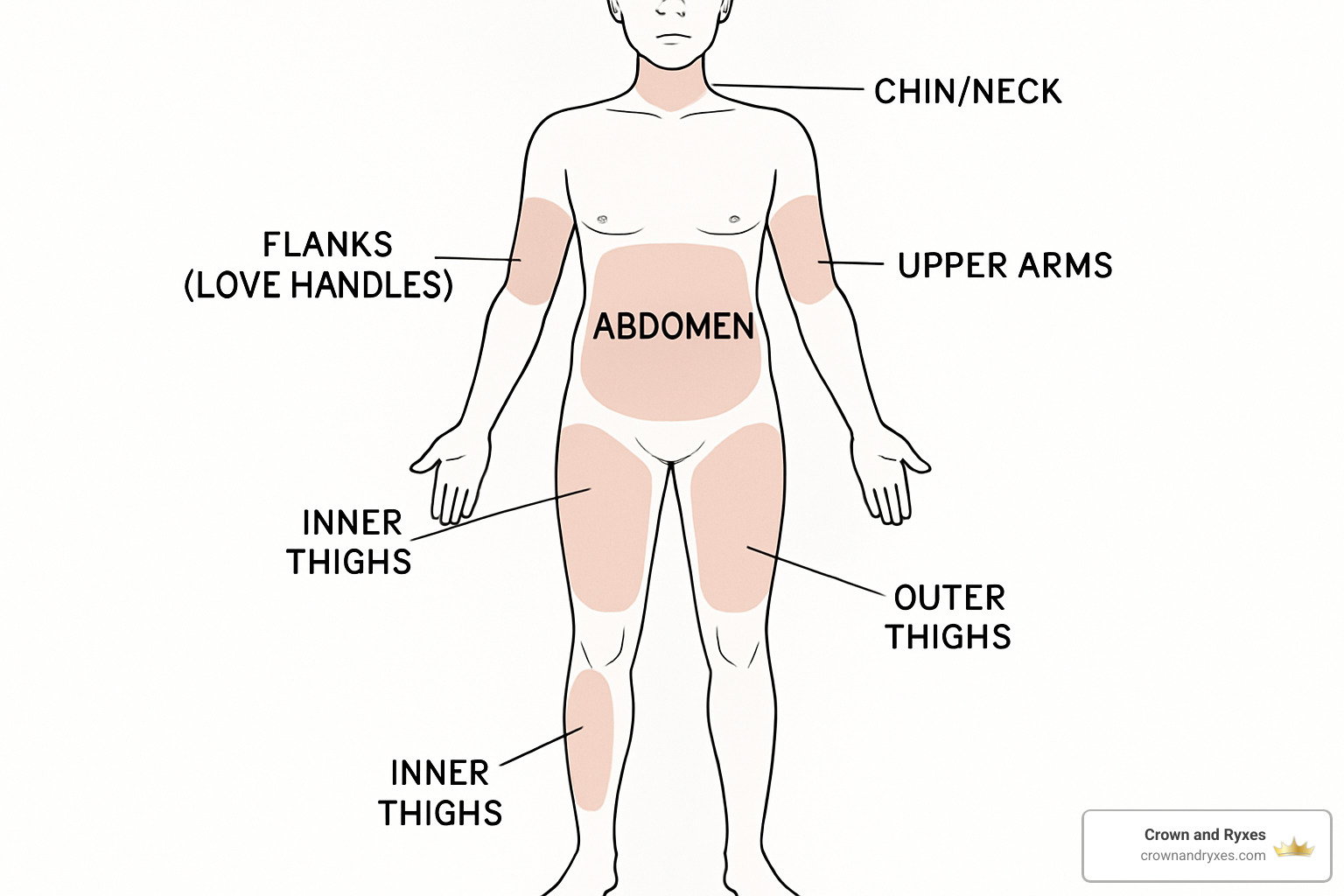
The abdomen and waist are fan favorites, addressing those pesky “love handles” that seem immune to crunches. Thighs – both inner and outer – can be slimmed to reduce uncomfortable rubbing and make jeans shopping less of a nightmare. The buttocks can be sculpted for better proportion, while arms can be contoured to eliminate that bothersome “bat wing” effect.
A more defined chin and neck profile can dramatically refresh your appearance. Men dealing with gynecomastia (enlarged male breasts) find relief through chest contouring. Back rolls, calf and ankle refinement, and even inner knee fat pads are all fair game for skilled liposuction techniques.
Traditional Liposuction vs Modern Devices
Traditional suction-assisted liposuction (SAL) is like the reliable grandparent of body contouring – effective but a bit old-school. It uses a cannula (a hollow tube) connected to a vacuum to mechanically break up and remove fat. While it works well, it requires significant physical effort from your surgeon and can be a bit rougher on surrounding tissues.
Today’s modern liposuction technologies have changed the game completely:
Power-Assisted Liposuction (PAL) uses a mechanized vibrating cannula that makes fat removal gentler and less tiring for your surgeon. Ultrasound-Assisted Liposuction (UAL) employs sound energy to liquefy fat before removal, allowing for more precise sculpting. Laser-Assisted Liposuction (LAL) uses laser energy to melt fat cells and may even stimulate collagen production for some skin tightening benefits.
These advancements mean less downtime, greater precision, and generally improved safety profiles compared to older techniques.
Medical Indications for Liposuction
While looking better in your clothes is a perfectly valid reason to consider liposuction, there are several medical conditions where this procedure offers real health benefits:
Lipedema is a chronic condition where symmetrical fat deposits in the legs cause pain and mobility issues. For people suffering from this condition, liposuction can be life-changing. Similarly, specialized lymph-sparing techniques can help manage lymphedema, a condition causing uncomfortable fluid buildup.
Liposuction can remove lipomas (benign fatty tumors) with less scarring than traditional excision. And for men with gynecomastia, the procedure can address both the physical and psychological aspects of enlarged breast tissue.
In cases like these, liposuction may be considered medically necessary, and with proper documentation and appeals, might even be covered by insurance. If you’re facing one of these conditions, we’d be happy to discuss whether liposuction might be appropriate for your specific situation at Crown and Ryxes.
Techniques & Technologies Explained
The world of liposuction has blossomed into a garden of innovative techniques, each designed to improve results and boost safety. Knowing your options helps you steer this landscape with confidence.
Tumescent Technique: The Gold Standard
Think of tumescent liposuction as the trusted foundation upon which modern body sculpting is built. This technique involves flooding the treatment area with a special cocktail of saline, lidocaine (for numbing), and epinephrine (to shrink blood vessels).
This clever solution does multiple jobs at once – it numbs the area so you’re comfortable, reduces bleeding during the procedure, makes the fat easier to remove, and protects surrounding tissues from unnecessary trauma. Since its introduction in the 1980s, this approach has dramatically improved safety profiles for patients everywhere.
“The tumescent technique revolutionized liposuction by allowing us to perform the procedure with patients wide awake and comfortable,” shares our surgical team at Crown and Ryxes. “It’s like having power steering in a car – you wonder how anyone did without it.”
Advanced Liposuction Technologies
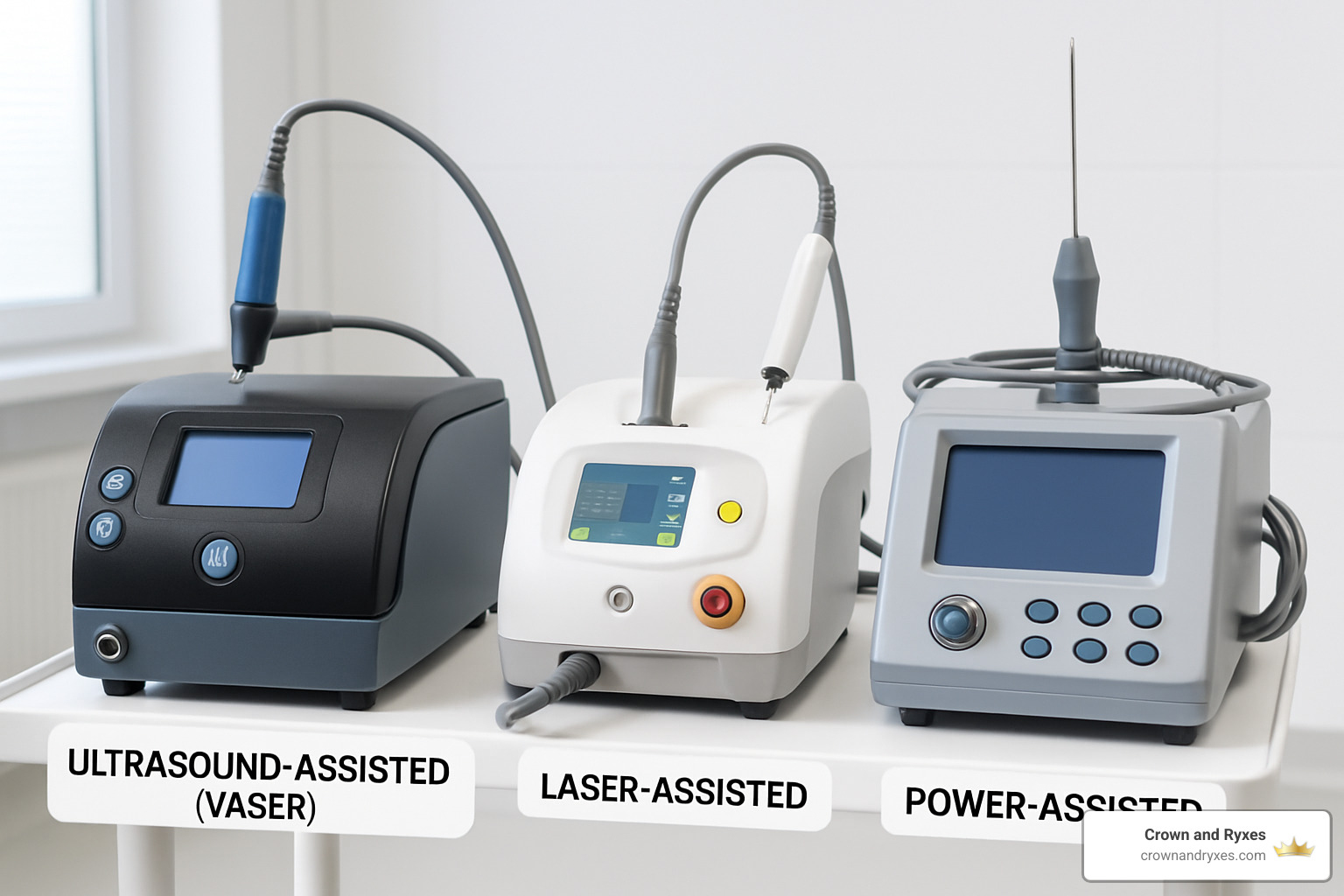
Ultrasound-Assisted Liposuction (UAL/VASER) harnesses sound waves to break down fat cells before removal. This approach shines particularly bright when tackling fibrous areas like male chests or backs. The gentler fat disruption often translates to less bruising and swelling, with the added bonus of more precise body sculpting potential.
When it comes to skin tightening benefits, Laser-Assisted Liposuction (LAL) deserves special attention. By using laser energy to rupture fat cells, this method may stimulate collagen production – giving your skin that extra “bounce back” quality. With tiny cannulas leaving smaller entry points, popular systems like SmartLipo and SlimLipo have earned devoted followers.
For our surgeons at Crown and Ryxes, Power-Assisted Liposuction (PAL) has been a game-changer. The rapidly vibrating cannula reduces surgeon fatigue during longer procedures (happy surgeon = better results for you!), while potentially allowing more efficient fat removal with less tissue trauma.
Patients concerned about skin laxity might benefit from Radiofrequency-Assisted Liposuction (RFAL). This clever two-in-one approach removes fat while simultaneously tightening skin, making it ideal for those with mild to moderate looseness who want to avoid more extensive lifting procedures.
Water-Jet Assisted Liposuction (WAL) uses a pressurized stream of fluid that gently dislodges fat cells while preserving important structures. This technique really shines when harvesting fat for transfer to other areas, as it keeps more fat cells intact and viable.
For patients with lipedema, a chronic and often painful fat disorder, Lymph-Sparing Liposuction offers specialized hope. This advanced technique preserves vital lymphatic vessels while removing diseased fat tissue, requiring surgeons with specialized training and equipment.

“When I was considering liposuction in Clermont, FL, I was overwhelmed by all the technical terms,” recalls one of our patients. “But my surgeon took time to explain which approach would work best for my body type. The results speak for themselves!”
At Crown and Ryxes, we believe the best technology is the one that’s right for your unique body and goals. Our approach combines tumescent technique with carefully selected advanced technologies based on your anatomy, desired outcomes, and recovery preferences. Just as we customize our REGENmax treatments for sexual wellness patients, we tailor liposuction techniques to each individual’s needs.
For those interested in the science behind these techniques, the research on liposuction methods continues to evolve, with safety benchmarks improving every year.
Benefits, Limitations, Risks & Complications
The Benefits of Liposuction
When you choose liposuction, you’re not just removing fat—you’re reshaping your relationship with your body. The most significant advantage is the permanent removal of fat cells from treated areas. Unlike diet and exercise which shrink fat cells, liposuction physically removes them, meaning they won’t return to those specific spots.
Many of our patients at Crown and Ryxes find their body proportions improve dramatically after treatment. Those stubborn areas that seemed immune to your healthy lifestyle finally respond, creating more balanced contours that better reflect your efforts.
“After my liposuction procedure at Crown and Ryxes, I finally felt comfortable in my own skin,” shared one patient from Lady Lake, FL. “The stubborn fat pockets that wouldn’t budge with diet and exercise are gone, and I feel like my outside finally matches how I feel inside.”
Beyond the physical changes, patients often experience a wonderful boost in self-confidence. Clothing fits better, movements feel easier (especially for those with larger deposits that limited mobility), and many people feel more comfortable participating in activities they previously avoided.
Important Limitations to Understand
Despite its transformative potential, liposuction isn’t magic—and understanding its limitations is crucial for satisfaction with your results.
First and foremost, liposuction is not a weight-loss procedure. Most patients lose only 1-10 pounds of actual fat. This surprises many people, but remember: the goal is contouring, not significant weight reduction. If you’re seeking treatment for obesity or hoping to improve metabolic conditions like insulin resistance, liposuction simply won’t address these issues.
Your skin quality matters tremendously. While modern techniques offer some skin tightening benefits, patients with significant skin laxity may need additional procedures like a tummy tuck to achieve their desired results. Think of it this way: removing the stuffing from a pillow doesn’t necessarily make the pillowcase smaller.
Liposuction also can’t prevent future weight gain. The removed fat cells are gone forever, but remaining cells throughout your body can still expand. This is why maintaining a stable weight through lifestyle management remains important after your procedure.
Cellulite is another limitation worth noting. Contrary to popular belief, liposuction typically doesn’t improve cellulite and may occasionally make it more noticeable by removing the underlying fat that was “filling in” the dimpled areas.
Risks and Potential Complications
Like any surgical procedure, liposuction comes with potential risks that deserve careful consideration. Most patients experience temporary side effects including bruising, swelling, and numbness in treated areas. These typically resolve within weeks, though some swelling can persist for several months.
Contour irregularities can occur, particularly in patients with poor skin elasticity or when large volumes of fat are removed. Seromas (fluid collections) may develop but can usually be drained in the office if necessary.
More serious but less common complications include:
- Infections (rare with proper surgical technique)
- Fat embolism (fat entering the bloodstream)
- Blood clots like deep vein thrombosis
- Lidocaine toxicity from the tumescent solution
- Organ perforation (extremely rare with experienced surgeons)
- Excessive fluid shifts affecting electrolyte balance
The published mortality rate for liposuction is approximately 1 in 10,000 cases. However, this statistic improves dramatically when procedures are performed by board-certified surgeons following established safety guidelines. A 2015 study found just a 1.5% complication rate among 4,534 patients treated by board-certified plastic surgeons.

“At Crown and Ryxes, we prioritize safety above all else,” emphasizes our surgical team. “We adhere to strict protocols regarding fluid management, aspirate volumes, and patient monitoring to minimize risks.”
For more information about abdominal contouring results, visit our Stomach Lipo Before and After gallery.
Preparation, Recovery, Costs & Choosing a Surgeon
Preparing for Your Liposuction Procedure
Getting ready for liposuction isn’t just about marking your calendar – it’s about setting yourself up for the best possible outcome. Think of it as training for a marathon rather than a sprint.
About 4-6 weeks before your procedure, you’ll need to quit smoking completely. This isn’t just doctor’s orders – it’s crucial for proper healing. During this time, you’ll also complete some medical evaluations and lab tests to ensure you’re in good health for surgery. Your doctor might calculate something called a Caprini score, which helps determine your risk for blood clots.
“I tell my patients that preparation is half the battle,” shares our surgeon at Crown and Ryxes. “When you come in well-prepared, your body can focus entirely on healing.”
As you get closer to surgery day (about two weeks out), you’ll need to avoid medications that thin your blood – things like aspirin, ibuprofen, and even vitamin E supplements. This is also the perfect time to prepare your recovery space at home. Trust me, future-you will be grateful for those extra pillows and easy-to-reach necessities!
Don’t forget to arrange for someone to drive you home and stay with you that first night. It’s not just about convenience – it’s about safety.
The Recovery Process
Recovery from liposuction follows a fairly predictable timeline, though everyone’s body heals at its own pace.
Those first 48 hours can be the most challenging. You’ll have some discomfort, bruising, and swelling – all completely normal. Your compression garments will become your new best friend, as they help reduce swelling and help your skin conform to your new contours. Light walking is encouraged from day one to promote circulation and prevent blood clots.
During the first week, you’ll continue wearing those compression garments and taking it easy. Most patients are pleasantly surprised at how manageable the discomfort is, especially with prescribed pain medication. Your follow-up appointment during this time is crucial to ensure everything is healing properly.
By weeks 2-4, you’ll gradually return to normal activities. Those compression garments still need to be worn (typically for 4-6 weeks total), but you’ll start feeling more like yourself. Most of our patients at Crown and Ryxes return to work within 1-2 weeks, depending on how physical their job is.
“The most common question I get is ‘when will I see my final results?'” says our recovery specialist. “I always tell patients that while they’ll see improvements quickly, their final contours emerge between 1-3 months as swelling completely resolves.”
Understanding the Costs
Let’s talk dollars and cents – liposuction is an investment in yourself, but it’s important to understand what drives the cost.
The price tag varies widely based on several factors. Geographic location plays a huge role – procedures in major metropolitan areas typically cost more than the same procedure in smaller cities. The surgeon’s experience and credentials also influence the cost – more experienced surgeons with impressive track records often charge more, but that expertise can be worth every penny.
Other factors include facility and anesthesia fees, the number of areas being treated, and the technology being used. Some advanced techniques like VASER or laser-assisted liposuction may come with a higher price tag.
Nationwide, liposuction costs range from $1,000 to $20,000, with an average of about $3,617 per treatment area. Most practices, including Crown and Ryxes, offer financing options to help make the procedure more accessible.
For those with conditions like lipedema, there may be potential for insurance coverage. You can learn more about this on our page about Does Insurance Cover Liposuction?
Choosing the Right Surgeon
Finding the right surgeon is perhaps the most critical decision in your liposuction journey. This choice will impact not just your results, but your safety and overall experience.
First and foremost, look for board certification in plastic surgery or a related specialty. This ensures your surgeon has completed rigorous training specifically in plastic surgery procedures. Experience matters tremendously – ask how many liposuction procedures they’ve performed and request to see before-and-after photos of previous patients with body types similar to yours.
Check that your surgeon operates in an accredited facility and has hospital privileges, even if your procedure will be done in an outpatient setting. This is an important safety indicator. Patient reviews can provide valuable insights into the surgeon’s bedside manner and the overall patient experience.
“When I was researching surgeons in Clermont, FL, I was overwhelmed with options,” shared one of our patients. “What made me choose Crown and Ryxes was how thoroughly they answered all my questions and never made me feel rushed during consultations.”
Your comfort level with the surgeon is paramount. You should feel completely at ease asking questions and expressing concerns. A good surgeon will take the time to understand your goals and set realistic expectations about what liposuction can and cannot achieve for your unique body.
To find a qualified plastic surgeon, resources like the Find a Plastic Surgeon directory can be extremely helpful in your search.
Alternatives, Combination Procedures & FAQs
Non-Surgical Alternatives to Liposuction
Not quite ready for surgery? I completely understand. Many of my patients initially feel the same way. The good news is that several non-surgical options exist for those who want fat reduction without the recovery time of liposuction.
Cryolipolysis (you might know it as CoolSculpting) uses controlled cooling to essentially freeze away fat cells. It’s pretty fascinating technology – your body naturally eliminates these frozen cells over the next few months. Many of my patients in Clermont, FL appreciate that they can return to work immediately after treatment.
If heat rather than cold appeals to you, radiofrequency treatments might be your answer. These treatments warm the deeper layers of tissue, reducing fat while potentially giving you some skin tightening benefits too – a nice bonus!
Laser fat reduction offers another approach, using non-invasive laser energy to shrink fat cells, while deoxycholic acid injections work particularly well for that stubborn under-chin fat that can be resistant to diet and exercise.
While these alternatives let you avoid surgery, I always make sure my patients understand they typically produce more modest results than liposuction and often require multiple sessions to achieve the desired effect.
Combination Procedures for Improved Results
Liposuction often works beautifully alongside other procedures to create comprehensive body changes. I’ve seen some truly remarkable results when thoughtfully combining treatments.
A tummy tuck paired with liposuction gives a one-two punch: the tummy tuck removes excess skin and tightens muscles while liposuction precisely removes fat deposits. For many of my patients, especially those who’ve had children or lost significant weight, this combination provides results neither procedure could achieve alone.
For women seeking breast reduction, adding liposuction can refine the results by contouring the surrounding areas. And for those wanting more fullness in their buttocks, we can purify fat removed during liposuction and transfer it to create a Brazilian butt lift with completely natural results.
Facial rejuvenation often benefits from neck liposuction to complement a facelift, creating a more harmonious transition between face and body.
One of our most popular offerings is 360 Liposuction, which treats the entire midsection circumferentially – giving that coveted hourglass or athletic shape many patients desire.

“I recommend combination procedures to many of my patients at Crown and Ryxes,” I often explain. “It maximizes your results while giving you just one recovery period to manage.”
For patients with intimate wellness concerns, we also offer innovative treatments like REGENmax, which can be scheduled separately from your body contouring procedures for comprehensive rejuvenation.

FAQ #1 – How much weight can you really lose with liposuction?
This is probably the question I hear most often, and it reveals a common misconception. Liposuction isn’t primarily about weight loss – it’s about body contouring.
Typically, we remove between 1-10 pounds of fat, depending on the areas treated and your body size. The magic of liposuction isn’t found on your bathroom scale but in how your clothes fit and how your body looks in the mirror.
Interestingly, research shows that after a few months, your overall body fat generally returns to pre-treatment levels. But – and this is the important part – the distribution changes. The treated areas maintain their improved shape if you keep your weight stable.
“Focus on inches lost and improved proportions rather than pounds,” I tell my patients in The Villages, FL. “Your scale may not show dramatic changes, but you’ll look slimmer, more proportionate, and feel better in your clothes.”
FAQ #2 – Does liposuction remove or improve cellulite?
I wish I could say yes, but I have to be honest with you – liposuction generally doesn’t improve cellulite and can occasionally make it more noticeable. This surprises many patients!
Cellulite occurs when fibrous bands pull down on your skin while fat pushes upward, creating that characteristic dimpled appearance. Since liposuction removes fat but doesn’t address these fibrous connections, it’s not an effective cellulite treatment.
For patients concerned about cellulite, I recommend specialized treatments like subcision, laser therapy, or radiofrequency that specifically target those structural issues. Sometimes combining these with liposuction gives excellent overall results.
“I believe in setting realistic expectations,” I always tell my patients. “While your overall shape will improve with liposuction, if cellulite is your primary concern, we should discuss treatments specifically designed for that issue.”
FAQ #3 – Is a second liposuction session ever necessary?
Sometimes, yes – and that’s not a reflection on you or your surgeon. There are several scenarios where a second liposuction procedure might make sense:
For some patients, minor touch-ups address small contour irregularities that become apparent after all swelling subsides. Others decide to treat additional areas after seeing their initial results. I’ve had patients who were so thrilled with their abdominal results that they later decided to address their thighs as well.
For larger-volume cases, I sometimes recommend a staged approach for safety and optimal results. And occasionally, significant weight fluctuations after the initial procedure might warrant revisiting treatment areas.
The revision rate for liposuction is approximately 10-15%, primarily for contour refinements. Most secondary procedures are smaller in scope than the initial surgery.
“At Crown and Ryxes, we strive for excellence with the initial procedure,” I assure my patients. “But I want you to know that touch-ups are sometimes part of achieving your absolute best result, especially in challenging areas.”
Conclusion
Liposuction is more than just a procedure—it’s a pathway to reclaiming confidence in your body. Throughout this guide, we’ve explored how this transformative treatment can sculpt and contour areas that simply don’t respond to your best diet and exercise efforts.
When I talk with my patients about liposuction, I always emphasize that this journey is about improvement, not change. The most satisfied patients are those who understand what the procedure can—and cannot—do for them.
Remember these essential takeaways as you consider your options:
Liposuction permanently removes fat cells from targeted areas, giving you a new baseline for your body contour. Those stubborn pockets that have frustrated you for years? They can finally be addressed with precision and artistry.
The ideal candidate isn’t looking for dramatic weight loss—you’re likely already committed to a healthy lifestyle but struggling with specific areas that won’t cooperate. If you’re within 30% of your target weight and have good skin elasticity, you’re probably on the right track.
Modern techniques have revolutionized the liposuction experience. Gone are the days of lengthy recoveries and significant discomfort. Today’s advanced technologies offer improved safety profiles, more precise contouring, and faster healing times.
The results of your procedure can last for many years, especially when you maintain a stable weight. While the treated fat cells are gone for good, your body still needs your partnership in maintaining results through reasonable nutrition and activity.
Perhaps most importantly, finding a qualified surgeon isn’t just about credentials—it’s about trust, communication, and artistry. Your results will only be as good as the hands that perform your procedure.
At Crown and Ryxes, our Clermont, FL and The Villages, FL locations welcome patients seeking thoughtful guidance through their body contouring journey. We believe in creating natural-looking results that improve your confidence without announcing that you’ve “had work done.”
For men and women exploring complementary treatments, we often discuss how our REGENmax treatments can address intimate wellness concerns, creating a comprehensive approach to feeling your best inside and out.
Your body is uniquely yours, and your liposuction experience should reflect that individuality. The procedure gives you a fresh canvas—a new starting point from which to continue your wellness journey with renewed confidence.
For more information about our approach to liposuction and our full spectrum of premium wellness solutions, visit Crown and Ryxes to start a conversation about your goals.