

Understanding Beard Implants: The Modern Solution for Facial Hair Challenges
What are beard implants? Beard implants are a specialized hair transplant procedure where hair follicles are harvested from a donor site (usually the back of the head) and implanted into facial areas to create or improve beard growth. Here’s a quick overview:
| Key Aspects of Beard Implants | Details |
|---|---|
| Definition | A surgical procedure that transfers hair follicles to the face to create or improve facial hair |
| Main Techniques | FUE (Follicular Unit Extraction) or FUT (Follicular Unit Transplantation) |
| Typical Graft Count | 2,000-5,000 hair follicles for a full beard |
| Results Timeline | Initial growth at 3-4 months, full results in 9-12 months |
| Cost Range | $3,000-$15,000 depending on extent and clinic |
| Permanence | Considered permanent once established |
For many men, growing a full beard isn’t as simple as putting away the razor. Patchy growth, sparse areas, or complete inability to grow facial hair can be frustrating and impact self-confidence. Beard implants offer a permanent solution for those struggling with these issues.
Unlike temporary fixes such as minoxidil or supplements, beard transplants provide lasting results by relocating your own hair follicles to facial areas where growth is desired. The procedure has gained significant popularity in recent years, with beard and mustache transplants increasing by over 557% between 2012 and 2019.
I’m Dr. Matthew Casavant, and throughout my career as a physician specializing in advanced surgical procedures, I’ve gained extensive knowledge about what are beard implants and their transformative effects on patients seeking to improve their facial appearance and confidence.

Essential what are beard implants terms:
– beard transplant clinic
– beard transplant cost
– patchy beard transplant
What Are Beard Implants?
What are beard implants? Simply put, they’re a specialized cosmetic procedure where hair follicles are relocated from one part of your body (usually the back of your scalp) to areas of your face where you’re wanting more facial hair. This procedure uses your own tissue—making it completely natural—and provides a permanent solution for men struggling with patchy, thin, or absent facial hair.
Beard implants have exploded in popularity in recent years. The numbers tell quite a story—beard and mustache transplants increased by a whopping 557% between 2012 and 2019! This remarkable surge reflects our changing cultural attitudes about male grooming and the renewed appreciation for well-maintained facial hair in professional and social settings.
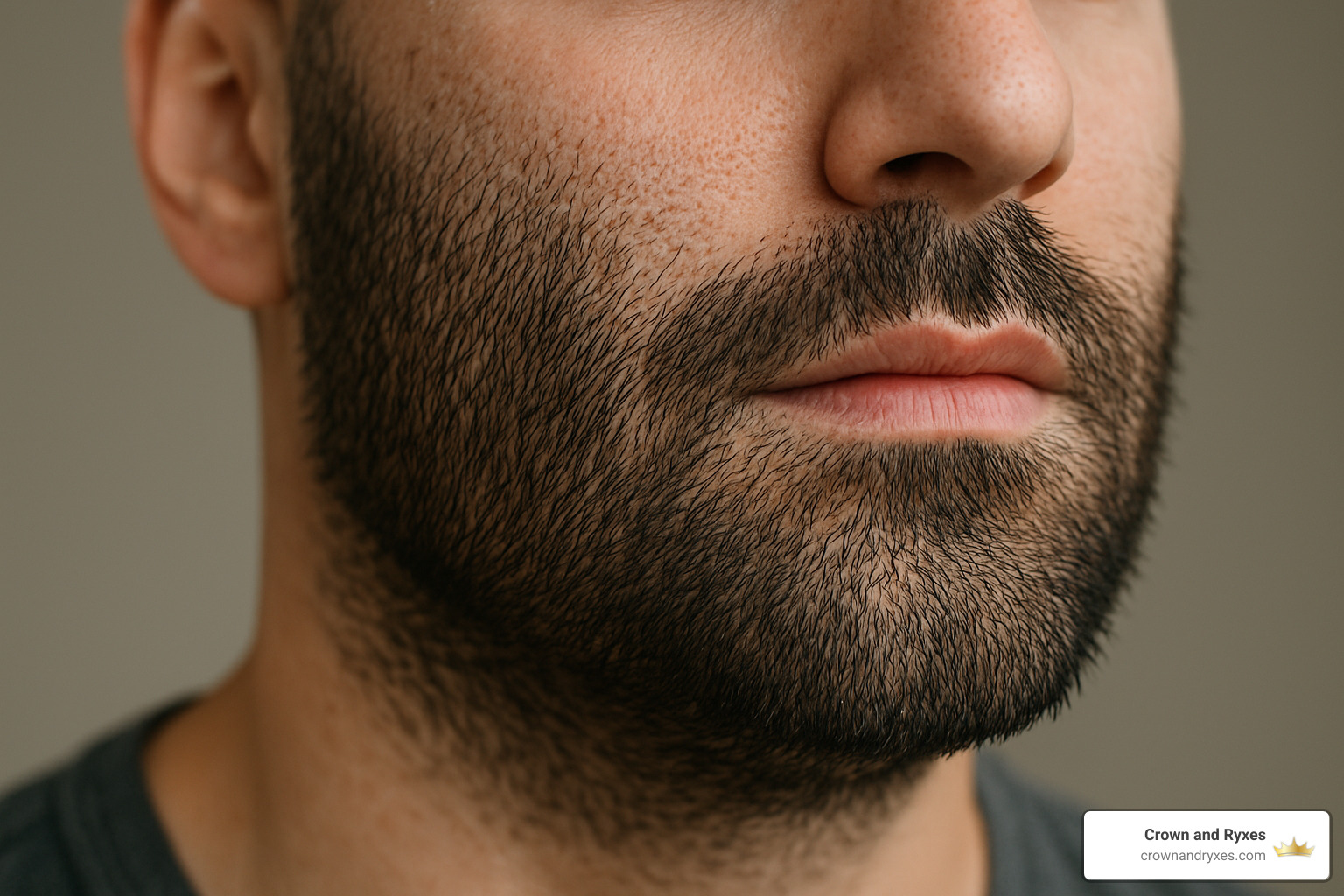
“What Are Beard Implants” Explained Simply
Think of what are beard implants as relocating tiny hair-producing factories from areas where you have plenty (typically the back of your head) to spots where you want more growth (your face). Once relocated, these hair follicles continue doing what they naturally do—growing hair—just in their new home.
Unlike scalp transplants that primarily address balding, beard transplants tackle different concerns: filling in patchy areas, enhancing specific features like mustaches or sideburns, creating facial hair where none existed before, or even covering facial scars.
The real artistry comes in the details. Facial hair naturally grows at specific angles and densities across different parts of the face. A skilled surgeon carefully plans each follicle’s placement to ensure your new beard looks completely natural.
Beard Implants vs. Temporary Fixes
Minoxidil (Rogaine) might stimulate some facial hair growth, but results vary dramatically between individuals. The biggest downside? Stop using it, and that new growth typically disappears within months.
Biotin and other supplements might support overall hair health, but there’s limited scientific evidence they specifically help beard growth. Most “beard growth” supplements lack solid clinical studies backing their claims.
Lifestyle changes like exercise, improved diet, and stress reduction support overall health and might marginally improve hair growth, but they rarely transform a patchy beard into the full one you’re dreaming of.
By contrast, beard implants offer clear advantages:
– One-time procedure with permanent results
– Your own natural hair follicles create a completely authentic look
– Custom-designed to match your desired beard style and density
– Freedom to shave, trim, or style your new facial hair just like natural growth
– High success rates, with most patients seeing up to 100% growth in the transplanted area within a year
How the Procedure Works: From Donor to Designer Beard
Ever wondered exactly what are beard implants and how they transform a patchy beard into a full, magnificent one? Let’s pull back the curtain on this fascinating procedure.
Think of beard implants as a carefully orchestrated relocation project. Your surgeon will typically move between 2,000 to 5,000 tiny hair follicle grafts from your head to your face. The exact number depends on your goals—filling a few patchy spots might need just a few hundred grafts, while creating a full beard from scratch could require several thousand.

When it comes to the technical approach, surgeons typically use one of two main methods:
| Technique | Description | Recovery | Scarring | Best For |
|---|---|---|---|---|
| FUE (Follicular Unit Extraction) | Individual follicles extracted using a micro-punch tool | Faster (3-7 days) | Tiny circular scars, virtually invisible | Most patients; those who wear short hair |
| FUT (Follicular Unit Transplantation) | Strip of skin removed, then dissected into individual grafts | Longer (10-14 days) | Linear scar at donor site | Patients needing maximum graft count; those who wear longer hair |
At Crown and Ryxes, we’ve found the FUE technique works best for most beard transplants. It leaves minimal scarring and gets you back to your normal routine faster.
Step-by-Step Journey
Your beard change journey unfolds like this:
First comes your consultation—a crucial conversation where we assess your facial structure, existing hair patterns, and beard dreams.
Next is beard design day. Your surgeon will literally draw your future beard on your face, considering your facial symmetry and natural growth patterns.
On procedure day, we begin with preparation. We’ll trim the donor area (usually the back of your scalp) short for better access. Then comes anesthesia—local numbing ensures you’ll feel comfortable throughout the entire process.
During the harvesting phase, we carefully extract your follicles. With FUE, we use a tiny micro-punch tool to “pop out” individual follicular units without leaving noticeable scars. These precious follicles then enter graft preparation, where they’re sorted and kept in a special solution.
The recipient site creation is where artistry meets medicine. Your surgeon makes tiny incisions in your facial skin, following your pre-designed beard pattern. The angle and direction of each incision is crucial—this determines how your beard will naturally flow.
Finally comes graft implantation—each tiny follicular unit is carefully placed into its new home on your face.
Donor Hair Sources & Graft Planning
The best beard transplants start with selecting the perfect donor hair. The occipital region (back and sides of your scalp) makes an ideal donor site because these hairs are genetically resistant to male pattern baldness and will keep growing throughout your life.
Creating a natural-looking beard requires thoughtful density mapping. Your surgeon plans the distribution of grafts to mimic natural growth patterns—typically denser in the mustache and chin areas, medium density in the cheeks, with subtle, graduated transitions between different zones.
For more technical details about the extraction techniques we use, check out our A Practical Guide to FUE Hair Restoration.
Candidacy, Risks & Side Effects
Thinking about getting beard implants? Let’s talk about who makes a good candidate and what you should know about potential risks.
Are You a Good Fit?
The best candidates typically include men with patchy facial hair looking for more complete coverage, individuals hoping to hide facial scars beneath natural hair, and transgender men enhancing masculine facial features as part of their transition journey.
Having sufficient donor hair is crucial—your scalp needs to have enough healthy follicles to relocate. And while we often associate hair procedures with older adults, age isn’t as significant a factor for beard transplants. Those DHT-resistant hairs we use remain stable even in younger patients.
For our transgender patients, beard implants can be truly transformative. Many trans men on hormone therapy see excellent results, as the procedure helps create distinctly masculine facial features that significantly reduce gender dysphoria.

Possible Downsides & Prevention
Like any surgical procedure, what are beard implants without discussing the potential downsides?
Most patients deal with temporary side effects that are part of the normal healing process. You’ll likely have some redness and swelling in both the donor and recipient areas for about a week. Tiny crusts typically form around the transplanted follicles and stick around for 7-10 days. Don’t panic when you see initial shedding of the transplanted hairs a few weeks after the procedure—this is normal and actually signals that the growth cycle is resetting.
Less common but more serious complications can include infection (though this risk is significantly reduced with proper aftercare and antibiotics). Some patients experience folliculitis—inflammation of the hair follicles that can feel like acne. “Cobblestoning,” an uneven texture that happens when grafts are placed too superficially, can occur if your surgeon lacks experience. There’s also the possibility of scarring (though it’s minimal with FUE techniques), poor growth of transplanted follicles, or an unnatural appearance if the angle and direction aren’t properly planned.
According to scientific research on transplant complications, you can dramatically reduce these risks by choosing an experienced surgeon, following all pre- and post-operative instructions carefully, maintaining proper hygiene during recovery, taking prescribed antibiotics exactly as directed, and giving yourself permission to take it easy during the initial healing phase.
At Crown and Ryxes, we provide comprehensive aftercare instructions, prescribe medications to prevent infection and manage any discomfort, offer 24/7 access to our medical team during that critical first week, and schedule follow-up appointments to keep an eye on your healing and growth progress.
Cost, Results & Alternatives
Wondering if beard implants are worth the investment? Let’s break down what you can expect to pay, when you’ll see results, and what other options exist if you’re not quite ready for surgery.
Investment Breakdown
The cost typically ranges from $3,000 for minor touch-ups to $15,000 for creating a full beard from scratch. At Crown and Ryxes, we price our procedures based primarily on the number of grafts needed – generally between $3-$7 per graft.
If you’re looking at a partial beard fill-in to address patchy areas, you might invest between $3,000-$7,000. For a complete beard change starting from minimal facial hair, expect to budget $7,000-$15,000.
Most clinics (including ours) charge a consultation fee, but we typically credit this toward your procedure if you decide to move forward. It’s worth noting that beard implants fall under cosmetic procedures, so insurance usually won’t cover them – with some exceptions for reconstructive cases involving burns or injuries.
For a deeper dive into pricing specifics, check out our detailed guides on Beard Transplant Cost and Beard Transplant Cost Per Graft.
Results Timeline & Longevity
Patience is key when it comes to beard implants. Here’s what your journey will look like:
Right after your procedure, you’ll see the outline of your future beard, but don’t get too attached to those initial hairs. Within 2-4 weeks, you’ll experience the “shedding phase” – a completely normal but sometimes alarming period where most transplanted hairs fall out.
Don’t panic! The follicles remain safely beneath your skin, preparing for their grand re-entrance. Around the 3-4 month mark, you’ll notice new growth beginning to emerge. Between months 4-8, your beard will continue filling in, becoming progressively thicker and more natural-looking. By the 9-12 month mark, you’ll enjoy the full results – a beard that can be styled, trimmed, or even shaved just like natural facial hair.
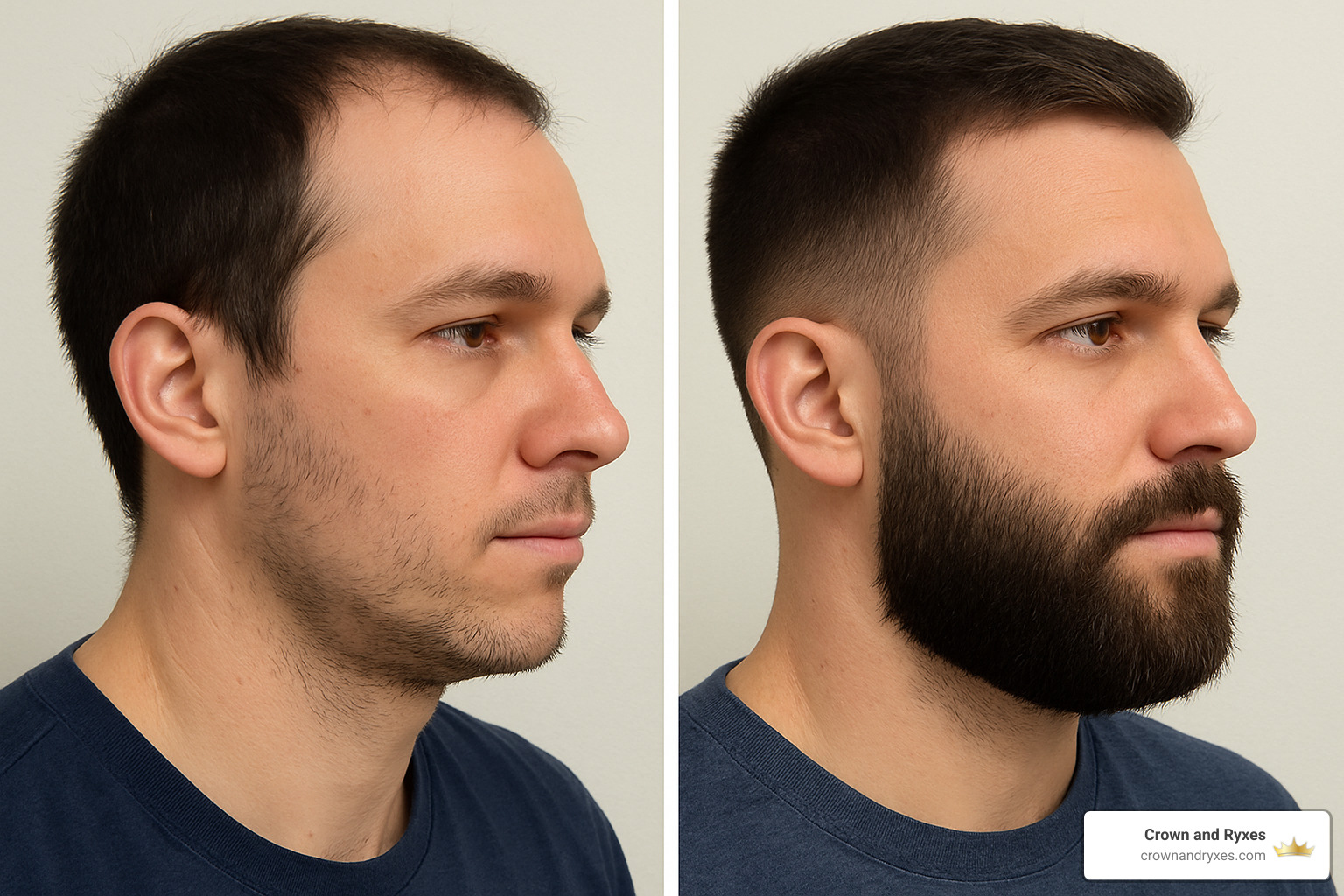
The best part? These results are permanent. Once established, the transplanted follicles will continue producing hair throughout your lifetime.
Alternatives Worth Considering
Not quite ready for surgery? Here are some alternatives to consider:
Topical Minoxidil (commonly known as Rogaine) is available over-the-counter and has shown some effectiveness for facial hair. Applied twice daily, it may stimulate new growth within 4-6 months. The catch? Results vary dramatically between individuals, and any new growth disappears when you stop using it.
For those seeking advanced non-surgical options, we offer REGENmax Therapy at Crown and Ryxes. This cutting-edge treatment works by delivering targeted growth factors to stimulate dormant follicles and improve blood flow to existing ones. Many clients use REGENmax either as an alternative to beard implants or as a complementary treatment to improve their surgical results.
Some men find success with strategic grooming techniques – carefully trimming existing facial hair to create the illusion of fullness, using beard dyes to darken lighter patches, or investing in specialized products formulated for thinner beards.
Choosing the Right Surgeon & Clinic
Finding the perfect team for your beard implant journey might feel overwhelming, but it’s the most crucial step toward achieving those full-beard dreams.
Credentials to Look For
When I talk to patients about what are beard implants, I always emphasize that your results are only as good as your surgeon’s expertise.
Start by checking for board certification with the American Board of Hair Restoration Surgery (ABHRS). This represents specialized training specifically in hair transplantation. Many excellent plastic surgeons haven’t necessarily mastered the unique artistry of beard design.
Experience with facial hair specifically matters tremendously. During your consultation, don’t be shy about asking, “How many beard procedures have you performed?”
Before-and-after photos tell the real story. Take your time examining these, particularly looking for patients with similar facial structure and beard goals to yours. At Crown and Ryxes, we maintain an extensive gallery showing various beard styles and densities we’ve created.
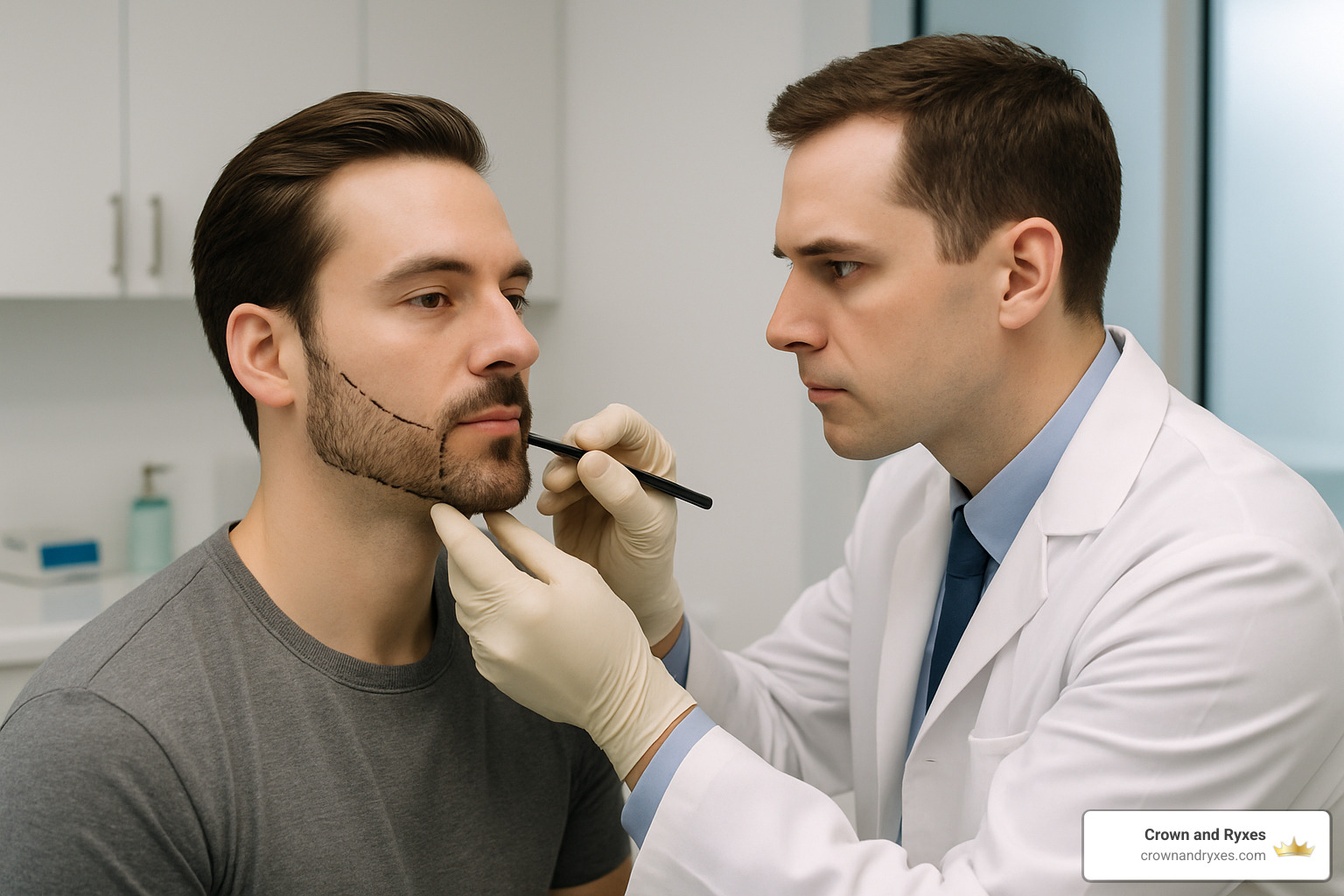
Your consultation experience itself speaks volumes. A good surgeon listens more than talks during your first meeting. They should ask about your lifestyle, preferences, and expectations before offering solutions.
Red Flags to Avoid
In my years helping patients understand what are beard implants, I’ve heard some concerning stories about less reputable clinics. Here are the warning signs that should have you heading for the door:
Technicians performing your surgery instead of the physician is a major concern. While technicians play important supporting roles, the critical aspects of extraction and placement should be performed by your surgeon.
Too-good-to-be-true pricing often means corners are being cut somewhere. Some patients consider traveling internationally for lower prices, but follow-up care becomes complicated across borders.
Extraordinary graft promises should raise eyebrows. Quality beard transplants require meticulous placement of each follicle at the correct angle and depth.
Absolute guarantees simply aren’t realistic in medical procedures. Ethical surgeons discuss variables like graft survival rates (typically 85-95%), healing factors, and realistic timelines.
For more detailed guidance on selecting the right clinic, our Beard Transplant Clinic page offers additional insights from our team.
Consultation Checklist: “What Are Beard Implants” Questions to Ask
Your consultation is your opportunity to become fully informed. I recommend bringing these questions:
About your specific needs: “How many grafts will I need for my desired beard style?” and “Do I have enough donor hair available?”
Regarding technique: “Why do you recommend FUE (or FUT) for my situation?” and “How do you ensure natural-looking angles?”
Recovery concerns: “What’s your specific aftercare protocol?” and “When can I safely return to work?”
Support questions: “What follow-up appointments are included?” and “How do you handle complications if they arise?”
At Crown and Ryxes, we view consultations as educational opportunities, not sales pitches. We encourage questions and provide honest answers. Not everyone is an ideal candidate for beard implants, and we believe in transparency above all else.
Frequently Asked Questions about Beard Implants
Let’s tackle those burning questions you might have about what are beard implants and what to expect throughout your journey to a fuller beard.
How soon will I see growth?
The path to your new beard is a marathon, not a sprint. After your procedure, your beard change follows a predictable timeline:
During the first two weeks, you’ll see the initial transplanted hairs and experience some healing. Then comes what I like to call the “disappearing act” around weeks 2-4 when those transplanted hairs shed. Don’t panic! This is completely normal and part of the process.
The exciting part begins around months 3-4 when you’ll spot those first new sprouts emerging. By months 6-8, you’ll notice significant improvement in density, and between months 9-12, you’ll enjoy your final results with full, natural-looking density.
Can beard implants cover scars?
Absolutely! Beard implants excel at concealing facial scars, whether they’re from accidents, burns, surgeries, or even severe acne. Many of our clients at Crown and Ryxes choose this procedure specifically for scar camouflage.
Working with scarred tissue does require special expertise, though. Scar tissue typically has reduced blood supply, which can affect how well the grafts take. We often need to place grafts more densely in these areas, and in some cases, multiple sessions provide the best coverage.
Will I need more than one surgery?
Most of our patients achieve their desired beard with just one procedure. However, there are situations where a second session makes sense:
If you’re aiming for extremely dense coverage that would require more grafts than is safe to transplant in one sitting, we might recommend a staged approach. Sometimes, despite our best efforts, not every graft survives at the same rate due to individual factors.
If you do need a second session, we typically schedule it 12-18 months after your first procedure.
Is the procedure painful?
Good news—the procedure itself isn’t painful! We use local anesthesia to ensure your comfort throughout. Most patients report feeling only minimal discomfort during the administration of the anesthesia itself, and then nothing during the actual extraction and implantation.
After the procedure, you might experience mild soreness in the donor area for 2-3 days, and some itching as healing progresses. The vast majority of our patients find that regular over-the-counter pain relievers are more than sufficient for managing any post-procedure discomfort.
Can I shave after a beard transplant?
Yes, you can—but timing matters. Your new beard needs gentle care initially:
For the first 10-14 days, hands off completely! Let those transplanted follicles settle in without disturbance. Once the scabs have naturally fallen away, you can cautiously trim with scissors if needed. After about 3-4 weeks, you can resume normal shaving, though we recommend using a gentle touch for the first few months.
The great news is that once fully healed, those transplanted hairs behave just like natural facial hair—you can shave, trim, or style them however you like.
Are beard implants permanent?
What are beard implants if not a permanent solution? Yes, the results are designed to last a lifetime. We source the transplanted follicles from areas of your scalp that are naturally resistant to hormonal hair loss, so they maintain their growth ability in their new facial location throughout your life.
Conclusion & Next Steps
If you’ve made it this far, you now have a comprehensive understanding of what are beard implants and how they can transform both your appearance and confidence. The journey from patchy facial hair to a full, natural-looking beard is now within reach.
Beard implants aren’t just a cosmetic procedure—they’re a life-changing solution that can help you finally achieve the facial hair you’ve always wanted. Whether you’re dealing with sparse growth, covering scars, or starting from scratch, modern beard transplantation offers remarkable, permanent results.
Your path forward involves several important steps:
First, take an honest look at your candidacy. Do you have sufficient donor hair? Are your expectations realistic? Is your health good enough for a surgical procedure?
Next comes perhaps the most crucial decision—choosing the right provider. The difference between disappointing and exceptional results often comes down to your surgeon’s expertise and artistic vision. Look for board certification, extensive before-and-after galleries, and specialists who truly understand facial aesthetics.
Understanding the financial commitment is equally important. While beard implants represent a significant investment (typically $3,000-$15,000), the permanent nature of the results makes this a one-time expense rather than an ongoing cost like many temporary solutions.
At Crown and Ryxes, we’ve helped countless men in Clermont, FL and The Villages, FL transform their appearance through carefully customized beard implants. Our approach blends medical precision with artistic design, ensuring your new beard complements your unique facial structure and personal style.
We believe every man deserves to feel confident in his appearance. For many of our patients, achieving the beard they’ve always wanted represents more than just a cosmetic change—it’s about finally looking on the outside how they’ve always felt on the inside.
The patience required during the growth process (typically 9-12 months for full results) is well worth the wait. As your transplanted hairs take root and flourish, you’ll watch your new look emerge gradually, culminating in a natural, permanent beard you can style, trim, and maintain just like natural facial hair.
Ready to take the next step on your beard journey? We invite you to learn more about our beard implant services or reach out for a personalized consultation. During this one-on-one meeting, we’ll assess your unique situation, answer your specific questions, and develop a customized treatment plan custom to your goals.
Transform your appearance and boost your confidence with beard implants from Crown and Ryxes—where cutting-edge science meets artistic vision to create the beard you’ve always wanted.