
Understanding What Happens to Your Sexual Desire After Having a Baby
Women’s libido after childbirth often decreases significantly, and this is completely normal. Here’s what you need to know:
Quick Facts:
- 83% of women don’t want or enjoy sex at 2-3 months postpartum
- 38% still experience low desire at 6 months after giving birth
- Low libido can last from weeks to a year or longer
- Main causes include hormonal shifts (low estrogen, high prolactin), physical recovery, exhaustion, and emotional adjustment
- Breastfeeding typically amplifies the effect due to additional hormonal changes
If you’ve recently had a baby and feel like intimacy is the last thing on your mind, you’re not alone. The dramatic changes in your body, hormones, emotions, and daily life all work together to shift your sexual desire. This isn’t a problem to fix immediately—it’s a natural adaptation your body makes during this intense period of motherhood.
As Dr. Matthew Casavant, I’ve spent over 20 years helping women steer postpartum health concerns, including the common experience of low women’s libido after childbirth. Through my practice at Crown and Ryxes in Clermont, FL, I’ve guided countless new mothers through understanding these changes and finding their path back to sexual wellness when they’re ready.
Women’s libido after childbirth vocab to learn:
Why Does Libido Drop After Childbirth? A Look at the Causes
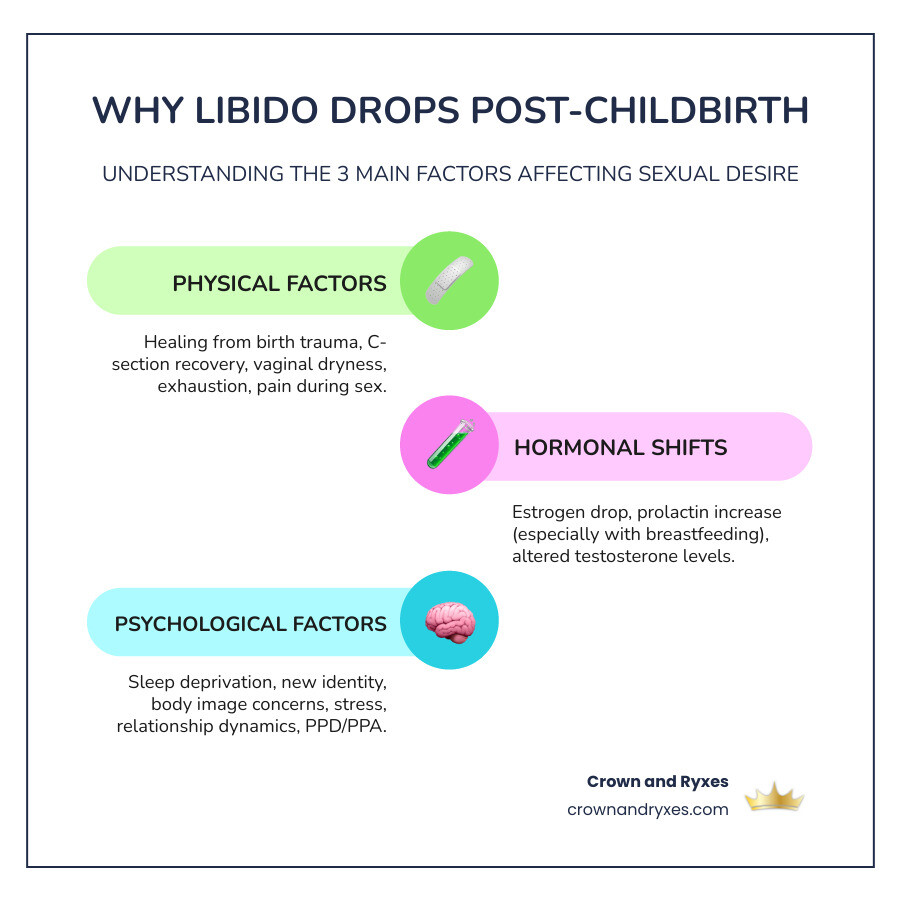
The journey into new parenthood is a beautiful, albeit challenging, one. While we often focus on the joys of a new baby, we sometimes overlook the profound impact childbirth has on a woman’s body and mind, especially her sexual health. A decrease in women’s libido after childbirth is not a sign of a flaw or a failing; it’s a complex interplay of physical, hormonal, and psychological factors. Research consistently shows that sexual function declines during pregnancy and often does not return to its baseline during the postpartum period. Understanding these underlying causes is the first step toward addressing them.
Physical Recovery and Changes
Giving birth, whether vaginally or via C-section, is a major physical event. Your body needs time to heal, and that healing can directly impact your desire and comfort during sexual activity.
Many women experience discomfort or pain during sex (dyspareunia) in the first few months postpartum. This can be due to vaginal birth trauma, such as perineal tears or an episiotomy, which require stitches and healing. Even without tears, the vaginal area can be sore and sensitive. For those who had a C-section, recovery from abdominal surgery involves its own set of physical limitations and pain. The first two weeks after childbirth, in particular, carry the highest risk of postpartum complications, making any sexual activity uncomfortable or even medically inadvisable.
Adding to this, hormonal shifts (which we’ll discuss next) can lead to vaginal dryness, making penetration painful even when there are no physical tears. Most women find intercourse painful up to three months after giving birth, and some may experience pain for much longer.
Beyond specific pain, sheer exhaustion is a massive libido killer. Caring for a newborn is a 24/7 job, leaving little time for sleep or personal recovery. When you’re constantly fatigued, the idea of intimacy can feel like just another chore.
To learn more about your body’s recovery after birth, you can refer to this guide on your body after baby.

The Hormonal Rollercoaster
Hormones play a huge role in women’s libido after childbirth, creating a veritable rollercoaster of changes. During pregnancy, hormone levels like estrogen and progesterone are incredibly high. After birth, these levels plummet dramatically.
The sharp drop in estrogen is a primary culprit for low libido. Low estrogen can lead to:
- Vaginal dryness and thinning of vaginal tissues, causing pain during sex.
- Decreased sexual desire and arousal.
If you are breastfeeding, this hormonal impact is often amplified. The hormone prolactin, essential for milk production, remains high during lactation. High prolactin levels suppress estrogen and testosterone, further dampening sexual desire and contributing to vaginal dryness. This is why exclusively breastfeeding women are more likely to experience sexual problems, particularly with lubrication and desire, compared to formula-feeding women.
Interestingly, it’s not just women who experience hormonal shifts. Studies show that men’s testosterone levels can also decrease when they become fathers, especially the more they interact with their children. This shared hormonal shift can subtly impact both partners’ sex drives.
Oxytocin, often called the “love hormone,” also plays a dual role. While it’s crucial for bonding with your baby and is released during breastfeeding, it doesn’t necessarily translate to romantic or sexual interest in your partner. In some cases, the strong maternal bonding facilitated by oxytocin might even temporarily redirect a woman’s focus away from sexual intimacy with her partner.
If you’re concerned about hormonal imbalances affecting your libido, especially in Clermont, FL, or The Villages, FL, we offer various solutions featuring our REGENmax protocol. REGENmax can be used as part of Hormone Therapy The Villages, Hormone Replacement Therapy, and Bioidentical Hormone Replacement Therapy Clermont. We also provide information on What Are Bioidentical Hormones? and whether they are FDA Approved BHRT.
Psychological and Emotional Factors
Beyond the physical and hormonal, the psychological and emotional landscape of new motherhood profoundly influences women’s libido after childbirth.
- Postpartum Depression (PPD) and Anxiety (PPA): These conditions are significant libido dampeners. Dealing with symptoms like persistent sadness, hopelessness, irritability, or overwhelming worry leaves little room for sexual desire. Postpartum depression and anxiety can dampen sexual interest and intimacy, making professional help essential.
- Sleep Deprivation: As mentioned, exhaustion is a major factor. Chronic sleep deprivation affects mood, energy levels, and overall well-being, making sexual intimacy feel like an impossible feat.
- New Identity as a Mother: The transition to motherhood involves a massive identity shift. Many women find their focus entirely consumed by their baby, with little mental space left for their previous roles, including that of a sexual partner. This shift is normal, but it can take time to integrate.
- Body Image Concerns: Pregnancy and childbirth change a woman’s body. Weight fluctuations, stretch marks, and changes in breast shape can lead to self-consciousness and lower self-confidence. If you don’t feel good about your body, it’s hard to feel desirable or want to engage in sexual activity.
- Relationship Dynamics and Unequal Household Tasks: The division of labor in the household often becomes a point of contention. If one partner feels overwhelmed by childcare and household responsibilities, resentment can build. As one new mother lamented, “I resent the fact that he always wants sex. I’ve been taking care of children all day and I’m tired. The last thing I want to do at the end of the day is to have someone else who wants something from me.” This feeling of being “touched out” and like a “servant” can significantly impact desire. Studies show that while sex may improve over time, emotional satisfaction can decline due to inequality in household tasks.

The Neurobiology of Women’s Libido After Childbirth
Recent research digs into the neurobiological underpinnings of why women’s libido after childbirth changes. The maternal brain undergoes significant rewiring, prioritizing infant cues and maternal care.
One key area of focus is the amygdala, a brain region involved in processing emotions and motivation, including sexual arousal. Studies comparing postpartum women to nulliparous (never-pregnant) women reveal fascinating differences:
- Reduced Amygdala Activation to Sexual Stimuli: Postpartum women exhibit a generalized decrease in right amygdala responsiveness to arousing stimuli, including sexual images, compared to nulliparous women. This suggests a neurobiological shift that may contribute to lower sexual interest. Nulliparous women rated sexual pictures to be more arousing than postpartum women did.
- Prioritizing Infant Cues: Conversely, postpartum women tend to rate infant stimuli as more arousing than nulliparous women do. This highlights the brain’s adaptation to focus on the needs of the baby, diverting attention and motivational resources towards maternal care.
- Neuroendocrine Adaptation: These changes are often viewed as a characteristic neuroendocrine adaptation rather than a dysfunction. The brain is essentially optimizing itself for the demanding task of caring for a newborn.
This scientific research on postpartum sexual function from the National Institutes of Health provides deeper insights into these fascinating changes: Postpartum Female Sexual Function: Risk Factors for Postpartum Sexual Dysfunction.
Navigating the Changes: How to Rekindle Intimacy
Understanding why your libido has changed is the first step. The next is navigating these changes with patience, compassion, and practical strategies. Rekindling intimacy after childbirth is a journey, not a race.
Communication is Key: Talking With Your Partner
Open and honest communication with your partner is paramount. This can be challenging when you’re both exhausted, but it’s vital for maintaining connection and managing expectations.
- Express Your Feelings: Share what you’re experiencing—the fatigue, the body image concerns, the shift in focus. Help your partner understand that this isn’t about them, but about the profound changes you’re undergoing.
- Manage Expectations: Acknowledge that sex might not look the same as before, at least for a while. It’s okay to take things slowly and explore different forms of intimacy.
- Scheduling Intimacy: While it might sound unromantic, scheduling sex can be a practical solution for busy parents. As one expert suggests, if a woman knows sex is scheduled, she can carve out that time and begin to build desire and arousal earlier in the day. This can reduce the pressure of spontaneity and ensure intimacy remains a priority. For women, the afternoon might even be a particularly good time for intimacy, as their sexual desire may peak then.
- Emotional Connection First: For many women, feeling cared for, listened to, and understood is a prerequisite for sexual desire. Men often feel loved through physical intimacy, but women often need emotional intimacy to feel ready for physical closeness. Focus on reconnecting emotionally through conversation, shared activities, and quality time.
- Non-Sexual Touch: Don’t underestimate the power of non-sexual physical affection—hugs, kisses, holding hands, massages. These acts of closeness can help maintain intimacy without the pressure of sexual intercourse.
For partners, understanding and supporting the new mother is crucial. This guide provides valuable insights for A Partner’s Guide to Pregnancy.
Self-Care and Lifestyle Adjustments
Taking care of yourself isn’t selfish; it’s essential for your overall well-being and, by extension, your libido.
- Prioritizing Sleep: Easier said than done with a newborn, but even small improvements can make a difference. Team up with your partner for night shifts, or ask for help from family members. When the baby sleeps, try to rest too.
- Nutritious Diet: Fueling your body with healthy food can boost energy levels and mood.
- Gentle Exercise: Physical activity, even a short walk, can improve mood, energy, and body image. It’s also linked to positive mental health outcomes postpartum.
- Pelvic Floor Exercises: If you’re experiencing concerns about vaginal tone or discomfort, Pelvic Floor Exercises Women like Kegels, which can be combined with REGENmax, can help strengthen these muscles and improve sensation.
- Stress Management Techniques: Mindfulness, deep breathing, or simply taking a few moments for yourself can help manage the overwhelming stress of new parenthood.
Reconnecting with Your Body and Sexuality
This is about refinding what feels good for you now.
- Masturbation: Self-pleasure can be a great way to reconnect with your body and understand what brings you pleasure without external pressure. It can also help with vaginal dryness.
- Using Personal Lubricants: Especially if you’re breastfeeding, vaginal dryness can be a significant issue. Don’t hesitate to use plenty of water-based or silicone-based lubricants to make sexual activity more comfortable and pleasurable.
- Exploring New Types of Intimacy: Penetrative sex isn’t the only form of intimacy. Explore oral sex, manual stimulation, massage, or simply extended foreplay. The goal is pleasure and connection, however that manifests.
- Body Positivity: Your body has done an incredible thing—it created and birthed a human! Practice self-compassion and focus on appreciating your body for its strength and resilience, rather than fixating on perceived flaws.
- Focus on Pleasure, Not Performance: Accept the concept of “responsive desire,” where arousal can follow the initiation of sexual activity. Start with non-pressure intimacy and let desire build. As this Mayo Clinic article on Sex After Pregnancy: Set Your Own Timeline suggests, set your own timeline and prioritize pleasure. Our Female Arousal Techniques resource can also provide helpful guidance.
When to Seek Professional Help for Women’s Libido After Childbirth
While a decrease in women’s libido after childbirth is common, there are times when professional help is warranted. You don’t have to suffer in silence.
Signs It’s Time to Talk to a Doctor
We encourage you to reach out if you experience any of the following:
- Severe or lasting pain during sex (dyspareunia): If pain persists beyond a few months, or is severe, it’s crucial to rule out underlying physical causes or complications.
- Symptoms of postpartum depression or anxiety: If low mood, overwhelming worry, or other PPD/PPA symptoms are impacting your daily life and libido, please seek help.
- Libido loss causing significant personal distress or relationship issues: If your low desire is genuinely bothering you or creating conflict with your partner, it’s a valid reason to seek support.
- No improvement after 6-12 months: While timelines vary, if you feel no positive shift in your libido or sexual comfort after a year, a professional evaluation can be beneficial.
- Concerns about hormonal imbalance: If you suspect your hormones might be playing a larger role, testing can provide clarity and guide treatment.
Professional Support for Women’s Libido After Childbirth
At Crown and Ryxes, we understand the complexities of women’s libido after childbirth and offer comprehensive support. Our approach to Female Sexual Health focuses on personalized care.
We provide various avenues for professional support in Clermont, FL, and The Villages, FL:
- OB/GYN Consultation: Your obstetrician or gynecologist can assess physical healing, address pain, and discuss treatments like hormonal contraception options and REGENmax.
- Sex Therapist or Couples Counseling: A sex therapist can help you and your partner steer communication challenges, redefine intimacy, and explore psychological factors impacting your libido. Couples counseling can strengthen your relationship foundation.
- Physical Therapy: A pelvic floor physical therapist can help with pain, muscle weakness, or other physical issues affecting sexual function, and may be combined with treatments like REGENmax.
- Hormonal Testing and Treatment: If hormonal imbalances are suspected, we can perform comprehensive testing and discuss options like REGENmax and Bioidentical Hormone Replacement Therapy (BHRT) with REGENmax to restore balance.
- Advanced Sexual Wellness Solutions: We offer cutting-edge treatments like REGENmax, a patented protocol designed to improve sexual wellness, including improving arousal and sensation. REGENmax uses tissue regenerative injections to help restore function and pleasure. Our REGENmax Review: Patented Protocol With Proven Results offers more information. Our REGENmax protocol uses Tissue Regenerative Injections as part of our broader Sexual Wellness Services.
Our Womens Sexual Health Clinic is dedicated to helping women in The Villages, FL, and surrounding areas find solutions like REGENmax for Low Libido Therapy for Women in The Villages and other Female Sexual Dysfunction Therapy needs. We are committed to offering the Best Female Sexual Wellness Treatments, including our patented REGENmax protocol, to help you feel like yourself again.
Frequently Asked Questions about Postpartum Libido
How long does low libido after childbirth typically last?
The duration of low women’s libido after childbirth varies greatly from person to person. While some women may feel ready for sex as early as three months postpartum, many others wait until six months or even longer. Research indicates that postpartum loss of sexual desire has been reported to last as long as one year to many years following childbirth. It’s common for sexual desire to gradually improve over time, but patience is key, and there’s no set timeline for everyone.
Is it normal to have no sex drive after having a baby?
Absolutely! It is extremely common and normal to experience a significant drop in sex drive after having a baby. As many as 83% of women report not wanting or enjoying sex at two to three months postpartum, and 38% still feel this way at six months. This is a natural physiological and psychological response to the demands of new motherhood, including hormonal changes, physical recovery, and sleep deprivation. It is not a sign that something is inherently wrong with you or your relationship.
How is postpartum libido different from libido during pregnancy?
Libido during pregnancy can vary widely; some women experience an increase in desire, while others may have a decrease due to physical discomfort or nausea. However, women’s libido after childbirth is more consistently low for most. The underlying causes differ:
- During Pregnancy: Libido changes are often influenced by increased blood flow, hormonal fluctuations, and physical discomforts like morning sickness or fatigue, but the overall hormonal profile is still supportive of sexual function.
- Postpartum: Libido is primarily suppressed by the dramatic drop in estrogen, liftd prolactin (especially with breastfeeding), physical healing, extreme fatigue, and the intense psychological shift to maternal identity. Research shows that sexual function generally declines during pregnancy and does not return to its baseline levels during the postpartum period, highlighting a distinct difference in the overall trend.
Conclusion: Embracing Your New Chapter
The experience of low women’s libido after childbirth is a common, complex, and entirely normal part of the postpartum journey. It’s influenced by a powerful combination of physical healing, hormonal shifts, profound psychological adjustments, and lifestyle changes. Understanding these factors, communicating openly with your partner, and prioritizing self-care are crucial steps in navigating this phase.
This is a season of life, and your body and mind are adapting to a new, beautiful reality. Be patient and compassionate with yourself and your partner. If you find that persistent pain, distress, or concerns about hormonal imbalances are impacting your well-being or relationship, please know that professional help is available.
At Crown and Ryxes, we are dedicated to supporting your overall wellness journey, including your sexual health. Whether you’re in Clermont, FL, or The Villages, FL, our team is here to provide personalized guidance and advanced solutions like REGENmax to help you rekindle intimacy and accept this new chapter with confidence and joy.
Learn more about our sexual wellness solutions, including REGENmax and how we can support you.